REVIEW · HO CHI MINH CITY
Ben Duoc ‘Less-Crowded’ Cu Chi Tunnels Half-Day Tour
Book on Viator →Operated by Joy Journeys · Bookable on Viator
Cu Chi is intense, so the details matter. This Ben Duoc half-day tour keeps the group small (max 10) and focuses on the quieter tunnels for a more grounded look at wartime life underground. I like how the day mixes history lessons with hands-on moments you can actually feel, like crawling through tight passages and seeing period relics up close.
Two things I especially like: you spend most of your time at Ben Duoc, which is aimed at being less crowded than the main Cu Chi circuits, and the tour includes guided stops for war history plus daily-life glimpses like tapioca and the Hoang Cam kitchen. One thing to consider: this is still a heavy, physical experience—crawling means cramped spaces, and the drive out of the city takes real time.
In This Review
- Quick hits before you go
- Ben Duoc Tunnel Time Feels More Personal Than the Usual Crowds
- Pickup, Drive, and What 6–7 Hours Really Means
- Arriving at Cu Chi: How the Tour Sets the Tone
- Entering Ben Duoc: Crawling, Booby Traps, and That Tank Touch
- Viet Cong Food and the Hoang Cam Kitchen Stop
- The Craft Shop Pause: Helpful Handcrafts, Real-World Prices
- Why the Guide Matters: Lessons Through Humor and Detail
- Price and Logistics: Is $34 Good Value?
- Who This Tour Fits Best (and Who Might Hesitate)
- Should You Book This Ben Duoc Tour?
- FAQ
- What’s the approximate duration of the Ben Duoc Cu Chi Tunnels half-day tour?
- Do you get pickup from Ho Chi Minh City?
- Is admission to Ben Duoc included in the price?
- How big is the group?
- What’s included in the tour cost besides the guiding?
- Is it a good option if I want a less crowded experience?
- What happens if weather is bad or the tour can’t run?
Quick hits before you go
- Small group, max 10: more breathing room for questions and moving around the tunnels.
- Ben Duoc focus: you spend most time at the less-busy tunnel complex, not just a quick photo stop.
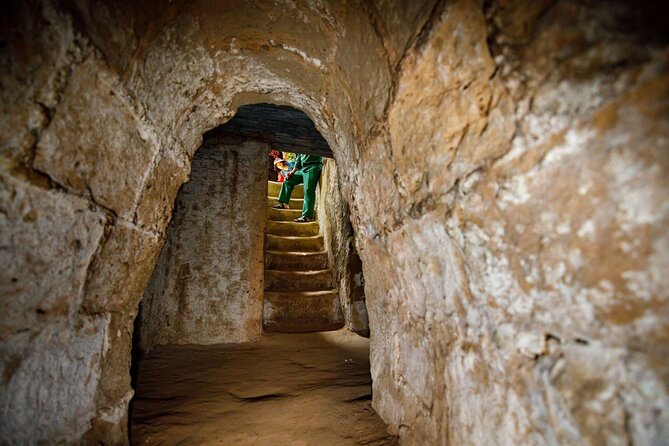
- Hands-on tunnel time: you’ll crawl inside and see wartime features like booby traps.
- A tank you can touch: a Vietnam War-era ex-US Army tank is part of the visit.
- Viet Cong daily-life moments: tapioca tasting plus propaganda viewing and an underground kitchen stop at Hoang Cam.
- Drive from HCMC: plan on roughly 6–7 hours total, with significant travel out and back.
Ben Duoc Tunnel Time Feels More Personal Than the Usual Crowds
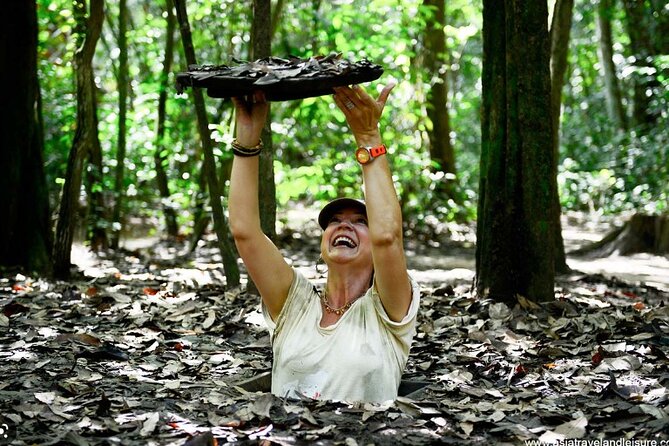
Cu Chi can feel like a checklist for some tours. This one is set up to feel more like a slow walk through a place with rules, not a conveyor belt through exhibits.
Ben Duoc is promoted as less-crowded and more authentic, and that matters because tunnel visits are physical. When fewer people are funneling through the same spots, you get more time to listen to explanations and less time waiting in line while your guide tries to keep everyone together.
Also, the tour doesn’t treat the tunnels as a backdrop for quick photos. You get guided context about why the underground network mattered during the Vietnam War, including tactical features like booby traps and the “how did they do this?” engineering behind it.
You can also read our reviews of more tours and experiences in Ho Chi Minh City.



Pickup, Drive, and What 6–7 Hours Really Means
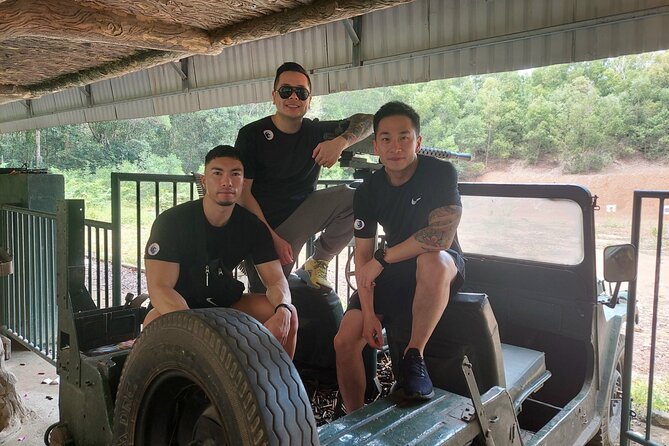
The day starts with pickup from District 1, 3, and 4 (typically around 30 minutes for pickup coordination). Your tour base point is listed at the Notre Dame Cathedral of Saigon area, so if you’re meeting rather than being picked up, that’s where you’ll likely orient.
From there, you head out toward Cu Chi. Expect a long-ish day: the tour runs about 6 to 7 hours total, and a quieter Ben Duoc visit comes with the trade-off of extra time on the road. The vehicle is air-conditioned, and bottled water is included (two bottles per guest).
This is the part I’d plan for mentally. If you go in thinking it’s a quick half-day detour, the travel time can feel long. If you go in knowing you’re committing to a full morning/afternoon of moving, watching, listening, and then crawling, it feels totally doable.
Arriving at Cu Chi: How the Tour Sets the Tone
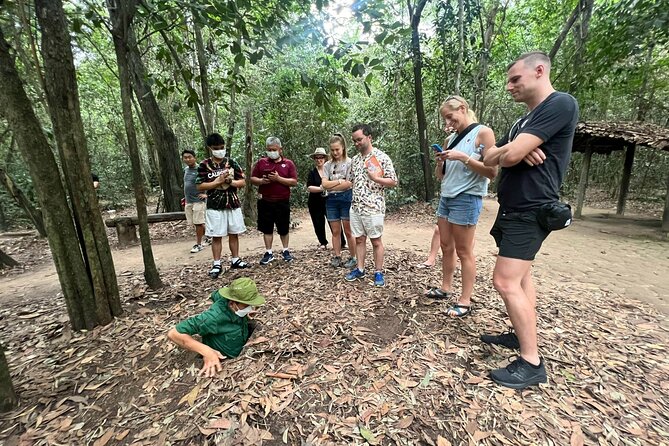
Before you hit the tunnels, you get a history-oriented start at Cu Chi. The goal is to get your bearings fast—what you’re seeing underground, why it was built, and how the tunnels worked as a living system rather than just a hole in the ground.
The itinerary includes time at the Ben Duoc tunnel complex (about 2 hours 30 minutes, with admission included). That’s a meaningful chunk of time for an underground site, where each stop is slower than you’d expect because people have to duck, squeeze, and follow instructions.
One practical benefit of the small group design (max 10) is pacing. It’s easier for your guide to keep you moving at a human speed, and easier for you to ask questions without the whole group falling behind.
Entering Ben Duoc: Crawling, Booby Traps, and That Tank Touch
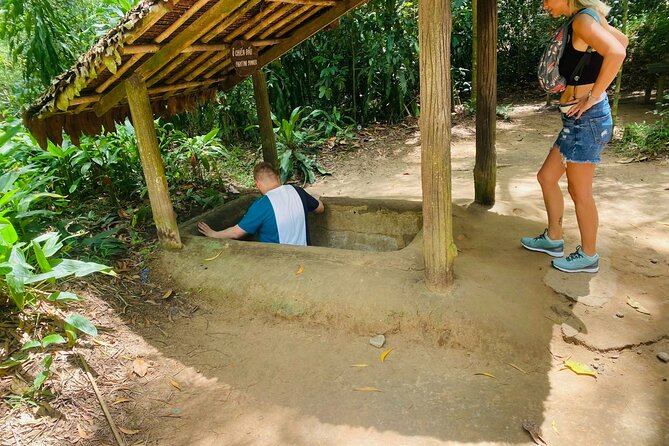
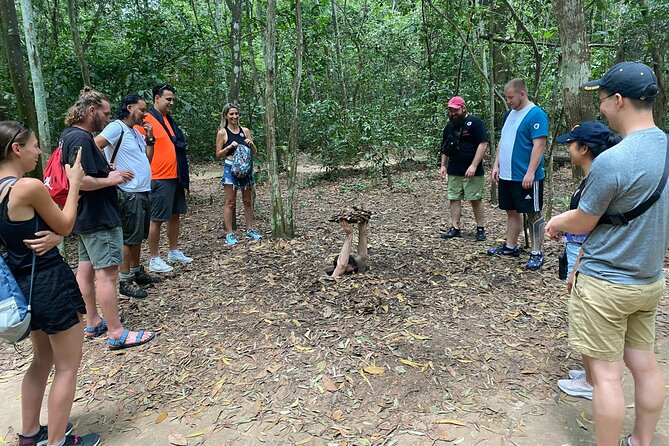
The highlight is the tunnel experience. You’ll explore the Ben Duoc complex with a guide, and there’s a key moment where you can crawl inside the tunnels to understand the conditions firsthand.
Tunnel conditions are famously tight. Even without getting claustrophobic, you’ll be moving at a crouch, and the passages are small enough that taller people usually need to watch their head and posture constantly. It’s not just “for show”—the point is to give you a physical understanding of how limited space shaped daily life.
You’ll also see wartime features. The tour includes booby traps used during the conflict, and it doesn’t treat them like random horror props. The explanations are meant to connect the objects to strategy and survival.
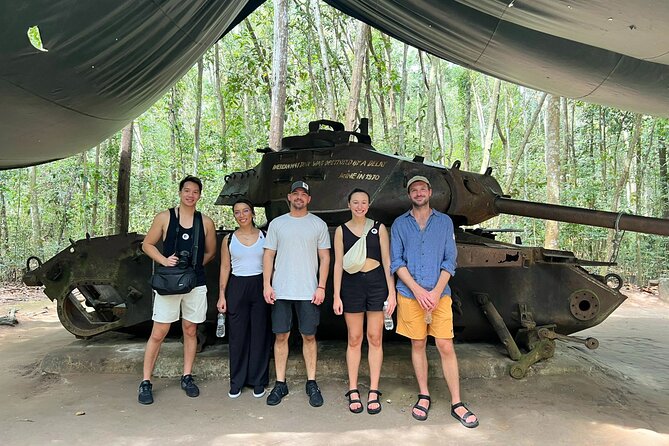
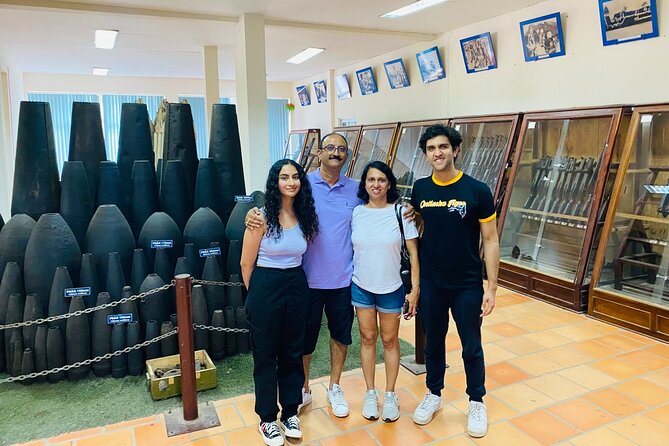
Then there’s a relic that’s unusual for many battlefield tours: an ex-US Army tank from the Vietnam War that you can touch. Being able to put your hands on a cold, heavy object helps switch your brain from lecture mode into reality mode.
Viet Cong Food and the Hoang Cam Kitchen Stop
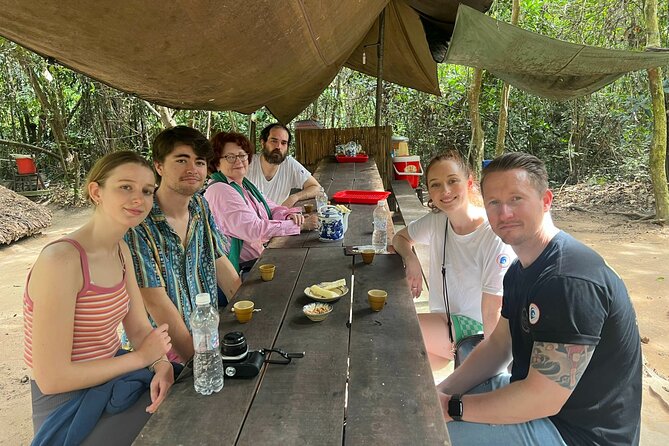
This tour doesn’t end with the tunnel crawl. It adds structured stops that bring the war history closer to everyday life, not just combat events.
You’ll taste tapioca, described as locally grown and connected to Viet Cong food. This is one of those small moments that can stick with you, because it reframes the underground story from tactics alone into what people ate, carried, and depended on.
Another stop focuses on propaganda of Viet Cong soldiers in Tan Phu Trung Ward. That can feel jarring if you’re used to war history being presented only with documents and dates. Here, you’re seeing how messaging and morale played roles alongside engineering and combat.
Finally, you get an underground Hoang Cam kitchen experience. Even if you don’t think of kitchens as “war infrastructure,” the underground setting changes the meaning. You’re being shown how people adapted daily tasks—cooking, preparing food, staying functional—under constant pressure.






The Craft Shop Pause: Helpful Handcrafts, Real-World Prices
On the route to Cu Chi’s quieter circuit, you may be taken to a craft shop where handmade items are made by handicapped people affected by the war. It’s a stop that can feel worthwhile because it links a purchase to a person’s livelihood rather than just souvenir production.
That said, treat it like a normal shopping moment with a normal shopping mindset. Some items here can feel pricey, and you might find similar handiwork sold elsewhere in the Cu Chi area for less. If you care about value, set a simple rule: compare prices quickly, and don’t feel pressured to buy right away.
Also, keep your attention on the main point of the tour. The tunnels and underground life are the reason to come; the shop is a side stop that you can either enjoy or skip without losing the core experience.
Why the Guide Matters: Lessons Through Humor and Detail
A war site tour can go one of two ways: dry facts, or clear meaning. This tour leans toward clear meaning, and the best part is that your guide can turn a difficult subject into something you can actually follow.
The tour experience is heavily tied to the guide’s communication style. In particular, guides like Leo, Ken, Safa, and Tommy come up for being strong English speakers, organized, and able to explain history with a sense of humor. That humor isn’t there to lighten the tragedy—it’s there to help you stay present while learning.
When a guide is good at pacing, you get more than names and dates. You start connecting what you saw above ground to what it meant underground—how people moved, how they hid, and why the tunnels weren’t just a refuge but a system.
If you’re the type who asks questions (even quick ones like how something worked), a small group size helps. You’re not competing with a crowd for a chance to clarify what you’re seeing.
Price and Logistics: Is $34 Good Value?
At $34 per person, this isn’t priced like a luxury excursion. It’s positioned as an affordable way to reach Cu Chi with structure, a small group, admission included at the tunnel complex, and air-conditioned transportation.
For many people, the value equation looks like this:
- You’re paying for a long day with pickup in central districts and organized guiding.
- You get included admission tied to the Ben Duoc tunnel visit.
- Water and fees and taxes are included, which cuts down the “surprise costs” feeling.
The real question is what you want out of Cu Chi. If you want a quick, crowded circuit, you may find cheaper options. If you want a more focused tour that spends most of its time at the quieter Ben Duoc site and gives you crawling time plus daily-life stops like the Hoang Cam kitchen, $34 feels like a fair trade.
Who This Tour Fits Best (and Who Might Hesitate)
This is a great fit if you want war history you can physically understand. The crawling element, the booby trap explanations, and the tactile tank moment make it more than a museum visit.
It’s also a good match for people who prefer a calmer experience. With a max group size of 10 and a Ben Duoc emphasis, it’s designed for fewer people in the same tight spaces.
If you’re sensitive to cramped spaces or you know crawling isn’t going to work for you, this is the main consideration. The tunnels are small, and even people who can participate may feel very uncomfortable with low ceilings and tight passageways.
Should You Book This Ben Duoc Tour?
I’d book this if you want the quieter Cu Chi angle with a guide who can explain wartime engineering and daily life, not just point at tunnels and move on. The small-group format is the big reason: it supports a more thoughtful experience when you’re ducking and crawling through tight spaces.
I’d hesitate if you’re looking for a light, easy day. This is a serious site, with hands-on crawling and a long drive out and back. If you’re okay with that reality and you want a structured, less-crowded Ben Duoc visit, Joy Journeys hits the right balance of education, pacing, and practical value.
FAQ
What’s the approximate duration of the Ben Duoc Cu Chi Tunnels half-day tour?
The tour runs about 6 to 7 hours approximately, including pickup and the drive between Ho Chi Minh City and Cu Chi.
Do you get pickup from Ho Chi Minh City?
Yes. Pickup is offered from accommodations in District 1, District 3, and District 4, and it usually takes about 30 minutes.
Is admission to Ben Duoc included in the price?
Yes. Admission for the Ben Duoc tunnel complex is included, while the other listed segments are marked as free.
How big is the group?
The tour is limited to a maximum of 10 travelers.
What’s included in the tour cost besides the guiding?
Included items are an air-conditioned vehicle, bottled water (two bottles per guest), and all fees and taxes. Tips and anything not mentioned are not included.
Is it a good option if I want a less crowded experience?
The tour is specifically designed to spend most of the time at Ben Duoc, which is described as less crowded and less busy than the more common Cu Chi tunnel visits.
What happens if weather is bad or the tour can’t run?
This experience requires good weather. If it’s canceled due to poor weather, you’ll be offered a different date or a full refund. It may also be canceled if a minimum number of travelers isn’t met, with a different date or a full refund offered.