REVIEW · NARA
Nara Early Morning Tour (Kyoto or Osaka Departure Available)
Book on Viator →Operated by GuideMe Japan · Bookable on Viator
Crisp mornings tame Nara’s crowds. This early start tour hits Nara before the big rush, so you spend more time watching deer at ease and less time herding with everyone else. I also like the small group (max 12) format, where guides such as Nana, Momoka, Haruka, and Futaba can keep the pace relaxed and still answer your questions. The one drawback to plan for: you’ll walk about 10,000 steps, and Todai-ji has an entrance fee (¥800) that is not included.
You meet at Nara Park and finish there too, which keeps things simple. There’s an option to add pickup at Kyoto Station, and the one-way transportation fee from Kyoto/Osaka is only included if you choose that add-on. The tour is priced at $61.02 per person for a 4-hour 30-minute morning circuit that covers three major temple/shrine stops plus the deer park—good value when you want structure, context, and less stress.
In This Review
- Key highlights to look for
- Why start at Nara Park so early
- Small group format and guide style that actually helps
- Kofuku-ji Temple: pagoda views and 710-era context
- What to watch for
- Kasuga Grand Shrine: lanterns you can count (almost)
- Why this stop matters on an early tour
- Nara Park deer time: sacred legends and real feeding tips
- Practical advice so it stays fun
- Todai-ji and the Great Buddha: the one paid ticket
- How to get the most from Todai-ji in one hour
- Logistics in plain terms: pickup, walking, and timing
- Who this tour works for
- Price and value: what $61.02 buys you
- Who should book this Nara early morning tour
- Should you book the Nara Early Morning Tour
- FAQ
- How long is the Nara Early Morning Tour?
- How big is the group?
- Is Todai-ji Temple admission included?
- Are the other temple/shrine stops free?
- Is there a pickup option from Kyoto Station?
- Is transportation to Nara included?
- What fitness level is needed, and is it okay for children?
Key highlights to look for
- Before-the-crowds timing that changes how Nara Park feels
- Max 12 people for easier conversation and photo stops
- Free admission at Kofuku-ji, Kasuga Grand Shrine, and Nara Park (Todai-ji is the exception)
- English-speaking guides who pace the walk and help you understand what you’re seeing
- Practical deer time at Nara Park, including feeding tips you’ll actually use
Why start at Nara Park so early
Nara gets popular fast. The difference between later morning and early morning isn’t just comfort—it changes the vibe. Starting at Nara Park means you’re in the deer-and-temple zone while it’s still quiet enough to notice details: the way lanterns glow in the morning light, the way the park path feels more like a slow walk than a crowd corridor.
You also save energy. Yes, the tour involves walking (about 10,000 steps), but doing it earlier helps you avoid the fatigue that comes from stopping and squeezing around groups. Think of it as sightseeing with breathing room.
If you’re the type who hates feeling rushed, this is a smart match. Many people come for the big name sights like Todai-ji, but they come back to Nara for the atmosphere—morning is when you can actually absorb it.
You can also read our reviews of more tours and experiences in Nara.

Small group format and guide style that actually helps
With a maximum of 12 people, you’re not lost in the mass. You can ask questions without shouting. You get guidance on where to stand for photos, how long to linger, and how to make the most of each stop.
Guides vary by date, but the style stays consistent: friendly, question-friendly, and focused on making the sites make sense. I’ve seen stories of guides like Nana and Haruka keeping explanations clear and unhurried, and Momoka being patient while still keeping momentum. Futaba’s approach also included fun moments like quizzes, which is a nice touch if you’re traveling with kids or you just like learning without it feeling like a lecture.
A practical point: small groups make meeting up easier. On a half-day with multiple stops, it matters.
Kofuku-ji Temple: pagoda views and 710-era context
Stop 1 is Kofuku-ji Temple, about 30 minutes. The big draw here is the famous five-storied pagoda. It traces back to when Nara became the capital—established in 710—and the pagoda is known as the second tallest wooden pagoda in Japan. It’s seven meters shorter than the tallest one.
Even if you only have a short window, this stop gives you a key anchor. Before you see the deer park and Todai-ji, Kofuku-ji helps you understand how old the sacred center of Nara really is. It’s the kind of start that makes the rest of the morning click.
Admission at Kofuku-ji is free, which also helps your budget.
What to watch for
- Take a moment to look for the pagoda lines and how the structure sits in its surroundings.
- Use this stop to get your bearings before the heavier crowds (and deer chaos) later.
Kasuga Grand Shrine: lanterns you can count (almost)
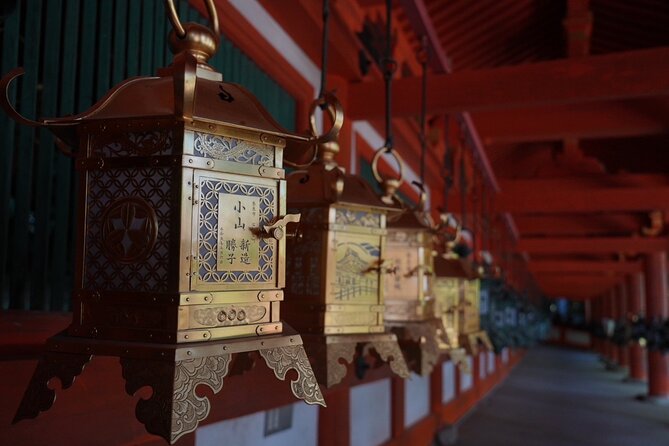
Next comes Kasuga Grand Shrine for about an hour, also with free admission. This shrine is famous for its lanterns, many of which were donated by worshippers. The count is impressive: about 3,000 stone and bronze lanterns.
If you like details, this is one of those places where the visual story builds as you walk. You’ll notice lanterns placed throughout shrine grounds in a way that feels intentional rather than decorative. And because it’s early, you’ll likely have a calmer time moving from one viewpoint to the next.
Why this stop matters on an early tour
Kasuga Grand Shrine sits in the middle of your morning itinerary, so it acts like a tempo switch. After Kofuku-ji’s pagoda focus, you get a slower, more atmospheric walk through shrine grounds—then you transition to Nara Park, where everything shifts again.
Nara Park deer time: sacred legends and real feeding tips
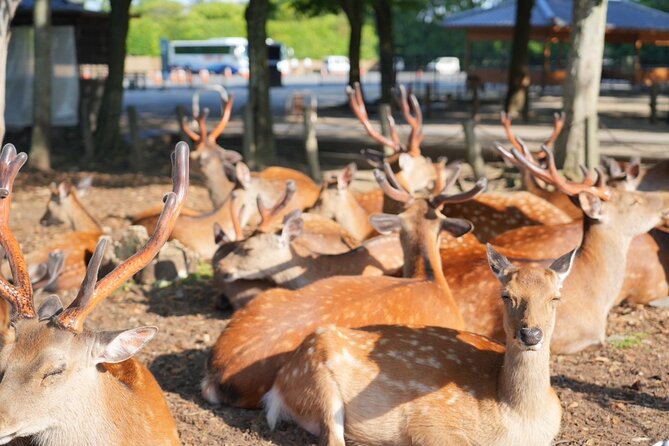
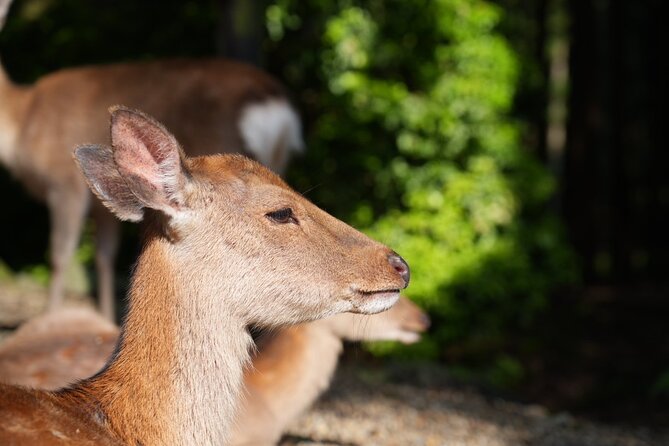
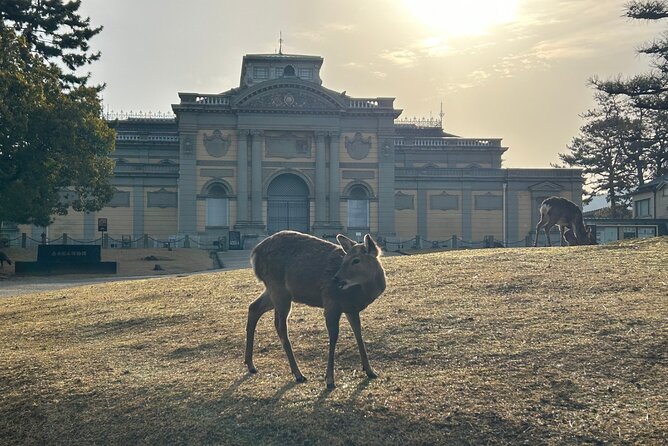
Stop 3 is Nara Park for about 30 minutes. This is where Nara does its magic. The park is home to thousands of deer, and they’re considered sacred. There’s a legend tied to Kasuga Shrine—one of the four gods rides deer to Nara—so the deer are part of the sacred story, not just tourist scenery.
The deer also act like they know exactly what you came for. If you’ve seen photos online, you’ll recognize the behavior: you’ll get close enough to hear them, see their calm expressions, and (yes) deal with the fact that they are very interested in food.
Feeding is a highlight. In practice, you’ll want to follow your guide’s lead on how to do it safely and politely. Some guides provide direction on where to buy biscuits to feed the deer, and you’ll see how fast they become confident with humans when the schedule is right.
Practical advice so it stays fun
- Wear shoes you’re comfortable walking 10,000 steps in, because deer areas can pull you off the main path.
- Keep your hands secure and follow your guide’s cues for feeding.
- Don’t fight the deer for space. If you’re patient, they’ll move through the area in their own rhythm.
Todai-ji and the Great Buddha: the one paid ticket
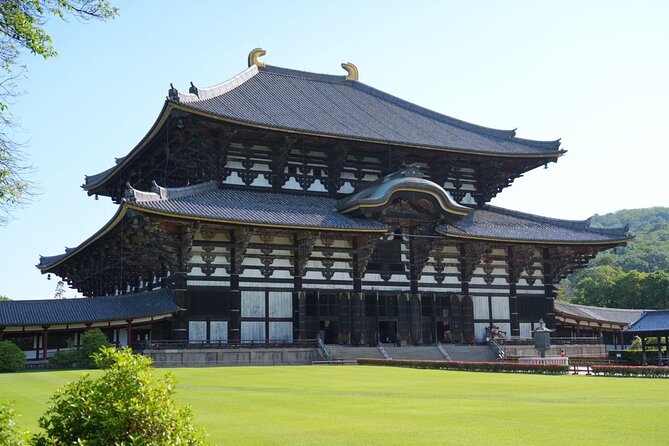
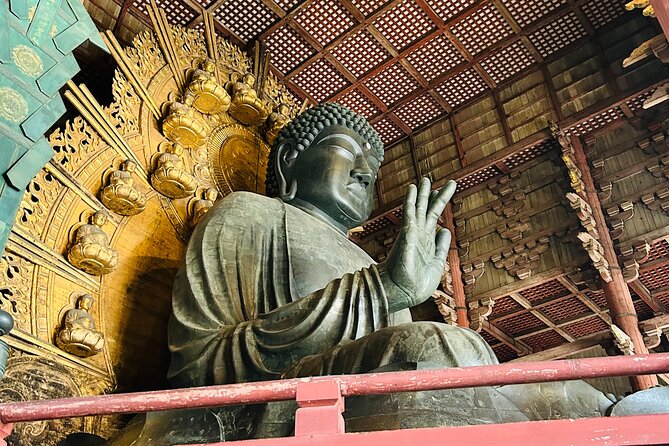
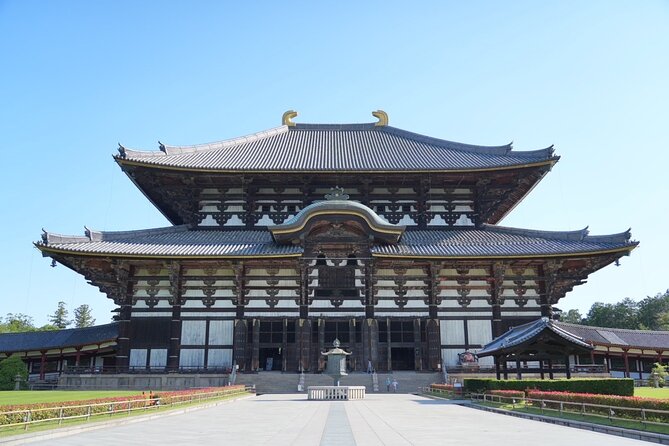
Stop 4 is Todai-ji Temple for about an hour. This is the headline: the Great Buddha statue, described as the biggest Buddha statue in Japan. It’s also tied to a major architectural fact—the main hall was, until recently, the world’s largest wooden building.
Todai-ji is the only stop with an entrance fee on this tour: ¥800 per person, not included in the tour price. Budget for it so you’re not surprised halfway through your morning.
How to get the most from Todai-ji in one hour
One hour is enough if you focus on priorities:
- First, take in the scale of the Great Buddha.
- Then, look at the hall structure and how the space frames the statue.
- Save time to stand, look around, and let the room sink in. Even with crowds, it’s worth slowing down for a minute.
This stop is often the reason people book, but the earlier stops make it more meaningful. By the time you reach Todai-ji, you’ve already seen Nara’s deeper spiritual layers: pagoda heritage at Kofuku-ji and the lantern devotion at Kasuga.
Logistics in plain terms: pickup, walking, and timing
Here’s the structure you’ll live with for this tour:
- Total time: about 4 hours 30 minutes
- Meeting and ending point: Nara Park
- Walking: about 10,000 steps
- Group size: up to 12 people
- Fitness: moderate physical fitness level recommended
- Age notes: guests under 6 can’t join, and it’s not recommended for guests over 75
There’s also an option to include pickup at Kyoto Station. Departure is available from Kyoto or Osaka, and if you select the transportation add-on, the fee to get from Kyoto/Osaka to Nara is included. Returning to Kyoto/Osaka is on you (and the tour does not include the return transportation fee).
A small but useful detail: you’ll have a mobile ticket. That’s convenient in Japan, especially for a short, early-morning schedule where you don’t want delays.
Who this tour works for
This tour is ideal if you want:
- a guided route (so you don’t waste time figuring out what matters first)
- fewer crowds (early start)
- a manageable half-day in a single morning circuit
- deer park time without turning it into a messy free-for-all
If you need minimal walking or you’re sensitive to crowds later in the day, the early timing is still your friend—but the 10,000-step target is the key reality check.
Price and value: what $61.02 buys you
At $61.02 per person for about 4.5 hours, the price feels fair for three reasons.
First, the tour gives you a focused route through Nara’s most important spiritual sites—Kofuku-ji, Kasuga Grand Shrine, Nara Park, and Todai-ji—without you needing to plan and stitch together transport on your own.
Second, you’re paying for the guide’s context and pacing. In the reviews, guides like Nana, Momoka, Haruka, and others are repeatedly praised for clear explanations, patience with questions, and not rushing you through stops. That matters when you only have half a day.
Third, most of the admissions are free. Kofuku-ji and Kasuga Grand Shrine are listed as free. Nara Park is free. That means the paid surprise is limited to Todai-ji (¥800). So your overall morning cost stays predictable.
If you add Kyoto Station pickup and select the one-way transport option from Kyoto/Osaka, you’ll likely feel even better about the value because you remove the friction of getting to Nara early.
Who should book this Nara early morning tour
I’d point you to this tour if:
- you want Nara’s highlights in a structured morning
- you enjoy walking as long as the pace stays reasonable
- you want deer park time paired with temple/shrine context
- you like having an English-speaking guide so you understand what you’re seeing (not just looking at it)
It’s also a strong pick for families who can handle a moderate walking schedule. More than one guide has been praised for being patient and helpful with kids, and deer park time is naturally kid-friendly.
If you’re older, have mobility limits, or you simply hate long walks, this might be harder. The age and fitness guidelines aren’t casual—this tour expects you to move.
Should you book the Nara Early Morning Tour
Book it if you want Nara before it becomes a full-time job. The early start really matters, and the small group size keeps it human. You’ll get a smart route with real context, plus the deer encounter you came for—without losing the entire morning to crowds.
Skip it only if the walking amount (around 10,000 steps) is a dealbreaker for your body, or if paying extra for Todai-ji admission (¥800) would feel annoying. If you can handle a half-day on your feet, this is one of the better ways to see Nara with less stress.
FAQ
How long is the Nara Early Morning Tour?
It runs for about 4 hours 30 minutes.
How big is the group?
The tour is limited to a maximum of 12 travelers.
Is Todai-ji Temple admission included?
No. Todai-ji admission costs ¥800 per person and is not included.
Are the other temple/shrine stops free?
Kofuku-ji Temple, Kasuga Grand Shrine, and Nara Park are listed as free admission for this tour.
Is there a pickup option from Kyoto Station?
Yes. You can choose an option to include pickup at Kyoto Station.
Is transportation to Nara included?
Transportation fee from Kyoto/Osaka to Nara is included only if you select that option. The return trip fee is not included.
What fitness level is needed, and is it okay for children?
You should have a moderate physical fitness level, and you’ll walk about 10,000 steps. Guests under 6 cannot join, and it’s not recommended for guests over 75.