REVIEW · UBUD
Taman Beji Griya Waterfall: Holy Bathing/Soul Retreat Ritual
Book on GetYourGuide →Operated by Trip Gotik - Bali Tours · Bookable on GetYourGuide
A shower that feels like a reset. At Bali’s Taman Beji Griya Waterfall, you follow a local guide through the Melukat purification ritual, complete with temple prayers and offerings, in a place where the water, the forest, and the ceremony do most of the heavy lifting. I also love the practical setup: sarong, locker key, towel, changing space, and a jamu herbal drink after, so you’re not juggling your own plan mid-ritual.
One key consideration: people who are menstruating are not permitted to enter the Taman Beji site.
In This Review
- Key takeaways before you go
- Melukat at Taman Beji Griya: What the holy bathing is really about
- Getting there from Ubud and beyond: transfers, timing, and the pace
- Arrival at the waterfall temple: sarong, offerings, and your role in the ritual
- Inside the ceremony: what the guide helps you understand
- The waterfall setting: nature, noise levels, and crowd reality
- Jamu and small “after” touches that make the day feel complete
- Photos without turning the ritual into a content shoot
- Price and value: is $29 a fair deal?
- Who should book this (and who should skip it)
- What to bring and how to respect the site rules
- Should you book the Melukat cleansing at Taman Beji Griya? My call
- FAQ
- How long is the Taman Beji Griya Waterfall Melukat experience?
- Is hotel pickup available?
- Is the tour guide available in English?
- What should I bring?
- Can I drink the holy water?
- Can I cancel if my plans change?
Key takeaways before you go
- Melukat cleansing ritual led by a local spiritual guide, with prayer equipment and offerings included
- Holy water + sarong setup means you can focus on the ceremony, not logistics
- English guidance (live) helps you understand what you’re doing at each stage
- Optional professional photos can help you take part without thinking about your camera
- Locker, towel, and changing facilities are provided on-site for comfort and privacy
Melukat at Taman Beji Griya: What the holy bathing is really about
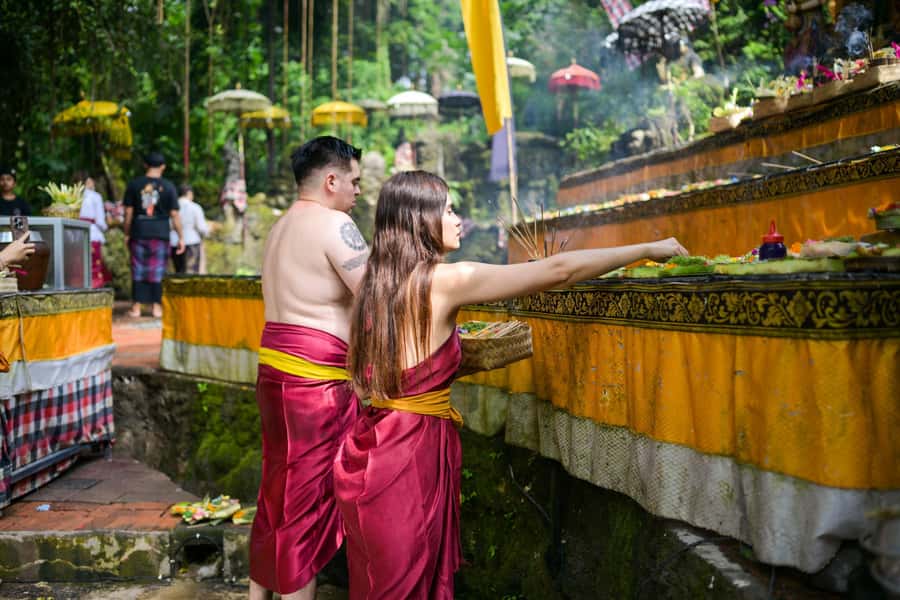
The Melukat ritual is a Balinese purification ceremony. The point isn’t spectacle. It’s about resetting your mindset and making space for calmer energy—through prayers, offerings, and immersions in holy water. At Taman Beji Griya Waterfall, that intention plays out in a natural, temple-centered setting, so the ceremony feels grounded instead of abstract.
What makes this experience meaningful is the guided structure. You don’t just stand there getting wet and hoping for the best. A local guide brings you through the steps, and explains what you’re praying for and how the flow works. Several guides and drivers mentioned in the program content—people like Bayu, Dodo, Nanda, and Mangku—are praised for pacing and clear explanations, which matters because the ritual is more than one quick dip.
You can also read our reviews of more tours and experiences in Ubud.
Getting there from Ubud and beyond: transfers, timing, and the pace
Most people do this with hotel pickup options from major Bali areas like Ubud, Uluwatu, Nusa Dua, Jimbaran, Kuta, Seminyak, Canggu, Sanur, Denpasar, Candidasa, Kintamani. Pickup happens in a shared vehicle with other participants, so you’ll want to build in some buffer time for traffic and stops. Your exact pickup time follows your selected start time, and you’ll get reconfirmed details via WhatsApp before you go.
Once you arrive, the day moves at a calm but efficient rhythm. You’ll do a guided tour and a walk around the site (the walk portion is listed as about 1.5 hours), then the ritual itself takes over your attention. This isn’t a long, all-day hike. It’s more like: get set up, learn the steps, go through the ceremony, then return.
Arrival at the waterfall temple: sarong, offerings, and your role in the ritual
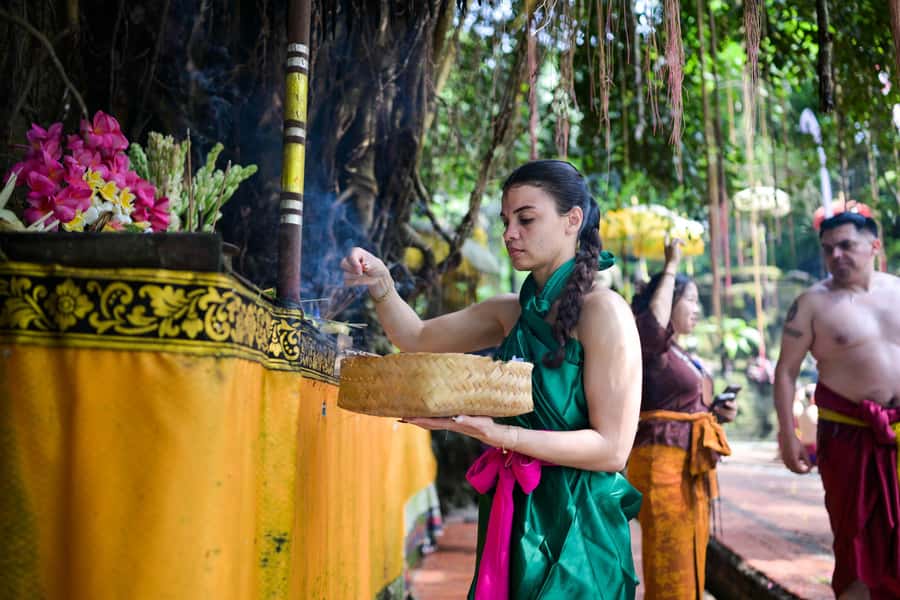
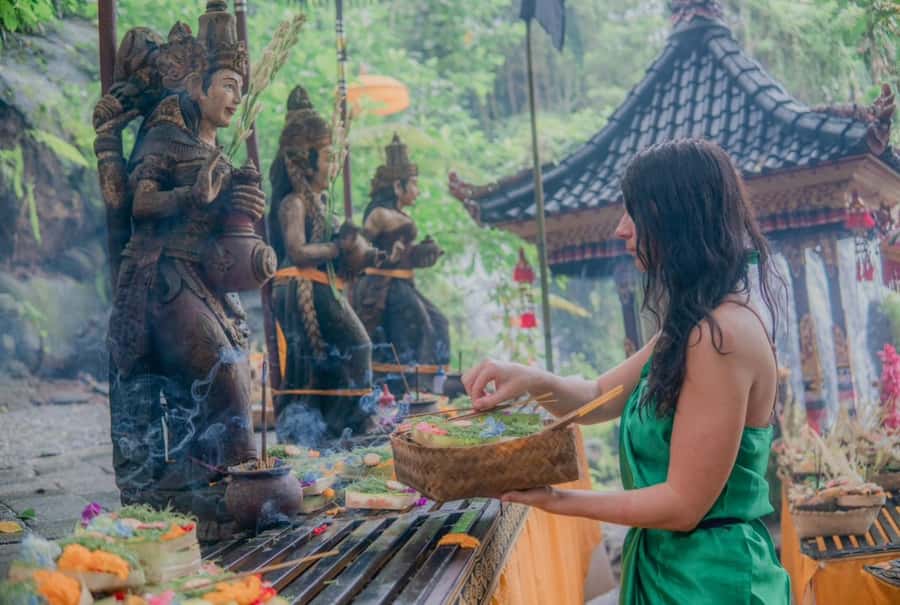
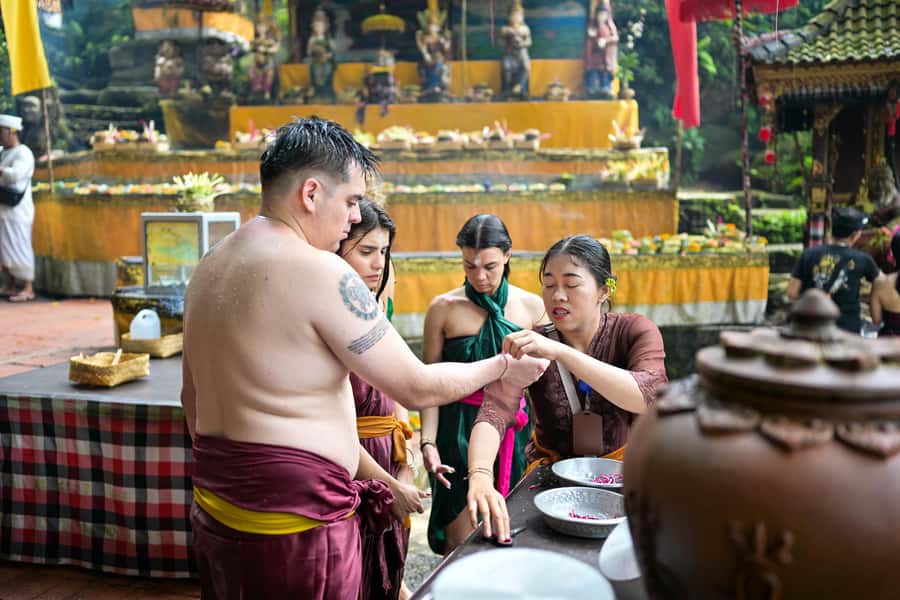
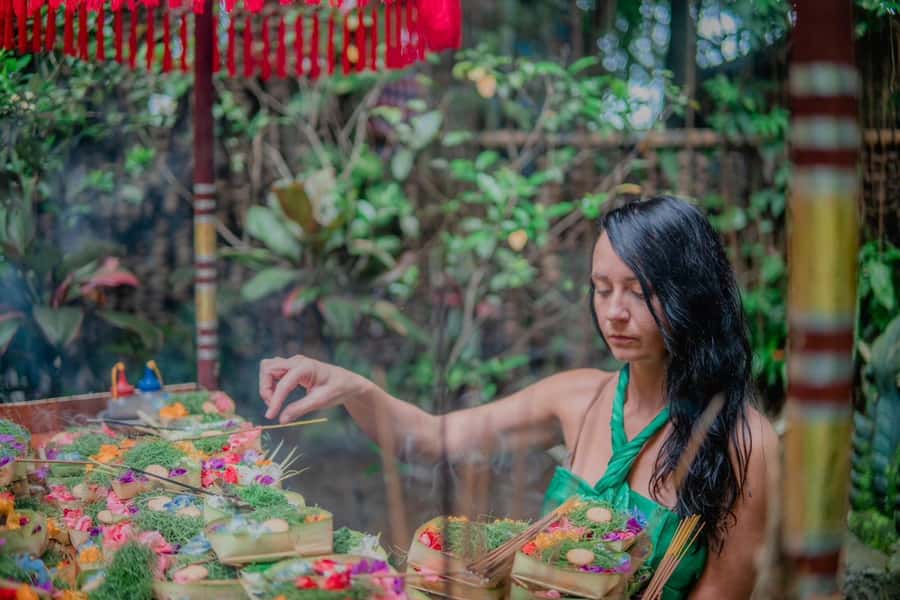
When you arrive, you’re welcomed by a local spiritual guide who leads you through the Melukat process. You’ll get what you need right there: a sarong, prayer equipment, and offerings. That matters because local ceremonies come with specific handling—if you’re improvising, you can accidentally step out of the flow. Here, you’re guided, so you can participate the right way.
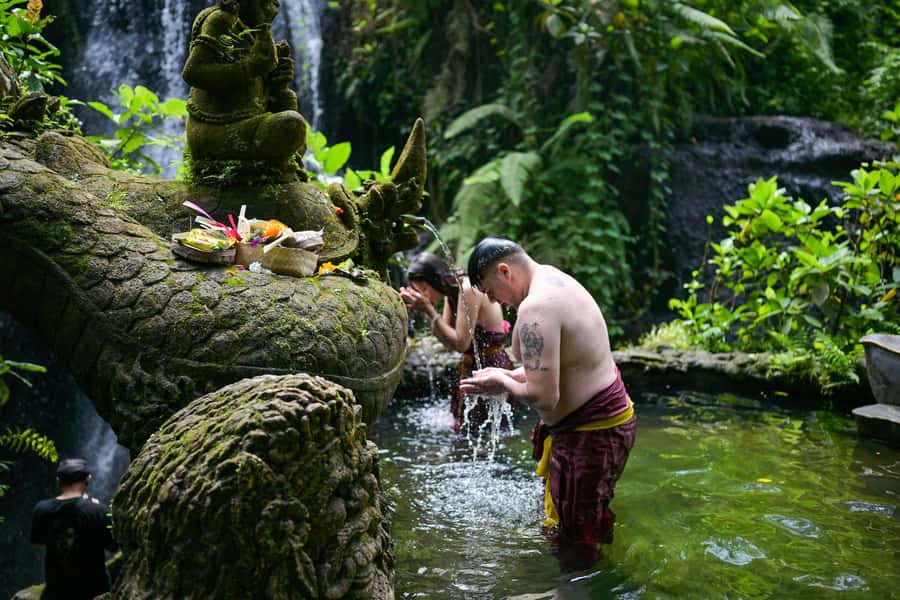
You should expect an orderly series of holy water immersions paired with prayer and guidance. The water is part of the cleansing practice, and the offerings are the respectful context around it. One practical note: holy water is used for ritual purposes only and isn’t recommended for drinking.
Inside the ceremony: what the guide helps you understand
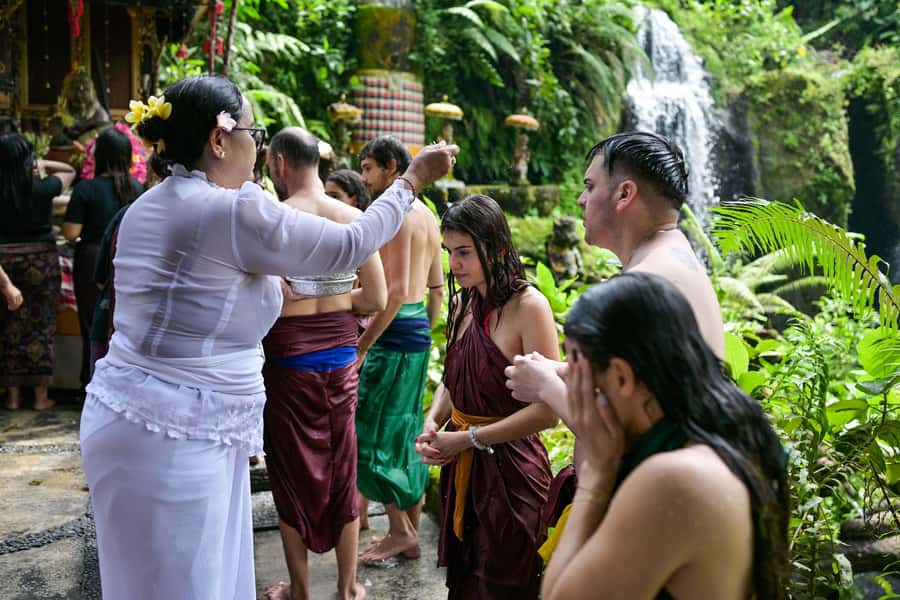
Even if you’re not religious, you can still appreciate what’s happening. The guide’s job is to translate the experience into actions you can follow—what to do, when to do it, and what the prayers/guardians/gods relate to in Balinese spiritual life.
In the content provided, multiple guides are praised for explaining the symbolism and the stages of the ritual, including references to gods and guardians you pray to during the process. That’s one reason this feels more like a cultural experience than a photo stop. You’re not just watching. You’re learning the meaning behind what you’re doing, and that usually changes the emotional impact.
Also: this is a place where you’re asked to behave respectfully—no loud voices, no disruptive behavior, and no littering. If you come in with a calm mindset, the whole flow tends to feel smoother.
The waterfall setting: nature, noise levels, and crowd reality
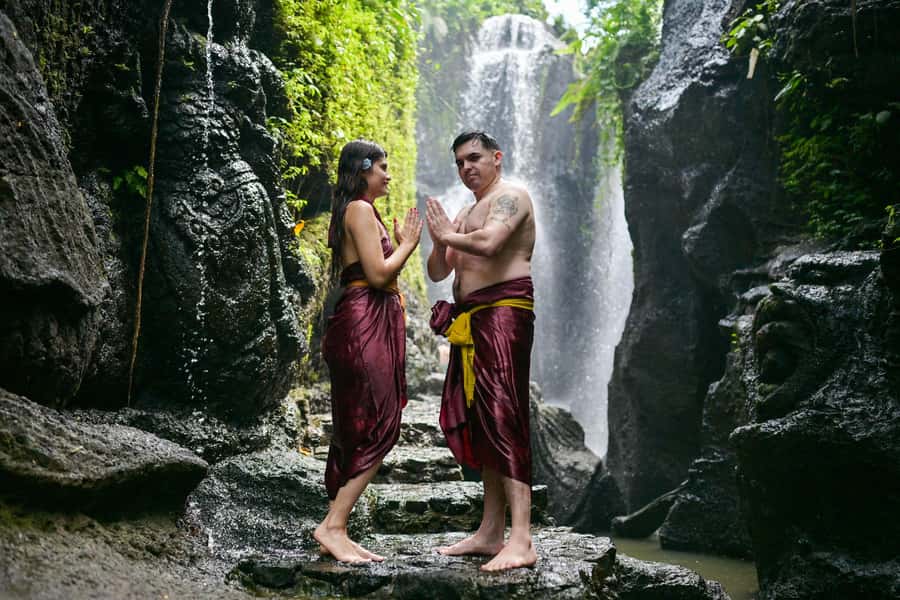
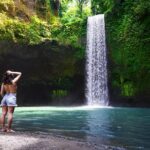
The waterfall environment is part of the magic. You’re in a temple site where the water sound and forest surroundings make it easier to slow down. People mention feeling calmer afterward—often described as lighter, grounded, and more powerful—not because the tour promises anything supernatural, but because the ritual has a real rhythm and intention.
That said, it can be busy. The program content notes that the site can have crowds, and the experience is organized to manage that. You can’t control crowd levels completely, but you can control your attitude. If you want a quieter feeling, picking an earlier starting time is a smart strategy—several people specifically praised the calmness of being early.


Jamu and small “after” touches that make the day feel complete
After the ritual, you don’t just leave damp and confused. You get a jamu herbal drink included in the experience. Jamu is common in Indonesia, and here it functions as a gentle finish—something warm/herbal after the cleansing that helps you come back to your body.
Some guides and drivers in the provided content also went beyond the basics with small extras, like fresh coconut water on the drive back. Those aren’t guaranteed for everyone, but it’s a good example of how the day often feels personalized beyond the checklist.
Photos without turning the ritual into a content shoot
Here’s the trick: you’ll probably want photos. It’s Bali, and the setting is gorgeous. But the rules matter. Flash photography is not allowed, and you’re there for the ritual, not for a lighting setup.
The good news is the experience offers optional photography add-ons—including a Polaroid photographer or a professional photography service. Many people praised guides for taking photos and videos discreetly while you focus on the steps. If you truly want to let the moment do its job, paying for photos can be worth it because it removes the temptation to constantly check your camera.
Price and value: is $29 a fair deal?
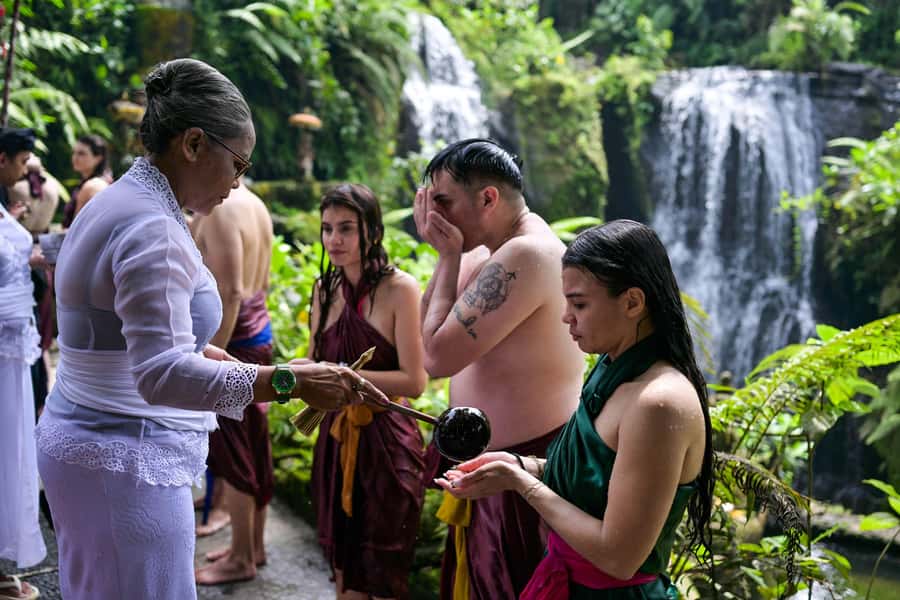
At about $29 per person, the price is competitive when you consider what’s included. You get the Melukat ritual itself, a local guide, holy water, admission fees, prayer equipment and offerings, a sarong, plus comfort items like a private locker with a key and a towel. Parking fees are included too, and the jamu herbal drink comes with the experience.
Some people also said it feels a bit more expensive than other Bali tours—but then followed with that quick reality check: this isn’t just a scenic visit. You’re paying for access, a guided purification process, and the cultural framework that makes the ritual understandable. If you want a meaningful Balinese spiritual custom, the value tends to show up fast.
Who should book this (and who should skip it)
This is best for you if you:
- want a structured ritual experience with clear guidance in English
- like learning the meaning behind customs, not just taking photos
- enjoy calm, reflective experiences with nature around you
It’s not for everyone. The program data says it’s not suitable for:
- pregnant women
- people with back problems
- people with mobility impairments
- people with heart problems
- wheelchair users
- people over 70 years
Also, the site has strict rules: people who are menstruating can’t enter. If any of these apply to you, skip this specific ritual and look for other Balinese cultural experiences that fit your needs.
What to bring and how to respect the site rules
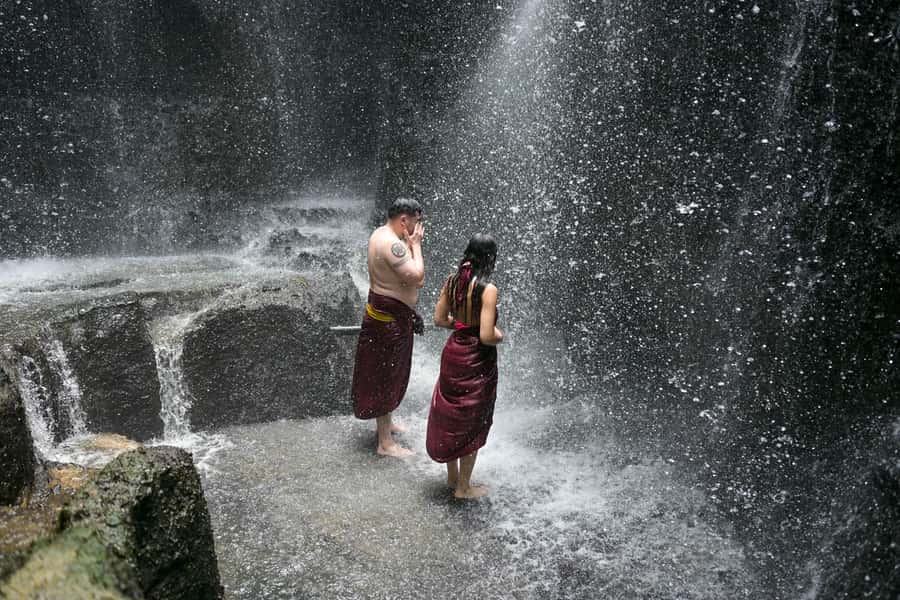
Bring swimwear (recommended under the provided sarong), a change of clothes, and a towel (though a towel is provided—having your own can still be handy if you prefer it). Comfortable clothes help for the walk and transition periods.
Respect rules on-site:
- no smoking
- no flash photography
- no alcohol and drugs
- no fireworks
- keep your behavior respectful: avoid loud noises and littering
Dress respectfully. If you feel unsure, just follow what the guide instructs. The ceremony works best when you treat it like a real sacred space.
Should you book the Melukat cleansing at Taman Beji Griya? My call
I’d book it if you want a Bali experience with both meaning and structure. The ritual isn’t vague, the support items are handled for you, and the guides—people like Bayu, Dodo, Nara, and others named in the content—are repeatedly described as explaining the steps clearly and guiding at a comfortable pace.
I’d think twice if you’re expecting a simple, self-guided waterfall visit. This is a ceremony. You follow the flow, you respect the rules, and you participate. And if you’re affected by the menstruation restriction or any of the “not suitable” health/mobility notes, this isn’t the right choice.
If you’re ready for a reset that’s more than a photo stop, this one earns its place.
FAQ
How long is the Taman Beji Griya Waterfall Melukat experience?
The duration is listed as 1 to 6 hours, depending on your selected start time and how the day runs.
Is hotel pickup available?
Yes, pickup and drop-off can be included if you choose the option. Pickup areas listed include Ubud, Uluwatu, Nusa Dua, Jimbaran, Kuta, Seminyak, Canggu, Sanur, Denpasar, Candidasa, and Kintamani.
Is the tour guide available in English?
Yes. The live tour guide is listed as English.
What should I bring?
Bring swimwear, a change of clothes, and comfortable clothes. A towel and sarong are provided, and the site has changing facilities and a private locker.
Can I drink the holy water?
No. The holy water is for ritual purposes only and is not recommended for drinking.
Can I cancel if my plans change?
Free cancellation is available up to 24 hours in advance for a full refund.
If you want, tell me your Bali base (Ubud vs Canggu vs Seminyak) and your ideal time of day, and I’ll help you decide which start slot usually fits best with a calm, respectful ceremony.