REVIEW · UBUD
Ubud: Cooking Class with Transfers and Optional Market Visit
Book on GetYourGuide →Operated by Ubud Costume Dress · Bookable on GetYourGuide
Spices have a way of telling stories. In Ubud, this short, small-group class pairs a market visit (on the morning option) with a hands-on cook session led by local hosts like Eri or Made, with plenty of time to ask questions. You’ll learn why dishes taste the way they do, not just how to copy the steps.
I love that you actually cook—chopping, mixing spices, and assembling dishes—so the meal at the end feels earned. I also like the culture layer, where your guide connects food to daily life, family, and Balinese beliefs, including small offering practices you may try during the session.
One thing to consider: if you’re staying outside Ubud Center (like the Sebali or Keliki areas), there’s an extra fee of 50,000 IDR per person, and the timing/logistics can differ for evening sessions.
In This Review
- Key things I’d watch for
- Ubud cooking class basics: short, hands-on, and good value
- Morning vs afternoon: choose the market stop on purpose
- Pickup, the meeting point, and why timing matters
- The Ubud market walk: learning ingredients, not just shopping
- Inside the cooking school: small group work and real tasks
- What you’ll cook: curries, satay, desserts, and the sauces that make it pop
- The cultural meaning: offerings, family practices, and why it all connects
- Eating together: buffet-style feast and recipe notes
- Dietary needs and allergies: they’ll work with you
- Price and logistics: why $21 can feel like a steal
- Who should book this (and who might not)
- Should you book this Ubud cooking class?
- FAQ
- How long is the cooking class in Ubud?
- Do I get a hotel pickup for this activity?
- Is the market visit included?
- Where is the meeting point?
- What is included in the price?
- Do they accommodate vegetarian or other dietary needs?
- How big is the group?
- Is the class taught in English?
- Is there an extra charge for some areas near Ubud?
Key things I’d watch for
- Small group size (up to 10): you get more hands-on time and less standing around
- Optional market stop (morning only): great if you want to understand ingredients before the stove
- Local chef-led cooking: guides like Eri and Made focus on practical technique and explanations
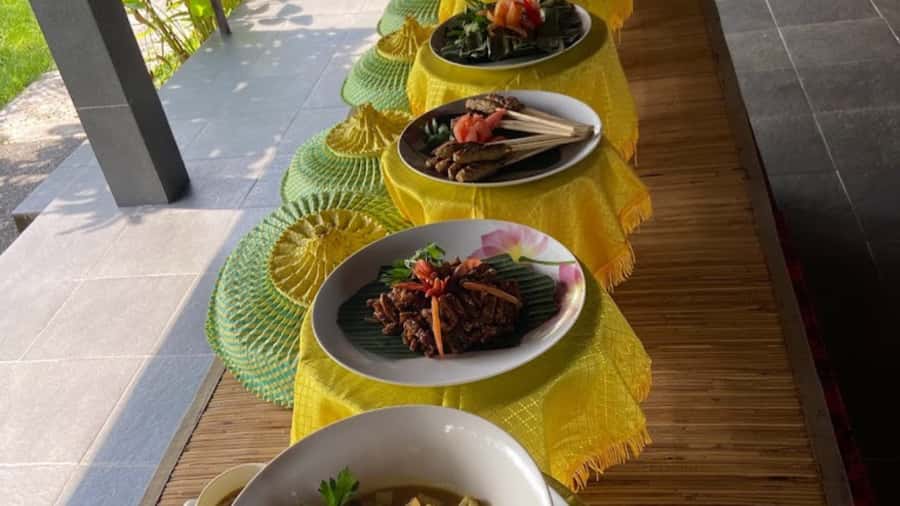
- Meal included: you sit down to eat what you helped make, often as a shared feast
- Dietary flexibility: the team accommodates vegetarian needs and other dietary requests
- Certificate and take-home notes: you leave with proof you cooked, plus recipe guidance
Ubud cooking class basics: short, hands-on, and good value
This is a 2–3 hour cooking class in Ubud that’s built for people who want more than a quick demo. For about $21 per person, you’re getting a guide in English, hotel pickup/drop-off at Ubud Center on the morning or afternoon options, plus a full meal.
That price feels especially fair because the class includes both the cooking and the eating. Many cooking experiences in Bali are longer, but not always more meaningful. Here, the goal is direct practice: you learn technique, make dishes, and then you eat them while it’s still fresh.
Also, the group stays small—max 10 participants. In other words, you’re not stuck waiting your turn for a knife or a ladle.
You can also read our reviews of more tours and experiences in Ubud.



Morning vs afternoon: choose the market stop on purpose
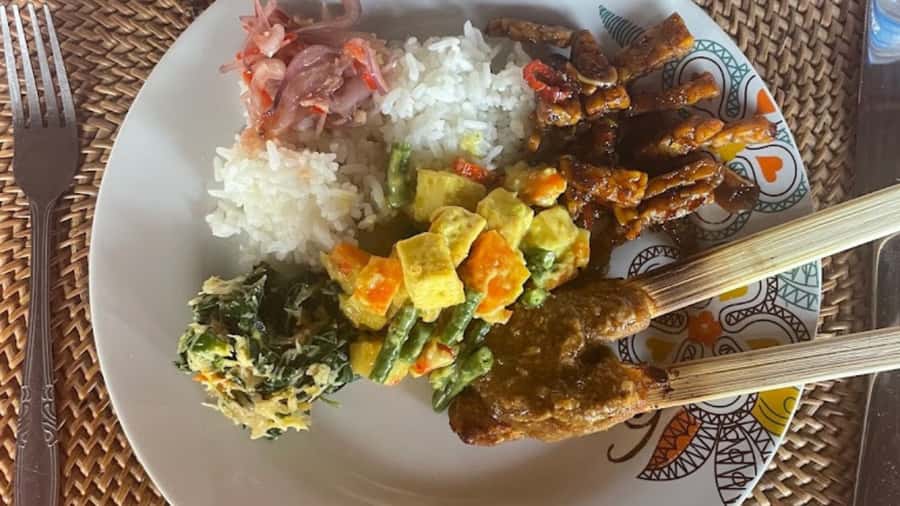
You have two main ways to structure your day, and it affects what you’ll learn first.
Morning option (market + cooking): you start with hotel pickup (for Ubud Center), then head into Ubud’s food market where you’ll see produce, herbs, fruits, and spices. A guide walks you through what’s for sale and what’s important, including how ingredients show up in Balinese cooking.
Afternoon option (cooking focus): you skip the market portion and go straight to selecting and working with ingredients through the cooking class flow.
If you’re the type who likes to understand food before you cook it, pick morning. If you’re tight on time, afternoon still gives you the core experience: cooking, explanations, and the meal.
Pickup, the meeting point, and why timing matters
If you select the morning or afternoon option, hotel pickup and drop-off at Ubud Center are included. If you’re not being picked up, you’re told to wait in your hotel lobby for pickup.
There’s also a specific note about the meeting point being in the Parking Field, and that it’s linked to traffic conditions at night. So if you’re doing an evening schedule, don’t assume your driver will meet you at the exact place you’d expect in the center of town. Confirm where you should go when you book, and give yourself a little buffer time.
One more logistics note that matters: if your accommodation is in the Sebali or Keliki area, there’s an extra 50,000 IDR per person charge. If you’re comparing options, factor that in early so there are no surprises.
The Ubud market walk: learning ingredients, not just shopping
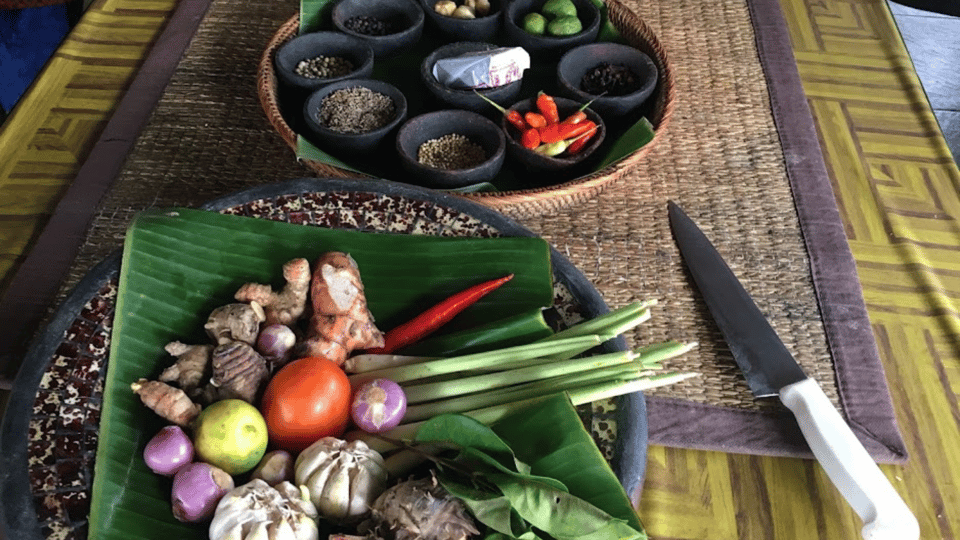
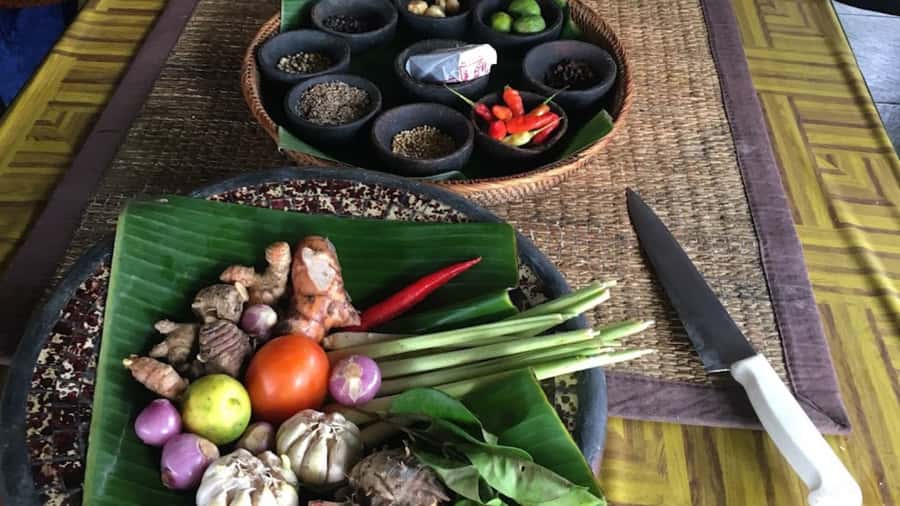
On the morning version, the market visit is not a random wander. The guide helps you connect what you see to what you’ll cook later.
You’ll be shown common ingredients used in Balinese flavors—spices, herbs, produce, and other staples—then you’ll move from just looking to understanding. This matters because Balinese cooking is very ingredient-driven. When you can name what something is (and why it’s used), you’ll remember the recipe back home instead of just remembering the taste.
A practical tip: go a bit hungry. The market makes you curious, but you’ll still cook and then eat later.
Inside the cooking school: small group work and real tasks
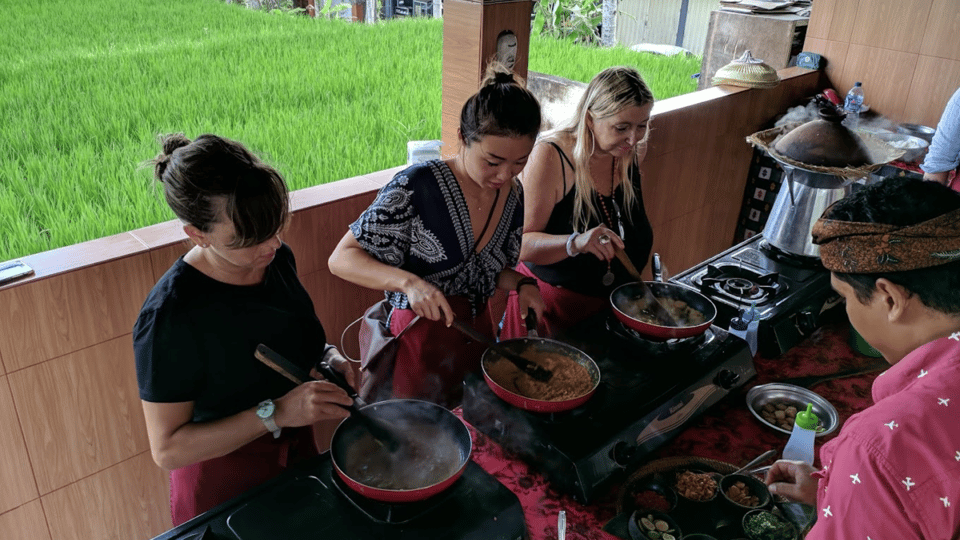
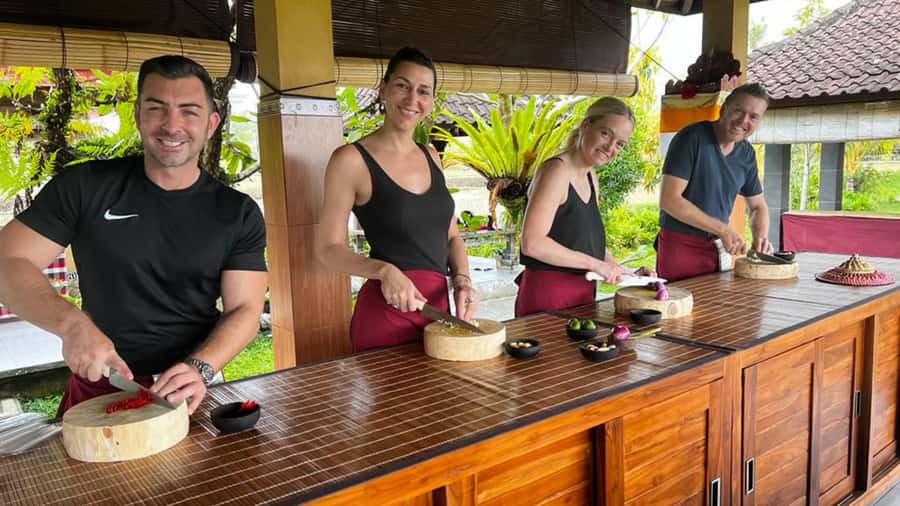
After the ingredient stage, you head to the cooking location, described as an outdoor, lush setting (think gardens and open air). You’ll be welcomed by local chefs who explain the methods and then assign tasks.
In a small group, you’re not watching from the sidelines. People report that it becomes a team setup, where you do hands-on steps like chopping, mixing, grinding, assembling, and cooking. It’s also common to see multiple helpers working alongside the chef so the flow stays organized.
Your guide’s English is a key part of the value here, because the instruction isn’t only about what to do. You’ll hear why you’re doing it—what the dish is aiming for, and how Balinese cuisine builds layered flavor.
And yes, you should expect the class to feel structured rather than chaotic. Many participants emphasize that everything stays on time and that the kitchen setup is clean.






What you’ll cook: curries, satay, desserts, and the sauces that make it pop
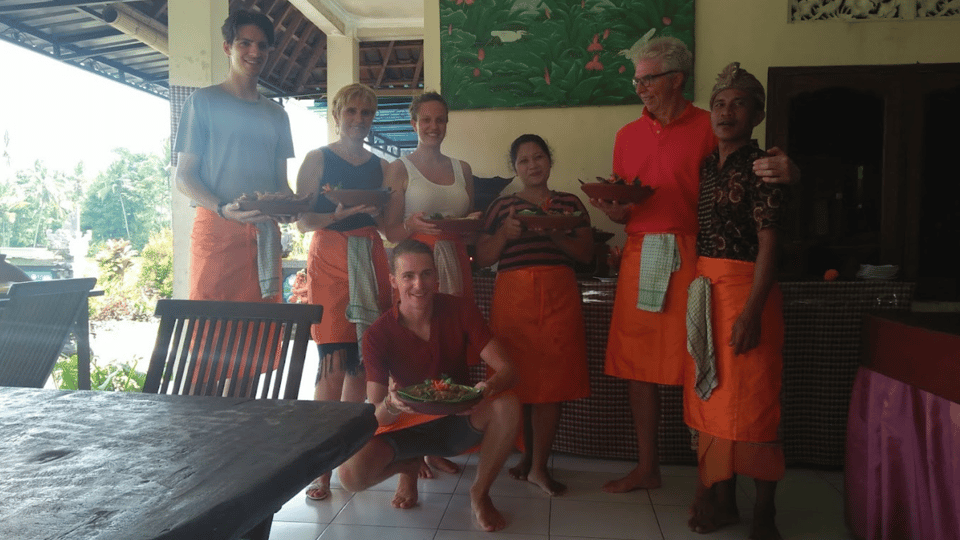
The class centers on classic Balinese dishes, with a focus on both savory and sweet.
Fragrant curries: you’ll learn to work with spice blends and how to build the right balance. Even if you don’t cook at home often, this is one of the easiest ways to take home real technique, because curry bases often translate into everyday cooking.
Savory satays: you’ll practice portioning and flavoring, and you’ll learn how Balinese-style satay is built around seasoning and grilling-friendly preparation.
Desserts: the sweet part is included, and many people mention dessert as a standout. If you’re worried you’ll spend the whole class on savory food, don’t. There’s time and focus for the final sweet hits.
Beyond the headline dishes, you may also hear about or make items like sambal-style sauces and other accompaniments. In past sessions, people also mention pancakes and tempeh-based options. The exact set can vary, but the structure stays similar: you cook multiple dishes, then you sit down to eat them as a shared meal.
The cultural meaning: offerings, family practices, and why it all connects
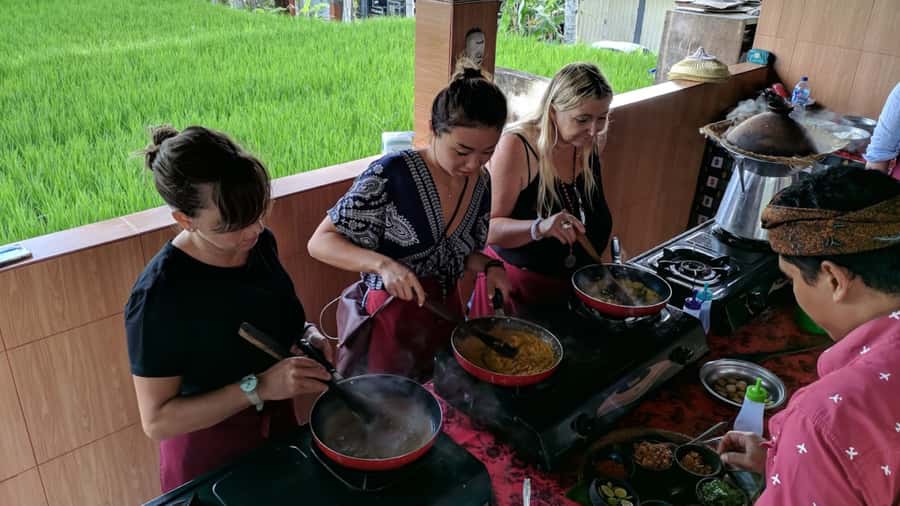
One of the most praised parts is how the guide frames food inside Balinese life.
You can expect explanations that connect cuisine to religion and daily routines—often including talk about family, architecture, and how beliefs show up in everyday practices. Some sessions also include making a small Hindu offering, like a canang, and you may learn the significance behind it.
If you’re into cultural context, this is the part that makes the class more than a cookbook workshop. Food in Bali isn’t treated as just flavor; it’s treated as a practice with meaning.
Also, this cultural focus helps you cook better. When you understand the goal—what the dish should feel like, smell like, or symbolize—you cook with more intention, not just following steps.
Eating together: buffet-style feast and recipe notes
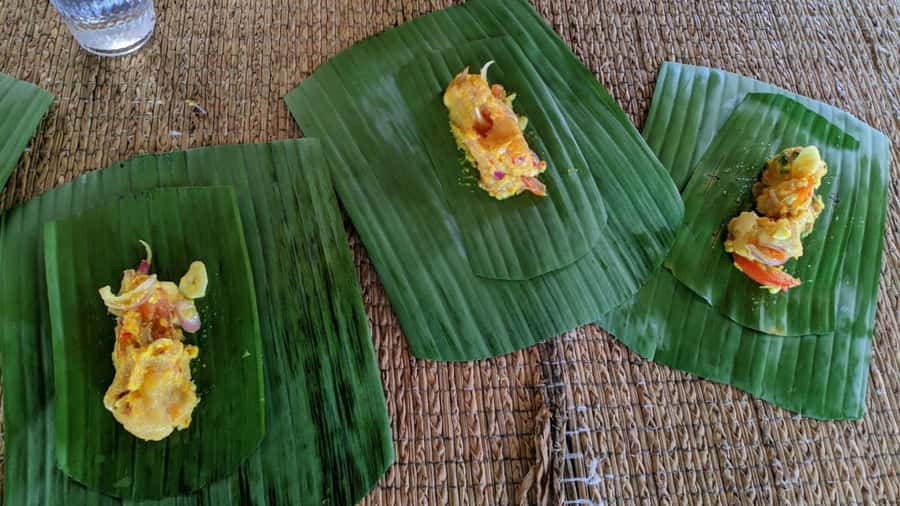
After cooking, you’ll gather around the table and eat the meal you made.
People often describe the end result as substantial, sometimes with around 10 dishes or a buffet-style spread. That means you’re not leaving after one plate. You get to compare flavors, sauces, and textures across what you cooked.
There’s also a wrap-up element: you receive a certificate of completion, and many participants mention getting recipe guidance to take home. If you want to recreate the food later, this part matters. Recipes are only helpful if they reflect what you actually cooked here.
Dietary needs and allergies: they’ll work with you
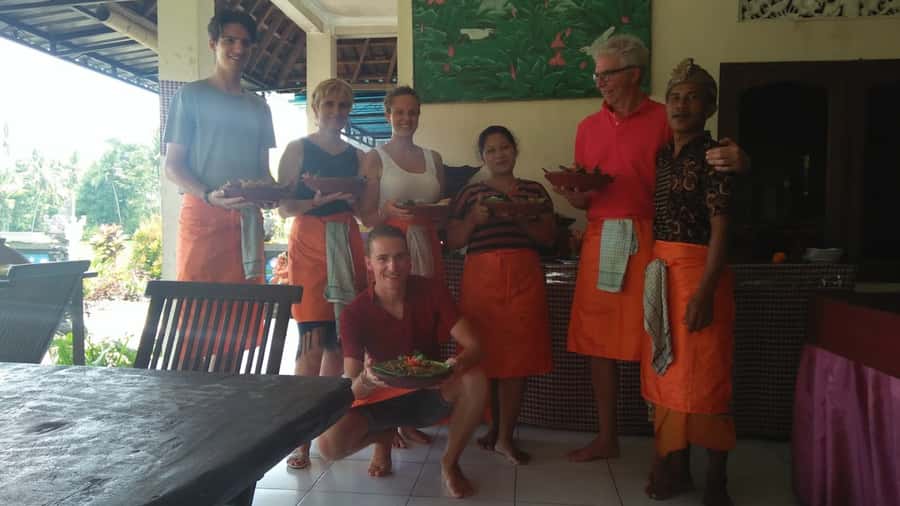
This is worth calling out because not every cooking class handles dietary needs well.
The class is reported to offer vegetarian alternatives, and it can also accommodate other requests. People mention examples like avoiding fish or adjusting ingredients. There are also mentions of allergy-aware options, and even alternatives such as using rice flour for certain items.
So if you have restrictions, this is a good type of class to contact directly when you book. Send your needs clearly, and ask what substitutions they can handle.
Price and logistics: why $21 can feel like a steal
For $21, you’re getting a lot bundled together: guide in English, ingredient orientation (on morning tours), cooking instruction, a meal, and transfers within Ubud Center.
Here’s the value logic I’d use when deciding:
- If you’d otherwise pay for a market tour plus a separate cooking lesson, the combined format saves time and money.
- A small-group setup means your instruction time is more “direct.” You’re not just standing near the back.
- The meal is included, so you’re not doing the awkward part where you cook and then eat later at your own cost.
The only real “watch-out” on value is location. If you need pickup/drop-off outside Ubud Center and you’re in Sebali or Keliki, the extra 50,000 IDR per person can change the math. Still often worth it, but check first.
Who should book this (and who might not)
This class is a strong match if you:
- want a short Bali activity that’s genuinely hands-on
- like learning about ingredients, spices, and how dishes are built
- want cultural context without sitting through a museum talk
- are okay cooking in a group and sharing the meal
It might be less ideal if you:
- only want a quick tasting, with no interest in cooking tasks
- hate markets or ingredient shopping (afternoon option helps)
- need very specific dietary guarantees that aren’t mentioned in your booking questions
Also, if you’re traveling with teens or family, it can work well because the class assigns tasks and keeps people active.
Should you book this Ubud cooking class?
I think it’s a smart booking for most first-time Bali food lovers. The main reason is simple: you get a complete arc in a few hours—ingredients, cooking technique, cultural meaning, then a meal you helped create. That’s the kind of souvenir you can taste.
Book morning if you want the market context. Book afternoon if you want to keep it lighter and still get the cooking and meal. If you’re in Sebali or Keliki, do the math with the extra 50,000 IDR fee.
If you’re excited to cook (even if you’re a beginner), you’re exactly the person this class was made for.
FAQ
How long is the cooking class in Ubud?
The duration is listed as 2–3 hours, depending on the starting time and option you choose.
Do I get a hotel pickup for this activity?
Hotel pickup and drop-off at Ubud Center are included for the morning or afternoon options. Pickup is optional, and you’re advised to wait in your hotel lobby if pickup is selected.
Is the market visit included?
Yes, the market tour is included on the morning option only. If you choose another option, the market stop is not included.
Where is the meeting point?
The meeting point is in the Parking Field, with a note that it’s due to traffic conditions at night.
What is included in the price?
Included items are hotel pickup/drop-off at Ubud Center (for morning/afternoon options), market tour (morning only), the cooking class, a guide, and the meal.
Do they accommodate vegetarian or other dietary needs?
Yes. Reviews indicate they can provide vegetarian alternatives and options for dietary requests (including examples like avoiding fish) and can handle allergies with substitutions such as different ingredients.
How big is the group?
The class is a small group, limited to 10 participants.
Is the class taught in English?
Yes. The live tour guide provides English, and an English audio guide is also included.
Is there an extra charge for some areas near Ubud?
Yes. If you’re in the Sebali or Keliki area, there is an extra charge of 50,000 IDR per person.