REVIEW · HIROSHIMA
Hiroshima: Hiroshima and Miyajima UNESCO Sites 1-Day Tour
Book on GetYourGuide →Operated by Japan Panoramic Tours · Bookable on GetYourGuide
One day. Two worlds of memory and water. This Hiroshima and Miyajima UNESCO Sites tour strings together the city’s most important Peace Memorial stops and the iconic island scenery of Miyajima, all in one efficient day with an English-speaking guide, bus audio, and ferry transport.
I like the balance: the tour gives you serious time at the Peace Memorial sites, then switches gears to the calm, photogenic beauty of Miyajima. I also like the support built in for non-Japanese speakers, including an English guide plus a multilingual audio option on the bus.
One consideration: if you want lots of extra sightseeing across Hiroshima city beyond the UNESCO focus, the schedule keeps it tight, with major time spent on the Memorial area first and Miyajima second.
In This Review
- Key things to know before you go
- Starting at Hiroshima Station: easy meeting, comfortable coach, quick orientation
- Atomic Bomb Dome and Peace Memorial Park: why the first half hits hard
- Peace Memorial Museum with free time: how to use that hour well
- Ferry to Miyajima: the reset you didn’t know you needed
- Hiroshima-style okonomiyaki lunch: what’s included, and what to request
- Itsukushima Shrine: the torii gate you came for
- Daishoin Temple on Mount Misen and Omotesando Street: reflection plus snacks
- Price and logistics: value for $122 and how the day is paced
- Should you book this Hiroshima and Miyajima UNESCO 1-day tour?
- FAQ
- Where is the meeting point for the tour?
- How long is the tour?
- Is lunch included?
- Is vegetarian okonomiyaki available?
- Are there dietary options for vegan, gluten-free, halal, or similar needs?
- What’s included in the entrance fees?
- Is there an audio guide?
- Will the Peace Memorial Museum be visited on every date?
- Is hotel pickup included?
Key things to know before you go
- English-speaking guidance plus multilingual bus audio (Spanish, French, Italian, German, Portuguese, Ukrainian)
- Atomic Bomb Dome and Peace Memorial Park in one guided block
- A free, self-paced hour at the Peace Memorial Museum
- Round-trip ferry to Miyajima with Seto Inland Sea views
- Hiroshima-style okonomiyaki lunch option (vegetarian available; no vegan, halal, or gluten-free)
- Itsukushima Shrine and Daishoin Temple plus free time at Omotesando Street
Starting at Hiroshima Station: easy meeting, comfortable coach, quick orientation
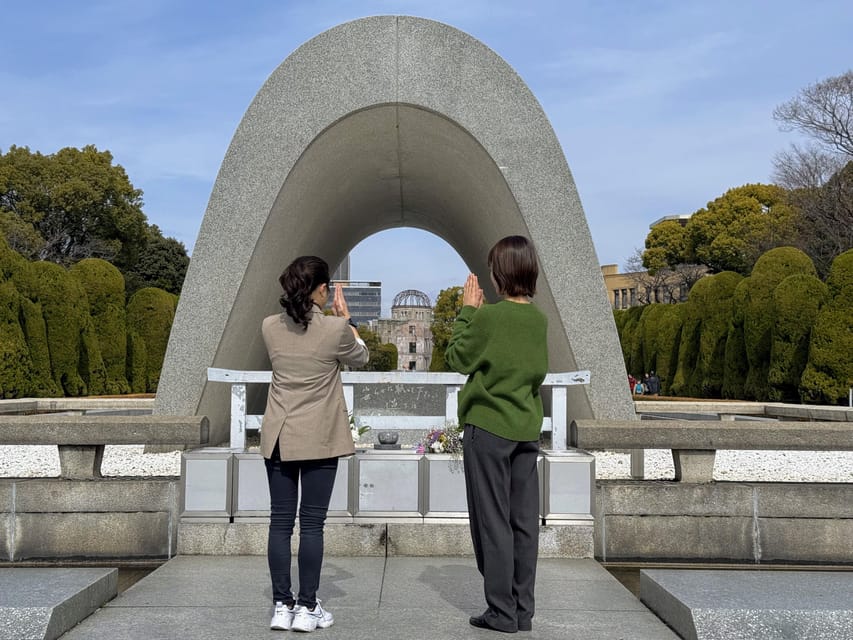
The day starts at Hiroshima Station, right by the Shinkansen Ticket Gate on 2F (North Gate). You’re looking for a staff member holding a green and white flag. This matters because Hiroshima Station is big, and you don’t want your first 10 minutes to be a scavenger hunt.
Once you’re on the bus, the setup is straightforward: air-conditioned coach, and free Wi-Fi onboard. There’s also a multilingual audio guide system on the bus (Spanish, French, Italian, German, Portuguese, and Ukrainian). The guide is live in English, and Japanese is also listed as part of the tour team, so you’re covered if you’re switching between languages during the day.
Early on, you’ll get a quick orientation as you head out. You’ll also pass by Hiroshima Castle (more of a photo-and-window moment than a deep visit). That’s your first hint that the tour is built for efficiency: major landmarks, then moving on.
This is a good format if you’re coming from elsewhere in Japan or you’re short on time. You’ll be able to say you did the big UNESCO anchors without needing to research transport, ticket timing, and routing on your own.
You can also read our reviews of more tours and experiences in Hiroshima.
Atomic Bomb Dome and Peace Memorial Park: why the first half hits hard
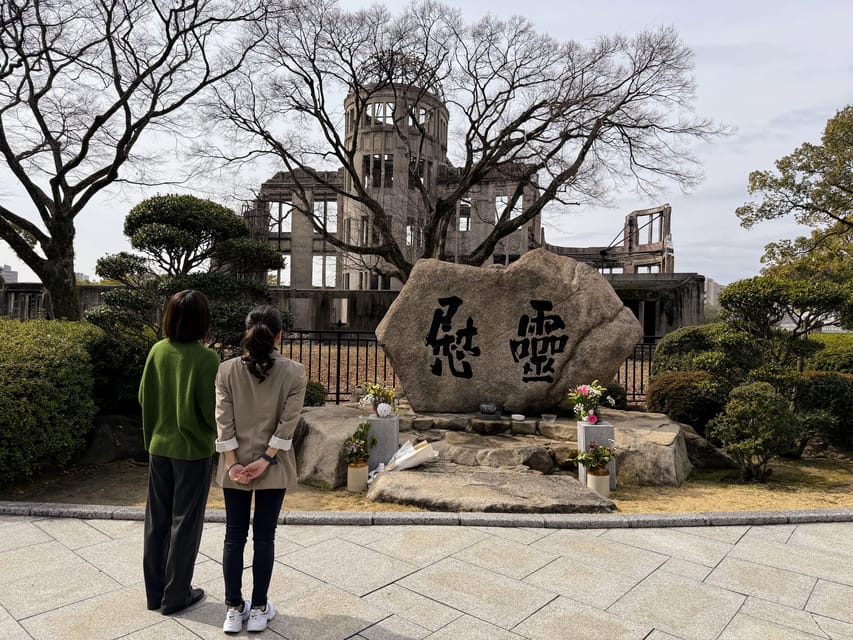
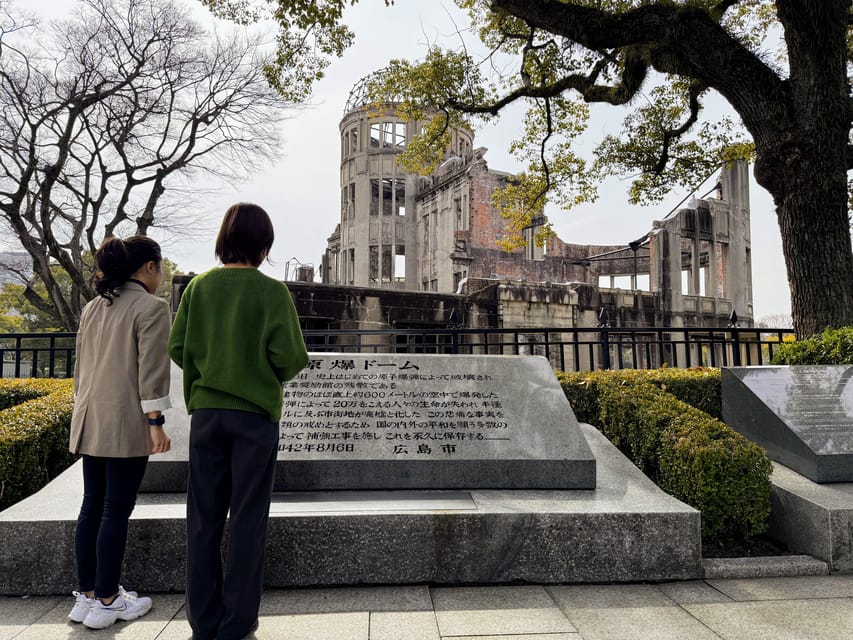
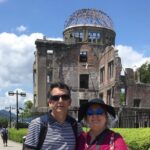
The tour’s emotional core comes early. You’ll stop at the Atomic Bomb Dome, and you’ll get a short guided explanation on site. This preserved structure is one of the most recognizable symbols linked to the atomic bombing, and the tour handles the visit as something you should understand, not just photograph.
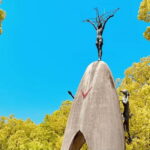
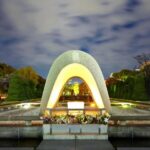
Right after, you’ll walk through Hiroshima Peace Memorial Park, with additional guided context. The park is where you’ll see memorials tied to victims and the message of peace, including the Cenotaph for the A-bomb Victims and the Children’s Peace Monument commemorating Sadako Sasaki. That name often comes up because it’s part of how the story reaches beyond dates and statistics and into human experience.
Here’s what I appreciate about this design: you don’t just rush past plaques. The visit is paced so the meaning has time to land. People often get tempted to speed through places like this. This tour doesn’t encourage that.
A small practical note: dress for walking. The park is outdoors, and you’ll want shoes that can handle a steady day of getting on and off transport, ferry steps, and temple paths later. Also, if you’re the type who needs silence to process, you’ll get it in the flows between guided segments.
Peace Memorial Museum with free time: how to use that hour well
After the park, you’ll have free time at the Hiroshima Peace Memorial Museum (the tour includes entry). The structure here is smart: you get guided context first, then you’re allowed to wander and choose what sticks.
Use the free hour like this:
- Start with the big exhibits first, so you understand the timeline.
- Then slow down on the sections that connect to what you just learned in the park.
- Don’t over-plan. Let one or two displays pull you in.
If you want extra layers, some people mention an optional paid audio guide at the museum for additional context. You might see that during the visit, and it can be a helpful add-on if you like hearing stories explained step-by-step.
Timing-wise, you should expect this portion to feel intense. The tour is designed so you’re not left alone in confusion. The earlier guided stops mean you’ll have a framework when you enter the museum.
One important heads-up for 2026: from February 16 to 21, the Hiroshima Peace Memorial Museum will be closed for exhibit replacement. During that window, the tour visits an alternative site, the Hiroshima National Peace Memorial Hall for the Atomic Bomb Victims, and the rest of the day continues as scheduled. No refunds are issued due to this change, so if your trip lands in those dates, it’s worth mentally preparing for a swap in that museum time.
Ferry to Miyajima: the reset you didn’t know you needed
Then comes the turn in mood. After the museum, the tour boards a ferry to Miyajima. The ferry ride is short, but it’s a real breather: Seto Inland Sea views, calm water, and surrounding islands that look like postcard material from almost any seat.
This part works because it’s not just transportation. It’s a transition. You go from heavy memorial themes to open sky, ocean light, and the sense that the rest of the day will be about beauty, ritual, and place.
If you’re sensitive to motion, choose your seat early and keep an eye on the weather. Nothing here is listed as a special requirement, but ferries are ferries.
And once you arrive, you’re on an island where walking dominates. It’s a good time to take care of restroom breaks and hydration before you step into shrine areas and temple grounds.
Hiroshima-style okonomiyaki lunch: what’s included, and what to request
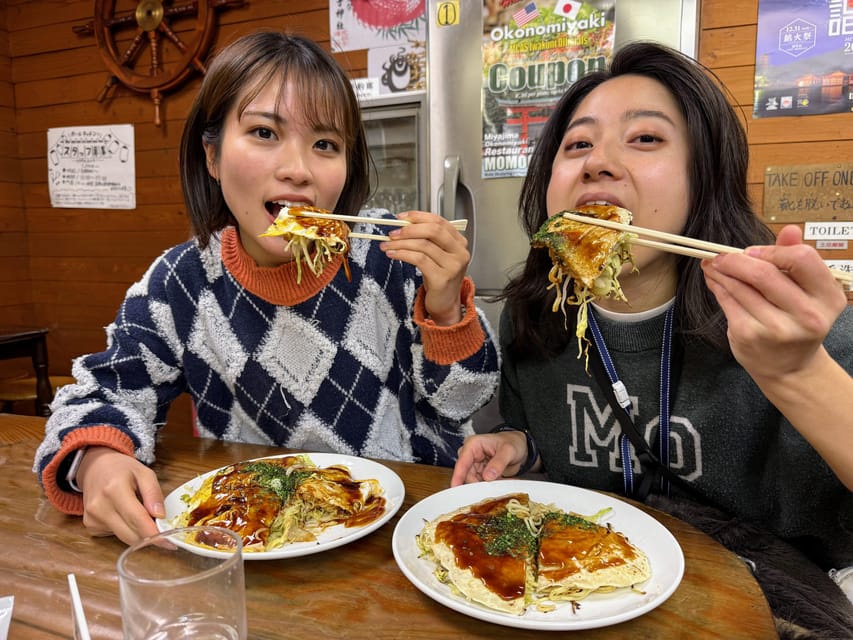
Lunch is one of the best practical perks of this tour. If you select the lunch option, you’ll eat Hiroshima-style okonomiyaki on Miyajima. This isn’t the same as Osaka-style. The Hiroshima version is known for being made with layers—think cabbage, pork, noodles, and egg—so every bite has structure.
The tour also includes vegetarian okonomiyaki on request, but you need to handle it ahead of time. Vegetarian options are available if you inform the provider at least 2 days before the tour.
Here’s the caution: no vegan, no halal, no gluten-free options are available for the lunch. There is a No lunch option, which is the right choice if your dietary needs don’t fit what’s offered.
I like that the tour doesn’t pretend dietary restrictions are easy. The clean way to manage it is to book the correct lunch choice now, then you won’t have to gamble at the last second on the island.
Itsukushima Shrine: the torii gate you came for
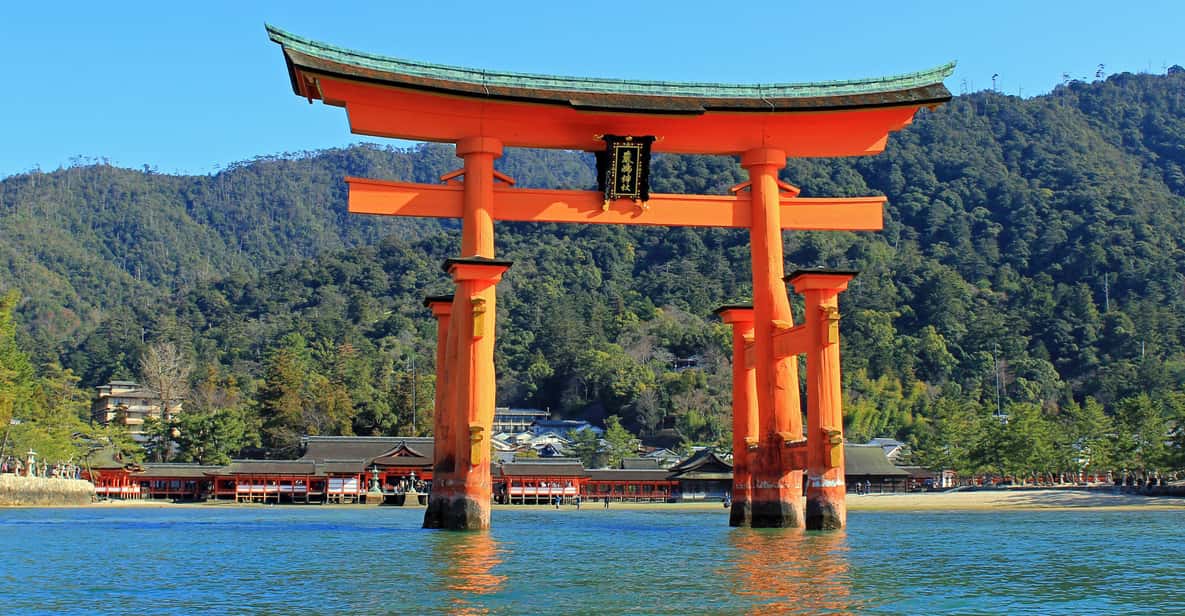
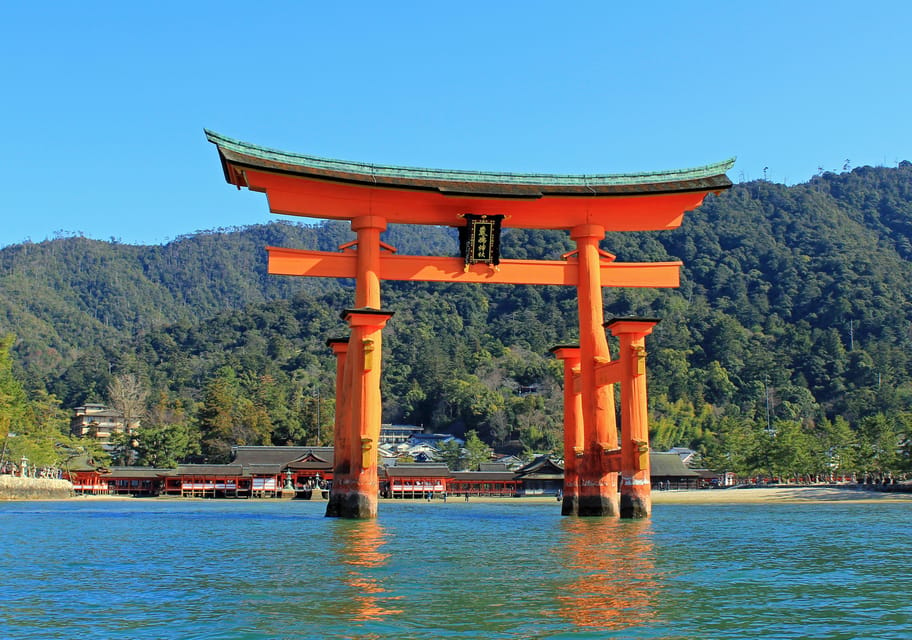
After lunch, the tour visits Itsukushima Shrine, one of Japan’s most famous Shinto shrines and a UNESCO World Heritage Site. The big visual is the so-called floating torii gate, which looks like it rises from the sea at high tide.
The tour gives you a guided look first, then free time so you can see it from different angles. That matters because the shrine’s atmosphere changes with light and tide. Even if you don’t catch the exact perfect moment you pictured, you’ll still get the sense of what makes this place famous.
Plan your priorities on the fly:
- Take your photos early, then slow down.
- If you enjoy details, watch for the way structures relate to the shoreline and the waterline.
- Leave time for small moments. This shrine is more about calm observation than big sightseeing checklists.
This is also where you’ll likely notice why this island is so popular. It’s scenic, spiritual, and extremely photogenic. That’s not a bad thing. Just know it’s part of the experience.
Daishoin Temple on Mount Misen and Omotesando Street: reflection plus snacks
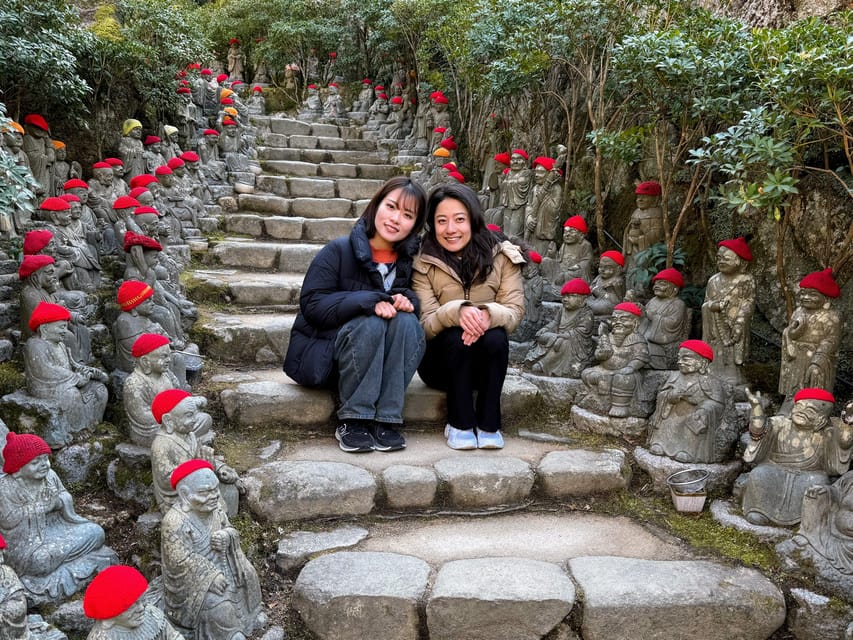
Next up is Daishoin Temple, located on Mount Misen. This is a Buddhist temple stop with a quieter feel than the shrine areas. The tour mentions it’s known for beautiful gardens and numerous stone statues, plus a chance to breathe and reset.
You’ll also get views back toward Miyajima and the Seto Inland Sea from this higher point. That’s one of the reasons this stop is more than a box on a schedule: you get a perspective that shrine-level walking can’t provide.
Afterward, you’ll have free time at Omotesando Street, the island’s main shopping lane. This is where you can snack, browse, and pick up small Miyajima-style souvenirs. The tour’s timing is built so you can fit shopping without losing the rest of your day.
If you like gifts that don’t feel mass-produced, look for locally themed items like hand-painted fans and maple-related crafts. Even if you only plan to buy one thing, this is a good place to get a memorable souvenir without feeling rushed.
Price and logistics: value for $122 and how the day is paced
At $122 per person for about 8 hours, this tour is priced like a full-service day trip. You’re paying for more than entry tickets. You’re paying for:
- an English-speaking live guide
- multilingual bus audio and free Wi-Fi
- air-conditioned coach
- round-trip ferry to Miyajima
- entrance fees for key sites
- lunch only if you select the lunch option
If you tried to recreate this on your own, the tricky parts would be timing and routing: getting from the Peace Memorial area to the ferry, matching ferries, and lining up shrine and temple visits in a workable order. This tour handles the logistics, so you can focus on the experience.
Is it perfect value? For many people, yes, because the day combines two UNESCO anchors and multiple transport segments. But here’s the honest tradeoff: the itinerary is packed, and it’s heavily focused on the major sites. If you want extra time for Hiroshima city neighborhoods, you may find the schedule leaves you wanting more. One visitor note also flags that Miyajima can feel touristy, and that’s easy to believe on an island this famous.
Still, the overall pacing is designed to avoid the worst kind of crowd frustration: you’re moved along at intervals, not stuck in one place for hours.
Two quick logistics you should know:
- There’s no hotel pickup or drop-off, so you need to be at the station meeting point.
- The tour is listed as not suitable for wheelchair users, so plan accordingly if mobility is an issue.
Should you book this Hiroshima and Miyajima UNESCO 1-day tour?
Book it if you want a guided, efficient UNESCO day that covers the big emotional anchor in Hiroshima and the visual wow factor of Miyajima, without you juggling transport and tickets. It’s especially worth it when you care about getting context at the memorial sites rather than just walking through on your own.
I’d hold off or plan differently if you have lots of extra days in Hiroshima and you’re hoping for a deeper neighborhood-style city exploration, because this schedule puts most of its weight on the UNESCO sites rather than general sightseeing.
If you’re choosing between DIY and guided, I’d pick guided for first-timers. The setup is designed to make a hard day more understandable, then reward you with a beautiful island reset. And based on guide names showing up again and again in the feedback—Marin, Tomo, Rino, Mo, and Momiji—it’s clear the tour teams tend to work hard at making the pacing smooth and the explanations careful.
FAQ
Where is the meeting point for the tour?
Meet in front of the Shinkansen Ticket Gate on 2F of Hiroshima Station (North Gate), address 2-1185 Matsubarachō, Minami-ku, Hiroshima, 732-0822, Japan. Look for a staff member holding a green and white flag.
How long is the tour?
The tour duration is listed as 8 hours.
Is lunch included?
Lunch is included only if you select the lunch option. There is also a No lunch option.
Is vegetarian okonomiyaki available?
Yes. Vegetarian okonomiyaki is available if you request it when booking. The information says you should inform the tour provider at least 2 days before the tour.
Are there dietary options for vegan, gluten-free, halal, or similar needs?
No. The available information says there are no vegan, halal, or gluten-free lunch options. If you need one of those, choose the No lunch option.
What’s included in the entrance fees?
Entrance fees for the Atomic Museum and for Miyajima are included.
Is there an audio guide?
Yes. A multilingual audio guide is included on the bus in Spanish, French, Italian, German, Portuguese, and Ukrainian.
Will the Peace Memorial Museum be visited on every date?
For February 16 to 21, 2026, the Hiroshima Peace Memorial Museum will be closed. During that period, the tour will visit the Hiroshima National Peace Memorial Hall for the Atomic Bomb Victims instead.
Is hotel pickup included?
No. Hotel pickup and drop-off are not included. You start at Hiroshima Station.