REVIEW · HIROSHIMA
Hiroshima in a Nutshell: Morning Bike Adventure
Book on Viator →Operated by In Kansai Experiences · Bookable on Viator
Morning bikes make Hiroshima click fast. This 3 to 4 hour ride links the city’s most important sites with an easygoing pace and an English-speaking guide, with bike rental and a helmet handled for you. You’ll start near Cycle Hiroshima and end back at the same spot, already feeling like you know where things are.
I love the time-saver here: by bike you cover multiple highlights that are spread out, and you can also slip onto streets that don’t feel like a big bus route. I also love how the tour pairs movement with meaning—starting in the quiet Peace Memorial Park, then moving on to the Atomic Bomb Dome and the city’s rebuilt landmarks.
One consideration: it’s weather dependent, so if it’s canceled for poor conditions you’ll need to pick a new date or get a full refund. And because the focus is key landmarks, it won’t replace a long, slow day at the Peace Memorial Museum area.
In This Review
- Key points before you book
- Morning Bike Adventure in Hiroshima: why it works so well
- Where you meet and how the ride starts (Cycle Hiroshima basics)
- Stop 1: Hiroshima Peace Memorial Park begins with quiet context
- A small watch-out at this stop
- Stop 2: Atomic Bomb Dome for photos and reflection (no rushing)
- Why that time box works
- Stop 3: Hiroshima Castle close-up ride—gardens, history, and best angles
- Photo tip (the bike advantage)
- Stop 4: Shukkei-en Garden—designed nature with admission included
- What to expect
- The route logic: why the day feels balanced (and what it doesn’t cover)
- Biking in Hiroshima: pace, terrain, and the e-bike question
- Electric bike upgrade (possible extra cost)
- Price and value: what you’re really paying for
- Guides and group feel: what you can expect from the experience
- Who should book this Hiroshima morning ride
- Who might not love it as much
- Quick practical tips for a smooth day
- Should you book this Hiroshima bike tour?
- FAQ
- How long is the Hiroshima morning bike tour?
- Where do I meet the tour?
- What are the main stops on the tour?
- What’s included in the price?
- Are entrance fees included?
- Do I need to bring my own bike?
- Is the tour suitable for kids?
- What happens if the weather is bad?
Key points before you book
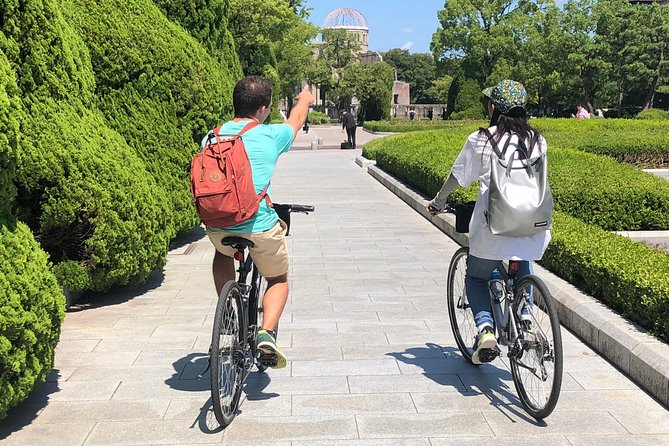
- Peace Memorial Park first: a calm opening with short commentary and old pictures before you move on
- Atomic Bomb Dome photo pause: quick stop, reflective mood, no scrambling
- Hiroshima Castle gardens + viewpoints: close-up time that’s hard to recreate on foot
- Shukkei-en Garden admission included: designed Japanese garden time without extra planning
- Small group limit (max 8): more attention, easier safety and bike checks
- Flat, doable riding: one rider clocked about 6.81 miles, with an e-bike upgrade option
Morning Bike Adventure in Hiroshima: why it works so well
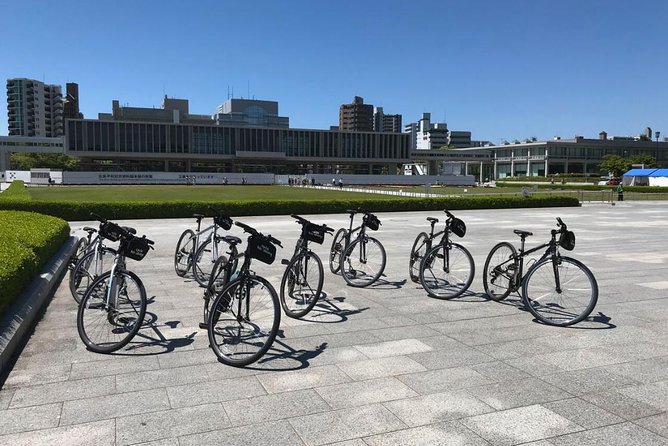
Hiroshima is a city where the top sights are both powerful and far enough apart that walking alone can feel slow. This morning bike tour is built for exactly that problem. You get a guided route that strings together four major stops in a way that feels efficient, not rushed. The start time—10:00 am—also helps. You’re not fighting the late-morning crowds, and the day still has room after the ride for extra exploring.
The other reason this format works: biking changes how you experience the city. You’re not just looking at monuments head-on from the sidewalk. You’re moving along the city streets, including areas that feel more local than a typical sightseeing loop. That movement helps you place each landmark in the real geography of Hiroshima.
You can also read our reviews of more tours and experiences in Hiroshima.
Where you meet and how the ride starts (Cycle Hiroshima basics)
You’ll meet at Cycle Hiroshima, 4-chōme-5-4 Ōtemachi, Naka Ward. This matters because it keeps the logistics clean: you don’t need hotel pickup, and you don’t need to figure out bike rental on your own. The tour ends back at the meeting point too, so you’re not left wondering how to get home.
Before rolling out, the tour includes a bike and helmet, plus bottled water. You should expect the guide to do basic setup and safety talk. In practice, that means things like bike fit (seat height adjustments) and clear signals for riding together. If you’re nervous about cycling in a new country, this is one of the best ways to make it feel manageable fast—someone else handles the start.
Group size is up to 8 travelers, which keeps the ride from turning into a “herd.” Smaller groups usually make it easier to stop and start on time, and it also helps the guide keep track of everyone—especially around the Peace Park area, where the mood matters.
Stop 1: Hiroshima Peace Memorial Park begins with quiet context
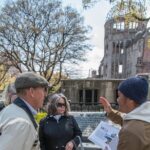
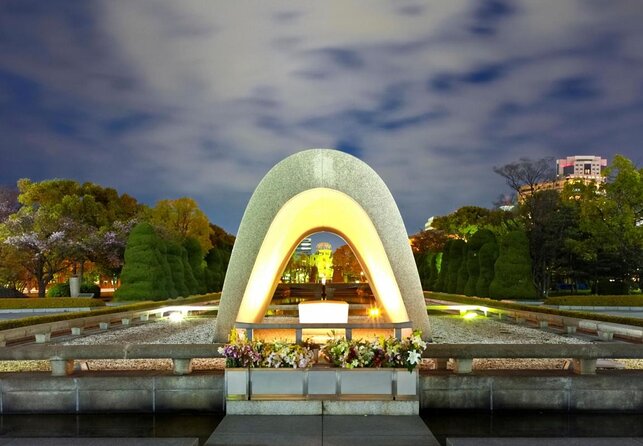
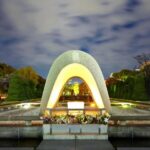
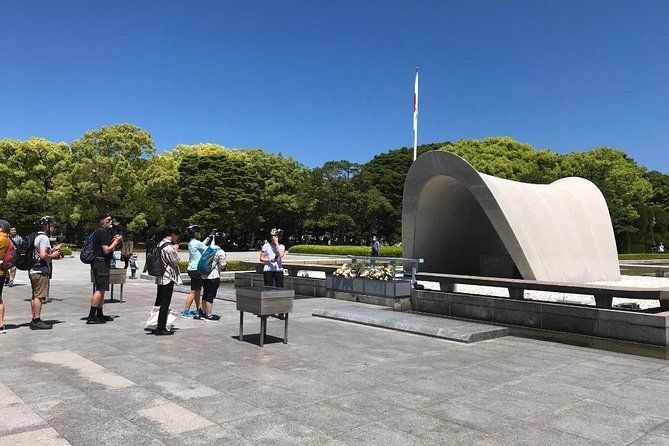
The tour starts at Hiroshima Peace Memorial Park, and it starts it in the right emotional order. The ride into the park is a slow, quiet warm-up rather than a sprint to landmarks. You’re given time to pause and reflect, with short commentary and old pictures of the area before WWII.
Practically, this stop is about two things:
- You get oriented to what you’re seeing (and why it matters), before you move deeper into the story.
- You’re not forced to guess at what to look for when you arrive.
At about 20 minutes, it’s long enough to soak it in without dragging your day down. But it’s also short enough that you won’t feel trapped there if you want to continue on to the next sights.
A small watch-out at this stop
Peace Park can be emotionally heavy. If you prefer lighter city sightseeing first, you might feel the tone shift. But if your goal is a meaningful introduction—this start is the strongest part of the whole itinerary.
Stop 2: Atomic Bomb Dome for photos and reflection (no rushing)
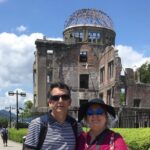
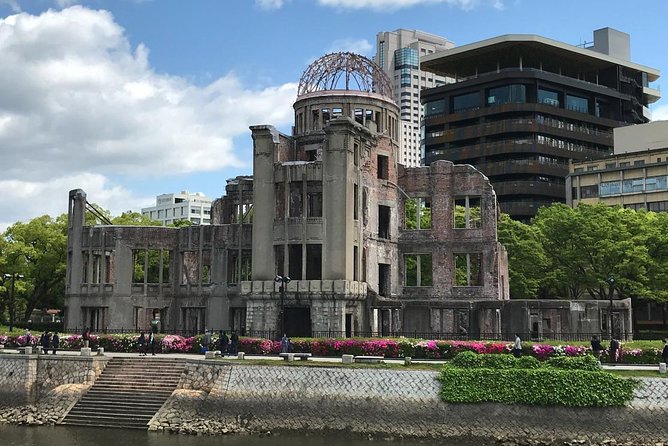
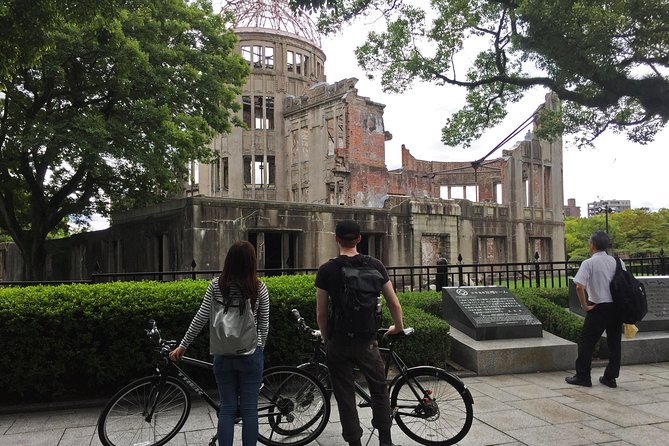
Next comes the Atomic Bomb Dome. This is the iconic building people recognize instantly. The tour gives you a focused 10 minutes here—enough for a few solid photos and for a reflective moment without turning the stop into a long detour.
This is a stop designed for “arrival satisfaction.” You see it, you take your pictures, and you still have energy to continue to Hiroshima Castle and Shukkei-en afterward.
Why that time box works
When you visit the Dome area on your own, you can spend too long hovering because it’s hard to decide what angle to take, or you bounce between spots looking for the perfect shot. With the guided time box, you get structure: see it, feel it, move on.
Stop 3: Hiroshima Castle close-up ride—gardens, history, and best angles
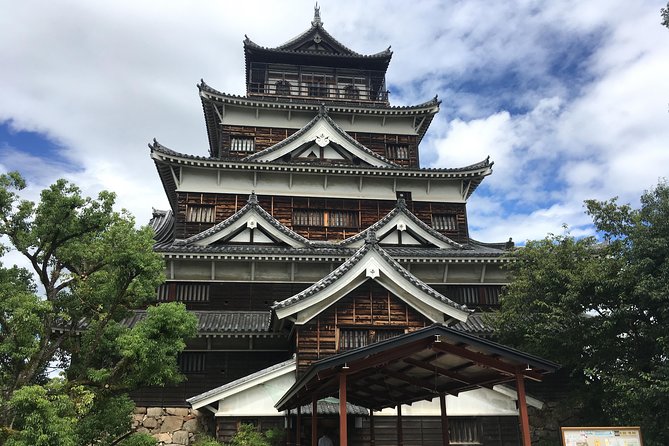
Then the tour shifts from solemn memory to a more outward, city-shaping landmark: Hiroshima Castle. You get about 25 minutes, which is a good amount of time for bikes because it lets you get close, move through landscaped gardens, and still stop for photos.
The guide also shares history tied to the castle, not just dates. The practical value is that you’ll walk away knowing what you’re looking at, and how it connects to Hiroshima’s identity beyond 1945.
Photo tip (the bike advantage)
At a place like the castle, photos can be tricky if you’re trying to do everything on foot. Biking keeps you moving, so you can find better vantage spots without turning it into a full day of walking. You also save time compared with bus-and-foot loops.
Also, because the terrain in this area is described as mostly flat in the ride experience, you shouldn’t feel like the “exercise” part overwhelms the sightseeing part.
Stop 4: Shukkei-en Garden—designed nature with admission included
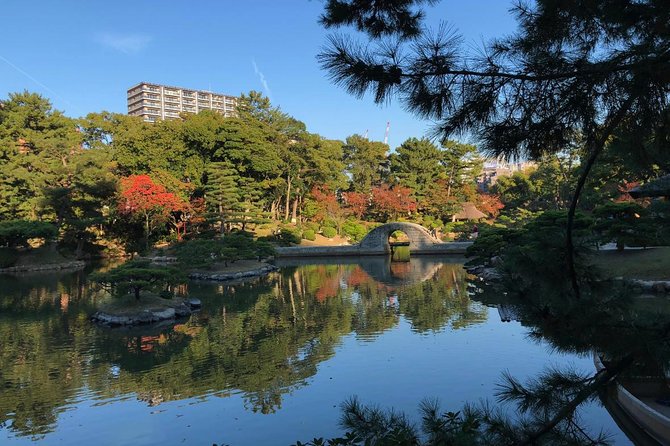
The final named stop is Shukkei-en Garden, with about 25 minutes and admission included. This part is a palate cleanser after the heavy emotional weight of the first two stops. It’s not just pretty scenery—it’s a chance to see how Japanese garden design balances walking, viewing, and seasonal structure.
This stop also works well because it gives you downtime. You can slow your pace, wander, and absorb without needing to check maps or transport options.
What to expect
You’ll learn about the construction and balance of Japanese gardens and get time to enjoy the greenery. For many first-time visitors, this is the moment the day feels complete: history, then city landmarks, then a calm place to reset.
The route logic: why the day feels balanced (and what it doesn’t cover)
This tour is built for a “best of Hiroshima” day. The stops are chosen because they map the city’s big story arcs:
- Peace Memorial Park sets the tone
- Atomic Bomb Dome anchors the global image of 1945
- Hiroshima Castle shows the city’s enduring presence and identity
- Shukkei-en adds calm and culture beyond tragedy
That structure is the real value. It keeps you from bouncing randomly between far-flung points.
What it does not do is replace longer independent time. If you want to deeply explore every exhibit inside a museum area, you’ll still need separate time on your own. The bike tour is more about efficient orientation and meaningfully touching the key landmarks, not reading every sign for hours.
Biking in Hiroshima: pace, terrain, and the e-bike question
The ride is generally described as steady and not rushed. One rider mapped the trip to about 6.81 miles over the course of the tour, which gives you a realistic sense of effort. It’s active enough to feel like you did something special, but not so intense that it feels like a workout punishment.
Terrain is often described as flat, which helps first-timers feel comfortable. That said, biking in any city can feel different on Day 1—so plan for that mental adjustment. Helmets are included, and the guide uses clear hand signals so you’re not guessing when the group needs to stop or turn.
Electric bike upgrade (possible extra cost)
There is an e-bike option mentioned as an upgrade for an extra fee (2000 yen). If you haven’t ridden a normal bike in a while, or you want to reduce strain on a hot day, this can be worth it. If you’re comfortable on a standard bike, the normal bikes are the default and should be totally fine for most adults.
Price and value: what you’re really paying for
The price is $72.96 per person for a 3 to 4 hour guided experience with bike and helmet included, plus bottled water. On paper, that might look like “just transportation.” In practice, you’re paying for three things that are hard to replicate cheaply:
- Guided context at the places that matter most. Peace-related sites are where good explanation changes the whole visit.
- Time saved. Getting from stop to stop by bike is faster and smoother than trying to do the same sequence by bus and walking.
- Convenient, low-stress setup. You’re not spending time finding a rental shop, figuring out routes, or worrying about your gear.
The inclusion details matter here: admission is free for Peace Memorial Park, the Atomic Bomb Dome, and Hiroshima Castle as listed in the tour stops, while Shukkei-en’s admission is included. That mix helps you avoid surprise add-ons.
If you only have one or two days in Hiroshima, this kind of guided “connector” tour often ends up being one of the best-value uses of limited time.
Guides and group feel: what you can expect from the experience
You’ll have an English-speaking guide. The vibe from multiple accounts is consistent: guides tend to be friendly, attentive, and ready to answer questions. You may encounter guides such as Ihsan, Awais, Yuki, James, Melissa, or Levi, and they’re described as using a mix of safety instructions, personal storytelling, and clear explanations.
One detail that stands out is that guides often make a point to keep the group comfortable. That includes bike checks, water provided up front, and a steady pace that feels manageable for different comfort levels. Some departures even take extra time if the group wants full explanations, which can be a good thing—especially at Peace Park and the Dome area.
Who should book this Hiroshima morning ride
This tour fits best if you:
- are a first-time visitor to Hiroshima and want an instant grasp of the key sights
- have limited time (a day trip, or just a couple of hours in the morning)
- like a plan with structure, but still want fresh air and movement
- want a guide’s explanation, not just photos
It’s also a good choice for people who don’t want to rent a bike solo. The helmets, rental, and bottled water remove the “admin work” so you can focus on the day.
Who might not love it as much
If you’re traveling with very young kids, note that it’s not recommended for child aged 12 and under, and it’s not possible for riders under 140cm. If your main goal is deep museum time or long, slow wandering without stopping for a guided sequence, you might prefer a different style of tour.
Quick practical tips for a smooth day
A few things can make your ride easier:
- Wear comfortable shoes and clothes you can move in.
- Plan sunscreen or a hat; you’ll be outside for a few hours.
- If you’re sensitive to cold or heat, aim for layers or bring light protection—weather can change in a city ride.
Also: at Peace sites, you’ll want a calm mindset. Even with a bike helmet on, the day’s tone is serious for a reason.
Should you book this Hiroshima bike tour?
Yes—if you want the highest-value way to see Hiroshima’s must-do landmarks in a half-day rhythm. The strongest reason to book is the combination of meaningful stops and smart logistics: bike rental and helmet included, small group size, and a route that connects Peace Park, the Atomic Bomb Dome, Hiroshima Castle, and Shukkei-en with just enough time at each.
Book it especially if you:
- want an efficient first day
- like having a guide explain what you’re seeing
- would rather ride than wrestle with multiple bus hops
Skip it if your schedule is flexible but you want museum-only depth, or if weather is likely to be rough and you can’t change your plans.
FAQ
How long is the Hiroshima morning bike tour?
It runs about 3 to 4 hours.
Where do I meet the tour?
The meeting point is Cycle Hiroshima, 4-chōme-5-4 Ōtemachi, Naka Ward, Hiroshima, 730-0051, Japan.
What are the main stops on the tour?
The tour stops at Hiroshima Peace Memorial Park, the Atomic Bomb Dome, Hiroshima Castle, and Shukkei-en Garden.
What’s included in the price?
Inclusions include an English-speaking guide, bike and helmet, and bottled water.
Are entrance fees included?
Admission is free for Peace Memorial Park, the Atomic Bomb Dome, and Hiroshima Castle as listed. Shukkei-en admission is included.
Do I need to bring my own bike?
No. Bike and helmet are provided, and you don’t need to bring a bike.
Is the tour suitable for kids?
It’s not recommended for child aged 12 and under, and it’s not possible for riders under 140 cm.
What happens if the weather is bad?
If it’s canceled due to poor weather, you’ll be offered an alternative date or a full refund. Free cancellation is available up to 24 hours in advance.