REVIEW · BALI
From Ubud: Authentic Cooking Class in a Local Village
Book on GetYourGuide →Operated by Paon Bali · Bookable on GetYourGuide
Cooking in a real village kitchen.
This class in Laplapan turns a simple meal into a hands-on lesson in Balinese cooking. I like that you start with a market visit (on the morning session) so you understand what you’re actually putting on your chopping board.
What makes it stick in your memory is the people and the pace. Mama Puspa and the Paon Bali team guide you through every step, with humor and clear instruction, and even bring you into the family compound area—yes, including a family temple moment for photos when it’s available. The one drawback to weigh is that the afternoon class skips the market tour, so you miss that ingredient-buying experience.
You’re not just watching. You’re cooking, tasting, and eating together like you’ve been invited in.
In This Review
- Key highlights worth your attention
- Laplapan cooking: why this feels more real than a demo
- Ubud pickup and what the schedule does for you
- The market tour: where your Balinese cooking education begins
- Rice plantation views and what you actually learn there
- Welcome in Laplapan: the compound atmosphere and the family temple moment
- Inside the Paon Bali kitchen: small group cooking that stays organized
- What you’ll cook: starters, mains, and dessert (meat or vegetarian)
- Dietary needs: tell them early
- Lunch: eating what you cooked, with the group vibe
- Price and value: why $35 makes sense here
- Who should book this cooking class (and who might skip it)
- Should you book Paon Bali in Ubud
- FAQ
- FAQ
- How long is the cooking class?
- Does hotel pickup happen from Ubud?
- Is there a market visit?
- What dishes do I cook?
- Can I choose vegetarian options?
- Do I get recipes to take home?
Key highlights worth your attention
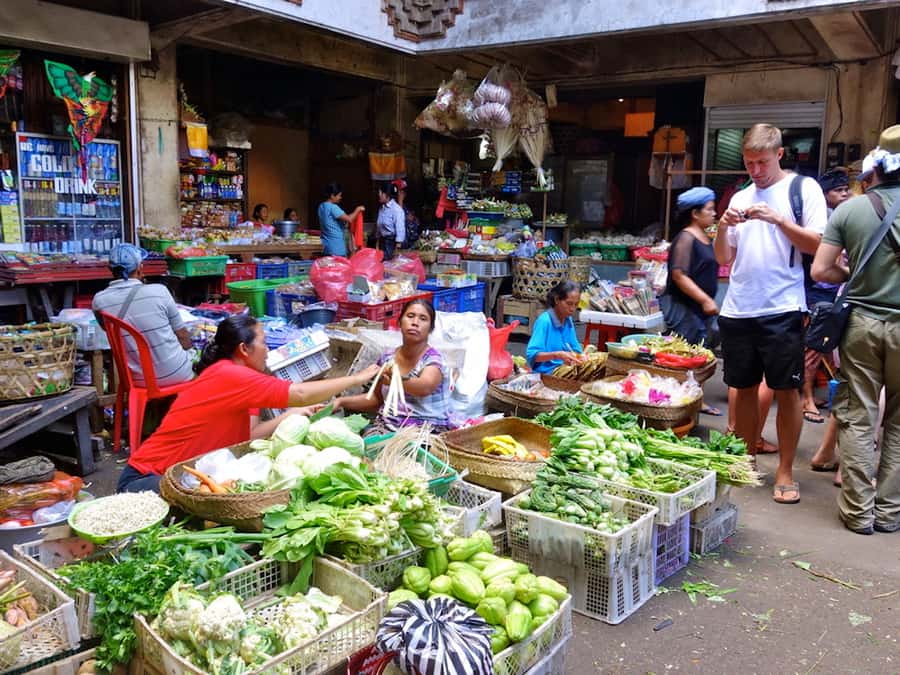
- Morning market shopping: pick ingredients yourself, learn what to look for, and try local fruit
- Laplapan village welcome: a traditional setting where the cooking feels personal, not staged
- Rice plantation stop: quick education on how the staple crop is grown and prepared
- Small group up to 15: more attention at the stations, not a cattle-line class
- Hands-on teamwork: chop, pound, mix, and cook with guidance at every step
- Take-home recipes: notes and recipes you can actually use after you get home
Laplapan cooking: why this feels more real than a demo
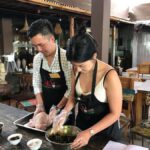
I love cooking classes where you leave with muscle memory, not just a recipe card. This one is built around active tasks—at shared stations, you chop, pound, mix, and cook while the team explains how flavors come together in Balinese food.
The setting matters, too. Paon Bali is set up so you’re not trapped in a modern studio. Instead, you get a warm welcome in the Laplapan area, where the day feels like it belongs to everyday life. Several guests also mention seeing the family temple area, which adds a personal touch beyond the food.
If your goal is a quick snack and a vague cultural chat, this might feel like work (the good kind). Plan on learning through repetition: you’re doing the steps, not just watching them happen.
You can also read our reviews of more tours and experiences in Bali.



Ubud pickup and what the schedule does for you
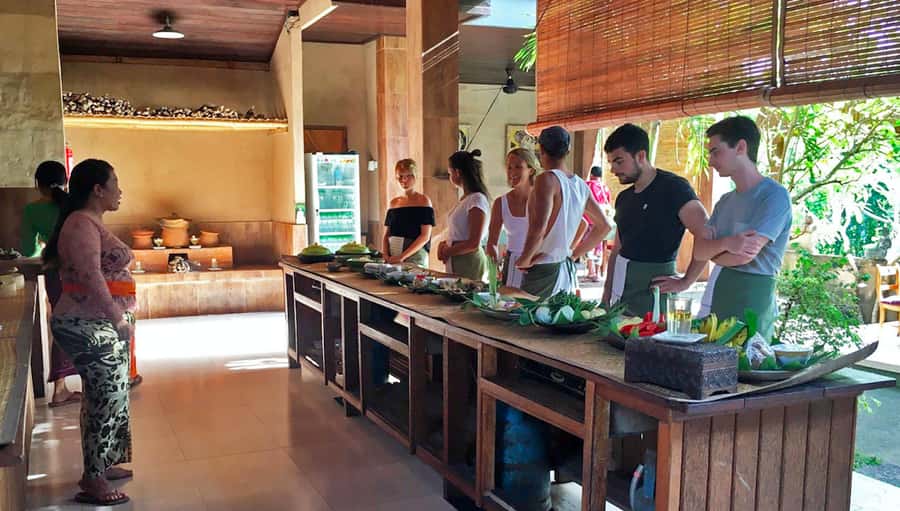
The day starts with hotel pickup in the Ubud area, with a live English guide accompanying you. Group size stays capped at 15, which is important because the class is practical. When the group is smaller, chefs can correct your chopping, help with spice balance, and make sure you’re not stuck waiting while someone else cooks.
The full experience runs about 210 minutes (roughly 3.5–4 hours). That’s long enough to feel like you accomplished something, but short enough that it doesn’t hijack your whole day in Ubud.
One practical note from how the tour runs: there are two sessions. The morning version includes the market tour; the afternoon version is shorter because it skips that ingredient stop. If you like learning by shopping, morning wins.
The market tour: where your Balinese cooking education begins
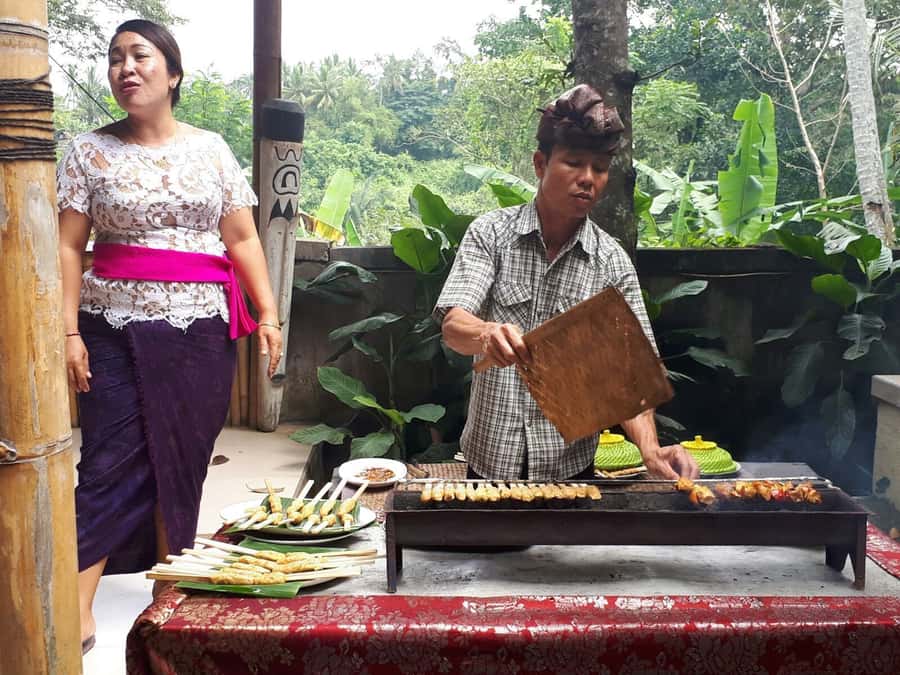
On the morning session, you head to a fresh local food market to pick ingredients for your class. This is more than a quick walk-through. You’re choosing from what’s on display—vegetables, herbs, meat, spices—and that choice helps you understand why Balinese dishes taste the way they do.
You’ll also get a chance to try fruit and ask questions with your guide. One of the most useful things you can do at markets is learn the names and roles of ingredients: not just what it is, but how it behaves when it hits heat. Think of it as ingredient storytelling you can taste later.
Also, this is a good moment to mentally prep for the kitchen. If you can picture the item you bought (and the smell you liked), cooking feels easier when your workstation is in front of you.
Rice plantation views and what you actually learn there
After the market, you visit a rice plantation area and learn how the staple crop is cultivated and prepared. It’s not a long lecture. It’s a stop that gives context: rice is the backdrop to a lot of Balinese meals, and seeing how it’s handled makes your later eating feel more grounded.
You’ll get scenic views along the way, too. Just don’t expect a rugged hike. This is about understanding and atmosphere, not athletic suffering.
If you’re the type who likes to connect food to place, this stop earns its keep. If you only care about eating, you’ll still appreciate it because it sets up your sense of the meal’s foundation.
Welcome in Laplapan: the compound atmosphere and the family temple moment
Arriving in Laplapan is part of why this class works. People describe the welcome as warm and friendly, and that matters because it lowers the pressure. When the tone is relaxed, you’re more willing to try new methods—like pounding spices or mixing pastes until they look right.
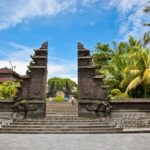
Several guests specifically mention the team allowing access to the family temple area for viewing and photos. That doesn’t turn the class into a sightseeing tour, but it does make the day feel personal, like you’re being shown something rather than being moved through it.
You should come ready to treat the day like an invitation, not a transaction. Small group cooking goes smoother when you’re present and curious.






Inside the Paon Bali kitchen: small group cooking that stays organized
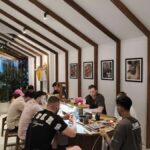
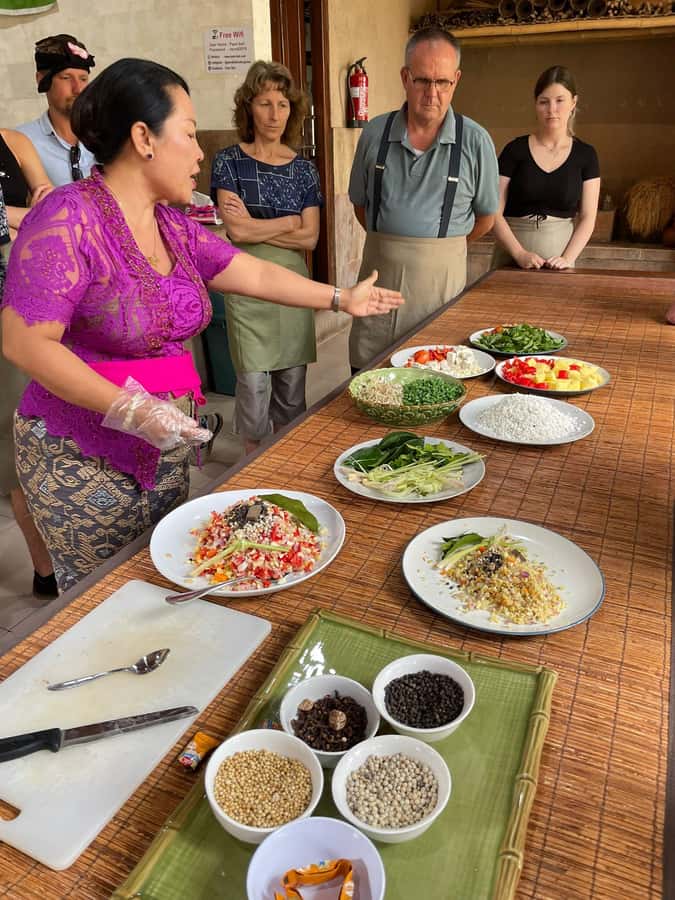
This is one of the most consistently praised parts of the experience. The Paon Bali team runs it like a well-run kitchen: clear stations, steady pacing, and lots of opportunities to participate.
Expect an interactive format:
- You’ll work through the dishes with the help of the chefs.
- Tasks rotate so you don’t just stir while someone else chops.
- The instructors explain methods as you go, so you can correct mistakes early.
Many guests also point out the humor and warmth of the cooking teachers. One host is repeatedly mentioned as Mama Puspa, and the overall vibe is that you’re cooking with family friends.
One detail I appreciate as a practical traveler: the kitchen is set up so you can follow along even if you’re a beginner. You’re not required to know any Balinese cooking terms. You just need attention and willingness.
What you’ll cook: starters, mains, and dessert (meat or vegetarian)
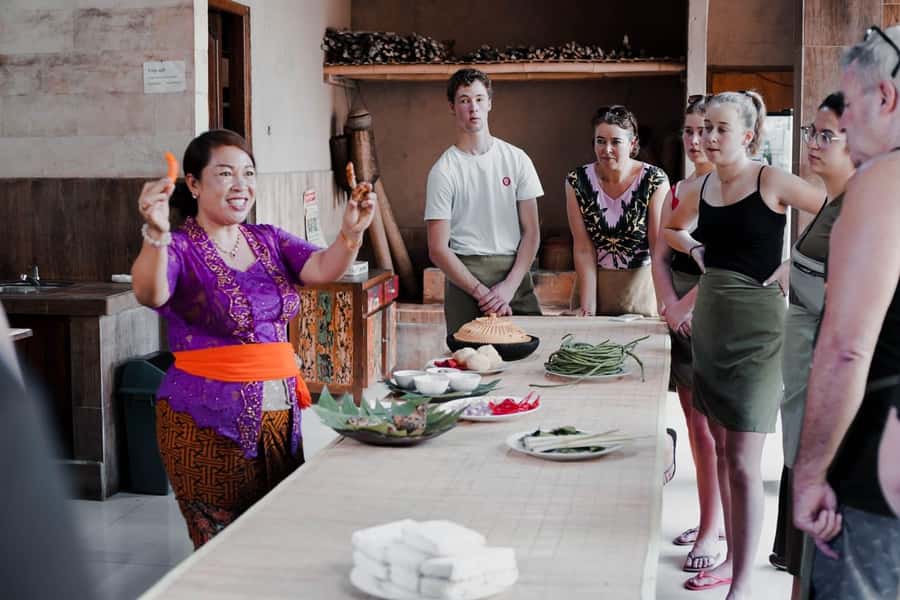
The class is designed around a multi-course meal. The schedule calls for 3 starters, 4 main courses, and 1 authentic dessert, plus the shared meal at the end.
You’ll have a choice of meat or vegetarian dishes, which is a big plus if you’re traveling with mixed preferences. In practice, it also means the team can steer flavors toward what you’ll actually eat, instead of forcing you to pick around the edges.
Across many reviews, the cooking format gets described as hands-on and step-by-step. Expect plenty of prep work—chopping, mixing, and pounded spice work—then cooking your dishes until they’re ready to eat.
Dietary needs: tell them early
The tour data says there’s a vegetarian option. Beyond that, multiple guests report that the team accommodated allergies and restrictions, including capsicum, garlic, and onion/garlic, and even gluten-free adjustments.
I can’t promise every kitchen will handle every scenario perfectly, but this is a strong sign you should communicate needs clearly when you book. If you have an allergy, send it in writing. Then remind the staff at the start so the team can plan your versions properly.
Lunch: eating what you cooked, with the group vibe
After cooking, you sit down to enjoy your meal together. This part matters more than you might think. A lot of cooking classes end with a quick bite and a thumbs-up for the photos. Here, the day is built around the shared feast, so your work turns into a real meal you can taste and compare.
You’re also served Balinese tea and coffee as part of the experience. It’s a small detail, but it rounds out the food lesson and gives you a local finish to the day.
If you’re traveling solo, this is the section where it’s easiest to talk to other participants. With a small group, conversations come naturally while dishes are being served.
Price and value: why $35 makes sense here
$35 for a half-day cooking class feels like a deal when you look at what’s included. You’re getting:
- hotel pickup and drop-off in Ubud
- a market tour on the morning session (fresh ingredient selection)
- a visit to a rice plantation area
- cooking instruction from the Paon Bali team
- all ingredients
- lunch
- Balinese tea and coffee
- recipes and notes you keep, plus a certificate
Cooking classes vary wildly in Bali. The ones that cost more often don’t include market shopping, ingredients, or lunch in the same way. Here, the structure builds in learning time and food you actually eat, not just a demonstration and a symbolic tasting.
One thing to watch: afternoon sessions cost the same but don’t include the market visit. If you’re paying for the experience of learning ingredients first, morning is better value for your money.
Who should book this cooking class (and who might skip it)
Book this if you want:
- a small group cooking class where you actively cook at stations
- an ingredient-focused start with a local market visit (choose morning if this matters)
- a cultural day that connects rice, spices, and everyday Balinese food
- a friendly host and teachers who explain in a practical way
It’s also a good fit for families and mixed-age groups, since the class structure is hands-on and the pacing is set for participation.
You might skip it if:
- you only want a quick food taste and don’t want prep work
- you dislike village settings or prefer strictly restaurant-style experiences
Should you book Paon Bali in Ubud
I’d book this if you’re spending time in Ubud and you want one activity that pays off twice: once while you’re there, and again when you cook at home. The biggest selling point is the combination of market-to-kitchen learning, small group hands-on cooking, and a real shared meal you helped make.
Choose the morning session if you can. The market ingredient selection is the difference between learning cooking and learning the logic behind cooking.
If you have allergies or dietary restrictions, this is a good class to consider. Just tell them your needs upfront and confirm again when you arrive.
FAQ
FAQ
How long is the cooking class?
The experience runs about 210 minutes, roughly 3.5 to 4 hours.
Does hotel pickup happen from Ubud?
Yes. Pickup and drop-off are included for hotels in the Ubud area. Pickup outside Ubud is possible as an add-on if requested.
Is there a market visit?
On the morning class only, you’ll visit a fresh local food market to choose ingredients. The afternoon class is shorter and does not include the market tour.
What dishes do I cook?
You cook multiple Balinese courses, including 3 starters, 4 main courses, and 1 dessert, then eat the meal together.
Can I choose vegetarian options?
Yes. You’ll have a choice of meat or vegetarian dishes.
Do I get recipes to take home?
Yes. Recipes and notes are supplied for you to keep, and there is a certificate at the end.