REVIEW · CHIANG MAI
Chiang Mai: Doi Suthep and Wat Umong Enchanting Evening Tour
Book on GetYourGuide →Operated by TripGuru Thailand · Bookable on GetYourGuide
Evening temples in Chiang Mai feel like a secret show, and this tour lines up the best scenes back-to-back. You’ll visit Wat Umong with its quiet forest setting and underground tunnels, then climb to Doi Suthep for sunset-to-night views over the city and a monk ceremony at the Golden Pagoda.
Two things I really like: the contrast. Wat Umong gives you woodland calm and shaded exploration with guided stops, while Doi Suthep flips the mood into golden temple glamour and dramatic Chiang Mai skyline views. I also appreciate the practical touches for a short tour, like the air-conditioned van ride, a glass bottle of drinking water, and included entry fees so you’re not hunting for cash halfway up a mountain.
One consideration: Doi Suthep involves a lot of stairs, and the tour isn’t suitable for people with mobility impairments. If you have knee or balance issues, this is the part to think about before you book.
In This Review
- Key things worth packing into your Chiang Mai plan
- Why this evening combo works better than temple-hopping by yourself
- Wat Umong: tunnels, temple calm, and the forest that keeps its own rhythm
- The step-count reality: Doi Suthep’s 309 stairs and golden light on stone
- Watching Chiang Mai light up from above
- Price and value: how $27 turns into more than a taxi ride
- Getting the most from the experience: what to wear, what to bring, how to plan your evening
- How pickup at Thapae Gate usually keeps things easy
- Should you book the Wat Umong and Doi Suthep evening tour?
Key things worth packing into your Chiang Mai plan
- Wat Umong’s underground tunnels: You’ll explore temple spaces that feel more like a meditative labyrinth than a typical temple hall.
- Doi Suthep at dusk and night: You get the sunset color shift, then the lights of the city from high up.
- A 309-step climb: It’s part of the experience, so comfortable shoes matter.
- Monks’ ceremony time: You can catch a traditional ceremony during your Doi Suthep visit at the Golden Pagoda.
- Small-group feel: Easier pacing and photos, and guides tend to keep track of the group.
- Low-impact choices: Glass bottled water and carbon offsetting are built into the tour approach.
Why this evening combo works better than temple-hopping by yourself
If you’ve got just a couple of hours in Chiang Mai and you want more than one “pretty temple,” this pairing makes sense. Wat Umong and Doi Suthep are both famous, but they deliver totally different experiences—one is about forest quiet and spiritual atmosphere, the other is about elevation, temple architecture, and city panoramas.
The evening timing is the secret sauce. At Wat Umong, the crowds are lighter and the forest feels calmer. At Doi Suthep, the light changes fast: you’ll start with sunset views, then watch Chiang Mai shift into a patchwork of warm lights. That transition is hard to replicate if you’re planning stops on your own with taxis and timing.
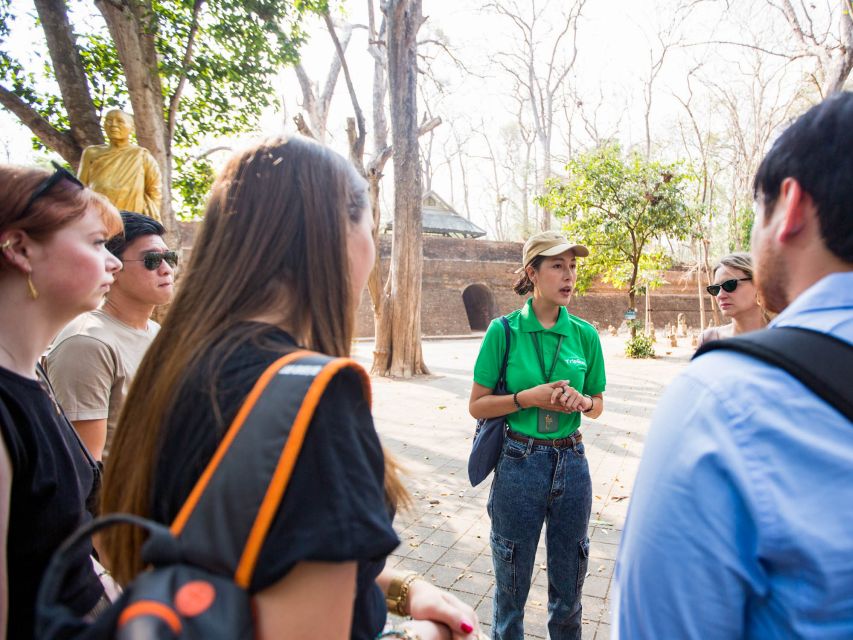
What also helps is that you’re not just getting a checklist of stops. With guides like TomTam, Boon, and James (names you’ll see tied to excellent experiences), you usually get context on Buddhism in Thailand and on what to notice when you’re standing in front of the temple details.
You can also read our reviews of more tours and experiences in Chiang Mai.



Wat Umong: tunnels, temple calm, and the forest that keeps its own rhythm
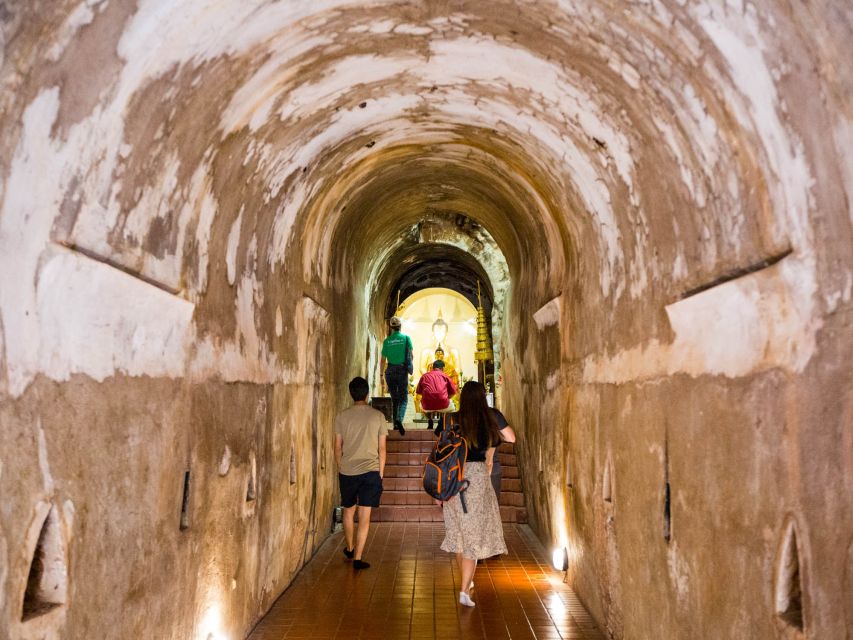
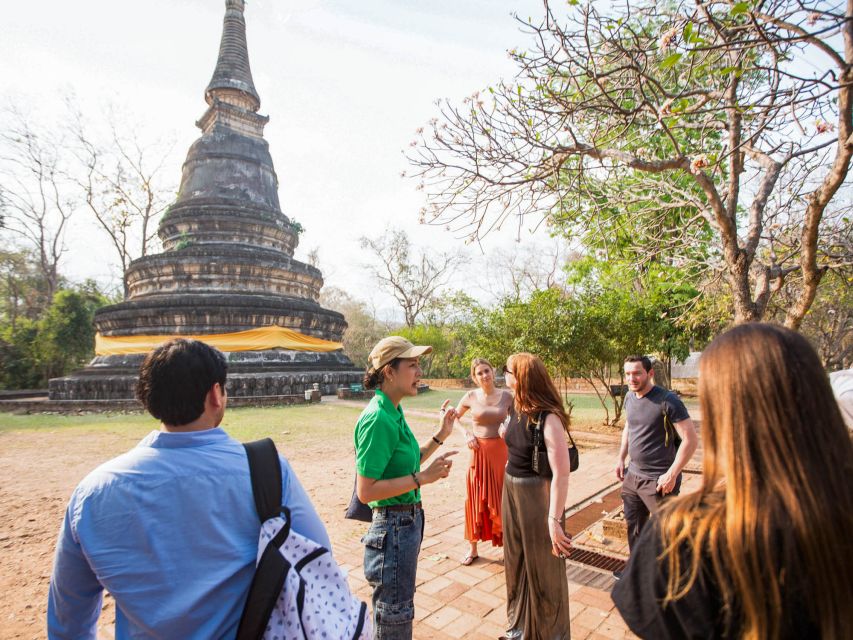
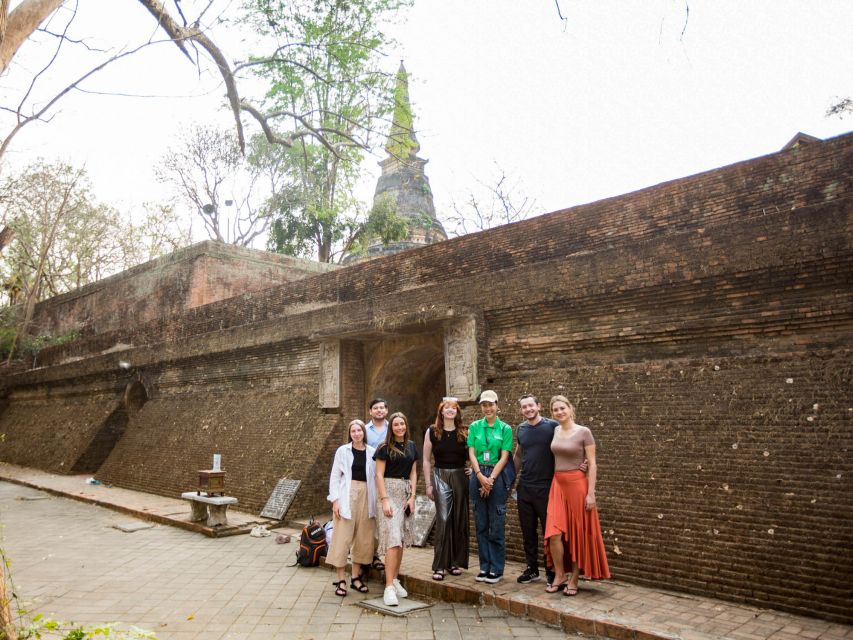
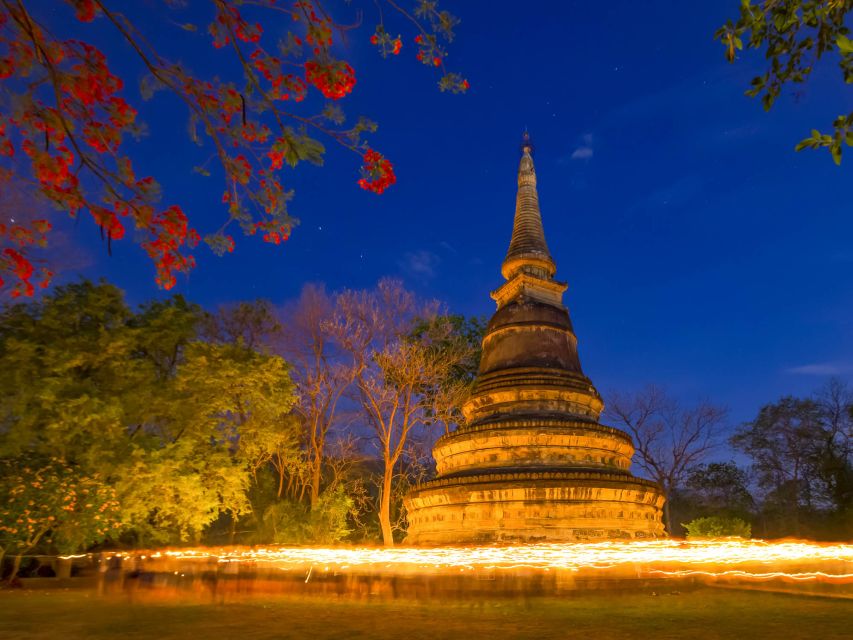
Wat Umong is the first stop, and it’s where the tour slows down. You’ll drive out from Chiang Mai city center in the late afternoon, and when you arrive, it tends to feel less hectic than the usual “must-see” temple scramble.
The headline here is the underground tunnels. Instead of simply walking around open courtyards, you’ll get to explore a network of tunnel-like spaces connected to the temple complex. It’s one of those places that feels quietly intentional—like you’re stepping into a different mood, not just a different location.
Guides often shape the experience beyond the physical space. People mention moments like meditation or being invited into a calmer state during the visit, especially around how monks practice and how the site is used. It’s a good stop if you want your evening to feel grounded rather than purely scenic.
A detail to know: Wat Umong is outdoors, and nature is part of the show. One review experience noted free-roaming chickens and tame pigeons on site. If you’re nervous around birds, it could matter. Personally, I’d treat it as normal temple-grounds wildlife rather than a problem, but it’s worth flagging for anyone who’s easily unsettled.
This is also where you’ll get temple etiquette guidance. Guides like Banana and Happy are praised for helping people understand what’s expected in temples—how to behave respectfully so you don’t have to guess.
The step-count reality: Doi Suthep’s 309 stairs and golden light on stone
After Wat Umong, the tour heads to Doi Suthep. This is the part of the evening that turns adventurous fast, because you’ll climb to Wat Phra That Doi Suthep using a staircase that totals 309 steps.
You’ll want comfortable shoes you can trust. Even if you’re fit, stairs at dusk feel different—your pace changes when the steps stretch up into cooler air. The good news is you’re not doing it alone. A guide keeps the group moving and can help with pacing and photos, especially if you’re traveling solo and want someone to handle the flow.
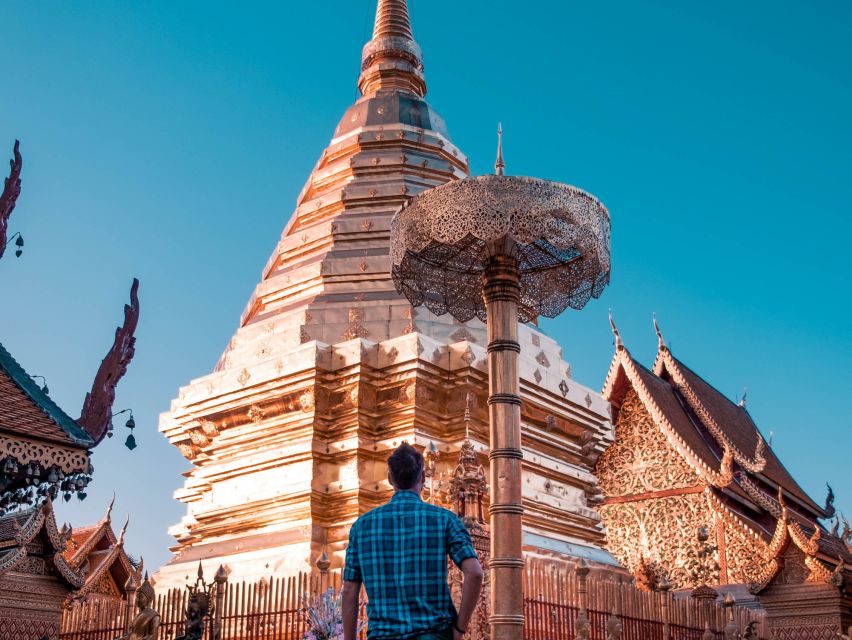
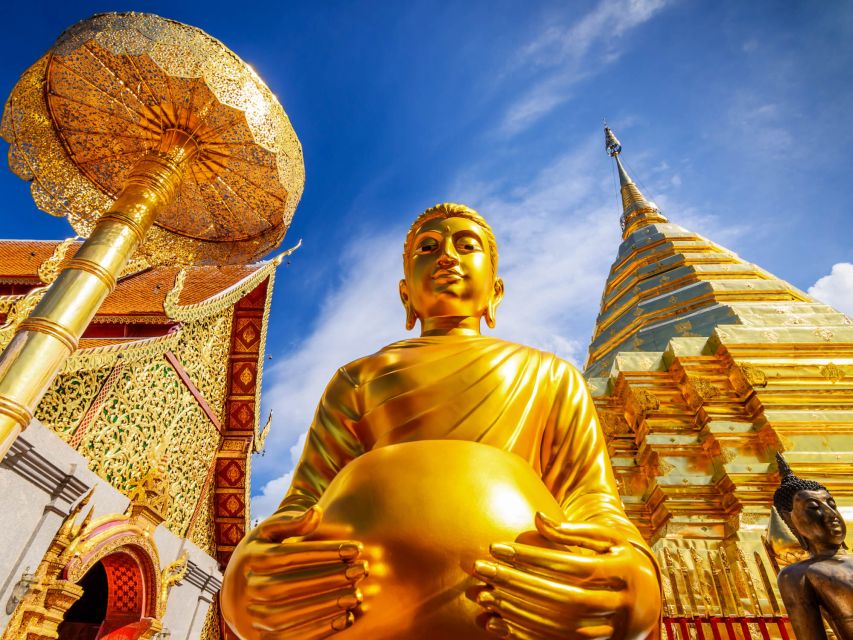
Once you’re up there, the temple itself is a spectacle. Doi Suthep is ornate and photogenic in a way that feels timeless. But the real reason you’re here is the viewpoint. From the summit area, you’ll see Chiang Mai’s sprawl start to glow as the light drains from the sky.
And yes, you’re there in temple time, not just sightseeing time. People highlight hearing monks chant during the evening period, and you may also catch a traditional ceremony performed by monks at the Golden Pagoda area. If you like cultural moments with structure—something that feels “scheduled” and purposeful—this is where it lands.
Some guides stand out for how they explain what you’re seeing. Boon and James get called out for being engaging and photo-friendly. TomTam is mentioned for thoughtful guidance and clear English. Even when language fluency varies a bit by guide, the best tours still help you understand what matters most: temple etiquette, Buddhism context, and how the architecture connects to beliefs.
Watching Chiang Mai light up from above
This tour is built around a simple idea: timing matters. When you visit Doi Suthep at the end of the day, you’re getting two views in one.
First is sunset: warm tones roll across the landscape and temple surfaces. Then comes nightfall: city lights appear below like someone quietly turned on a thousand small lanterns. It’s not just pretty. It helps you “read” the city. From up there, Chiang Mai looks less like street names and more like a living region—neighborhoods, roads, and the feeling of distance.
This viewpoint is often described as the highlight, and it’s easy to see why. You’ve already had the forest calm at Wat Umong, so the switch to a sweeping skyline feels like closure to the day.
If you like photography, this is where you’ll spend a bit more time. Even with a guided schedule, the summit views give you room to pause, take photos, and watch the city evolve. Just remember: the stairs and the timing mean you don’t want to run behind the group.
Price and value: how $27 turns into more than a taxi ride
The price for this tour is listed at $27 per person, and the value is more interesting than the number.
Here’s what you’re getting built into the package:
- hotel pickup and drop-off if you select that option
- transportation by air-conditioned vehicle
- a live guide
- entry fees for Doi Suthep (THB 50) and Wat Umong (THB 20)
- a glass bottle of drinking water
That last point matters more than you’d think. Glass-bottle water is a simple choice that signals the tour’s low-impact approach. Carbon offsetting is also mentioned as part of their responsible model. In real life, I usually care more about how a tour reduces waste and how it respects sites—so it’s a good sign when those things are explicitly part of the plan.
Also, the tour is short: about 5 hours. That’s ideal if you’re juggling a busy Chiang Mai schedule or trying to avoid burning half your day on logistics.
Small groups are another value add. People mention small group sizes (like around 8 in one experience), and that helps with photos, questions, and keeping everyone together on stairs.



Getting the most from the experience: what to wear, what to bring, how to plan your evening
This is an evening outing, so dress like you’re going to temples and a viewpoint, not like you’re going to a party.
Bring:
- comfortable shoes (stairs are real)
- sunglasses
- camera
- sunscreen
- insect repellent
- cash
Not allowed:
- sleeveless shirts
- shorts
That sounds strict, but it’s normal for temple visits in Thailand. The goal is simple: cover up so you don’t feel awkward once you arrive.
Two practical tips that can make your evening smoother:
- Plan for the climb. If you usually avoid stairs, this is still doable for many people, but you’ll want to go at your pace and take breaks.
- If you’re someone who gets distracted by animals, remember Wat Umong has free-roaming chickens and tame pigeons around the grounds.
Finally, languages: guides may speak Spanish, Chinese, and English. Many experiences praise guides for clear communication and keeping the group engaged, including helping with photos and questions.
How pickup at Thapae Gate usually keeps things easy
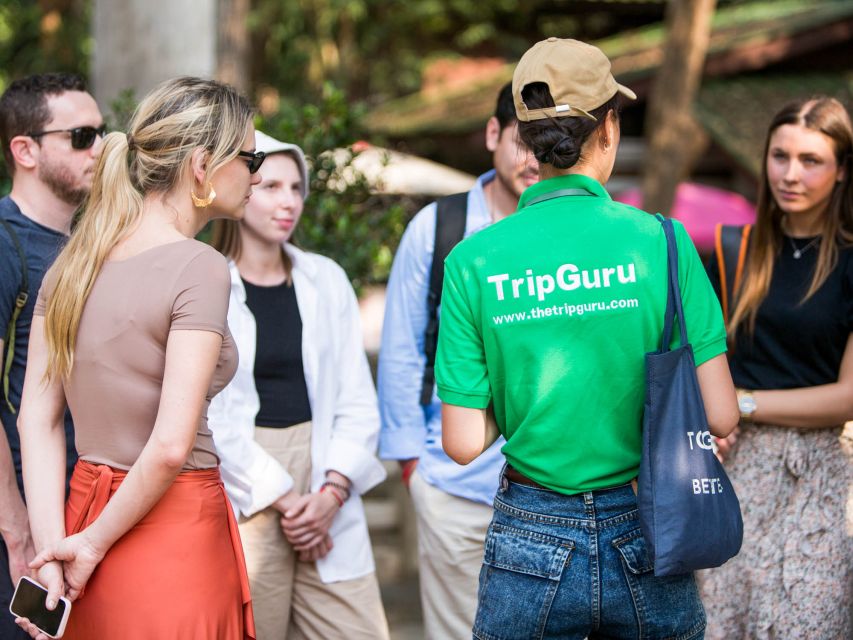
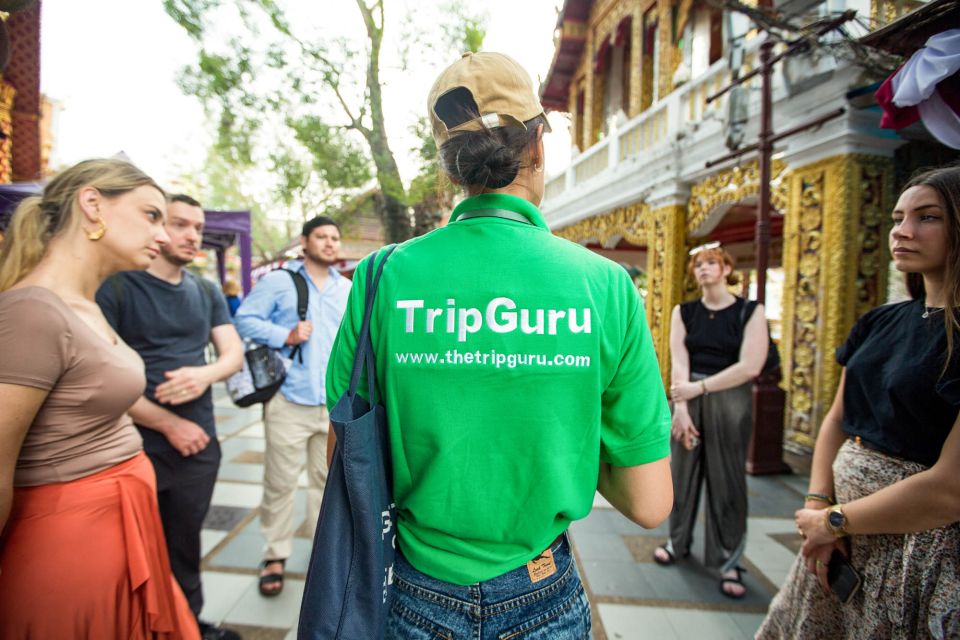
You can meet at McDonald’s at Thapae Gate inside Chiang Mai’s Old City. The guide holds a TripGuru sign, and you’ll want to be there about 10 minutes before pickup if you’re using the meeting point option.
For pickup from your hotel, the tour team emails you the evening before to confirm your exact pickup time and meeting point details. The pickup is only offered from hotels or registered accommodations—so if your place is on a roadside or in a spot that doesn’t count as an approved pickup area, you may need the meeting point instead.
If you’re trying to book last-minute, the meeting point option is noted as available for late bookings, which is handy when your Chiang Mai schedule shifts.
Should you book the Wat Umong and Doi Suthep evening tour?
I’d book it if you want:
- two very different temple experiences in one evening
- a sunset-to-night city view without juggling transportation and timing
- a guided explanation of Buddhism and temple meaning, not just a photo stop
- a manageable tour length (about 5 hours)
I’d skip or rethink if:
- stairs are a deal-breaker for you (this tour isn’t suitable for mobility impairments)
- birds make you uncomfortable, since Wat Umong’s grounds can include free-roaming chickens and pigeons
- you’re looking for a fully off-the-beaten-path adventure without any crowds at all (Doi Suthep gets busy in general, even at dusk)
For most people, this is a smart Chiang Mai value: you pay for transport, a guide, and temple entries, then you walk away with the best part of evening Chiang Mai—temples in soft light and the city glowing from above.