REVIEW · HOI AN
Hoi An: Ancient Town Guided Walking Tour
Book on GetYourGuide →Operated by Freetour Vietnam · Bookable on GetYourGuide
Hoi An starts to click fast. This 3-hour guided walking tour strings together the city’s big sights and the quieter corners, with real stories about how life works here. You’ll also get built-in shade breaks when the heat ramps up, so the walk stays doable.
I especially like the local guide setup and the Heart-Head-Hand way they explain what you’re seeing, not just dates and facts. I also like the practical PDF recommendations you get afterward, with food, drinks, activities, and discounts for things like spas, tailors, and craft beer.
One thing to consider: you’ll be outside a lot. Even with indoor pauses, it’s still a walking tour, and the UNESCO entrance ticket (120,000 VND) is not included.
In This Review
- Key things I’d actually plan around
- Getting Your Bearings: Red Seal Ship Model Start
- How This 3-Hour Walk Really Flows (and why that matters in Hoi An)
- Stop by Stop: What Each Landmark Gives You
- Hoi An Ancient Town, the quick orientation
- Japanese Culture Gallery: setting the cultural frame
- Japanese Covered Bridge: more than a postcard
- Kazik Park and the Ancient-House Shift
- Kazik Park: a breather with local texture
- Quan Thang Ancient House: seeing household history
- Fujian Assembly Hall: community meaning, not just architecture
- Dumplings Stop: a short fuel break in the middle
- Finish Near the Market: Hoi An’s easy next step
- The PDF Guide with Discounts: what you’ll use it for
- Price and the UNESCO ticket reality check
- Who this tour fits best (and who should think twice)
- Book it or skip it
- FAQ
- How long is the Hoi An Ancient Town guided walking tour?
- Where do I meet the guide?
- Where does the tour end?
- Is the tour guided in English?
- What’s included in the price?
- Is the UNESCO ticket included?
- Does the tour help with ticket lines?
- Are there food stops?
- Can I cancel and still get a full refund?
- Is this tour wheelchair accessible?
Key things I’d actually plan around

- Japanese influence in walking order: Japanese Culture Gallery, Japanese Covered Bridge, then assembly-hall context later on.
- A heat-smart pace: short stops and frequent shade/indoors when the sun gets serious.
- Ancient houses you can picture: Quan Thang Ancient House adds a lived-in feel, not just postcard views.
- A real pause for dumplings: a short food stop in the middle so you don’t burn out.
- A market landing: finish near Hoi An’s market energy so you can keep exploring right away.
Getting Your Bearings: Red Seal Ship Model Start

Most good Old Town tours start with a clear meeting point, and this one does. You head to 79 Nguyen Thi Minh Khai Street at the Red Seal Ship Model. The guide’s easy to spot too: you’re looking for Momo with a blue paper fan.
Why I like this kind of start: it reduces the usual first-day scramble. Hoi An’s Old Town can feel like a maze when you first arrive, so it’s nice to begin with someone who already knows how to steer you around.
You can also read our reviews of more tours and experiences in Hoi An.



How This 3-Hour Walk Really Flows (and why that matters in Hoi An)
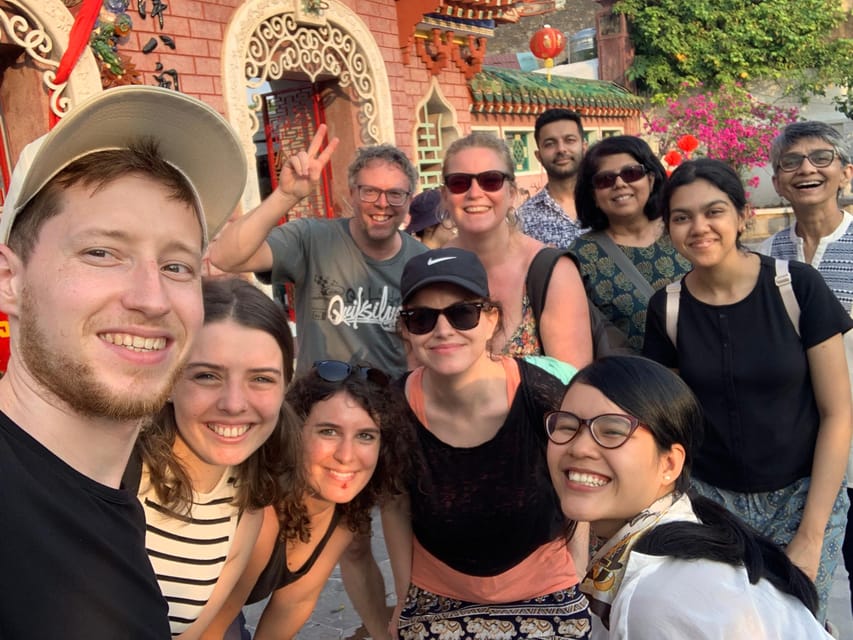
This tour is built as a sequence of short guided segments across Hoi An. Think about it like a guided playlist: every stop gives you a new angle, then you move on before you start to zone out.
The pace matters because Hoi An can be sweaty, especially mid-day. The tour notes that indoor breaks are often used to handle the heat. In other words, you’re not just trudging from landmark to landmark in a single long stretch.
Group size seems to stay manageable. One recent group described about 12 people and mentioned the organizers split a larger group into smaller ones so it didn’t feel cramped. That lines up with the overall vibe you want on a walking tour: enough people for energy, small enough for questions.
Also, you get a guide the whole time in English. That’s a big deal in Hoi An, where the meanings behind doors, street layouts, and community buildings can get lost if you’re reading everything solo.
Stop by Stop: What Each Landmark Gives You
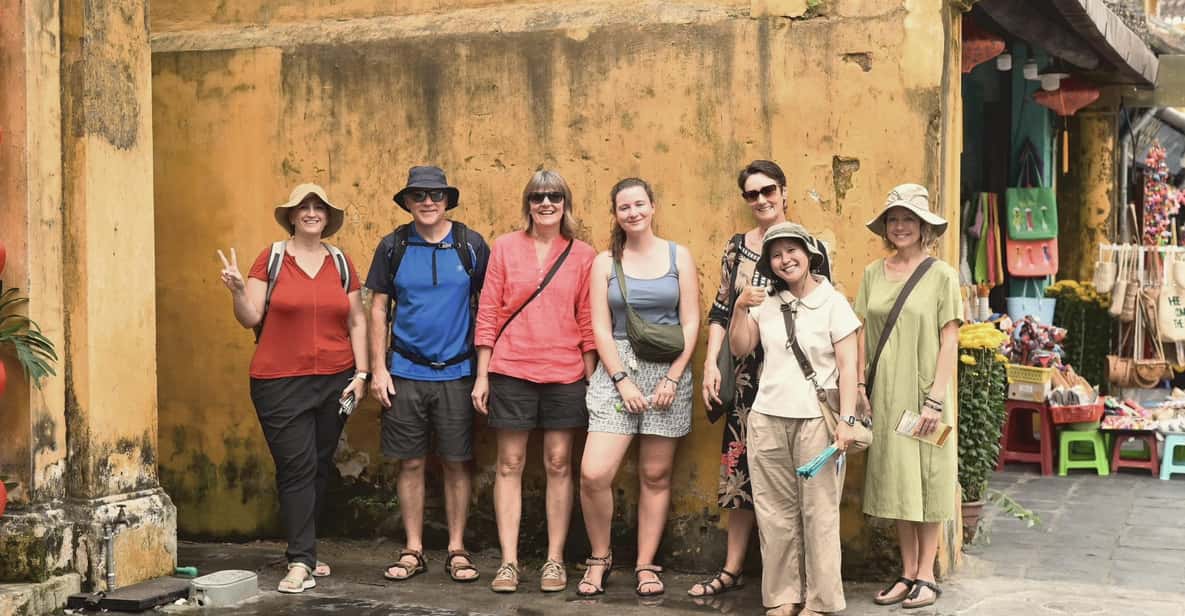
Hoi An Ancient Town, the quick orientation
You kick off in the Ancient Town area with a short guided intro. Even 10 minutes here helps you understand what you’re about to see. Instead of treating the Old Town like a string of separate sights, you start to see it as a trading-era setting where different cultures left their fingerprints.
If you’re coming in your first day, this early orientation pays off. It helps you walk the rest of your trip with context, so you don’t miss the “why” behind the “what.”
Japanese Culture Gallery: setting the cultural frame
Next is the Japanese Culture Gallery. This is where the tour starts laying groundwork for the rest of the Japanese-influenced stops.
I like this kind of preface because it makes the later photos make sense. The Japanese Covered Bridge won’t just look like an attractive structure. You’ll have something to connect it to.






Japanese Covered Bridge: more than a postcard
Then comes the Japanese Covered Bridge. This stop is timed at about 20 minutes, which is enough to actually read the details and not just power-walk through.
Here’s what to watch for when you’re there: look at the bridge as a connector, not an isolated attraction. It’s the kind of place that symbolizes relationships—between communities, trade connections, and the way different groups shaped daily life in Hoi An.
If you like asking questions, bring them. Guides in this tour style tend to be good at turning your curiosity into answers without making it feel like a lecture. Names mentioned in praise include guides like June and Vy, both singled out for engaging explanations and good English.
Kazik Park and the Ancient-House Shift
Kazik Park: a breather with local texture
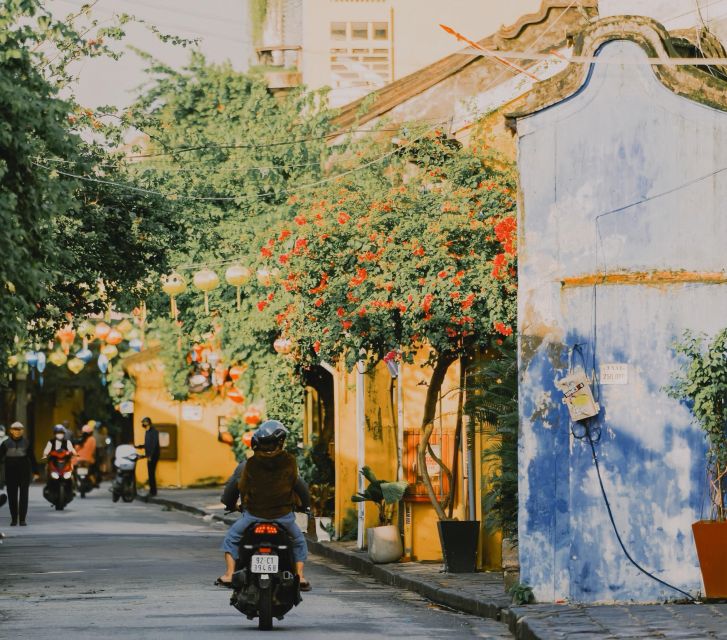
Kazik Park is a 15-minute stop. At first glance, a park can seem like a “rest” on a sightseeing route. But in a town like Hoi An, that pause is useful. It gives your eyes a break from old-stone intensity and gives your brain time to process what you’ve already learned.
Also, parks are where you can sometimes catch local life in motion. Even if you don’t have long here, it helps the tour feel like a walk through a real town rather than a museum circuit.
Quan Thang Ancient House: seeing household history
Next is Quan Thang Ancient House. This stop gives you an important shift: away from trade-landmark symbolism and into the feel of a domestic setting.
The value of an ancient house visit is that you start picturing everyday routines. Streets and bridges are easy to photograph. A house gives you a sense of how people lived, moved, and adapted to their environment.
Guides like Tom and Minh have been praised for making these kinds of explanations easy to follow—so if your guide is similarly animated, you’ll likely walk away with more than surface-level impressions.
Fujian Assembly Hall: community meaning, not just architecture
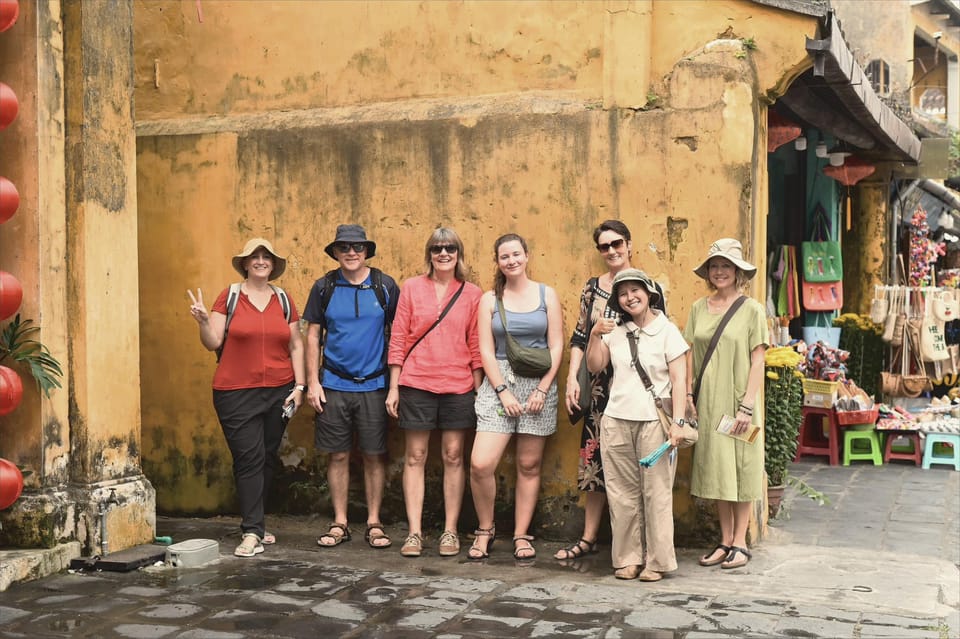
Fujian Assembly Hall is another major stop (about 20 minutes). Assembly halls in places like Hoi An are tied to community organization, and that’s the angle that makes this stop click.
Look at it as more than a building with a distinctive look. You’re seeing a space that helped people gather, support each other, and keep ties strong. That context makes the Old Town feel less like a theme park and more like a place where social life had structure.
I’d also suggest paying attention to the details your guide points out. Since this tour is short, you want the highlights that your guide chose to be the takeaway, not the stuff you’d skip if you were on your own.
Dumplings Stop: a short fuel break in the middle

A 15-minute stop for dumplings breaks up the walking rhythm. The tour doesn’t list dumplings as a separate included item, so treat this as your chance to try something—then pay based on what you order.
This kind of mid-tour snack pause is practical. It prevents the common problem of walking tours that end strong on stories but weak on stamina. With food in the middle, you can keep your attention for the last stretch.
Finish Near the Market: Hoi An’s easy next step
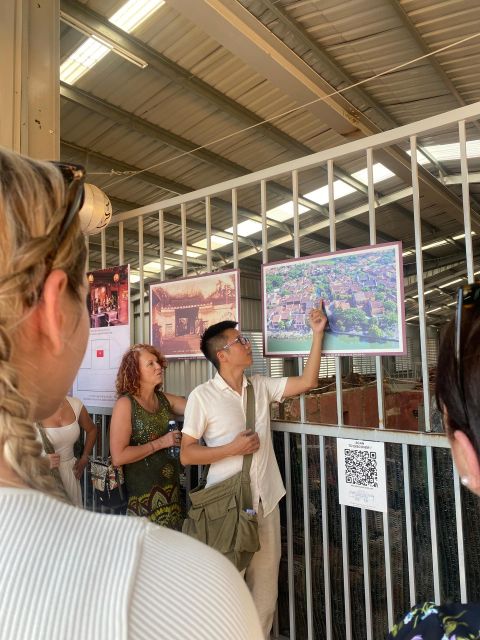
You finish around Hoi An’s market area, then wrap back near the meeting point. Ending by the market is smart because you can keep going immediately—shopping, eating, or just watching the flow of people.
If you’re the type who likes to plan the rest of the day before you’re tired, this is a good moment to do it. You’ve got a fresh mental map now, plus ideas on what to try next.
The PDF Guide with Discounts: what you’ll use it for
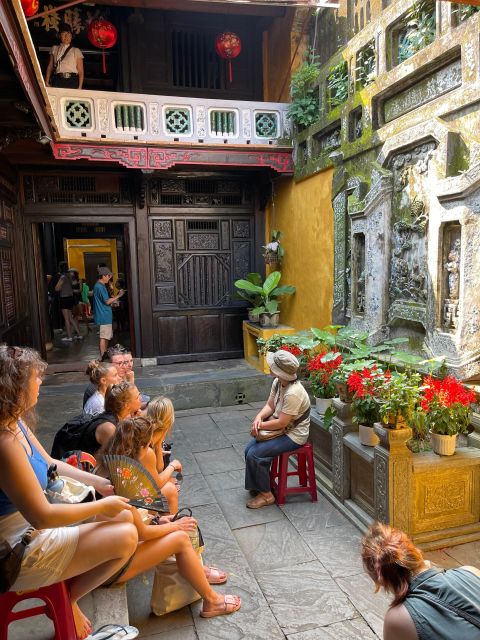
One of the biggest “value per minute” parts of this tour is the PDF of local recommendations you receive afterward. It’s not just a generic list. It’s described as including food, drink, and activities, plus discounts for places like spas and massage, tailors, and craft beer.
Here’s how I’d use it the same day you take the tour:
- Pick one food or drink suggestion for tonight, so you don’t keep scrolling when you’re hungry.
- Use the activity ideas for tomorrow while your route memory is still fresh.
- If you’re planning shopping (tailors craft items), skim the discounts before you buy.
This is also why doing the tour early helps. You want those recommendations while you still have choices.
Price and the UNESCO ticket reality check
The price is listed at $2.01 per person, and that’s the kind of number that makes you wonder what’s being optimized. In practice, it’s a walking experience with an English-speaking guide plus the PDF pack. The cost is low because you’re not paying for transport or a long sit-down attraction program.
The main extra you might pay is the UNESCO entrance ticket at 120,000 VND. The tour also notes skipping the ticket line, which can save time if you’re heading into a ticketed Old Town area.
So the real value math is:
- You’re paying very little for guided context + local recommendations.
- You may still need to budget for the UNESCO ticket if it applies to what you enter.
If you’re visiting with tight timing, that guided context can be worth more than the ticket savings.
Who this tour fits best (and who should think twice)
This tour is ideal if:
- You’re in Hoi An for a short time and want the big landmarks with context.
- You like walking through history but don’t want to get stuck reading alone.
- You want a guide who’s comfortable making the explanation interactive and fun.
You might want to choose another option if:
- You can’t handle 3 hours of walking, even with indoor shade breaks.
- You’re only interested in one or two photo spots and don’t care about connecting stories.
Book it or skip it
Should you book? I’d say yes, especially if this is your first day in Hoi An. The combination of Japanese-influence stops, ancient-house perspective, and a PDF with practical local leads is a strong mix for the price.
If you already have a detailed plan and hate guided pacing, you could DIY the same sights. But if you want to understand what you’re seeing and get a shortcut to good food and activities, this walk is an efficient way to start.
FAQ
How long is the Hoi An Ancient Town guided walking tour?
The tour lasts about 3 hours, though starting times depend on availability.
Where do I meet the guide?
Meet at 79 Nguyen Thi Minh Khai Street at the Red Seal Ship Model. Look for Momo with a blue paper fan.
Where does the tour end?
It finishes near Hoi An Market and then wraps back near the meeting point.
Is the tour guided in English?
Yes, it includes an English-speaking live guide.
What’s included in the price?
You get a walking tour with an English-speaking guide, plus a PDF of local recommendations with discounts.
Is the UNESCO ticket included?
No. A UNESCO entrance ticket is listed as not included at 120,000 VND per ticket (if required for the sites you visit).
Does the tour help with ticket lines?
The activity notes skipping the ticket line.
Are there food stops?
Yes. The route includes a stop for dumplings as part of the tour timing, so you’ll have a chance to try them.
Can I cancel and still get a full refund?
Free cancellation is available up to 24 hours in advance for a full refund.
Is this tour wheelchair accessible?
Yes, it’s listed as wheelchair accessible.