REVIEW · KANAZAWA
World Heritage Shirakawa-go and Experience Tours from Kanazawa
Book on Viator →Operated by Japan Panoramic Tours · Bookable on Viator
Shirakawa-go in one packed day. This tour strings together UNESCO gassho-zukuri farmhouses in the mountains and major Kanazawa sights without the stress of planning. It’s a smart way to get both rural Japan and a top city itinerary in just 9.5 hours.
What I like most is the mix of big sights and hands-on culture: you’ll explore Shirakawa-go, then handle traditional crafts like wagashi (Japanese sweets) or Daruma doll art. I also love the guide format, since an English-speaking guide helps you with questions and you get multilingual audio support on the bus.
One thing to consider: lunch is on your own at Shirakawa-go, and the day is scheduled tightly. Also, the order can shift with traffic and operations, so you’ll want to stay flexible if something changes.
In This Review
- Key things that make this tour work
- Shirakawa-go and Kanazawa in One Shot: The Real Value
- Price and Logistics: What You’re Paying For
- Meeting at Kanazawa Station West Plaza and the Morning Rhythm
- Shirakawa-go Gassho-zukuri: What to Look For in Ogimachi
- Ogimachi Castle Old Site Observatory: The Viewpoint Stop
- Kenrokuen Garden: Your One-Hour Stroll in Kanazawa
- Ishikawa Local Products Center: Wagashi Making vs Daruma Art
- Kanazawa Gold Leaf at Kanazawa Bikazari Asano
- Higashi Chaya District: Geisha Streets and Gold Leaf Ice Cream
- Who This Tour Fits Best (and Who Might Want to Skip)
- My Quick Booking Call
- FAQ
- What time does the tour start, and where do I meet?
- How long is the tour?
- Is lunch included?
- What’s included in the ticket price?
- Do I need to speak Japanese?
- Is there hotel pickup or drop-off?
- What activities do I do in the afternoon?
- Are admissions included for Kenrokuen Garden?
- What if weather or operations affect the schedule?
- Is the tour small?
Key things that make this tour work
- Early start from Kanazawa Station (7:50am): you’ll be in position for the calmer feel of Shirakawa-go.
- Shirakawa-go time with room to walk: you’re not just herded past photos.
- Kenrokuen Garden included: one hour in one of Japan’s three most famous gardens.
- Hands-on craft stops: wagashi (or Daruma painting) plus a gold leaf experience.
- Comfort built in: air-conditioned bus with Wi-Fi and multilingual audio guidance.
- Small group limit: up to 38 people, so it still feels manageable.
Shirakawa-go and Kanazawa in One Shot: The Real Value
If you’re doing Kanazawa and you want the “wow” factor of a UNESCO mountain village, this is the efficient route. You get two different Japan vibes in one day: steep-roof farmhouses in Shirakawa-go, then landscaped strolling at Kenrokuen and the preserved geisha district in Higashi Chaya.
The value is not just that the locations are famous. It’s that the tour bundles the stuff that usually takes extra time to arrange: transportation by air-conditioned vehicle, admissions (Kenrokuen), and craft experiences (wagashi/Daruma and gold leaf). At $122.45 per person, you’re paying for convenience and guided pacing more than just scenery.
You can also read our reviews of more tours and experiences in Kanazawa.
Price and Logistics: What You’re Paying For
Here’s where the price makes sense. You’re covering a long day between Kanazawa and Shirakawa-go with a guided itinerary, and you’re not paying separately for Kenrokuen Garden entry or the gold leaf workshop. You also get a professional guide who speaks both English and Japanese, plus multilingual audio guidance (English, Spanish, French, Italian, German, Portuguese, Ukrainian).
The trade-off is what’s not included: lunch is not provided, and you have to meet at the meeting point (no hotel pickup/drop-off). If you dislike early starts or hate staying on schedule, plan carefully.
You’ll also want to know the day is capped at 38 travelers, which helps keep the experience from feeling like a theme-park stampede. It’s still a group tour, though, so expect a planned flow rather than total freedom.
Meeting at Kanazawa Station West Plaza and the Morning Rhythm
The day kicks off at Kanazawa Station West Plaza – Short-term Car Park (1-chōme-6-802 Hirooka) with a start time of 7:50am. You’ll return to the same general meeting point at the end of the activity.
That early departure matters more than you’d think. One guide-led day I’d recommend for crowds starts by getting you into Shirakawa-go early enough that the village feels less crowded and more like a living place. I like this style because you’re not fighting peak-time foot traffic before you even get your bearings.
The bus ride is part of the deal: it’s air-conditioned, has Wi-Fi, and includes multilingual audio guidance. Several guides on this route are known for keeping the drive interesting, including history talk and humor, which makes the long transfer feel shorter.
Shirakawa-go Gassho-zukuri: What to Look For in Ogimachi
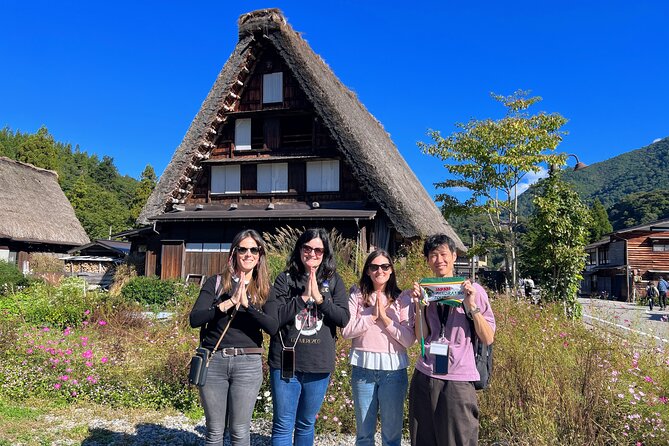
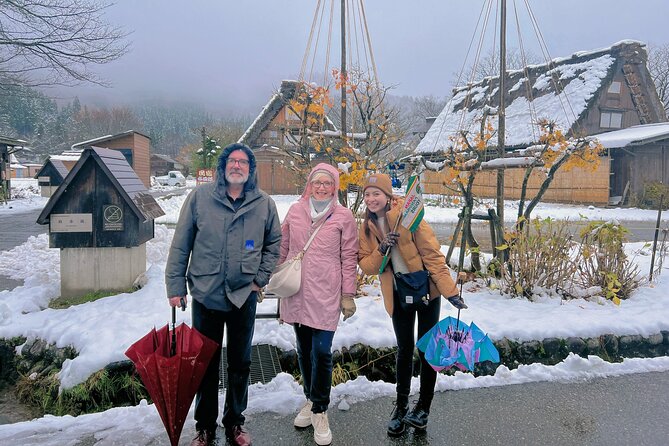
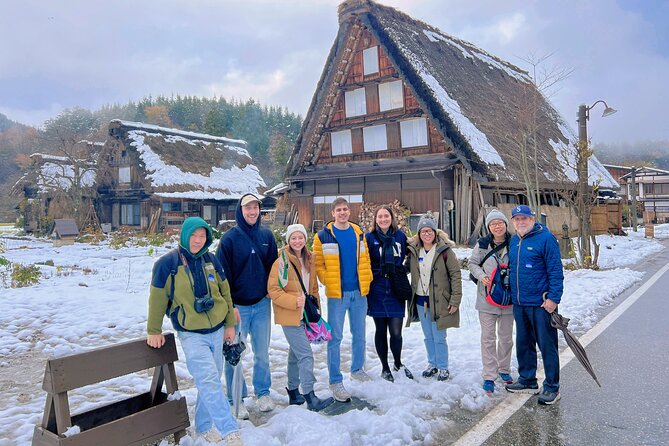
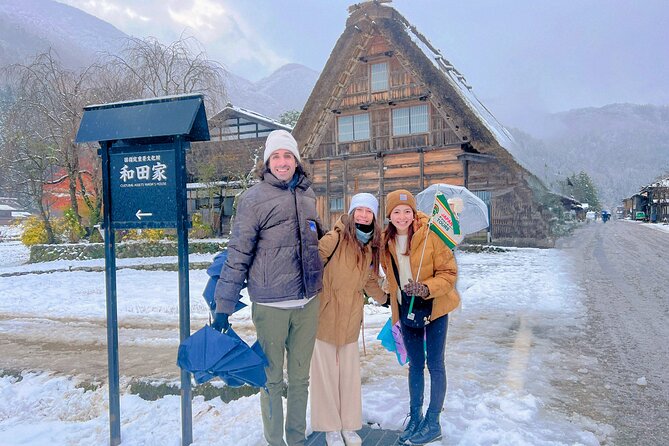
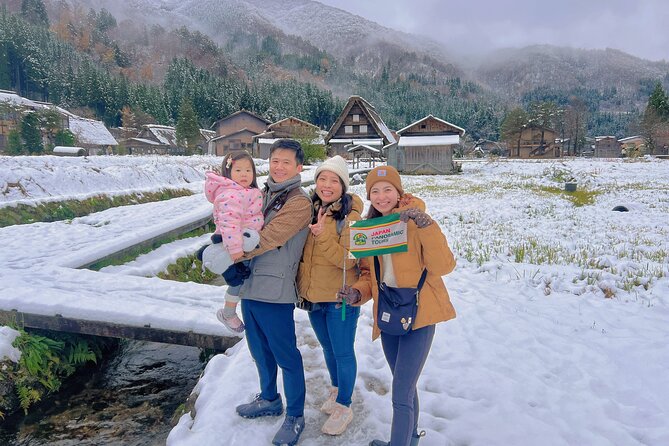
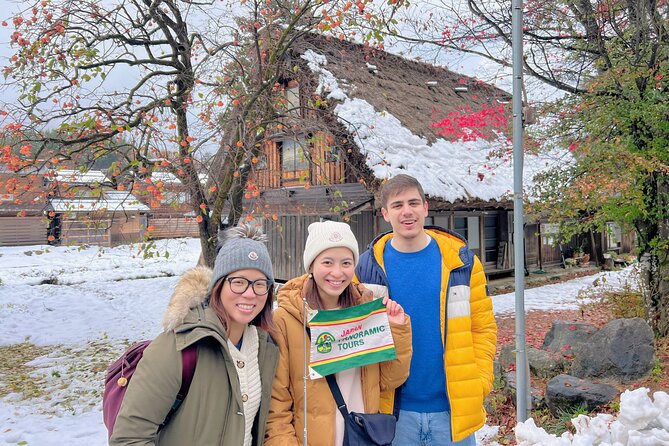
Your main visit is the Historic Villages of Shirakawa-go Gassho Style Houses. Expect about 2 hours in the village area, plus an additional viewpoint stop.
Shirakawa-go’s signature is the gassho-zukuri farmhouse shape: roofs steep enough to handle heavy snow, and the overall look that feels straight out of a storybook. The village is set in a mountain settlement, so even walking at a gentle pace gives you constantly changing angles.
Practical tip for enjoying it: use your time for slow looking first, then photo second. The best views usually come after you pause—when you notice roof lines, narrow lanes, and how the village sits in the valley. I also recommend saving a little time for shops and small local displays rather than trying to “sprint” the village.
You’ll have time to handle lunch on your own here. Keep it simple: grab something quick so you don’t lose time before the afternoon garden and craft stops.
Ogimachi Castle Old Site Observatory: The Viewpoint Stop
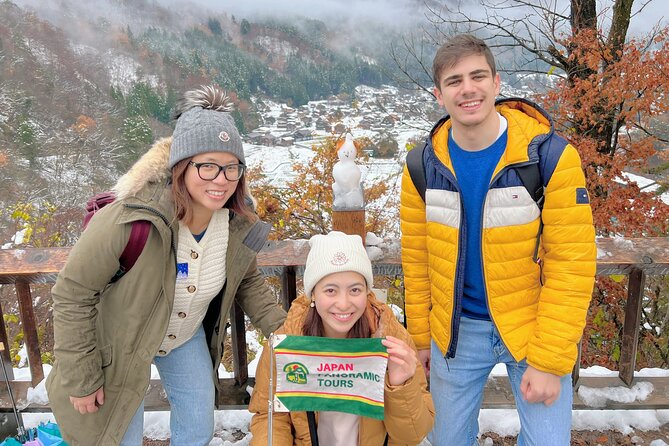
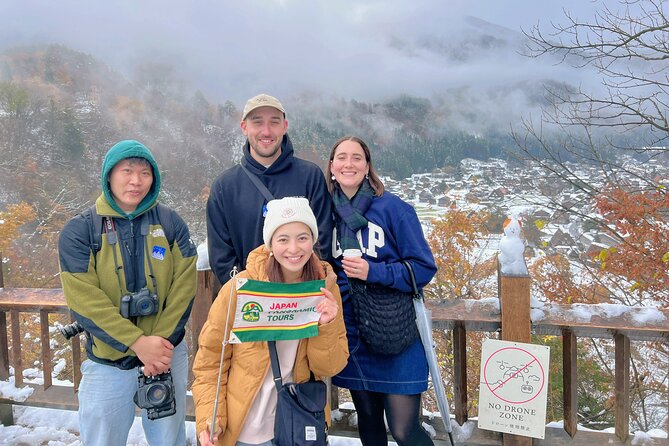
After your village walk, you’ll visit the Ogimachi Castle Old Site Observatory for about 20 minutes. This is a short stop, but it’s valuable because it gives you the village layout from above.
When you can see the central settlement pattern at a distance, Shirakawa-go stops being just “cute buildings” and becomes a place with a clear historical structure. Even if you’re not into castle history, the viewpoint helps you understand how the village was built to endure mountain weather.
Kenrokuen Garden: Your One-Hour Stroll in Kanazawa
After the morning mountains, you’ll shift gears in Kanazawa with Kenrokuen Garden (about 1 hour, admission included). Kenrokuen is one of Japan’s three most famous gardens, and it’s known for how it changes through the seasons.
In a time-limited day, I like that you get one focused garden visit rather than a rushed photo stop. One hour is enough to walk key paths, pause for pond views, and notice how design channels your eyes. You also don’t need to decode every stone or bridge detail; the guide and audio support help you follow what you’re looking at.
If it’s raining or the weather turns, gardens can still be enjoyable, just with a different mood. I’d rather have one solid garden hour with a planned route than gamble on trying to squeeze Kenrokuen into an unstructured afternoon.
Ishikawa Local Products Center: Wagashi Making vs Daruma Art
Next is the Ishikawa Local Products Center with about 50 minutes for a hands-on activity. The included option is Japanese sweets making (wagashi) with a professional wagashi craftsperson, and depending on the craftsperson schedule, it may be painting Daruma dolls instead.
This is a great stop for two reasons. First, it’s interactive. You’re doing something with your hands, not just watching. Second, it gives you a tangible souvenir experience even if you’re not buying a lot of physical items.
If you end up doing wagashi, pay attention to how the craftsperson describes ingredients and form. Wagashi isn’t about sweetness alone; it’s also about seasonal shapes and presentation choices. If Daruma painting is the activity you do, you’ll get a feel for how people use these traditional icons as personal symbols.
Either way, this is one of those included components that justifies the price. Craft experiences like this often cost extra when booked separately.
Kanazawa Gold Leaf at Kanazawa Bikazari Asano
Then it’s time for Kanazawa’s famous specialty: gold leaf. The stop is about 40 minutes at Kanazawa Bikazari Asano, and admission is included.
Gold leaf is more than “pretty decoration.” In Kanazawa, it’s a craft tradition that shows up in everyday goods and ceremonial aesthetics. Doing the workshop hands-on helps you see why it’s valued: the technique is delicate, and the process feels precise.
One practical angle: when you make something during the workshop, you carry home more than photos. You leave with an actual piece of craft work, and that turns the afternoon from sightseeing into a memory you can touch.
Higashi Chaya District: Geisha Streets and Gold Leaf Ice Cream
The final sightseeing portion is Higashi Chaya District for about 30 minutes. This is one of Kanazawa’s larger geisha districts, known for preserved streets and atmosphere.
This is a good wrap-up stop because it connects the crafts and symbolism from earlier with how Kanazawa presents its culture. Many people also plan a snack here, and a favorite is gold leaf ice cream, which fits the day’s theme perfectly.
In just 30 minutes, you won’t do a deep cultural tour of the district. But you will get a sense of the preserved lane layout and the visual style—especially if you walk slowly and look at shopfront details.
Who This Tour Fits Best (and Who Might Want to Skip)
This tour fits you if:
- You want UNESCO Shirakawa-go plus top Kanazawa highlights in one day.
- You like guided pacing and don’t want to juggle multiple transport legs yourself.
- You’re the type who enjoys hands-on experiences like craft-making.
- You’d rather not worry about tickets for Kenrokuen and the workshops.
You might consider a different approach if:
- You strongly prefer long, unstructured time in one place over a packed schedule.
- You’re very sensitive to early mornings.
- You hate planning your own lunch.
As for fitness, the tour asks for moderate physical fitness, and you will be walking in village streets and around a viewpoint.
My Quick Booking Call
I’d book this tour if your goal is a single-day hit list that still includes real culture. The best parts are the craft stops (wagashi/Daruma and gold leaf) and the fact that you get meaningful time in Shirakawa-go rather than only a quick drive-by.
If your priority is maximum relaxation, choose a slower plan. But if you want a day that covers mountains, garden time, and traditional craft skills with an English-speaking guide, this is a strong value.
FAQ
What time does the tour start, and where do I meet?
The tour starts at 7:50am at Kanazawa Station West Plaza – Short-term Car Park (1-chōme-6-802 Hirooka, Kanazawa). The tour ends back at the same meeting point.
How long is the tour?
The duration is about 9 hours 30 minutes.
Is lunch included?
No. Lunch is not included, and you’ll enjoy lunch on your own during the Shirakawa-go village time.
What’s included in the ticket price?
Included items are a professional tour guide (English and Japanese speaking), an air-conditioned vehicle with Wi-Fi, multilingual audio guidance, Kenrokuen Garden admission, the Japanese sweets making experience or Daruma doll painting, and the gold leaf experience.
Do I need to speak Japanese?
No. You’ll have an English-speaking guide and you also get multilingual audio guidance in English, Spanish, French, Italian, German, Portuguese, and Ukrainian.
Is there hotel pickup or drop-off?
No. There is no extra pickup and drop-off service, so you’ll meet at the station.
What activities do I do in the afternoon?
At the Ishikawa Local Products Center, you’ll do Japanese sweets making (wagashi) or painting of Daruma dolls depending on the craftsperson schedule. Later you’ll take part in a gold leaf experience at Kanazawa Bikazari Asano.
Are admissions included for Kenrokuen Garden?
Yes. Kenrokuen Garden admission is included.
What if weather or operations affect the schedule?
If a site is closed or operations change due to weather, the tour will attend an alternative place or provide a gift as compensation, depending on the situation. There are no refunds for changes.
Is the tour small?
Yes. The maximum group size is 38 travelers.