REVIEW · BANGKOK
Bangkok Classical Bicycle Tour
Book on GetYourGuide →Operated by Co van Kessel Bangkok Tours · Bookable on GetYourGuide
Bike through Bangkok’s back alleys fast. This Bangkok Classical Bicycle Tour turns the city into a living map, from Chinatown shop-houses and spirit-house rituals to the calmer rhythm of Thonburi. I love how the route shows you everyday details (not just photo spots) and how the ferry crossing over the Chao Phraya makes the whole day feel like a real transition. One catch: this is not a casual stroll—some lanes in Chinatown get tight, so you need to feel comfortable riding a bike among people.
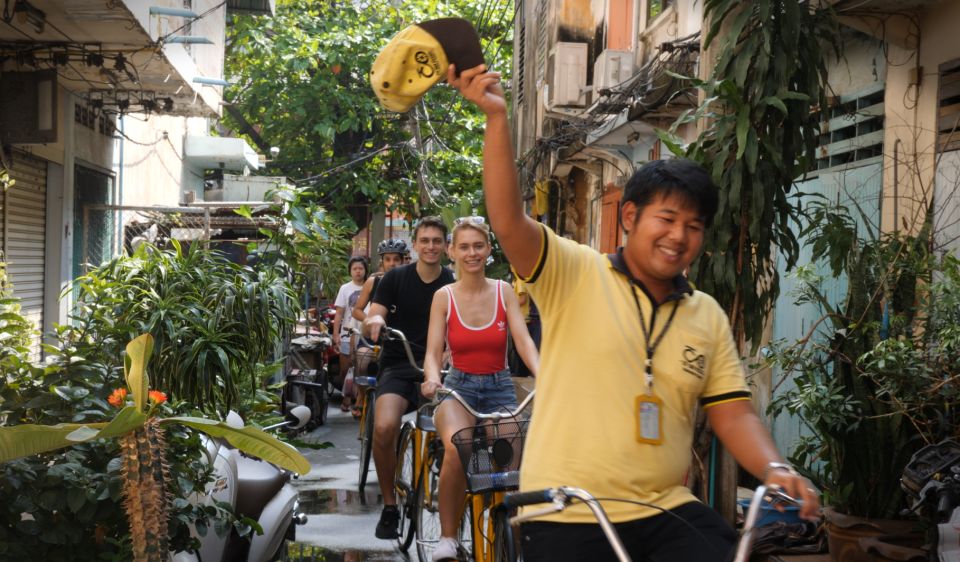
The start is easy to find, right by River City Shopping Center. You’ll meet at 23 Soi Charoen Krung 24 (look for a yellow sign, about 30 meters to the right of a 7-Eleven), then the guides in yellow shirts get you moving with bike basics, quick rules, and an English-speaking plan. The best part is the balance: you get the energy of markets and backstreets, plus small pauses for viewing and explanation—guides like Mike (and teams such as Emma, Bob, and Lia) are repeatedly praised for keeping it organized and safe.
I also like that the tour doesn’t waste time. In 3 hours you’ll cross the river, visit a monastery area in Thonburi, and stop for drinks and snacks that often include local fruit and treats from market stops. Still, manage expectations: this isn’t designed for people with mobility issues or anyone who can’t ride a bike, and the tour won’t be comfortable for very inexperienced riders.
In This Review
- Key highlights I’d plan around
- Chinatown on two wheels: the part of Bangkok you feel more than see
- What you’ll want to watch for in Chinatown
- Thonburi after the ferry: calm neighborhoods with real daily rhythms
- Monastery time: spiritual space without the tourist performance
- The ride experience: safety systems, narrow streets, and your own comfort level
- Bike basics and what’s included
- Clothing and readiness
- Market stops and the snack tasting that feels like a mini lesson
- How to approach snack time
- Price and value: why $40 can make sense for 3 hours
- Who should book (and who should skip)
- Should you book the Bangkok Classical Bicycle Tour?
- FAQ
- How long is the Bangkok Classical Bicycle Tour?
- How much does it cost?
- Where do I meet the tour?
- What’s included in the price?
- Is there an English-speaking guide?
- What should I bring and wear?
- Can children join, and do infants ride too?
Key highlights I’d plan around
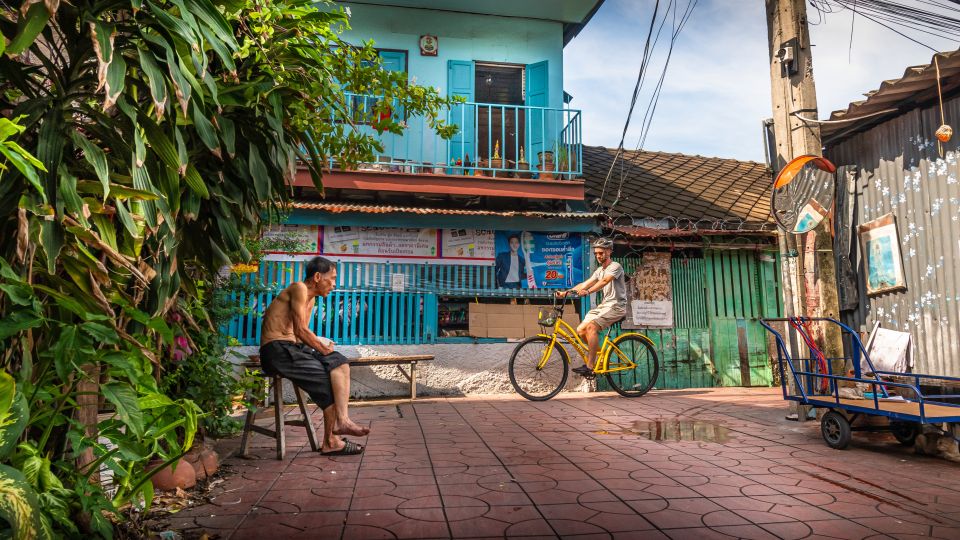
- Chinatown route that stays human-scale: narrow lanes, shop-house culture, spirit-house displays, and hidden temples
- Chao Phraya ferry crossing: a quick 10-minute break in traffic for city-skyline views
- Thonburi, the historic third capital: a contrast to Chinatown, with more residential calm
- Monastery visit in Thonburi: time to see how everyday worship fits into neighborhood life
- Local fruit and snack tasting: a market pause that turns eating into a cultural moment
Chinatown on two wheels: the part of Bangkok you feel more than see
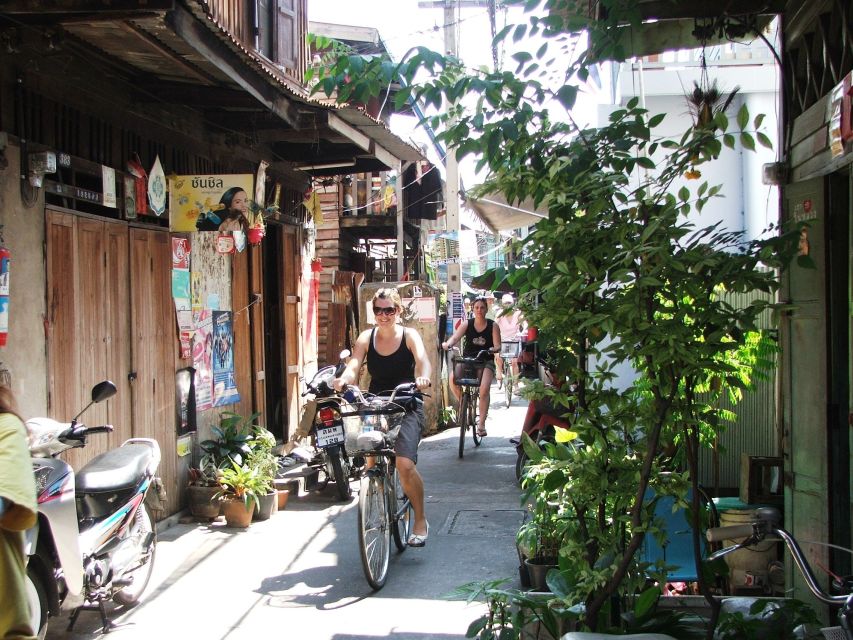
Your tour begins in Chinatown, where the streets don’t behave like they do in guidebooks. The first chunk of time is about letting your senses catch up: the sound of vendors, the smell of street food, the motion of people threading between stalls and shop fronts. You’re not just passing storefronts—you’re moving through the working side of the neighborhood, where shop-houses sell everything from Buddhist amulets to odd bits of recycled metal and parts (the kind of things you’d never think to search for).
This is also where the tour earns its name “classical” in a practical way. Bangkok’s identity isn’t only temples and palaces. It’s also small rituals and everyday beliefs. Along the way you’ll notice spirit house displays, ritual paper burnings, and hidden places of worship tucked into alley pockets. Those details matter because they explain why Chinatown feels layered: business, belief, family life, and community all share the same tight spaces.
I especially like how the route avoids the “one big street, ten minutes of stopping” trap. Expect winding through narrow side lanes and alleyways where walking would be crowded but biking lets you cover more ground while still staying close to the action.
You can also read our reviews of more tours and experiences in Bangkok.
What you’ll want to watch for in Chinatown
- Tight corners and shared space: you’ll be riding near pedestrians and street activity.
- Slow down without panicking: the guides handle crossings and timing, but you still need your own balance.
- Photos, but eyes first: there are lots of scenes worth capturing, yet the safest habit is to point-and-shoot after you’ve stabilized.
Thonburi after the ferry: calm neighborhoods with real daily rhythms
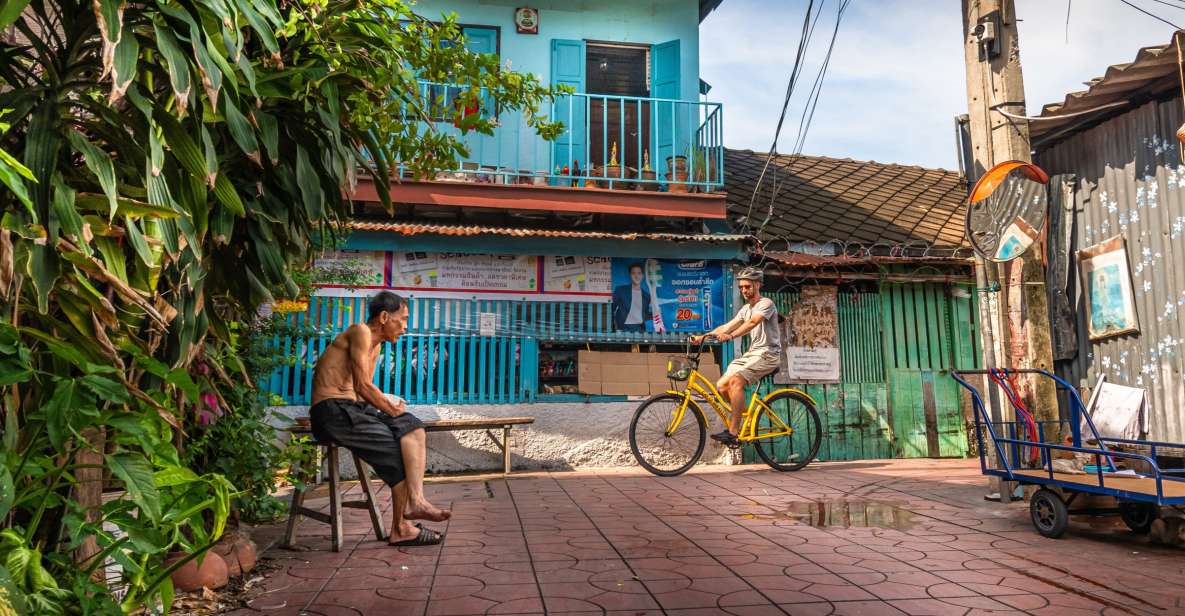
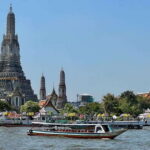
After Chinatown, the tour shifts gears with a ferry crossing over the Chao Phraya. It’s only around 10 minutes, but it changes the whole tempo. One minute you’re focused on tight movement and close-up street life; the next, you get open views and the feeling of distance across the river. You’ll also see the skyline behind you, and it’s a great moment to reset before Thonburi’s quieter streets.
Thonburi is described as Thailand’s historic third capital, and you’ll feel that in the way the neighborhood holds onto tradition while still functioning as a place where people live their normal day. The bike route takes you through more residential communities—less market chaos, more everyday rhythm. This contrast is one of the biggest reasons I think this tour works: it gives your brain a before-and-after picture of Bangkok instead of one long blur.
Monastery time: spiritual space without the tourist performance
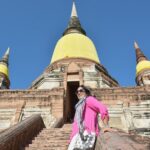
In Thonburi you’ll visit a monastery area and spend about 30 minutes there. This stop is valuable because it’s not just about checking a building off a list. It’s time to watch how local worship fits into the neighborhood. You’ll see people doing ordinary, purposeful things—worship, quiet attention, and the kind of routines that don’t feel staged.
If you’re the type who enjoys cultural context, this part pays off. The guides explain what you’re seeing and tie it back to the broader city patterns you already experienced in Chinatown.
The ride experience: safety systems, narrow streets, and your own comfort level
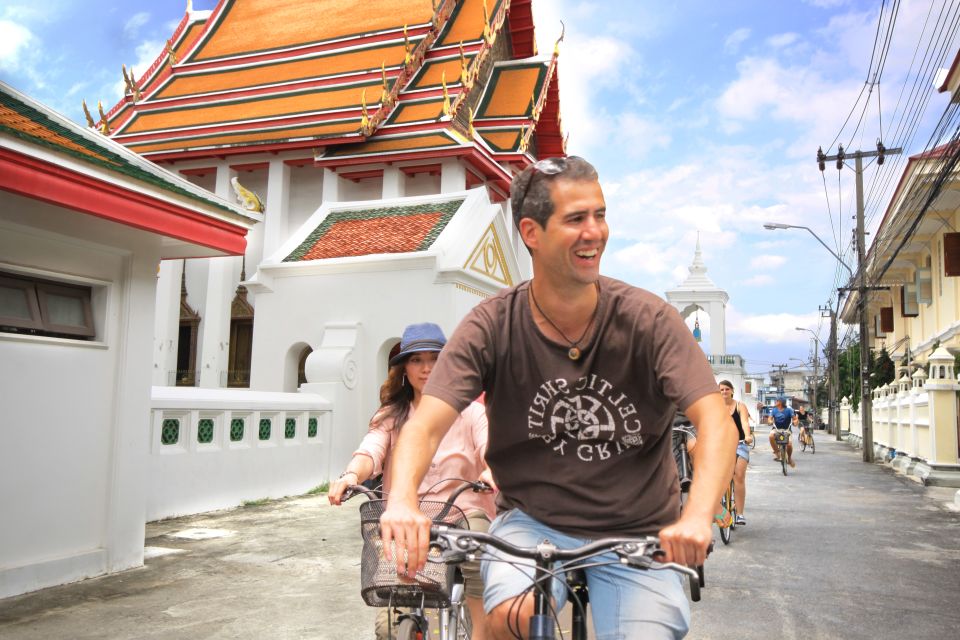
This is a guided bike tour, which means the real secret isn’t your ability to bike perfectly—it’s whether you can follow a group pace while staying relaxed.
The good news: guides are repeatedly praised for safety and organization. People mention that guides keep everyone together, and in crowded zones the team helps manage crossings so you don’t feel like you’re improvising in chaos. Many riders also say the tempo is manageable and not physically demanding overall.
The honest note: narrow alleys in Chinatown can feel busy. You may share paths with pedestrians, and your comfort level matters. One review explicitly flags that you should be confident on a bike because the routes can get tight with people. So, if you’ve never ridden much (or you wobble on turns), this is the wrong kind of practice ride. Bring your best riding day.

Bike basics and what’s included
You get bicycle hire as part of the tour, plus drinks and snacks en route. Reviews mention bikes are in good condition and are comfortable enough that the tour doesn’t feel punishing even when you’re moving through cramped streets.
Also, the tour includes ferry crossing, so you’re not juggling another layer of transport. That’s a hidden value win for a 3-hour experience.
Clothing and readiness
You’ll want comfy shoes and sunglasses. Cameras help too. One rule to remember: sleeveless shirts aren’t allowed.
Market stops and the snack tasting that feels like a mini lesson
A huge highlight here is the food stop, often tied to a flower market area. Reviews repeatedly mention local fruit and Thai snacks, plus small tastings that make you try things you wouldn’t order on autopilot. That includes fruit some people describe as new to them, along with baked goods or local biscuits depending on the stop.
This matters more than you might think. In a city like Bangkok, markets aren’t only about buying. They’re where people learn flavors, share routines, and keep ingredients close. When a guide brings you to try snacks, you’re getting a shortcut to understanding how locals experience the day.
There’s also something fun in the unpredictability. One rider even mentions spotting a water monitor lizard during the route—exactly the kind of surprise you’re more likely to catch on the street than from a bus window.
How to approach snack time
- Eat slowly and politely: you’ll want your hands free for biking later.
- Ask what you’re trying: guides are English-speaking and help explain what it is.
- Use the break for photos: it’s a natural time to stop and reset.
Price and value: why $40 can make sense for 3 hours
At about $40 per person for a 3-hour tour, the value isn’t just the bike. You’re paying for three practical things:
- Access to places you’d likely avoid on foot
Tight streets and backstreets are hard to navigate alone without losing time or ending up in the wrong place.
- A guide managing movement and context
The guides are repeatedly singled out for English ability and friendliness, which helps you understand what you’re seeing—not just pass through it.
- Included ferry crossing plus snacks/drinks
The ferry is part of the package. And the market stop turns into an eat-and-learn moment rather than a random roadside craving.
For a short stay, this is the kind of tour that can replace a “half-day shuffle.” You leave with a sense of how neighborhoods work, plus specific cultural points: Chinatown rituals, Thonburi’s feel, and a monastery visit.
If you’re someone who enjoys structured wandering, the price is easier to swallow. If you prefer unguided time and don’t like riding through crowds, you might feel the cost is harder to justify.
Who should book (and who should skip)
I think this tour is a strong fit if you:
- like street-level Bangkok, not only landmark tours
- can ride a bike confidently
- want a short plan that covers a lot in 3 hours
- enjoy food tasting and small cultural stops
- want an English-speaking guide who keeps the group moving smoothly (people often call out guides like Mike, Emma, Bob, Lia, Earth, Kitty, Zoe, Ling ling, and others)
You should skip or be cautious if you:
- can’t ride a bike
- have mobility impairments
- get stressed by narrow, crowded alley traffic
- aren’t comfortable controlling a bike in shared pedestrian space
Should you book the Bangkok Classical Bicycle Tour?
If you want Bangkok that feels lived-in—Chinatown’s shop-house details, the spiritual pockets, and Thonburi’s quieter neighborhoods—this is a great way to get there fast. The ferry crossing is a smart break, and the monastery visit adds cultural weight without turning it into a long lecture.
Book it if you’re a confident bike rider and you’re okay with some crowding in Chinatown lanes. Skip it if you’re only comfortable on wide roads or if biking makes you nervous; the whole point is getting into the streets.
In short: for active, curious visitors who want real neighborhood Bangkok in 3 hours, this one is worth your morning.
FAQ
How long is the Bangkok Classical Bicycle Tour?
The tour lasts about 3 hours.
How much does it cost?
It’s listed at $40 per person.
Where do I meet the tour?
You meet at 23 Soi Charoen Krung 24, about 30 meters to the right of the 7-Eleven at River City Shopping Center. Look for a yellow sign.
What’s included in the price?
You get bicycle hire, local guide(s), ferry crossing, and drinks and snacks during the ride.
Is there an English-speaking guide?
Yes, the live tour guide speaks English.
What should I bring and wear?
Bring comfortable shoes, sunglasses, and a camera. Sleeveless shirts are not allowed.
Can children join, and do infants ride too?
Infants age 0–5 must ride on the back of the bikes. Children age 6–11 have no charge if they cannot ride on their own and will ride on the back of the bike.