REVIEW · HONG KONG SAR
Big Bus Hong Kong Open Top Hop-On Hop-Off Sightseeing Tour
Book on Viator →Operated by Big Bus Hong Kong · Bookable on Viator
One of the best ways to beat Hong Kong’s hills. This open-top hop-on hop-off tour links the city’s big sights with clear audio commentary and the freedom to get off when something catches your eye.
I like that you can pick a pace that fits your day. The 24- or 48-hour pass lets you spread things out instead of sprinting between neighborhoods, and it covers three major areas with stops that actually match classic Hong Kong itineraries.
One thing to plan around: bus frequency can mean longer waits at some stops, especially on the Kowloon side. If you hate waiting, you’ll want to use live tracking and build a little buffer into your schedule.
In This Review
- Key things to know before you ride
- First sit-down: what this Big Bus tour is really good at
- Price and value: what you’re paying for at about $53
- The routes map in plain language (and how to pick yours)
- Red Route: Hong Kong Island highlights
- Green Route: Stanley and the south side of Hong Kong Island
- Blue Route: Kowloon and the culture belt
- Using your 24 or 48-hour pass without wasting hours
- A smart order if you’re doing the 48-hour plan
- Stop-by-stop: what to expect at the biggest landmarks
- Central Star Ferry Pier No.7: your launching pad
- Mid-Levels Escalator: a Hong Kong landmark in motion
- Man Mo Temple: incense, history, and street-level calm
- Tai Kwun: culture inside a former prison complex
- The Pawn (Johnston Road area)
- Causeway Bay Sogo and Park Lane Hong Kong: retail plus a polished skyline feel
- The Peak Tram: one of the most rewarding viewpoints
- Wan Chai Waterfront: where the city feels like it’s breathing
- Stanley: markets, seafront strolling, and a different pace
- 23 Carmel Rd and the south-coast transitions
- Repulse Bay: beaches and a clearer sense of distance
- Ocean Park and Kwun Hoi Path
- Aberdeen: boats, harbor views, and a living coastline
- Avenue of Stars and the Bruce Lee Statue
- Temple Street: night market energy, even in daytime planning
- Wholesale Fruit Market
- Langham Place: modern mall energy between attractions
- M+ Museum and Hong Kong Palace Museum
- West Kowloon Station: practical endpoint with transit options
- What I’d pay extra attention to: waiting time and stop-finding
- Audio commentary: when it helps most
- The included extras that make the pass feel more complete
- Who this tour is best for
- Should you book Big Bus Hong Kong’s open-top hop-on hop-off?
- FAQ
- How long is the Big Bus Hong Kong hop-on hop-off tour?
- What routes are included?
- Is Star Ferry included?
- Is Peak Tram included?
- Is WiFi included?
- Do I have to use the hop-on pass on consecutive days?
Key things to know before you ride
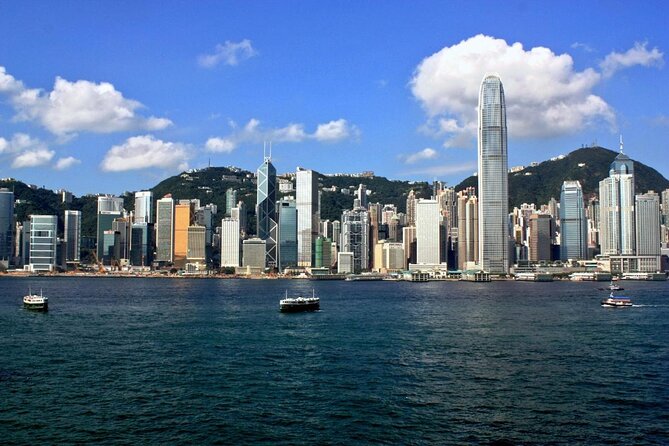
- Three routes, three sides of Hong Kong: Red (Hong Kong Island), Green (Stanley), Blue (Kowloon)
- You can start at major landmarks like Central Star Ferry Pier No.7
- Audio commentary in 9 languages means you’re not just looking at streets
- 24 vs 48 hours changes value (and affects which extras you can choose)
- 48-hour pass adds a Peak Tram/harbor combo choice (Peak Tram special, water taxi, or sampan houseboat)
First sit-down: what this Big Bus tour is really good at
Hong Kong has a talent for making first-time visitors feel like they’re always walking uphill. This tour fixes that problem with a practical setup: you ride double-decker open-top buses between key areas, then hop off for temples, markets, waterfronts, and museums.
The real win is how it combines movement and context. The bus isn’t just transport. You get audio commentary in 9 languages, so stops like Man Mo Temple or Tai Kwun make more sense as you pass and as you plan your walking time.
If you like flexibility more than check-the-box schedules, this fits. Your pass is valid for 24 or 48 hours, and with multiple routes you can re-shape your day without paying for a bunch of separate tours.
You can also read our reviews of more tours and experiences in Hong Kong SAR.
Price and value: what you’re paying for at about $53
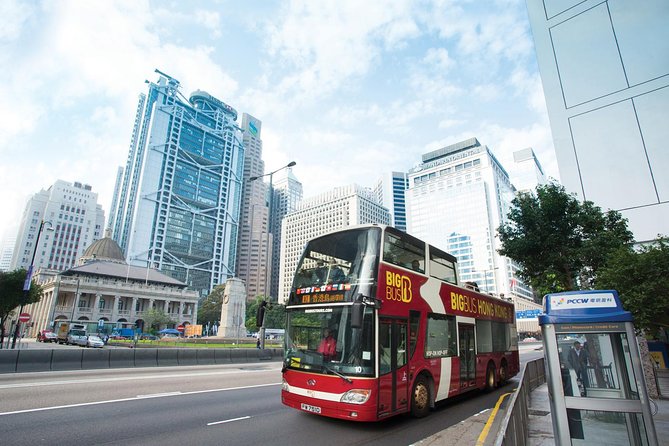
At about $53.14 per person, this is not the cheapest way to see Hong Kong. But it can still be good value because you’re buying three things at once:
- Time-savings across big neighborhoods (Hong Kong is spread out)
- Interpretation via audio, so you understand what you’re looking at
- Extras included like a Star Ferry ticket plus a special combo option with the 48-hour pass
The biggest value move is deciding whether you can realistically use 48 hours. If you can, you’re more likely to hit more stops without rushing. If you only have one day, the 24-hour pass can still work, but you’ll want to be selective and strategic about which route you prioritize first.
The routes map in plain language (and how to pick yours)
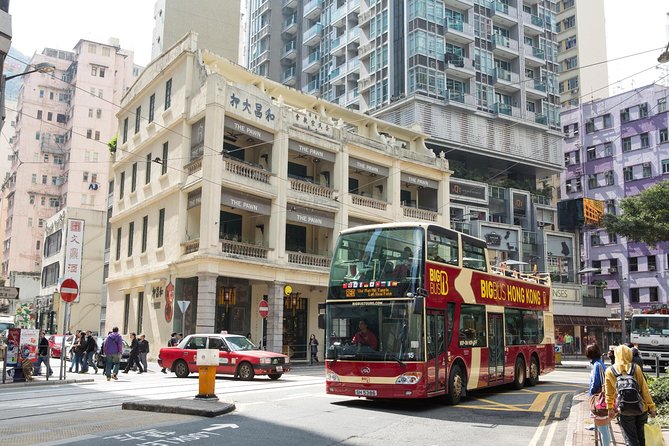
The tour runs three colored routes, and each one tells a different story about Hong Kong.
Red Route: Hong Kong Island highlights
This is your classic “Central up to the Peak” arc. Expect famous landmarks and viewpoints, plus neighborhoods that help you understand how the city grew upward and outward.
Green Route: Stanley and the south side of Hong Kong Island
If you already know Central and Kowloon, the Green Route is often the one that feels fresh. It shifts you toward seaside views, beaches, and laid-back streets, including stops like Stanley Market and Repulse Bay.



Blue Route: Kowloon and the culture belt
This route is heavy on big-name sights in Kowloon. You’ll see famous skyline-area spots and also museum stops that are easy to miss if you only stick to the most obvious tourist trail.
Using your 24 or 48-hour pass without wasting hours
You don’t just ride once. You can hop on and off across the day(s), which is where this tour stops being “a ride” and becomes your day-planner on wheels.
A key rule: your hop-on pass must be used over consecutive days. So if your schedule has a gap between days (for example, you leave Hong Kong and come back later), this pass may not match how your trip is built.
Also, the tour is designed so you can start at the stops anywhere around the network. But in practice, your biggest time-saver is starting close to where you’re staying or where your day begins, then letting the route carry you to the next area.
A smart order if you’re doing the 48-hour plan
A common, efficient pattern is:
- Day 1: do Red + Green to cover the Peak area and then the south coast
- Day 2: do Blue for Kowloon sights and museums
That way, you’re not constantly switching back and forth across the harbor.
Stop-by-stop: what to expect at the biggest landmarks
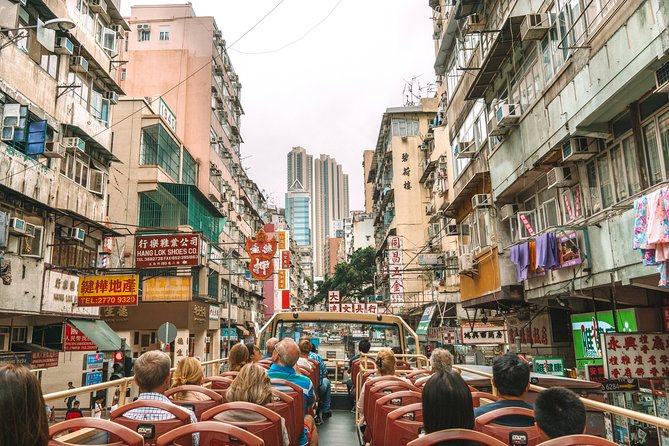
Below is how I’d think about the major stops, what they’re for, and how to avoid time traps.
Central Star Ferry Pier No.7: your launching pad
The tour starts at Central Star Ferry Pier No.7 (and you’ll see this area again later). This is a good first stop because it connects you to one of Hong Kong’s signature experiences: the harbor and the ferry rhythm.
Practical tip: if you’re coming in on foot from the Central area, don’t assume the bus stop is right next door. One traveler noted the Red Route boarding area can be about a half-mile walk from Central terminal landmarks. When it’s hot and humid, that walk can feel longer than it sounds.
Mid-Levels Escalator: a Hong Kong landmark in motion
A stop at Mid-Levels Escalator is a small but important Hong Kong lesson: this city moves vertically, and the escalator is part of everyday life. Even if you don’t plan a long walk, this stop helps you understand the geography behind the views.
Man Mo Temple: incense, history, and street-level calm
At Man Mo Temple, you’re stepping into an older rhythm. It’s one of those places where the bus audio gives you context, and then your feet slow down the pace. It’s a great hop-off stop if you want a pause between neighborhoods.
Tai Kwun: culture inside a former prison complex
Tai Kwun is a high-impact stop if you like history that’s been turned into something usable. Even if you don’t go deep into exhibits, the site itself gives you a sense of how Hong Kong reuses important buildings.
The Pawn (Johnston Road area)
There’s a listed stop for The Pawn at 60A–66 Johnston Rd (noted with an opening date of May 12, 2025). If you’re planning a future trip, check what’s on there at the time you visit. This is exactly the kind of stop you’d miss if you only followed a rigid bus route without hop-off freedom.
Causeway Bay Sogo and Park Lane Hong Kong: retail plus a polished skyline feel
These stops (including Causeway Bay Sogo and The Park Lane Hong Kong) work well if you want a break day of shopping and city views. They’re also useful for planning because they put you near transit connections and easy walking clusters.
The Peak Tram: one of the most rewarding viewpoints
The Peak Tram is a star moment on Hong Kong Island. It’s listed as a key stop on the route, and with the 48-hour pass you have an option called the Peak Tram Special Combo (with other harbor transport options instead). If you care about views, this is where the 48-hour pass can feel worth it.
For timing: Peak areas can be crowded, so if you want smoother photos, plan to be there earlier in the day or at a less peak time.
Wan Chai Waterfront: where the city feels like it’s breathing
A stop at Wan Chai Waterfront is a good hop-off for harbor atmosphere without committing to a full day excursion. You can use it as a reset point between sightseeing blocks.
Stanley: markets, seafront strolling, and a different pace
Stanley is the headline of the Green Route. The stop listed for Stanley is your launch point for Stanley Market and the surrounding seafront vibe. It’s a strong choice if you want to see a part of Hong Kong that feels less like the central business zone and more like a coastal town.
23 Carmel Rd and the south-coast transitions
There’s a stop listed around 23 Carmel Rd on the way into the Stanley/Repulse Bay region. Stops like this matter because they help break up the ride into walkable chunks. Sometimes the best sightseeing is simply choosing where you want to get off and wander.
Repulse Bay: beaches and a clearer sense of distance
Repulse Bay is listed twice across the route logic, which is a hint about how often people want to use that area as a long hop-off. Even if you’re not planning a full beach session, it’s a great place for photos and a slower walk.
Ocean Park and Kwun Hoi Path
If you’re into attractions and coastal walks, these stops pair well. Ocean Park gives you option value if you want to add something ticketed. Kwun Hoi Path supports the more “walk the edges of the island” experience, and it pairs nicely with the feeling that Hong Kong isn’t just skyscrapers.
Aberdeen: boats, harbor views, and a living coastline
With Aberdeen on the Green Route, you get a different side of the harbor than the busy central areas. It’s a strong stop if you like waterfront atmosphere and want your day to feel more coastal than corporate.
Avenue of Stars and the Bruce Lee Statue
On the Blue Route, you’ll hit Avenue of Stars and the Bruce Lee statue. It’s an easy hop-off stop that feels fun even if you don’t go too deep into film history. It works well as a photo stop paired with a walk along the harbor.
Temple Street: night market energy, even in daytime planning
Temple Street is listed on the Kowloon route. It’s one of those areas where you can use the bus like a schedule tool: hop off when you’re ready for that street-market vibe, then hop back on when you need air-conditioned relief.
Wholesale Fruit Market
The stop for the Wholesale Fruit Market is very Hong Kong in the best way: it points you toward daily commerce rather than only showpiece sights. If you want an experience that feels grounded and local, this is worth targeting.
Langham Place: modern mall energy between attractions
Langham Place gives you an easy mid-day pause, especially if you want food, bathrooms, and indoor downtime. It’s also a practical landmark so you’re not wandering without a “home base.”
M+ Museum and Hong Kong Palace Museum
Both M+ and the Hong Kong Palace Museum are listed. These are ideal when you want a “sit and learn” part of the day, and they help break up what can otherwise be nonstop streets and sidewalks.
West Kowloon Station: practical endpoint with transit options
Hong Kong West Kowloon Station is listed on the route. It’s useful as a practical landing point when you’re tired and want an easy way to connect onward.
What I’d pay extra attention to: waiting time and stop-finding

This is where the experience can swing from great to frustrating.
A recurring issue in feedback is frequency. Some people report waits around an hour on certain routes and stops. That doesn’t make the tour useless, but it does change how you should plan:
- Don’t assume you’ll wait zero minutes. Give yourself slack.
- Use the Big Bus app live tracking if you can. A helpful tip from past experiences is to time your arrival at stops using that tool.
- If you’re trying to hit museums at exact opening times, build buffer time. Waiting for the next bus is part of the reality.
Stop-finding can also be tricky. One traveler noted it was a challenge to locate stops until they got familiar with the layout. My advice is simple: when you’re near the stop area, look for clear signage and branded bus-stop zones rather than guessing.
If you’re arriving from a cruise port, allow extra time. Some experiences didn’t line up smoothly with how easily it was to find and board the buses.
Audio commentary: when it helps most
The audio in 9 languages is one of the core reasons the tour feels more useful than a simple sightseeing ride. What I like about audio on a hop-on hop-off is that it gives you a reason to care about what you’re seeing, even if you only spend 20–30 minutes at a hop-off point.
Still, audio can vary by device. If you’re bringing headphones, test them before you settle in, and keep your expectations realistic: on a day with lots of stops and crowded buses, it’s possible for audio tech to act up.
The included extras that make the pass feel more complete
This tour includes a few “smart add-ons” in the ticket price:
- Star Ferry Ticket (listed as included)
- Audio commentary in 9 languages
- Free WiFi
- With the 48-hour pass: a choice among Peak Tram Special Combo, Hong Kong Water Taxi, or Sampan Houseboat
How to choose? If top priority is the classic view from the Peak, pick the Peak Tram special combo. If you want the harbor vibe and don’t care about Peak views as much, the harbor options can feel like a more relaxed payoff.
Who this tour is best for
This works especially well for:
- First-timers who want a guided overview without locking into a strict schedule
- Travelers who feel overwhelmed by HK’s size and want the route structure to reduce stress
- People who hate long walks between neighborhoods (Hong Kong can be punishing on foot)
- Anyone who plans to spend at least part of the trip across two days, since 48-hour value is strongest when you can use it across consecutive days
If you only have a few hours and hate waiting, you might prefer a tighter plan. But if you’re open to a bit of bus timing and you’ll enjoy hop-offs, this is a solid fit.
Should you book Big Bus Hong Kong’s open-top hop-on hop-off?
Book it if you want a flexible framework. The mix of three routes, audio in 9 languages, and a pass that lasts 24 or 48 hours makes it easier to build your own Hong Kong day without constantly re-planning.
Skip it or rethink your timing if you’re the type who needs frequent buses to keep a tight schedule. If your priorities are exact-hour museum entry slots or back-to-back timed events, you may feel the pain of wait times on some stretches.
One last practical note: if you want help during your trip, the company’s support team has responded with real staff names like Razvan, Ana, Cristian T, Alexandru, and Vlad in past interactions. That doesn’t guarantee everything will be perfect, but it does suggest they do handle questions and feedback.
FAQ
How long is the Big Bus Hong Kong hop-on hop-off tour?
The experience duration is listed at about 2 hours, but the ticket is valid for 24 or 48 hours, so you can use it across that time.
What routes are included?
You get three routes: Hong Kong Island (Red Route), Stanley (Green Route), and Kowloon (Blue Route).
Is Star Ferry included?
Yes. The tour includes a Star Ferry ticket.
Is Peak Tram included?
With the 48-hour ticket, you can choose a Peak Tram Special Combo (or choose Hong Kong Water Taxi or Sampan Houseboat instead). Peak Tram is also listed as a stop on the route.
Is WiFi included?
Yes. Free WiFi is included.
Do I have to use the hop-on pass on consecutive days?
Yes. The pass must be used over consecutive days.