Want Hoi An without the crowds? This small-group walking tour sends you into quiet backstreets to meet family producers and then taste what you just learned about. You’ll get a morning or afternoon option, plus complimentary pickup from select hotels to start smoothly.
What I like most is how the experience connects the dots fast. I love the way you can actually see Hoi An staples being made—like Cao Lau noodles at the oldest factory and organic bean sprouts—before you eat. The second win is the built-in foodie payoff: five to seven tastings with bottled water and coffee or tea. The one consideration: some parts involve walking on narrow streets, and the Ancient Town stop lists an admission ticket as not included, so you may pay a little extra there.
In This Review
- Key things to know before you go
- Morning or afternoon? Picking the best timing in Old Hoi An
- Backstreets first: why this walk feels different
- Entering the noodle world: Cao Lau and bean sprouts in real factories
- Hoi An’s mixed influences: temples, markets, and architecture
- From sightings to tastings: 5 to 7 bites that actually connect
- Guide-led small-group magic: the human part of the day
- Practical stuff that makes or breaks your comfort
- Price and value: why $41 can feel like a deal
- When this tour is the best fit (and when it isn’t)
- Should you book this Old Hoi An food and backstreet walk?
- FAQ
- What’s the duration of the Hidden Gems of Old Hoi An experience?
- How many tastings are included?
- Are drinks included?
- Is pickup available?
- How large is the group?
- Are morning and afternoon tours offered?
- Is there free cancellation?
- Is admission included for Hoi An Ancient Town?
Key things to know before you go
- Small group, max 10 people means more time for questions and a calmer pace in tight alleys
- Factory-style food stops focus on real production, including Cao Lau noodles and bean sprouts
- 5 to 7 tastings are tied directly to the items you saw being made
- Morning or afternoon departures let you pick your comfort level around heat and crowds
- Pickup from select hotels keeps the start easy, especially if you’re not near the meeting point
Morning or afternoon? Picking the best timing in Old Hoi An
Hoi An can feel like a movie set at peak hours. That’s why the choice of morning vs afternoon matters more than it sounds. The morning slot usually feels like the best way to get street life before it’s packed, with cooler temps for walking and fewer tour groups pushing along the same sidewalks.
If you’re booking the afternoon, you’ll still get the point of the tour: backstreets, local families, and food you won’t easily find on your own. It just means you’ll want to lean into the walking and bring water seriously, because the city can turn warm fast.
Also think about your energy level. The tour is about 3 to 4 hours, with moderate walking through side streets. If you’re someone who hates being on your feet, pick your shoes carefully and plan to take it slow where you can.
You can also read our reviews of more tours and experiences in Hoi An.


Backstreets first: why this walk feels different
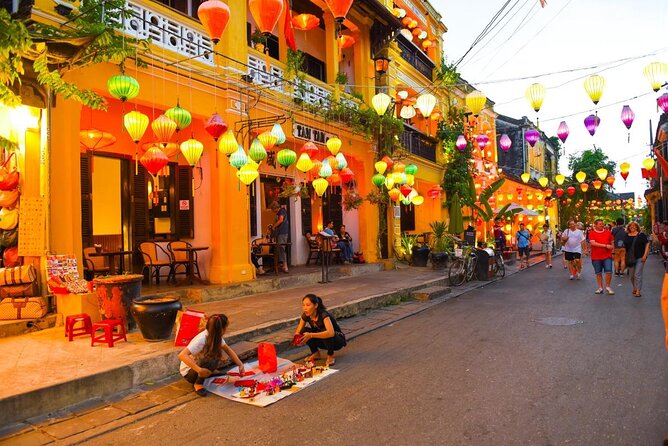
The core of this tour is not just food. It’s the route. You start with a gentle orientation in the Ancient Town area, then your guide moves you away from the main flow into lanes that feel more like how people actually live.
Along the way, you’ll hear about everyday patterns—how families organize work, how markets function, and how local spaces are shaped by tradition and change. The goal is simple: you get context first, then the tastings make more sense.
One small but important detail: guides help with crossing busy areas. More than once, I’ve seen how that turns an otherwise stressful stretch of road into something smooth. Here, the guides are clearly used to keeping the group together and moving safely.
Entering the noodle world: Cao Lau and bean sprouts in real factories
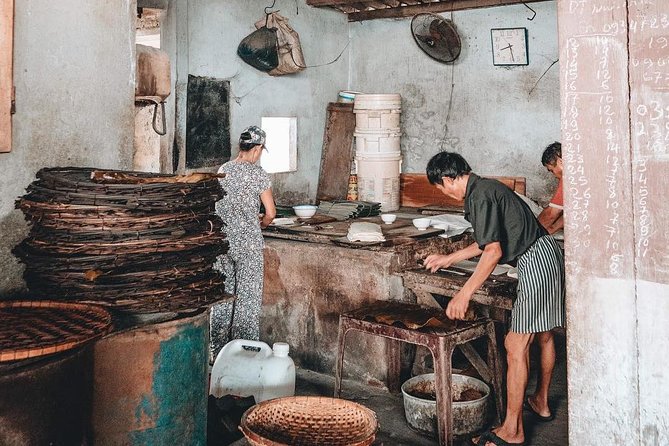
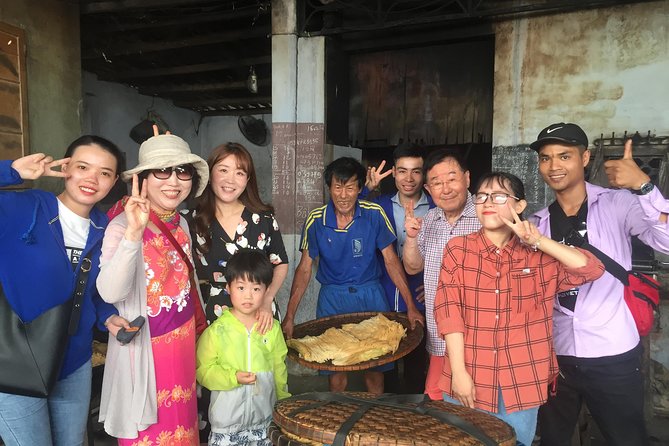
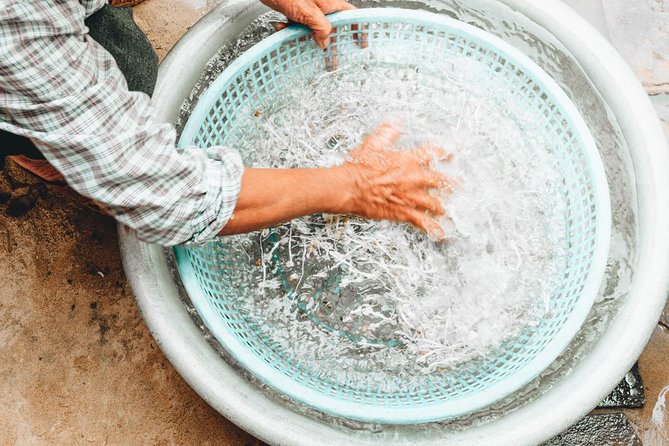
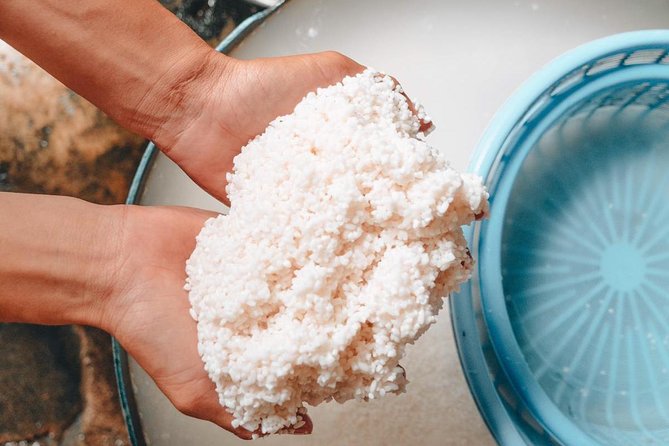
This is the part people remember. You visit local family producers, and the tour focuses on items that Hoi An is famous for—especially Cao Lau noodles and bean sprouts.
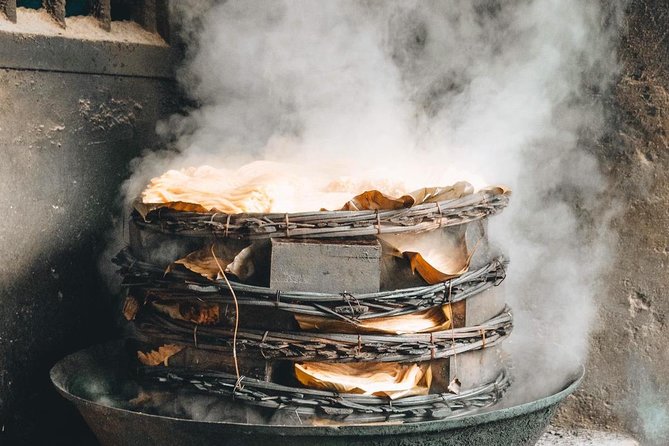
For Cao Lau, the tour highlights the oldest factory for the noodles. That matters because Cao Lau isn’t just a dish here; it’s a whole local system of sourcing and production. Seeing the process turns dinner into a story you can explain later.
Then you shift to bean sprouts, including organic bean sprout production. Even if you think you already know how sprouts work, watching the process up close makes you understand why the texture and taste can be so different from what you find elsewhere.
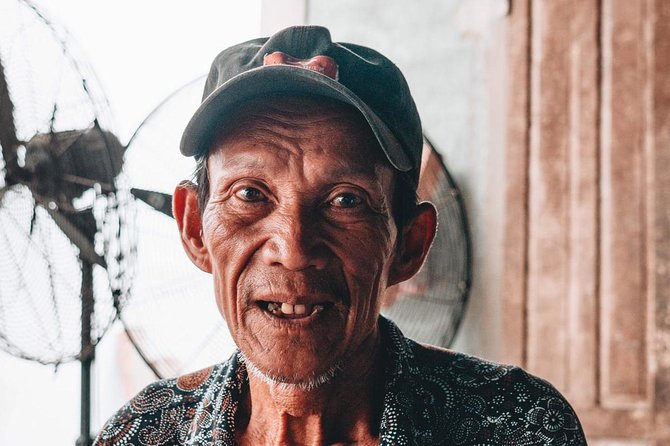
These stops also change the tone of the day. Instead of window-shopping for souvenirs, you’re standing in working spaces and meeting the people behind the food. In multiple guide narratives from past groups, you’ll notice the same theme: family pride. The producers are proud to show what they do, and the guide helps you ask the right questions.
Hoi An’s mixed influences: temples, markets, and architecture
Food in Hoi An didn’t grow in a vacuum. One reason the walking portion is valuable is that you learn how different communities shaped daily life and cuisine over time—specifically the impacts of Japanese, Chinese, and Westerners.
As you walk, you’ll also see a mix of practical places and meaningful structures: markets, a family temple, and architectural details that hint at how the city adapted while staying rooted. It’s not a museum tour. You’re moving through parts of town where people still do real-life routines.
If you like history but don’t want lectures, this portion is a good middle ground. It’s story-based and tied to what you can see. It also helps you connect the production stops to the city around them. When you understand where ingredients come from and how neighborhoods function, you start reading the streets differently.
From sightings to tastings: 5 to 7 bites that actually connect
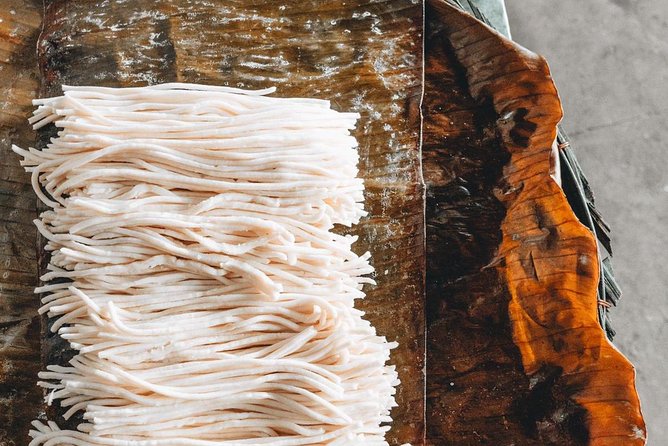
The tastings are where the tour pays you back. You’re offered five to seven tastings, plus bottled water and coffee or tea. The best part is that the tastings are not random. They’re structured around the items you saw being made earlier.
So after you watch Cao Lau noodles and bean sprout production, you’re not left guessing what makes them special. You get to taste the results right away, while the production details are still fresh in your mind.
This is also why I think the tour is good value. At $41 per person, you’re essentially paying for a guided walkthrough plus a meal-like set of bites, with drinks included. You’re not just sampling one or two dishes and calling it a day.
Dietary notes: one key detail from the experience is that guides can accommodate at least some special diets. If you’re vegan, bring it up ahead of time. In past groups, the guides have been able to adjust for vegan needs, but confirmation is still smart.
And yes, you’ll likely get some street-style food during the tastings phase. One example from the tour experience includes bites at Tiger market, which is the kind of place you could miss if you stick only to the most obvious tourist lanes.





Guide-led small-group magic: the human part of the day
A tour like this lives or dies by the guide. The tour design is small by default—a maximum of 10 people—but the guide makes it feel personal.
You may meet different guides depending on your date. Names that have led groups include Kiwi (Quyen/Quinni), Kim, Quynh, Van, Swan, Emily, and Lien Lien, with Harry also mentioned as part of the support team. Even with different guide styles, the consistent thread is warmth and real storytelling about what you’re seeing.
Another practical win: some guides communicate clearly in advance, including messaging through WhatsApp. That sounds small, but it reduces stress when you’re trying to line up pickup and start time.
Also, guides are encouraged to share extra context. For example, you’ll hear history and daily-life stories tied to markets, temples, and architecture—not just a list of food names. That’s what helps you leave with more than a full stomach.
Practical stuff that makes or breaks your comfort
This tour is designed for people who want to walk and eat, not just sit and watch.
- Pace and walking: You’ll be moving through backstreets and local areas. The experience calls for moderate physical fitness, so wear shoes you trust.
- Weather matters: The tour requires good weather. If conditions are poor, expect the provider to adjust by offering a different date or refund.
- Meeting and end point: The walk starts near 03 Phan Đình Phùng, Cẩm Sơn, Hội An, and ends at Bill Coffee & Tea on Trần Hưng Đạo. If you plan a later activity after the tour, give yourself a small buffer so you’re not rushing to a new plan right at end time.
- Mobile ticket: You’ll use a mobile ticket, which is convenient for keeping everything simple on your phone.
For what to bring, keep it basic: water, sun protection, and a light layer if the afternoon feels cooler by the end. And if you tend to get hungry between meals, this tour is built to handle that with multiple tastings plus coffee or tea.
One more tip: ask questions. This tour rewards curiosity, especially when it comes to the production process. Since you’re stepping into family spaces, you’ll learn more when you ask what matters to you—ingredients, methods, sourcing, and what makes a dish taste the way it does.
Price and value: why $41 can feel like a deal
Let’s talk straight about the cost. At $41 per person, this isn’t a budget snack tour. But it also isn’t overpriced for what you get.
You’re getting:
- a guided 3 to 4 hour walking experience
- pickup from select hotels
- a small group size (max 10)
- five to seven tastings
- bottled water and coffee or tea
- visits tied to real food production (Cao Lau noodles and bean sprouts)
When you price those pieces separately in Hoi An—guiding, multiple tastings, and drinks—this becomes easier to justify. Plus, the walking route is the kind you’d struggle to assemble on your own without local connections. That’s where the value really shows up.
When this tour is the best fit (and when it isn’t)
You’ll love this tour if you want:
- food with context, not just a list of dishes
- to walk beyond the main tourist lanes
- a small-group experience where you can ask questions
- factory-style stops that make famous Hoi An items feel real
You might skip it if:
- you hate walking on narrow streets
- you only want a quick, casual sampling (this is a real 3 to 4 hour plan)
- you’re trying to avoid any separate admission fee at the Ancient Town stop area, since that part lists admission as not included
Should you book this Old Hoi An food and backstreet walk?
I think you should book it if you’re in Hoi An for a short time and want one day that gives both flavor and context. This tour is built around a simple formula: see how iconic food is made, then taste it right away, all while learning how the city’s neighborhoods work and why the ingredients matter.
If you want a smooth, structured day that still feels local, this is a strong choice—especially with the small group size and the chance to meet the families behind the production. Just plan for walking, wear comfortable shoes, and be ready to eat your way through Old Hoi An.
If that sounds like your style, it’s an easy yes.
FAQ
What’s the duration of the Hidden Gems of Old Hoi An experience?
It runs for about 3 to 4 hours.
How many tastings are included?
The tour includes five to seven tastings.
Are drinks included?
Yes. It includes bottled water and coffee or tea.
Is pickup available?
Complimentary pickup is available from select hotels in Hoi An.
How large is the group?
The tour has a maximum of 10 travelers.
Are morning and afternoon tours offered?
Yes, you can choose from morning or afternoon tours.
Is there free cancellation?
Yes, you can cancel for a full refund up to 24 hours before the experience’s start time.
Is admission included for Hoi An Ancient Town?
No. The Hoi An Ancient Town stop lists an admission ticket as not included.