REVIEW · GOA
Old Goa Heritage Walk by Make It Happen
Book on Viator →Operated by Make It Happen · Bookable on Viator
Old Goa can feel like a time machine. This guided heritage walk focuses on Portuguese-era churches and key monuments, with admissions included and a heritage map in your pocket.
I like how private touring keeps you from feeling rushed. I also love that your guide turns stone and stained glass into clear stories you can actually follow.
One thing to consider: church access can change, and the route may get adjusted if major sites are closed on the day.
In This Review
- Key highlights at a glance
- Old Goa Heritage Walk: why this walk makes sense
- Price and what $12.27 buys you in real life
- Where you start: Viceroys Arch and an easy way to orient
- Stop 1: Church of St. Francis of Assisi and the baroque eye-opener
- Stop 2: Viceroy’s Arch and the city gateway story
- Stop 3: Church of Our Lady of the Rosary and World Heritage context
- Private tour setup: small group feel, flexible pacing
- Dress code and weather: the two things that can make or break the day
- Your guide can turn stone into a story
- If a major site is closed, your route may adapt
- Who should book this Old Goa walk?
- Should you book Old Goa Heritage Walk by Make It Happen?
- FAQ
- How long is the Old Goa Heritage Walk?
- What’s included in the price of $12.27 per person?
- What’s the meeting point?
- What is the dress code for visiting churches?
- Is a vehicle or snacks included?
- What happens if the weather is bad?
Key highlights at a glance
- Portuguese-era focus through iconic Old Goa churches and landmarks
- Entry fees included so you avoid surprise costs mid-walk
- Old Goa Heritage Map handed out during the tour for easy orientation
- Private tour flexibility with an English-speaking guide
- Baroque and church interiors you’re less likely to notice on your own
- Max 20 travelers, so it stays conversational rather than chaotic
Old Goa Heritage Walk: why this walk makes sense
Old Goa is the kind of place where you can wander for hours and still miss the point. This is built as a guided route that gives context fast, so the churches aren’t just pretty—they explain why Portuguese rule left such a visible mark on Goa.
You’ll walk through some of the oldest religious landmarks in the area, with stops chosen for design details and historical significance. That means you get a tight, efficient overview, without needing a full day of museum-style pacing.
You can also read our reviews of more tours and experiences in Goa.



Price and what $12.27 buys you in real life
At about $12.27 per person, this is priced like a budget-friendly cultural add-on—yet it includes several “hidden” value items. The big win is that entrance fees are included, so you’re not hunting for tickets while you’re trying to see things.
You also get an Old Goa Heritage Map plus a friendly English-speaking host. For many people, that combination (map + guided explanations) is where the money actually goes—helping you understand what you’re looking at and giving you direction for the rest of your day in Old Goa.
Two practical notes. First, it doesn’t include snacks, so plan to bring water if you tend to get thirsty while walking. Second, there’s no air-conditioned vehicle included, which matters in Goa’s heat—so choose a departure time you can handle comfortably.
Where you start: Viceroys Arch and an easy way to orient

The walk starts at Viceroys Arch (near the Mandovi river front side of Old Goa). That’s a smart starting point because it’s tied to how people historically entered the area from the waterfront, not some random street corner.
The tour ends back at the meeting point, which is useful when your morning or afternoon plans are tight. It’s also listed as near public transportation, so you’re not forced into a taxi-only scenario.
The duration is about 2 hours 30 minutes, so this fits well as a first taste of Old Goa. It’s short enough to do without draining your entire day, but long enough for your guide to explain more than just the basics.
Stop 1: Church of St. Francis of Assisi and the baroque eye-opener
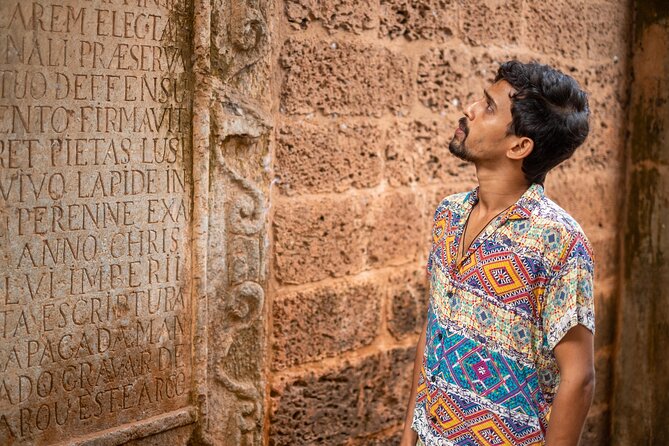
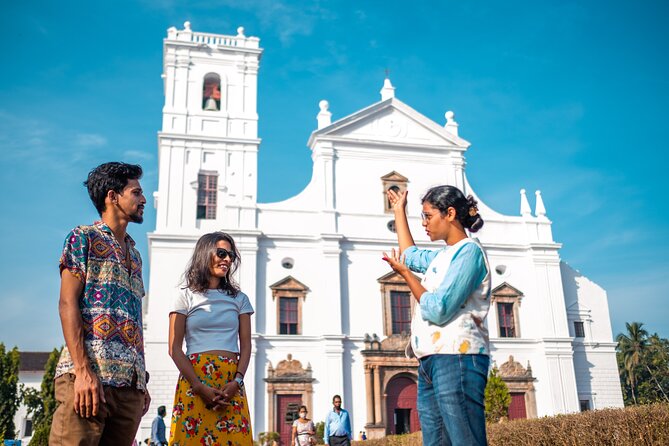
Your first major stop is the Church of St. Francis of Assisi, described as fine baroque style, with plenty of wall paintings and intricate wood work. If you’ve only ever seen churches as “big buildings,” this is the one that usually changes that.
Here’s what makes this stop valuable: baroque design is all about storytelling, using detail to pull you inward. A good guide helps you notice what’s worth looking at—so you don’t walk past art that you could have actually interpreted.
A common snag in church visits is the practical dress rule. This one is strict: you must cover knees and shoulders to enter churches. If you forget, you may have to adjust clothes before you can go in, which wastes time in a route that’s already timed tightly.
Stop 2: Viceroy’s Arch and the city gateway story
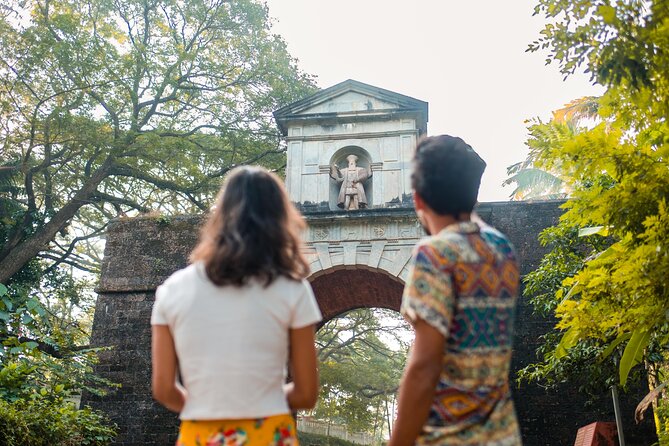
Next up is Viceroy’s Arch, a majestic archway that functioned as a main entrance to Old Goa from the Mandovi river front. Even if you’re not “a monument person,” an arch like this helps you understand the layout and movement of the city.
This stop works because it connects geography to history. Old Goa wasn’t built as a standalone pile of churches; it was a living settlement tied to trade routes and the river. When you see the arch from the right perspective, you start to understand how Portuguese-era Goa looked and how people likely flowed into the city.
One consideration: this portion is relatively short. Don’t expect a huge explanation just from standing under the arch. The payoff is better when your guide ties it into the next church stop—so listen closely as you move.
Stop 3: Church of Our Lady of the Rosary and World Heritage context
The final church stop is the Church of Our Lady of the Rosary, noted for being one of the most beautiful churches architecturally and historically important to Old Goa. It’s also part of the churches-and-convents collection recognized as a World Heritage Site.
This matters because it adds a layer beyond “local landmark.” World Heritage status usually means the site’s value isn’t only aesthetic; it’s also about preservation of cultural identity and historical influence. Your guide can help you connect what you’re seeing to why it was recognized in the first place.
If you like architecture, this is likely the stop where you slow down. You’ll have time to look at the building as a structure, not only a place of worship. If you’re more into people and politics, listen for the way Portuguese rule shaped the religious landscape—your guide’s focus is specifically tied to Goa under that period.
Private tour setup: small group feel, flexible pacing
This is listed as a private tour, with a maximum of 20 travelers. That’s an important middle ground. It’s not so small that you get only a couple of voices, and it’s not so large that you’re waiting for everyone to catch up.
Private touring is also where flexibility shows up. If a church is slower than expected, your guide can adjust pacing. If you have questions, you’re more likely to get direct answers instead of a rushed lecture for the whole group.
Also, the tour uses a mobile ticket, which keeps paperwork simple. That may not sound glamorous, but it makes start-time days less stressful—especially when you’re trying to navigate in a historic area.
Dress code and weather: the two things that can make or break the day

The dress code is non-negotiable: cover knees and shoulders to enter churches. I’d plan for this even if you think you’re already dressed appropriately, because you might sit, climb steps, or adjust fabric in warm weather.
Weather is the other major factor. The experience requires good weather, and if it gets canceled due to poor conditions, you’ll be offered a different date or a full refund. This is a walking route, so rain doesn’t just mean discomfort—it changes the whole feasibility of the plan.
If your schedule is flexible, I recommend choosing a departure when the day isn’t at its hottest. In the past, people have mentioned a start time around 8:30 AM, which is the kind of timing that can make the walk feel easier.
Your guide can turn stone into a story
What makes this walk stand out is the guiding style. Guides are repeatedly praised for being friendly, patient, and good at keeping the pace smooth while explaining what you’re looking at.
Several names come up in standout experiences: John Ferrão, Vimala Desouza, Yashasvi, Santoshi, Pawan, Mugdha, and Amreen. While any excellent guide can make a difference, the pattern here is consistent: you’ll get explanations that answer real questions, not just a script.
Practical tip: if you want the most value, ask a couple of grounded questions early. For example, ask what Portuguese influence looks like in architecture versus daily life, or how the riverfront connected Old Goa to the wider world. You’ll find that your guide’s focus on Portuguese rule makes those questions land well.
If a major site is closed, your route may adapt
One realistic consideration with heritage walking tours is that some major churches or related sights can be closed on certain days. When that happens, your guide may adjust by rerouting you to other nearby highlights.
For example, there’s a mention of St Augustine Tower being used as an alternative when bigger sites were not accessible. So don’t assume you’ll see every single famous church on every date. Still, the tour is designed to keep you moving through Old Goa’s key Portuguese-era religious landmarks.
Who should book this Old Goa walk?
This experience fits best if you want a guided overview without spending a whole day. With a 2 hours 30 minutes format, it’s ideal for first-timers who want the “how to read Old Goa” version of a church visit.
You’ll likely enjoy it if you:
- Want Portuguese-era church architecture explained in plain language
- Like walking routes that start and end in one place
- Appreciate small-group energy (max 20 travelers)
- Are comfortable meeting a group at a central Old Goa landmark, Viceroys Arch
If you’re the type who wants zero walking, or you need frequent seating breaks, you might find the pace challenging. The route is still manageable, but it’s built for active sightseeing.
Should you book Old Goa Heritage Walk by Make It Happen?
Yes—if you want strong value and clear guidance in a short window. For around $12.27, you get the basics done right: a map, an English-speaking host, and entry fees included. The stop choices (St. Francis of Assisi, Viceroy’s Arch, and Our Lady of the Rosary) create a smooth arc from design detail to city layout to World Heritage context.
Before you book, plan for two things: bring the right clothes for church entry (knees and shoulders covered), and choose a time when weather won’t bully your walking pace. If those boxes are checked, this is the kind of Old Goa experience that helps you see the city as more than postcard churches.
FAQ
How long is the Old Goa Heritage Walk?
It lasts about 2 hours 30 minutes.
What’s included in the price of $12.27 per person?
The experience includes a friendly English-speaking host, an Old Goa Heritage Map, and the entrance fee for the stops.
What’s the meeting point?
You start at Viceroys Arch, Goa Old Goa, Goa 403402, India, and the walk ends back at the same meeting point.
What is the dress code for visiting churches?
It’s mandatory to cover knees and shoulders to enter churches.
Is a vehicle or snacks included?
No. Air-conditioned vehicle and snacks are not included.
What happens if the weather is bad?
The experience requires good weather. If it’s canceled due to poor weather, you’ll be offered a different date or a full refund.