REVIEW · SIEM REAP
Angkor Wat full Day ‘Small Group with sunset & Tour Guide
Book on Viator →Operated by Angkor Wat Shared Tours · Bookable on Viator
Angkor Wat hits different at human speed. This full-day small-group tour links the top temples with a guide and finishes with a sunset viewpoint climb.
I love the air-conditioned pickup and the bottled water that keeps you moving comfortably in the heat. I also like that your guide helps you focus on the highlights across the whole Angkor complex, instead of getting stuck on random corners.
One big planning note: Angkor Park entry tickets and food aren’t included, so you’ll want to budget for those. And sunset depends on conditions and timing—great when it works, not magic if the sky is cloudy.
In This Review
- Quick highlights to know before you go
- Value check: what $14.50 really buys you
- Pickup, timing, and how the day is paced
- Angkor Park tickets: the one must-pay before you arrive
- Stop-by-stop: what each temple stop gives you (and the trade-offs)
- Angkor Wat: the big one first
- Banteay Kdei: “citadel of monk’s cells” vibes
- Ta Prohm: jungle reclaiming stone
- Ta Keo: the unfinished pyramid that feels different
- Angkor Thom: the capital layout and the South Gate
- Phnom Bakheng: your sunset viewpoint
- Sunset expectations: how to get the best view from Phnom Bakheng
- The guide: where this tour can feel excellent (or frustrating)
- Group size and transport: why “small” matters at Angkor
- Cost and planning: what to budget for a stress-free day
- Who should book this Angkor Wat small-group tour
- Should you book it?
- FAQ
- What time does the tour start?
- How long is the full-day Angkor Wat tour?
- Is hotel pickup included?
- Where is the meeting point?
- Are Angkor Park tickets included?
- Is food included?
- Does the tour include bottled water and transport comfort?
- How many people are in the group?
- What happens if the weather is poor?
Quick highlights to know before you go
- Small group size (max 15) for a more relaxed pace through crowded stone cities
- Guide-led highlight route that hits Angkor Wat plus the best-known temples around it
- Ta Prohm connection to the Tomb Raider look, with jungle reclaiming the ruins
- Cooling breaks at stops with bottled water, and often cold cloths as a welcome relief
- Sunset from Phnom Bakheng with a view over Angkor Wat—timed for the end of the day
Value check: what $14.50 really buys you
At $14.50 per person, this tour is priced like a budget-smart way into Angkor Wat—especially because it includes the practical stuff you’d otherwise pay for: hotel pickup/drop-off, a driver/guide, and air-conditioned transport for a full day.
But don’t let the cheap price fool you on the two costs that matter most:
- Angkor Park tickets are not included and must be purchased directly from the park.
- Food and drinks (other than water) aren’t included, so lunch is an extra expense.
This tour still feels like good value because you’re not paying for random transport. You’re paying for one guided route through the complex, with enough structure to see major sites in one day and still end with a sunset stop.
You can also read our reviews of more tours and experiences in Siem Reap.
Pickup, timing, and how the day is paced
The tour starts at 9:30am. Pickup is offered from Siem Reap Pub Hostel (behind Angkor Night Market), and the activity returns you back to that same meeting point.
It’s designed as an 8 to 9 hour day. That length matters in Angkor because you’re doing more than just sightseeing—you’re also dealing with heat, walking, lines, and the constant need to move between sites without losing daylight.
A key comfort detail: you’re riding in air-conditioned transport, and you get bottled water during the day. In the real world of temple visits, that’s not a luxury. It’s what keeps you from turning the day into a dehydration math problem.
Angkor Park tickets: the one must-pay before you arrive
Your itinerary takes you into multiple temples inside the Angkor Park area. The important part: admission tickets are not included for these stops, and the Angkor Park ticket has to be purchased from the park directly.
So here’s the practical mindset:
- Assume you’ll pay for entry on top of the tour price.
- Plan to carry cash or payment options the park accepts (since the ticket is bought from the park itself, not bundled in the tour cost).
If you’re trying to keep the day smooth, it helps to arrive mentally ready for that extra step. Even when the tour flow is good, park entry logistics are part of the Angkor reality.
Stop-by-stop: what each temple stop gives you (and the trade-offs)
This day is built around seeing a set of standout sites, each with its own look and feel. Every stop is about 1 hour, so you’ll get enough time to see, walk, and take photos—but you won’t get hours to wander like you’re on your own.
Angkor Wat: the big one first
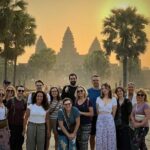
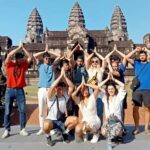
You start at Angkor Wat, the largest religious monument in the world and the complex that people come to see in the first place. It’s also famously tied to sunrise, even though your tour is timed to end with sunset later.
What you’ll like here: this is where you understand the scale and ambition. The carvings and structure are awe-inducing, and the guide’s job is to point out what to notice so you don’t just stare at stone from far away.
Possible drawback: one hour can feel short if you’re the type who likes to linger at each detail. Also, the best-photo spots can be crowded, so moving with the group is usually the fastest path to good views.

Banteay Kdei: “citadel of monk’s cells” vibes
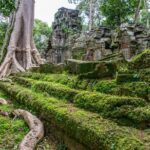
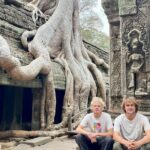
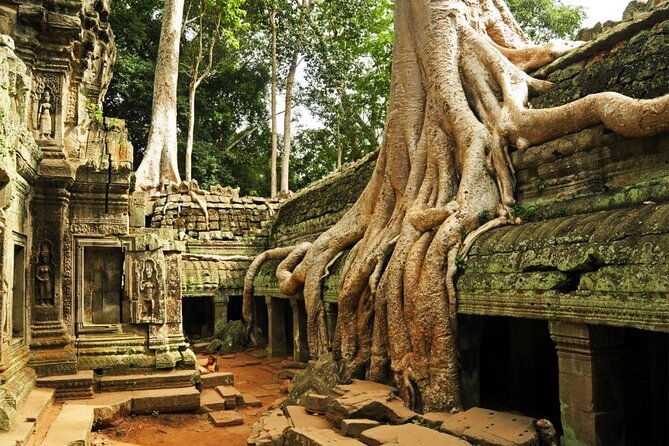
Next is Banteay Kdei, often described as the citadel of monk’s cells. The signature here is the way the ruins are partially overtaken by nature, including towering trees and roots threading through stone.
Why it works: this stop changes the mood. Instead of the main grandiosity, you get a softer, lived-in ruin look—one where the place feels older because it looks like time has physically moved through it.
Trade-off: it’s beautiful, but it won’t hit the same emotional volume as Angkor Wat. Think of it as the palate cleanser in the middle of the day.
Ta Prohm: jungle reclaiming stone
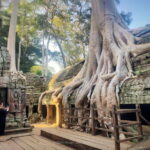
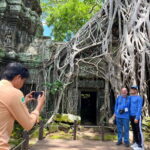
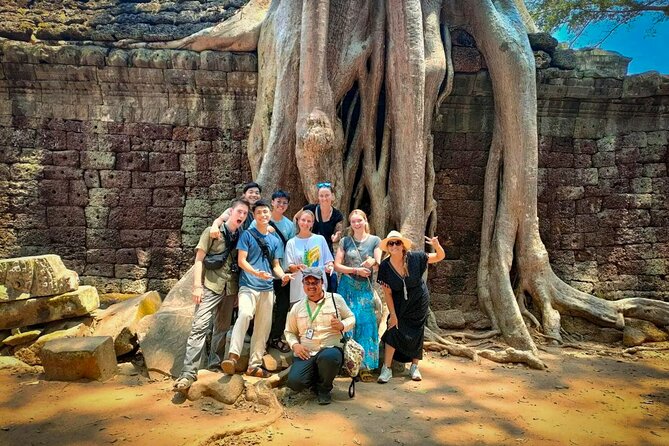
Then comes Ta Prohm, the famous jungle-cloaked temple also known as the Tomb Raider temple. This is the one with the tangled roots and the dramatic frame of trees over ruins.
What you’ll like: it’s instantly recognizable, and it photographs well even if you’re not a photography person. The guide can help you notice how the architecture and the jungle takeover work together.
Consideration: the jungle look also means shade can be patchy. Bring good walking shoes and keep your water pace steady.
Ta Keo: the unfinished pyramid that feels different
Ta Keo is a square, layered-pyramid temple—and the key twist is that it was never finished. That unfinished quality makes it look different from most other temples you’ll see today.
Why it stands out: the structure feels more stark and geometric. It reads as something in progress, not just an ended monument.
Trade-off: if you don’t like climbing and uneven steps, this can be a tiring stop. You may have to pace yourself during ascent, especially in midday heat.
Angkor Thom: the capital layout and the South Gate
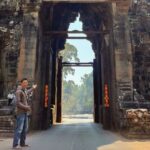
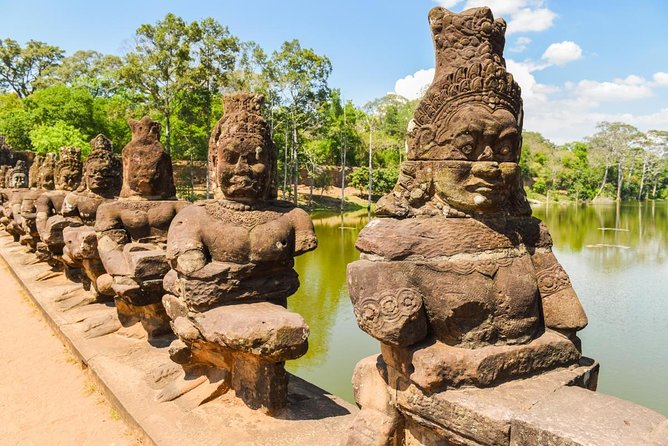
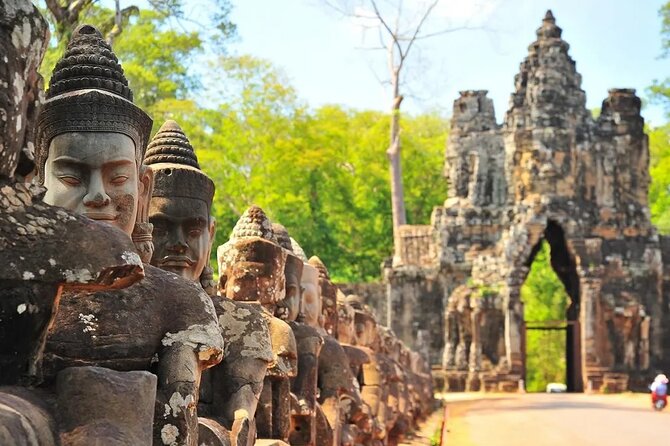
After that you move to Angkor Thom, the later capital of the Angkor Empire. You pass through the famous South Gate lined with gods and demons locked in a forever tug-of-war theme.
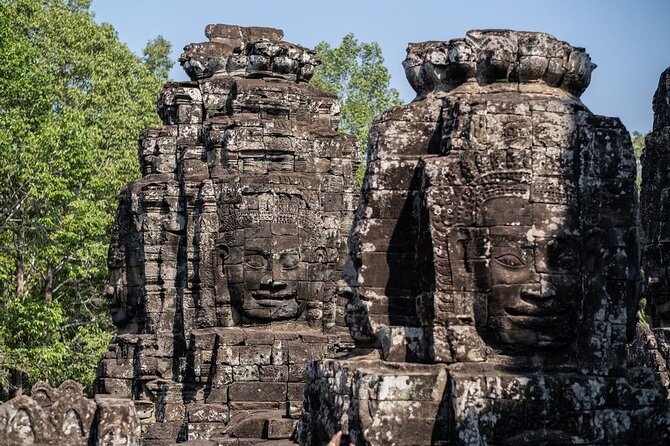
Then, the main draw is Bayon at the center, known for its face towers.
Why this stop is important: Angkor Thom helps you understand the city-plan feeling of the complex, not only the single-temple wow moments. It also gives you strong symmetry and sculpture details that reward looking up.
Possible drawback: this area can be busy, and the crowds can make it harder to slow down. Staying with your guide keeps the flow moving.
Phnom Bakheng: your sunset viewpoint
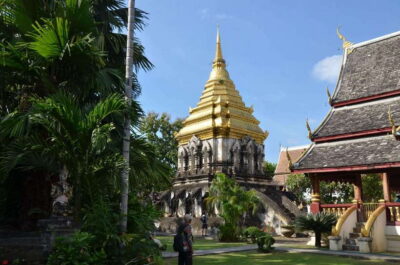
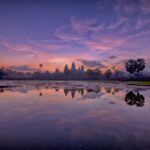
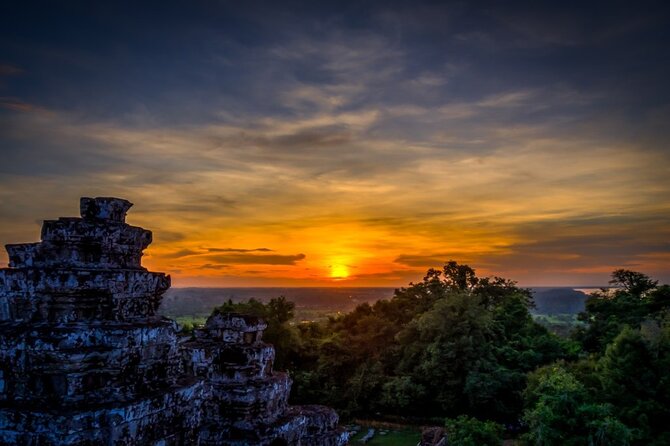
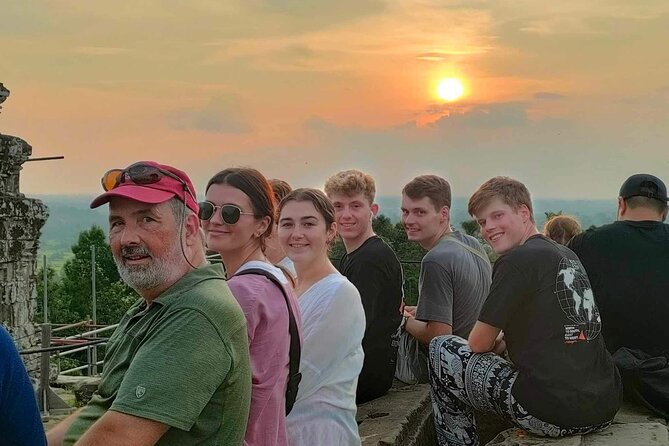
Finally, you reach Phnom Bakheng, a hilltop temple built centuries before Angkor Wat. It’s one of the best sunset viewpoints because it looks out over the Angkor Wat area.
What you’ll like: the timing is the point. Sunset turns the whole stone region into a different palette—warmer tones, longer shadows, and that “Cambodia from above” feeling.
Reality check: sunset views depend on weather and the exact angle you end up with. Some people end up wishing it felt more perfectly framed, but the hilltop approach is still one of the most classic sunset choices in the region.
Sunset expectations: how to get the best view from Phnom Bakheng
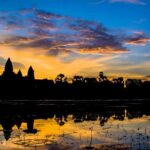
This tour is built to end with a sunset stop at Phnom Bakheng, so you’re not just getting a random day-temple schedule. You’re planning the last part of the day around a payoff view.
To make sunset actually work for you:
- Accept that clouds can steal the drama even when the timing is right.
- Be ready for walking and stairs at the end of a long day.
- Keep your phone/camera power in mind. You’ll want it ready at the top, not buried in your bag while you negotiate steps.
One more thing: the sunset being beautiful is one part. The other part is whether it lines up with what you pictured. Sometimes you get an iconic view; sometimes the horizon is less perfect. Your best move is to enjoy the whole scene—the temple towers, not just the last-minute “perfect” moment.
The guide: where this tour can feel excellent (or frustrating)
Here’s the truth about Angkor tours: the guide can make the difference between just seeing temples and actually understanding what you’re looking at.
On this kind of full-day highlight route, a great guide tends to:
- keep you moving at a pace that fits the heat,
- point out carving details so you know what matters,
- and help you avoid the worst crowd crush when possible.
Your experience can vary because guide skill and English clarity vary from person to person. Names that show up with strong praise include Kosal, Buth, Sari, Nakieth, Nick, Vone, John, and Narith. Several of these guides are noted for sharing stories of carvings, answering questions clearly, and even helping with photos (one guide was described as taking quality group shots).
If you’re booking for the storytelling and the photo help, prioritize a day with a guide who’s known for clarity and pacing. That’s where this tour earns its strong reputation.
Group size and transport: why “small” matters at Angkor
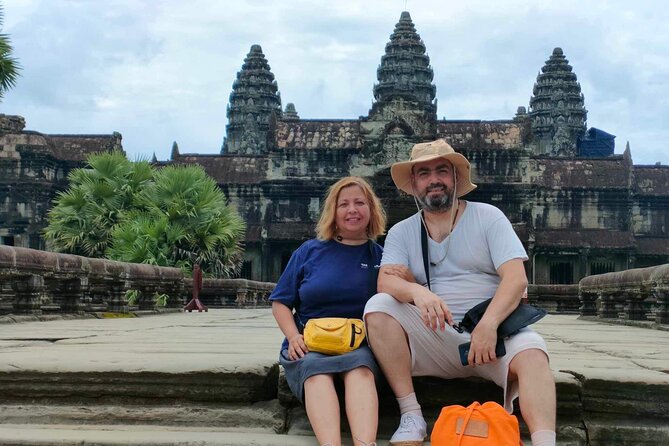
This is a maximum 15-person group, which is a sweet spot for Angkor.
- Too small, and you can lose the benefit of a full guided route with logistics.
- Too large, and you spend half your time waiting and half your time trying to be in the right place.
With a small group, you’re more likely to keep momentum between stops and get a better chance at photos without constantly playing catch-up.
The air-conditioned van also matters more than people think. Between temple stops, you’re not just traveling—you’re resetting. That’s how you keep the energy up for the final sunset climb.
Cost and planning: what to budget for a stress-free day
Even though the tour price is low, plan for these extras:
- Angkor Park ticket (entry is not included)
- Lunch and any other food or drinks (water is included, everything else is on you)
One review-style pattern that matches the tour details: people often find the lunch spot is decent, but it’s still extra cash. If you want a smooth day, bring enough money for lunch and any small purchases you decide on during breaks.
Then pack smart for a long day:
- sun protection,
- a hat,
- comfortable walking shoes,
- and a small amount of cash for the things not handled by the tour.
Who should book this Angkor Wat small-group tour
This tour fits you best if you want:
- a full-day overview of the Angkor highlights,
- a structured route that covers Angkor Wat, Ta Prohm, Ta Keo, Angkor Thom, and Phnom Bakheng,
- and the convenience of pickup + air-conditioned transport.
It’s also a good choice if you’re visiting for the first time and want a guide to help you connect what you see with why it matters.
If you hate stairs, want total freedom, or prefer a slower, more flexible temple day, you might be happier with a private guide and more time per site. This one is efficient by design.
Should you book it?
I’d say book this tour if your priority is seeing the main temples in one day with guide support and ending with a sunset viewpoint. The pricing makes it easy to justify, and the included transport + bottled water + small-group format help the day feel manageable.
I’d hesitate if you’re extremely picky about sunset being exactly framed in the way you imagined, or if you don’t want to deal with the reality that entry tickets and food aren’t included. In Angkor, that’s the cost of doing it right—someone always has to pay the park entry, and someone always has to eat at some point.
If you go in prepared, this tour is a practical way to turn a packed day into a well-structured Angkor experience.
FAQ
What time does the tour start?
The tour starts at 9:30am.
How long is the full-day Angkor Wat tour?
It runs about 8 to 9 hours.
Is hotel pickup included?
Yes. Pickup and drop-off are included, with pickup offered from your Siem Reap hotel area.
Where is the meeting point?
The start meeting point is Siem Reap Pub Hostel, behind Angkor Night Market.
Are Angkor Park tickets included?
No. Admission tickets are not included, and the Angkor Park ticket must be purchased from the park directly.
Is food included?
No. Food and drinks are not included (other than bottled water).
Does the tour include bottled water and transport comfort?
Yes. Bottled water is included, and you travel in air-conditioned transport.
How many people are in the group?
The group size is capped at a maximum of 15 travelers.
What happens if the weather is poor?
The experience requires good weather. If it’s canceled due to poor weather, you’ll be offered a different date or a full refund.