REVIEW · NEW DELHI
3-Day Delhi, Agra and Jaipur Private Tour – India Golden Triangle
Book on Viator →Operated by Delight Tours India · Bookable on Viator
Golden Triangle in just three days. This private Delhi–Agra–Jaipur tour strings UNESCO sights together with a private air-conditioned vehicle and guides who can bring the monuments to life, like Sajul in Delhi and Faiz in Agra. I also love the included daily breakfast and the fact that you get an early Taj Mahal window that many day-trip plans miss.
One thing to plan for: entrance fees are listed as extra, around $65 per person, so your final budget is higher than the base price. Also expect a tight day-by-day rhythm, especially during heavy-traffic periods.
In This Review
- Key highlights worth planning around
- Planning Your 3 Days in Delhi, Agra, and Jaipur Without Losing Your Mind
- Day 1 in New Delhi: Qutub Minar, Humayun’s Tomb, and Old Delhi by Rickshaw
- Qutub Minar and the Qutub Complex
- Humayun’s Tomb: Mughal gardens that set the tone
- New Delhi monuments: India Gate and Jama Masjid
- Old Delhi lunch timing and Chandni Chowk by rickshaw
- A view of Red Fort from the outside
- The expressway to Agra
- Day 2: Taj Mahal Sunrise, Agra Fort, and the Baby Taj
- Taj Mahal sunrise: why early is worth it
- Agra Fort after sunrise
- Itmad-ud-Daula: the Baby Taj
- Day 3 in Jaipur: Amber Fort, Jal Mahal, Hawa Mahal, and the UNESCO Observatory
- Amber Fort: the big first stop
- Panna Meena ka Kund: quick but memorable
- Jal Mahal: Water Palace looks best as a pause
- Hawa Mahal: the Palace of Winds
- City Palace and Jantar Mantar
- Ending the tour: Jaipur airport or the drive back to Delhi
- Price and Logistics: What You Pay for and What You Should Budget
- The Real Secret Sauce: Guides and Drivers Who Handle the Day
- Drivers: safety and smooth pacing
- Guides: storytelling that makes sites easier
- Pacing Tips: Shoes, Timing, and How to Survive Traffic Days
- Who This Tour Is Best For (and Who Should Consider Another Option)
- Should You Book This Delhi Agra Jaipur Private Tour?
- FAQ
- What time is the pickup in Delhi on Day 1?
- What time is the Taj Mahal sunrise visit on Day 2?
- Which monuments are included in Delhi on Day 1?
- Are entrance fees included in the price?
- Are lunch and dinner included?
- Is breakfast included?
- Do I get hotel accommodation for this tour?
- Is transportation private and air-conditioned?
- Where does the tour end on Day 3?
- What if the second day of the tour falls on a Friday?
- Is free cancellation available?
Key highlights worth planning around
- Taj Mahal sunrise pickup at about 6:00 AM so you can see the marble in softer light
- Old Delhi rickshaw ride plus Khari Baoli spice market during Chandni Chowk time
- UNESCO stops across two cities (Qutub Minar and Humayun’s Tomb, plus major Agra and Jaipur landmarks)
- Private, door-to-door transport with sedan or SUV depending on group size
- Guides who adjust to your pace (and often help you find strong photo spots)
- Flexible ending: drop at Jaipur airport or drive back to Delhi by evening
Planning Your 3 Days in Delhi, Agra, and Jaipur Without Losing Your Mind
The big idea here is simple: you get the Golden Triangle classics with less hassle. You’ll move by private AC car with a driver, and you’ll have a live guide at the sites, so you’re not just standing around reading plaques.
Timing matters. Day 1 starts with a 9:00 AM pickup in Delhi and packs a lot of sights into the capital before you head toward Agra via Yamuna Expressway (about a 3-hour drive after lunch time). Day 2 is the early one: you’ll be picked up around 6:00 AM for the Taj Mahal sunrise, then you’ll tour Agra Fort and the Baby Taj. Day 3 is a full Jaipur circuit, starting at about 8:00 AM.
This style of tour is great if you want structure. It’s less great if you crave long, slow wandering with zero schedule pressure. If you’re the type who likes to linger, you’ll need to use the free time wisely—especially on the Agra evening, which is yours to relax.
You can also read our reviews of more tours and experiences in New Delhi.


Day 1 in New Delhi: Qutub Minar, Humayun’s Tomb, and Old Delhi by Rickshaw
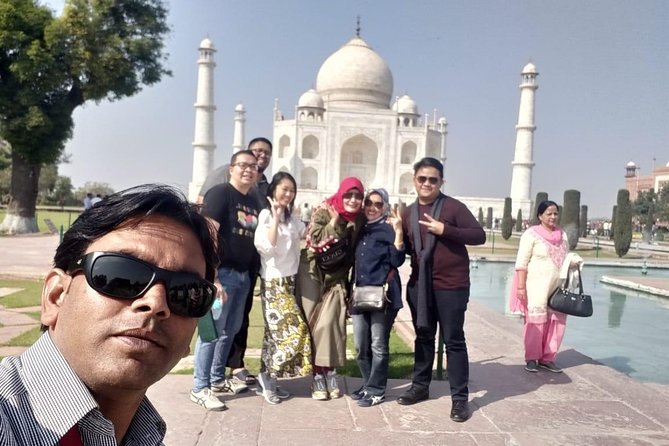
Day 1 moves between “Old Delhi” energy and “imperial Delhi” architecture.
Qutub Minar and the Qutub Complex
You start at Qutub Minar (UNESCO), the world’s tallest brick minaret, built in 1193. Your guide takes you through the Qutub Complex, including the Iron Pillar, Alai Darwaza, and the Quwwat-ul-Islam Mosque. This is one of those stops where the details matter—so having a guide here pays off.
Practical tip: wear shoes you can walk in comfortably. The terrain and crowds at major Delhi monuments can be a little uneven.
Humayun’s Tomb: Mughal gardens that set the tone
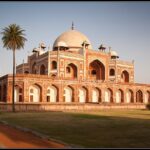
Next is Humayun’s Tomb (UNESCO), a Mughal masterpiece from 1570. It’s known for gardens inspired by Persian design, and it’s also famous for the architectural influence that later shows up in the Taj Mahal. Plan on about an hour, which is enough time to see the big composition without feeling rushed into the gift-shop sprint.
New Delhi monuments: India Gate and Jama Masjid
After the Mughal-era stops, you’ll shift to New Delhi for India Gate (a World War I war memorial) and then Jama Masjid, one of the largest mosques in India, built in 1656. You’ll spend about an hour here, and the scale of the courtyard makes it feel like a world of its own.






Old Delhi lunch timing and Chandni Chowk by rickshaw
The highlight for many people is Old Delhi time, especially the rickshaw ride through Chandni Chowk. This is where you really feel the city: narrow lanes, market activity, and the smells from the Spice Market (Khari Baoli).
One consideration: your day is full, and this part can be sensory overload. If you can, take small breaks, grab water, and let your guide steer you through calmly.
A view of Red Fort from the outside
You also get an iconic red-sandstone fort stop via an outside viewpoint. It’s not the same as going inside, but it helps you understand the geography of Shah Jahan’s Delhi without spending extra time at another ticket line.
The expressway to Agra
Once you’ve done the Delhi loop, you’ll have time for lunch at a local restaurant (not included), then you drive to Agra and check into your hotel for the evening. This is a nice balance: you don’t arrive at midnight, and you still have a real chance to recharge before tomorrow’s big moment.
Day 2: Taj Mahal Sunrise, Agra Fort, and the Baby Taj
Day 2 is all about the Taj Mahal—specifically, getting there early enough to see it at sunrise. You’ll be picked up around 6:00 AM from your Agra hotel.
Taj Mahal sunrise: why early is worth it
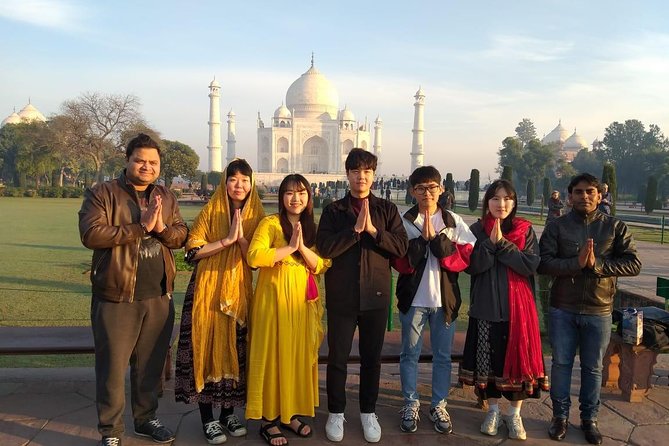
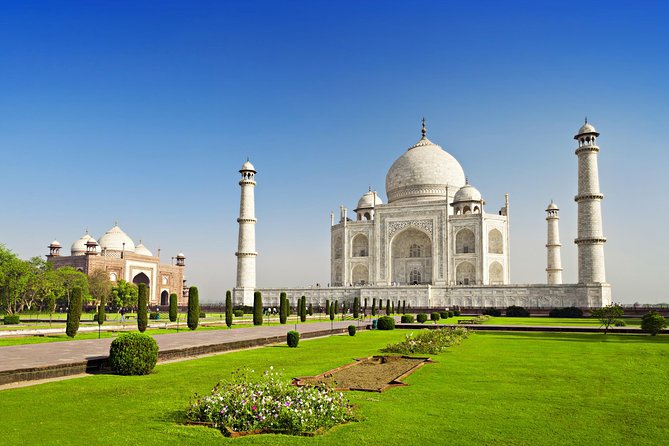
This is the moment you booked the Golden Triangle for. The Taj Mahal is an ivory-white marble mausoleum on the south bank of the Yamuna River, and the sunrise timing makes the experience softer and more photogenic. Expect about 3 hours total at this stop, including time for photos and the classic viewing angles.
Practical photo tip: if your guide offers photo spots, take them seriously. People like Rafiq and other Agra guides have a habit of finding the best angles, and that saves you from fighting your way into bad positions.
Agra Fort after sunrise
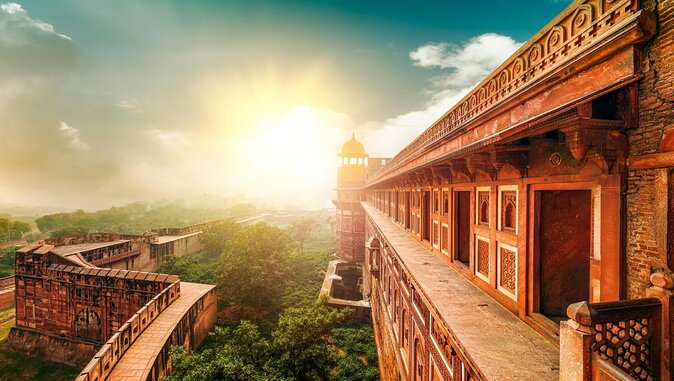
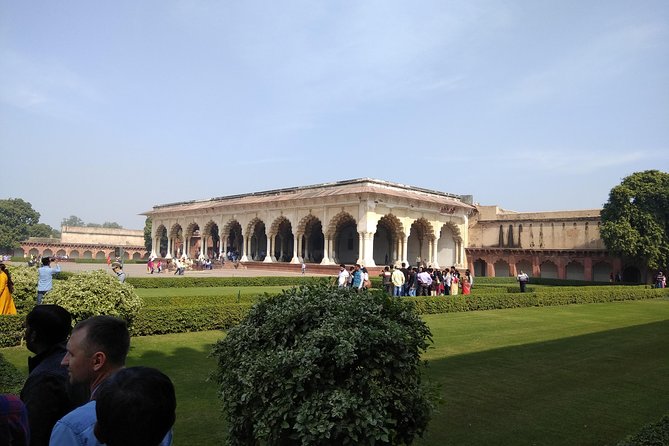
After you return to the hotel, you’ll have breakfast and then check out to visit Agra Fort, where you spend about an hour. It’s a Mughal power base—more fortress than palace—and it helps connect the Taj Mahal to the world that built it.
Itmad-ud-Daula: the Baby Taj
Then you’ll stop at Itmad-ud-Daula, often called the Baby Taj. You’ll get around 30 minutes here. It’s smaller than the main Taj Mahal, but it’s a smart add-on because the craftsmanship is easier to study at a slower pace than the bigger monuments.
Day 3 in Jaipur: Amber Fort, Jal Mahal, Hawa Mahal, and the UNESCO Observatory
Jaipur is the “Pink City” feeling in real life, and this day is the most stop-heavy. You’ll start around 8:00 AM from your hotel for Amber Fort, then keep moving through the city’s most famous landmarks.
Amber Fort: the big first stop
First up is Amber Fort (Amer), about a two-hour visit. This is where you’ll see why Jaipur became powerful in the region—defense, royal style, and architecture all in one place.
If you’re choosing what to prioritize, Amber Fort is usually the right call. It’s a strong mix of views and structure, and it’s a good base for understanding the rest of the day.
Panna Meena ka Kund: quick but memorable
Next is Panna Meena ka Kund, a stepwell near Amber Fort. It’s only about 15 minutes, but it’s the kind of stop that makes people go, so that’s why it’s famous. The geometric stair pattern is a real visual punch.
Jal Mahal: Water Palace looks best as a pause
Then you’ll see Jal Mahal, the Water Palace in Man Sagar Lake. This is a shorter stop, around 30 minutes. The best use of your time here is to slow down a bit—take in the setting and let your guide explain why the building sits where it does.
Hawa Mahal: the Palace of Winds
Next is Hawa Mahal (Palace of Winds). You’ll have about 30 minutes. The façade with its small windows (jharokhas) is the star. It’s one of those sights that reads like a postcard from the outside, but the details feel more fun up close.
City Palace and Jantar Mantar
You’ll move on to City Palace for about an hour, then close the circuit with Jantar Mantar (UNESCO). Jantar Mantar is an astronomical observatory built in the 18th century, and it’s a great contrast to the forts and palaces.
A practical note: Jantar Mantar is not a “stand and stare” monument. It works best when your guide connects what you’re seeing to how people used it. Guides like Arbab and Abbas (seen in the tour team) tend to be strong at this kind of explanation.
Ending the tour: Jaipur airport or the drive back to Delhi
At the end of Day 3, the tour can drop you at Jaipur Airport, or you can drive back to Delhi (about 4 hours), arriving around 8–9 PM. If your flight is later in the evening, dropping at the airport can be a stress-saver.
Price and Logistics: What You Pay for and What You Should Budget
The base price listed is $110 per person for the 3-day private Golden Triangle format. For what you’re getting—private AC vehicle, a driver, live guide time at the major stops, and two nights of 3–5 star hotel with breakfast and taxes—it can be good value compared to booking each piece separately.
Here’s what to keep straight:
- Breakfast is included for two days.
- Lunch and dinner are not included.
- Entrance fees to monuments are listed as extra (about $65 per person).
- Mineral water bottles are provided.
- Tolls, parking, and driver allowances are covered.
So your real spend is base tour price + entrance fees + your meals + optional tips.
Car choice is also worth noting because it affects comfort: a sedan for 1–2 people, an SUV for 3–5, and a 13-seater coach for 6–12. If you’re a small group, you generally get a more flexible and comfortable setup.
Also, this is a private tour, meaning only your group participates. That can make a big difference in how often you can stop for photos, adjust pacing, or ask questions without crowd pressure.
The Real Secret Sauce: Guides and Drivers Who Handle the Day
This kind of tour rises or falls on two people: the driver and the guide.
Drivers: safety and smooth pacing
The reviews paint a consistent picture: drivers are careful, patient, and focused on safety. Names that come up include Sumit, Hemant, Riyaz, Mukesh, Ravi, Prakash, and Aamir, with comments about calm driving and arriving on time. Even when traffic is intense, a strong driver helps you feel in control instead of stuck in the chaos.
If you’re nervous about Indian roads, this tour format can help because you’re not doing the driving yourself. You still share the road, but you do it from the passenger seat with someone experienced.
Guides: storytelling that makes sites easier
Guides make the monuments make sense. Delhi guides named in reviews include Sajul and Jacky. Agra guides include Faiz, Deepak, and Ritik. Jaipur guides include Arbab, Abbas, and Yogi. People also mentioned guides like Abbas as a great fit for solo travelers.
What you should watch for: sometimes guides are very talkative, and the day can feel facts-heavy. That’s not automatically bad, but if you want a lighter pace, tell your guide early that you prefer fewer stories and more time for photos or quiet views.
Also, some people noticed shopping stops feeling too sales-driven. If that’s not your travel style, it’s smart to say clearly up front that you’re not interested in shopping and would rather see more sites or spend time resting.
Pacing Tips: Shoes, Timing, and How to Survive Traffic Days
This tour is efficient by design. You’ll cover a lot in three days, which can feel like a sprint if you don’t plan for energy.
- Bring comfortable walking shoes. You’ll be on your feet for multiple monuments, often with short ticket queues but real walking distances.
- Use the hotel downtime. Day 1 ends with leisure time in Agra. Day 2 has an early start but also includes returning to the hotel before continuing.
- Expect traffic on busy calendar periods. One review story highlighted Diwali season traffic throwing off the exact schedule. That’s normal in Delhi and around major routes. If that happens, your guide should help you prioritize what matters most to you.
One more useful mindset: treat the morning Taj Mahal as your “must-see.” Everything else can be enjoyed with a little flexibility if needed.
Who This Tour Is Best For (and Who Should Consider Another Option)
This is a strong fit for you if:
- You want the Golden Triangle highlights in a short time.
- You prefer private transport and live guides over DIY planning.
- You care about seeing the Taj Mahal at sunrise instead of arriving late in the day.
- You like having a clear structure but still want the flexibility to ask questions.
You may want to think twice if:
- You want slow travel with long unscheduled breaks.
- You don’t handle schedules well.
- You hate any shopping-related stops and want zero retail interruptions. Even with good guides, the itinerary format can include such stops.
That said, many people loved the guidance and didn’t feel over-pushed when they set boundaries politely.
Should You Book This Delhi Agra Jaipur Private Tour?
I’d book this tour if your goal is simple: maximize the Golden Triangle with expert help, especially for Taj Mahal sunrise and major UNESCO-era sights like Qutub Minar and Humayun’s Tomb. The private vehicle, hotel nights with breakfast, and guided pacing can save you a lot of stress.
Before you commit, do two quick checks with yourself:
- Are you comfortable budgeting extra for entrance fees and your meals?
- Are you okay with a packed schedule that can run long during heavy traffic?
If you said yes, this tour is a practical way to see the big icons without losing days to planning. If you said no, you might prefer a longer stay in one city or a tour with fewer stops.
FAQ
What time is the pickup in Delhi on Day 1?
The pickup from your hotel (or preferred location) in Delhi is scheduled for 9:00 AM on Day 1.
What time is the Taj Mahal sunrise visit on Day 2?
You’ll be picked up from your hotel at about 6:00 AM to visit the Taj Mahal for sunrise.
Which monuments are included in Delhi on Day 1?
Day 1 includes Qutub Minar, Humayun’s Tomb, India Gate, Jama Masjid, a rickshaw ride through Chandni Chowk, the Spice Market (Khari Baoli), and an outside visit of a red-sandstone fort building.
Are entrance fees included in the price?
Entrance fees are listed as not included, with entrance fees to monuments listed at $65.00 per person.
Are lunch and dinner included?
Lunch and dinner are not included.
Is breakfast included?
Yes. Daily breakfasts are included for two mornings.
Do I get hotel accommodation for this tour?
Yes, it includes two nights of hotel accommodation (3–5 star options) with breakfast and taxes, if that option is booked.
Is transportation private and air-conditioned?
Yes. You get a private air-conditioned car with a driver. Car type depends on group size (sedan, SUV, or 13-seater coach).
Where does the tour end on Day 3?
After Jaipur sightseeing, you can either be dropped at Jaipur Airport, or you can drive back to Delhi (about 4 hours, arriving around 8–9 PM).
What if the second day of the tour falls on a Friday?
If Friday is on the second day, the itinerary can switch to Delhi–Jaipur–Agra–Delhi. If you booked your own hotel, you’ll need to message the operator for the revised itinerary.
Is free cancellation available?
Yes. You can cancel up to 24 hours in advance for a full refund. If you cancel less than 24 hours before the experience starts, the amount paid is not refunded.