REVIEW · FLORENCE
Florence in a Day: Michelangelo’s David, Uffizi and Guided City Walking Tour
Book on Viator →Operated by Walks - Italy & Spain · Bookable on Viator
Five hours in Florence, timed to perfection. This Florence in a Day tour strings together skip-the-line timed entry to the Accademia and the Uffizi, then layers in key city sights like the Duomo area, Ponte Vecchio, and Piazza della Signoria. I love how the story stays local, too, with guides such as Stefano and Elena bringing the Renaissance to life in a clear, human way.
I like two big things right away. First, you get to Michelangelo’s David at the Accademia with timed access, so it feels less like queue management and more like looking. Second, the Uffizi visit is handled with timed entry as well, and the tour uses headsets when necessary, which helps a lot when you’re moving through crowded rooms.
One consideration: this is a packed schedule with breaks, not a slow, full-day stroll. Depending on your departure time, you’ll have a lunch/free window or coffee break, and that can make the “guided” part feel shorter than you expect—especially if you’re hoping to go inside every major church and wander every street.
In This Review
- Key things to know before you go
- Starting at Piazza di San Giovanni: your Florence warm-up
- Accademia first: timed entry and Michelangelo’s David (plus more)
- Santa Maria del Fiore and the Baptistery: short stops with big payoffs
- Duomo dome views from the outside
- Baptistery: the doors people talk about
- Piazza della Signoria: where David was supposed to stand
- Ponte Vecchio and Porcellino: the Florence you’ll remember
- Uffizi time entry: a crowded museum handled the smart way
- When the museum layout doesn’t cooperate
- Timing matters: breaks, departure times, and why the day feels different
- Guides make or break it: Stefano, Elena, Greta, and the rest
- Group size, comfort, and what to wear
- Value check: is $134.23 worth it?
- Who should book this Florence in a Day tour
- Should you book it
- FAQ
- What does the tour include?
- How long is the tour?
- Do you go inside the Duomo?
- Is lunch included?
- What’s the group size?
- What do I need for entry to the Uffizi?
Key things to know before you go
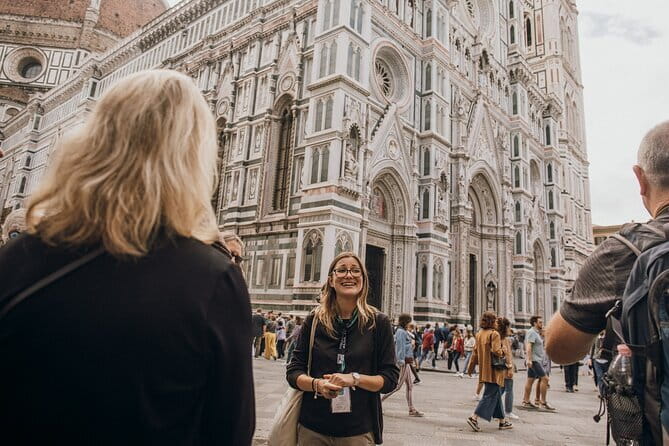
- Timed entry to Accademia and Uffizi: you’re buying time back from long lines.
- David plus context, not just a photo stop: guides point out details you might miss.
- Duomo and Baptistery are outside views: plan for stories and viewpoints, not a full interior visit.
- Piazza Signoria connects art to politics: you’ll see where David was meant to go.
- Ponte Vecchio and Il Porcellino add texture: quick stops that help your day feel like Florence, not only museums.
- Small group max of 15: easier to hear, easier to move, but still a real group.
Starting at Piazza di San Giovanni: your Florence warm-up
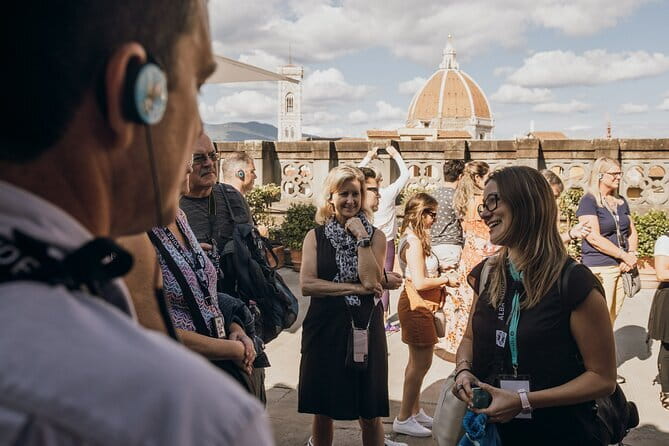
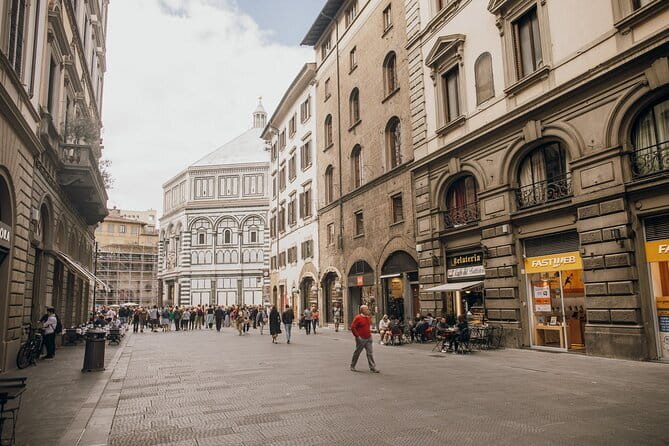
You meet at Piazza di San Giovanni, right by the Baptistery area. It’s a smart starting point because it lets you orient fast. Within the first stretch, the guide frames the day around Florence as a stage for Renaissance ambition: powerful families, famous artists, and buildings built to last longer than people’s careers.
What I appreciate here is how the tour doesn’t treat the museums like separate worlds. Even before Accademia, you’re being taught how to look. That matters, because if you arrive at David or later at the Uffizi “cold,” you’ll get dazzled—but you might not fully understand what you’re seeing.
You can also read our reviews of more tours and experiences in Florence.
- Tuscany Day Trip from Florence: Siena, San Gimignano, Pisa and Lunch at a Winery
★ 5.0 · 21,634 reviews

Accademia first: timed entry and Michelangelo’s David (plus more)
Accademia is the main reason most people sign up, and the tour plays to that strength. You get timed entry tickets so you’re not stuck waiting in line while your day evaporates.
At the gallery, the centerpiece is Michelangelo’s David. The guide helps you understand what makes David more than a perfect sculpture silhouette. I like that you’re not simply told facts; you’re guided through what to notice: scale, gesture, and the emotional tension that makes it feel alive. One of the best parts is that you also spend time on other Michelangelo works people sometimes miss when they only chase the headline.
A practical note: Accademia can still feel busy, and you’ll be doing a fair amount of walking and standing. Sturdy shoes are not optional here. You want your feet ready so your eyes can stay focused.
Santa Maria del Fiore and the Baptistery: short stops with big payoffs
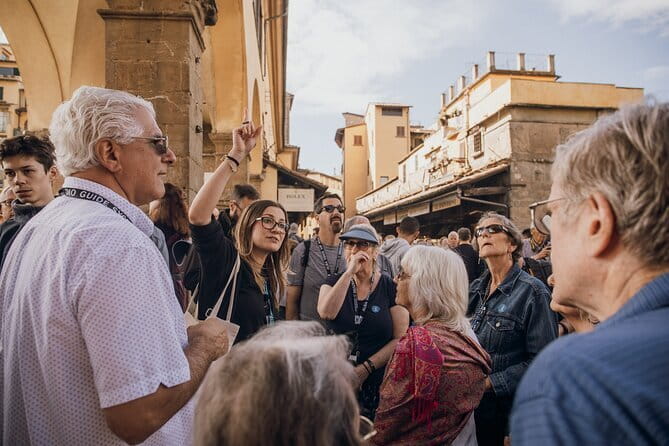
After Accademia, the tour shifts to city sights on foot.
Duomo dome views from the outside
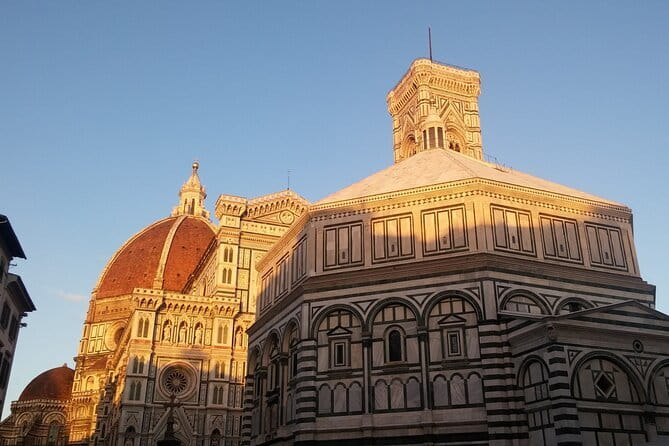
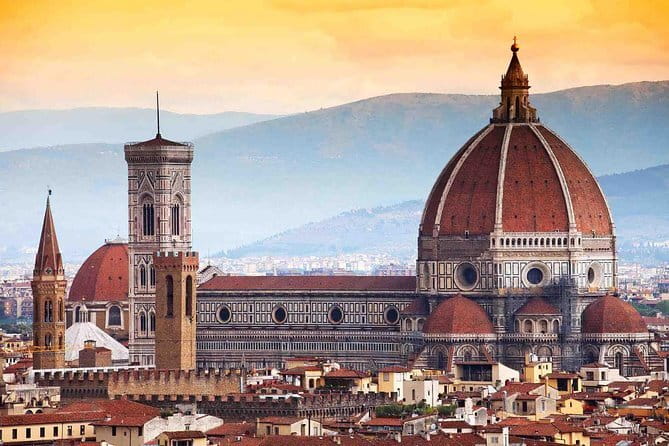
At Santa Maria del Fiore, you see the enormous dome from outside. You won’t be going inside on this stop, but you will get the story behind the dome’s challenge: how it went from near catastrophe to a top building achievement of its era. Even from streets and squares, this kind of context changes the way you look at the skyline. Instead of thinking of the Duomo as one big landmark, you start noticing the drama of engineering and the risk behind the design.
Baptistery: the doors people talk about
Next is the Battistero di San Giovanni. You’ll spend time at the Baptistery and focus on the bronze doors that were thought so beautiful Michelangelo called them Gates of Paradise. Even if you’re not a church-history person, this stop works because it connects a famous artistic phrase to an actual place.
Drawback to flag: these are quick, exterior-focused moments. If you were hoping for lots of time inside the Duomo or for deep exploration of interior chapels, this tour’s format won’t match that goal.

Piazza della Signoria: where David was supposed to stand

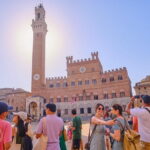
Piazza della Signoria is Florence at street-level theater. You’ll arrive with the guide’s framing, so Michelangelo’s David feels like a thread that connects multiple locations.
The standout detail here is that the tour points out the connection between David and Piazza della Signoria—where Michelangelo’s David was originally supposed to stand. That “planned placement” story helps you understand why Renaissance art wasn’t just decoration. It was messaging. A statue could signal power, taste, and identity in public.
Even if you only have 15 minutes at the square, it’s a useful kind of stop: you leave with a clearer map of Florence’s art as a citywide system.
Ponte Vecchio and Porcellino: the Florence you’ll remember
Then you move toward Ponte Vecchio, the postcard bridge everyone recognizes. The stop is short, but it’s timed so you get the flavor without draining the day. You’ll walk through the area and soak in the typical Florence charm: river views, stone edges, and that sense of a city that never stopped being a marketplace.
From there, you pass by Mercato del Porcellino and see Il Porcellino—the pig whose snout is famous for the luck ritual. This is exactly the kind of stop that makes a museum-heavy day feel less like a checklist. It’s small and quick, but it gives your photos and memories a human touch.
Uffizi time entry: a crowded museum handled the smart way

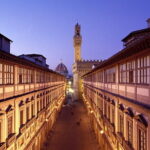
The Uffizi visit is where timed entry pays off the most in real time. The Uffizi is incredibly busy, and the tour’s structure helps you skip the line and spend your energy inside looking.
The guided portion at the Uffizi is about 1 hour 30 minutes. That’s enough time to see major works and get a sense of the big artistic transitions, but it’s not enough time to see everything. I like that the tour gives you a focused path so you come away with a working mental guide to what you saw, not just a blur of rooms.
One bonus you might appreciate: at the end, you can often stay to explore on your own. That helps if you’re the type who wants to circle back for one painting you can’t stop thinking about.
When the museum layout doesn’t cooperate
One thing to keep in mind: at least one Uffizi visit reported the lift being out of order. If you rely on elevators or you’re sensitive to stairs, it’s wise to factor that in and plan accordingly.
Timing matters: breaks, departure times, and why the day feels different
The tour runs around 5 hours total, but your experience of that “5 hours” depends heavily on your departure time.
- If you take the 09:45 a.m. departure, the schedule includes a 1-hour lunch break/free time.
- If you take the 08:30 a.m. or the 1:30 p.m. departures, there’s a shorter 30-minute coffee break.
Either way, the breaks are part of the plan. Guides are meant to keep the day from dragging, and the free time is meant to help you recharge. Still, I can see why some people feel the tour is not a full day—because the guided walking and museum time are concentrated, and the day doesn’t include long interior detours (like entering the Duomo).
If you’re the kind of traveler who wants a deep museum day, you might prefer splitting your Florence plans across two days. If you’re here for highlights and you want them explained, this format is a strong fit.
Guides make or break it: Stefano, Elena, Greta, and the rest
The quality of commentary is a repeat theme. Guides like Stefano, Elena, Greta, Daniela, Jade, Ishmael, Angelo, Nebo, Fredericka, Laura, and Chiara show up in different groups, and the style tends to be local and story-driven.
A helpful pattern: guides often keep the pace respectful. One guide had a sense of humor and helped even non-art people enjoy what they were seeing. Another leaned into art-historical details so thoroughly that art lovers likely ate it up, while others found it a bit too much at the Uffizi.
So here’s my advice for you: if you want a faster overview with less “who commissioned what,” you can mentally prepare to tell yourself the details are optional. Focus on the big shifts in style, composition, and what changed from one era to the next. If you do like detail, you’ll likely leave the Uffizi feeling like you finally understand how the paintings connect.
Group size, comfort, and what to wear
This tour caps at a maximum of 15 travelers. That’s small enough for a guided conversation, but it’s still a group moving through tight spaces.
Expect:
- A walking route with moderate pace
- Steps and standing in museums and on streets
- Sturdy shoes as your best friend
Also important: the tour isn’t set up for strollers. If you’re traveling with a mobility need, the operator says they can accommodate guests with mobility impairment or a wheelchair if you email their Guest Experience team ahead of time.
Value check: is $134.23 worth it?
At $134.23 per person, the first question is whether you’re paying mostly for “tickets” or for “time saved plus guidance.”
Here’s the practical way I look at it:
- Timed entry to both Accademia and the Uffizi is the big value driver. The Uffizi entrance is listed as €29, and the tour handles entry timing so you’re less likely to lose prime hours waiting.
- You’re also paying for an expert local guide plus headsets when necessary. In a place like the Uffizi, better listening means better payoff.
- You’re packing in several Florence highlights on foot: Duomo area views, Baptistery, Piazza Signoria, Ponte Vecchio, and the Porcellino area.
Is it pricey? Yes, compared with a self-guided day. But if your goal is to leave with understanding, and you’d rather not spend your limited time in line or trying to decode Renaissance art on your own, the price can feel fair.
The main value risk is the schedule itself. If you expected to go inside lots of places or spend unhurried time in every museum room, you’ll feel shorted. This day is built for smart coverage, not maximum lounging.
Who should book this Florence in a Day tour
This works best if you:
- Want Michelangelo’s David and the Uffizi’s strongest Renaissance highlights
- Like a guide who turns art into a story, not just labels
- Have limited time and want a day that gives you momentum
- Enjoy city-walking around major landmarks, even if the stops are brief
It may feel less ideal if you:
- Want to enter the Duomo and spend real time inside (this tour focuses on outside views)
- Prefer a longer museum session where you can wander freely without a guided path
- Are very sensitive to crowds and stairs
Should you book it
If you’re trying to make the most of a first Florence visit, I’d say yes—with the right expectations. This is a focused art-and-highlights day built around timed entry and guided context. You’ll likely come away feeling like Florence connects the dots between sculpture, politics, and power.
Before you book, ask yourself one question: do I want a guided hit of Florence’s greatest works, or do I want a slow, deep museum marathon? If you want the hit, this tour is a great fit. If you want the marathon, plan a longer stay and consider pairing museums across multiple days.
Either way, if you’re flexible with departure time, you can choose between the longer lunch break (09:45) and the shorter coffee break options (08:30 or 1:30), which helps you shape the day to your energy level. And if plans change, you can cancel for a full refund up to 24 hours in advance.
FAQ
What does the tour include?
It includes timed entry tickets for the Accademia Gallery (for Michelangelo’s David) and the Uffizi Gallery, plus an expert local guide. You’ll also receive headsets when necessary.
How long is the tour?
The duration is about 5 hours.
Do you go inside the Duomo?
You view the Florence Duomo from outside during a short stop, with explanation about how the dome became a major building achievement. The tour does not list an interior Duomo visit.
Is lunch included?
Lunch is not included. There is a scheduled lunch/free time window depending on your departure time, and the 08:30 and 1:30 departures include a shorter coffee break.
What’s the group size?
The maximum group size is 15 travelers.
What do I need for entry to the Uffizi?
You must present a valid passport or ID document, and the full names provided at booking must match your ID/Passport for successful entry.


More Tour Reviews in Florence
- Tuscany Day Trip from Florence: Siena, San Gimignano, Pisa and Lunch at a Winery
★ 5.0 · 21,634 reviews