REVIEW · FLORENCE
Francy’s Pasta & Gnocchi on Top of Florence Hills
Book on Viator →Operated by Francys'Pasta · Bookable on Viator
Fresh pasta in the hills beats the usual restaurant routine. This hands-on class is set in a 16th-century villa above Florence, where you learn dough skills from the host team and eat what you make. You’ll start with coffee and cookies, then move into an aperitivo with bruschetta and Prosecco before the kitchen work begins, all in a relaxed small-group format.
What I like most is the hands-on pasta focus: you’ll work with fresh dough, learn multiple pasta styles (including chitarra and ravioli), and finish with handmade gnocchi plus classic sauces. The second big plus is the full sit-down payoff: you sample what you cook with wine, pecorino, and dessert. One thing to consider is that the experience depends on good weather, so plan for possible date changes if conditions are rough.
In This Review
- Key points worth knowing
- From Piazzale di Porta Romana to a hilltop kitchen
- The welcome: coffee, cookies, and aperitivo energy
- Rolling dough by hand: ravioli and chitarra made practical
- Handmade gnocchi and classic sauces you can actually repeat
- The meal at the table: what you eat after the work
- Group size, atmosphere, and why the home setting matters
- Price and value: what $145.12 buys you in real terms
- When this class fits best (and when it might not)
- Tips for getting the most out of your pasta night
- Should you book Francy’s Pasta & Gnocchi?
- FAQ
- Where do I meet for the class?
- How do we get from Florence to the cooking location?
- What kinds of pasta and dishes will I learn or make?
- Is the class offered in English?
- What food and drinks are included?
- How large is the group?
- What happens if the weather is poor?
- Is there free cancellation?
Key points worth knowing
- Hilltop villa setting just outside Florence, reached by short taxi ride from the city
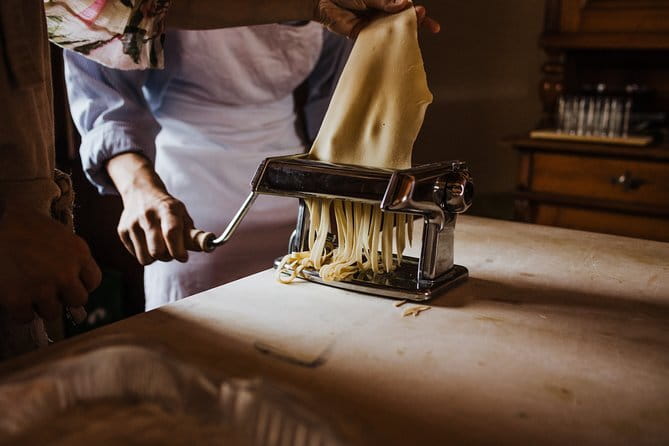
- Hands-on instruction for multiple pasta styles, not just a demo
- Aperitivo + wine included, turning the class into a real evening meal
- Small group size with a max of 20 people
- Recipe copies so you can remake the pasta at home
- English-led experience in a casual home-kitchen flow
From Piazzale di Porta Romana to a hilltop kitchen
The experience starts at Caffè Petrarca (Piazzale di Porta Romana, 6/red). That matters because it anchors you in a clear, easy-to-find spot in central Florence. Once you arrive, you’ll link up with the host team and then head out by taxi toward the hills.
Expect the drive to be short—about ten minutes—and the vibe to shift quickly from city streets to countryside quiet. The destination is a home located in the Florentine hills, described as a beautiful villa dating to the 1500s. You don’t need fancy directions or a scavenger hunt. You show up at the meeting point, get in the car, and arrive where the cooking actually happens.
Why this is valuable: it saves you the time and stress of trying to locate a hard-to-reach restaurant on your own, especially if you want something truly “Florentine” rather than generic. The view also sets the tone. Even if you’re not a scenery person, being up high makes the whole evening feel special.
You can also read our reviews of more tours and experiences in Florence.
- Tuscany Day Trip from Florence: Siena, San Gimignano, Pisa and Lunch at a Winery
★ 5.0 · 21,634 reviews
The welcome: coffee, cookies, and aperitivo energy
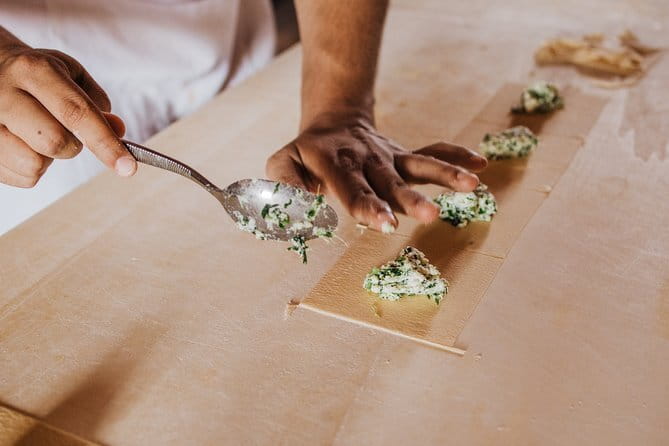
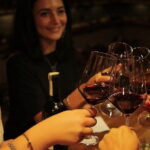
Before the flour starts flying, the hosts keep things friendly and simple. You’ll begin with a welcome coffee and cookies, then transition into an aperitivo-style setup with bruschetta and Prosecco. This is more than a snack break. It’s a pacing trick that gets you in the right mood before you start rolling dough by hand.
You’ll also get that informal home-kitchen feeling fast. In the accounts of this class, names come up often: Luisa (also spelled Louisa), Francesca (sometimes written as Francy), and Gaia/ Giia. No matter which combination you meet, the tone is consistent—welcoming, hands-on teaching, and plenty of laughter.
Practical note: because the villa is outside the center, you’ll likely want a calm start. Wear shoes you can move around in comfortably. The tour runs about 3 hours 15 minutes, so you’re not waiting around for hours, but you are there for the full cycle: welcome, cooking, then eating.
Rolling dough by hand: ravioli and chitarra made practical
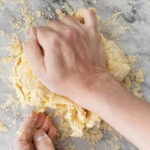
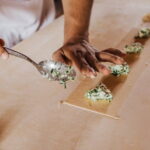
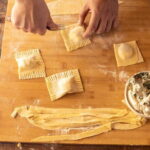
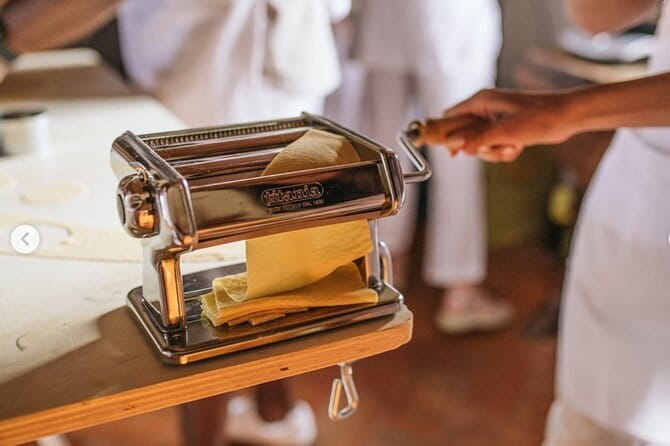
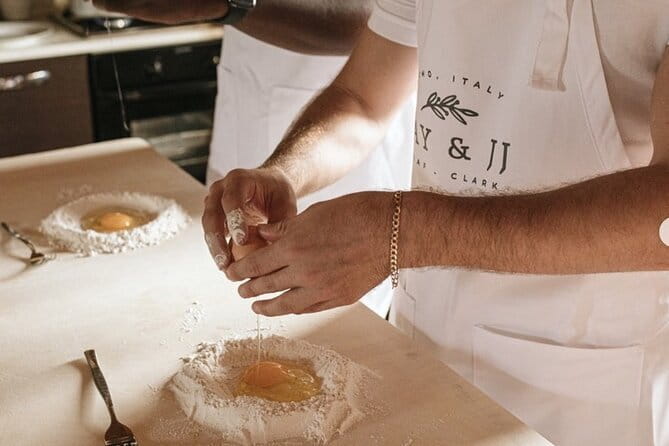
This is the part many people hope for and few cooking classes actually deliver: real skill-building. You’ll learn to work dough by hand and put that dough to use in traditional pasta shapes.
You’ll focus on two pasta types during the instruction—ravioli and chitarra pasta—plus the session’s other pasta elements that show up at the table. The best way to think about it: you’re learning technique, not memorizing theater.
Here’s what makes the teaching style work for most skill levels. The class is designed so you can follow along even if you’re intimidated by pasta at home. The host approach emphasizes doing the steps yourself—rolling, shaping, and working through the textures—rather than only watching someone else fly through it. That’s why people keep calling it fun and hands-on.
If you’re food curious, this is also a nice chance to connect Florence’s cooking with specific pasta formats. Chitarra in particular is distinctive. It’s not just “another noodle.” It’s a pasta method you can repeat later once you understand what the dough needs to do.
Handmade gnocchi and classic sauces you can actually repeat
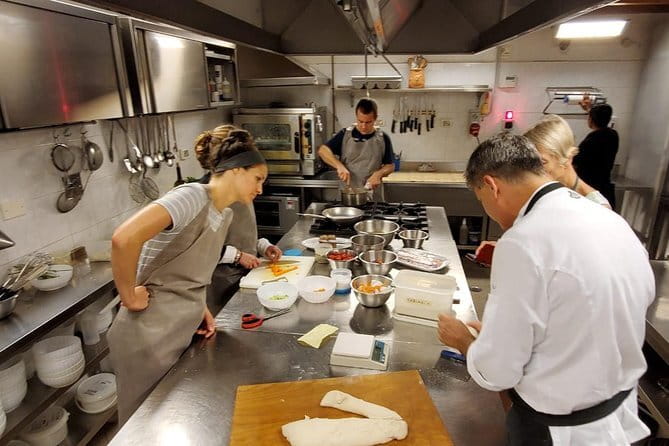
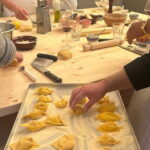
Then comes the gnocchi section—arguably the most satisfying part of a pasta class, because you can feel the dough turn from messy to controlled as you learn the steps. You’ll make potatoes gnocchi and pair it with sauces designed to taste like real Italian comfort food.
You’ll also learn sauces alongside your pasta work. Expect classic combinations such as:
- butter with sage (a common, simple pairing that tastes rich without being heavy)
- basil-tomato-style bruschetta flavors tied into the meal
- other sauce variations included in the session’s teaching and sampling
Why this matters for value: many classes teach one pasta shape and toss you a sauce recipe at the end. Here, the sauce work is part of the same skill set. You don’t just leave knowing what ravioli is. You leave with a sense of how Italians build flavor with a small set of core ingredients.
Also, gnocchi is a great confidence-builder. Once you understand the texture target and the shaping logic, the next time at home feels less like a gamble. You’ll have a stronger baseline for timing and doneness too.
The meal at the table: what you eat after the work
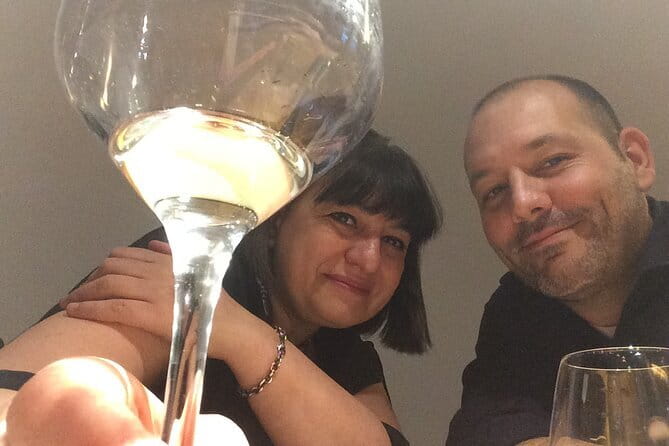
After the cooking, you eat like this class is trying to impress you, because it is. The menu you’ll work through and sample centers on the pastas and includes typical Italian meal components.
You should expect:
- Bruschetta al pomodoro e basilico, paired with Prosecco
- potatoes gnocchi as a main
- cappellacci-style pasta served with butter and sage
- spaghetti included among the course options
- pecorino cheese as part of the tasting
- dessert, described as a daily special
In the accounts tied to this class, people also mention extra touches like more wine over the meal, and that the hosts keep your drinks topped up. Even if you don’t drink much, the overall point stands: you’re not doing a quick cooking demo and then sending everyone away. You sit down with the group, you taste, and you get that shared-food feeling that makes the learning stick.
Practical idea: come hungry, not starving. The class runs about three-plus hours, and the meal is part of it. If you arrive with an empty tank, you’ll enjoy the cooking more and you’ll enjoy the eating more.
Group size, atmosphere, and why the home setting matters
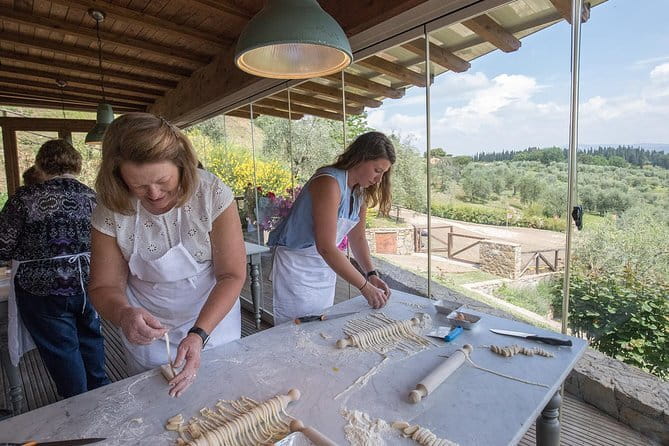
This class caps at 20 participants, which is a big deal for a hands-on experience. In a larger group, pasta work turns into waiting your turn or watching others while someone else handles the hardest steps. Here, the size keeps the atmosphere personal enough that you can actually ask questions and get guidance while you work.
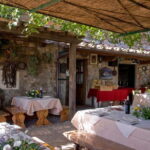
The home-villa setting also changes the tone. Instead of a fluorescent training kitchen, you’re in a private, older building with the kind of views that make photos feel like more than souvenirs. One consistent theme in feedback is that the villa view and the host warmth make the evening feel like a memory you’ll remember for reasons beyond food.
The humor and warmth matter too. When you’re stressed about flour and dough, a light mood makes learning easier. And when teachers keep things playful, you’re more likely to replicate the steps later.
Price and value: what $145.12 buys you in real terms
At $145.12 per person for about 3 hours 15 minutes, you’re paying for several things at once:
- instruction for multiple pasta styles and gnocchi
- a meal you actually sit down to eat
- drinks (welcome coffee plus Prosecco and wine during the experience)
- ingredients and cooking tools you don’t have to source
- recipe materials so you can try again later
If you compare this to the cost of doing pasta classes that are mostly demonstrations, the value becomes clearer. You’re not just watching. You’re building skills in a real kitchen, then eating the results. Add the hilltop villa setting and the fact it’s English-led, and the price starts to feel like a bundled experience rather than a single lesson.
One fair consideration: you are paying for the convenience of not having to plan logistics to an out-of-town kitchen. If you’re the type who loves arranging every detail and DIY-ing transport, the “included experience” angle may not feel as special. But if you want authentic food without the planning headache, this cost makes sense.
When this class fits best (and when it might not)
This experience is ideal if you:
- want authentic Italian pasta skills with real hands-on practice
- like small-group settings over crowded tour buses
- enjoy meeting people while you learn
- want a Florence activity that feels different from museum lines
It may be less ideal if you:
- dislike weather-dependent outdoor-or-view-heavy settings (the experience needs good weather)
- prefer purely structured, no-mess cooking lessons with zero wine involved
- need a rigid schedule with minimal conversation (this class flows like a hosted evening)
That said, the teaching approach is described as friendly and approachable for all levels. So even if you don’t cook much, you’re not expected to arrive with advanced technique.
Tips for getting the most out of your pasta night
A few practical things that will help:
- Plan to be there with comfortable movement clothing. You’ll be working with dough.
- Bring your appetite to the table. The meal includes multiple pasta components and dessert.
- Pay attention to sauce steps while you’re standing close to the counter. Those details are the part people forget at home.
- If you care about pronunciation and names of pasta types, don’t be shy about asking. The class includes teaching moments that go beyond just hands.
And yes, take a minute to enjoy the view when you arrive. The setting is part of what makes the learning feel like a true Florence evening.
Should you book Francy’s Pasta & Gnocchi?
I’d book it if you want a Florence food experience that feels personal: a hilltop villa, friendly hosts, hands-on work with ravioli and chitarra, handmade gnocchi, and a proper meal afterward. The class is priced like a full evening event, and the structure matches that: you leave with skills, not just photos.
Skip it or at least be flexible if you’re not comfortable with weather dependency or you hate off-the-beaten-path logistics. In exchange, you’ll get a genuine home-cooking vibe and a lesson you can repeat.
If you’re comparing, this one is strongest when you want: multiple pasta types, real instruction, and a shared dinner in a small group.
FAQ
Where do I meet for the class?
You meet at Caffè Petrarca, Piazzale di Porta Romana, 6/red, 50124 Firenze FI, Italy.
How do we get from Florence to the cooking location?
After confirmation of the address, you’ll take a taxi to a villa in the hills of Florence, about ten minutes from the city center.
What kinds of pasta and dishes will I learn or make?
You’ll learn to make fresh ravioli and chitarra pasta, and you’ll also make handmade gnocchi. The meal includes additional pasta options like cappellacci (with butter and sage) and spaghetti.
Is the class offered in English?
Yes, the experience is offered in English.
What food and drinks are included?
The experience includes a welcome coffee and cookies, an aperitif with bruschetta, Prosecco, and a shared meal with wine and pecorino cheese, plus dessert (the special of the day).
How large is the group?
The class has a maximum of 20 travelers.
What happens if the weather is poor?
This experience requires good weather. If it’s canceled due to poor weather, you’ll be offered a different date or a full refund.
Is there free cancellation?
Yes. You can cancel for free up to 24 hours in advance of the start time for a full refund.


More Tour Reviews in Florence
- Tuscany Day Trip from Florence: Siena, San Gimignano, Pisa and Lunch at a Winery
★ 5.0 · 21,634 reviews