REVIEW · TOKYO
Best Samurai Experience in Tokyo
Book on Viator →Operated by Samurai Theater Tokyo · Bookable on Viator
Put on a kimono and act like a samurai. In Samurai Theater Tokyo (Shinjuku), you pick your kimono and hakama, step into an Edo-style dojo set, and learn core sword moves with instructors who have worked on major Japanese drama and movie productions. The 1-hour session ends with a simple chambara practice and a music-driven showdown, plus you can film and photograph the whole thing.
What I like most is how hands-on it is without feeling intimidating. You’ll also get lots of photo moments, and the venue has armor, swords, and spears on display in a space that feels intentionally not modern. The only real caution: this is fundamentals and fun, not long, deep martial-arts training—so if you want serious technique coaching for weeks, plan something else.
In This Review
- Key highlights to know before you go
- A dojo set in Tokyo that actually looks Edo-period
- Kimono and hakama first: the fastest way to feel like a samurai
- Sword basics: draw, hold, swing, retract (and keep it safe)
- From drills to chambara: the mini-battle that feels like a scene
- Instructors who know the craft, plus the patience factor
- Group size, timing, and where to find Samurai Theater Tokyo in Shinjuku
- Value check: what $65 buys you in Tokyo
- Who this Samurai Experience is perfect for (and who may want a different class)
- Should you book this Samurai Theater Tokyo experience?
- FAQ
- How long is the Samurai Theater Tokyo experience?
- Where does the experience start?
- How much does it cost?
- Is a mobile ticket used?
- What’s included in the price?
- What is not included?
- Can I take photos or videos inside?
- Can one person join the tour?
- How big is the group?
- What is the cancellation policy?
Key highlights to know before you go
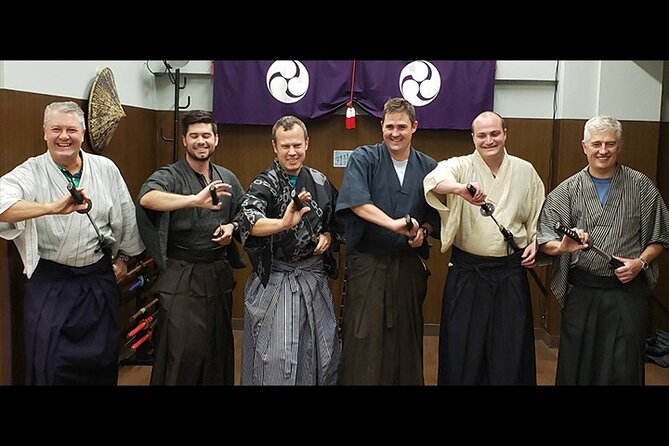
- Choose your own kimono and hakama before you change into samurai gear
- Learn sword basics in a clear sequence (draw, hold, swing, retract)
- Practice a simple chambara sword fight with a guided choreography
- A music-backed finale that turns your new moves into a mini performance
- Up to 10 people, photo and video allowed inside, so you’re not rushed
A dojo set in Tokyo that actually looks Edo-period
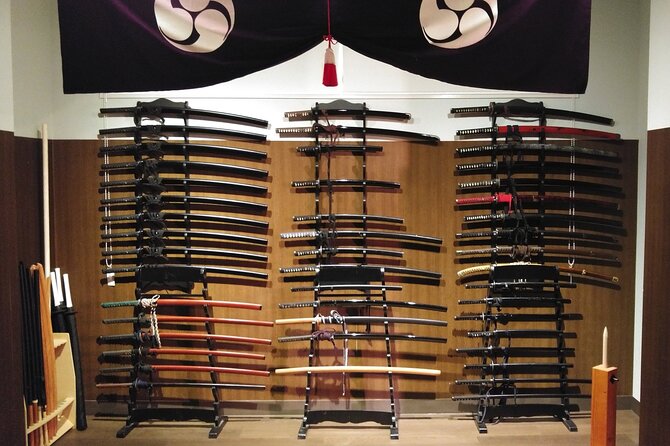
This is the kind of experience where the space matters. You’re not just walking into a classroom with posters and props—you enter a museum-like dojo setup designed to feel like an Edo-era training hall. Armor and weapons are displayed around you, including swords and spears, so you’re surrounded by the real story of samurai culture rather than only hearing about it.
That setting does two things for your experience. First, it makes the costuming step feel like you’re crossing into a different world, not just trying on a costume. Second, it makes the sword practice feel dramatic in the right way, especially for first-timers who might not know what to look for in classic Japanese weapon training.
You can also read our reviews of more tours and experiences in Tokyo.


Kimono and hakama first: the fastest way to feel like a samurai
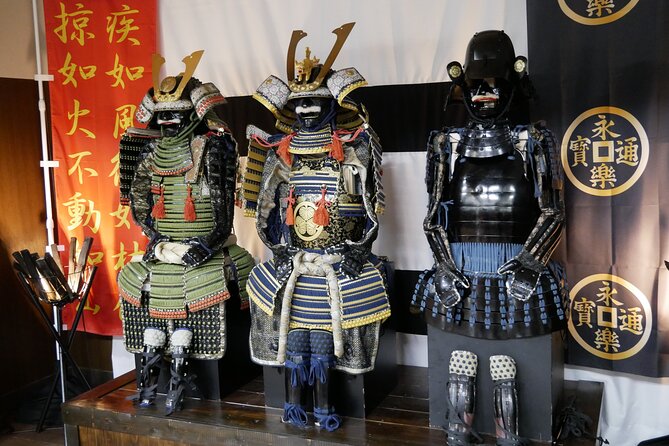
Your first big moment is the outfit. You choose your favorite kimono and hakama, then change into full samurai costume. It’s one of the most popular parts of the program because it turns everyone—kids and adults—into characters with a shared look right away.
Even better, people consistently comment on comfort. Traditional attire can sound stiff on paper, but once it’s on, it tends to feel surprisingly wearable for the hour you’ll be moving around. And for your phone camera, this is the easiest win in Tokyo: you don’t need to edit anything. The clothes do the work.
Practical tip: show up ready to get dressed and move. You’ll want your phone charged because the class allows video and photo inside, and you’ll likely want to capture your outfit and your final mini-battle sequence.
Sword basics: draw, hold, swing, retract (and keep it safe)
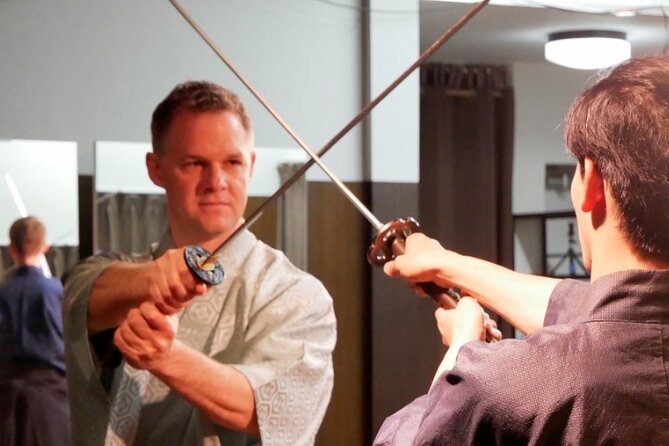
The core of the program is learning how to use a Japanese sword in a guided, beginner-friendly way. You don’t start with a full battle. You start with fundamentals, in a sequence that your body can actually follow.
You’ll practice:
- How to draw the sword
- How to hold it correctly
- How to swing it
- How to retract it
That order is smart for two reasons. It builds confidence before you add speed or chaos, and it trains the parts most people mess up when they try to copy sword movies. You also get safety emphasized, so your training doesn’t feel reckless—it feels controlled, like you’re learning a skill, not just waving a prop around.
If you’re worried you’ll be terrible, don’t be. This program is built for most travelers, and the structure keeps you from being lost. You’ll get clear guidance, and the choreography later is meant to match what you practiced at the start.
From drills to chambara: the mini-battle that feels like a scene
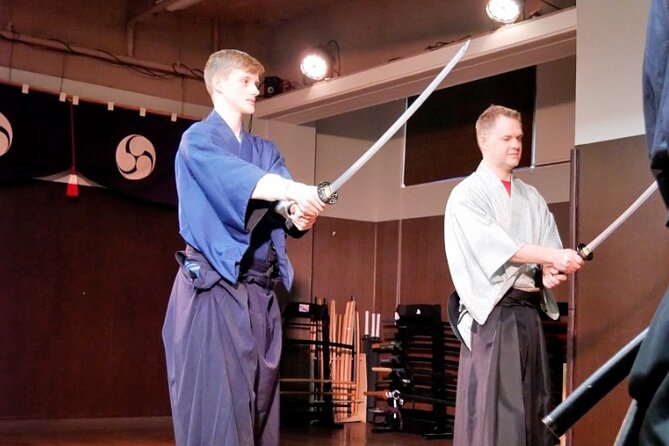
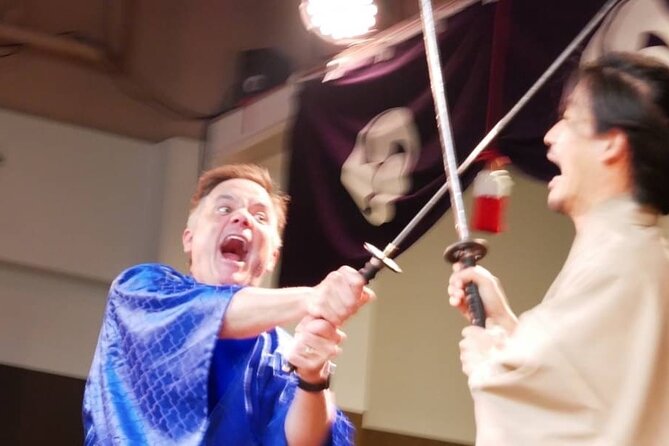
Once you learn the basic sword movements, the class shifts into a simpler chambara (sword-fight) practice. This is where the experience turns from instruction into action. Instead of random swinging, you follow steps and timing so you can participate in a fight-style moment without needing months of training.
Then comes the music-driven finale. You’ll try to exterminate bad guys to the soundtrack, which sounds goofy in English and works surprisingly well in person. It gives structure to the choreography and makes it easier to remember what to do, especially if you’re filming. The rhythm turns your new movements into something you can actually perform.
This is also where the photo opportunities multiply. People like this part because it’s not just standing still for pictures. You’re making choices and reacting in a staged battle moment, which makes for better videos than the usual tourist photos.
Instructors who know the craft, plus the patience factor
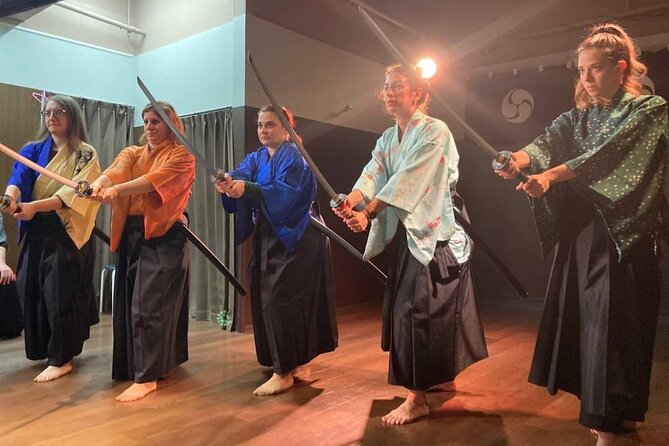
The program credits its teachers as authentic instructors who have appeared in major Japanese dramas and movies. Even without celebrity backstories, the thing that matters is how they teach—especially if you’re bringing kids or you’re a total beginner.
In multiple experiences, the instructors get praised for being fun and professional, with patience that shows up when students need extra help. That includes families where children are engaged, slowed down when needed, and encouraged to participate rather than just watch.
A bonus that’s worth calling out: instructors also help you capture the moment. You can take videos with your smartphone, and the staff is set up to take plenty of photos for you too. One practical effect of this: you’re less stuck trying to manage camera framing and sword timing at the same time. You can focus on learning and performing, and still leave with good memories.
If you’re going solo, you’re not stuck doing your own thing in a corner. The small group format and active staff support mean you can still get filmed and photographed during your turn.






Group size, timing, and where to find Samurai Theater Tokyo in Shinjuku
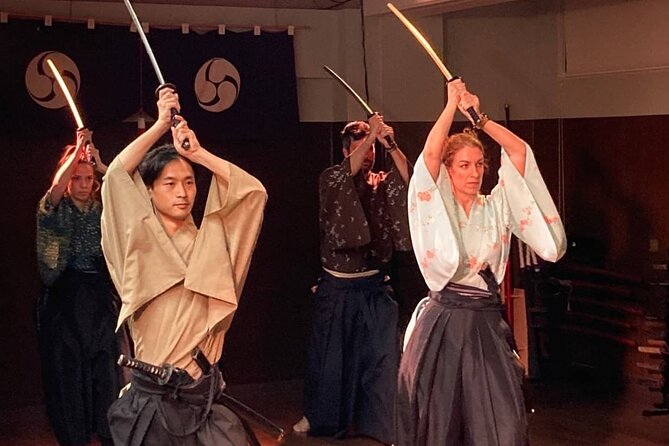
This class runs about one hour. It’s also capped at a maximum of 10 travelers, which is a big deal for a hands-on activity. Smaller groups mean more attention and more time for you to actually practice, rather than waiting around while others take turns.
The meeting point is Samurai Theater Tokyo at 40 Yokoteramachi, Shinjuku City, Tokyo 162-0831, Japan. The venue is near public transportation. One more detail to plan for: the entrance can be down side roads, and signage may not look obvious at first. If you arrive early, you’ll have time to find the correct spot without stress.
Make your schedule work like this:
- Give yourself buffer time to locate the entrance
- Bring a charged phone for the filming-allowed portion
- Wear comfortable clothing for moving and posing in traditional attire
Transportation isn’t included, so you’ll handle getting to the meeting point on your own. The activity itself ends back at the meeting point, so you can move on right after.
Value check: what $65 buys you in Tokyo
At $65 per person, this experience is priced in the range of a solid paid activity in Tokyo—but it’s not just entertainment. You’re paying for several valuable pieces at once:
- Professional instruction during live practice
- Samurai costumes (kimono/hakama plus samurai gear)
- A structured training sequence that ends in a performance-style mini-battle
- Time-efficient fun in about an hour
If you tried to recreate this on your own, the cost would add up fast: getting costume time, finding a qualified instructor, and then booking a place to practice safely would be much more complicated than most first-time visitors expect. Here, the whole experience is compressed into one organized slot, with a controlled environment and a teaching team built for the flow.
The one tradeoff is also simple: you’re not getting hours and hours of deep training. You’re getting a memorable, beginner-friendly introduction to samurai sword fundamentals and performance choreography. If that’s your goal, the price makes sense.
Who this Samurai Experience is perfect for (and who may want a different class)
You’ll likely love this if:
- You want an authentic-feeling Edo-style set for photos and roleplay
- You like hands-on learning more than museum browsing
- You’re traveling with kids who want to dress up and do something active
- You want a clear beginner start to katana basics without needing previous experience
It may not be your best fit if:
- You’re hunting for long, serious martial-arts training or technical progression over multiple sessions
- You’re only interested in history lectures and don’t care about physical practice
- You expect a sword master workshop in the Hollywood sense (this is controlled training and choreography, not free-form dueling)
The sweet spot here is first-timers and families—people who want a Tokyo highlight that feels different from the standard sightseeing checklist.
Should you book this Samurai Theater Tokyo experience?
If you want one highly memorable, hands-on Tokyo activity that mixes costume, sword basics, and a fun final battle moment, I’d book it. The small group size, the structured draw/hold/swing/retract training, and the fact that photo and video are allowed inside make it easy to walk away with both skills and great memories.
If you’re the type who hates scheduled activities or expects advanced training, consider whether you’ll feel satisfied in just one hour. But for most visitors—especially families—this is an efficient way to experience samurai culture in a way that actually gets you moving.
FAQ
How long is the Samurai Theater Tokyo experience?
It runs for about 1 hour.
Where does the experience start?
The meeting point is Samurai Theater Tokyo, 40 Yokoteramachi, Shinjuku City, Tokyo 162-0831, Japan.
How much does it cost?
It costs $65.00 per person.
Is a mobile ticket used?
Yes, the tour provides a mobile ticket.
What’s included in the price?
All fees and taxes, a professional guide/instructor, and samurai costumes are included.
What is not included?
Private transportation is not included.
Can I take photos or videos inside?
Yes. Photography and video recording are allowed inside the museum.
Can one person join the tour?
Yes, one person can join the tour.
How big is the group?
The experience has a maximum of 10 travelers.
What is the cancellation policy?
You can cancel for a full refund if you cancel up to 24 hours in advance of the experience start time. If you cancel less than 24 hours before, the amount paid is not refunded.