REVIEW · BUSAN
Gyeongju UNESCO World Heritage Guided Day Tour from Busan
Book on Viator →Operated by TOURSTORY · Bookable on Viator
Silla sites, handled in one smooth day. I liked how this Gyeongju UNESCO World Heritage guided day trip gives you UNESCO-listed context without you having to plot routes, and I really appreciated that the UNESCO option includes entrance fees for several key stops. With guides like Irene (English) and Lan (Chinese) keeping things on track, the day feels organized even when it’s full.
The main thing to weigh is time: it’s a long day, with lots of walking outdoors and a pace that can feel rushed if you like to linger.
In This Review
- Key takeaways
- Two tour styles: UNESCO highlights or the Museum mix
- Getting from central Busan to Gyeongju without hassle
- Bulguksa Temple: the architectural anchor on both routes
- Yangdong Folk Village: UNESCO life beyond the bus window
- Daereungwon Tomb Complex and Cheonmachong: royal cemeteries with context
- Hwangnidan-gil Street and Woljeonggyo Bridge: snacks and ancient stonework
- Donggung Palace and Wolji Pond: the sunset-and-lights payoff
- Gyeongju National Museum: a calmer choice on the Museum tour
- Food and pacing: what meals cost and where the day can feel rushed
- Guide performance: why names like Irene, Roy, and Sol matter
- Price and value: paying $57 to buy back your time
- Who should book the Gyeongju UNESCO day tour from Busan
- Should you book this day trip?
- FAQ
- How long is the Gyeongju UNESCO World Heritage guided day tour from Busan?
- What options are available for this day trip?
- Is the entrance fee included?
- What does the price include?
- Are meals included?
- Where do you depart from in Busan?
- How big is the group?
- What is the cancellation policy?
Key takeaways
- Two tour styles: a UNESCO-heavy route or a shorter museum-focused mix
- AC transport from central Busan with a guide in English/Chinese/Korean and a mobile ticket
- Ticket costs covered on the UNESCO route for Yangdong Village, Wolji/Donggung, and Cheonmachong Tomb (plus Bulguksa)
- Evening highlights at Donggung Palace and Wolji Pond, where the setting often feels extra special
- Real group-tour tradeoffs: efficient stops, but not much slow wandering
Two tour styles: UNESCO highlights or the Museum mix
This trip works because you can pick the version that matches your brain and your time.
The UNESCO tour is the more “full chapter” experience. You start with Bulguksa Temple, then move into the Silla-era world through Yangdong Folk Village, Daereungwon Tomb Complex, and the Woljeonggyo bridge area. You’ll also get Donggung Palace and Wolji Pond, which is often timed to feel more atmospheric later in the day. It’s the option to choose if you want the biggest run of major UNESCO-listed places in one go.
The Museum tour swaps some of the UNESCO-specific stops for a more indoor balance. It still includes Bulguksa, but you also get Hwangnidan-gil Street for browsing and snacks, then a focused visit to the Gyeongju National Museum. If you’re the type who needs a break from outdoor walking, this route can feel calmer.
Either way, you’re getting a guide and transport. That’s a big deal in Korea day trips, because Gyeongju isn’t difficult, but it’s easy to waste time figuring out timing and ticket logistics.
You can also read our reviews of more tours and experiences in Busan.
Getting from central Busan to Gyeongju without hassle
You board an air-conditioned coach or minivan and you’re guided by a multi-language team (English, Chinese, and Korean spoken by the guide). The operator notes it’s near public transportation, which helps if you’re not staying right in the middle of Busan.
Expect a 10 to 12 hour day. In real life, that usually means an early-ish pickup (many people report around 9:00 to 9:20am) and a return in the evening (often around 8pm to 9pm range). Traffic can shift the schedule, and weather matters since many stops involve outdoor sections.
Group size is capped at 43 travelers, so you won’t feel like you’re in a crowd you can’t manage. Still, it’s big enough that you should plan on moving with the group and using bathroom breaks efficiently.
Practical note: you’ll use a mobile ticket. Also, one caution from past participants—some people were asked to be ready with WhatsApp and a Google account for meeting updates or directions. If you want zero stress, have both set up before you go.
Bulguksa Temple: the architectural anchor on both routes
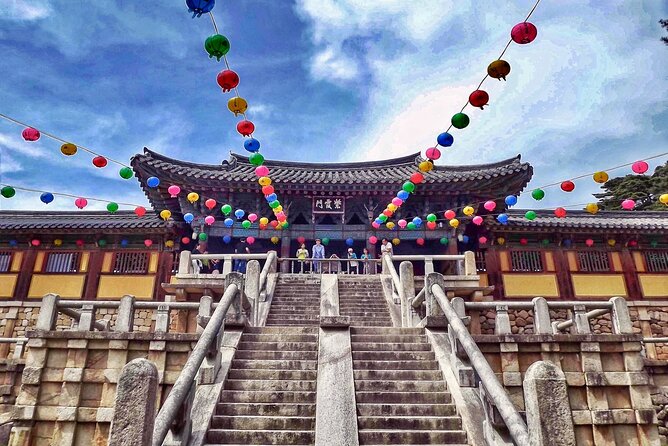
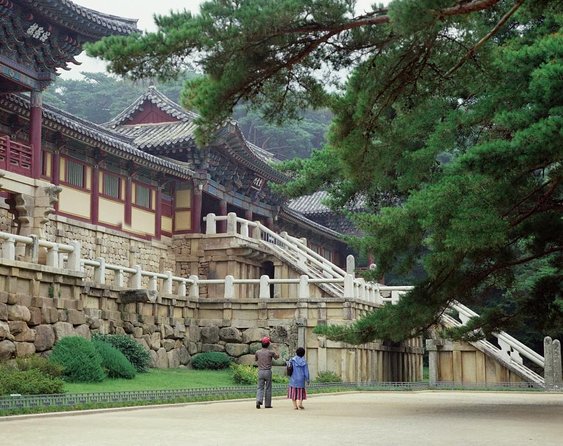
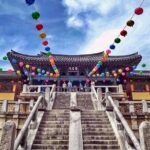
Bulguksa Temple is a strong opening move for a reason: it sets the tone fast. On this tour, you get about 1 hour 10 minutes here, and entry is included.
What I like about starting at Bulguksa is that you immediately see Silla-era Buddhist architecture at a “scale that sticks in your memory.” You’re not just walking through a single photo spot. You’re entering a temple complex where stonework, layout, and details give you something to look at even if you’re not the type to read every sign.
Drawback? Time at Bulguksa can feel a bit tight if you love long, slow wandering. A couple of people noted that bigger stops can be a little rushed. If Bulguksa is the one site you care most about, keep your expectations aligned: this is a guided sampler with smart pacing, not a self-guided full-day temple crawl.
Yangdong Folk Village: UNESCO life beyond the bus window
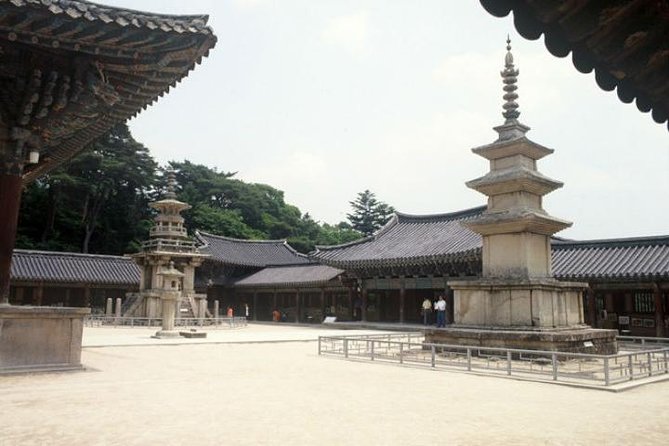
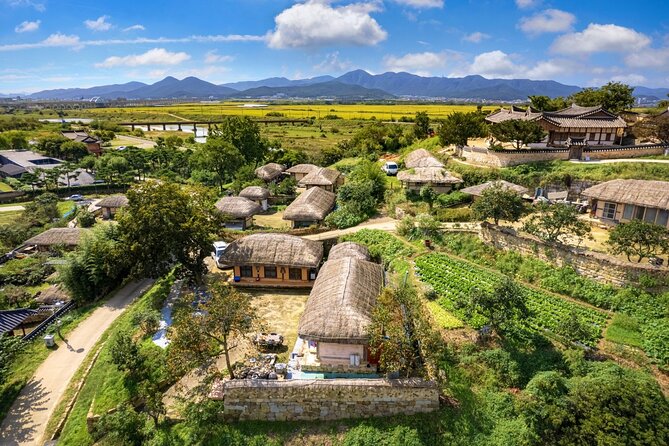
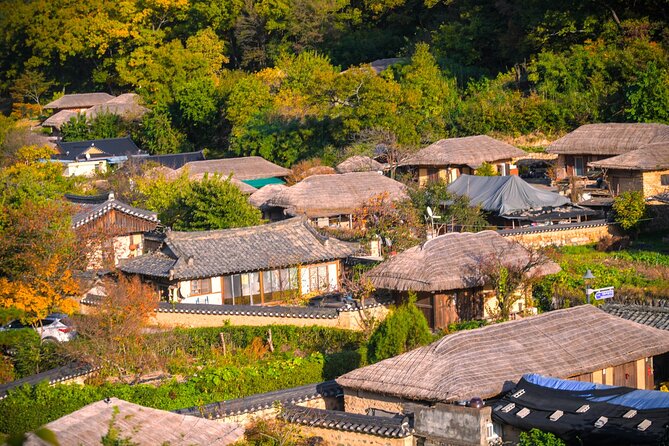
If you pick the UNESCO tour, Yangdong Folk Village is one of the best “Silla in daily life” stops. You’re here for about 2 hours 15 minutes, and the admission is included.
This village sits in a mountain setting and is known as one of Korea’s largest and best-preserved traditional village areas tied to UNESCO. What makes it worthwhile on a day trip is that you can slow down slightly compared with temple-only visits. You get time to walk lanes, look at traditional houses, and get a better sense of how people once lived—rather than only seeing monuments and royal sites.
Food happens during this block too. Meals aren’t included in the base price, but lunch time is part of the schedule and it can be tied to the on-site restaurant/café setup. One practical tip: at least one commonly used lunch spot in this area has been described as cash-only. So, carry some Korean won just in case.
Daereungwon Tomb Complex and Cheonmachong: royal cemeteries with context
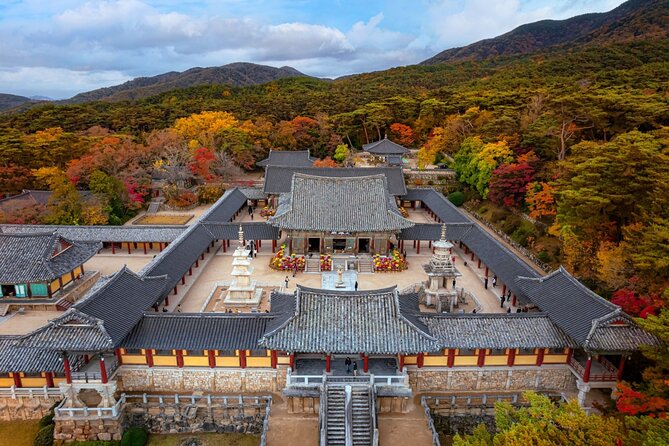
The UNESCO route includes Daereungwon Tomb Complex for about 45 minutes, and the schedule also includes a Cheonmachong Tomb ticket.
Daereungwon is often referred to as the Park of Royal Tombs, and it contains 23 tombs built during the Silla dynasty. Even with a short visit, the size and layout help you understand why this part of Gyeongju mattered. You’re not learning history from a screen—you’re standing in the landscape of power.
What I find useful here is the guide’s narration. With the time you have, you want the big picture, not a list of dates. A good guide can connect the tombs to what you’ve already seen at Bulguksa and Yangdong.
Potential consideration: you may also see some extra walking around the nearby area, including time near Hwangnidan-gil. If you’re tired near the end of the day, build in patience and use the planned breaks.
Hwangnidan-gil Street and Woljeonggyo Bridge: snacks and ancient stonework
On the UNESCO tour, Hwangnidan-gil Street is listed as a 45-minute free stop. This is the “in-between” zone where the day shifts from formal heritage sites toward something you can taste and browse.
Hwangnidan-gil is popular for street food and casual cafés, including spots in traditional hanok-style settings. It’s a good chance to buy small snacks, try something local, or just reset your legs before the next monument.
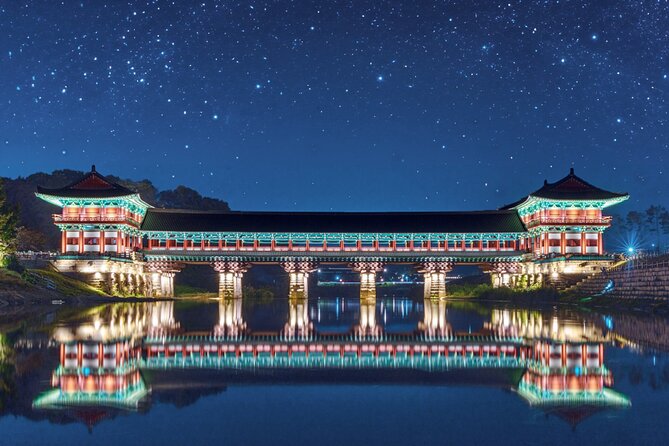
Then comes Woljeonggyo Bridge (about 20 minutes, also free). The bridge has stone-arch engineering that takes you back to how practical Silla-era construction could be. It’s short, but it gives variety. I like including smaller stops like this because the big places can be exhausting when you’ve had a long bus ride.
Donggung Palace and Wolji Pond: the sunset-and-lights payoff
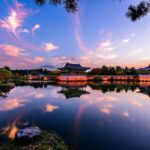
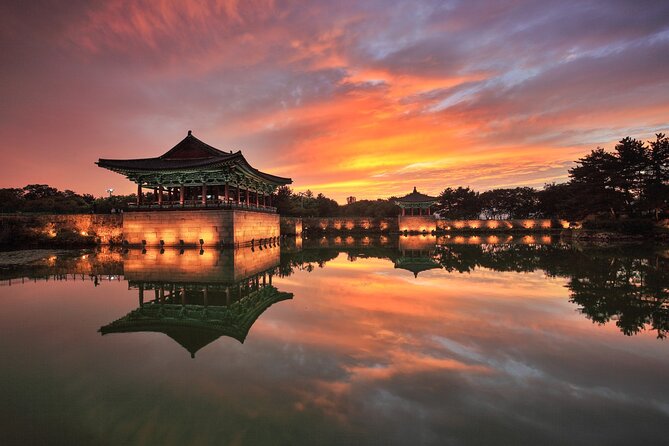
This is one of the most memorable parts of the UNESCO itinerary. You get about 1 hour at Donggung Palace and Wolji Pond, and admission is included.
You’ll learn how the pond area relates to court life and how the site’s story ties back to 674. Korean government work has even included periods where the pond was temporarily drained—an example of how living maintenance affects historic sites. Even if you don’t memorize the details, the point lands: this isn’t a random garden. It’s tied to royal memory.
Why it works on a guided day trip: Wolji Pond is often best when the light changes. Multiple participants highlight the atmosphere around sunset and illuminated evening views. Even if weather shifts timing, you’ll generally leave this stop feeling like you got more than just daytime ruins.
Tip: wear shoes that handle uneven ground and bring a light layer if you’re sensitive to evening chill.
Gyeongju National Museum: a calmer choice on the Museum tour
If you choose the Museum tour, the centerpiece is Gyeongju National Museum for about 1 hour, and entry is listed as free.
This stop is valuable because it gives your feet a break while still keeping the story on track. The museum holds major Silla-era artifacts, including items described as golden crowns and Buddhist relics. A museum visit like this helps connect what you saw outside—temple architecture, royal tombs, and the feel of the city—into a cleaner narrative.
If you’re traveling with someone who doesn’t love long outdoor walks, this is the route that can keep everyone happier.
Food and pacing: what meals cost and where the day can feel rushed
Meals are not included in the tour price, so you’re paying for lunch during the scheduled stop and handling dinner time on your own (the day structure often places you near spots where you can choose what to eat).
In practice, lunch is often at a traditional restaurant tied to the Yangdong area during the UNESCO route. People have described lunch as authentic and delicious, while others felt a lunch stop wasn’t worth the money or had a small portion. That’s the kind of swing you should expect when group tours build meals around limited on-site options.
My advice for getting through a long day:
- Bring a snack or two for the gaps between stops.
- Carry won for small purchases, since some places may not take card.
- If you’re vegetarian or have dietary limits, check your comfort level ahead of time. One lunch spot tied to the village has been described as having meat options, so you may need to plan around that.
Pacing is the other factor. Many people say the tour is well organized and efficient, but a few mention that major stops like Bulguksa or the village can feel rushed. Also, there’s a lot of bus time built in, because Gyeongju spreads out and you’re covering multiple zones. If you hate long coach rides, you might want to reduce expectations and treat it as a highlight tour.
Guide performance: why names like Irene, Roy, and Sol matter
On this kind of day trip, the guide makes or breaks the experience. The best part here is that the tour has a strong track record of guides staying helpful, organized, and good with questions and photos.
I’ve seen standout mentions of guides including Irene and Lan, plus Tomy and Lan in one group, Bobby and Christina, Vincent, Lee, Charles, Lucy, Kim Ji Song, Roy (Sante), Sol, Victoria, and Bryan. What these guides seem to share is practical flow: keeping the group moving, explaining what you’re looking at, and helping with photo spots.
A funny-but-useful detail from the experience style: good guides don’t just talk history; they also tell you where to stand for the best views. That matters at places like Wolji Pond and the bridges, where angles can change your photos a lot.
If you want maximum value, choose the tour option that matches your interest level. Then show up with your questions ready. A good guide will answer quickly.
Price and value: paying $57 to buy back your time
At about $57.14 per person, this can be a solid value for a full-day UNESCO run—especially if you pick the UNESCO tour where key admission fees are included.
Here’s why that matters. If you self-plan, you’d typically pay for transport between multiple heritage zones plus tickets. This tour rolls transport into the price and covers entry for several stops tied to the UNESCO route, including Yangdong Village and the Donggung/Wolji area, plus Cheonmachong Tomb tickets. Bulguksa entry is also included on the itinerary.
You’re also paying for the guide’s narration and scheduling. For first-timers in Korea, that can save serious time and reduce the stress of figuring out where to be and when.
The tradeoff is flexibility. This is not a choose-your-own-adventure day. It’s a managed route with group pace. If you’re the type who hates being on a clock, you might prefer a slower plan where you stay longer at one or two sites.
Who should book the Gyeongju UNESCO day tour from Busan
You’ll probably love this if:
- You have only one full day in Busan and want major Silla-era sites
- You like structured touring where the guide tells you what matters
- You want a UNESCO-first route with a later-day Wolji Pond payoff
- You’re okay with a long day and outdoor walking
You might skip or consider a different format if:
- You want lots of free roaming and unlimited time inside major sites
- You’re sensitive to long bus rides
- You’re expecting a relaxed pace at every stop
- Your group has strict dietary needs and you don’t want to hunt for options at lunch time
Should you book this day trip?
If you want the easiest way to see Gyeongju’s top UNESCO-related highlights from Busan, this tour is a strong choice. Pick the UNESCO option if you want Yangdong Folk Village, Daereungwon, and Donggung/Wolji as a single story. Pick the Museum option if you’d rather balance with Hwangnidan-gil and a museum hour.
Book it if you can handle a long day and you’re happy trading some flexibility for certainty and context. The best version of this trip is the one where you dress for outdoor time, carry some won for snacks, and let the guide do the connecting work.
FAQ
How long is the Gyeongju UNESCO World Heritage guided day tour from Busan?
The tour runs about 10 to 12 hours.
What options are available for this day trip?
You can choose between a UNESCO tour and a Museum tour.
Is the entrance fee included?
On the UNESCO tour, admission fees for key sites are included (including Yangdong Village, Donggung & Wolji, and Cheonmachong Tomb). The itinerary also notes admission as included or free for specific stops.
What does the price include?
Transport by air-conditioned coach or minivan, a guide who speaks English/Chinese/Korean, and selected admission fees (depending on the chosen route). The ticket is provided as a mobile ticket.
Are meals included?
No. Meals are not included, so you’ll pay for lunch and dinner on your own.
Where do you depart from in Busan?
The pickup is in central Busan and is noted as being near public transportation.
How big is the group?
The tour has a maximum of 43 travelers.
What is the cancellation policy?
You can cancel for a full refund up to 24 hours in advance of the experience start time.