REVIEW · FLORENCE
The Best of Florence Walking Tour in a Small Group
Book on Viator →Operated by All Around Florence · Bookable on Viator
Florence makes more sense on foot. This small-group walk threads together the Medici story and the city’s biggest art-and-architecture icons, with a guide who keeps the pacing easy and the context clear. You’ll spend about 1 hour 45 minutes moving at a “slow down and look” rhythm, not a sprint-and-snap routine.
I really like two things about this tour: the cap of 15 travelers (so you can actually hear your guide) and the whisper system, which is a huge deal in crowded lanes around the Duomo. One thing to plan for: many stops involve major churches, libraries, and museums where admission tickets aren’t included, so you may still need to buy entries separately if you want to go inside.
In This Review
- Key points to know before you go
- How a max-15 group changes the Florence experience
- San Giovanni start, Ponte Vecchio finish: a smart route for first-timers
- Medici power stops: San Lorenzo, the Laurentian Library, and the Medici Chapels
- Palazzo Medici Riccardi: where banking wealth becomes visible power
- The Duomo complex: cathedral area, Baptistery, Giotto, and Brunelleschi’s dome
- Piazza della Signoria and Palazzo Vecchio: civic Florence before you hit the art
- Ponte Vecchio and Palazzo Pitti: riverfront trade and Medici residence
- The real value: guide stories, pacing help, and food direction
- Price and whether it’s worth it
- Who should book this Florence walking tour
- Should you book this tour?
- FAQ
- What is the meeting point for the tour?
- What time does it start, and how long is it?
- How big is the group?
- Is the tour offered in English?
- What is included in the price?
- Are admission tickets included for the stops?
- Are tips required?
- Does this tour run in any weather?
- Can I cancel after booking?
Key points to know before you go
- Max 15 people keeps it intimate and makes questions feel normal.
- Whisper system helps you hear clearly even when the group slows for photos.
- Medici-focused route connects family power, art, and architecture across multiple neighborhoods.
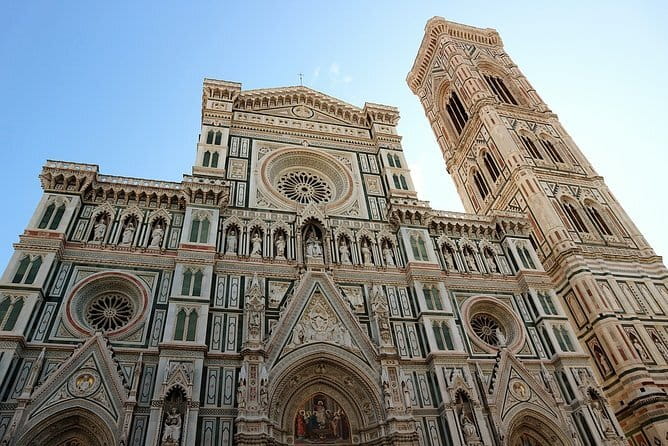
- Duomo complex in one sweep: cathedral area, Baptistery, Giotto’s Campanile, and Brunelleschi’s dome.
- Easy “day 1” energy: you end near Ponte Vecchio, a perfect launch point for the rest of your afternoon.
- Tickets not included for most interiors means your free time depends on whether you add museum/church entry.
How a max-15 group changes the Florence experience
Florence can feel chaotic fast. This tour avoids that by keeping the group small. With 15 people or fewer, you’re not stuck behind a wall of hats and selfie sticks, and you get more space to stop and actually see details on façades and domes.
The pace is built for walking and noticing. Each stop isn’t long, but the guide uses that short window to point out what matters: why this building exists, what changed over time, and what symbols to look for when you’re back on your own.
Also, the whisper system really helps. Around the Piazza del Duomo and the Piazza della Signoria, the background noise is real. Hearing your guide makes the difference between getting a list of sights and getting the story.
If you hate rushed tours, you’ll probably like this format. It’s the kind of “get your bearings fast” walking tour that makes the next day’s museum line shorter, mentally. And since it’s offered in English, you won’t have to play catch-up with translations.
You can also read our reviews of more tours and experiences in Florence.
- Tuscany Day Trip from Florence: Siena, San Gimignano, Pisa and Lunch at a Winery
★ 5.0 · 21,634 reviews

San Giovanni start, Ponte Vecchio finish: a smart route for first-timers
The walk starts at Caffè Scudieri Firenze, in Piazza di San Giovanni 19R, and ends around Ponte Vecchio. That shape matters. You begin near the Duomo complex zone and finish across the Arno River, so you finish your orientation walk right where you’ll want to keep exploring.
You also start at 12:15 pm, which is a practical time. It’s late enough that the morning crowds have already done their peak stamp, but early enough that you still have plenty of energy to add an extra stop afterward.
One more practical point: this is a walking tour in historic streets. The route is best for people who can handle uneven sidewalks and short transfers on foot. The experience info says most travelers can participate, and service animals are allowed, which is helpful if you need that flexibility.
If you’re the type who plans a whole day by “what’s closest,” you’ll find this ending location convenient. Ponte Vecchio is a natural hub for wandering, dinner scouting, and finding your next ticketed stop.
Medici power stops: San Lorenzo, the Laurentian Library, and the Medici Chapels
This tour’s backbone is the Medici family. You don’t just see buildings; you see how family influence showed up in Florentine religion, education, and art patronage.
Stop 1: Basilica di San Lorenzo
San Lorenzo sits in the city’s main market district, and it matters because it’s tied directly to Medici burials—from Cosimo il Vecchio to Cosimo III. Even if you only get a short look, the building’s role as a Medici mausoleum gives you a key to the rest of the route. You’re not just looking at a church. You’re looking at a dynasty’s statement.
Stop 2: Biblioteca Medicea Laurenziana
The Laurentian Library is known for its architecture designed by Michelangelo and for being part of a Medici shift in image. The idea wasn’t only wealth; it was status—no longer just merchants, but part of the educated and ecclesiastical world. If you’re the sort of traveler who loves when art has an agenda behind it, this stop delivers.
Stop 3: Cappelle Medicee
Then you step into the Medici Chapels, built between the 16th and 17th centuries as extensions to Brunelleschi’s earlier church. Here’s where you feel the connection between politics and patronage: the chapels celebrate the Medici as patrons and Grand Dukes. The Sagrestia Nuova, also called the New Sacristy, was designed by Michelangelo, which makes this portion especially rewarding for anyone who wants to connect names you’ve heard to places you can stand in.
Practical note: admission tickets aren’t included for these interior-heavy stops, so if entry is important to you, you may want to time your day so you can buy tickets without stress.
Palazzo Medici Riccardi: where banking wealth becomes visible power
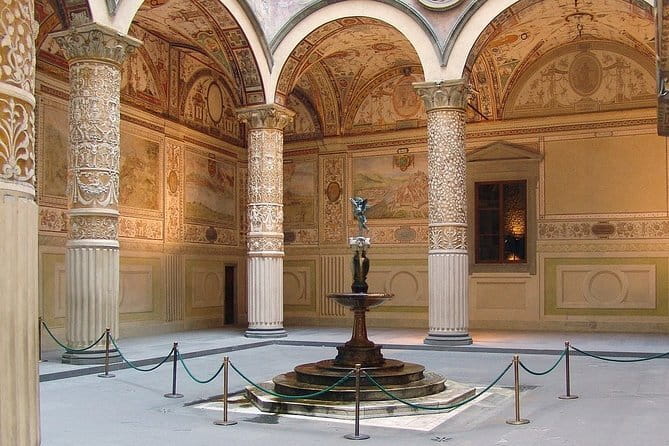
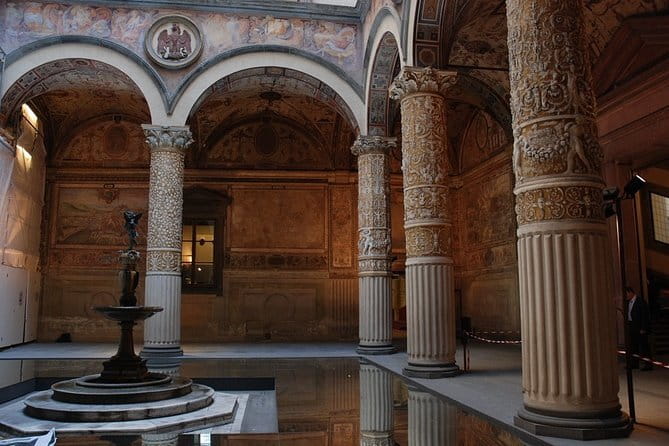
After the church-and-library cluster, you get a change of scenery with Palazzo Medici Riccardi. This palace was commissioned for Cosimo de’ Medici, leader of the Medici banking family, and built between 1444 and 1484.
What’s useful here is the contrast. A lot of Florence is “big art you see from the street.” But palaces like this explain how wealth got translated into architecture and urban presence. It’s the Medici story turning from private devotion and elite scholarship into something public you can walk by every day.
This stop is also a good reset moment. It gives you a break from religious interiors while still keeping the theme tight. If you’re walking with kids or anyone who gets museum fatigue, palazzi like this often land better than you’d expect—especially when your guide points out what makes the façade and setting meaningful.
Again, admission tickets aren’t included here, so expect more of an outside-focus unless you add ticketed time on your own.
The Duomo complex: cathedral area, Baptistery, Giotto, and Brunelleschi’s dome
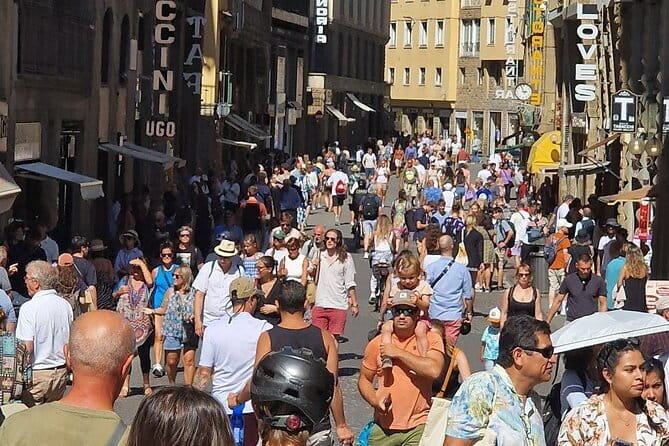
Now you hit the part nearly everyone pictures when they think Florence: the Duomo complex.
The tour includes stops around the Cattedrale di Santa Maria del Fiore area, plus key neighbors:
- the Battistero di San Giovanni
- Campanile di Giotto
- the Cupola del Brunelleschi
Cathedral complex (Cattedrale di Santa Maria del Fiore)
This cathedral began in 1296 in Gothic style. The complex sits in Piazza del Duomo and includes the Baptistery and Giotto’s Campanile, all part of Florence’s UNESCO-recognized historic center. The exterior façade is famously decorated with white, green, and pink marble, and you’ll want time to notice the patterning rather than just looking up at the size.
Florence Baptistery (Battistero di San Giovanni)
This Baptistery is among the oldest buildings in Florence, constructed between 1059 and 1128 in Florentine Romanesque style. It’s across from the cathedral and campanile, so it’s perfect for a guide-led comparison: Gothic vs Romanesque vibe, and why the site kept evolving rather than staying one-era.
Giotto’s Campanile
Giotto’s tower is right next to the action and is a showpiece of Florentine Gothic architecture, with rich sculptural decoration and polychrome marble. Even on a quick stop, having someone explain what you’re looking at makes your photos better later.
Brunelleschi’s Dome (Cupola del Brunelleschi)
This is the “how did they do that” moment. The dome remains the largest brick dome ever constructed and was once the biggest in the world. If you’ve heard the nickname of the dome as an engineering miracle, this is the place where it clicks in your mind.
Two practical considerations here:
- Some entries are not included (your guide can still frame what you see, but interiors may require separate tickets).
- This area is busy. Wear comfortable shoes and plan for slow movement during stops.

Piazza della Signoria and Palazzo Vecchio: civic Florence before you hit the art
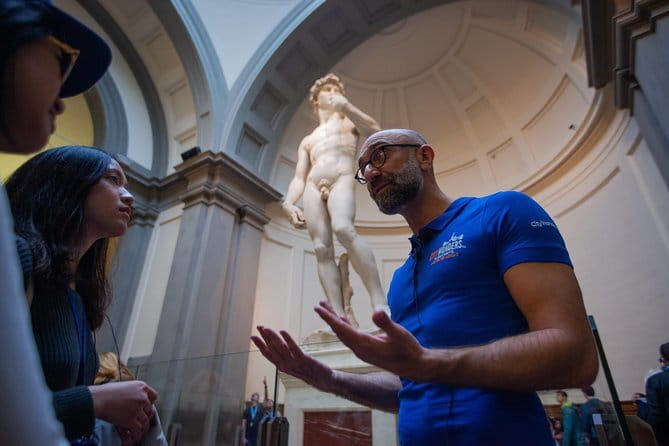
Once you leave the cathedral zone, the tour heads to the Piazza della Signoria and Palazzo Vecchio.
Piazza della Signoria is L-shaped and functions like a living room for locals and a magnet for tourists. It’s also a gateway area for bigger sights nearby, so it’s a good moment to understand Florence as a “city of institutions,” not just an open-air museum.
Palazzo Vecchio is Florence’s town hall, a massive fortress-palace with a commanding presence over the square. Your guide helps you connect what you’re seeing with how power worked here. There’s also an easy-to-spot reference point: a copy of Michelangelo’s David statue and the Loggia dei Lanzi with its statuary nearby. Even if you don’t enter anything, you’ll understand why this square is central to Florentine life.
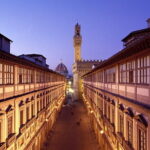
Then you move to the Gallerie degli Uffizi area. The Uffizi is one of Italy’s most important art museums, and it’s also built into the Medici-era administrative story. The complex began under Giorgio Vasari in 1560 for Cosimo I de’ Medici, meant to house offices for Florentine magistrates. In other words: offices helped produce a museum legacy later.
The catch: admission for Uffizi isn’t included, so if you want to go inside, you’ll need to plan that as a separate ticketed add-on.
Ponte Vecchio and Palazzo Pitti: riverfront trade and Medici residence
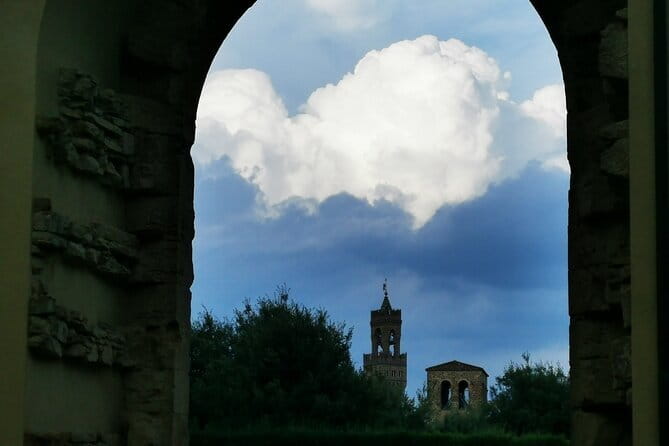
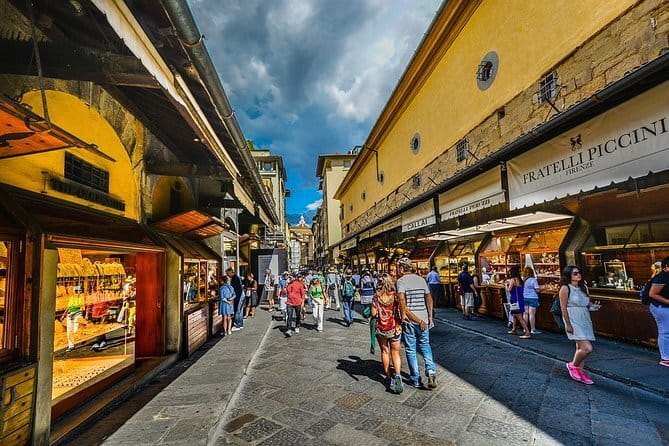
You end with Ponte Vecchio, the Old Bridge over the Arno. It’s the oldest bridge over the Arno in Florence and it’s famous for the shops built along it. Long ago, those shops belonged to trades like butchers, tanners, and farmers. Today, the visible tenants are mostly jewelers and art dealers, which gives the bridge a shifted identity from everyday commerce to curated luxury.
Finishing here is smart because Ponte Vecchio is both scenic and useful. It’s a place where you can keep walking, cross back, or start looking for dinner without losing your bearings.
Right before the walk ends, the route includes Palazzo Pitti. The palace was bought by the Medici in 1549 and became the main residence of the ruling families of the Grand Duchy of Tuscany. Over time, it grew into a treasure house holding paintings, plates, jewelry, and other luxury possessions.
That last Medici stop is a nice capstone. Earlier you saw Medici power through church and learning. Here you see it through living spaces and collection-building. It helps you understand how wealth turned into public influence and cultural legacy over generations.
The real value: guide stories, pacing help, and food direction
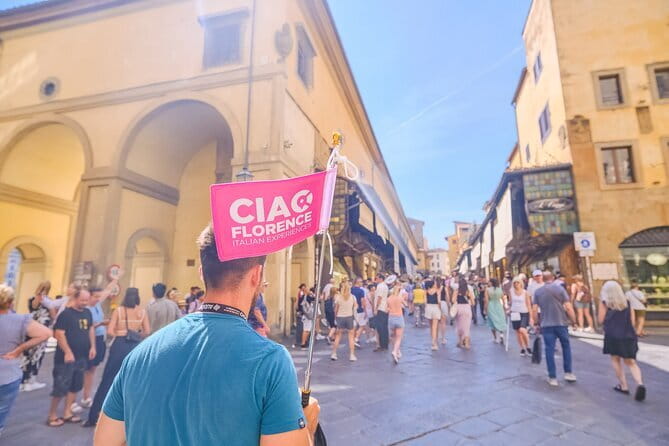
A walking tour like this is only as good as what your guide adds between the landmarks. This one tends to be strong on story and practical help.
Expect your guide to:
- point out architectural clues you might miss on your own
- connect names you’ve heard (like Michelangelo and Giotto) to what you can see right now
- share suggestions for what to do next and where to eat
The vibe from past guides is also very “Florence-specific.” Guides like Manuel often bring a personable, humorous narrative style and focus on details you wouldn’t find in a museum label. Camilla is described as someone who calls out architectural and historical attributes as you walk, and also shares favorite church and backstreet stops plus shopping and eating advice. Other guides in this program, like Simona, are praised for mixing humor with personal stories and even helping the group manage shade on hot or bright days.
You might not need a full museum map after this tour. What you’re really buying is a mental framework: where Florence’s big power centers are, how the pieces connect, and what corners are worth your time later.
Price and whether it’s worth it
At $59.26 per person for about 1 hour 45 minutes, this isn’t a budget “just walk around” deal, but it also isn’t a pricey day-long tour. For that money, you get a licensed guide, a small group format, and a whisper system, plus the structure to hit many big-name areas without getting lost.
The main cost wrinkle isn’t the base ticket. It’s the optional add-ons created by admission policies. Many major interiors on this route require separate tickets, so the full spend depends on your style:
- If you mostly want exterior views plus guided context, the tour stays easy on your wallet.
- If you want to enter big sites (libraries, chapels, Uffizi), you’ll need to budget for admissions on top of this.
In short: it’s good value if you want orientation plus meaning fast. It can be less cost-efficient if you only want a quick walk and don’t plan to use the guide’s interpretation.
Who should book this Florence walking tour
This tour is a great fit for:
- first-timers who want the Medici-to-Duomo story in one afternoon
- travelers who like walking, photos, and architecture details
- people who want a plan for food and what to do next without heavy scheduling
It may be less ideal if:
- you want a strictly ticketed itinerary with guaranteed museum entry time (admissions aren’t included for many stops)
- you need lots of time inside each site rather than guided exterior context and quick stops
If you’re visiting Florence for a short stay, this is the kind of tour that helps you spend your limited time wisely afterward.
Should you book this tour?
I’d book it if you want a smart first pass through Florence’s power centers and most famous landmarks, with a guide who explains what you’re seeing and helps you plan the rest of your day. The combination of small group size, whisper system, and a route that ends at Ponte Vecchio makes it convenient and efficient.
I would hesitate only if you hate buying separate tickets or you plan to skip most interiors. In that case, you might still enjoy the walk, but the value shifts toward your ticket budget and your willingness to add entries later.
If you can handle a short, focused walking tour with optional ticketed extras, this one is a strong way to get oriented fast and start enjoying Florence with better context.
FAQ
What is the meeting point for the tour?
The tour starts at Caffè Scudieri Firenze, Piazza di San Giovanni 19R, 50123 Firenze FI, Italy. The end point is Ponte Vecchio, and the exact meeting location for the finish can vary slightly within the nearby area.
What time does it start, and how long is it?
The start time listed is 12:15 pm. The duration is approximately 1 hour 45 minutes.
How big is the group?
The tour has a maximum of 15 travelers, keeping it in a small-group format.
Is the tour offered in English?
Yes. The tour is offered in English.
What is included in the price?
The price includes a licensed tour guide, a small group experience, and a whisper system. A mobile ticket is also listed as a feature.
Are admission tickets included for the stops?
No. Admission tickets are not included for most stops. Some parts of the Duomo area and open areas may be free to view, but the tour does not include entry tickets for several major sites like the Medici sites, museums, and Uffizi.
Are tips required?
Tips and gratuities are not included, but they are optional.
Does this tour run in any weather?
The experience requires good weather. If it’s canceled due to poor weather, you’ll be offered a different date or a full refund.
Can I cancel after booking?
Yes, free cancellation is available. You must cancel at least 24 hours in advance of the start time for a full refund. If you cancel less than 24 hours before, the amount you paid is not refunded.

More Tour Reviews in Florence
- Tuscany Day Trip from Florence: Siena, San Gimignano, Pisa and Lunch at a Winery
★ 5.0 · 21,634 reviews