REVIEW · SIEM REAP
2 Days Guided Historical Tour in Angkor
Book on Viator →Operated by Angkor Wat Shared Tours · Bookable on Viator
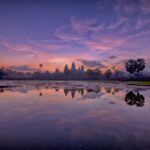
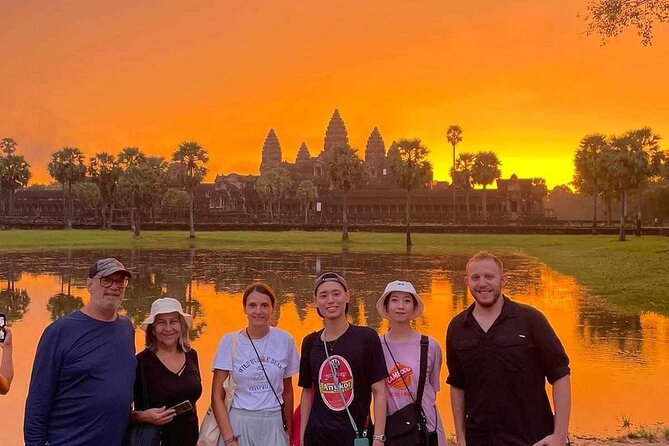
Angkor Wat at 4:30am hits different. This two-day guided loop is built for big moments—sunrise at the main temple, then sunset on day two—without you having to figure out logistics.
I love the practical comfort touches: hotel pickup plus cool water and a wet towel so you can last the walking and the heat. I also like the small-group cap of 15, which keeps things easier when you’re swapping from temple to temple early and late.
One thing to plan around: temple tickets aren’t included, and you’ll still need to budget for the separate admission cost. Also, the very early start isn’t for late-night sleepers.
In This Review
- Key Highlights Worth Marking
- Two Days, Eleven Temples, and a Start Time You Feel in Your Bones
- Pickup, AC, and the Comfort Stuff That Actually Helps
- Day 1: Angkor Wat Sunrise and the Main-Temple Sweep
- Angkor Thom South Gate: Faces and a Causeway Stroll
- Bayon Temple: The Four-Face Focus
- Ta Keo: Break for Breakfast and a Strong First Look at Sandstone
- Ta Prohm: The Trees, the Stones, and the Famous Visual Chaos
- Day 2: Lesser-Frequented Temples and the Sunset Climb at Phnom Bakheng
- Pre Rup: The Temple-Mountain Views
- Ta Som: A Smaller Stop With Big Photo Potential
- Neak Pean: The Artificial Island and Temple in a Basin World
- Preah Khan: Honoring the King’s Father
- Phnom Bakheng: A Sunset Finish Worth Timing
- The Real Magic: What the Guides Add (Sok, Vone, Sem, and Heang)
- Price and Value: The $35 Tour vs. Temple Tickets
- Who This Tour Fits Best (and Who Might Want Something Else)
- Practical Tips for Enjoying the Two-Day Angkor Route
- Should You Book This 2-Day Angkor Tour?
- FAQ
- What time does the tour start?
- Is hotel pickup included?
- How long is the tour?
- How many temples are included?
- Are meals included?
- Do I need to pay for temple entrance tickets?
- What comfort items are provided during the day?
- What is the maximum group size?
- What is the starting meeting point?
- Is free cancellation available?
Key Highlights Worth Marking
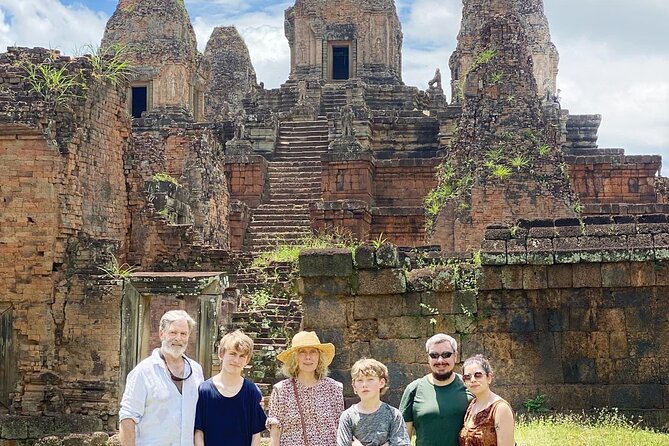
- Sunrise at Angkor Wat so you get the temple before it turns into a full-on crowd festival
- 11 temples in 2 days with time for guided explanations and your own exploring
- Max 15 people for a calmer pace and more chance to ask questions
- Cold water plus a wet towel to deal with Cambodia heat without wasting time buying drinks
- Hotel pickup and drop-off to cut down the “where do we meet?” stress
- Guides with real storytelling skills, with names like Sok, Vone, Sem, and Heang showing up in guest feedback
Two Days, Eleven Temples, and a Start Time You Feel in Your Bones
This is the kind of Angkor tour that respects time. You’re not just ticking off names—you’re using the most important light windows: early morning for Angkor Wat and later for day-two viewing. That matters, because Angkor doesn’t work like a normal museum visit. Your eyes want the changing sky, and your camera wants the softer contrast.
The tour is structured over about two days and covers 11 temples. The pace is active. You’ll walk, climb, and move on schedule, which is exactly what you want if you’re trying to see more than the usual two-hour “taste.”
The catch is simple: you leave at 4:30am. In plain terms, you go to bed earlier than you might on vacation, or you’ll pay for it with crankiness before your first temple even opens.
You can also read our reviews of more tours and experiences in Siem Reap.
Pickup, AC, and the Comfort Stuff That Actually Helps
One of the most useful inclusions here is the combo of air-conditioned vehicle and pickup/drop-off. Angkor day tours can turn into endurance tests if you’re constantly transferring tuktuks and waiting in the sun. Having one driver rhythm, plus hotel pickup, makes the whole day feel smoother.
You also get cool water and a wet towel during the day. That sounds small until you’re standing in open sun with sweaty ankles and a heat-haze shimmer in your photos. In the guide stories people share, this is repeatedly praised because it helps you keep going instead of slowing the group down.
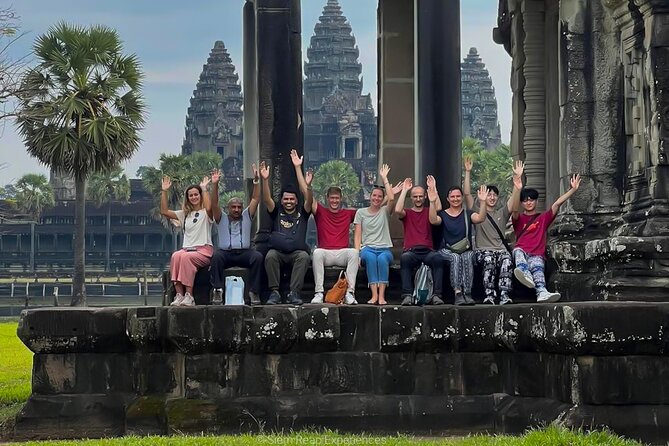
Finally, there’s the small-group limit: a maximum of 15 travelers. I like this because you’re less likely to feel like you’re in a moving train. You can ask your guide a question, pause for a photo without a long wait, and generally feel less rushed than on big buses.
Day 1: Angkor Wat Sunrise and the Main-Temple Sweep
Day one is about getting your bearings fast. You start at Angkor Wat early, when the world is quiet enough to hear your own footsteps—and when Angkor Wat looks its best. Your guide meets you with pickup, then you head out for sunrise viewing. Inside the complex, you’ll explore with explanations that connect the temple’s layout to Khmer religious and royal ideas.
At Angkor Wat, the key value is timing plus guidance. Without a guide, it’s easy to stare at stone and miss the “why.” With a guide, you get the story behind the design lines, the symbolism, and what you’re actually looking at as you walk the grounds. Guests consistently point out that guides like Sok and Vone are the kind who answer questions and explain what matters before you break off to look around.
After sunrise, you move to the broader Angkor Thom area.
Angkor Thom South Gate: Faces and a Causeway Stroll
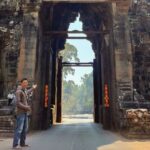
Next up is the South Gate of Angkor Thom. It’s dramatic right away, with carved stone faces and a line of figures along the approach. This stop is useful because it sets a tone for the day. You’re not just visiting random ruins—you’re getting a sense of how the city entrances controlled movement into sacred space.
The downside here is that this is another “early visibility” stop, so if you’re dragging from the 4:30am wake-up, you’ll want to stay focused. Keep your pace, drink water, and let the guide’s explanations pull you along.
Bayon Temple: The Four-Face Focus
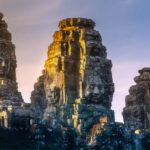
Then comes Bayon Temple, the one with those famous smiling faces. This is where the crowd tends to gather, but the guide helps you slow down enough to notice details in the carvings and how the layout supports the temple’s religious role.
You’ll spend time here, not just pass through. Expect walking and photo angles that don’t always show up from your first location. The value is having a guide who can point out where to stand to understand the temple’s structure.

Ta Keo: Break for Breakfast and a Strong First Look at Sandstone
After Bayon, you take a break for breakfast (meals aren’t included, so you’ll pay for your own). Then you go to Ta Keo, a temple-mountain known for being built entirely of sandstone—an architectural choice that shapes how it looks and how it weathers.
What I like about Ta Keo in a route like this: it’s a chance to step away from the most photogenic “crowd temples” and see something that rewards quieter attention. You’re still in the same complex universe, but the experience feels different.
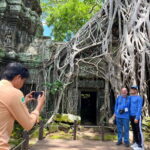
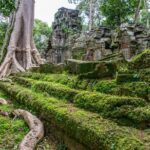
Ta Prohm: The Trees, the Stones, and the Famous Visual Chaos
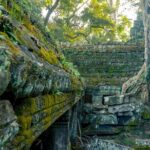
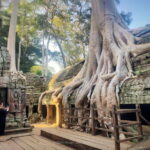
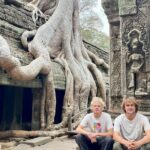
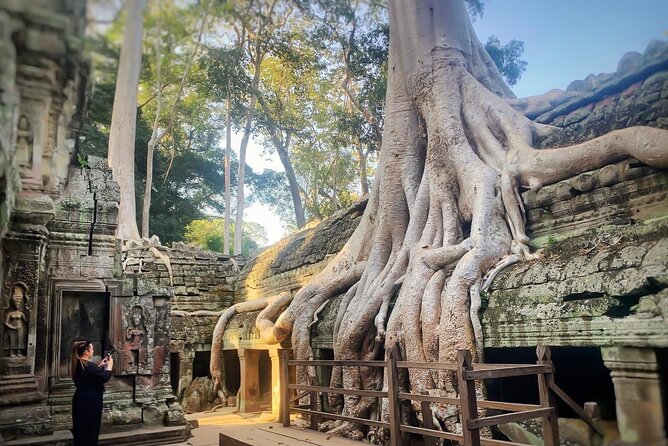
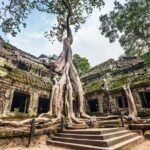
Day one ends with Ta Prohm, the temple most associated with dramatic trees and roots across stone. It’s busy, it’s photographed constantly, and it can feel like a circus if you show up with no plan.
Here’s where a good guide helps: you get context first, then you’re free to explore. The best strategy is to listen for the layout and symbolism, then use your time to find angles that don’t look like everyone else’s shot.
If you want photos with fewer people in-frame, you’ll usually have better luck during the portions where the group is moving to specific viewpoints rather than just standing in the “main postcard spot.”
Day 2: Lesser-Frequented Temples and the Sunset Climb at Phnom Bakheng
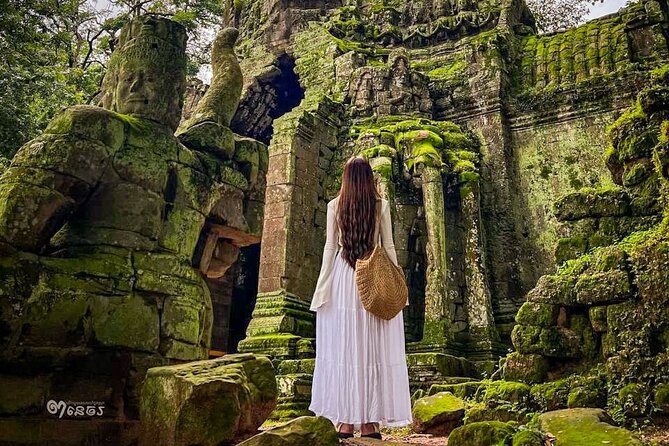
Day two shifts gears. You’re still seeing Khmer temples, but the selection is geared toward variety and atmosphere. The stops here are often less crowded than the core Angkor Wat cluster, which can make the whole day feel calmer.
You start with the temple that sets a strong tone for the afternoon light.
Pre Rup: The Temple-Mountain Views
Pre Rup is a Hindu temple-mountain connected to a Khmer king and dedicated to Shiva. You’ll spend time here, and the point of the stop isn’t just the stones. It’s how the temple form creates viewpoints over the surrounding Angkor area.
If you like “lookout moments,” this is a good one. If you don’t like walking and climbing, you’ll still manage it, but your pace needs to be steady and your water use consistent.
Ta Som: A Smaller Stop With Big Photo Potential
Then you reach Ta Som, a smaller temple tied to the late 12th century. This kind of stop is the secret sauce of day two: it gives your eyes a break from the biggest iconic sights, and it often lets you slow down.
Neak Pean: The Artificial Island and Temple in a Basin World
Next is Neak Pean, an artificial island with a Hindu temple setting tied to a baray water system. Even if water history isn’t your usual interest, this stop works because it changes how you visualize the Angkor landscape. You’re not just looking at stone; you’re seeing how Angkor engineered the sacred world.
Preah Khan: Honoring the King’s Father
Then you visit Preah Khan, dedicated to honor the father of a Khmer king. This stop tends to reward attention to structure and spacing—the way corridors, doorways, and temple groupings create a moving experience as you walk.
Again: the guide explanation makes a difference. You learn what you’re looking at and why it was arranged this way.
Phnom Bakheng: A Sunset Finish Worth Timing
Finally, you end at Phnom Bakheng for late-day atmosphere. It’s another temple-mountain, and it’s especially about that end-of-day payoff. People come here for views and that sunset glow on the stone.
One practical caution: day two can be exhausting. You’re stacking climbs and walking in warm light. Bring the same hydration discipline you used day one, and don’t let “just one more viewpoint” turn into a stamina spiral.
The Real Magic: What the Guides Add (Sok, Vone, Sem, and Heang)
Angkor can turn into a blur if you only look. The strongest part of this tour is that you’re not left alone with ruins. The guides named in guest feedback—Sok, Vone, Sem, Heang/Ho Heang, Sary, Sam—show up for a reason: they connect temple design to Khmer belief and explain what details mean.
This shows up in small ways:
- They answer questions instead of reciting a script
- They keep the group moving at a pace that fits real heat conditions
- They help you understand why a gate faces a certain way or why a layout works like it does
Some guests also mention that guides help with timing for photos and make space for you to explore after they explain the key points. That’s the best balance: guidance first, freedom second.
If you’re the type who likes history, you’ll feel satisfied without getting lectured to death. If you’re more visual, the explanations help your eyes pick up what matters.
Price and Value: The $35 Tour vs. Temple Tickets
Here’s the honest math. The tour price is $35 per person, and that includes the guided experience, air-conditioned transport, the guide, cool water and wet towel, and access to the route covering 11 temples.
But temple entrance fees are not included. The separate temple ticket cost is listed as $62 per person. So your likely all-in cost is closer to $97 per person, depending on how the ticket is priced at purchase time.
Does that make this a bad deal? Not necessarily. When you pay for a two-day guided route, you’re paying for:
- a structured itinerary across multiple sites
- early morning timing you might not manage solo
- a guide who helps you understand what you’re looking at
- transport that reduces wasted time and sun exposure
If you already have a temple ticket and you’re the kind of person who wants a plan, $35 plus ticket still feels reasonable. If you hate paying separate fees, it’s something to budget upfront so there are no surprises at the gate.
Who This Tour Fits Best (and Who Might Want Something Else)
This tour fits best if you want a lot of Angkor in a short, guided format. The route covers major highlights like Angkor Wat, Bayon, Ta Prohm, and it also includes additional temples that broaden the experience beyond the standard two-stop Instagram plan.
It also works well for first-time visitors because the guide helps you build context fast. And the small group size is great if you don’t want to feel lost in a huge crowd.
Who might struggle?
- If you can’t handle very early mornings, the 4:30am start can be tough
- If you hate walking/climbing, you’ll still do it on temple-mountain stops like Phnom Bakheng and Pre Rup
- If you want fully planned meals included, you’ll need to budget for breakfast and lunch since meals aren’t included
If you’re okay with those realities, this is a strong way to see Angkor without turning your days into an unorganized scramble.
Practical Tips for Enjoying the Two-Day Angkor Route
First, plan your sleep like you’re prepping for a flight. You start at 4:30am, and sunrise tours don’t negotiate.
Second, treat water as part of the schedule, not as an afterthought. This tour gives cool water and a wet towel, which is great, but heat still takes energy.
Third, wear shoes you can trust for uneven stone and temple steps. Angkor ruins are not built for flip-flops.
Fourth, go with a photo mindset that isn’t just one angle. At Angkor Wat and Bayon, your best shot usually comes after you’ve watched how others position themselves and then found your own viewpoint.
Finally, lean on the guide for the “why.” If you listen for a few minutes before each main stop, your experience will last longer after you leave the site.
Should You Book This 2-Day Angkor Tour?
I’d book it if you want sunrise Angkor Wat, a two-day plan that hits 11 temples, and you like the idea of having a guide connect the dots while you move efficiently. The comfort touches—AC transport plus cold water and wet towel—also make it feel more humane than many Angkor tours.
I would pause before booking if you dislike separate costs, since temple tickets are not included. And if very early starts are a dealbreaker, you might prefer a later-timed option.
If you’re flexible, curious, and ready for active days, this is a solid value way to experience Angkor without guessing your way through the schedule.
FAQ
What time does the tour start?
The start time is 4:30am.
Is hotel pickup included?
Yes. Pick up/drop off hotel is included, and the tour starts with pickup and a driver/guide.
How long is the tour?
It’s 2 days (approximately).
How many temples are included?
The tour covers 11 temples across the two days.
Are meals included?
No. Meals are not included.
Do I need to pay for temple entrance tickets?
Yes. Entrance fees are not included, and the temple ticket cost is listed as $62 per person.
What comfort items are provided during the day?
You get cool water & a wet towel, plus an air-conditioned vehicle.
What is the maximum group size?
The group size is capped at a maximum of 15 travelers.
What is the starting meeting point?
The start is at Siem Reap Pub Hostel, behind Angkor Night Market, in Siem Reap.
Is free cancellation available?
Yes. You can cancel for a full refund if you cancel up to 24 hours in advance of the experience’s start time.