REVIEW · SIEM REAP
Full-Day Angkor Wat Sunrise Private Tour with Guide from Siem Reap
Book on Viator →Operated by Angkor Wat Travel Tour · Bookable on Viator
Angkor Wat looks different before the sun clears the trees. This private sunrise tour is built around getting you there early, then moving through four big sites with an English guide who explains what you’re actually seeing. I love the tight timing, the personal pacing, and the photo-friendly routes your guide can steer you toward. One thing to consider: temple entrance tickets aren’t included, so budget for that on top of the $60 price.
You start at 4:30am with hotel pickup, ride in an air-conditioned vehicle, and keep moving without the hassle of figuring out tuk-tuks in the dark. The guides seem to bring plenty of “how to look” tips too; I’ve seen names like Se, Sopha, Curly, and Sa come up for strong English, good story-telling, and helping people up and down stairs at a comfortable pace.
In This Review
- Key highlights that make this sunrise tour worth your money
- Why 4:30am is the smartest plan in Siem Reap
- Private pickup, English guide, and the comfort details that matter
- Angkor Wat at sunrise: main entrance climbs and first-light views
- Bayon Temple in Angkor Thom: 54 towers and 216 faces
- Ta Prohm: fig trees, root shadows, and why it still feels real
- Banteay Kdei: a quieter monastic complex with a similar feel
- Tickets, entrance fees, and what the $60 really covers
- Timing: crowds, heat, and how the day flows
- Who this sunrise tour is best for
- Small practical tips I’d use before you go
- Should you book this Angkor Wat sunrise private tour?
- FAQ
- What time does the tour start?
- How long is the full-day tour?
- Are Angkor temple entrance tickets included?
- What’s included in the tour price?
- Are meals included?
- Can I get a full refund if I cancel?
Key highlights that make this sunrise tour worth your money
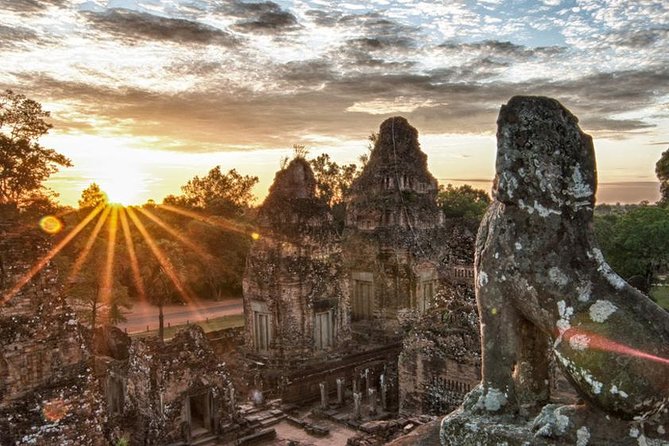
- 4:30am departure so you can reach Angkor Wat while it’s still calm
- Private, English-guided temple time instead of self-wandering with a map
- Hotel pickup and drop-off in Siem Reap, plus air-conditioned transport
- Cold towel and cold water to reset between temples on a long morning
- Four major stops: Angkor Wat, Bayon, Ta Prohm, and Banteay Kdei in one day
- Photo-focused guidance from guides who know where to stand for views and reliefs
Why 4:30am is the smartest plan in Siem Reap
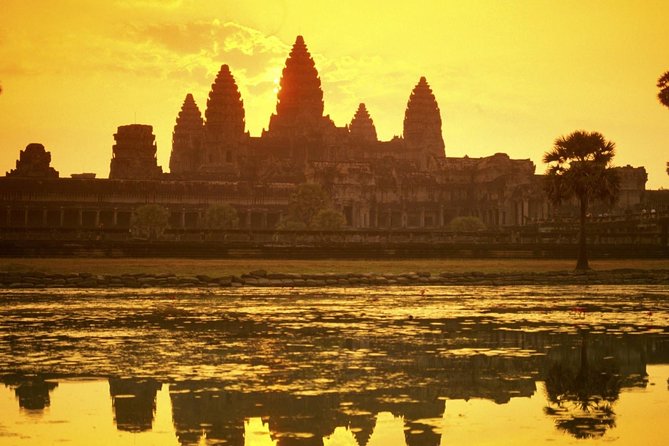
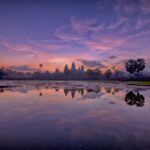
Angkor isn’t just one temple. It’s a huge complex, and the light changes everything. Starting before sunrise is your best shot at seeing Angkor Wat with softer crowds and that first glow across the central towers.
The early start also shapes the day in a good way. You’ll explore the most famous highlights while the air is still cooler, then finish earlier than you would if you were starting later and getting stuck in midday heat. In the schedules like this, you’re typically wrapping up around late morning to early afternoon, which feels like a win.
You can also read our reviews of more tours and experiences in Siem Reap.
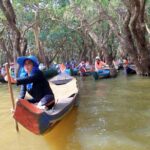
Private pickup, English guide, and the comfort details that matter
This is a private format, meaning it’s built around your group only, not a mixed crowd tour. That changes the feel of the day. You can move at a slower pace if your legs or attention need a break, and your guide can answer questions without repeating themselves for a big bus.
The comfort perks are practical, not fancy. You get an air-conditioned vehicle, plus cold water and towels along the way. In Siem Reap, those small resets matter, especially when you’re walking stone corridors and climbing steps back-to-back.
And yes, the guide choice can make or break the day. Names that pop up in strong feedback include Se, Sopha, Sa, Curly, Chen, Huot, Samuth, and Keo Sieng, often praised for clear English and for turning the temples into stories you can actually follow.
Angkor Wat at sunrise: main entrance climbs and first-light views
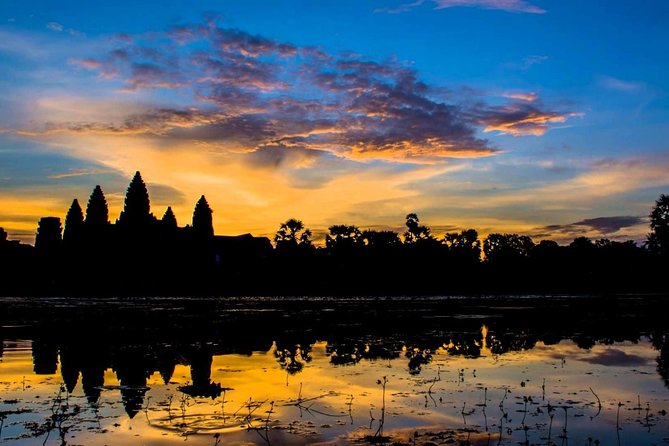
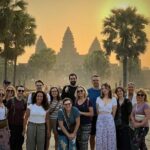
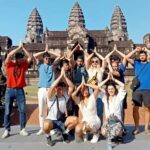
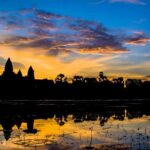
Angkor Wat is the reason you set that alarm. Your morning begins with time at the temple for sunrise viewing, then a chance to explore by climbing the main entrance.
Here’s what makes this stop special, beyond the obvious. When the light first hits the carved stone, you start seeing depth in the bas-reliefs and the symmetry in the courtyards. Without a guide, you’ll still enjoy it. With a guide, you get help noticing the details that most people miss while they’re just trying to get a photo.
There’s also a crowd-management advantage. Your guide’s job is to get you to a good viewing position early, before the busiest waves arrive. If you arrive when everyone else is arriving, you lose that calm moment when Angkor Wat feels almost like a single glowing shape in the dark.
One practical note: sunrise is weather-dependent. Clouds can happen, and you may not get the exact “sun ball over the horizon” moment you dreamed of. Even then, the temple at dawn still carries a strong mood. But if you’re chasing a specific sky effect, know that you can’t control that part.
Bayon Temple in Angkor Thom: 54 towers and 216 faces
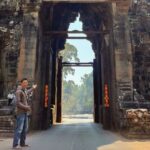
After Angkor Wat, you head into central Angkor Thom for Bayon Temple. This is where the place goes from impressive to a little uncanny—in the best way.
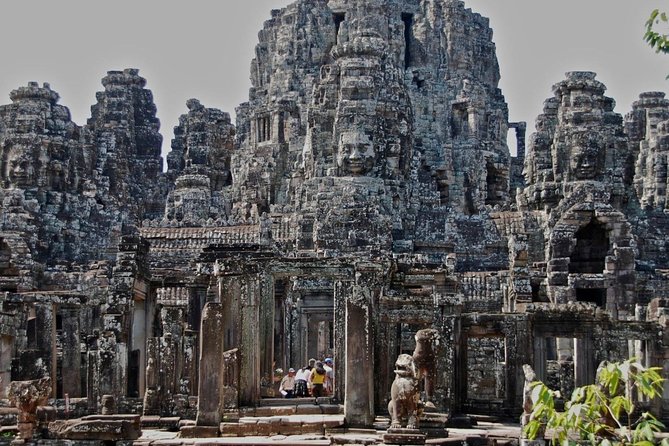
Bayon is famous for its 54 towers and 216 faces of Avalokesvara. The guide helps you understand what you’re looking at and how to “read” the expressions from different angles. On your own, you might notice faces. With guidance, you start linking what the carvings suggest with the bigger story of the site and its rulers.
This stop also works well because it gives your eyes a new kind of focus. Angkor Wat is about structure and symmetry. Bayon is about the human scale inside the stone, the repeat faces, and the feeling that the temple is looking back at you.
Time here is roughly about two hours. That’s long enough for photos, short enough to keep the day from dragging once the sun climbs.
Ta Prohm: fig trees, root shadows, and why it still feels real
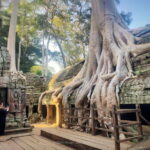
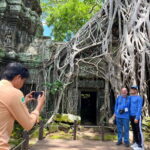
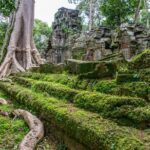
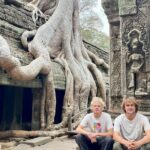
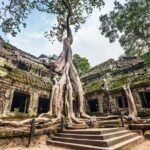
Next up is Ta Prohm, the temple where huge fig trees wrap around the ruins. It’s famous for a reason: the roots don’t just sit near the stone. They move the whole scene into a kind of living frame.
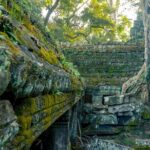
The key detail to expect is that the temple is left largely in its found condition. That’s why Ta Prohm doesn’t feel like a perfectly restored display. It feels like a place where time is still visible, like the jungle reached in and didn’t fully let go.
This stop is also a photo magnet. Your guide can point out where root shadows fall best, which angles make the carvings look deeper, and how to avoid getting boxed in by other people trying for the same shot. If you care about photos, this is usually where your time starts turning into keepsakes.
The downside is that it can feel busy even when you start early, because Ta Prohm draws lots of attention. The private setup helps here: you can pause when you want and keep moving when you don’t.

Banteay Kdei: a quieter monastic complex with a similar feel
Banteay Kdei is a strong choice for finishing the big-day circuit. It was built by King Jayavarman VII in the late 12th to early 13th century, and it’s described as a sprawling, largely non-restored monastic complex.
If Ta Prohm gave you jungle-and-stone vibes, Banteay Kdei keeps some of that mood but with a calmer rhythm. It’s the kind of stop where you can take your time and notice how the stonework and layouts repeat. And because it’s less “stage-managed” in feel than the very top draw sites, it can feel more personal.
You’ll typically spend about an hour here. That’s enough for the highlights without turning the day into a marathon.
Tickets, entrance fees, and what the $60 really covers
The price is $60 per person, and that’s for the experience framework: private transportation, English guide, and the comfort items like cold towels and water. Your hotel pickup and drop-off are included too, which saves you hassle and time at the start and end of the day.
The big budget catch: admission ticket fees are not included. Angkor entrance pricing can change over time, and you’ll want to confirm what you need for your exact day and ticket type. If you’re comparing this to a cheaper option, this is usually the reason the final cost feels closer than it looks at first glance.
Meals also aren’t included. That doesn’t mean you won’t get a break for food. It means you’ll pay for breakfast lunch on your own if the schedule includes a stop. A small snack in your daypack can help, especially while you’re waiting through the early morning in that waiting-between-moments zone.
Timing: crowds, heat, and how the day flows
This tour is built to hit Angkor Wat at sunrise and still cover three other major temples before the heat takes over. That’s the real value of the early start: it compresses your sightseeing into the cooler hours.
The day shape also tends to reduce decision fatigue. You’re not trying to choose what’s worth your limited time, or where to go next, or how to avoid backtracking across the complex. Your guide keeps it moving.
That said, it’s still a long day. Even with private comfort, you’ll be walking and climbing, sometimes on uneven stone. If you want a slower pace, this is exactly the kind of tour where a guide can help adjust. In prior feedback, guides like Se and others were specifically praised for being considerate with stair steps and for adapting to people who need gentler pacing.
Who this sunrise tour is best for
I’d put this tour at the top of the list if you want:
- A stress-free start from your hotel
- A guide who can explain what the carvings and towers mean in plain language
- A day plan that avoids starting too late and suffering in heat and crowds
- Photo help, especially at Angkor Wat and Ta Prohm
It’s also a solid fit for first-timers. The route hits four of the big names in one day, and the timing helps you see them in the best light windows.
If you’re traveling as a family, note the rule that children must be accompanied by an adult. And if anyone in your group has limited mobility, tell your guide your pace needs early. You will be climbing at Angkor Wat, and your comfort level will matter.
Small practical tips I’d use before you go
- Bring bug spray. Mosquitoes can show up near water around sunrise, and early mornings by temple ponds don’t leave you much room for perfect timing.
- Wear breathable layers. You’ll start cold in the early morning, then heat ramps up later.
- Pack water even though cold water is included. You’ll drink more than you think once you’re out in open courtyards.
- Use temple-appropriate clothing. Shoulders and knees are usually a safe rule of thumb in Khmer temple areas.
- Budget for entrance tickets. This tour is guide-and-transport heavy, and the entry fees are your add-on.
Should you book this Angkor Wat sunrise private tour?
If this is your first Angkor day, and you want the sunrise without dealing with logistics in the dark, I think this is a smart booking. You’re paying for the structure: early pickup, private guide attention, and a route that hits Angkor Wat, Bayon, Ta Prohm, and Banteay Kdei without wasting daylight.
Skip it only if you’re already comfortable building the plan yourself, you don’t care about sunrise timing, or you need a package that includes every fee and meal with no add-ons. Since entrance tickets and meals are not included, your final total will be a bit higher than $60 once you add those.
In your shoes, I’d book this for the sunrise chance plus a guide who can translate the stone into meaning. That combination is what turns a visit from photos-only into something you remember.
FAQ
What time does the tour start?
The tour start time is 4:30am.
How long is the full-day tour?
The duration is listed as approximately 8 hours.
Are Angkor temple entrance tickets included?
No. Entrance tickets fee are not included.
What’s included in the tour price?
The price includes an English tour guide, an air-conditioned vehicle, cold towel and cold water, and private transportation with hotel pickup and drop-off in Siem Reap.
Are meals included?
No. Meals are not included (breakfast, lunch, and dinner are not included).
Can I get a full refund if I cancel?
Yes. There is free cancellation, and you can cancel up to 24 hours in advance for a full refund. If you cancel less than 24 hours before the start time, you don’t get a refund.