REVIEW · BALI
Bali: Sacred Temples and Sunset Private Tour
Book on GetYourGuide →Operated by Your Bali Trekking Tour · Bookable on GetYourGuide
Bali temples hit different when you get context. This private 9-hour route strings together sacred sites that show how Balinese Hindu life connects to ritual, water, and everyday art. It’s also built around timing, with a sunset finish at Tanah Lot that can be dramatic when conditions line up.
Two things I like a lot: the chance to take part in a purification blessing at Tirta Empul (with a sarong provided), and the fact that you’re not stuck with a generic script. In guides praised across the bookings, names like Nyoman, Edi, and Gede Susila show up often because they explain what you’re seeing and help you move through each place correctly.
One possible drawback: it’s a long day with temple steps, uneven ground, and Bali’s traffic. If you’re sensitive to walking and stairs, or if you want a slower pace with more downtime, plan your expectations carefully.
In This Review
- Key highlights worth planning for
- A private temple circuit that makes Balinese Hinduism make sense
- Goa Gajah and Bedulu Village: carvings you’ll keep staring at
- Gunung Kawi Sebatu: the 11th-century river-temple feeling
- Tirta Empul: what a purification blessing actually feels like
- Taman Ayun Temple: Royal Family Temple on a handmade lake island
- Tanah Lot at sunset: dramatic views, but plan around tides
- Price and value: is $55 a fair deal for this kind of day?
- Getting ready: pack smart for temple steps and bright sun
- Should you book this Bali Sacred Temples and Sunset private tour?
- FAQ
- What is the start time of the tour?
- How long is the tour?
- Is hotel pickup and drop-off included?
- Where does pickup coverage include in Bali?
- Are entrance fees included?
- Is lunch included?
- Do I need to bring a sarong for the temples?
- What does the Tirta Empul experience include?
- Is Tanah Lot accessible at all times?
- Is the tour suitable for wheelchair users?
- FAQ
- What languages is the tour guide available in?
- Is a ticket line skip included?
- What should I bring?
Key highlights worth planning for
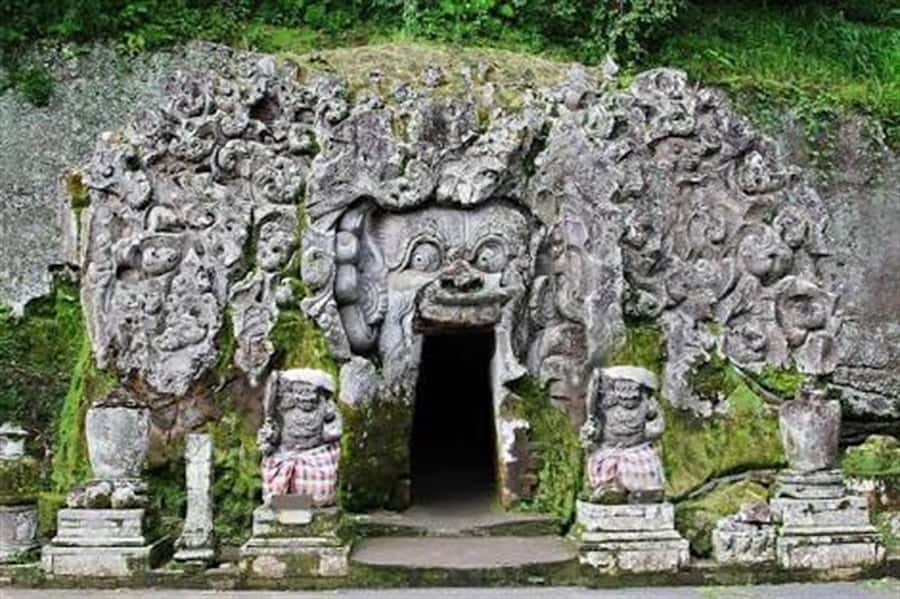
- Tirta Empul purification blessing with a sarong and clear guidance on the ritual steps
- Goa Gajah Elephant Cave plus the carved-stone atmosphere around Bedulu Village
- Gunung Kawi Sebatu: an 11th-century funerary complex spread across the Pakerisan River
- Taman Ayun Temple: built in 1634 on a small island surrounded by a handmade lake
- Tanah Lot sunset: the most photographed finale, with access limited at high tide
- Private guide + air-conditioned transport, and drivers who handle traffic with patience
A private temple circuit that makes Balinese Hinduism make sense
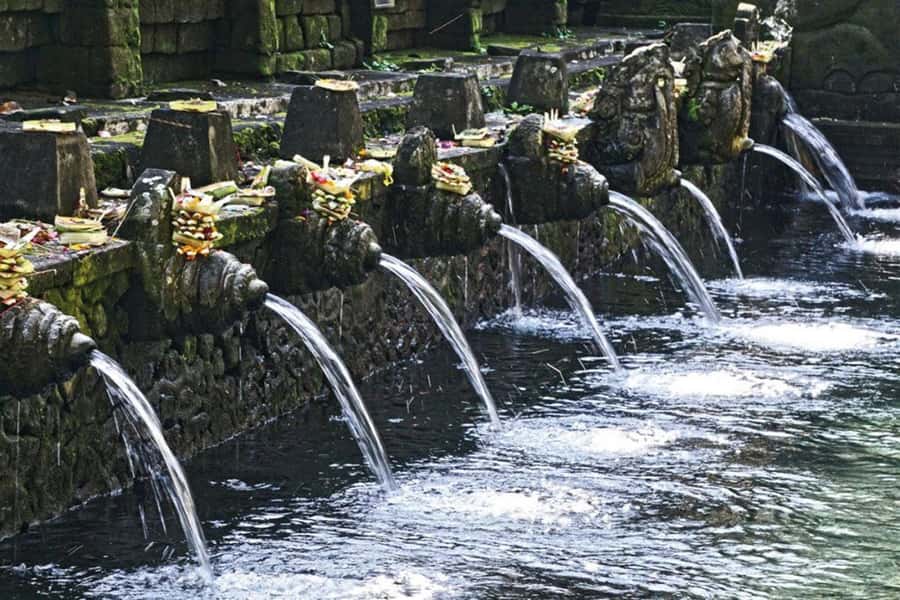
This is the kind of day you’ll remember because it’s not just a checklist of famous temples. Your guide is the difference. They translate the symbolism—gates, carvings, water, offerings, and posture—so you understand what you’re looking at instead of just photographing it.
You start at 9:00 AM with hotel pickup and you end after sunset at Tanah Lot, dropped back at your hotel. The route moves west-to-south and back again, depending on where you’re staying and how traffic flows. That’s not a flaw; it’s the reality of Bali driving.
The value here is strong because the price covers your private local guide, entrance fees, and hotel pickup/drop-off. For $55 per person, you’re paying for a full day of logistics and cultural interpretation, not just bus transport.
You can also read our reviews of more tours and experiences in Bali.


Goa Gajah and Bedulu Village: carvings you’ll keep staring at
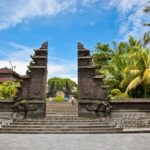
Goa Gajah is often called the Elephant Cave Temple, but what makes it special is the stone design and the sense of age around the carvings. You’ll walk through an atmosphere that feels carved by time—cool stone, textured walls, and motifs that connect to Hindu beliefs and local devotion.
Right after that, the day links into the stone-culture feel around Bedulu Village, where you can take in older carvings. Even if you’re not a “history person,” carved details are visual language. A guide can point out what you’re meant to notice—where the pattern sits, what symbols mean, and how the space is arranged for worship.
Practical note: Goa Gajah and nearby temple areas mean walking on stone and uneven paths. Wear shoes you trust, not sandals that slip on damp surfaces.
Gunung Kawi Sebatu: the 11th-century river-temple feeling
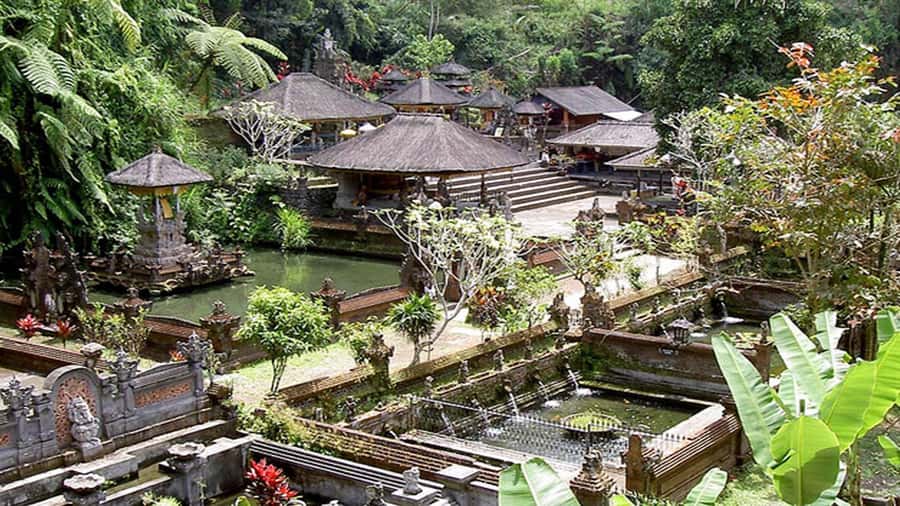
Next comes Gunung Kawi Sebatu, a temple complex dating back to the 11th century, set on both sides of the Pakerisan River. This stop has a different mood than Goa Gajah. It feels more spread out and rhythmic, with the river acting like a divider and a backdrop.
A big reason I like this part of the itinerary is pacing. You’re not just bouncing between small spots—you’re getting a sense of how Balinese sacred spaces can stretch across natural features. Your guide can also explain the funerary side of the complex, which changes how you interpret the structures you see.
Expect stairs and some effort to reach viewpoints and temple sections. Some guides also help with “where to stand” for photos without blocking paths. If you’re traveling with knee or mobility issues, say something early so your guide can adjust your route and time your visits.
Tirta Empul: what a purification blessing actually feels like
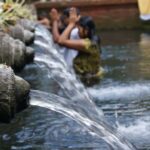
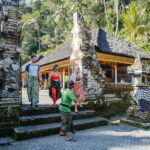
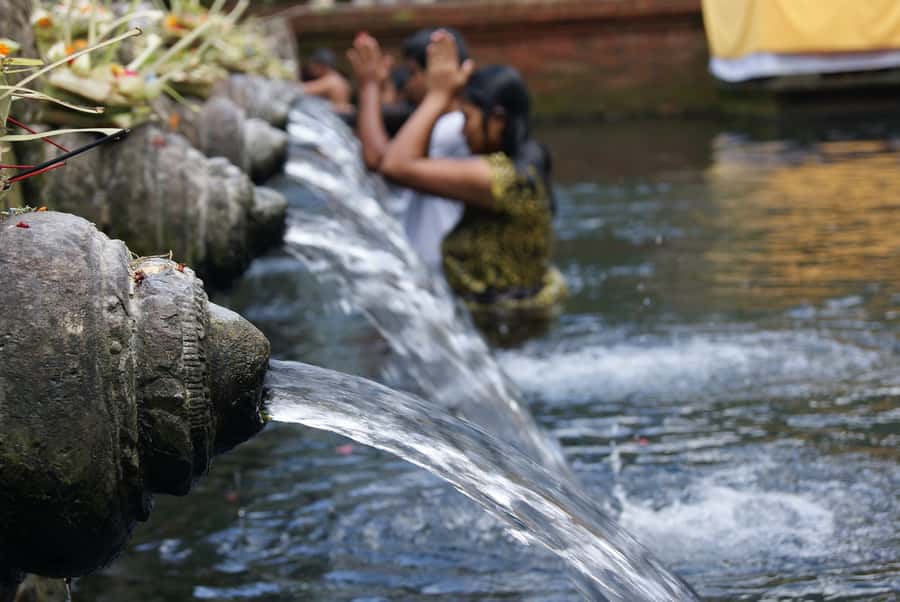
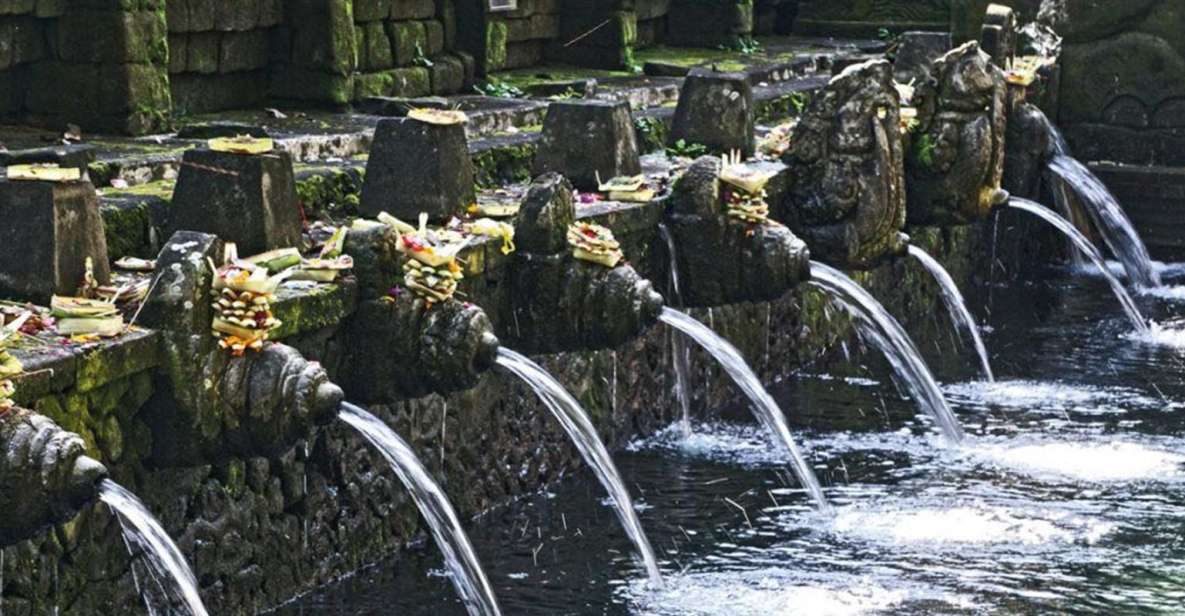
Then you hit the heart of the “sacred temples” theme: Tirta Empul, the Holy Spring Temple. This is where you can receive a purification blessing connected to the temple’s holy spring water.
You’ll be provided a sarong to enter the temple, and you’ll use it for the blessing as instructed. What matters most is not just getting in—it’s doing it in the right way. A good guide explains the basic steps and etiquette so you don’t feel awkward standing there guessing what to do next.
This is also the stop where your guide can turn “a tourist activity” into something more respectful. In one booking, the guide joined the blessing on a Balinese holiday (Galungan), explaining the steps so the experience felt tied to the local calendar rather than a scripted show.
Don’t forget: this is an active religious site. Keep your phone put away when asked, watch what others are doing, and follow your guide’s cues. You’re there to participate appropriately.
Taman Ayun Temple: Royal Family Temple on a handmade lake island
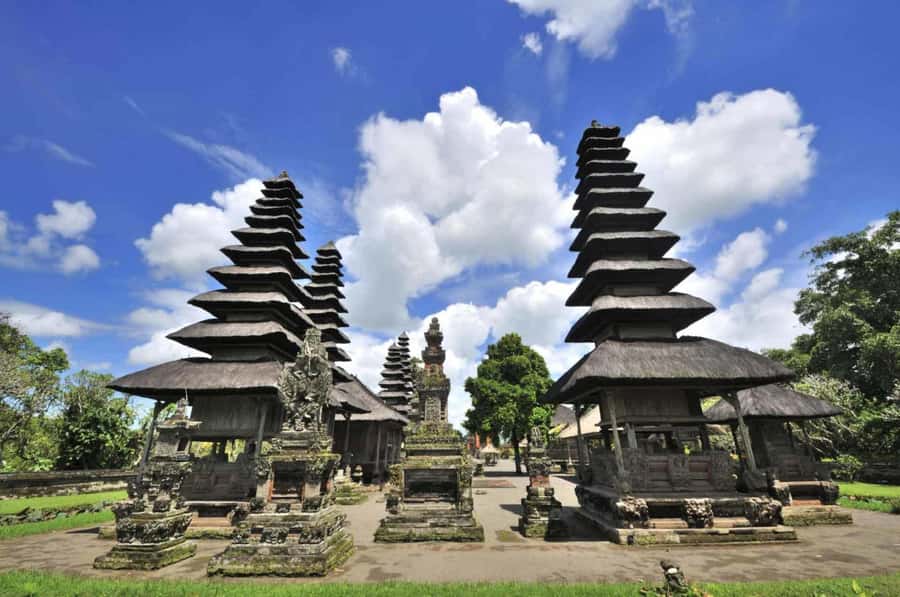
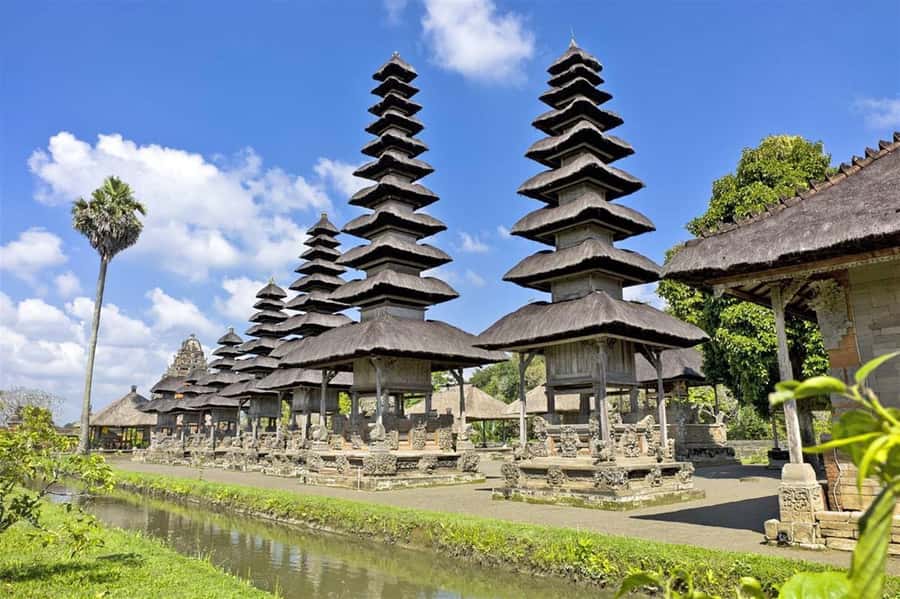
After the holy water experience, the day shifts into calmer, more “royal architecture” territory: Taman Ayun Temple in Mengwi. This is the Royal Family Temple built in 1634 by the king of the Mengwi dynasty.
One of the most interesting details here is the setting: the temple sits on a small island surrounded by a handmade lake. That water boundary changes the whole feel. It creates an enclosed, reflective atmosphere—less frantic than the busiest photo spots.
If your guide is on top of things, you’ll get context about how power and religion were intertwined. The temple isn’t just a beautiful structure; it’s part of a story about the dynasty and how they expressed authority through sacred space.





Tanah Lot at sunset: dramatic views, but plan around tides
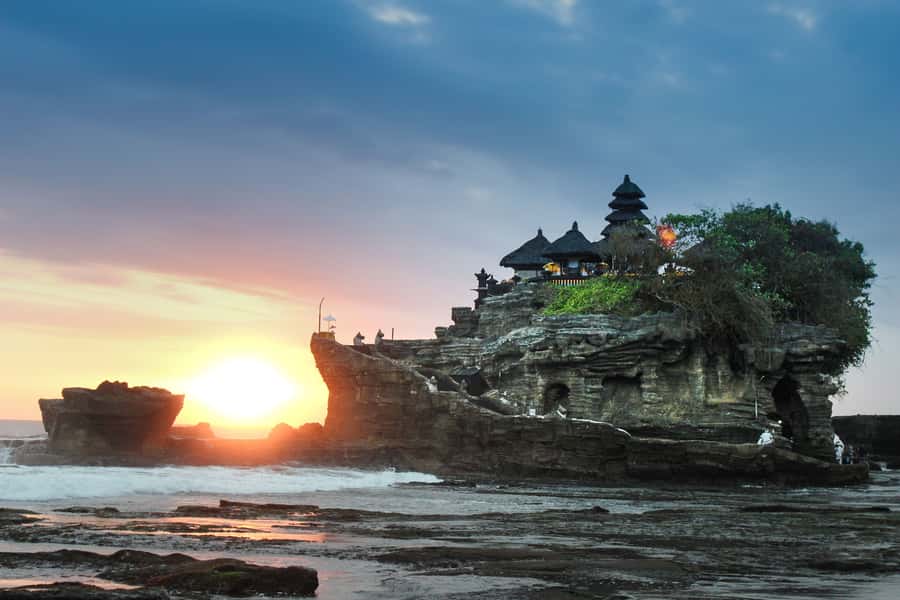
Finish at Tanah Lot, Bali’s most photographed temple. It sits on a rocky islet, and here’s the key detail: it’s not accessible during high tides. That means timing affects how close you can get and how you experience the waterfront views.
This stop is where you’ll feel the “sunset tour” part most strongly. If you reach in time, you’ll watch the light change across the rock and temple silhouette. If you’re late or water levels are high, you may need to adjust how much time you spend near the shoreline and where you can walk.
Your guide’s job is to manage the timing so you’re not stuck waiting in traffic at the worst moment. Many guides praised in these tours are also good at rearranging the order slightly when conditions shift—because in Bali, timing isn’t optional.
Price and value: is $55 a fair deal for this kind of day?
At $55 per person for a 9-hour private tour, this is one of those value plays where you’re paying for fewer headaches more than a “cheap ticket.”
Here’s what you get that usually costs extra when you book separately:
- Hotel pickup and drop-off
- A private English-speaking local guide
- Entrance fees for the listed temples
- A sarong for temple entry and the purification blessing
- Private transport (well rated by most people)
The big missing piece is food. Lunch and meals aren’t included, so you should budget for that. In the real world, you’ll likely stop at a restaurant around midday or your guide may suggest a place along the way, but it’s still on you.
So, is it worth it? If you want a day where you understand what you’re seeing and you’d rather not fight with routing, parking, ticket lines, and traffic stress, then yes. If you only care about quick photos and you don’t want cultural context, you could build your own route cheaper—though it’ll take more planning and effort.
Getting ready: pack smart for temple steps and bright sun
Bring comfortable shoes because you’ll walk on uneven, sometimes wet surfaces. A sun hat and sunglasses help a lot too—especially for the late-day Tanah Lot finish when the sky does what it does in Bali.
Also pack a camera. Guides who are strong at timing often help you get better shots without crowd-jostling. A bunch of bookings specifically praised guides for taking great photos and videos, which is useful if you’re traveling as a couple or want a clean set of memories.
If you’re thinking about accessibility: this tour is not suitable for wheelchair users, mainly because temple access involves stairs and steps. If that matters for you, ask before booking any “temple circuit” day and plan a different route.
Should you book this Bali Sacred Temples and Sunset private tour?
Book it if you want a structured full-day temple experience without the stress of logistics. It’s a strong match for first-timers who want meaning behind the sights—especially if you care about the Tirta Empul purification ritual and not just scenic stops.
Skip it or look for an alternative if you hate long driving days, get cranky with stairs, or you want a lighter pace with lots of downtime. Also note the Tanah Lot timing constraint: high tide can limit access, so you’ll want a guide who takes that seriously.
My final take: this works best when you treat it as a cultural day, not a photo sprint. When your guide is good—names that come up a lot include Nyoman, Edi, Cok, Andy, Agung, and Gede Susila—you’ll leave with a better understanding of Balinese Hindu life and a sunset that feels like a proper finale.
FAQ
What is the start time of the tour?
The pickup starts at 9:00 AM, and the day tour runs for about 9 hours total.
How long is the tour?
The duration is 9 hours.
Is hotel pickup and drop-off included?
Yes, pickup from your hotel and drop-off back at your hotel are included.
Where does pickup coverage include in Bali?
The pickup area covers Kuta, Legian, Seminyak, Nusa Dua, Jimbaran, Canggu, Sanur, and Ubud.
Are entrance fees included?
Yes, all entrance fees to the temples are included.
Is lunch included?
No, lunch and other meals are not included.
Do I need to bring a sarong for the temples?
No. A sarong is provided for temple visits, including the purification blessing at Tirta Empul.
What does the Tirta Empul experience include?
You can receive a holy purification blessing at Tirta Empul (Holy Spring Temple). Your guide will provide guidance, and you’ll use the sarong for entry and the blessing.
Is Tanah Lot accessible at all times?
No. Tanah Lot is not accessible during high tides.
Is the tour suitable for wheelchair users?
No, it is not suitable for wheelchair users.
FAQ
What languages is the tour guide available in?
The live tour guide is available in English.
Is a ticket line skip included?
Yes, ticket line skipping is included.
What should I bring?
Wear comfortable shoes, and consider sunglasses, a sun hat, and a camera.