REVIEW · SIEM REAP
Angkor Wat Private Day Tour from Siem Reap
Book on Viator →Operated by Green Era Travel · Bookable on Viator
Angkor Wat hits different with a guide. This private 6 to 7 hour route from Siem Reap lets you compare enduring stone at Angkor Wat with the jungle takeover at Ta Prohm, and you get a calm wrap-up on the ride back in an air-conditioned vehicle.
I especially like the way the guide turns the carvings into a story, including Angkor Wat’s world’s longest continuous bas relief and the iconography behind the main temples. I also like the small comfort basics—cold bottled water during the tour—because it matters when you’re walking in heat and on steps.
One drawback to plan for: the Angkor National Park ticket is not included and is required, so your day cost will be higher than the $49 tour price.
In This Review
- Key highlights worth knowing
- A Private Circuit That Keeps Angkor Wat From Feeling Like a Checklist
- Price and Tickets: What You’ll Pay in Real Terms
- Getting Started: 8am Hotel Pickup and First Temple Context
- Angkor Wat: Vishnu, Bas Relief, and the Scale That Still Shocks
- What to watch for (so it doesn’t become just photos)
- Angkor Thom South Gate: How the City Feels Like an Outer Ring
- The quick reality check
- Bayon Temple: The Faces, the Symbols, and Why Timing Helps
- A practical tip
- Elephant Terrace and the Leper King Terrace: When Art Becomes Stories
- Why this stop is worth your time
- Ta Prohm: Tree Roots, Framing, and the Human-Nature Clash
- Photo and pacing reality
- Heat, Steps, and Clothing Rules That Matter More Than You Think
- How the Guide Changes Everything (And the Names You Might Hear)
- Transport That Fits the Size of Your Group
- Should You Book This Private Angkor Wat Day Tour?
- FAQ
- What time does pickup happen?
- How long is the tour?
- Is this tour private?
- What’s included in the price?
- What’s not included?
- Do I need a ticket for Angkor National Park?
- What should I wear?
- Is the tour suitable for kids?
- Can the guide speak languages other than English?
- What is the cancellation policy?
Key highlights worth knowing
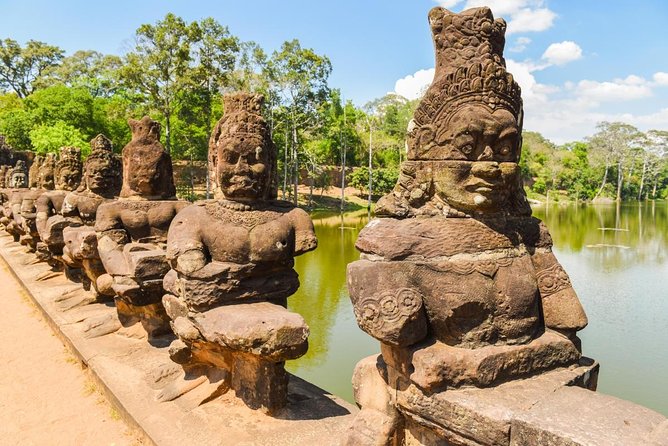
- Private pacing: only your group, so you can stop for photos and details without herd timing.
- Top Angkor targets in one loop: Angkor Wat, Angkor Thom South Gate, Bayon, Elephant Terrace, Ta Prohm.
- Carving and symbolism explained: the guide focuses on motifs and what you’re actually looking at.
- Stone vs. jungle contrast: Angkor Wat’s structure against Ta Prohm’s tree-root ruins.
- Guided debrief on the way back: you’ll get story threads tied up before you head to your hotel.
- Dress and footwear rules are real: knee-length clothing and good walking shoes save you hassle.
A Private Circuit That Keeps Angkor Wat From Feeling Like a Checklist
Angkor can feel like a blur if you show up with only a map and a phone. This private setup helps because you’re not just moving from temple to temple—you’re learning what each place represents and why the design looks the way it does.
You’ll see the headline stops—Angkor Wat and the Angkor Thom complex—but the value is in the context. A guide can point out the details that most people miss, like repeated motifs across walls and the way the temples connect through religion and royal power.
You can also read our reviews of more tours and experiences in Siem Reap.
Price and Tickets: What You’ll Pay in Real Terms
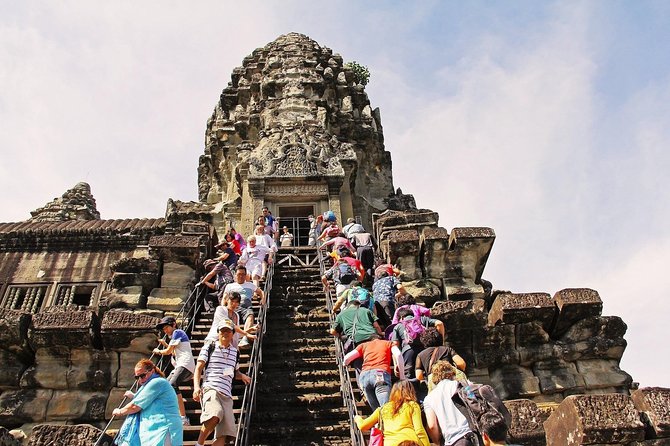
The tour price is $49 per person, and it runs about 6 to 7 hours. The big add-on is the Angkor National Park ticket, which costs $37 per person and is required.
So a realistic starting budget is about $86 per person before food and gratuities. That’s not cheap, but the trade-off is a private group, an English-speaking guide, and transport that gets you between temples efficiently. If you have limited time in Siem Reap, the math usually favors private, especially when you care about understanding what you’re seeing.
Getting Started: 8am Hotel Pickup and First Temple Context
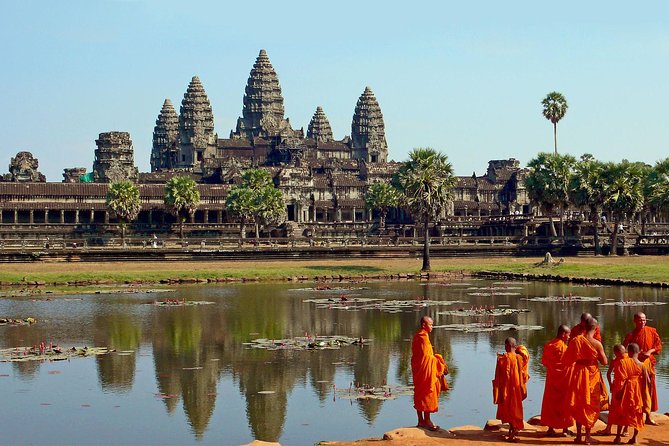
Your day begins with hotel pickup at 8:00 am in Siem Reap. From there, you’re heading into the UNESCO-listed Angkor Archaeological Park zone for a focused temple visit.
This first stretch is useful because it sets expectations. A good guide doesn’t just list facts. They help you recognize what’s ahead—large temple geometry, dense decoration, and the shift from Hindu foundations to later Buddhist influence that you’ll keep noticing throughout the complex.
Angkor Wat: Vishnu, Bas Relief, and the Scale That Still Shocks
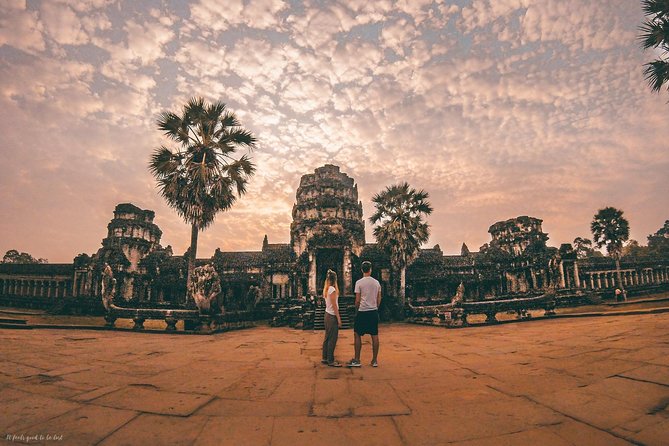
Angkor Wat is built between 1113 and 1150 AD and dedicated to Vishnu, which shapes the whole visual language of the site. It’s also the best-preserved temple in the area, so you get to experience the original intention more clearly than at many ruins.
Plan on about 2 hours here. You’ll spend time inside the complex appreciating the layout and the sheer magnitude of the stonework. The standout detail on this tour is Angkor Wat’s world’s longest continuous bas relief, a long-running strip of carved storytelling you can follow panel by panel.
What to watch for (so it doesn’t become just photos)
- Look for how carvings repeat themes rather than being random decoration.
- Notice where you’re standing in relation to the temple’s layout—your position changes what the carvings mean.
If you’ve only got one major temple in your day, Angkor Wat is the right choice. The guide’s job here is to make the place feel logical, not overwhelming.

Angkor Thom South Gate: How the City Feels Like an Outer Ring
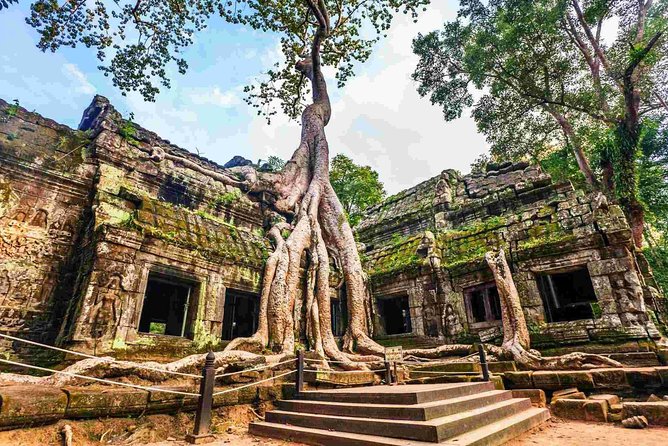
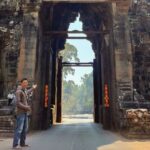
Next up is Angkor Thom South Gate, one of the city entrances into the royal complex. The tour highlights the massive scale of the walls—some 6m wide, 8m high, and stretching 13km in length—which helps you understand how controlled and planned the city was.
You’ll spend about 50 minutes here. This isn’t the kind of stop where you just snap a quick picture and move on. The gate is a threshold, and your guide can connect it to how Angkor’s kings organized space: ceremonial entry first, then deeper movement into the complex.
The quick reality check
This stop still includes walking and time outdoors. If you’re sensitive to heat, take the short break opportunities when they’re offered and don’t save your energy for later.
Bayon Temple: The Faces, the Symbols, and Why Timing Helps
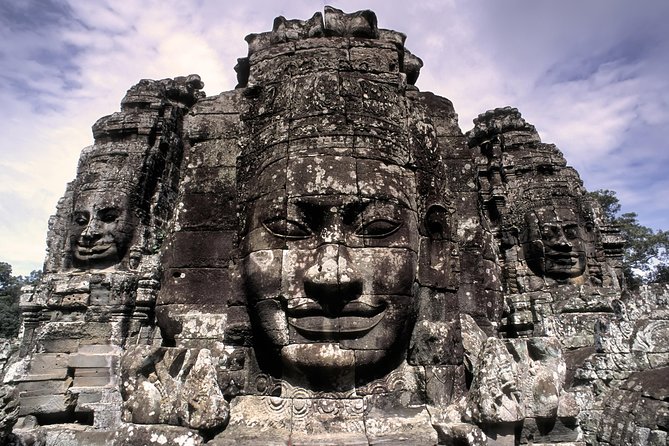
Inside the Angkor Thom complex you’ll visit Bayon Temple, famous for 200 smiling faces. That number is part of the spectacle, but the guide’s explanations are what turn it from a landmark into a meaning-filled experience.
Expect around 45 minutes at Bayon. The “temple mountain” setting matters here too—the faces feel different as you move around. Your guide can also connect what you’re seeing to the temple’s role in royal space and later religious shifts.
A practical tip
Bayon is visually intense. If you keep moving without stopping, you’ll miss the fact that the carvings and face angles create different moods. Give yourself a little patience. Even a few extra minutes at the right viewpoint changes your whole impression.
Elephant Terrace and the Leper King Terrace: When Art Becomes Stories
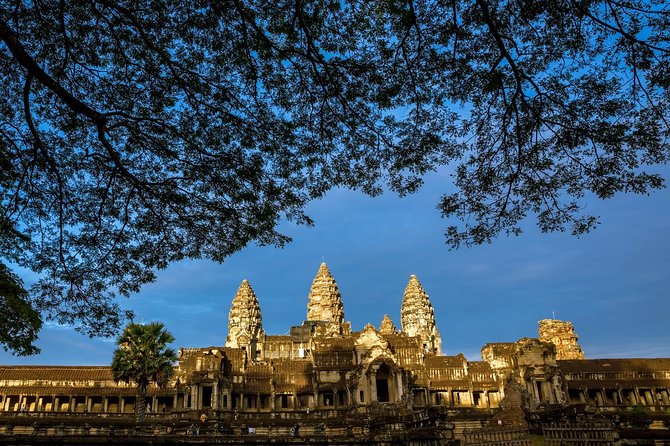
After Bayon, you’ll head to the Elephant Terrace, known for its animal depictions. This stop is a lot of fun because it’s detailed and textured, and the guide can explain the scenes so they stop looking like a wall of patterns.
You’ll also see the Terrace of the Leper King, which is popularly linked to the sculpture often called the leper king. The timing here is about 45 minutes, and it’s long enough to notice the craft without turning it into a lecture.
Why this stop is worth your time
Elephants and kings matter in Angkor art because they’re tied to power, protection, and ceremonial life. With a guide, the “what” becomes the “why,” and that’s what makes you feel like you’re traveling with understanding, not just checking boxes.
Ta Prohm: Tree Roots, Framing, and the Human-Nature Clash
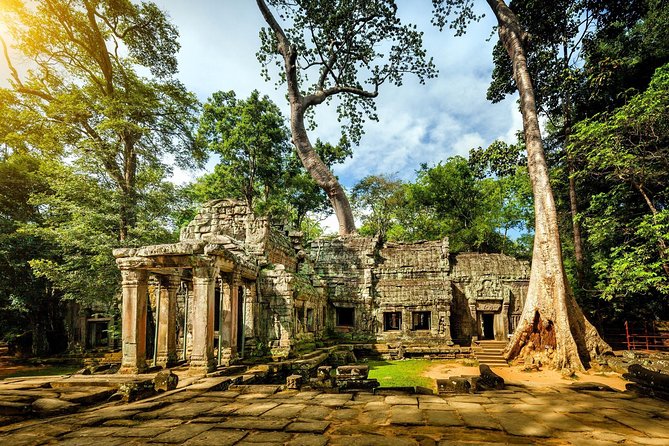
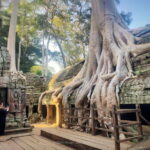
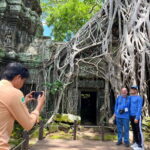
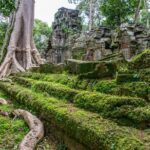
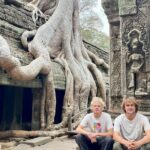
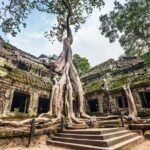
Ta Prohm is the temple that feels like a movie set, except you’re standing in it. You’ll see ruins taken over by tree roots, which gives you a strong contrast to the clean stone geometry you saw earlier at Angkor Wat.
You’ll spend about 1 hour here. The tour also explains why the site was left exposed by French archaeologists, including the controversial choices that kept the roots tangled in place. That decision changes how you experience Ta Prohm: it becomes a lesson in time, preservation, and what happens when nature refuses to stop.
Photo and pacing reality
Ta Prohm can make you slow down because the whole scene is framed by roots and broken architecture. That’s a good thing—just make sure your feet can handle it. Wear shoes that grip.
Heat, Steps, and Clothing Rules That Matter More Than You Think
Angkor days are physical. Even on a private tour, you’ll do plenty of walking and there are lots of steps across the temples. The tour is listed for moderate physical fitness, so be honest with your body.
The dress rule is also real: pants or knee-length skirts/dresses are permitted. Good walking shoes are a must. If you forget this part, you can waste time fixing your clothing instead of enjoying the temples.
If you’re visiting with kids, note that children must be accompanied by an adult. That’s important for planning pacing at places that require constant attention.
How the Guide Changes Everything (And the Names You Might Hear)
This is a tour built around your guide’s ability to make the site make sense. English-speaking guides are included, and in some cases other languages can be arranged with a surcharge depending on availability.
You can also expect a “story thread” style of guiding. Many guides focus on:
- Iconography and motifs across temples
- the shift from Hindu foundations into later Buddhist practice you’ll notice in the icon details
- how the Khmer Empire shaped these spaces, not just when the temples were built
In practice, guides like Perth, Roem, Choud, San, Nak, Sorphea, Sammy, Dy, Pot, and Phat have shown up as standouts. Common themes include punctual pickup, clear explanations in strong English, and patience when guests ask questions—or even when someone needs a moment for photos.
One more comfort angle: the tour includes cold bottled water, and some guides also provide cooling towels between walks. That extra cooling can be the difference between enjoying Ta Prohm and feeling wiped out halfway through.
Transport That Fits the Size of Your Group
You’ll ride between stops using either a tuk tuk or a minivan, depending on group size: 1 to 2 people typically by tuk tuk, and 3 people or more by minivan. That matters because Angkor roads can be bumpy, and a smoother ride helps you save energy.
On the return, you get debrief time on the way back to your accommodation in an air-conditioned private vehicle. It’s a nice reset when your legs are tired and your brain is buzzing with carvings and faces.
Should You Book This Private Angkor Wat Day Tour?
Book it if you want Angkor Wat and the major Angkor Thom highlights without feeling rushed, and if you like learning what you’re looking at. This is also a strong fit if your schedule in Siem Reap is tight. Private pacing helps you cover the key temples in a single day while still spending real time on the details.
I’d think twice if you hate steps, you’re sensitive to heat, or you’re trying to keep costs low. The added $37 park ticket plus food can raise the total, and you’ll still be outdoors walking a lot.
If you’re choosing between a do-it-yourself day and a guided private circuit, my advice is simple: at Angkor, the guide is the real value. The temples are amazing on their own, but the explanations make the place click faster—and you’ll leave with a clearer sense of why these stones look the way they do.
FAQ
What time does pickup happen?
Pickup is scheduled for 8:00 am from your hotel.
How long is the tour?
The tour runs about 6 to 7 hours.
Is this tour private?
Yes. It’s a private tour/activity, meaning only your group participates.
What’s included in the price?
Included are hotel pickup and drop-off, transportation by tuk tuk (1–2 pax) or minivan (3+ pax), an experienced English-speaking guide, and cold bottled water.
What’s not included?
You’ll need to pay for the Angkor National Park ticket ($37 per person, required), plus food and drinks, and gratuities/other personal expenses.
Do I need a ticket for Angkor National Park?
Yes. The Angkor National Park ticket is required and costs $37 per person. It is not included in the tour price.
What should I wear?
Only pants or knee-length skirts/dresses are permitted. Wear good walking shoes.
Is the tour suitable for kids?
Children must be accompanied by an adult.
Can the guide speak languages other than English?
The tour includes an English-speaking guide, and it may be operated by a multi-lingual guide with an additional surcharge depending on availability.
What is the cancellation policy?
You can cancel for a full refund if you cancel at least 24 hours before the experience’s start time. If you cancel less than 24 hours before, the amount paid is not refunded.