REVIEW · CHIANG MAI
Care Pride Elephants: Full-Day Tour Experience
Book on Viator →Operated by Elephant Pride Sanctuary · Bookable on Viator
Elephants in the jungle feel different than the usual tourist show. At Elephant Pride Sanctuary, you spend a full day with a small group learning how caretaking works and seeing elephants live far from the roadside.
What I like most is the focus on elephant care instead of entertainment. You’ll get a real sense of the sanctuary’s family-run operation, and the day is structured around calm, close interaction like feeding, walking, and mud-and-river routines.
One thing to consider: the day is active in a muddy, mountain-way. Expect a long drive into the hills and plan for getting wet and stained during the mud bath.
In This Review
- Key points worth planning for
- Inthanon National Park and the family behind the sanctuary
- Hotel pickup and the mountain drive you should budget for
- Elephant care lessons in the jungle: what the morning is really for
- Feeding, walking, mud bath, and river rinse: the hands-on routine
- Feeding and getting close
- Walking with elephants
- Mud bath: fun, wet, and messy
- River rinse: cool off and slow down
- Thai lunch and water breaks that actually feel planned
- Price and value: why this costs more (and what you get instead)
- What to wear and bring for a mountain, mud, and river day
- Who this is best for (and who might want a different day)
- Should you book Elephant Pride Elephants at Elephant Pride Sanctuary?
- FAQ
- How long is the Elephant Pride Sanctuary full-day tour?
- What’s included in the tour price?
- Do you get hotel pickup and drop-off?
- What group size should I expect?
- Do they ride the elephants?
- What should I bring for the mud and river parts?
- What happens if the weather is bad?
- What is the cancellation policy?
Key points worth planning for
- Hotel pickup plus round-trip transfers so you skip the taxi maze
- Small groups (up to 12) for a quieter, less stressful feel
- Family-run sanctuary in Inthanon National Park with a caretaking story
- Hands-on time without riding—feeding, walking, mud bath, and river rinse
- Thai lunch and bottled water included to keep the day easy to manage
- Mountain roads and mud mean shoes, insect repellent, and a change of clothes matter
Inthanon National Park and the family behind the sanctuary
Your morning starts in Chiang Mai and quickly turns into a nature-first day. The sanctuary sits in Inthanon National Park, away from the road, on land described as more than 9,600 square meters. That matters because it reduces the “traffic” feeling you get at more crowded sites.
The bigger story here is who runs the place. This sanctuary is organized as a multi-generation family effort, with caretakers who live and work alongside the elephants. That continuity is what makes the explanations feel grounded, not scripted.
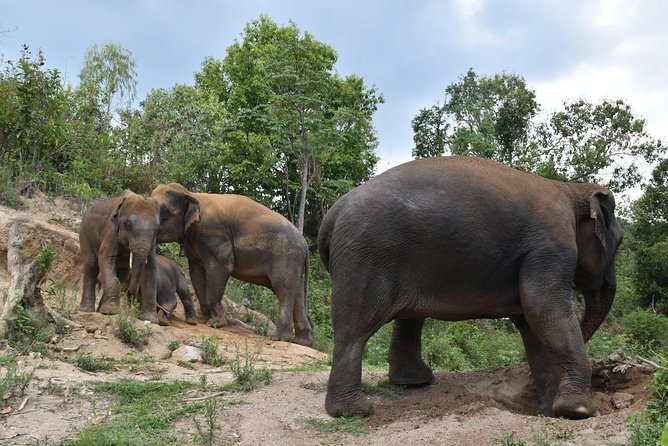
You’ll also hear the context for why the elephants are here. The elephants once worked on logging crews, but the Thai government announced the cancellation of logging in prohibited forest areas in 1989. Today, the message is clear: these are rescue elephants living a more natural life, with people working to keep them healthy and safe.
You can also read our reviews of more tours and experiences in Chiang Mai.


Hotel pickup and the mountain drive you should budget for
Pickup starts around 8:15–8:30am, and you’ll travel in air-conditioned comfort. The drive heads south of Chiang Mai toward the mountains, and you can expect the trip to take about two hours one way.
This isn’t a quick “half-day close by” situation. The mountain roads are described as steep and curvy, so if you’re sensitive to motion, consider bringing nausea medicine just in case. The upside is you’re trading city noise for cooler mountain air and scenery.
Also, plan for a long day. The tour runs about 8 hours, but with pickup, travel time, and the slow rhythm of care activities, it feels like a full commitment. It’s the kind of day that rewards you for wearing the right clothes from the start.
Elephant care lessons in the jungle: what the morning is really for
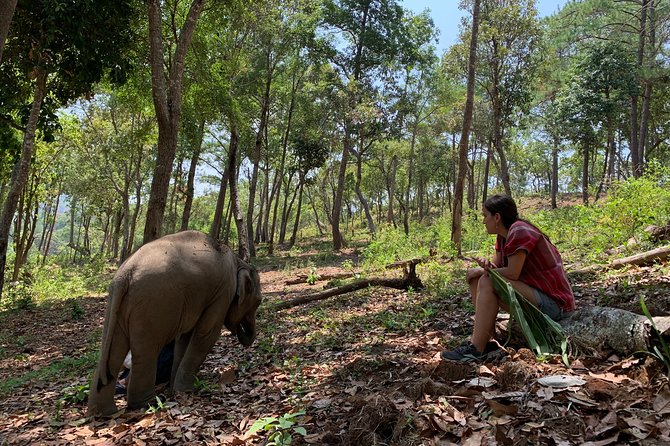
The core of the experience is learning how to care for elephants in their environment. When you arrive, you’re taught about elephants and how caretakers support them in the jungle setting.
This isn’t just animal trivia. The focus is on the elephants’ personalities, how they live in the sanctuary, and how the caretaking routines keep things predictable. That perspective changes how you experience the rest of the day. You stop thinking of elephants as props and start thinking of them as animals with habits and preferences.
You’ll also meet the people running the sanctuary in a direct way. Some days feel more like a family visit; you’re learning from the people who know the elephants best, not just watching staff demonstrate a set performance.
One small variability to remember: the number of elephants you interact with can change day to day. On some days there are only a couple of elephants present, while other days include more. The key is that you’re not rushed through a scripted lineup. You’re there to spend time with the elephants that are available and comfortable.
Feeding, walking, mud bath, and river rinse: the hands-on routine
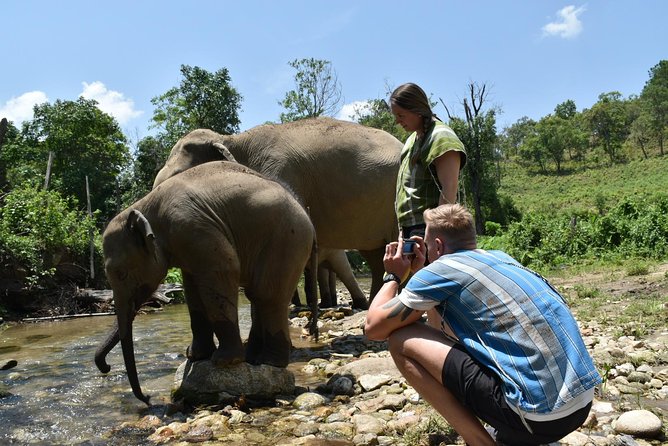
Once the morning orientation is done, the day turns into a series of structured interactions—each one with a purpose.
Feeding and getting close
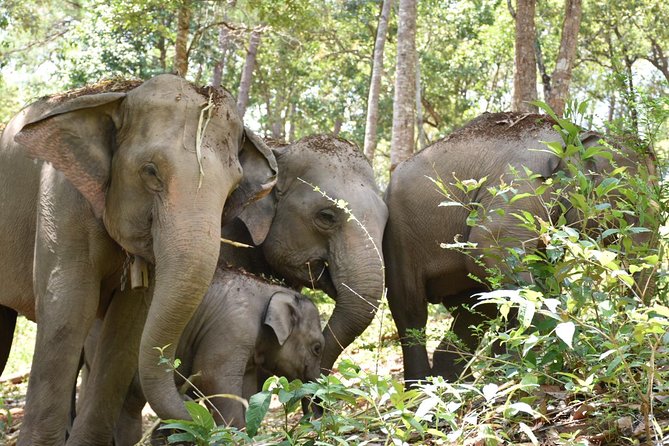
You’ll spend time feeding the elephants. Expect corn stalks and fruit/plant-based treats like sugar cane stalks and bananas (the sanctuary provides what you use during the feeding). The point isn’t to “perform” for photos. It’s to practice calm, careful interaction while learning how elephants respond.
Because the group stays small, you’re less likely to feel crowded at feeding time. And because caretakers guide the pace, you don’t get the frantic energy common in big commercial setups.


Walking with elephants
Next comes walking in the hills/forested area. You’re not riding. You’re moving alongside them as they take their time, with caretakers explaining what you’re seeing and why it matters for routine and exercise.
This part is more than a photo stop. It’s where the day shifts from “watching” to “sharing space.” You’ll learn to look at behavior—when an elephant pauses, when it moves forward, and how caretakers keep everyone safe.
Mud bath: fun, wet, and messy
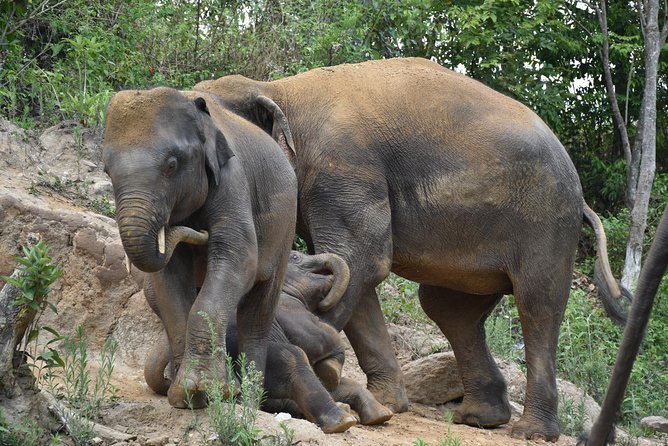
The mud bath is one of the highlights. You’ll help elephants cover themselves with mud. The reasoning you’re given is practical: mud can cool them and helps keep insects from being a constant problem around their skin.
Be ready for the reality: the clay can stain clothes, and you will get muddy. There’s a restroom and a place to clean up and change after the stream bath, but you should still dress like you’re going to come out looking like you survived a rainforest.
River rinse: cool off and slow down
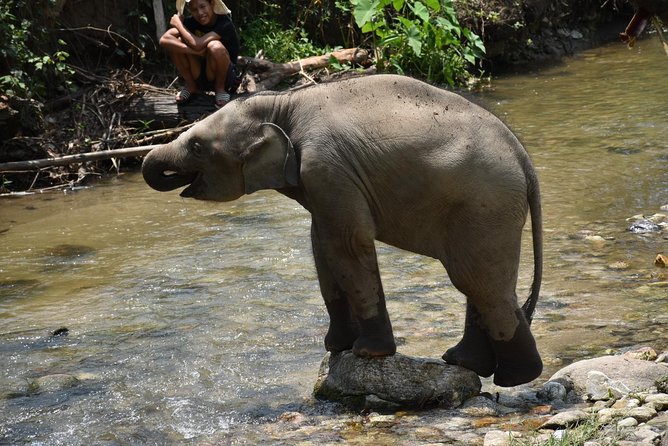
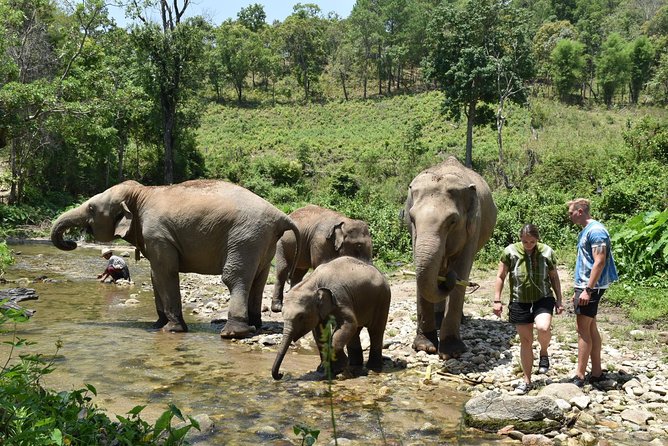
After the mud, you’ll head to a river area to rinse off. This is often where the day feels most serene. Elephants move into the water rhythmically, and the caretakers keep the experience calm and controlled.
You’ll also want to stay aware. Even with docile elephants, they’re still large animals. The safe approach is to follow the caretakers closely, keep a respectful distance when asked, and treat the interaction like a real wildlife-care situation—not a playground.
Thai lunch and water breaks that actually feel planned
You don’t have to hunt for food during the day. The tour includes a Thai lunch and bottled water, which helps keep energy steady during the mountain drive and active elephant routines.
What makes this inclusion valuable is the timing. You’re in and out of outdoor areas, and the mud-and-river part can drain you. Having lunch handled means you don’t spend your day distracted by logistics.
Based on the experience style here, lunch is also likely to be more than a quick bite. Many people come away praising the quality of the meal and the way it fits the slow pace of the sanctuary day.
Price and value: why this costs more (and what you get instead)
At $91.31 per person, this isn’t the cheapest elephant option in Chiang Mai. The value comes from what you’re paying for: smaller groups, full-day time, and an operation set up around animal care rather than mass throughput.
A key detail is the group size. The tour caps at 12 travelers, and there’s an emphasis on keeping the sanctuary experience low-stress by limiting how many people are on-site at once. That often costs more because caretakers can’t run the day like an assembly line.
You also get real “all-in” inclusions: hotel 2-way transfers, admission ticket, Thai lunch, bottled water, and the sanctuary experience itself. With those pieces covered, the cost feels less like a sticker price and more like paying for time and access that would cost you extra on your own.
So if you’re comparing prices, compare the day. A cheaper half-day where you feel herded usually won’t feel anything like this. You’re choosing the slower, more personal model—and you’re paying for that.
What to wear and bring for a mountain, mud, and river day
This is where you’ll save yourself discomfort. The day happens in cooler mountain temperatures, and you’re outdoors for a long stretch.
Here’s what you should plan around:
- Walking shoes you don’t mind getting wet
- Insect repellent (you’ll be in jungle terrain)
- A change of clothes if you want to feel human again afterward
- Expect mud and possible staining
- If you’re motion-sensitive, consider nausea medicine for the curvy drive
If it rains, you might feel cold at first, but the mountains cool off the city, so pack like you’re layering. Also, don’t bring items you can’t replace. You’ll be glad you didn’t.
Who this is best for (and who might want a different day)
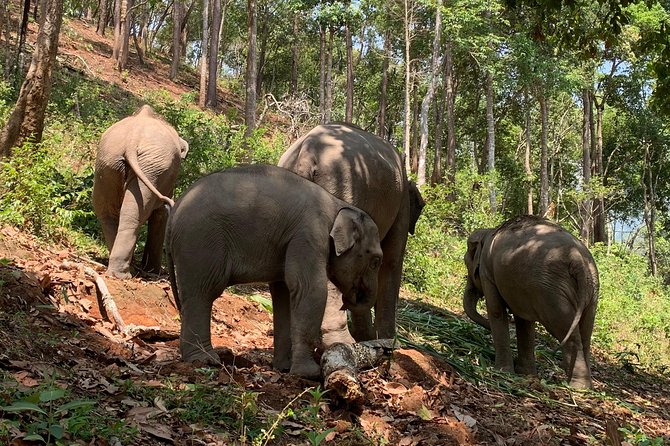
This is a great fit if you want an elephant experience that feels more like care and education than entertainment. It’s also ideal if you like calmer group dynamics. With up to 12 people, you’ll usually get more attention and space than in huge bus-and-cattle setups.
It’s also good for families or couples who want a day that isn’t just sightseeing. You’ll learn the sanctuary story, meet caretakers, and spend time doing small but meaningful activities like feeding, walking, and bathing routines.
It might be less ideal if you want an action-packed thrill ride. The day is hands-on, but it’s still a calm, observing-and-interacting rhythm. It’s not designed to be a nonstop adrenaline circuit.
And if you hate getting muddy, this will challenge you. The mud bath isn’t optional in spirit—it’s part of the elephant care routine. You can control your clothing choices, though.
Should you book Elephant Pride Elephants at Elephant Pride Sanctuary?
Book it if:
- you want a small-group elephant day with a real focus on care
- you value hotel transfers that remove stress
- you’re okay with the day being messy and active
- you want hands-on interaction like feeding, walking, and mud-and-river time
Skip it or look for another option if:
- you strongly dislike mud, wet clothes, and long mountain drives
- you need a very fast schedule with minimal outdoor time
- you’re expecting an elephant ride experience (this is about interaction, not riding)
For most people doing Chiang Mai right, this is one of the better ways to spend a day: the sanctuary’s family-run care model, the small group feel, and the full-day structure all point to a calmer, more respectful experience.
FAQ
How long is the Elephant Pride Sanctuary full-day tour?
It runs about 8 hours.
What’s included in the tour price?
The package includes admission, Thai lunch, bottled water, and 2-way transfers from Chiang Mai hotel pickups.
Do you get hotel pickup and drop-off?
Yes. The tour offers pickup and drop-off from Chiang Mai hotel lobbies.
What group size should I expect?
This experience has a maximum of 12 travelers.
Do they ride the elephants?
The experience focuses on elephant care and interaction. It does not include elephant riding.
What should I bring for the mud and river parts?
Bring walking shoes, insect repellent, and plan for getting muddy. It’s also a good idea to have a change of clothes since the clay can stain.
What happens if the weather is bad?
The experience requires good weather. If it’s canceled due to poor weather, you’ll be offered a different date or a full refund.
What is the cancellation policy?
Cancellation is free up to 24 hours in advance for a full refund. If you cancel less than 24 hours before the start time, you won’t receive a refund.