REVIEW · MUMBAI
Group Guided Walking Tour in Fort and Colaba
Book on Viator →Operated by M/s Khaki Tours · Bookable on Viator
Mumbai history walks fast. This guided Fort and Colaba walk covers the big landmarks and the big shifts, from Portuguese and British influence to modern Mumbai, all in about 2½ hours. I like that the group stays small (max 12), so your guide can actually slow down when a detail matters. I also like that you get photo time at the major stops, with the Gateway of India as the final payoff.
One thing to factor in: you will be walking and stopping in a real street setting, so comfortable shoes and flexible timing help, especially when the weather is hot or rainy. A lot of the charm is outdoors, and the pace stays steady.
In This Review
- Key things I’d plan around
- How a 2.5-hour Fort and Colaba walk gives you a city map
- Asiatic Society and Town Hall: Portuguese and British influence on Mumbai
- Horniman Circle, St. Thomas Cathedral, and Flora Fountain in one sweep
- Oval Maidan and Rajabai Clock Tower: cricket and clockwork power
- Kala Ghoda and Keneseth Eliyahoo Synagogue: the art district and a shrinking enclave
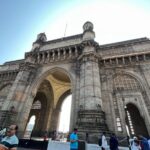
- Finishing at the Gateway of India and Taj Mahal Palace Hotel photos
- Price, pace, and what you get for $16.73
- Who this tour suits best
- Should you book this Fort and Colaba walking tour?
- FAQ
- How long is the Fort and Colaba walking tour?
- What is the price per person?
- Where does the tour start and end?
- How big is the group?
- Are there admission fees for the stops?
- Is the ticket digital?
- What if the weather is bad?
Key things I’d plan around

- Small group of up to 12 means you get more attention than on big coach-style tours.
- Photo-friendly stops help you see the skyline and then actually capture it.
- 500 years of Mumbai’s story gets explained in plain, human terms at each landmark.
- Free entry at every main stop keeps the tour’s value high.
- Fort plus Colaba mix gives you both colonial-era architecture and city-life street energy.
- Jewish and Anglican landmarks round out the usual sightseeing checklist.
How a 2.5-hour Fort and Colaba walk gives you a city map
If Mumbai ever feels like a blur, this is a good fix. The route stays in the Fort and Colaba area, where you can connect buildings, streets, and power shifts without bouncing across town. You start at the Asiatic Society area and you end near the Gateway of India, so you get a natural line through the city.
The tour runs about 2 hours 30 minutes, with a handful of short stops (most around 15–20 minutes). That length matters. Too-long tours can turn into endurance tests; too-short ones can feel like you sprint from one signboard to the next. This one is long enough to learn what you are looking at, but short enough that you still feel fresh at the end.
You also get a mobile ticket, and the meeting point is near public transportation. That makes it easier to fit into a day when you want a guided overview first, then free time after.
And yes, the guide’s local tips are part of the value. A good guide doesn’t just recite dates—they suggest what to do next, where to wander, and what details to watch for as you keep exploring on your own.
You can also read our reviews of more tours and experiences in Mumbai.


Asiatic Society and Town Hall: Portuguese and British influence on Mumbai
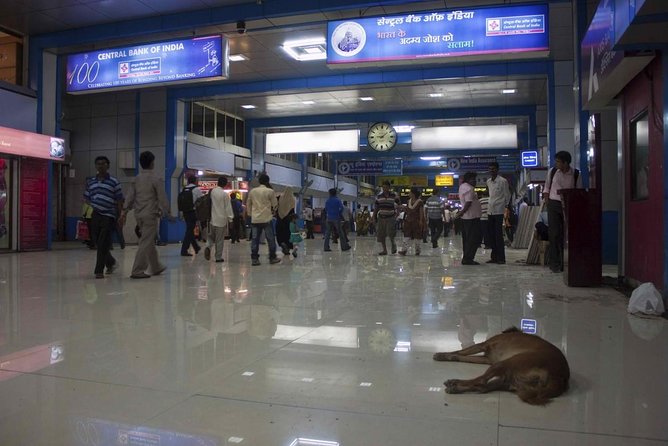
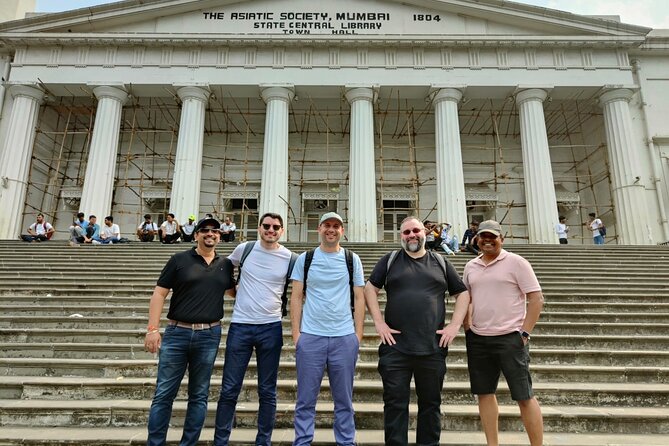
The walk starts at Town Hall, tied to the Asiatic Society building. This is a strong opening because it frames Mumbai as a place that was reshaped by outside powers long before it became the modern metropolis you see today.
You spend about 20 minutes here, and the focus is on how Portuguese and British colonization helped set the city’s direction. It’s not just “colonial history” as a theme; it’s history you can connect to what you see later in the architecture. Once you understand the starting point, the later buildings start to make more sense.
What I like most about this opening is the cause-and-effect feel. Instead of treating landmarks like isolated pretty objects, you’re encouraged to see them as the results of shifting trade, administration, and cultural influence.
A consideration: library and institutional stops can vary in how much you can go inside versus stay in public areas. The tour still works either way, but keep your expectations flexible.
Horniman Circle, St. Thomas Cathedral, and Flora Fountain in one sweep
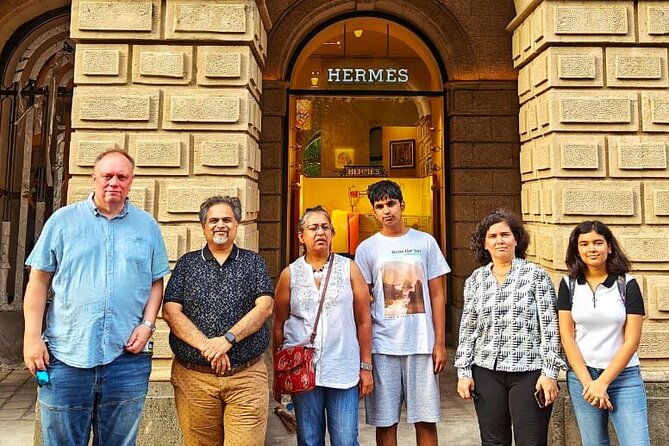
From Town Hall you move into a more visual, street-level rhythm. The stops here are short, but they each give you a different way to read Mumbai.
Horniman Circle Garden is up next, around 15 minutes. The big idea is that this is Mumbai’s oldest garden, surrounded by Victorian buildings. It also used to host activities, so it’s not just a landscaped break—it’s a clue to what city life looked like when this area was setting the pace. Even if you only have a moment, stand back and look at the shape of the buildings around it.
Then you head to St. Thomas Cathedral Mumbai, another 15 minutes. This is described as Mumbai’s oldest Anglican church, and the highlights are inside: memorials and the grand altar. Churches can be hit-or-miss on tours, but this one is worth it because it helps you understand how European Christian architecture landed in the city and how formal remembrance was built into public space.
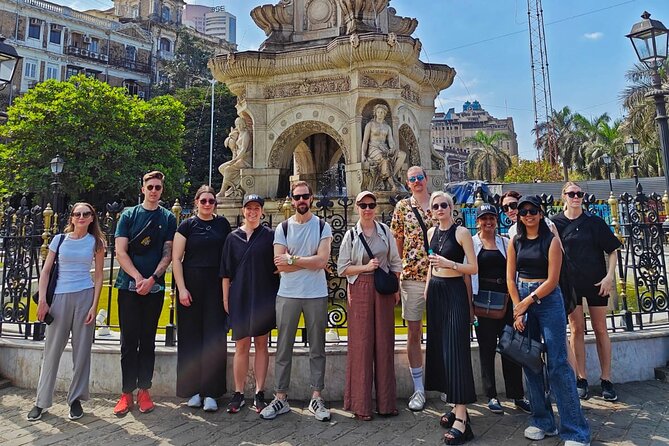
Next comes Flora Fountain, about 15 minutes. Think of it as Mumbai’s answer to Piccadilly Circus, plus the Martyrs’ Memorial idea, all concentrated in a main town-square setting. It’s the kind of spot where you can watch the city move while your guide explains what the monument represents and why it became such a recognizable point.
This segment is a good example of why the small group size matters. When the guide points out something on a building facade or a memorial detail, you can actually line up your view instead of getting carried along to the next stop before it lands.
Oval Maidan and Rajabai Clock Tower: cricket and clockwork power
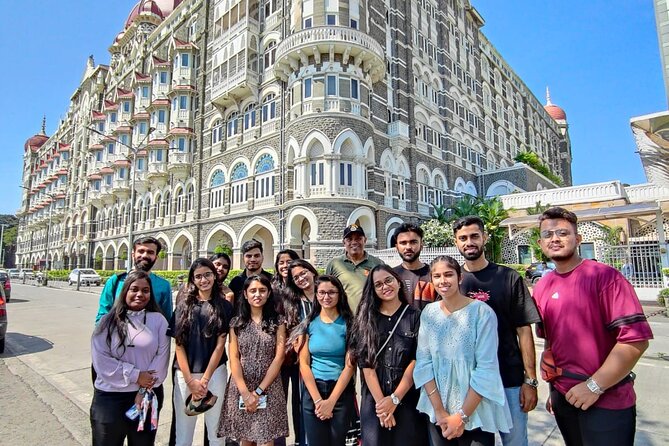
Two of the most “Mumbai-feeling” stops arrive back-to-back: Oval Maidan and the Rajabai Clock Tower. They’re close enough to connect, but different enough to keep your brain engaged.
At Oval Maidan you get about 20 minutes. The key point is that this is the birthplace of Indian cricket, and it’s part of a site noted as a UNESCO World Heritage location. Even if you are not a cricket fanatic, the value here is cultural. You learn how sport and public space overlap, and why this big open area became meaningful beyond recreation.
Next is Rajabai Clock Tower for about 15 minutes. The tour frames it as Mumbai’s answer to Big Ben, and it comes with a story about how the University of Mumbai evolved. Clock towers are more than decorative timepieces. They usually signal institutions, money, ambition, and public authority—and here you get the narrative thread so you can read the building as a symbol, not just a landmark.
One practical tip: when you stop for photos, don’t aim for only one angle. With towers and maidan-style open areas, a second photo from a slightly different street position can change the whole composition. Your guide’s directions help, so take them rather than trying to freestyle.
Kala Ghoda and Keneseth Eliyahoo Synagogue: the art district and a shrinking enclave
Now the tour moves into the part that feels less like a museum route and more like a neighborhood route. Kala Ghoda is the art district, and you’ll spend around 15 minutes there.
This stop focuses on diverse architecture and the secrets buildings hold. That wording matters because it pushes you to look for patterns: different styles next to each other, and the way street-level details reflect the layered life of the area. It’s a good mental reset after the more monumental feel of earlier stops.
Then you reach Keneseth Eliyahoo Synagogue, also around 15 minutes. This is where the tour adds a cultural layer many visitors miss. You explore Mumbai’s Jewish enclave and see signs of Jewish life that are now almost extinct in the city.
I appreciate this stop because it widens the story beyond the most famous colonial-era landmarks. Even if you only catch a few details, you leave with a clearer sense that Mumbai’s community history didn’t follow one straight line. It shifted with migration, trade, and changing demographics.
A consideration: religious sites can have rules on what you can photograph or how you should behave. The tour includes time inside where possible, but keep your pace respectful and follow the guide’s cues.


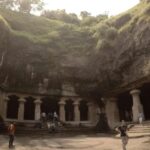

Finishing at the Gateway of India and Taj Mahal Palace Hotel photos
The end is where the tour earns its reputation: Gateway of India plus Taj Mahal Palace Hotel. You’ll spend about 20 minutes here, finishing at Apollo Bandar in Colaba.
This is a classic Mumbai photo target, but the tour’s value is that you are not just taking pictures—you are finishing with a sense of how the city’s earlier shifts brought it to this shoreline symbol. When you understand the timeline from your earlier stops, the Gateway hits harder.
Also, this is a convenient finish point for the next leg of your day. You’re in Colaba, close to the kind of wandering that works well right after a guided route: browsing, snapping extra photos, and grabbing a bite without committing to another structured activity.
And one small extra detail I think you’ll like: some guests have mentioned a quick complimentary coffee break during the tour. If it happens on your date, it’s a nice reset before you tackle the final photo stretch.
Price, pace, and what you get for $16.73
At $16.73 per person, this tour is priced like a smart add-on rather than a big splurge. The real value isn’t only the low cost—it’s what you get layered together: a guided narrative, a compact route, and multiple major landmarks without separate paid entry.
Every main stop is listed with free admission in the tour plan. That makes the pricing feel fair, because you are not paying again and again just to stand in front of famous buildings.
The duration also helps the math. In 2½ hours you hit a concentration of sites that would take you much longer to organize alone, especially if you want the “why” behind what you are seeing. You are basically buying a guided decoder ring for the Fort and Colaba area.
The only pace concern is personal comfort. Short stops are great for learning, but you will still walk between locations. If you’re visiting with limited stamina, plan to take breaks after the tour ends rather than trying to cram more walking immediately.
Who this tour suits best
This is a great pick if you want an organized overview that still feels human-paced. I’d especially recommend it if:
- You are in Mumbai for a short time and want the Fort and Colaba core first.
- You enjoy architecture and want the story behind what you photograph.
- You like small groups because you want questions answered without shouting over the crowd.
It’s also a good fit if you are the type who likes to keep exploring after the tour. You’ll end at a landmark area where it’s easy to continue on your own, armed with better context.
If you hate walking or need long indoor breaks every 20 minutes, this might feel a bit tight. The route is built around brief, moving stops, so it rewards people who enjoy that style.
Should you book this Fort and Colaba walking tour?
Yes, I think you should book it if your goal is to get your bearings fast and learn what the landmarks mean in Mumbai’s larger story. The combination of small group size, free entry at the stops, and a route that moves you through Fort to Colaba is strong value.
Book it especially if you care about seeing how Mumbai changed over time, not just collecting stamps on a sightseeing list. And on your end, do one simple thing: wear comfortable shoes and save your energy for the final stretch near the Gateway—because that is where it all comes together.
FAQ
How long is the Fort and Colaba walking tour?
The tour lasts about 2 hours 30 minutes.
What is the price per person?
The price is $16.73 per person.
Where does the tour start and end?
It starts at The Asiatic Society (Town Hall area), Fort, Mumbai, and ends at the Gateway of India, Apollo Bandar, Colaba, Mumbai.
How big is the group?
This experience has a maximum group size of 12 travelers.
Are there admission fees for the stops?
The plan lists free admission for the main stops, including the Asiatic Society library area, Horniman Circle Garden, St. Thomas Cathedral, and others.
Is the ticket digital?
Yes, you get a mobile ticket.
What if the weather is bad?
This tour requires good weather. If it’s canceled due to poor weather, you’ll be offered a different date or a full refund.