REVIEW · MUMBAI
Dharavi Slum tour in Mumbai by local resident
Book on Viator →Operated by Beautiful Bombay Tours · Bookable on Viator
Dharavi is busy, not a museum. I like that this resident-led, English-speaking walk is built around the day-to-day reality of the area, not staged storytelling. I also like that you get both the commercial and residential sides, so you understand how work and home sit side by side.
The best part for me is how practical it feels: you’re guided through factories and lanes on foot, with enough structure to make sense of what you’re seeing. One drawback to consider is that this is a real working community—so if you want a light, detached sightseeing vibe, this tour may feel more direct than you expect.
With an approximate 2–3 hour length and a starting point at Third Wave Coffee (Mahim/Station area), it’s an easy add-on for a Mumbai visit. And at a very low listed price with frequent demand (10+ bookings last month), it’s also one of those tours that can feel like a rare value if you show up with the right mindset.
In This Review
- Key things that make this Dharavi tour worth your time
- A resident-led Dharavi walking tour (and why it matters)
- Price and value: what $4.46 buys you in Mumbai
- Meeting at Third Wave Coffee: logistics that keep your day smooth
- The on-foot Dharavi loop: how the walk is organized
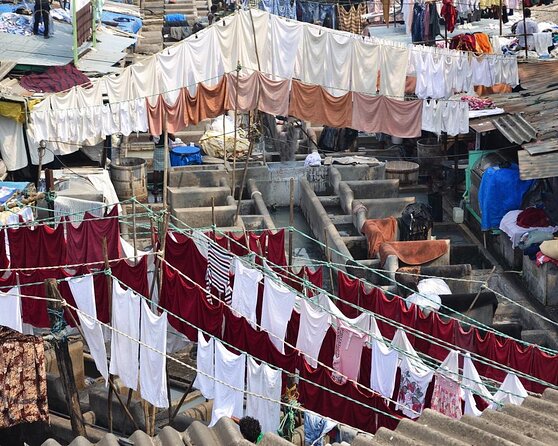
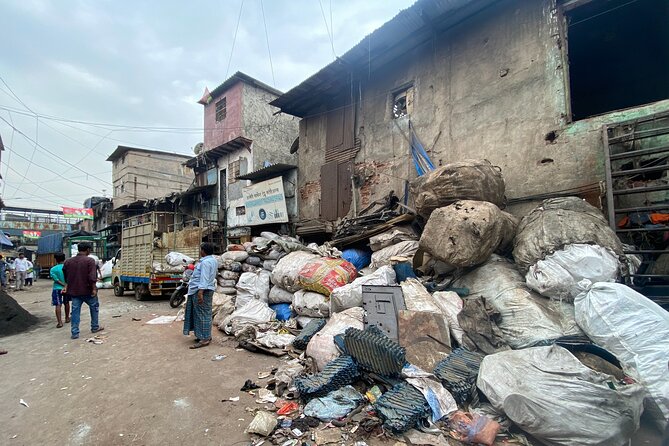
- Factory life you can actually see: recycling, soap, and plastic bags
- Residential lanes and the commercial side-by-side reality
- Leather-drying and product sales, without the hard sell
- Why the local English-speaking guide changes everything
- Who should book this Dharavi slum tour
- Practical tips so your 2–3 hours go smoothly
- Should you book? My take on the decision
- FAQ
- How long is the Dharavi slum tour?
- How much does the Dharavi slum tour cost?
- Is pickup available?
- Where does the tour start?
- Do I get a ticket on my phone?
- Does the tour end back at the meeting point?
- How big is the group?
- What’s included in the tour price?
- Is free cancellation available?
- Are service animals allowed?
Key things that make this Dharavi tour worth your time
- Local guide from Dharavi: you’re not learning from a script; you’re learning from people who live with the place
- Walking access to work and homes: you see how daily life connects to the local economy
- Factory-focused stops: including areas tied to recycling and small production
- Tight but manageable timeframe: about 2 hours of on-tour time is the norm
- No-pressure buying stop: you can browse products made in the area without being pushed
- Group capped at 99: you’ll be in a shared experience, not a private one-on-one tour
A resident-led Dharavi walking tour (and why it matters)
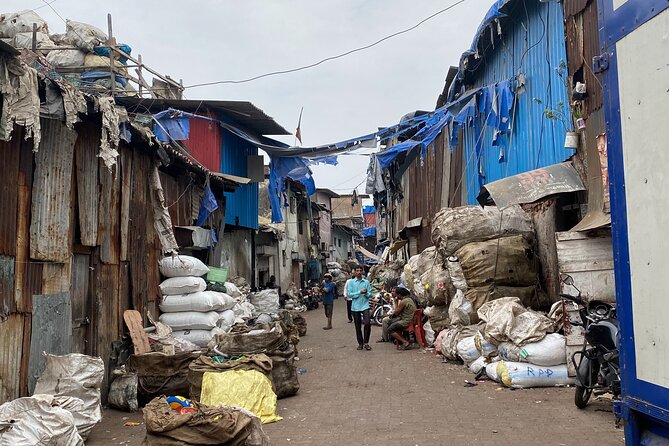
Dharavi gets talked about a lot. Most of what you hear is either sensational or simplified. What makes this tour feel useful is that it’s guided by a local resident who can explain how the community actually functions—work, movement, and daily routines—at street level.
You’re also walking, not driving through a distant view. That changes the feel. In a dense neighborhood, seeing a place from a bus window tells you almost nothing, and it can turn people and businesses into background scenery. This tour keeps you at footstep distance, where you can notice details like how people organize workspaces and how community life spills into narrow lanes.
One more practical point: the guide is English-speaking, which helps you get answers as you go instead of relying on guesswork. For me, that’s the difference between visiting a “site” and actually understanding a working neighborhood.
You can also read our reviews of more tours and experiences in Mumbai.



Price and value: what $4.46 buys you in Mumbai
The listed price—about $4.46 per person—is startlingly low for a guided, multi-hour experience. In travel terms, that’s a big deal because Dharavi tours often get priced as premium “must-do” experiences elsewhere.
Here’s how I think about value with this one:
- You’re paying for direction and context, not just a route. Without a guide, it’s easy to get lost in the wrong places or to miss what you’re actually looking at.
- You’re getting structured time (about 2–3 hours) with a planned flow that makes sense of the area’s commercial and residential character.
- You’re also getting included admission ticket (as noted for the on-tour time), which matters for budgeting.
Could you spend less by doing it DIY? Yes—if you’re comfortable navigating on your own and you already know what to look for. But the whole point here is that you’re seeing reality you can’t easily decode alone. For many first-timers, paying for a guide is what turns the experience from confusing into meaningful.
Meeting at Third Wave Coffee: logistics that keep your day smooth
You’ll meet at Third Wave Coffee, Tip Road, Unit no. 58, Ground, Ram Mahal, Senapati Bapat Marg, Marinagar Colony, Station, Mahim, Mumbai, Maharashtra 400016. The tour ends back at the same meeting point, so you don’t have to rebuild your route afterward.
A few practical things to know before you go:
- Pickup is offered, so if you prefer not to hunt for transit at the start, check how pickup works when you book.
- It’s near public transportation, which is helpful in Mumbai where “getting there” can be the hardest part of any plan.
- It’s a group experience with a maximum of 99 travelers, so plan for the walk to feel social and organized rather than quiet and private.
If you like starting your day with one clear plan, this is the kind of tour where the meetup is specific and the return is simple. That reduces decision fatigue—especially useful if you’re stacking multiple Mumbai stops.
The on-foot Dharavi loop: how the walk is organized
The core focus is simple: you explore Dharavi with a local English-speaking guide. The tour time is about 2 to 3 hours, and the featured on-tour portion is described as around 2 hours with an admission ticket included.
Even though the tour is labeled as one stop—Dharavi—it’s effectively broken into moments. You’ll move between:
- Work areas tied to local production
- Lanes and built spaces that show day-to-day life
- Commercial corners where goods and services connect the neighborhood
This structure is what makes the experience click. You’re not just staring at a neighborhood. You’re being guided through the logic of how the area works.
Factory life you can actually see: recycling, soap, and plastic bags
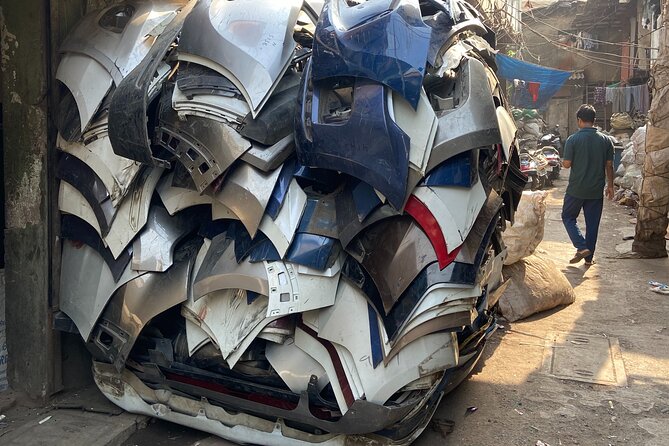
One of the most detailed parts of the experience (in the way it’s described) is the attention to small production. In particular, the walk can include areas focused on:
- Plastic recycling
- Soap production
- Plastic bag production
- Sewing or finishing work, depending on what’s active that day
What I like about this kind of stop is that it gives you a sense of the neighborhood’s skill base. Even if you don’t catch every technical detail, you understand the big idea: Dharavi isn’t only a place where people live. It’s also a place where people make products, reuse materials, and keep processes running.
You also get a useful reminder that this is not “industrial scale” in the way most people picture. It’s local industry built inside everyday spaces. Walking through it helps you see how labor is organized when there’s no luxury of big, empty factory buildings.
A note on expectations: because the tour is a walking experience and production activity can vary, the exact mix of visible workshops can shift. That’s normal in a live working community—so come ready to be flexible.



Residential lanes and the commercial side-by-side reality
Dharavi is often discussed as if it’s only one thing. This tour resists that. You’re shown both the residential and commercial areas, which is the key to understanding the place.
Seeing work and home together changes how you interpret what you’re looking at. Instead of thinking of “factories” as separate from “living,” you notice the connections: how movement works, how people manage space, and how the neighborhood’s economy shapes daily routines.
Walking here also teaches you a practical kind of awareness. The streets and passages are part of how the area functions. If you rush through just trying to photograph everything, you miss the pattern. If you slow down and let your guide’s explanations land, the neighborhood becomes legible.
Leather-drying and product sales, without the hard sell
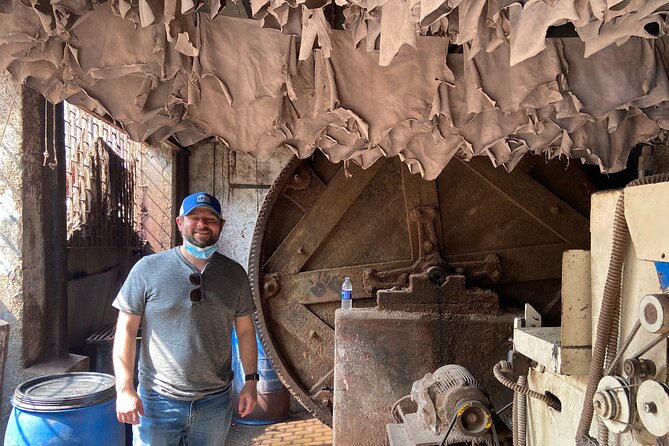
Another stop described in detail is a leather drying area. It’s the kind of working process that feels invisible from outside, but makes sense once you see it in context. Even without a technical explanation, you can grasp why stages of production need specific conditions and why the work is often spread across different spaces.
The tour may also include a shop where products are sold—and an important detail: it’s described as not involving pressure to buy. That matters. In tight neighborhoods, the wrong type of sales stop can feel awkward fast. A browse-friendly shop break gives you the chance to look at what’s been made, without turning the experience into a shopping errand.
If you want to support local makers, you can. If you don’t, you can still treat the shop as an information point: a way to connect the work you saw to the products that reach customers.
Why the local English-speaking guide changes everything
A guide can do many things: translate, explain, steer. In Dharavi, those jobs matter even more.
This tour emphasizes a local tour guide from the area, and that’s a big advantage. Residents know how to show the place accurately without turning it into a stereotype, and they can answer questions in a way that feels grounded.
The guide’s manner also shows up in the experience description: the tour is described with a sympathetic, kind, and competent feel. That’s not a small point. In a neighborhood that outsiders often approach with nervous curiosity, a respectful tone helps you stay present instead of anxious.
Also, because it’s an English-speaking tour, you’re more likely to understand what you’re seeing while you’re still standing in it. That’s what makes the walking time meaningful rather than just movement.
Who should book this Dharavi slum tour
I think this is a smart fit if you:
- Want a walking experience with context, not just photos
- Appreciate learning from people who live the place every day
- Are open-minded and ready for reality, not a polished theme-park version of Mumbai
- Like tours that explain the connection between work and daily life
It may be a worse fit if you:
- Prefer purely scenic or low-intensity sightseeing
- Don’t handle close-up looks at poverty and working conditions well
- Want a private, quiet, no-group experience
And because groups can be sizable (up to 99), you should be comfortable in a shared tour setting.
Practical tips so your 2–3 hours go smoothly
Dharavi is a place you experience with your feet. So plan for that.
- Wear comfortable shoes you’re okay getting dusty. You’ll be moving through lanes and working areas.
- Bring a small bag you can keep close. In crowded neighborhoods, you’ll move with the group and want your essentials secure.
- Keep expectations respectful. This is a real community with active production and living spaces.
- If you have specific needs, check what’s possible since service animals are allowed and it notes that most travelers can participate—but conditions can vary person to person.
If you’re doing this as part of a Mumbai day, give yourself a little buffer. With pickup options, transit links nearby, and a return to the meetup, it’s easier to fit into your schedule. Still, Mumbai traffic and walking pace can influence your timing.
Should you book? My take on the decision
If you want to understand Dharavi in a way that’s more than headlines, I’d book this. The combination of a resident-led, English-speaking guide, a walk that covers both commercial and residential areas, and low-cost pricing makes it a strong value.
I’d only hesitate if you’re looking for an “easy,” detached tour or you’re not prepared for close-up views of how people work and live in a dense, active neighborhood. If you can handle realism with respect, this is one of the more practical ways to see Dharavi for what it is.
FAQ
How long is the Dharavi slum tour?
The tour is approximately 2 to 3 hours long, with around 2 hours described for the on-tour experience.
How much does the Dharavi slum tour cost?
The listed price is $4.46 per person.
Is pickup available?
Pickup is offered, but you’ll want to confirm the details when you book.
Where does the tour start?
The tour starts at Third Wave Coffee on Tip Road, Unit no. 58, Ground, Ram Mahal, Senapati Bapat Marg, Marinagar Colony, Mahim, Mumbai, Maharashtra 400016, India.
Do I get a ticket on my phone?
Yes. A mobile ticket is part of the experience.
Does the tour end back at the meeting point?
Yes. The activity ends back at the meeting point.
How big is the group?
The tour/activity has a maximum of 99 travelers.
What’s included in the tour price?
An admission ticket is included for the on-tour time.
Is free cancellation available?
Yes. Free cancellation is available up to 24 hours in advance of the experience start time for a full refund.
Are service animals allowed?
Yes. Service animals are allowed.