REVIEW · MUMBAI
Private Half-Day Sightseeing Tour in Mumbai
Book on Viator →Operated by Explore Mumbai Tours · Bookable on Viator
Mumbai compresses history, sea air, and street life.
This private half-day tour is designed to help you get your bearings fast without feeling rushed, with a local guide and an A/C car that keeps you comfortable as you bounce between South Mumbai landmarks.
I especially like the private hotel pickup and the A/C vehicle with Wi‑Fi, which makes a short day feel doable even with Mumbai traffic. And if you end up with a guide like Sharon or Yash, you’ll likely get clear, practical explanations instead of long lectures.
The one thing to consider is that a half-day means time juggling: you’ll spend some of your limited hours moving between stops, and open-air places like Dhobi Ghat can feel hot and crowded depending on the day.
In This Review
- Key Things That Make This Tour Work in Mumbai
- A Tight Route Through South Mumbai Highlights (4 to 6 Hours)
- The Comfort Advantage: A/C and Wi‑Fi in Real Mumbai Traffic
- Gateway of India to Sassoon Dock: Colonial Edges and Working Mumbai
- Afghan Church and the Stories Behind the Facade
- Dhobi Ghat: The Open-Air Laundromat You Can’t Fake
- Oval Maidan to the UNESCO-Era Buildings: Architecture in One Concentrated Stretch
- Marine Drive to Girgaon Chowpatty: The Sea Promenade Part
- Malabar Hill and the Religious + Civic Views
- The Tower of Silence (Dokhma): A Culturally Specific Stop
- Mani Bhavan Gandhi Museum: One Ticket You Don’t Have to Plan
- Chhatrapati Shivaji Maharaj Terminus (CSMT) to Crawford Market
- Price and Value: What $33.48 Buys You Here
- The Guide Makes the Difference: What to Look For
- How to Customize This Tour in Real Life
- Should You Book This Private Half-Day Sightseeing Tour in Mumbai?
- FAQ
- How long is the private half-day sightseeing tour in Mumbai?
- Is pickup included?
- Is this tour private or shared?
- What sights are included?
- Is Wi‑Fi and air-conditioning included?
- Is free cancellation available?
Key Things That Make This Tour Work in Mumbai
- Private, on-your-time pacing: you stay in your own group, and your guide can adjust the route when it makes sense.
- A/C comfort with Wi‑Fi: this is a real help during transfers between neighborhoods.
- Working-city stops, not only monuments: Dhobi Ghat and Sassoon Dock show Mumbai doing its everyday jobs.
- South Mumbai in an efficient loop: Gateway of India → UNESCO-era buildings → Marine Drive → CSMT.
- Gandhi Museum is handled for you: Mani Bhavan has admission included, so you don’t have to plan that piece.
- Guides who speak clearly: multiple guide reviews highlight strong English, which makes the history easier to follow.
A Tight Route Through South Mumbai Highlights (4 to 6 Hours)
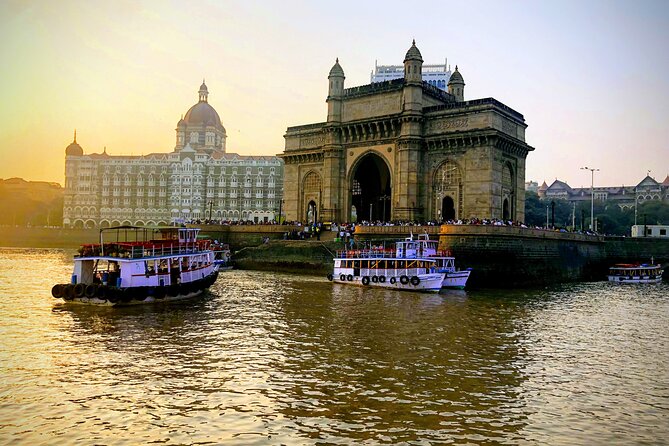
This tour is built for people who want “best of Mumbai” without turning the day into a logistics test. You’re looking at roughly 4 to 6 hours, which is short enough to stay energetic but long enough to connect the dots between colonial-era landmarks, modern city life, and religious/cultural sites.
Because it’s private, you won’t get herded into a large group line. That matters here. Mumbai has crowds, and it has traffic. A private car plus a local guide helps you move with less stress and more clarity.
You can also read our reviews of more tours and experiences in Mumbai.


The Comfort Advantage: A/C and Wi‑Fi in Real Mumbai Traffic
Here’s the practical value: you’re traveling in a private air-conditioned vehicle with Wi‑Fi. In Mumbai, that is not a luxury detail—it’s part of how you stay sane.
The route includes long stretches where walking would be tiring, and the car lets you reset between sights. Even better, the guide uses the vehicle time to give context—so you arrive at places like the High Court area or CSMT with the big picture already in your head.
Gateway of India to Sassoon Dock: Colonial Edges and Working Mumbai
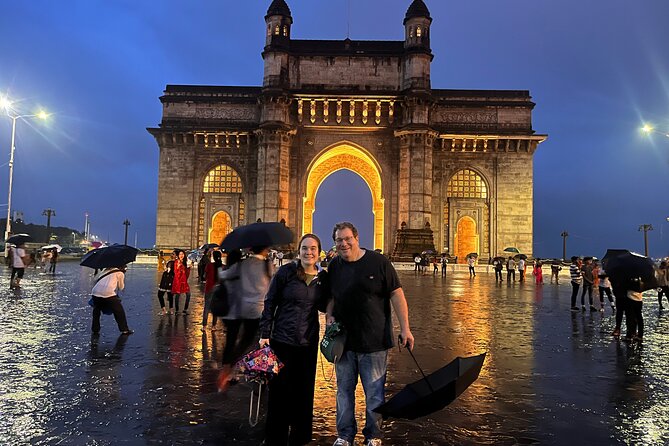
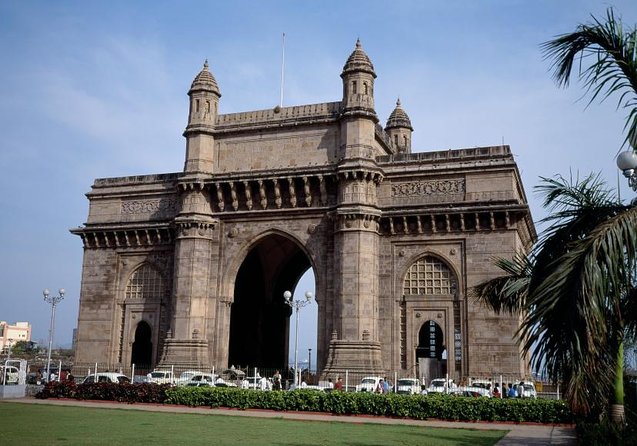
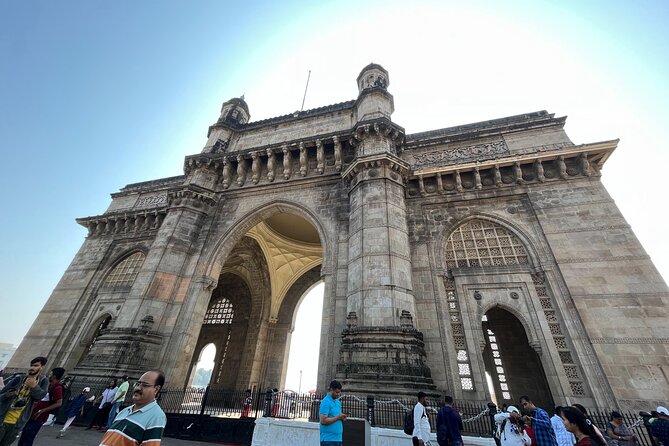
Your day starts at the Gateway of India, the big arch monument that signals how Mumbai ties into a broader colonial past. It’s also a classic “first photo stop” because the setting opens up toward the waterfront.
From there, you head toward Sassoon Dock, one of the older and busier fish markets. This is where the tour stops feeling like an architecture walk and turns into a look at how Mumbai feeds itself. Expect a working scene with local fishermen trading fresh catches.
A tip: keep your expectations flexible here. Markets can be messy, busy, and intensely real. If you want a calm photo, you may need to time your shots when the traffic of people slows. Your guide can help you find angles quickly.
Afghan Church and the Stories Behind the Facade
Next comes the Afghan Church, a historic church built in memory of soldiers who died in the First Afghan War. The key payoff at this stop is what you notice after you hear the backstory: the Gothic style isn’t just decoration—it’s a clue to the era that shaped this part of the city.
This stop is also a good change of pace. After Dhobi Ghat and the market energy, a calmer religious site gives you a breather and helps you understand how the city’s history layers over time.
Dhobi Ghat: The Open-Air Laundromat You Can’t Fake
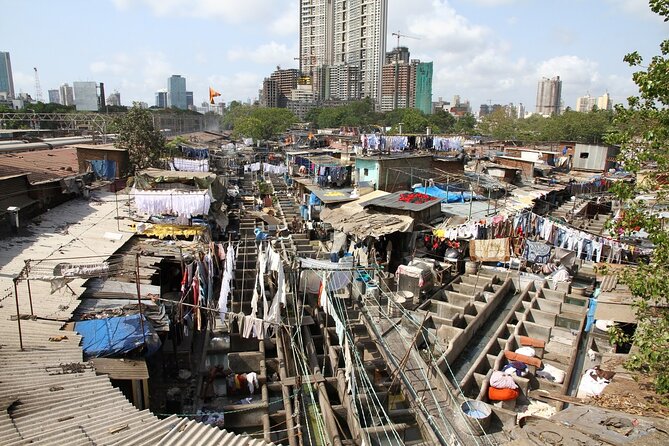
Dhobi Ghat is one of those Mumbai sights that feels unlike anywhere else. It’s an open-air laundromat where washermen, known as dhobis, wash, dry, and iron clothes for homes and businesses across the city.
A few things make this stop memorable:
- You’re watching a job with rhythm. It’s not a museum scene.
- The scale is striking. Hundreds of people and clothes cycles run at the same time.
- You’ll likely see clothes and tools that look almost industrial, not like traditional laundry.
Timing matters. You’ll spend about 20 minutes here, so go ready to look first, then ask questions. If it’s very busy, your guide can help you pick the best vantage spots without wasting time.



Oval Maidan to the UNESCO-Era Buildings: Architecture in One Concentrated Stretch
After the working-city scenes, the route pivots to the formal side of South Mumbai. You move through Oval Maidan, a large open space locals use for recreation—useful as a visual reset because you can see the skyline and building edges all at once.
Then come several landmark clusters that many people roll into one bucket as British-era architecture, but your guide will help you sort it out:
- University of Mumbai main building (noted for its grand colonial-era feel)
- Rajabai Clock Tower, a Gothic-style tower with intricate carvings
- Bombay High Court, known for a grand structure blending styles
- The Victorian Gothic and Art Deco Ensembles of Mumbai (a UNESCO World Heritage group)
What you’ll get from bundling these together is efficiency. The buildings sit close enough that you can compare styles without commuting back and forth all day.
Possible drawback: this area can mean lots of details per minute. If you’re the type who likes slow reading and long photo sessions, you may want to ask your guide to prioritize the 2 or 3 buildings you care about most.
Marine Drive to Girgaon Chowpatty: The Sea Promenade Part
Next is Marine Drive, the famous sea-facing promenade lined with palm trees and classic Art Deco surroundings. This is a visual payoff stop. Even from street level, the curve of the road gives you that postcard sense of Mumbai’s waterfront identity.
You then continue to Girgaon Chowpatty, a well-known beach area. Chowpatty tends to be lively, and it’s a good contrast to the architectural stops you just saw.
If you want photos: stand a little back from the busiest walking flow. People move fast here, so patience beats luck.
Malabar Hill and the Religious + Civic Views
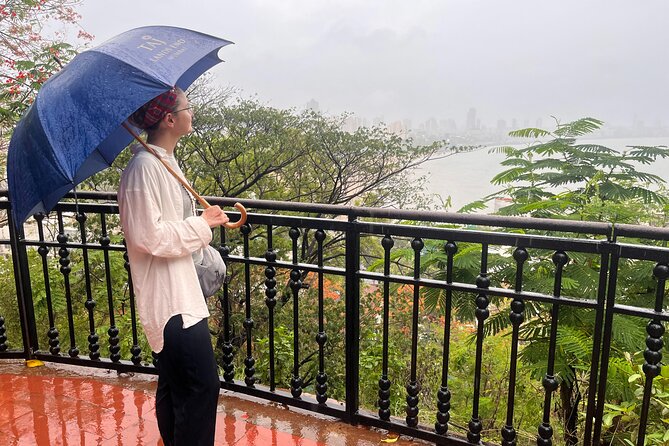
From the promenade zone, the tour works its way toward Malabar Hill, an upscale residential area that’s famous for views over the city and Arabian Sea.
On the way you may stop near:
- Raj Bhavan (the Governor’s House)
- The Jain Temple, noted for its marble construction and intricate carvings
- Hanging Gardens (Pherozeshah Mehta Gardens)
- Kamala Nehru Park
This section is valuable because it shifts Mumbai from “monument mode” to “neighborhood perspective.” You get to see how the city looks and feels at street level, plus the kind of green, structured spaces people enjoy here.
One practical note: Malabar Hill can involve a bit of uphill or uneven walking depending on exactly where you pause. If you want a gentler day, tell your guide early.
The Tower of Silence (Dokhma): A Culturally Specific Stop
The Tower of Silence, also called the Dokhma, is a circular structure associated with the Parsi community’s approach to disposal of the dead.
This is one of those stops where the value is in interpretation. Without context, it can feel like a strange roadside structure. With a guide’s explanation, it becomes a window into how communities practice and preserve beliefs over time.
Because it’s specific and cultural, it’s also worth treating it with extra respect—quiet voice, slower steps, and a bit of attention.
Mani Bhavan Gandhi Museum: One Ticket You Don’t Have to Plan
Your museum stop is Mani Bhavan Gandhi Museum, the former residence of Mahatma Gandhi from 1917 to 1934, now presented as a museum about his life and work.
This is one of the easiest stops to appreciate because it’s a focused theme in the middle of a big “highlights” route. And since admission is included, it removes a common pain point on half-day tours: you don’t lose time at ticket counters or figure out how entry works.
If you like short, high-signal museums, this works well. If you want to spend hours reading, you may still enjoy it, but you’ll likely want to skim rather than sink.
Chhatrapati Shivaji Maharaj Terminus (CSMT) to Crawford Market
The final stretch leans into civic Mumbai: rail history, municipal identity, and street-level shopping energy.
You visit:
- Chhatrapati Shivaji Maharaj Terminus (CSMT), formerly Victoria Terminus, built in 1887 to commemorate Queen Victoria’s Golden Jubilee
- The Brihanmumbai Municipal Corporation building (BMC Building), built in 1884, a prominent landmark near CSMT
- Crawford Market, built in 1869 and named after Arthur Crawford
CSMT is usually the emotional high point for architecture/transport fans. It’s hard to ignore how monumental a working station can feel. The market stop then shifts you back to everyday life—goods, stalls, and the rhythm of commerce.
This pairing works because it shows two faces of Mumbai:
- Movement through infrastructure
- Movement through markets
A quick practical thought: markets can be tiring after a long day. If you’re short on energy, ask your guide to help you do Crawford Market efficiently—pick a few best views, then move on.
Price and Value: What $33.48 Buys You Here
At $33.48 per person, the value is strongest if you factor in three things:
- Private vehicle + guide time for a half-day
- A route that covers many major sights without you planning transportation between them
- Free entry at most stops and admission included at Mani Bhavan
In other words, you’re paying to buy back time and clarity. If you’re trying to DIY these stops by taxi and self-guided wandering, you’ll spend plenty on rides—and you’ll likely lose the narrative thread that ties the architecture and culture together.
The Guide Makes the Difference: What to Look For
One theme from guide performance is simple: the best ones are good at pacing and explanations. Names showing up again and again include Sharon, Yash, Priti, Javed, Chirag, and Ayan, along with drivers like Deepak, Wasim, Depak, Santosh, and Vijay.
What you want from your guide in practice:
- Clear English, so you follow quickly
- Fast navigation around crowds and bottlenecks
- Flexibility when you say you want to spend more or less time somewhere
If you get a guide who’s already used to this route, your day will feel like a plan, not a scramble.
How to Customize This Tour in Real Life
This is where you can get more out of your half-day without turning it into a mess.
If your priorities are:
- Architecture first: spend a little longer around the UNESCO ensemble buildings and Rajabai Clock Tower area.
- Culture and daily life: keep Dhobi Ghat and Sassoon Dock early in the loop so you don’t rush through them later.
- Inspiration and ideas: protect your time for Mani Bhavan so you don’t sprint through it.
- Photos: tell your guide that you want photo windows. Marine Drive and the Malabar Hill viewpoints tend to reward a bit of timing.
Just be honest about your energy level. Mumbai can be warm, and a half-day tour is still a half-day of walking and standing.
Should You Book This Private Half-Day Sightseeing Tour in Mumbai?
I’d book it if you:
- Are on a short schedule and want a structured overview
- Prefer a private format over crowds and group juggling
- Want an air-conditioned car so you can enjoy more than you endure
- Like the idea of mixing landmark photography with real Mumbai stops like Dhobi Ghat and Sassoon Dock
I’d think twice if you:
- Hate outdoor scenes or get overwhelmed by busy markets
- Want a slow museum day with lots of reading (this is built for highlights, not long stays)
If you land with the right guide and you plan your own must-sees, this tour is a strong way to understand Mumbai without losing your whole day to transit.
FAQ
How long is the private half-day sightseeing tour in Mumbai?
The tour runs about 4 to 6 hours.
Is pickup included?
Yes. Pickup is offered, and it’s set up around your hotel or a nearby starting point.
Is this tour private or shared?
It’s a private tour/activity, meaning only your group participates.
What sights are included?
You’ll see major South Mumbai highlights such as the Gateway of India, Dhobi Ghat, Marine Drive, Mani Bhavan Gandhi Museum, CSMT, and Crawford Market, plus several other landmark stops along the way.
Is Wi‑Fi and air-conditioning included?
Yes. You travel in a private air-conditioned vehicle with Wi‑Fi.
Is free cancellation available?
Yes. You can cancel for a full refund if you cancel up to 24 hours in advance of the experience start time.