REVIEW · MUMBAI
Mumbai: Dhobi Ghat Laundry and Dharavi Slum Tour with Local
Book on GetYourGuide →Operated by Inside Mumbai Tours · Bookable on GetYourGuide
Stepping into Dharavi changes how you see Mumbai. This 3-hour experience links Dhobi Ghat and everyday life in Dharavi, with a local guide showing how work, recycling, and community actually run. I like the local-in-the-room access you get, not a distant stare-from-the-side view.
Two things I especially like are the chance to see the open-air laundry at Dhobi Ghat in action and the way the tour focuses on the full Dharavi “system” of work and neighborhoods. One consideration: this is a working community, so you’ll need a respectful attitude and a bit of patience for tight lanes, busy sights, and the usual heat.
In This Review
- Key things that make this tour worth your time
- Why Dhobi Ghat and Dharavi belong in the same tour
- The 3-hour flow: what you should expect from start to finish
- Dhobi Ghat: open-air laundry you can actually see and understand
- Dharavi on your feet: homes, work areas, and how the neighborhood breathes
- The industries you’ll see: plastic, textiles, leather, and the full recycling web
- The Slumdog Millionaire filming location: what you gain beyond the movie
- Guides make or break this type of visit: Bharti, Abi, and others
- Train ride moments: why transit is part of the realism
- Price and value: is $4.45 per person too good to be true?
- What to pack and how to act respectfully
- Who should book this tour, and who should skip it
- Should you book this Dharavi and Dhobi Ghat tour?
- FAQ
- How long is the Dharavi and Dhobi Ghat tour?
- Is this tour private or shared?
- What language is the tour guide?
- What’s included in the price?
- Is food included?
- What will I see in Dharavi?
- Do you visit a place connected to Slumdog Millionaire?
- Is there public transportation during the tour?
- What about meeting point and timing?
Key things that make this tour worth your time
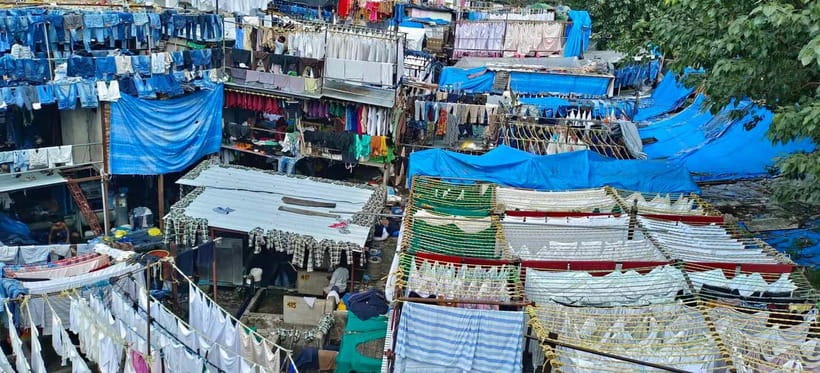
- Dhobi Ghat plus Dharavi in one loop so you connect laundry work to the wider recycling economy
- Slumdog Millionaire filming connection inside Dharavi, plus context beyond movie scenes
- Local guides with lived experience (Bharti, Abi, Ansh, Alkama, Faizan are named in guide stories)
- You see the real industries: plastic recycling, garment/textile work, leather and more
- A privacy-first approach that keeps the visit human and avoids exploitative moments
- A train ride is part of the story on the way between areas
Why Dhobi Ghat and Dharavi belong in the same tour
Mumbai’s laundry and Dharavi’s recycling aren’t separate worlds. When you see Dhobi Ghat (an open-air laundry system) right alongside Dharavi’s industries, the city’s circular economy starts to make sense in a practical way.
I also like that the format doesn’t treat Dharavi as a single dramatic viewpoint. You’re guided through homes, workplaces, and businesses in a way that keeps the focus on daily life rather than shock value.
You can also read our reviews of more tours and experiences in Mumbai.



The 3-hour flow: what you should expect from start to finish
The exact meeting point varies by option, but the plan stays simple: walk through Dharavi with a local guide, then connect to Dhobi Ghat. The tour includes entry tickets, travel fees, and water, which matters because these areas don’t feel like a quick stroll.
Expect a good amount of walking and a couple of transit moments, including a local train ride that many people find memorable and easy to feel “inside Mumbai” rather than on rails like a standard attraction.
Dhobi Ghat: open-air laundry you can actually see and understand
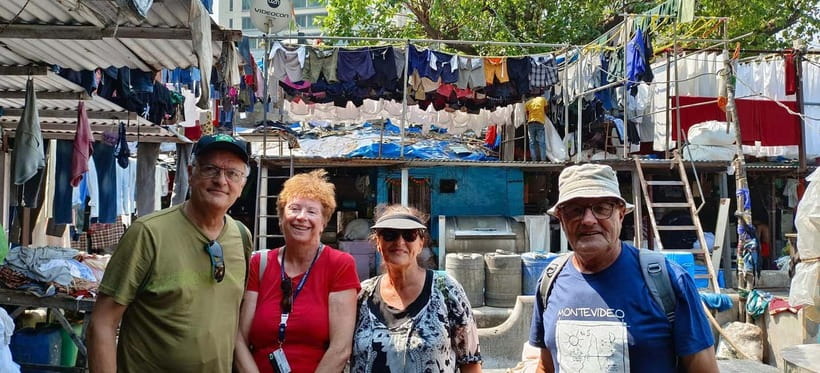
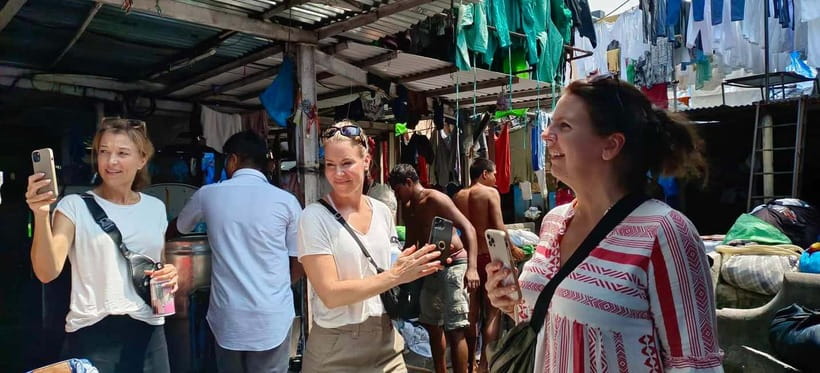
Dhobi Ghat is not a museum-style exhibit. It’s a working place where you can see how laundry moves through an industrial-by-necessity routine, with people doing real jobs with real timing.
What makes it special on this tour is the explanation. You don’t just look at basins and lines; you learn how the laundry system works and why it became important in the city’s life.
One practical bonus: Dhobi Ghat is a great contrast point after Dharavi, because both are work-based spaces, just with different production steps. You start noticing the logic of reuse, labor, and logistics instead of only the visuals.
Dharavi on your feet: homes, work areas, and how the neighborhood breathes
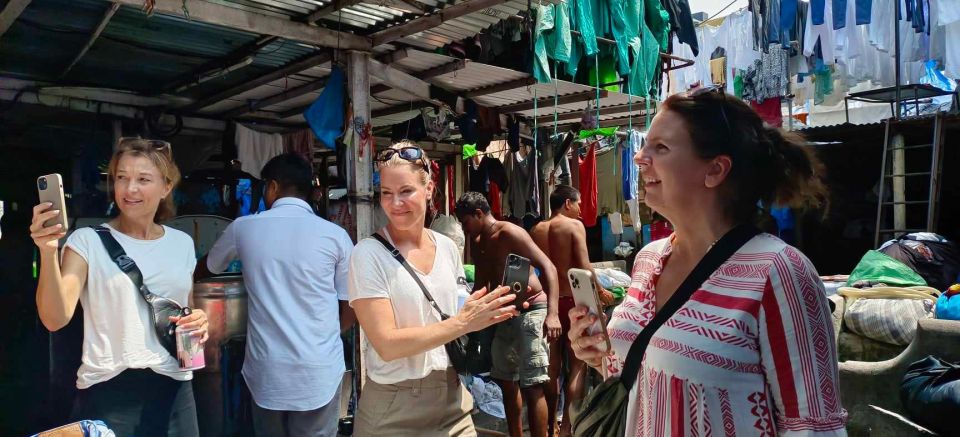
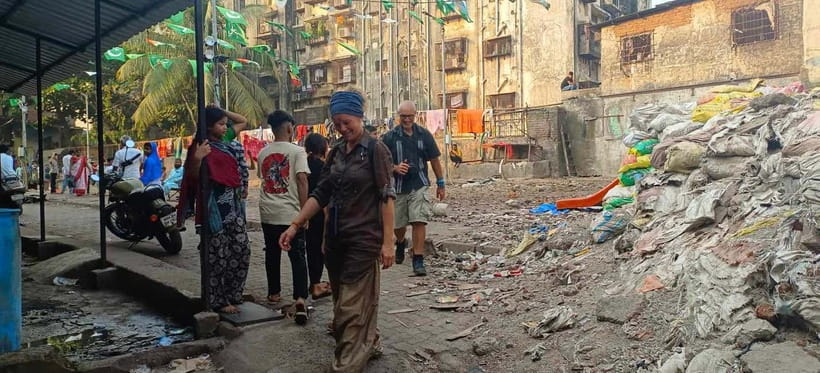
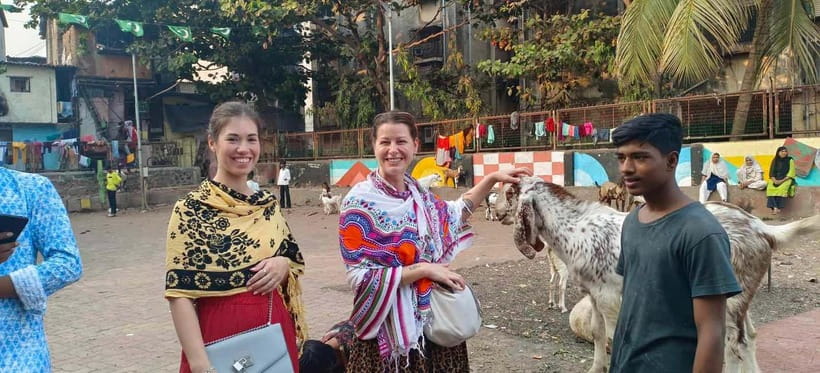
Dharavi is presented here as a living neighborhood, not a film set. Your guide helps you understand where people stay, where family members spend time, and how children play and relax alongside business activity.
This is also where the tour tries to correct the common stereotypes. The goal is to show how people in Dharavi build livelihoods, manage resources, and create income networks—so you leave with a more accurate picture than anything based on movies or headlines.
A big part of the trust comes from the guide relationship. People repeatedly highlight that guides are connected to the area and manage the route carefully, including respecting privacy while still showing you what daily life looks like.
The industries you’ll see: plastic, textiles, leather, and the full recycling web
Dharavi’s economy is often described as recycling, but you’ll see it as a chain of practical jobs. On this tour, you get examples across plastic recycling, garment and textile work, leather, and other linked businesses.
The value for you is interpretation. You learn how waste becomes input, how parts of the workflow connect, and why skills and small operations matter in a place where people can’t rely on big external systems.
If you like markets, manufacturing, or how cities function behind the scenes, this section is where the tour earns its time. It’s not abstract; it’s visible work happening in small spaces.





The Slumdog Millionaire filming location: what you gain beyond the movie
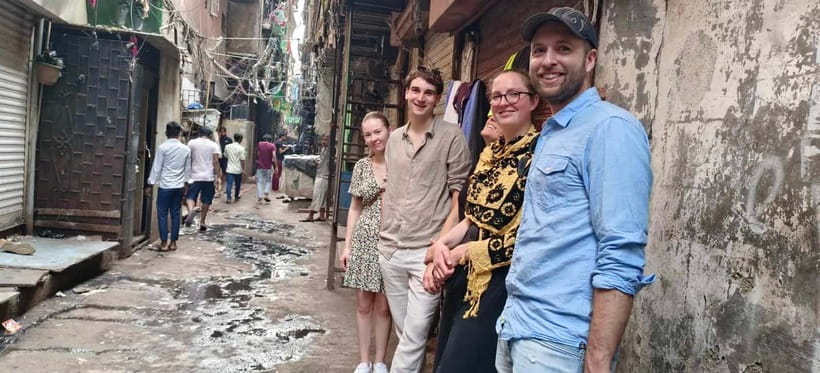
The tour includes the place where Slumdog Millionaire was filmed inside Dharavi. That alone can be a fun hook, especially if the movie is in your memory.
But the real payoff is context. You’re shown how the location fits into actual neighborhood life, so the scene becomes less about story drama and more about how filming found real Mumbai textures on the ground.
Think of it as a fact-check for your brain. It’s easier to understand the city when you can connect the screen image to the lived environment.
Guides make or break this type of visit: Bharti, Abi, and others
This is one of those tours where the guide isn’t a nice-to-have. People repeatedly praise guides like Bharti (often described as growing up in Dharavi), Abi (born and raised in Dharavi in guide stories), Ansh/Anshika (named in multiple experiences), Alkama, and Faizan for the way they connect explanations to real daily routines.
What you want to notice is the tone. The best guides on this route manage curiosity with respect, answer questions without turning people into props, and keep you moving at a human pace.
If you get a guide who speaks clearly and explains both industries and residential life, the tour feels less like a checklist and more like understanding a city ecosystem. Several people also mention that the guide helps with practical comfort like timing and pacing, which matters on a hot, active route.
Train ride moments: why transit is part of the realism
A highlight in many accounts is the local train ride included as part of the experience between areas. Even if you know Mumbai has transit, riding it with a guide adds context fast—how people use it, and how movement ties the city together.
One detail mentioned in guide experiences is that the train ride can feel unusually open and fun, with the door vibe you might not expect if you only picture standard tourist transit. Either way, it’s a quick way to shift from walking-with-a-guide mode to observing how the wider city works.
Price and value: is $4.45 per person too good to be true?
At $4.45 per person for a 3-hour tour that includes a local English-speaking guide, entry tickets, travel fees, and water, the value looks unusually strong. The key reason it feels like a bargain is that the tour isn’t only walking past sights; it’s guided access with interpretation and logistics handled for you.
The value also comes from focus. Instead of spending your limited time on panoramic views, you’re using that time to understand labor, industries, and neighborhood life. For many visitors, that’s the type of experience that changes how they interpret Mumbai afterward.
Still, do keep one consideration in mind. If you go expecting comfort-first sightseeing, this won’t match that mood. You’re in a real area where daily work happens, so wear practical shoes and bring the mindset that you’re learning how people live, not consuming a spectacle.
What to pack and how to act respectfully
Because this is an on-foot working community visit, small choices matter. Wear comfortable shoes, and plan for sun and heat since you’ll be outside for parts of the route.
For respect, follow your guide’s lead. People strongly emphasize the tour is not voyeuristic, with privacy respected and no pressure around uncomfortable photo moments, so you’ll be best served by keeping your questions thoughtful and your camera use sensible.
Also: you won’t be fed on this tour. It’s wise to plan water intake and consider eating before you go, because the included items cover water but not food.
Who should book this tour, and who should skip it
This tour is a strong fit if you:
- want to understand Mumbai through daily work and real neighborhoods
- like practical explanations about recycling, textiles, and local industries
- enjoy guided walking routes that correct stereotypes with context
It may not be the best fit if you:
- struggle with ethical discomfort around visiting poverty or dense neighborhoods
- need a low-walking, high-comfort sightseeing style
- aren’t okay with active streets and normal crowd energy
Should you book this Dharavi and Dhobi Ghat tour?
If your goal is to see Mumbai as a functioning city, book it. The Dhobi Ghat laundry stop gives you a real, visible system, while Dharavi shows the human side of work networks, recycling, and everyday neighborhood life.
Book it especially if you can get a guide like Bharti, Abi, Ansh, Alkama, or Faizan from the names you’ll hear in guide stories, because the strongest versions of this tour are built on lived-in interpretation and a respectful pace. If you go with curiosity and humility, you’ll come away with a Mumbai you can explain to friends.
FAQ
How long is the Dharavi and Dhobi Ghat tour?
The tour duration is 3 hours.
Is this tour private or shared?
It can be booked as a private tour or as a shared/small group option.
What language is the tour guide?
The tour guide is English-speaking, and an optional audio guide in English may be available.
What’s included in the price?
Included are a local English-speaking tour guide, entry tickets, traveling fees, and water.
Is food included?
No, food and drinks are not included.
What will I see in Dharavi?
You’ll see how people live and work inside Dharavi, including areas for family life and children playing, plus businesses such as plastic recycling and garment/textile and leather-related industries.
Do you visit a place connected to Slumdog Millionaire?
Yes, the tour includes a filming location inside Dharavi connected to Slumdog Millionaire.
Is there public transportation during the tour?
Yes. The experience includes traveling by train as part of the route between areas.
What about meeting point and timing?
The meeting point may vary depending on the option booked, and starting times depend on availability for the 3-hour duration.