REVIEW · KYOTO
Kyoto: Early Morning Tour with English-Speaking Guide
Book on GetYourGuide →Operated by GuideMe Japan · Bookable on GetYourGuide
Kyoto feels endless when you start late. Start early and it turns into a tight, satisfying highlights run. This guided morning tour strings together Kyoto’s biggest hits with a calm group size and lots of explanation so you’re not just following crowds.
I especially like the way the early start lets you experience Fushimi Inari and Kinkaku-ji with more breathing room than you’ll get later in the day. And since it’s a walking tour that uses public trains and buses, you get real “how to get around” confidence for the rest of your Kyoto days.
One consideration: it’s not a slow sightseeing stroll. You’ll be moving on foot and switching between trains and bus/coach, and it’s not suitable for everyone (for example, no strollers, and it’s not wheelchair accessible). Also, being late to the meeting point means you may not join the tour.
In This Review
- Key things that make this tour worth your time
- Why an early Kyoto morning changes everything
- Meeting at Kyoto Station Central Ticket Gate (and how to not miss the group)
- Stop 1: Fushimi Inari Taisha, the torii gates in calmer light
- Stop 2: Arashiyama in one guided hour (bamboo plus the neighborhood feel)
- Getting to Kinkaku-ji: the advantage of public transit routing
- Stop 3: Kinkaku-ji Golden Pavilion, timed to stay enjoyable
- Pace and group size: what the morning feels like
- Price and what you’re really paying for
- Who should book this Kyoto highlights morning tour
- Should you book it? My practical verdict
- FAQ
- Where does the tour meet?
- What language is the tour guide?
- How long is the tour?
- Is this a bus tour?
- What do I need to pay separately?
- Do I need to use cash?
- What transportation do we use?
- What’s the group size?
- Is it wheelchair or stroller accessible?
- What happens if I’m late to the meeting spot?
Key things that make this tour worth your time
- Fushimi Inari first thing: torii gates and shrine atmosphere before the peak crowd wave
- Small group (up to 8): easier questions, better pacing, less waiting around
- Arashiyama with context: see the bamboo area and understand what you’re looking at
- Golden Pavilion without the whole-day grind: a focused stop before lines and tour buses stack up
- Public transport skills: you learn how to move between neighborhoods like a local
- Guides who help with photos: many guides point out photo angles and photo-friendly moments (names you may see include Hinano Yoshida, Genki, Koi, Aya, Haruki, and Rin)
Why an early Kyoto morning changes everything
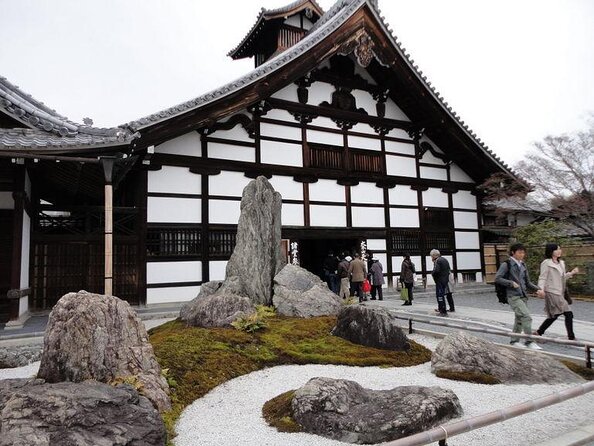
Kyoto is famous for a reason, but that also means the city can feel like a theme park by mid-morning. The biggest win here is timing. You’re designed to see the headline sights before tour groups fully arrive and before the day turns into a slow shuffle.
With this tour, the morning has structure: you start at Kyoto Station, then move outward in a logical loop so you’re not zig-zagging across the city all day. That matters because Kyoto’s best sites are spread out. A guided route helps you save time, avoid wrong turns, and spend your energy on the places that actually reward your effort.
This is also a good fit if you only have one or two Kyoto days. You’re basically buying a “greatest hits” morning, but with enough guidance that it doesn’t feel rushed or superficial. Guides in recent groups have shared history and practical on-the-ground notes, and that’s what helps the scenery stick in your memory after you leave.
You can also read our reviews of more tours and experiences in Kyoto.
Meeting at Kyoto Station Central Ticket Gate (and how to not miss the group)
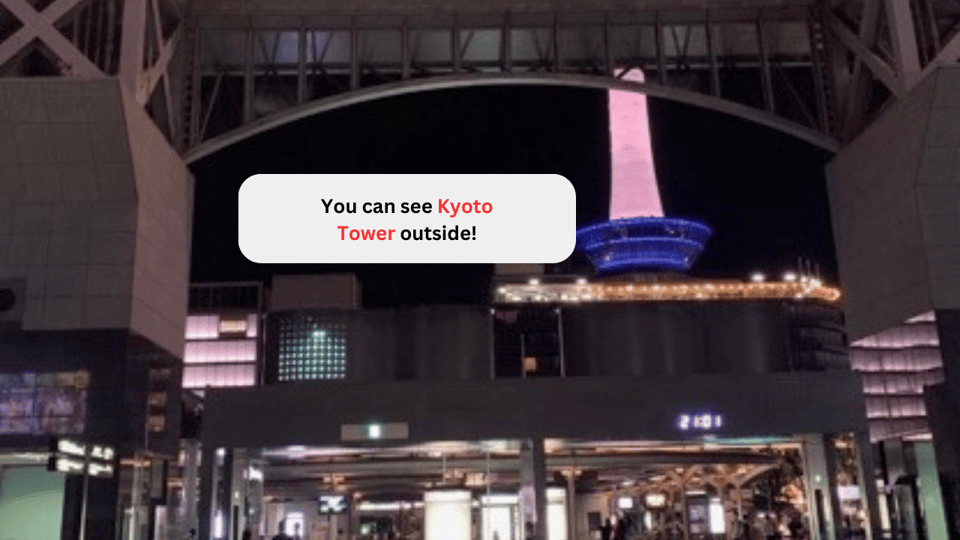
Your meeting point is Kyoto Station Central Ticket Gate, the big entrance near Kyoto Tower, next to a 7-Eleven. The guide is listed as holding a board that says GuideMe Japan. Plan to arrive about 5 minutes early, because the tour doesn’t wait for late arrivals.
You’ll also be asked to use WhatsApp so the guide can confirm the exact meeting spot and help the group connect smoothly. If you’re coming from another part of Kyoto, I’d treat this like a strict appointment. Kyoto Station is huge, and standing around for your group to find you costs time you won’t get back.
A practical tip: Kyoto Station can swallow your sense of direction fast. Use the Kyoto Tower exterior as your landmark, then scan for the 7-Eleven area and the GuideMe Japan sign.
Stop 1: Fushimi Inari Taisha, the torii gates in calmer light
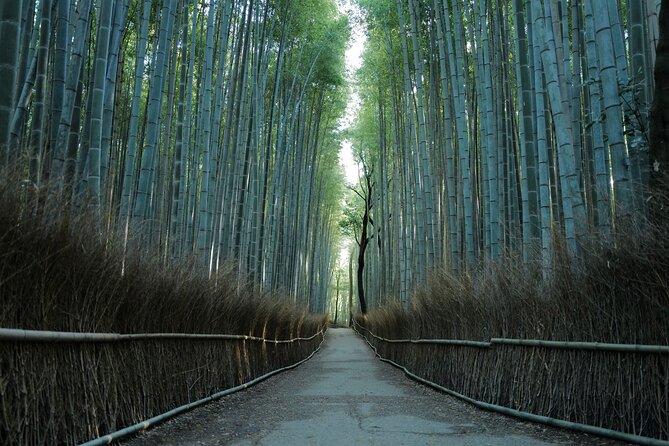
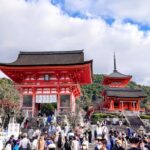
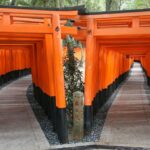
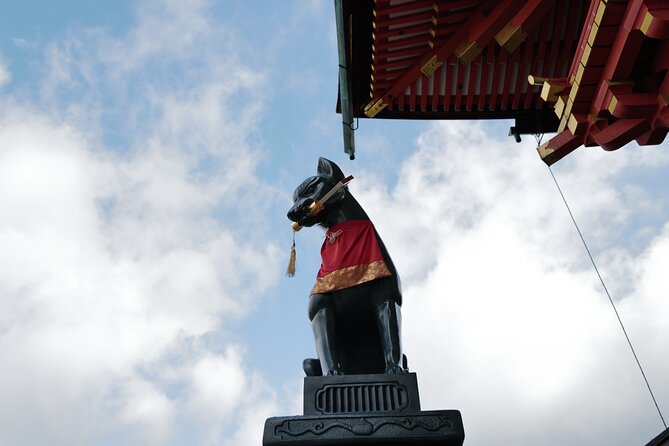
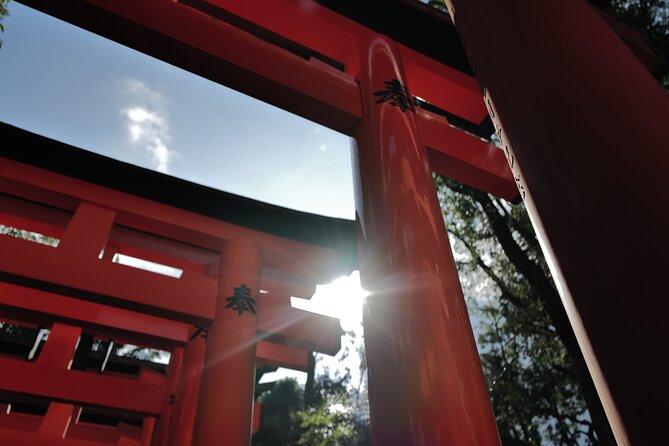
Fushimi Inari Taisha is the shrine people dream about: rows upon rows of torii gates. On a day when you start late, it can feel like walking through a human conveyor belt. The tour’s whole logic is to hit this place earlier so you can actually enjoy it.
You’ll spend about 70 minutes here with a guide. That guided time is the difference between seeing torii gates as decoration and understanding why people treat the place as something more. You’ll also get help spotting the meaningful parts of the shrine complex rather than only chasing the most photographed segment.
What I like about this stop for your first encounter with Kyoto is how it sets the tone. It’s spiritual and visually dramatic, but it’s also easy to relax into once you’re not fighting crowds. If you love quiet, reflective moments, this is the part of the tour where that usually happens. One of the standout moments in recent tours has been “pause for contemplation and reflection” time at Fushimi Inari, not just a checklist.
Possible drawback: with any popular shrine, the vibe depends on the day and season. But in the morning, even if there are visitors, you’re still more likely to find pockets of calm.
Stop 2: Arashiyama in one guided hour (bamboo plus the neighborhood feel)
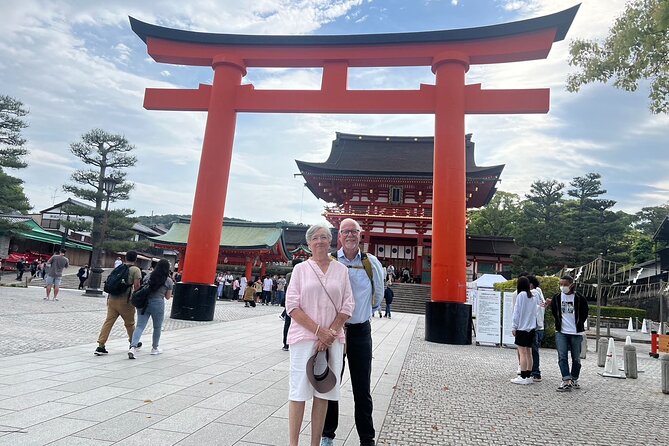
Next comes Arashiyama. You’ll travel by train and arrive in the Arashiyama area, then get about 60 minutes on foot with your guide.
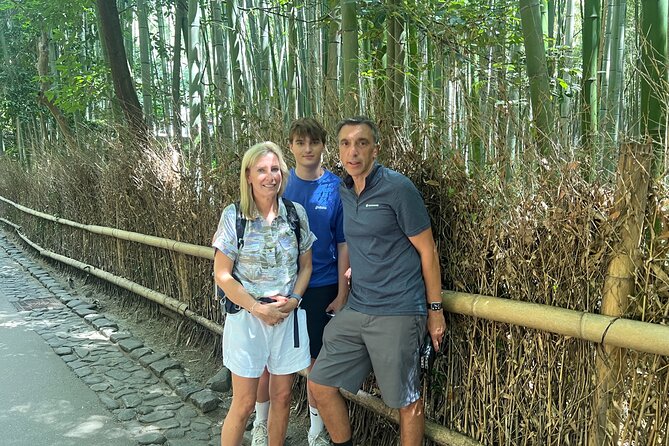
This is the tour’s “wow with context” stop. Arashiyama’s bamboo area is instantly recognizable, but it becomes more meaningful when someone explains what you’re looking at and how the space works. Many guides are also quick with photo direction, so you get the best angles without constantly asking where to stand.
Arashiyama is also a district, not a single attraction. In a short guided window, the goal is balance: you see the headline scenery (including the bamboo setting) and you also get a better sense of what kind of place it is so you can decide whether you want to return later on your own.
One real-world detail from past groups: winter conditions can make the bamboo area feel extra special, and guides have managed transportation hiccups when needed. For example, one guide handled a bus glitch by switching to a taxi to keep the day moving toward Kinkaku-ji.
Possible drawback: 60 minutes goes fast. If you want long wandering time, this stop will leave you wanting more. The trade-off is that you get Kinkaku-ji too, without wasting the entire day.
Getting to Kinkaku-ji: the advantage of public transit routing
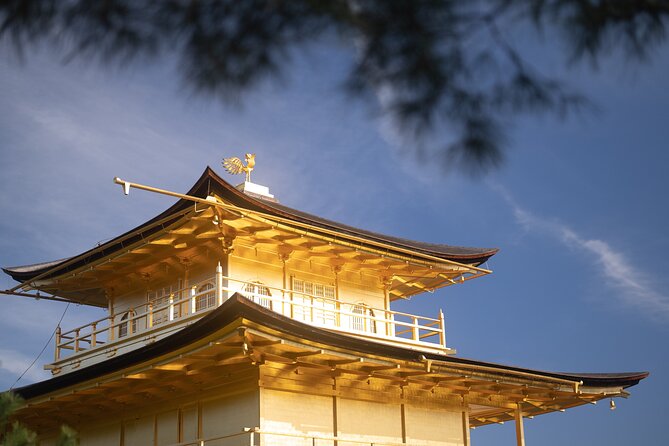
After Arashiyama, you’ll switch again: another train segment and then a bus/coach hop (about 20 minutes). This is a walking-and-transit tour, not a bus charter.
Why that matters: it keeps the schedule realistic and teaches you how to use Kyoto’s transit system. Several guide reviews mention that the tour helped people feel confident using trains and buses afterward. Even if you already know your routes, having a guide steer you through the transfers removes stress.
You’ll also need to budget for transit costs. Transportation fee is listed as about 1240 yen, separate from the tour price.
Possible drawback: public transit includes waiting and occasional crowding. If you’re the type who hates any “moving parts” to a schedule, you might feel more tension than you would on a single-vehicle bus tour. Still, the advantage is you’re learning the rhythm of the city.


Stop 3: Kinkaku-ji Golden Pavilion, timed to stay enjoyable
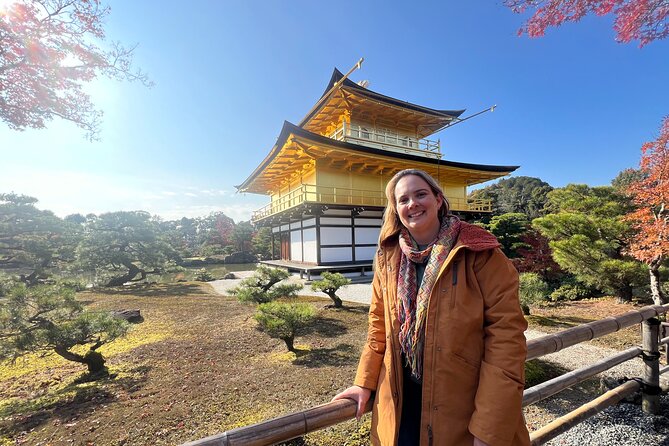
Kinkaku-ji, the Golden Pavilion, is the last major stop and the one that often surprises people even if they’ve seen photos before. You’ll spend about 60 minutes here with your guide.
There’s an entrance fee for the temple complex (listed as 500 yen). If you budget for that in advance, you won’t lose time at the gate.
What makes this stop work inside a morning tour is the timing. Late morning and afternoon can bring a thick crowd, including groups that stack up around the most photographed areas. By arriving as part of a structured morning program, you’re more likely to see the pavilion and its surrounding views without feeling squeezed.
Also, you get guided attention: where to look, what architectural or cultural features matter, and how the space is laid out so you don’t miss key viewpoints.
From the reviews, a common praise is that guides keep the day running smoothly and still allow enough time to enjoy the scenery, not just rush through it. One note from a winter group: snow affected bus timing and crowds at Kinkaku-ji, and the guide adapted on the spot. That’s not something you can guarantee every day, but it’s a sign this tour is managed with real-world flexibility.
Possible drawback: if Kinkaku-ji is your #1 priority and you want maximum time for slow photography, you may wish the stop was longer than one hour. The tour’s strength is packing multiple highlights efficiently.
Pace and group size: what the morning feels like
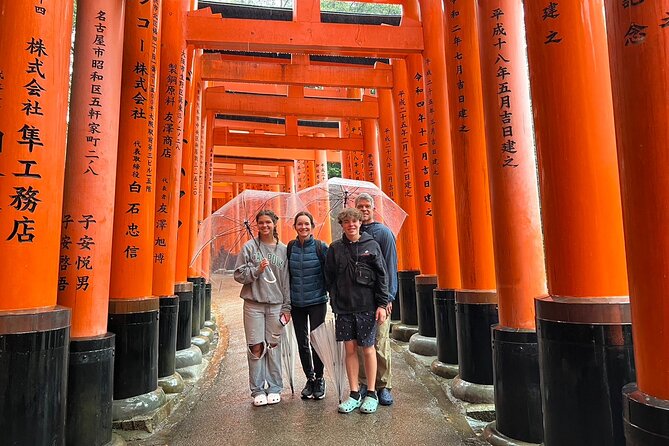
This is not a private tour. It’s a small group capped at 8 people. That matters because it keeps the experience more conversational and less chaotic. You’re more likely to ask questions and actually get answers, rather than shouting over a megaphone in a mass group.
The pace is also a big part of satisfaction. Reviews repeatedly mention it being neither too fast nor too slow, and that’s what you want for a five-hour day that mixes walking, trains, and a bus/coach transfer. You’ll likely walk between sites and within areas like shrine grounds and temple grounds, so comfortable shoes are a must.
Another subtle plus: many guides in recent groups have been praised for photo help. Names you might encounter from past tours include Haruki, Rin, Aya, Aya’s fellow guides like Ramu, and others. Even if your guide is not a professional photographer, you’ll still get practical direction on where to stand and when to move so you can capture the highlights.
Price and what you’re really paying for
The tour is priced at $101 per person for about 330 minutes (about five hours, with the schedule able to shift by around 30 minutes either way). Lunch is not included.
Here’s the value math in plain terms:
- You get an English-speaking guide (with some tours also noting Korean, depending on the guide)
- You visit three top Kyoto sights in one morning: Fushimi Inari, Arashiyama, and Kinkaku-ji
- You use public transportation with guided transfers, which saves you from figuring out routes while you’re tired
- You’re set up to beat crowds by starting early and finishing by lunch
The separate costs you should budget for are:
- Transportation fee: about 1240 yen
- Kinkaku-ji entrance fee: 500 yen
- Lunch: not included
So is it worth it? For most first-time Kyoto visitors, yes, especially if you want the main sights without spending your limited time juggling trains, station exits, and ticket lines. If you’re already extremely confident with Kyoto transit and you have plenty of time, you might do it cheaper on your own. But you’d be paying with stress and time, not money.
Who should book this Kyoto highlights morning tour
This tour fits best if you:
- Want a structured highlights route without committing to a full day
- Like learning context as you walk, not just taking photos
- Are okay with moderate walking and transit transfers
- Prefer to see popular sights before the biggest crowd wave
It’s less ideal if you:
- Need wheelchair access or stroller access (it’s not wheelchair/stroller accessible, and baby strollers aren’t allowed)
- Have difficulty with walking or getting around quickly
- Are traveling with very small babies (not suitable for babies under 1 year)
- Have significant heart or mobility concerns (listed as not suitable for heart problems)
- Rely on very flexible arrival times (being late can mean you cannot join)
Should you book it? My practical verdict
If Kyoto is your first stop in Japan and you want maximum results with minimal planning, I think this is a smart buy. The early start changes everything. You’re hitting Fushimi Inari and Kinkaku-ji at a better hour, and you’re still adding Arashiyama bamboo in a way that feels complete rather than scattered.
Book it if you want: a calm morning, strong guidance, and a smooth “how to get around Kyoto” foundation. Skip it if you want a slow, no-transfers day, or if walking and transit switches will make you miserable.
One final tip: if you’re hoping for the best experience, arrive early at Kyoto Station Central Ticket Gate, wear shoes that can handle real walking, and keep some cash ready for entrance fees and transit.
FAQ
Where does the tour meet?
The meeting spot is Kyoto Station Central Ticket Gate, near Kyoto Tower and next to a 7-Eleven. The guide will hold a board that says GuideMe Japan.
What language is the tour guide?
The guide is listed as English (and live tour guide also indicates Korean in the activity details).
How long is the tour?
The duration is about 330 minutes (about 5 hours), with possible variations of around 30 minutes earlier or later.
Is this a bus tour?
No. This is a walking tour that uses public transportation. It does not use a charter bus.
What do I need to pay separately?
Lunch is not included. There is also a transportation fee (about 1240 yen) and an entrance fee for Kinkaku-ji (500 yen).
Do I need to use cash?
Cash is recommended. Some entrance and transit costs are not included.
What transportation do we use?
You’ll use trains and then a bus/coach segment during the route between stops, all as part of public transportation.
What’s the group size?
It’s a small group tour with a maximum of 8 participants.
Is it wheelchair or stroller accessible?
No. It is not wheelchair/stroller accessible, and baby strollers are not allowed.
What happens if I’m late to the meeting spot?
You should arrive 5 to 10 minutes early. If you are late, you cannot join the tour and you won’t be given a refund.