REVIEW · KYOTO
Kyoto: Gion Magical Night Walking Tour with Geisha Insights
Book on GetYourGuide →Operated by TravelinGood!! · Bookable on GetYourGuide
Gion feels different after dark. This small-group Kyoto night walk turns lantern-lit streets into a story you can follow, starting right at the Minamiza Theatre area and ending at a shrine you won’t forget. I like the tight size limit, because your guide can actually answer questions as you go.
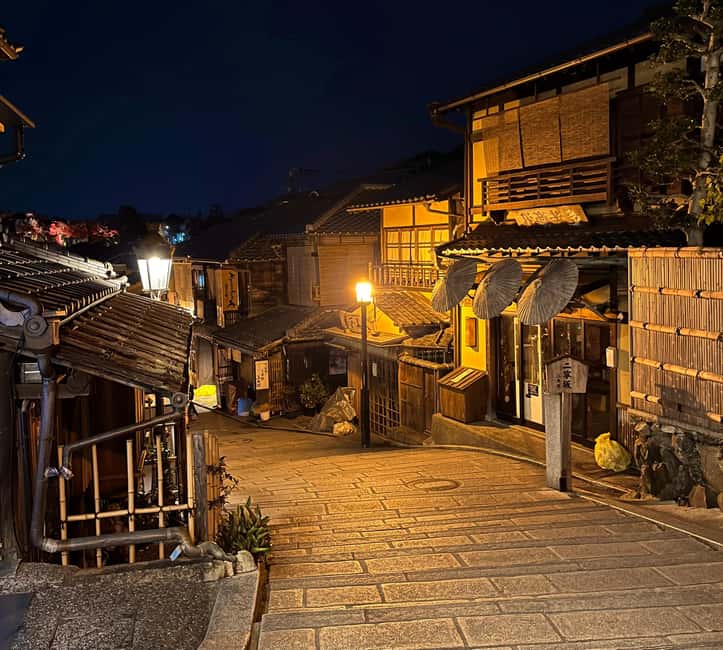
My favorite part is the geisha culture focus, with a route built around what you can spot on the street: Hanamikoji, a matchmaking shrine, an illuminated Buddhist pagoda, and the chance to see a maiko or geisha if you’re lucky. One drawback to plan for: the route has stairs, so it isn’t suitable for wheelchair users or anyone with limited mobility.
In This Review
- Key things to know before you go
- Why Gion’s lantern-lit streets work better than daytime
- The $34 value: a guide-led night with real culture context
- Meeting at Minamiza Theatre: the easy landmark you’ll want
- Hanamikoji: where you learn the geisha district by what you see
- Shrines and a matchmaking stop: the spiritual side of Gion nights
- Hidden lanes and pathways: how small-group pacing improves your photos
- The 1000-year-old shrine finale: your end point with a real sense of place
- When the tour runs early: the 6pm option for families and plans
- Who should book this tour (and who should skip it)
- Photo and comfort tips that actually help
- Should you book Kyoto: Gion Magical Night Walking Tour with Geisha Insights?
- FAQ
- Where is the meeting point?
- What time should I arrive?
- How large is the group?
- Is the tour wheelchair accessible?
- What’s included in the price besides the guide?
- Do children need a ticket?
- What language is the tour in?
- Is it okay if I have a cold?
- Can I change the time by joining another tour?
Key things to know before you go
- Small group size (up to 10) keeps the pace calm and questions possible
- Start time is when you leave the meeting point, not when you arrive
- Meet at Minamiza Theatre (front side) with a TravelinGood sign
- Hanamikoji + geisha rules are the main focus, not just photos at famous spots
- Photo service included and your guide can take pictures at key stops
- Stairs along the route make this a no-go for wheelchairs and baby carriages
Why Gion’s lantern-lit streets work better than daytime

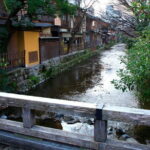
Gion is one of those places where your eyes change at night. In daylight you see architecture and crowds. After dark, you start noticing details: the scale of wooden machiya houses, the way lanterns soften the street edges, and how the lanes feel like they belong to a different rhythm.
This tour is built around that. You’re not chasing a checklist. You’re walking Gion and the surrounding temple-and-shrine area while it’s cooler and quieter, which matters in summer. The experience is also designed for a small group, so you can actually look up, slow down, and ask why a street looks the way it does or what certain customs mean.
You can also read our reviews of more tours and experiences in Kyoto.
The $34 value: a guide-led night with real culture context
At $34 per person, this isn’t priced like a fancy private guide. The value is in what the tour adds to a self-walk:
- A guide who can explain what you’re seeing in Gion, including geisha-world rules and trivia
- Focused stops that go beyond the most obvious photo points
- Photo help, not just “take your own picture and keep moving”
You’ll also get the kind of pacing that doesn’t treat you like luggage. The tour limits participation because the provider believes a guide can’t give everyone proper attention with too many people. In practice, that shows up as better interaction, more time to talk, and less awkwardness when you don’t know what to ask.
Meeting at Minamiza Theatre: the easy landmark you’ll want
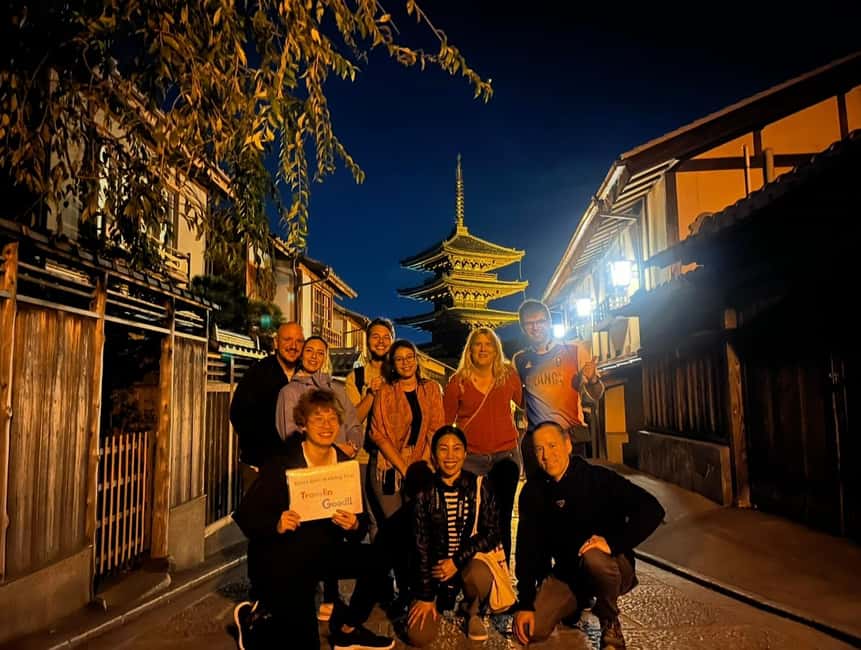
Your start point is simple: Minamiza Theatre. Meet in front of the theatre, at the front side. Your guide holds a sign that says TravelinGood, which helps a lot if you’re arriving from another part of Gion.
Timing matters here. The tour start time is the moment the group leaves the meeting point, not when you gather. Arrive at least 5 minutes early so you’re not sprinting in flip-flops while everyone else is already lining up. If you’re using a taxi or bus, build in extra buffer for traffic, since Kyoto streets can slow down.
This tour loops back too. It ends back at the same meeting point, so you don’t have the stress of figuring out where to go next.
Hanamikoji: where you learn the geisha district by what you see
Hanamikoji is the heart of Gion, and this tour places you there early in the route. The point isn’t only to walk the classic street. It’s to give you a framework for understanding what you’re looking at.
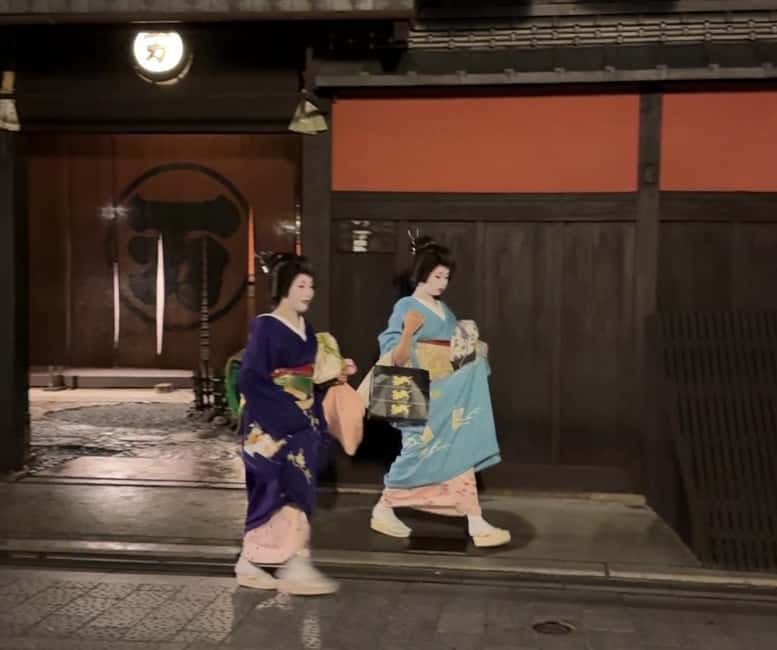
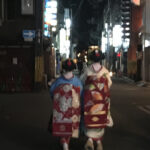
Your guide shares geisha culture rules and trivia as you move. That helps you notice things you’d otherwise miss: why certain spaces and traditions matter, and what signals mean when you’re watching the street at night. If you’re lucky, you may even spot a real geisha. Seeing one isn’t guaranteed, but the tour is structured to put you in the right areas and at the right pace.
A bonus detail: the guides are often described as interactive. Some guides come with extra reference materials—like images or short visuals—to help you place the difference between roles you might hear about, including maiko and geisha. Guides you may encounter include Shino, Pam, Sho, Karen, Hina, Laiki, and Riki, and multiple people specifically mention how engaged and responsive these guides are during Q&A.
Shrines and a matchmaking stop: the spiritual side of Gion nights
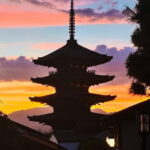
After Hanamikoji, the walk turns more “Kyoto” in the best way. You’ll visit:
- A shrine associated with matchmaking
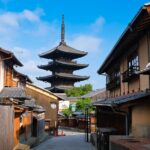
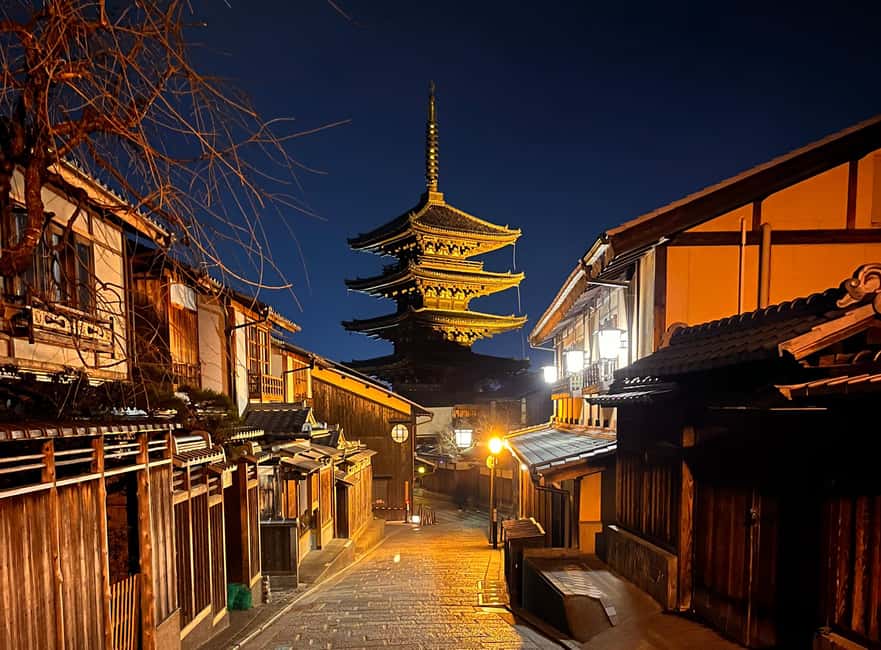
- A beautiful Buddhist pagoda that’s illuminated at night
These stops do two helpful things. First, they break up the street-scene concentration so you get variety—wooden lanes, then sacred spaces, then back to quieter paths. Second, they give you context for why Gion feels layered. It’s not just entertainment culture. It’s also tied into older religious traditions that locals still treat seriously.
Your guide can also take your picture at the pagoda if you want. That’s a small inclusion, but it’s the difference between “I got a blurry shot” and “I got a shot worth keeping.”
Hidden lanes and pathways: how small-group pacing improves your photos
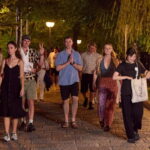
One of the most practical reasons people love this format is simple: with a group of up to 10, you’re less likely to feel herded. You can pause for photos, step aside so others can pass, and ask what a small detail is before the light moves on.
During the tour you’ll get “hidden spots and pathways,” meaning side lanes and quieter routes that don’t feel like you’re standing in the busiest public view lines. You’ll also notice something else: at night, even well-known streets look gentler. Wooden facades and lanterns create a softer contrast, which makes the photos look more like a scene and less like a snapshot.
If you’re doing this on a summer trip, this is also a comfort win. You’re walking when it’s cooler and less crowded than midday, and the night lighting makes the atmosphere feel special without needing any special equipment.
The 1000-year-old shrine finale: your end point with a real sense of place
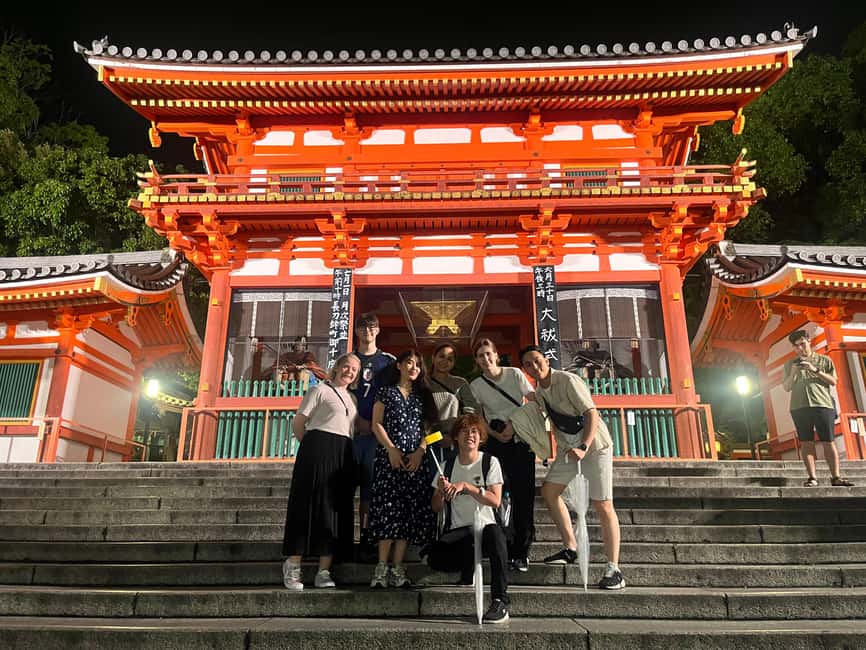
The tour ends with a visit to a shrine over 1000 years old. This is a strong closing note because it shifts you from “geisha district storytelling” into “Kyoto’s older heartbeat.”
That matters for two reasons:
- It gives you continuity. You see the entertainment district, but you finish in a place that reminds you the city’s roots go way deeper than any single neighborhood.
- It gives your night a conclusion that feels earned. After the walking, the explanations, and the side lanes, you’re not just returning—you’re landing.
And because you end back at the starting point, it’s easy to roll into dinner or a last stroll without scrambling for directions.
When the tour runs early: the 6pm option for families and plans
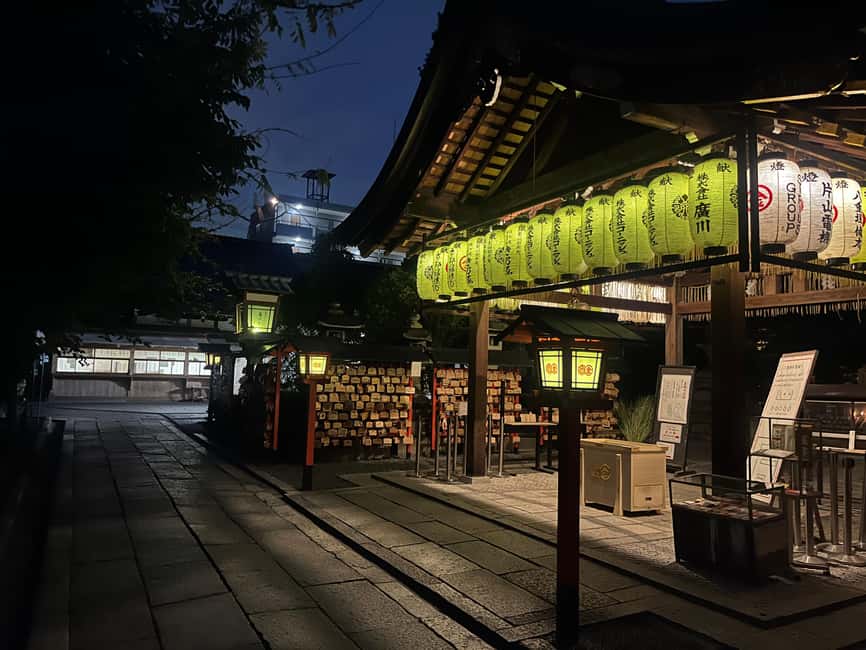
There’s also a useful timing choice. The tour offers early evening departures, including a 6:00 PM option (noted as starting in August). That can be a smart move if you don’t want to wait until it’s fully dark, or if you’re traveling with kids.
People often like it for a practical reason: it runs before sunset, when the heat is easing but the streets still feel like they belong to evening. One family-friendly detail from the tour info: children under 6 don’t need to buy tickets. With that, the 6pm timing can be a calmer way to see Gion without forcing little legs into a late-night schedule.
Who should book this tour (and who should skip it)
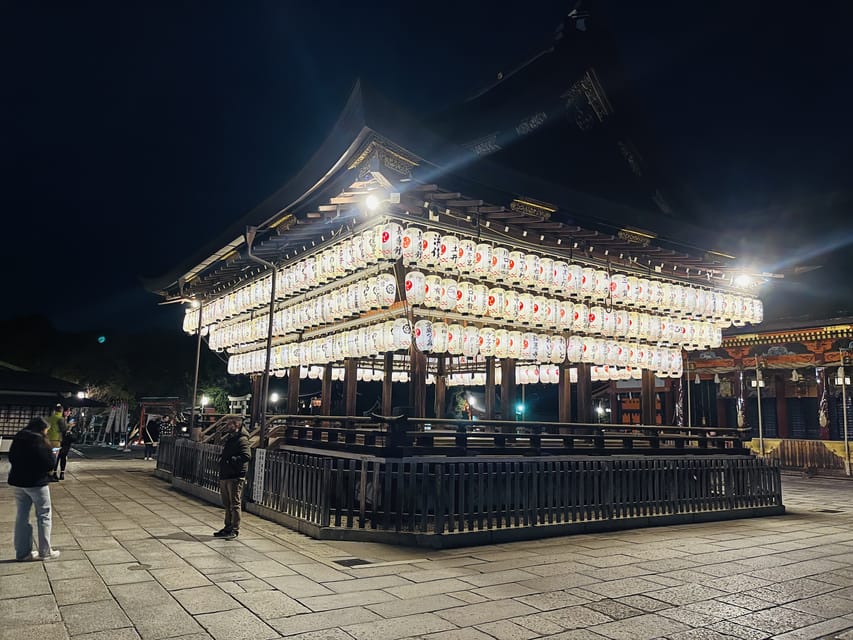
This is best for you if you:
- Want geisha-world context while walking Gion at night
- Prefer a small group experience (up to 10) over big-bus energy
- Like photo stops where your guide helps you capture the moment
- Are visiting Kyoto in summer and want a cooler time window
You should skip it if:
- You use a wheelchair or need mobility assistance. The route has stairs, and it’s not accessible for wheelchairs, baby carriages, or limited mobility.
- You have a cold. The tour info lists that it isn’t suitable if you’re sick with a cold.
If you’re unsure, this is one of those tours where the “walk” part matters. It’s a nice stroll, but you should treat it as a real night walk, not a sit-and-watch experience.
Photo and comfort tips that actually help
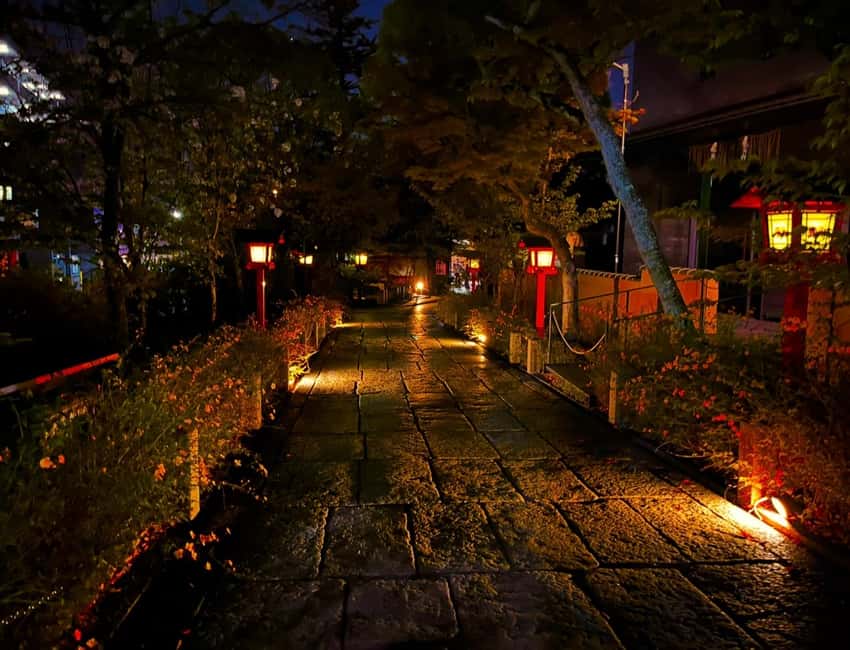
A few practical tips will make your night smoother:
- Wear shoes you can walk in comfortably. The tour includes stairs, and the route involves real walking time.
- Arrive early. Because the start time is when the guide leaves, being 10 minutes late can mean you miss the start.
- If you want the guide to take a photo at the illuminated pagoda, say so when you reach that stop. The tour includes photography service, and it’s easiest when everyone is positioned together.
- Bring a light layer. Even in summer, evenings can feel cooler once you’re outside longer than you expect.
Also, don’t over-plan right before this. Give yourself room to linger after the tour ends back at Minamiza Theatre. Gion at night is the kind of place where you’ll want a little extra time, especially once you know what to look for.
Should you book Kyoto: Gion Magical Night Walking Tour with Geisha Insights?
If you want the simple version, book it if your goal is understanding, not just sightseeing. This tour gives you a guided night walk with geisha culture context, plus focused shrine and pagoda stops, and even photo support at key moments. The small group size is the real quality driver, and at $34 it’s a solid value for what you get.
Skip it if your mobility needs don’t match the route’s stairs, or if you’re dealing with illness. And if you hate walking at night or prefer zero interaction, this may feel too guided.
For most people visiting Kyoto for the first time, this is one of the more satisfying “night plans” because it changes how you see Gion. By the time you reach that older shrine finale, the neighborhood stops being just a pretty map point and starts feeling like a place with rules, stories, and history you can actually trace with your feet.
FAQ
Where is the meeting point?
Meet in front of Minamiza Theatre, at the front side. Your guide holds a sign that says TravelinGood.
What time should I arrive?
Arrive at least 5 minutes before the tour starts. The listed start time is when the group leaves the meeting point, not when you meet.
How large is the group?
The tour is typically in a small group of up to 10 people.
Is the tour wheelchair accessible?
No. The route includes stairs, so it is not accessible for wheelchairs, baby carriages, or people with limited mobility.
What’s included in the price besides the guide?
The tour includes a guide and a photography service.
Do children need a ticket?
Children under 6 years old do not need to purchase tickets.
What language is the tour in?
The tour is offered in English.
Is it okay if I have a cold?
No. The tour is not suitable for people with a cold.
Can I change the time by joining another tour?
Your ticket is valid only for the booked date and time. Joining another tour without confirmation isn’t allowed.