REVIEW · KYOTO
Kyoto: Table-Style Tea Ceremony at a Kyo-Machiya
Book on GetYourGuide →Operated by Éclat Japon · Bookable on GetYourGuide
Kyoto can feel like a museum. This experience feels like someone opening the door to daily life. You get a table-style tea ceremony in a traditional Kyo-machiya, plus a garden stop for purification and plenty of hands-on culture.
What I like most is the comfort and flow: you do not have to sit on the floor. You also get to make your own matcha and finish with calligraphy using your name in Japanese characters, not just watch from the sidelines.
One consideration: this is not wheelchair-friendly, and it’s located on the outskirts of southern Kyoto, so you’ll want to plan your train time carefully.
In This Review
- Key highlights worth your time
- A Chair-Based Tea Ceremony in a 100-Year Kyoto Townhouse
- Getting There Without Stress: Southern Kyoto Meeting Point Basics
- Before You Drink: Purification at a Stone Basin
- Welcome Drinks and Sweets: Setting the Tone
- The Heart of It: Making Creamy, Frothy Matcha
- Calligraphy With Your Name: Kanji or Hiragana Keepsake
- Photo-Friendly Props: Umbrellas, Fans, and Sword-Style Drama
- Optional Kimono Rental: Worth Considering, With Real Health Notes
- Exploring the House: Altars, Antiques, and the Kyoto Feeling
- Flower Arranging After Tea: A Calm Creative Finish
- How Long Is It, and What the Timing Feels Like
- Price and Value: Why $45 Can Be a Fair Deal
- Pair It With the Rest of Your Day: Fushimi Inari, Uji, Osaka, Nara
- Who This Experience Is Best For
- Should You Book This Kyoto Table-Style Tea Ceremony?
- FAQ
- How long is the Kyoto table-style tea ceremony experience?
- Do I need to sit on the floor?
- Is the instruction available in English?
- What’s included in the experience?
- Where do I meet the guide?
- If I rent a kimono, when should I arrive?
- Is this experience wheelchair accessible?
Key highlights worth your time
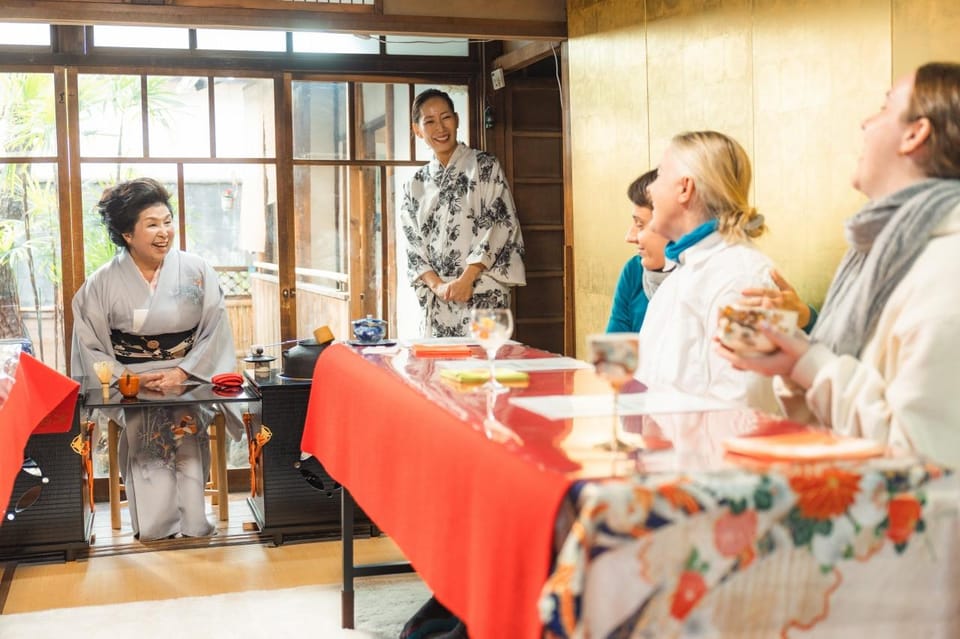
- Chair-based tea ceremony so the experience stays relaxing, not physically limiting
- Make frothy matcha with a bamboo whisk and learn what to pay attention to when you drink it
- Write your name in kanji or hiragana and leave with a keepsake scroll or envelope
- Photo-friendly props like umbrellas, folding fans, and katana sword-style items
- Old-townhouse atmosphere in a 100+ year-old Kyoto home with altars and antiques to notice
- Optional kimono rental (plus hairstyling) that turns the whole afternoon into a memory
A Chair-Based Tea Ceremony in a 100-Year Kyoto Townhouse
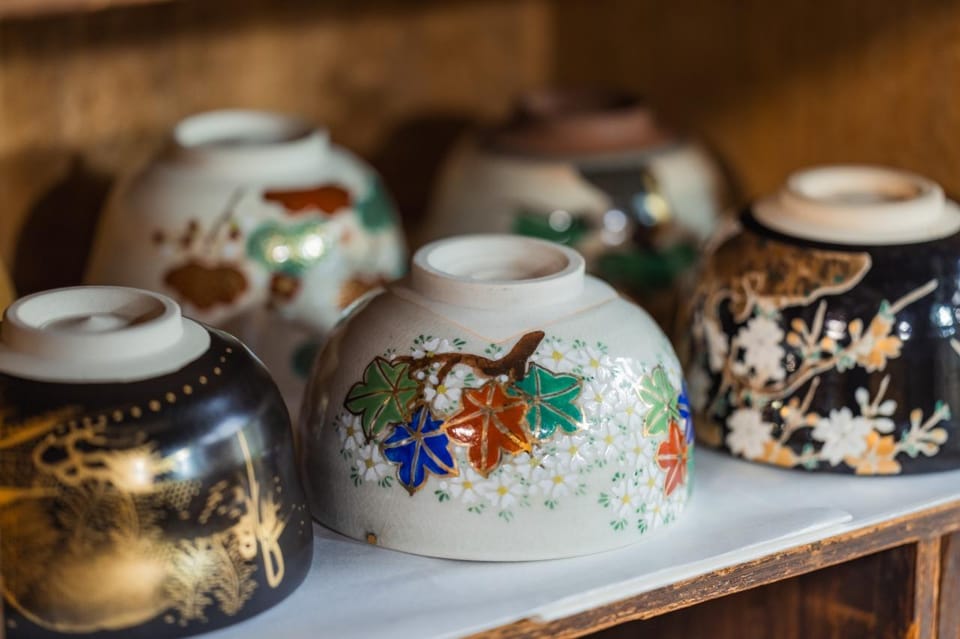
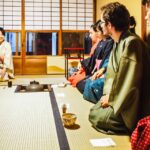
The big selling point here is also the practical one: the ceremony is designed for sitting on chairs, not on the floor. That matters more than it sounds. Tea ceremonies usually assume you can comfortably kneel or sit seiza-style for a while. Here, you can focus on the ritual and the details instead of wrestling with your legs.
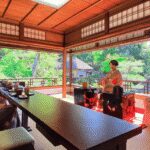
The setting also does a lot of work for you. You’ll experience tea in a traditional, older Kyoto townhouse that feels connected to how the city lived long before the tourist crowds. The whole mood is nostalgic, from the structure of the house to the little things you notice during a stroll inside.
And yes, it’s still a real ceremony. You’re shown why each step exists, then you do it yourself. The result is less like a lecture and more like learning a small, repeatable skill—how to make matcha properly and how to move with intention.
You can also read our reviews of more tours and experiences in Kyoto.
Getting There Without Stress: Southern Kyoto Meeting Point Basics
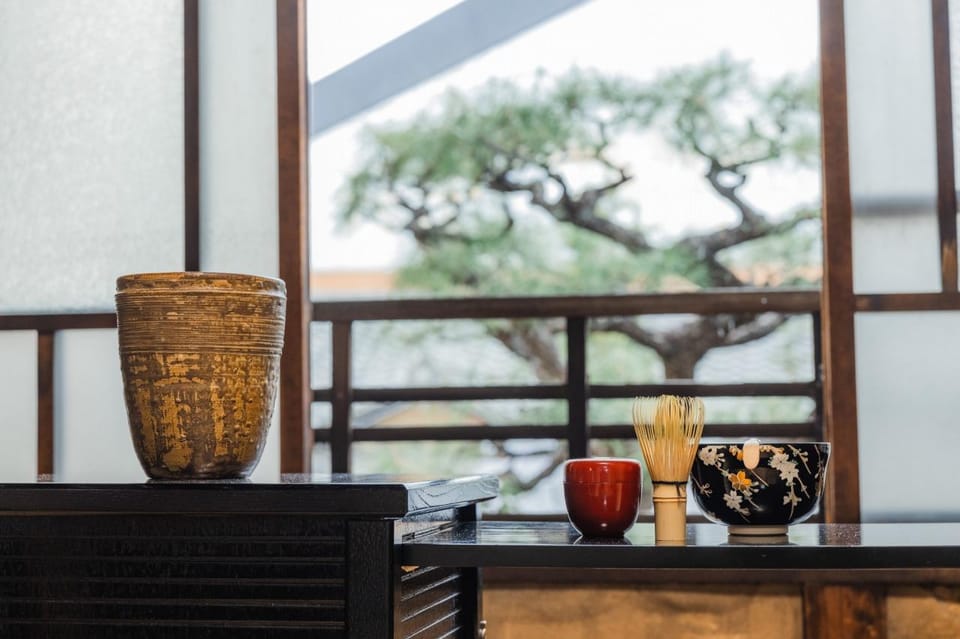
This is in southern Kyoto, about 20 minutes by train from Keihan Gion-Shijo Station, and about 25 minutes from Kintetsu Kyoto Station. That’s close enough to pair with other classic stops, but far enough to feel like you’re outside the busiest core.
There’s no hotel pickup, so you’ll go straight to the meeting area. Guides will be waiting—wearing kimono—so you should be able to spot them when you arrive.
If you’re starting from Kintetsu Kyoto Station: take the express train about 15 minutes to Kintetsu Momoyama-Goryo-mae Station.
If you’re starting from Keihan Gion-Shijo Station: get off at Fushimi-Momoyama Station.
From there, the walking directions use the Otesuji shopping arcade as your anchor:
- Head west on Otesuji arcade and walk about 3 minutes
- Turn right at Mizuho Bank or at the Rakuten mobile sign
- Walk about 2 more minutes until you see the old Kyoto townhouse with a blue curtain on your right
If you’re coming via Momoyama Station (JR): head northwest, pass Gokogu (shrine) on the right in about 300 meters, then continue on Otesuji arcade and follow the same turn-right-from Mizuho Bank/Rakuten mobile route.
One tiny tip: build in a few minutes of buffer. The directions are clear, but Kyoto alleys can make your phone route look different depending on where it starts.
Before You Drink: Purification at a Stone Basin
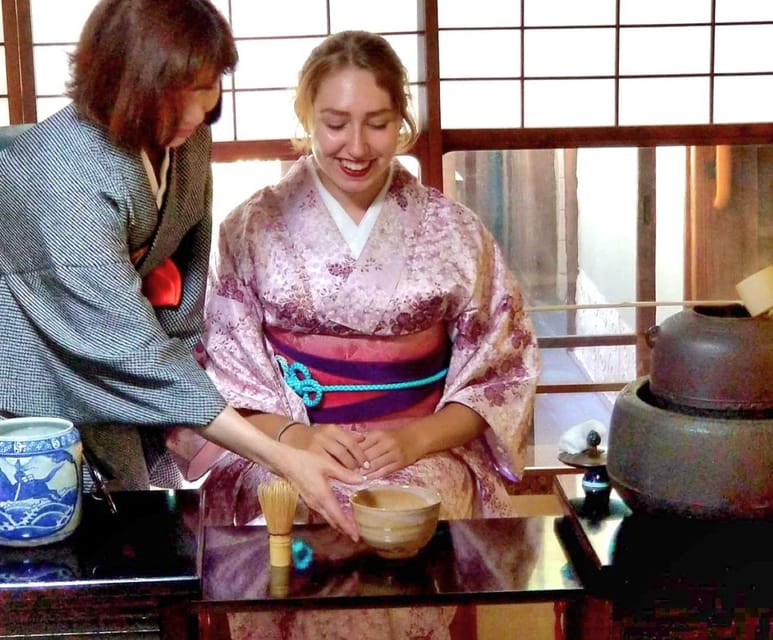
You start with more than tea. You’ll learn the ceremony’s mindset and then practice a purification-style moment in the garden using a stone basin, similar to what you might see at shrine settings.
This is the part many people skip when they assume tea is only about matcha. But it’s valuable because it puts the rest into context. You’re not just tasting a beverage—you’re entering a space with rules, manners, and a deliberate sequence.
It also helps you reset your posture and attention. After a long train or a walk in Kyoto weather, that quiet “reset” moment makes the actual tea steps feel more meaningful.
Welcome Drinks and Sweets: Setting the Tone
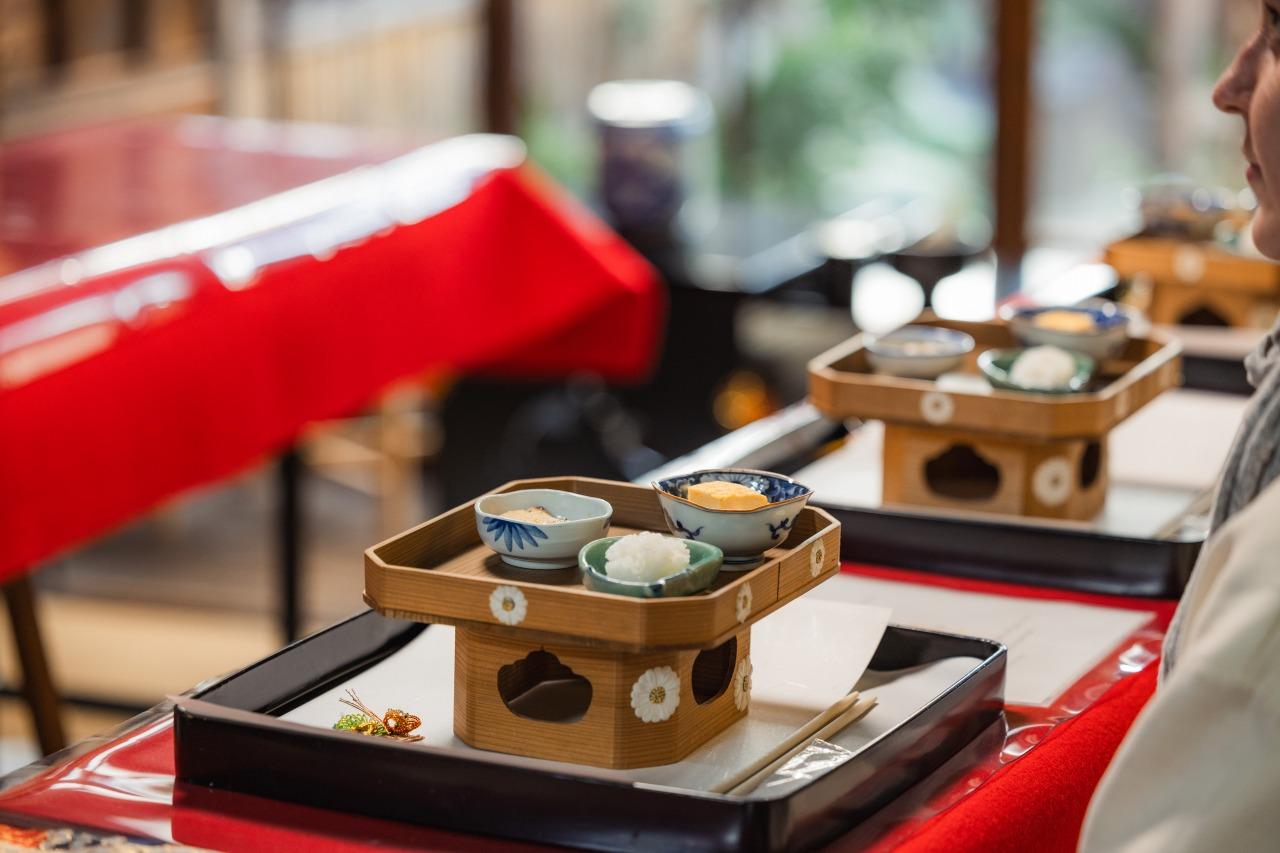
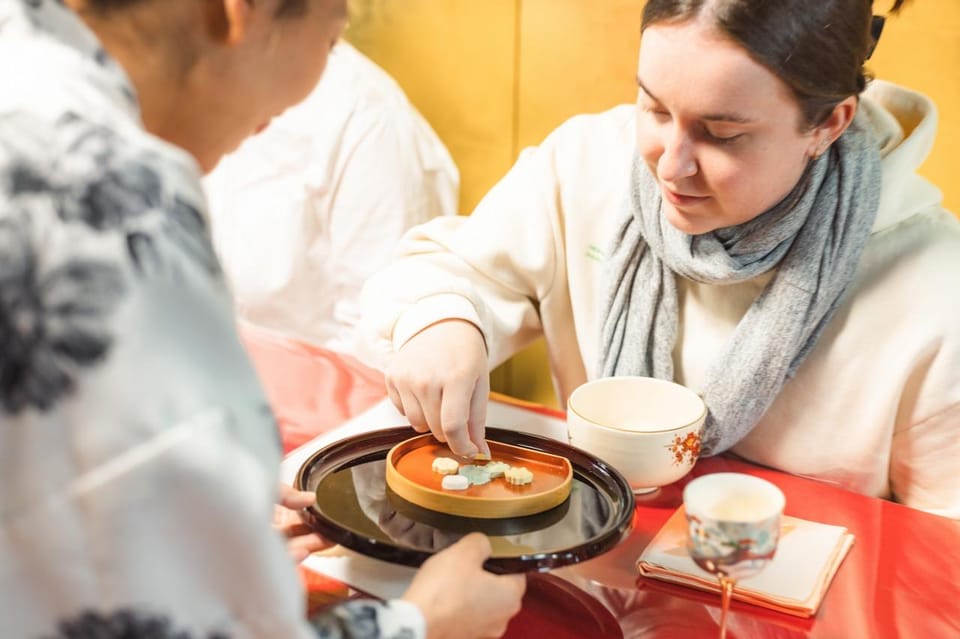
Before the main ritual, you’re welcomed with a drink—listed options include sake, juice, or Japanese tea—and you’ll also have traditional sweets. There’s also latte art using thick tea, which is a fun bridge between classic tools and something easier for first-timers to picture.
This is a good pacing choice. It warms you up, then you learn the meaning behind the movements. If you’ve ever felt nervous doing cultural activities in Japan—like you’ll be the slow one—this format helps. You’re already comfortable by the time the whisk comes out.
The Heart of It: Making Creamy, Frothy Matcha
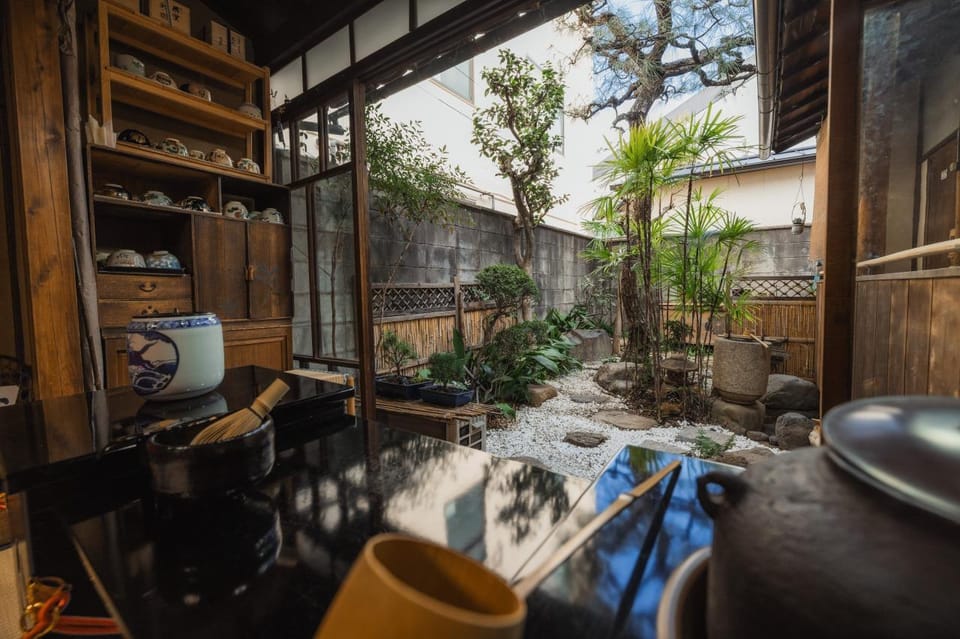
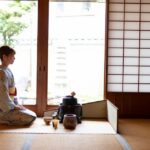
Here’s the hands-on moment you came for: you make your own matcha using a bamboo whisk. The goal is that creamy, frothy texture, and you learn what changes in the process and why.
This is the part where the “table-style” setup shines. You can sit comfortably, follow the steps, and repeat without the usual physical distraction. Your focus stays on whisk technique, consistency, and how to handle the bowl and utensils with care.
Then comes the etiquette side. You’re shown how the tea ceremony developed in Japan, including the spirit and manners behind it. You’ll also see PowerPoint-style explanations, which is a practical touch for English speakers. It keeps the cultural background clear without turning it into a 60-minute slideshow.
If you love food culture, matcha here isn’t treated like a trendy drink. It’s taught as a specific, intentional ritual—something you appreciate by slowing down and paying attention to details.

Calligraphy With Your Name: Kanji or Hiragana Keepsake
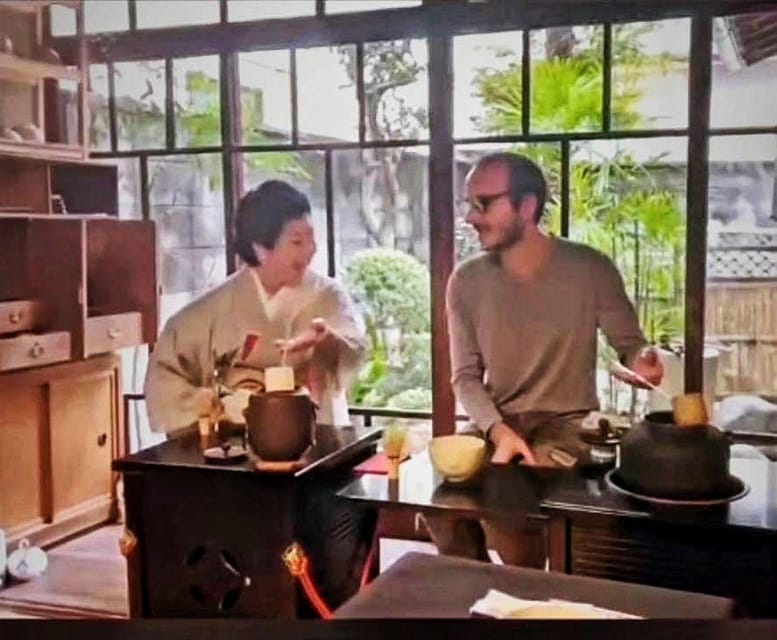
After matcha, you get the chance to write your name in Japanese characters. You can choose kanji or hiragana, and at the end you receive a hanging scroll or an envelope with your name written in Japanese.
This is a great activity for two reasons:
- It gives you a finished souvenir that feels personal, not generic
- It slows you down in a good way, so you remember the ceremony as an experience, not a photo shoot
The guides also teach the basics of calligraphy enough to make it doable. You don’t need prior skill. It’s more about understanding the motion and the shapes than performing perfection.
Photo-Friendly Props: Umbrellas, Fans, and Sword-Style Drama
Yes, you can take photos and videos. And the experience leans into that in a clever way by providing photo props like umbrellas, folding fans, and katana sword-style items.
This sounds like gimmick territory, but it actually works because it matches the atmosphere of a traditional house. You’re not breaking the mood—you’re capturing the feeling of being dressed and guided through a ritual that has its own visual language.
Quick practical note: move slowly when you’re handling props. The point is to create fun memories while still respecting the ceremony environment.
Optional Kimono Rental: Worth Considering, With Real Health Notes
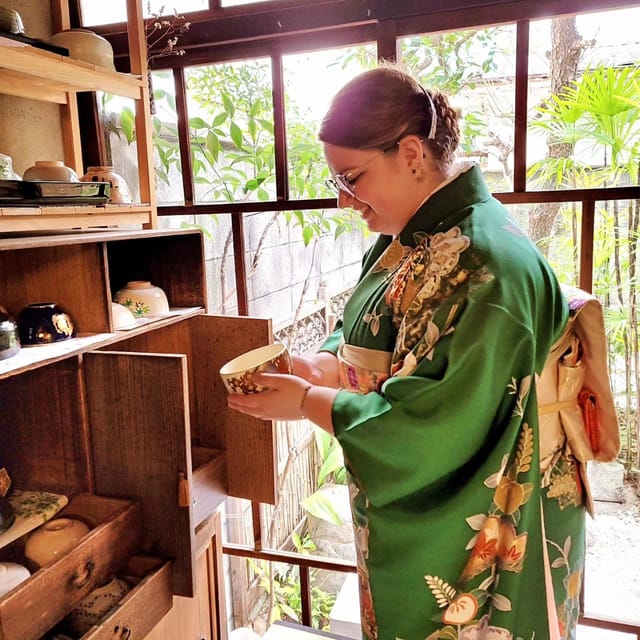
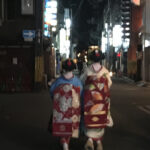
If you choose the kimono option, you’ll get kimono rental (listed as optional) and it’s paired with photo-ready styling. Guides can help you get dressed, and you’ll be in kimono throughout the ceremony.
This is one of those experiences where clothing changes how you move and how you photograph. The kimono doesn’t just look good—it reinforces the manners and makes the whole afternoon feel more grounded in tradition.
Two practical considerations from the provided info:
- If you select the kimono option, you must arrive 30 minutes early. This isn’t optional if you want time to dress comfortably.
- If you’re pregnant, the guidance is to refrain from wearing a kimono for health and safety reasons.
Also, if you’re worried about fitting the kimono comfortably, it helps to know that the activity includes guidance for dressing. You’re not left to wrestle the outfit alone.
Exploring the House: Altars, Antiques, and the Kyoto Feeling
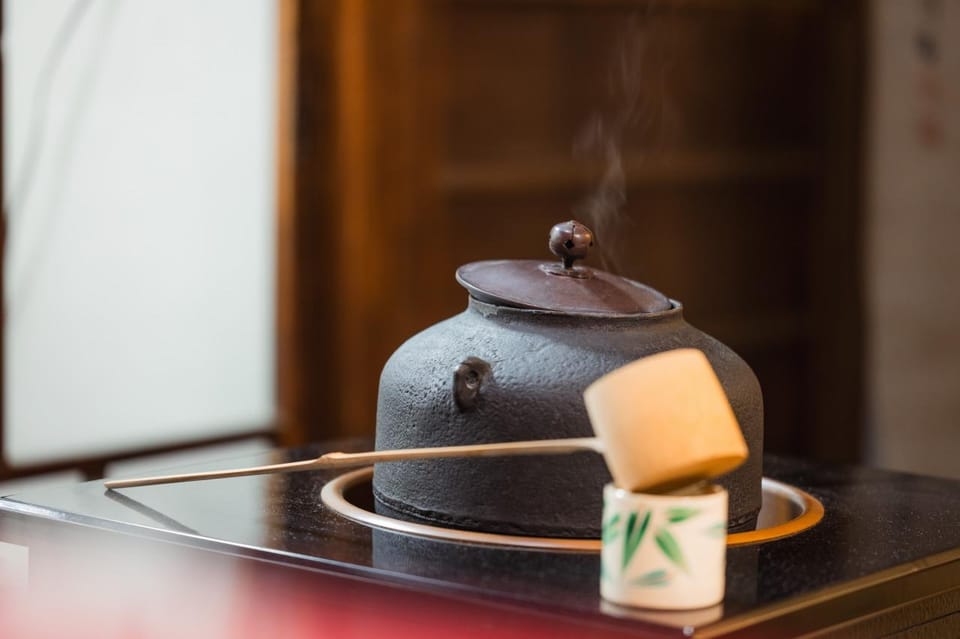
Between steps, you’ll have time to take in the townhouse itself. You’ll stroll through the interior and notice elements like old Buddhist and Shinto altars and some antiques.
This matters because tea ceremony culture is deeply tied to space—what’s around you shapes how you behave. In a modern studio, it can feel like a staged workshop. In a home-like setting, it feels closer to what Kyoto everyday life might have looked like.
The house tour also gives you conversation points while you wait for your turn at utensils. You’re not just sitting and waiting—you’re building a mental map of the space you’re using.
Flower Arranging After Tea: A Calm Creative Finish
The experience doesn’t stop at matcha. You’ll also do tea ceremony flower arranging (listed as included). It’s short, but it changes the vibe of the ceremony.
Think of it as the “exhale” after focused ritual steps. You’re still learning tradition, but now you’re expressing it creatively with natural materials. For many people, it’s the easiest activity to enjoy even if you’re not confident with craft skills.
And it’s a nice pairing: matcha teaches attention to form and process, while flower arranging gives you a more visual outlet.
How Long Is It, and What the Timing Feels Like
The duration is 90 minutes. That’s an ideal length for first-timers: long enough to do matcha, calligraphy, and the extra cultural activities, but not so long that you feel tired or rushed.
The “table-style” setup helps keep energy steady. You’re not spending half your time fighting a posture requirement, so you can actually enjoy the explanations and the small pauses between steps.
Price and Value: Why $45 Can Be a Fair Deal
At $45 per person for 90 minutes, this isn’t just a basic tea tasting. You’re paying for a full cultural workshop package, including:
- Traditional sweets
- A welcome drink (sake/juice/Japanese tea options)
- Latte art using thick tea
- Hands-on matcha making with a bamboo whisk
- Calligraphy with your name in kanji or hiragana
- A keepsake scroll or envelope
- Tea ceremony flower arranging
- Plus optional add-ons like kimono rental
When you compare that to the cost of booking a single workshop elsewhere, the pricing makes more sense. It’s not “one activity.” It’s a short cultural program with multiple outputs: something to taste, something to do, and something to take home.
Also, there’s no hotel pickup, so you’re not paying extra for transport logistics. You’re spending money on the actual experience inside the townhouse.
Pair It With the Rest of Your Day: Fushimi Inari, Uji, Osaka, Nara
Because this is southern Kyoto, it’s practical for planning around major nearby sights.
You can combine it with:
- Fushimi Inari Shrine via trains listed as about 15 minutes from Keihan Fushimi Inari Station
- Uji City, known for tea, about 20 minutes by train
- Osaka, about 40 minutes by express train
- Nara, about 50 minutes
One smart way to schedule it: do a sightseeing morning, then come here for a calmer cultural reset. Tea ceremony afternoons also work well because the activities are indoor-focused, and you’ll still have time to shop and eat nearby afterward.
Who This Experience Is Best For
You’ll probably love this if:
- You want an authentic-feeling Kyoto cultural activity without physically tough seating
- You like hands-on learning: matcha you make yourself, calligraphy you do yourself
- You want a program that includes multiple arts—tea, calligraphy, and flower arranging
- You’re traveling with friends, a couple, or even teenagers who want structured, understandable English guidance
It’s also a good choice for people who have done the big temple circuit already and want something quieter and more personal.
Should You Book This Kyoto Table-Style Tea Ceremony?
If your priority is comfort plus culture, I’d book it. The chair-style format is the main reason, and the added activities make the value feel fair for the time. You’ll end up with matcha in your body and calligraphy on paper, not just a quick taste.
I’d hesitate only if you need wheelchair access, since it is noted as not suitable. Also, if you hate planning transit and walking directions, build in extra time before your start.
If you can handle a short train ride from Kyoto’s core and you want a tea ceremony that feels more like learning than watching, this is an excellent use of a 90-minute slot.
FAQ
How long is the Kyoto table-style tea ceremony experience?
It lasts 90 minutes.
Do I need to sit on the floor?
No. This experience is designed for sitting on chairs.
Is the instruction available in English?
Yes. The instructor is listed as English.
What’s included in the experience?
Included items are the tea ceremony itself, traditional sweets, a welcome drink (sake or juice), latte art using thick tea, matcha-making, calligraphy experience, and a hanging scroll or envelope with your name written in Japanese kanji or hiragana. Tea ceremony flower arranging is also included. Kimono rental is included only if you select the kimono option.
Where do I meet the guide?
The location is on the outskirts of Kyoto, about 20 minutes by train. From Kintetsu Kyoto Station, take an express train for about 15 minutes to Kintetsu Momoyama-Goryo-mae Station. From Keihan Gion-Shijo Station, get off at Fushimi-Momoyama Station. Walk along Otesuji shopping arcade, turn right at Mizuho Bank or Rakuten mobile, and look for the old Kyoto townhouse with a blue curtain.
If I rent a kimono, when should I arrive?
If you select the kimono option, you should arrive 30 minutes before the experience begins.
Is this experience wheelchair accessible?
No. It is listed as not suitable for wheelchair users.