REVIEW · CHIANG MAI
Chiang Mai – Doi Suthep Temple & Wat Pha Lat Hike
Book on Viator →Operated by WanderSiam · Bookable on Viator
Forest steps to a golden temple. I like how this tour strings together Wat Pha Lat and Monk’s Trail into one logical outing: start on a wooded path used by monks, finish at a calm temple garden, then carry that momentum up to Doi Suthep. It’s also small-group paced (max 10), and the guide keeps the story of the sites easy to follow.
My other favorite part is the option for a sunrise visit at Doi Suthep, when the city views feel more spacious and the temple grounds are quieter. The big physical anchor is the 300-step dragon staircase, plus the forest hike segment, so the only real drawback is that your legs need to be ready for stairs and uneven trail.
In This Review
- Key things you’ll notice on this tour
- Why Wat Pha Lat and Doi Suthep belong on one day
- Pickup, songthaew ride, and the small logistics that matter
- Wat Pha Lat: jungle temple vibes, Monk’s Trail hike, and what to watch for
- Entrance fee you’ll pay in cash
- Small animal reality
- Doi Suthep: Naga dragon staircase, copper chedi, and Buddhist wall stories
- Entrance fee you’ll pay in cash
- Sunrise vs later departures: how the hike direction changes
- How hard is it, and what should you bring
- Shoes and traction
- Temple-appropriate clothing
- Water
- A note about “open-air”
- Price and value: what $26.09 includes, and what fees you still need
- Guides: what you gain from English storytelling in temple spaces
- Watch-outs: the small issues to plan around
- Pickup timing
- Open-air ride comfort
- Weather and trail conditions
- Dogs on the trail
- Who should book this tour, and who should skip it
- Should you book this Doi Suthep and Wat Pha Lat tour?
- FAQ
- What’s included in the tour price?
- Are temple entrance fees included?
- How much is the Wat Pha Lat Monk’s Trail entrance fee?
- How much is the Doi Suthep entrance fee?
- Is the cable car included?
- How long is the hike to Wat Pha Lat?
- How many steps are on the dragon staircase at Doi Suthep?
- What should I wear to the temples?
- How do pickup and drop-off work?
- Is there a sunrise option, and what’s different?
Key things you’ll notice on this tour
- Monk’s Trail to Wat Pha Lat (about 30 to 40 minutes) with a jungle-temple finish
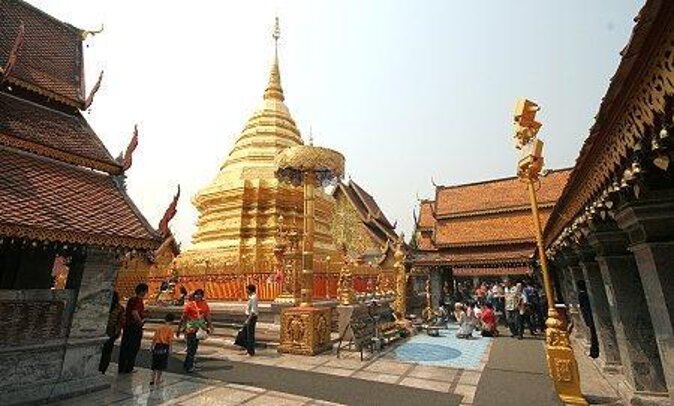
- The 300+ step Naga dragon staircase to Doi Suthep and its sacred chedi area
- Sunrise program changes the order and hike direction, often making the day feel easier
- English guide interpretation focused on Buddhism and the meaning of wall paintings
- Open-air songthaew transport plus temple fees you’ll pay in cash on site
Why Wat Pha Lat and Doi Suthep belong on one day

These two temples are often sold as separate stops, but doing them together makes more sense. Wat Pha Lat sits at the end of the Monk’s Trail, an older pilgrimage route that connects religious sites on Doi Suthep Mountain. Walking that corridor (instead of only driving) helps you understand why the mountain mattered in the first place: it’s not just about buildings. It’s about the path, the climb, and the change in atmosphere once you reach the temple grounds.
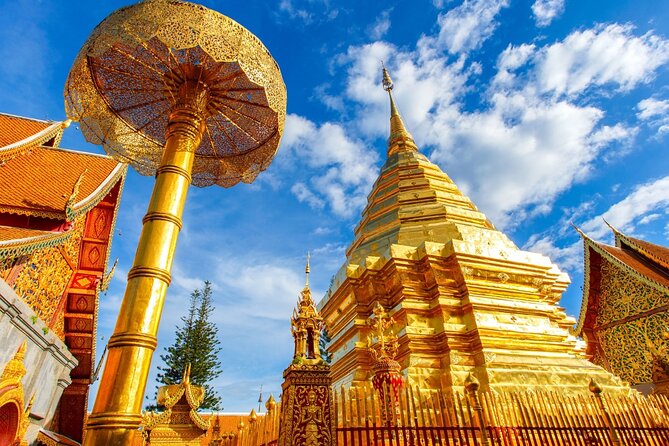
Then you jump to Doi Suthep, one of Northern Thailand’s major sacred pilgrimage destinations. At Doi Suthep, the experience is visual right away: statues, pagodas, shrines, bells, and Buddhist paintings. The most sacred part is the copper-covered chedi area. If you like your sightseeing with context, this combo works well because the guide can connect symbolism in the art to what you’re seeing in front of you.
You can also read our reviews of more tours and experiences in Chiang Mai.



Pickup, songthaew ride, and the small logistics that matter
This tour starts from central Chiang Mai (Rachadamnoen Rd), with free pickup and drop-off inside the old, walled city for eligible hotel areas. If you aren’t at a pickup hotel, the designated meeting point is in front of Burger King at Tha Pae Gate. Pickups can begin up to 45 minutes before the official start time, so don’t show up exactly at the printed time and then wait around with no plan.
Transportation is on a typical Thai songthaew: a converted pickup truck with two benches, open sides, and no air-conditioning. That’s part of the charm. It also means you’ll feel the weather, and you may catch exhaust from traffic depending on how crowded or slow the road is. If you know you’re prone to motion sickness on curvy roads, this is the moment to plan for it. Bring your usual prevention strategy, and sit where you feel most stable.
One more practical note: temples require respectful dress. Plan to cover shoulders and knees.
Wat Pha Lat: jungle temple vibes, Monk’s Trail hike, and what to watch for
Wat Pha Lat is often described as Chiang Mai’s jungle temple, and you feel that quickly once the hike starts. Your group is dropped near the trailhead, and then you walk the Monk’s Trail to reach Wat Pha Lat in about 30 to 40 minutes.
This part is not a paved stroll. Expect an earthy, sometimes muddy trail. In wet conditions, traction can be the whole game, so proper walking shoes matter more than fancy sandals. If it’s rainy when you go, the hike can turn into a real outdoor Thai experience, not a museum walk.
When you arrive, take a moment to slow down. Wat Pha Lat is where the forest-temple calm really shows. You’ll also get to connect what you’ve just done (the monk’s trail ascent route) with the temple’s meaning as a finishing point of that pilgrimage.
Entrance fee you’ll pay in cash
Wat Pha Lat / Monk’s Trail entry is THB 100 per person, and it’s not included. Have cash ready so you’re not stuck at the last second.
Small animal reality
On the trail, you might encounter dogs. Guides in this setting know how to manage the situation, but it’s smart to stay alert and follow your guide’s cues rather than trying to do your own thing around animals.

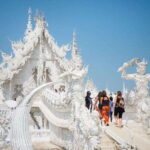




Doi Suthep: Naga dragon staircase, copper chedi, and Buddhist wall stories
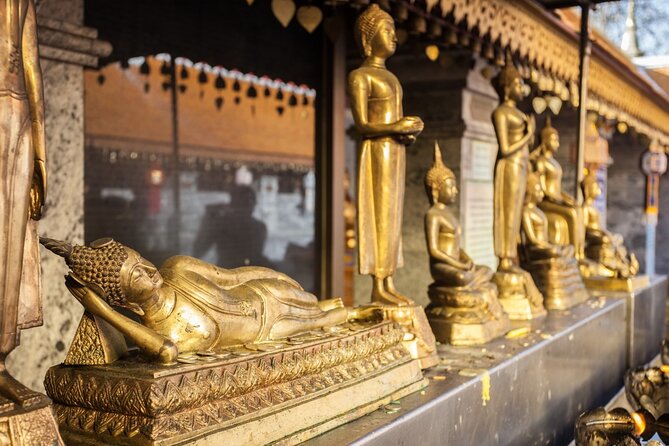
After Wat Pha Lat, you head to Doi Suthep. This is where the tour gets iconic. The main way in is the dragon staircase, with more than 300 steps flanked by Naga (mythical serpent) shapes.
You have two approaches:
- Walk the stairs for the full experience and the photo moments.
- Take the cable car instead, if you want to reduce stair strain. The cable car costs extra and is not included.
Once you’re on the grounds, you’ll see the temple complex: statues, pagodas, shrines, bells, and Buddhist drawings. The guide will point out the meaning behind some of the wall paintings, including the life of Buddha themes. It’s not just a history lecture. The point is to help you read the art while you’re standing in the space.
Entrance fee you’ll pay in cash
Doi Suthep entry is THB 80 per person, not included.
If you’re going for the best photos, aim to arrive early enough that the light is working for you. The sunrise slot tends to help with that, and it also changes the flow of the day (more on timing next).
Sunrise vs later departures: how the hike direction changes
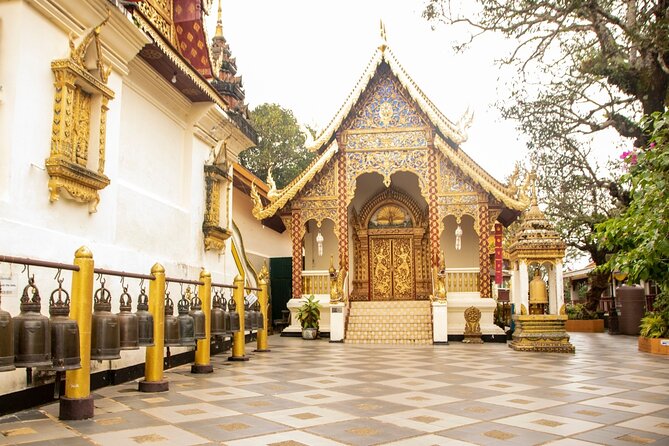
There’s a sunrise program option starting around 5:00 in the morning. In that schedule, you visit Doi Suthep first. After sunrise, you continue to Wat Pha Lat and start the Monk’s Trail from there, meaning you hike down the mountain rather than up.
That difference is huge in practical terms. Walking down can still be tough, but it’s often easier than climbing the forest incline when your legs are fresh. It also tends to be cooler early, which helps a lot.
If you skip sunrise, you’ll likely do the day in the more standard direction: Wat Pha Lat first, then Doi Suthep, with the dragon staircase walk as the big climb. Some people prefer the afternoon slot because it can feel less like an early wake-up sprint. The tradeoff is that heat and crowds can rise later in the day.
How hard is it, and what should you bring

Let’s put the effort in real terms.
- Wat Pha Lat hike: about 30 to 40 minutes on the Monk’s Trail segment.
- Doi Suthep: 300+ steps on the dragon staircase, unless you use the cable car.
One review detail worth taking seriously: Monk’s Trail is described as about 4.5 miles on the route. Your tour segment is still shorter than a full day’s pilgrimage, but it’s a reminder that the mountain trail network is longer than most people expect.
Shoes and traction
Bring shoes you trust on uneven ground. If it’s wet, muddy spots can slow you down fast.
Temple-appropriate clothing
Cover shoulders and knees. This is not a suggestion once you’re at the gate.
Water
A bottle of drinking water is included. Still, if you get thirsty easily, consider how you handle humid days.
A note about “open-air”
Songthaew ride means you feel the air and road motion. If you’re sensitive to exhaust and curves, plan for that before you’re already on the road.
Price and value: what $26.09 includes, and what fees you still need
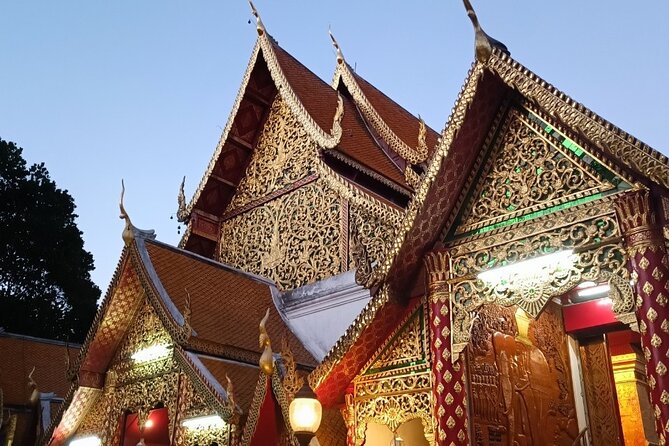
The headline price is $26.09 per person for a roughly 4-hour tour. What’s included is genuinely useful for the cost:
- songthaew transport
- an English-speaking guide
- a bottle of drinking water
- a mobile ticket
What’s not included is where people get surprised if they don’t read closely:
- Wat Pha Lat / Monk’s Trail entrance: THB 100 cash
- Doi Suthep entrance: THB 80 cash
- Cable car to Doi Suthep if you decide not to do the stairs
So your real day cost is the tour price plus those temple fees, and possibly cable car. Still, the structure is good value because you’re not just buying tickets. You’re buying transportation, interpretation, and a guided route that saves you from figuring out trail access and temple meaning on your own.
Guides: what you gain from English storytelling in temple spaces
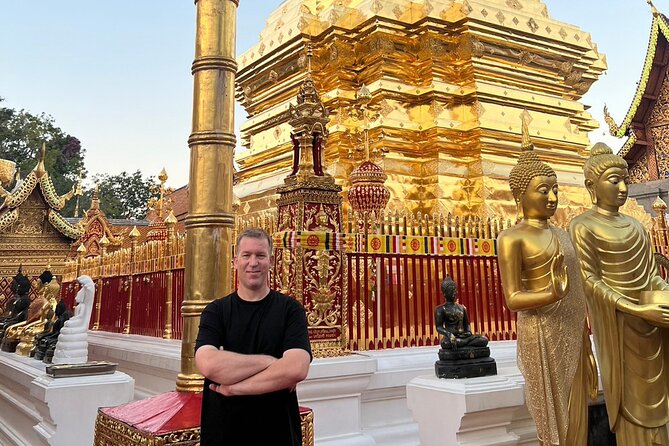
This tour works best when you treat it like more than a photo stop. The guides focus on Buddhism and the meaning of the site details, including what you’re seeing in wall paintings and how monks use the trail routes. Several named guides show up in past participants’ experiences, including Saman, Jane, Bright, Emmy, Amy, Maggie, Pia, and Bum. Whoever you get, the common thread is clear: the guide is there to translate the visuals into something you can actually understand.
That matters at temples, because without context, a chedi or painting can feel like a nice backdrop. With context, it becomes a message you can read while you stand there.
Also, guides help with pacing. Some even provide or offer a walking stick for the stairs in certain situations, which can be a genuine relief when you’re managing 300+ steps.
Watch-outs: the small issues to plan around
Most days run smoothly. Still, I’d plan for these because they’re part of how this experience works.
Pickup timing
Pickups can start up to 45 minutes early. Confirm your start time and be ready at the meeting point area rather than drifting in late.
Open-air ride comfort
Songthaew ride is open and can be warm, noisy, and affected by exhaust. If you’re prone to motion sickness, take it seriously.
Weather and trail conditions
This experience needs good weather. Rain can make the trail muddy, and temple areas get slick on stair approaches. Wear grippy shoes.
Dogs on the trail
You might see dogs. Follow your guide’s lead and don’t try to react independently.
Who should book this tour, and who should skip it
You’ll likely love it if you:
- want a nature-and-culture day, not just temple sightseeing
- can handle walking on a forest trail
- are willing to climb stairs, or you’ll use the cable car for Doi Suthep
- enjoy learning about Buddhism in plain language
You might want a different plan if you:
- have knee or mobility limits that make stairs risky
- want a fully seated, low-walking outing
- are very uncomfortable with open-air transport and curvy roads
One helpful flexibility: if you cannot hike up the mountain, you can go up with the songthaew. That option matters for people who still want the temple without the full uphill effort.
Should you book this Doi Suthep and Wat Pha Lat tour?
My take: book it if you want the best combo of Chiang Mai’s temple culture and real outdoor walking in one half-day. It’s efficient. It’s guided. And it gives you two different temple moods: forest calm at Wat Pha Lat, then the big sacred grandeur at Doi Suthep.
Choose the sunrise program if you can handle early mornings and you’d rather trade crowds for cooler air and a more peaceful start. Choose the later departure if you prefer sleeping a bit longer and you’re comfortable with the full climb rhythm.
Just be honest with yourself about the legs-and-steps part. If you’re good with that, this tour is a strong value buy, especially because the guide helps you understand the paintings, chedi symbolism, and the story behind why these places are important.
FAQ
What’s included in the tour price?
The tour includes songthaew transport, an English speaking guide, and a bottle of drinking water.
Are temple entrance fees included?
No. You pay entrance fees in cash on the day: Wat Pha Lat/Monk’s Trail and Wat Phra That Doi Suthep.
How much is the Wat Pha Lat Monk’s Trail entrance fee?
The Wat Pha Lat Monk’s Trail fee is THB 100 per person, paid in cash on the day of the tour.
How much is the Doi Suthep entrance fee?
The Wat Phra That Doi Suthep entrance fee is THB 80 per person, paid in cash. Cable car cost is separate.
Is the cable car included?
No. If you want to avoid walking the dragon staircase, you can take the cable car, but it costs extra and is not included.
How long is the hike to Wat Pha Lat?
The Monk’s Trail hike to Wat Pha Lat takes about 30 to 40 minutes.
How many steps are on the dragon staircase at Doi Suthep?
The dragon staircase has more than 300 steps.
What should I wear to the temples?
Wear proper walking shoes. Also plan for temple dress rules: shoulders and knees should be covered.
How do pickup and drop-off work?
You get free pickup and drop-off inside the old walled city area if you’re in the pick-up zone. If not, you meet at Burger King at Tha Pae Gate. Pickup can start up to 45 minutes before the scheduled start.
Is there a sunrise option, and what’s different?
Yes. The sunrise program starts around 5:00 in the morning, visits Doi Suthep first, then continues to Wat Pha Lat. After sunrise, you hike down the Monk’s Trail instead of up.