REVIEW · SIEM REAP
Full-Day Temples of Angkor Small Group Tour
Book on Viator →Operated by Journey Cambodia · Bookable on Viator
Angkor in one day sounds impossible, until you do it like this: early starts, tight routing, and a guide who connects the dots. This is a full-day small-group tour in Siem Reap built around the most famous (and most photogenic) corners of the UNESCO Angkor Archaeological Site.
Two things I like a lot: you get hotel pickup/drop-off with an air-conditioned minivan, and you’re not left guessing what you’re looking at because the guide tells the stories behind the carvings and layouts. One real consideration: it’s a long, hot day with lots of steps and uneven ground, so you’ll want to plan for sore legs and smart heat protection.
In This Review
- Key points at a glance
- Why this Angkor tour starts early and moves fast
- Small-group size (up to 15) and why it matters at Angkor
- Price and value: $19 plus the Angkor temple pass
- The morning at Angkor Wat: sunrise energy, bas-reliefs, and steep stairs
- Angkor Thom’s South Gate to Bayon: 108 guardians and the face-towers
- Terrace moments: Leper King and Elephant, then lunch near Srah Srang
- Ta Prohm: the jungle takeover and the “Tomb Raider” feel
- What you’re really buying: guided context plus small comforts
- Practical tips before you go (so the day feels fun)
- Who should book this Angkor Wat full-day small-group tour
- Should you book it?
- FAQ
- How long is the Full-Day Temples of Angkor Small Group Tour?
- What’s included in the tour price?
- Is the temple entrance fee included?
- Does lunch come with the tour?
- What’s the group size limit?
- What should I wear to visit the temples?
- Do I need to pay in cash, or can I use a card?
- What’s the minimum age for the tour?
Key points at a glance
- Early morning timing helps you see Angkor Wat with better light and fewer crowds
- Small group size (max 15) keeps the day from feeling like a cattle call
- Real temple routing: Angkor Wat, Angkor Thom South Gate, Bayon, plus Ta Prohm
- Refreshments included: cool water and wet towels during the day
- Temple pass is separate: expect to pay the Angkor site entrance fee on arrival
Why this Angkor tour starts early and moves fast
This tour is designed around the Angkor rhythm: beat the heat, then see the highlights while you still have energy to climb. Expect a very early pickup from your Siem Reap hotel (many departures are around 4:30am), then an air-conditioned ride out to the temple area.
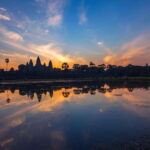
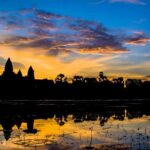
Starting early also helps with light. Angkor Wat sunrise is the classic moment, and the schedule is shaped to get you there in time. Later in the day, you’re still out there walking, but at least you’ve already “done the big wow” before the temperature climbs into the danger zone.
The payoff is obvious: you don’t just see temples, you see how the sites change mood as the sky brightens and the crowds thin.
You can also read our reviews of more tours and experiences in Siem Reap.
Small-group size (up to 15) and why it matters at Angkor
At Angkor, the difference between a good day and a painful day is often not the itinerary. It’s the pace, the crowding, and whether you can hear your guide at the moment you most need context.
This tour caps the group at 15 travelers, and many departures run smaller than that. In practice, that means:
- fewer bottlenecks at stairways and narrow passageways
- more time for photos without constant shuffling
- a guide who can answer questions without shouting over the entire planet
The guide quality is also a big theme in the strongest reviews. People consistently praise guides who can explain Khmer temple symbolism in clear English (names that come up include Saruon Pal, Sopheaprath, Sarak, Chea Sok, Kiss (Sok), and Pal Saruon). That matters because Angkor Wat is not just a pretty ruin. It’s geometry, religion, and political theater, all packed into stone.
Price and value: $19 plus the Angkor temple pass
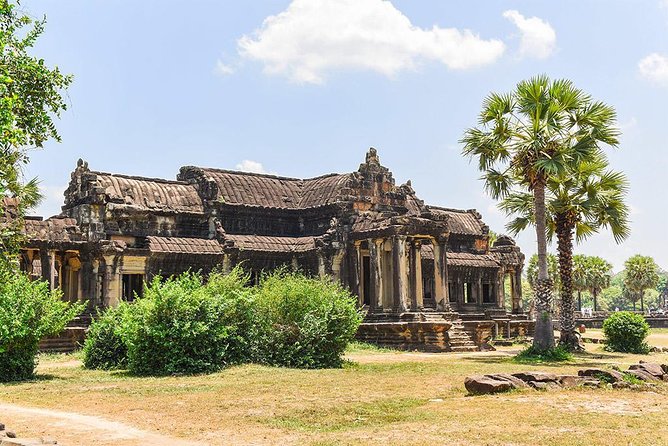
The listed tour price is $19 per person, which sounds like a steal until you look at the one unavoidable extra: the temple entrance fee (Angkor pass) is not included and must be paid directly to the site. The cost given here is $37 per person.
So your realistic “day at Angkor” budget is roughly:
- $19 for the tour service
- $37 for the Angkor temple pass
- lunch and drinks come extra (lunch is not included)
Now the value part: you’re paying for more than transportation. You’re buying a guided route that hits the major sites in one go, with licensed English-speaking guide time, an air-conditioned vehicle, and small comforts that reduce the misery factor (cool water and cool towels).
If your goal is to see Angkor’s core in one day without the stress of planning and timing, the math tends to work in your favor.
The morning at Angkor Wat: sunrise energy, bas-reliefs, and steep stairs
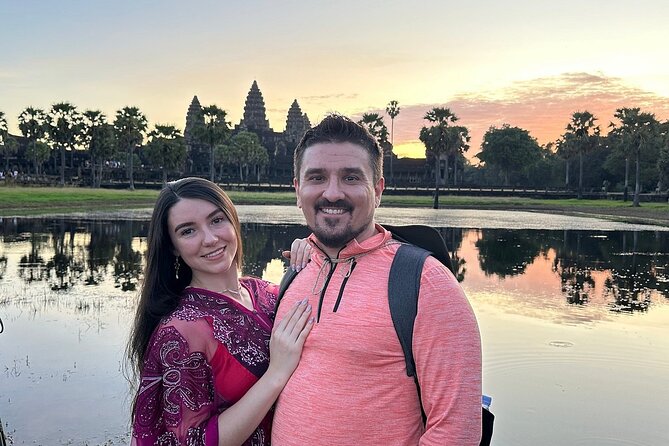
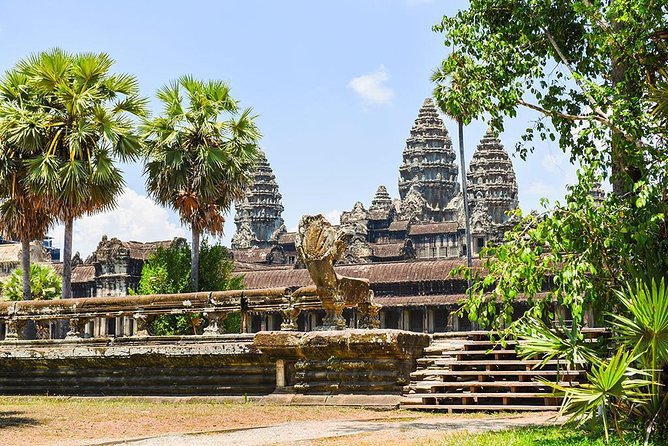
Angkor Wat is the centerpiece for a reason. This tour sends you straight there in the morning, with enough time to experience the most iconic parts before the day heats up.
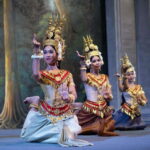
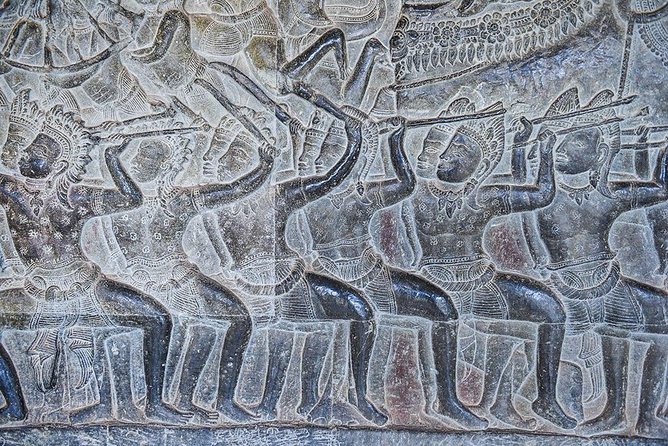
At Angkor Wat, you’ll move through narrow stone corridors and passageways lined with bas-relief carvings and shrines. The experience described here also includes gold-shrouded statues tended by local monks, and then a climb up into a central gallery with dancing apsaras figures.
One practical note: Angkor Wat involves stairs and climbing, and the route includes ups and downs in and around the galleries. It’s not extreme hiking, but it is very “ruins on a hot morning” work—especially if you’re not used to stone steps.
How to make it easier: wear shoes with grip and a bit of cushioning. Reviews repeatedly call out comfortable walking shoes because once you’re inside, you’re basically committing to a lot of step-based sightseeing.
Angkor Thom’s South Gate to Bayon: 108 guardians and the face-towers
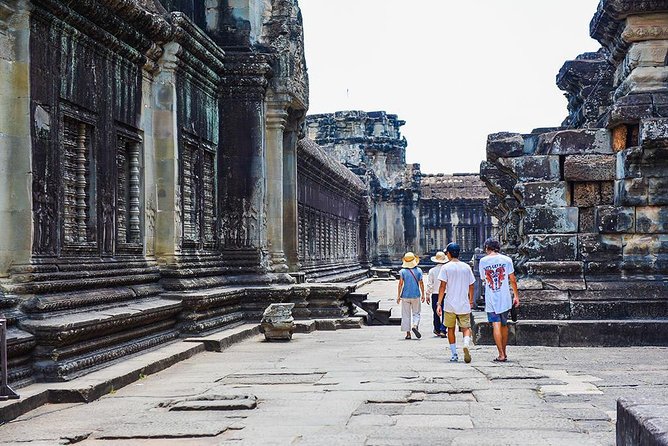
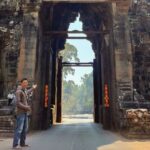
After Angkor Wat, you head to Angkor Thom’s South Gate. This part of the day is shorter (about 30 minutes in the plan), but the impact is big because the entrance is where the city’s power is announced.
Walk down the narrow lane guarded by 108 statues of gods and demons, a detail that’s worth slowing down for. The gate is dramatic in photos, but it’s even better when your guide points out how the figures work as a storytelling framework.
Next comes Bayon Temple (about 1.5 hours). This is where the famous stone faces stare out from towers—serene and unbothered, even while you’re huffing up stairs.
The explanation style matters here. Bayon’s long bas-reliefs tell a story of Khmer victories against the Cham, and that kind of narrative turns the carvings from decoration into history you can actually follow.
Watch-outs: Bayon is also step-heavy, and you’ll want to pace yourself. If you rush, you’ll feel it later. If you slow down, you’ll get more from the details.

Terrace moments: Leper King and Elephant, then lunch near Srah Srang
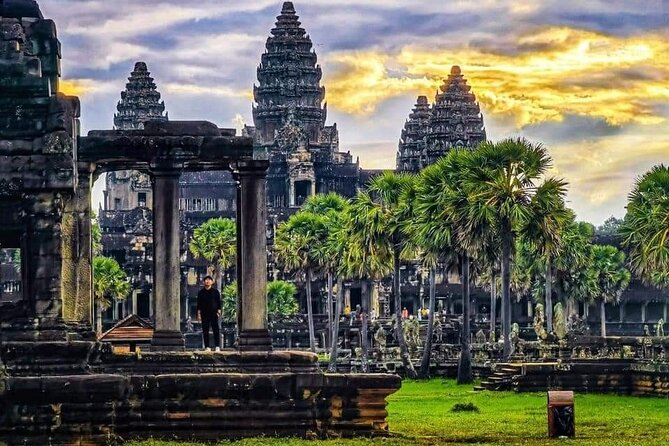
Between temples, the tour includes a pass by two famous terraces: the Terrace of the Leper King and the Terrace of the Elephants. You’re not meant to treat this like a full museum stop, but it gives you a quick, visual hit of some of the Angkor imagery people remember for years.
Then you get a breathing break for lunch. The schedule places lunch around Srah Srang, with about 1 hour there, at a nearby local restaurant. Lunch itself is not included, but this is a planned rest stop, not a grab-and-go scramble.
This is also where the day’s rhythm makes sense. You’ve done major climbs at Angkor Wat, then you hit gate and Bayon. A lunch-and-rest window helps you reset before the jungle section.
If you’re sensitive to heat, use this break for the basics:
- water refill
- shade time
- a slower walk pace
It’s the kind of mid-day recovery that can make the difference between enjoying Ta Prohm and just trying to survive it.
Ta Prohm: the jungle takeover and the “Tomb Raider” feel
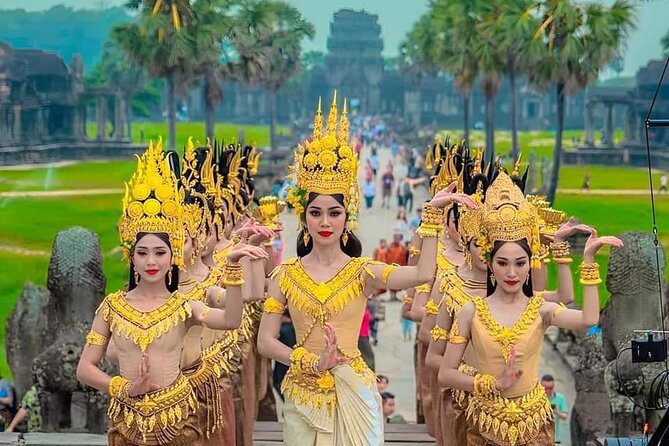
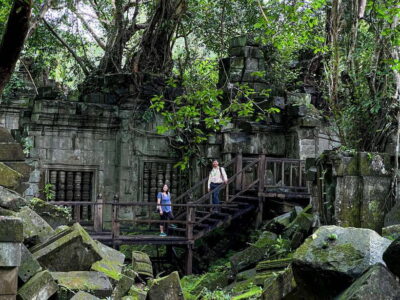
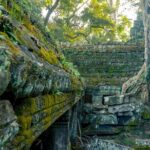
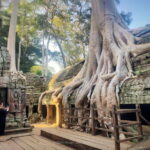
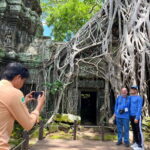
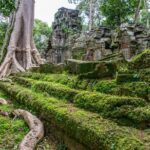
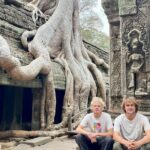
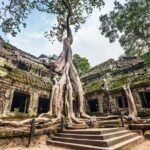
After lunch, it’s Ta Prohm Temple (about 1.5 hours). This is the site most associated with the wild, overgrown Angkor look. The plan includes fig trees that threaten to take over the structures, and the result is a maze-like ruin that feels almost theatrical.
You’ll wander through ornate worship spaces where nature has become part of the architecture. It’s a great contrast to the more polished symmetry you see at places like Angkor Wat. Here, the vibe is rough, atmospheric, and full of visual surprises.
The trade-off: Ta Prohm has plenty of uneven stone surfaces and more walking than it looks like from a distance. Even when the walking isn’t technically difficult, your feet will notice it after a morning of climbing. Build in patience. Stop often. Let your eyes adjust to the dimmer, tree-shadowed interior spaces.
What you’re really buying: guided context plus small comforts
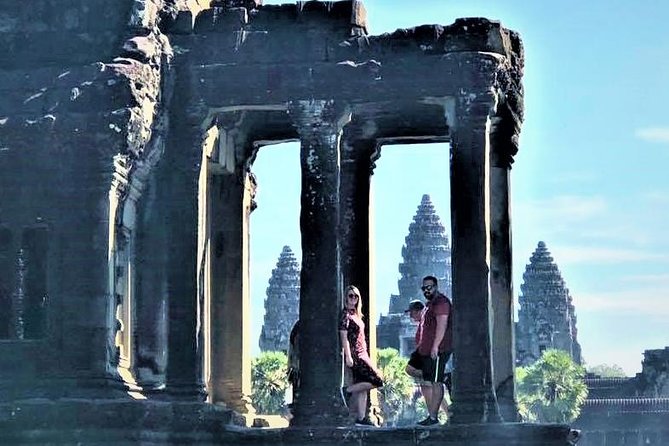
Angkor is famous, but it can also feel overwhelming. Hundreds of carvings, multiple layers of religious influence, and huge spaces that make you wonder where to look next.
This tour’s value comes from the guide doing the heavy lifting:
- explaining what you’re seeing in a logical order
- linking carvings to the stories behind the sites
- keeping you moving so you don’t waste time at the wrong viewpoint
On the comfort side, you get mineral water and cool towels, and the driving is handled in an air-conditioned minivan. Reviews also highlight drivers staying attentive and helping with timing so you’re not stuck waiting in the heat.
You’ll feel the benefit of those small comforts more than you expect. In a place like this, “just a few minutes” matters. Cool water at the right moment keeps you functioning long enough to enjoy the next stop.
Practical tips before you go (so the day feels fun)
Dress for Khmer temple rules. Shoulders and knees should be covered. The guidance here is direct: you need cover your shoulders and knees, and scarf coverage is expected. Plan simple layers you can adjust in humidity.
Bring sun protection. Even with an early start, the day can be intense. Have sunscreen and something for your head.
Pack for steps. This itinerary includes climbing at major sites. Comfortable walking shoes are not a suggestion. They’re part of the success plan.
Use the photo stops. If your guide is the type who helps with picture timing (several guides are praised for photography support), take advantage. It’s often the difference between random selfies and good angles on the face-towers or bas-relief corridors.
Stay hydrated between major zones. The tour provides water and towels, but don’t treat it as a magic spell. Take small sips and slow down on the steep stairs.
Who should book this Angkor Wat full-day small-group tour
This tour fits best if you want:
- the big Angkor hits in one day: Angkor Wat, Angkor Thom, Bayon, Ta Prohm
- an English-speaking guide who explains what you’re seeing
- an organized route from hotel to hotel without worrying about transport
It’s also a smart choice if you don’t want to handle temple pass logistics, because the tour handles the guided flow and you just pay the site entrance fee on arrival.
You might want to think twice if:
- you hate early mornings (pickup can be very early)
- you have limited mobility, because there are stairs and lots of walking across temple grounds
- you prefer lots of free time at fewer sites rather than a packed highlights route
Should you book it?
For most first-timers, I’d say yes. This is one of the cleaner ways to see major Angkor highlights in a single day without turning your trip into a logistics project. The best versions of this tour are powered by strong guides like Saruon Pal, Sarak, Chea Sok, Kiss (Sok), or Pal Saruon, and the included cool towels and water help you stay on your feet.
If you book, come prepared for a big walking day. Bring good shoes, cover up correctly, and pace your climbs. Do that, and you’ll leave with the kind of Angkor photos and understanding that justify the early wake-up.
FAQ
How long is the Full-Day Temples of Angkor Small Group Tour?
It runs for about 8 hours (approx.).
What’s included in the tour price?
Included are hotel pickup and drop-off, a licensed English-speaking guide, air-conditioned minivan transport, mineral water and cool towels, and local tax.
Is the temple entrance fee included?
No. The temple pass is not included and must be paid directly at the site. The price listed here is $37 per person.
Does lunch come with the tour?
Lunch is not included. The tour includes time to eat at a local Khmer restaurant near Srah Srang.
What’s the group size limit?
The tour has a maximum of 15 travelers.
What should I wear to visit the temples?
You need respectful dress with shoulders and knees covered. A scarf that covers your shoulders is allowed, and bare shoulders or uncovered knees aren’t.
Do I need to pay in cash, or can I use a card?
The temple pass accepts Visa cards and you can buy it on the day of the tour.
What’s the minimum age for the tour?
The minimum age is 5 years.
If you want, tell me your travel dates and your fitness level, and I’ll suggest a smart packing list and which shoes are most worth it for these stone stairs.