REVIEW · TOKYO
Japanese Speaking Experience Meet the locals Friend Cafe Shibuya
Book on Viator →Operated by Welcome Tokyo · Bookable on Viator
Tokyo after dark can be social and low-pressure.
This 2-hour English/Japanese language exchange in Shibuya is built around quick conversation rounds, so you keep moving and actually get to talk. I like that it welcomes beginner Japanese learners, including people who can’t speak much yet, and still makes you feel included. One thing to plan for: it’s in a pub setting for over-18s only, and the vibe may feel louder than a quiet classroom.
What I really like is the structure: you sit with a mixed group, use topic cards, and then change seats so you meet more than just one or two people. The small group setup (about 3–4 people at a time) makes it easier to start talking without awkward dead air. The possible drawback is that it’s not a private lesson, and you’ll be trading time with the group instead of focusing on your personal weak spots.
If you want a fun night that mixes language practice with meeting locals, this one in Shibuya can be a smart pick. Just remember the ticket covers the event, not the drinks, so you’ll need to buy at least one drink at the bar when you arrive.
In This Review
- Key highlights to know before you go
- Shibuya’s 2-hour language exchange in a B1F pub setting
- Price and value: what your $29 ticket covers
- Where you check in: timing, reception, and first steps
- The conversation schedule you’ll follow all night
- How the groups are set up (and why it makes talking easier)
- What you’ll actually do after each 15-minute block
- Meeting locals in Shibuya without the awkwardness
- Hosts and vibes: what to expect from the human part
- Is it good for beginners, and how to prepare your level
- Who this Shibuya language exchange is best for
- Downsides to consider before you book
- Your night-out strategy in Shibuya (after the conversation ends)
- Should you book this Japanese speaking experience in Shibuya?
- FAQ
- How long is the Japanese speaking experience in Shibuya?
- Where does the experience meet and start?
- Is the meeting place on a specific floor?
- Do I need to speak Japanese to join?
- How does the English and Japanese conversation work?
- What group size should I expect?
- Is the ticket price all-inclusive?
- Do I need to buy a drink during the event?
- How many people can be on the tour?
- Can I get a refund if I cancel?
Key highlights to know before you go
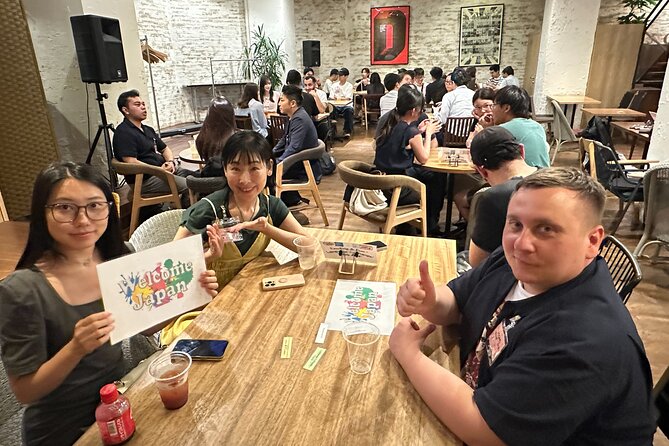
- B1F pub meeting spot in Shibuya: easy to find near public transit, and it’s an actual nightlife setting.
- Beginner-friendly Japanese exchange: you can show up with little or no Japanese and still participate.
- Guaranteed rotation: staff change your seats so you get multiple conversation partners.
- Built-in 15-minute language rhythm: English first, Japanese after, then repeat.
- Small-group feel: groups of about 3–4 people with a mix of Japanese and international participants.
Shibuya’s 2-hour language exchange in a B1F pub setting
This experience takes place in Shibuya, one of Tokyo’s best areas for meeting people. Your meeting point is at Shibuya Bowling Cafe Shibuya EST (1-chōme-14-14 Shibuya), and the café is on the B1F. The whole thing is designed for an evening flow: you arrive, check in, grab a drink, and then the host guides you through conversation rounds.
The format matters. Instead of hoping you’ll bump into someone at the bar, you get placed into a group and given a repeatable way to talk. That’s the difference between a random night out and something you can count on for language practice.
Also, it’s explicitly over-18 only because it’s located in a pub. If you’re traveling with a group and want a straightforward, grown-up social activity, it fits that role well. If you’re hoping for a quiet cultural lecture, this isn’t that.
You can also read our reviews of more tours and experiences in Tokyo.


Price and value: what your $29 ticket covers
The price is $29.00 per person, and it includes all fees and taxes. That’s the good part: you know the core cost upfront and you’re paying for the event itself.
What’s not included is the big nightlife reality check: alcoholic beverages (and food) are not included. The guidance is to buy a minimum of one drink at the bar when you arrive. So plan a small extra budget for your drink.
Is $29 good value? For Tokyo, yes—because you’re getting:
- about 2 hours of structured conversation time
- topic cards to help you keep talking
- a designed 15-minute English / 15-minute Japanese rhythm
- active help from staff to rotate you between people
In plain terms: it’s not a 1-on-1 lesson, but it’s more organized (and usually more productive) than just walking into a random conversation event and hoping someone matches your level.
Where you check in: timing, reception, and first steps
The reception has a clear instruction: there’s a 10-minute starting time. That means you should arrive with enough buffer to check in and get settled before the first conversation portion begins.
Once you check in at the reception, you’ll buy a drink from the store/bar area before the event starts. Then the staff prepare everything you need to talk:
- seats for each person
- topic cards for smoother conversation
The event is capped at a maximum of 20 travelers, so it doesn’t feel like you’re joining a massive crowd. That smaller size also supports the staff’s ability to guide seat changes without losing people.
The conversation schedule you’ll follow all night
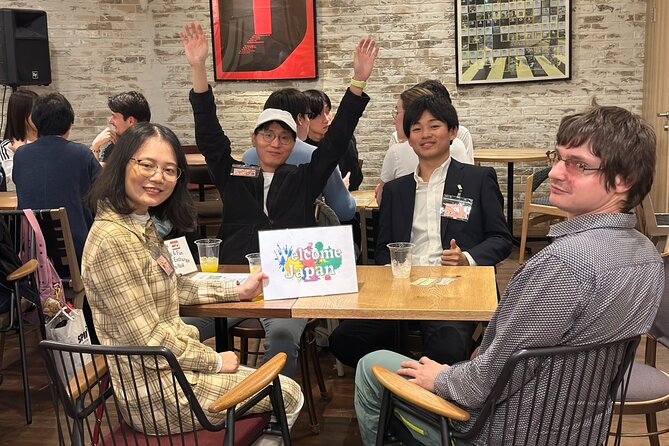
The event runs in rounds, and the staff keep the pace moving. Here’s the rhythm based on the event flow:
- English conversation (first round)
- Japanese conversation (second round)
- 5-minute break + changing seats
- English conversation (third round, 15 minutes)
- Japanese conversation (fourth round)
- 5-minute break + changing seats
- English conversation (fifth round)
- Japanese conversation (sixth round)
- Closing group photo
That repeated alternation is the key value. If you only practiced English, your Japanese muscles would stay lazy. If you only practiced Japanese, your confidence could crash when you hit a gap. This design forces balance—while still keeping each block short enough that you don’t mentally run out of steam.
The seat-changing also prevents the classic language exchange problem: getting stuck with one person and then running out of new things to say. It’s not random—staff rotate seats so everyone gets more than a couple conversations.
How the groups are set up (and why it makes talking easier)
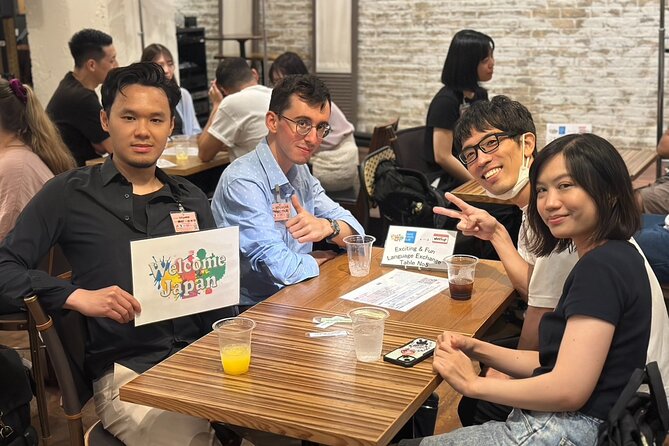
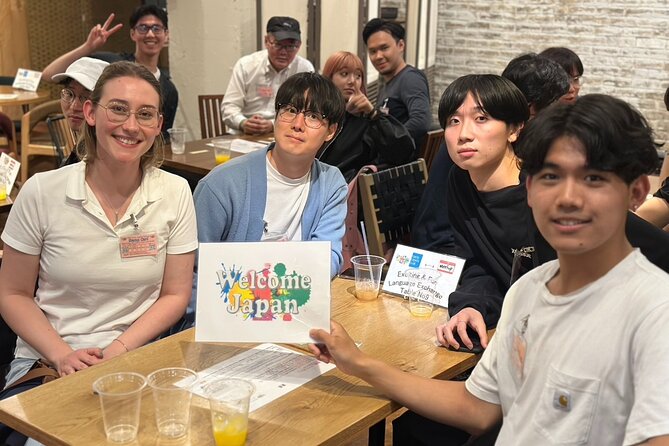
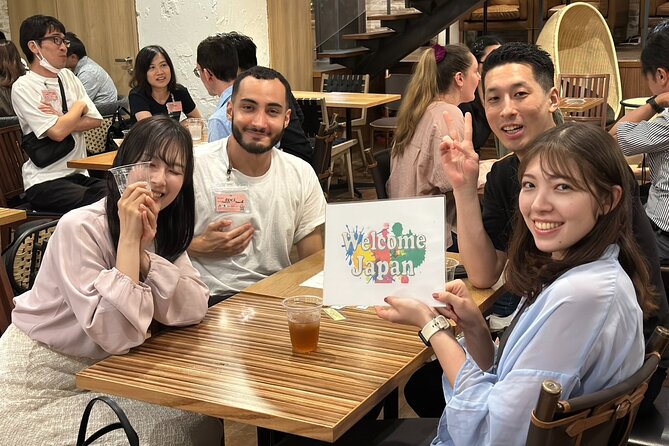
You’re split into small groups of 3–4 people per group, and the groups include a mix of Japanese and foreigner participants. That’s important.
If you’re a beginner, mixed groups lower the pressure. You’re less likely to freeze when someone speaks faster or uses more advanced phrases. And because the staff changes seats and you’re not locked into one group all night, you’ll get multiple chances to meet different styles of speakers.
The topic cards are another quiet hero here. They reduce the need to invent conversation from scratch. You can focus on using Japanese or English to respond, ask simple questions, and keep the exchange moving.
You also get prompts that switch between languages may be part of how the event is run, depending on the setup on the night. Either way, the core idea stays the same: you’re not meant to guess what to say next.



What you’ll actually do after each 15-minute block
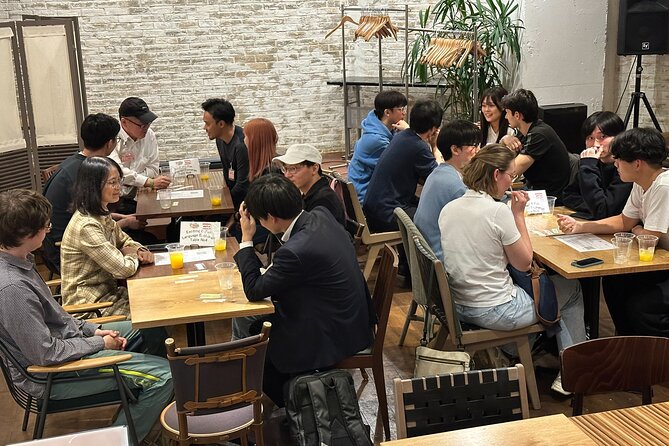
Each language segment lasts long enough to have real back-and-forth, but short enough that you’ll stay engaged. Between segments, you get about a 5-minute break to shift seats and reset your brain.
That break is useful for a practical reason: language exchanges can get mentally tiring. In short rounds, you can do a quick reset, review a couple phrases in your head, and jump back in when the host signals the language switch.
One small thing I’d plan for: the event is at a bowling café / pub-style location. That kind of place can be louder than a calm restaurant, so if you’re sensitive to noise, you’ll want to speak a bit slower and make eye contact when you change seats. A “hard to hear” moment won’t ruin the event, but it can affect your confidence if you expect quiet.
Meeting locals in Shibuya without the awkwardness
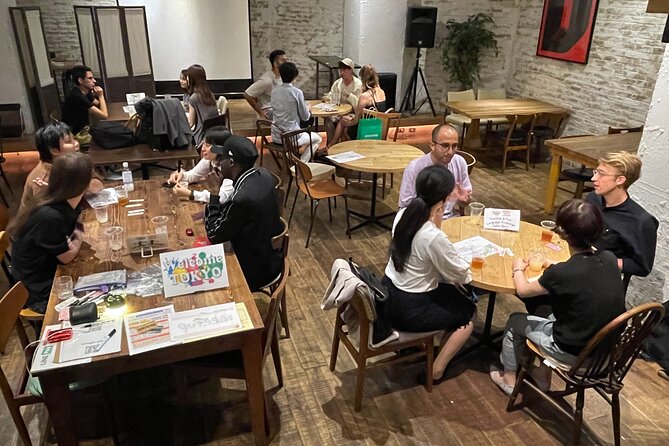
Shibuya is a top Tokyo neighborhood for people-watching, but it can also be intimidating if you don’t speak Japanese. This kind of event helps you bypass the hardest part: starting the conversation.
Because the format is scheduled, you don’t have to guess timing or approach strangers. The staff do the placement and rotation. You just show up and participate.
Also, the crowd composition is international-plus-Japanese. That matters for learners. Even if you’re not fluent, you’ll likely hear how others handle the same level of uncertainty—so you can mirror what works.
And yes, it can turn into a real social night. The event is described as a standalone activity or a way to kick off a bigger night out in Tokyo, which fits the Shibuya scene perfectly. You finish back where you started, which makes it easier to continue exploring without thinking about transport.
Hosts and vibes: what to expect from the human part
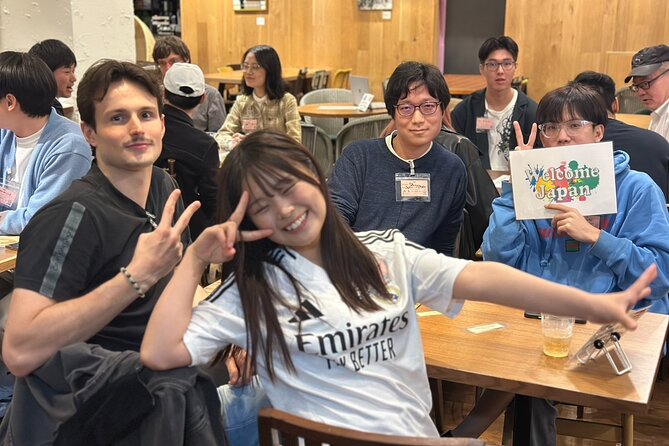
The event includes staff guidance throughout, including check-in, group splitting, and seat rotation. The tone is meant to be relaxed and friendly.
From the way hosts are described, people tend to mention strong organization and a host who keeps things light and funny. Names that come up include Candice and Rikiya, both associated with making the group feel comfortable and moving on time.
You don’t need to be outgoing to benefit. The structure does most of the social work. Your job is to show up ready to talk for two hours and treat mistakes as part of the process.
Is it good for beginners, and how to prepare your level
If you’re a beginner, you’re allowed to be. The key point: it doesn’t matter that you can’t speak Japanese if you’re interested in practicing.
Still, you’ll get more out of it if you prepare a small set of go-to phrases. You don’t need a textbook. Just have a few ideas ready like:
- a simple self-introduction
- a question about where someone is from
- a question about what they’re doing in Tokyo
- a polite way to say you’re learning Japanese
You’ll also have topic cards to help steer you. Think of those cards as training wheels. Use them for starting points, then branch out once you feel the conversation flow.
If you already know some Japanese, the rotating seats can help you test your real-world speaking speed. It’s not a controlled drill, so you’ll hear what you can do under pressure.
Who this Shibuya language exchange is best for
This is a good fit if you:
- want real conversation practice in English and Japanese
- enjoy meeting new people in a social setting
- prefer a guided structure over free-form networking
- want an easy plan for a night in Shibuya
It’s also a solid choice for people who want something short and contained. The whole thing is about 2 hours, and it ends back at the meeting point.
If you’re searching for a private, grammar-heavy lesson, this won’t replace that. But if you want friendly, practical speaking practice, the format fits.
Downsides to consider before you book
Nothing is perfect, so here are the main things to weigh:
- Pub setting + over-18 only: it’s nightlife energy, not a quiet study session.
- Noise level: places like bowling cafés can be louder, which can make it harder to hear details.
- No drink included: you’ll need to buy at least one drink. That’s easy to plan for, but it does change the real cost.
- Group practice, not individualized coaching: you won’t get tailored correction for your specific mistakes.
These are normal trade-offs for a social language exchange. If you understand the vibe upfront, you’ll likely have a better time.
Your night-out strategy in Shibuya (after the conversation ends)
Since the experience ends back at the same meeting point, you can build a simple plan for the rest of your evening. Shibuya has plenty of food and late-night options, and you won’t need to reposition yourself far from transit.
A practical approach:
- go easy on your first drink so you can still participate in Japanese conversation rounds
- keep your phone charged for directions and future meetups
- if you meet someone you like, decide on a quick follow-up before you drift into the crowd
This activity is designed as either a standalone hang or a start to something bigger. Use it that way.
Should you book this Japanese speaking experience in Shibuya?
Book it if you want a structured language exchange in one of Tokyo’s most social neighborhoods, and you’re okay with a pub-style setting. The biggest reasons are the conversation design: topic cards, small groups, and seat changes that force you to meet more people and keep speaking. At $29 including fees and taxes, it’s a straightforward value for two hours of guided practice.
Skip it if you’re looking for a quiet classroom environment, private tutoring, or a night that doesn’t involve buying a drink. Also, if you’re very noise-sensitive, mentally prepare for a louder venue than a typical café.
If your goal is to leave Shibuya that night with new friends and more confidence speaking, this is the kind of event that can do the job fast.
FAQ
How long is the Japanese speaking experience in Shibuya?
The event runs for about 2 hours.
Where does the experience meet and start?
You meet at Shibuya Bowling Cafe Shibuya EST, 1-chōme-14-14 Shibuya, Tokyo 150-0002, Japan.
Is the meeting place on a specific floor?
Yes. The café is on B1F.
Do I need to speak Japanese to join?
No. Beginner Japanese learners are welcome, and it doesn’t matter if you can’t speak Japanese.
How does the English and Japanese conversation work?
The schedule alternates: English conversation for about 15 minutes, then Japanese conversation, with 5-minute breaks and changing seats between rounds.
What group size should I expect?
Staff split attendees into small groups of about 3–4 people per group, mixing Japanese and international participants.
Is the ticket price all-inclusive?
Your ticket price includes all fees and taxes, but alcoholic beverages and food are not included.
Do I need to buy a drink during the event?
Yes. The guidance is to buy a minimum one drink at the bar when you arrive.
How many people can be on the tour?
There is a maximum of 20 travelers for the event.
Can I get a refund if I cancel?
Yes. You can cancel for a full refund if you cancel at least 24 hours in advance of the experience start time.