REVIEW · TOKYO
Mt. Fuji Day Trip from Tokyo with English Speaking Driver Guide
Book on Viator →Operated by NIHON HORIZON TOUR · Bookable on Viator
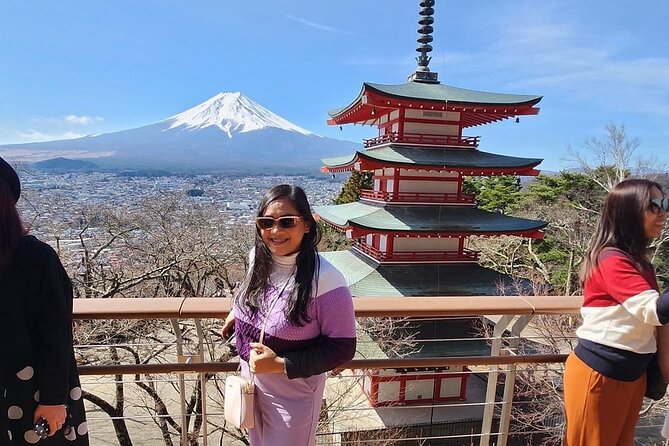
Fuji day trips should be easy. This private Mt. Fuji outing gives you hotel pickup plus an English-speaking driver-guide, with a full day of stops around Lake Kawaguchiko, Oshino Hakkai, and the Fuji 5th Station area. I especially like the door-to-door convenience and the way guides (like Prince and Prem) help you find quick photo windows. The main thing to watch is that some admissions, including the Fuji 5th Station fee, are not included, and each stop can feel rushed if crowds build up.
You’re rolling in a private, air-conditioned van for about 10 hours, so you’re not waiting on trains or sharing elevators with everyone in Tokyo. Because the mountain is weather-dependent, the day can shift focus toward other scenic spots and caves when visibility is poor.
In This Review
- Key highlights to know before you go
- Why a private Mt. Fuji day trip from Tokyo feels different
- Leaving Tokyo: how the 10-hour schedule really works
- Pickup and the English-speaking driver-guide factor
- Lake Kawaguchiko: the 830m opening act for Mt. Fuji views
- Mt. Fuji 5th Station on the Subaru Line: views and the paid fee
- Oshino Hakkai and Oishi Park: classic Fuji scenery in smaller doses
- Oshino Hakkai
- Oishi Park
- Kitaguchi Hongu Fuji Sengen Jinja: volcano shrine energy, calm footing
- Lake Yamanaka and the boat moment
- Narusawa Ice Cave and Fugaku Wind Cave: cold-weather gold
- Narusawa Ice Cave (Hyoketsu)
- Fugaku Wind Cave
- Saiko Iyashi no Sato Nenba: thatched-roof village atmosphere
- Food breaks, restrooms, and ride comfort on a long day
- Price and value: what $497.43 per group actually covers
- Weather reality: why Mt. Fuji days can change fast
- Should you book this Mt. Fuji day trip from Tokyo?
- FAQ
- How long is the Mt. Fuji day trip?
- What’s the group size and how private is it?
- What’s included in the price?
- What isn’t included?
- Do I need to pay for the Fuji 5th Station?
- What happens if the weather is poor?
- Can I cancel for free?
Key highlights to know before you go
- Hotel-to-hotel pickup in a private van for up to 7 people
- Classic Fuji Five Lakes circuit with lakeside views and shrine stops
- Fuji 5th Station time (Subaru Line area) when conditions allow
- Free sights plus paid add-ons like caves and the ice cave experience
- English-speaking driver-guide support with pacing that can flex
- Weather-dependent operation with a chance to switch dates or get refunded
Why a private Mt. Fuji day trip from Tokyo feels different
If you’ve ever tried to get to Mt. Fuji on public transit, you already know the pain: schedules, transfers, and luggage logistics pile up fast. With this setup, the day is built around one big goal—get you out of Tokyo quickly and keep you moving once you’re there.
The value is in the structure. You’re paying for a private vehicle, highway tolls, fuel, and a driver-guide who handles the driving so you can focus on the stops. For groups up to 7, that can work out better than everyone buying separate tickets and splitting up to meet again later.
Also, this is a true countryside day. The drive alone is a big part of the experience. Even if Fuji is shy, you still get lakeside air, shrine gardens, and those sharply defined moments when the mountain finally appears.
You can also read our reviews of more tours and experiences in Tokyo.

Leaving Tokyo: how the 10-hour schedule really works
This is an around-10-hour day, starting with pickup and ending with drop-off back at your hotel. In real life, the schedule depends heavily on traffic leaving Tokyo and how long you linger at each viewpoint. Some guides push for earlier departure to beat congestion, which is a smart move if your goal is clear-sky photos.
Plan your own mindset like this: you’re not going to “deep explore” every corner of the Fuji Five Lakes. You’re going to see the best highlights in a single loop—then you’re back to Tokyo before dinner. That’s why pacing matters so much here. Guides like Rana and Usman are often praised for keeping things flowing and suggesting photo timing.
If you’re the type who hates rushing, build in a little extra patience. Some stops are only 30–45 minutes, so shoes that you can slip on fast and a quick plan for what you want to photograph help a lot.
Pickup and the English-speaking driver-guide factor
The biggest practical advantage is that someone meets you and takes you where you need to go. Most of the day’s success comes down to communication: being easy to find, being on time, and not treating you like a passenger-only delivery.
When it goes well, you’ll feel it immediately. Guides named Mukarram, Asif, Jamil, and Hassan are repeatedly described as punctual, friendly, and proactive—helping with viewpoints and taking photos. Some even help manage the “senior pace” with a gentle rhythm, which is exactly how you want this kind of day to feel.
Still, this is worth saying plainly: the experience can be uneven if pickup timing or driver communication breaks down. So do your part:
- Share your pickup address clearly.
- Keep your phone available on the morning of the tour.
- Be ready to move as soon as the van arrives (grab water, camera, and any tickets you need).
Lake Kawaguchiko: the 830m opening act for Mt. Fuji views
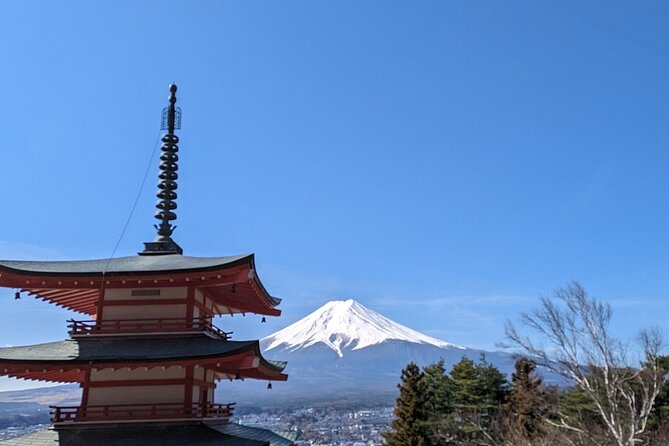
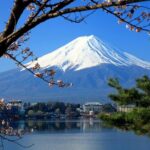
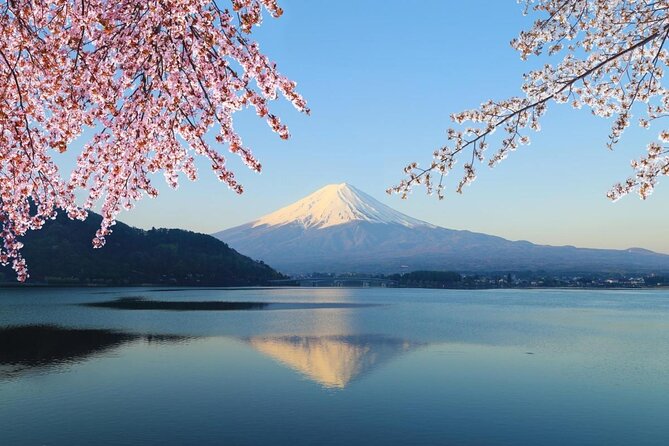
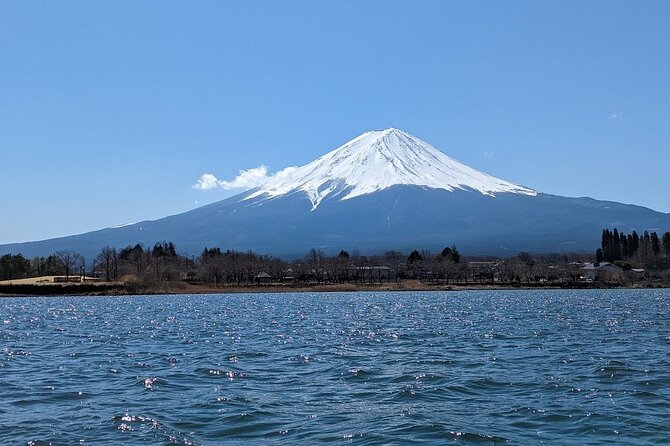
Your day starts at Lake Kawaguchiko, a major base for Fuji views. The lake sits around 830 meters above sea level, which is why summers can feel cooler and winters can get icy. That elevation matters: the air feels different, and so does the light.
You get about 45 minutes here, with admission listed as free for the stop. That time is enough for:
- a quick lakeside stroll,
- one good viewpoint session,
- and deciding if you want to add a relaxing boat option or a rope-related experience (those options are mentioned as available during this stop).
The catch: this is also where crowds concentrate. If Fuji is clearly visible, you’ll see people clustering fast for the same angles. Your best plan is to walk first, then commit to your photo spot when you see where the best sightline opens up.
Mt. Fuji 5th Station on the Subaru Line: views and the paid fee
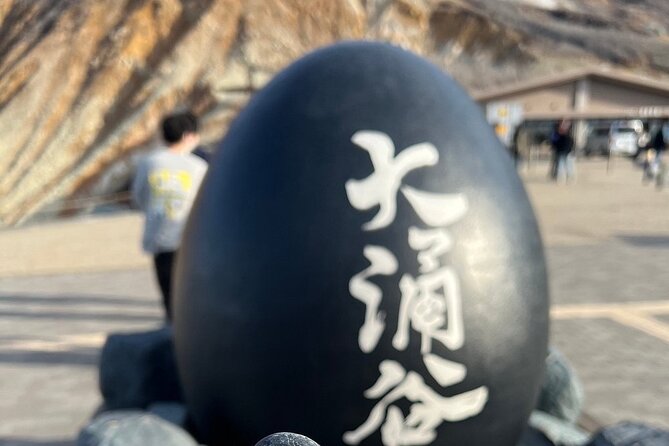
Next is Mt. Fuji 5th Station, set around 2,300 meters above sea level. This stop is popular because you don’t need to climb to get a commanding look down toward the Fuji Five Lakes area.
You’ll have about 1 hour at the station area, but plan for the cost: the Fuji 5th Station entrance fee is 2,100 yen per group and is not included.
A key reality check: access and timing can change with conditions. On days when roads or routes don’t cooperate, the day may lean more heavily on lakes, shrines, and nearby attractions instead. That’s not a failure—just how Mt. Fuji days work.
Dress for altitude. Even in milder months, it can feel colder than Tokyo. If you’re sensitive to cold, bring a light layer you’re willing to actually wear.


Oshino Hakkai and Oishi Park: classic Fuji scenery in smaller doses
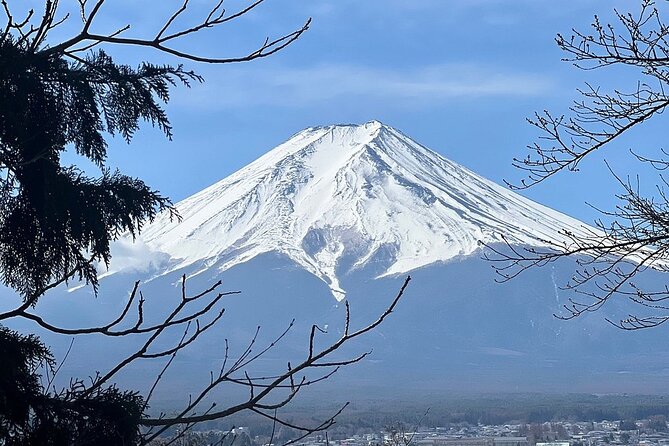
After the 5th Station area, you move into the charm zones—places that feel distinctly Japanese and very photo-friendly.
Oshino Hakkai
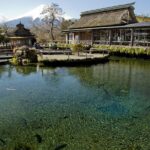
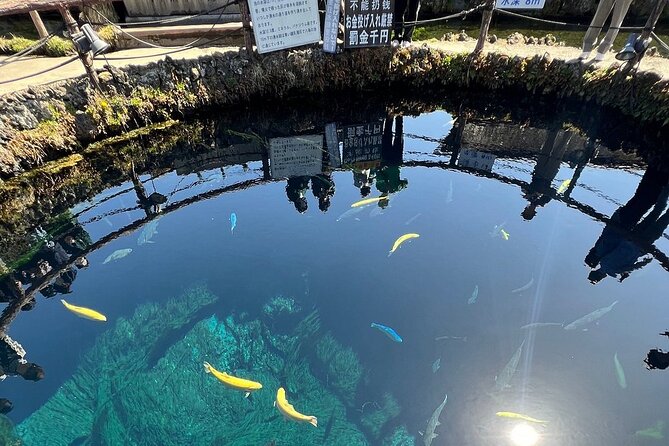
You get about 45 minutes at Oshino Hakkai, a small old-style village in the Fuji Five Lakes region. This area is linked to a dried-up former lake bed, and it’s known for its traditional atmosphere. Admission is listed as free here.
This is usually a “walk and linger” stop. The best use of your time is to wander a little first, then stop where the water features and Fuji alignment look best.
Oishi Park
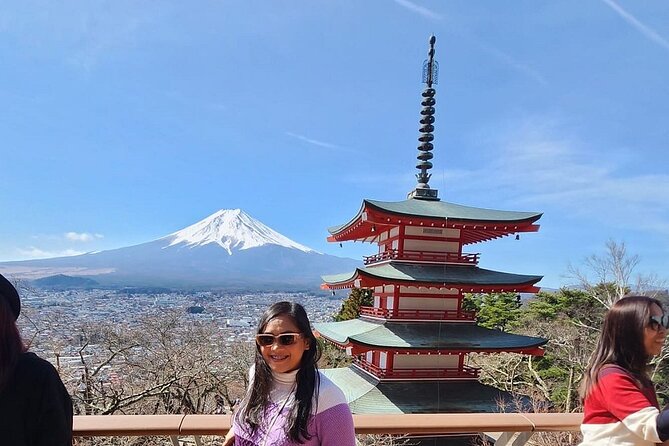
Then it’s Oishi Park, about 30 minutes, also free. This is a park area on the north shore of Kawaguchiko where you can get lake and Mt. Fuji in one view. It’s the kind of stop that works even if you’re only good for 20–30 minutes of walking—because the views do most of the work.
If it’s windy, you may want to keep your footing secure and avoid running after the perfect photo angle.
Kitaguchi Hongu Fuji Sengen Jinja: volcano shrine energy, calm footing
You’ll visit Kitaguchi Hongu Fuji Sengen Jinja Shrine for about 30 minutes. This is one of roughly 1,300 Asama shrines, and it enshrines deities connected to volcanoes and Mt. Fuji in particular. It’s also tied to the broader Mt. Fuji World Heritage area.
This stop is valuable for a reason beyond photos. It gives you a break from the lakeside hustle and shifts you into a more reflective part of the day. You’re surrounded by shrine grounds and a quieter pace, which pairs well with any leftover feelings after the height and cold of the 5th Station area.
In winter conditions, some guides have been known to tailor the moment—making a snowy shrine walk a highlight. If that’s your season, wear shoes that don’t slip.
Lake Yamanaka and the boat moment
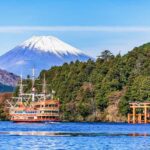
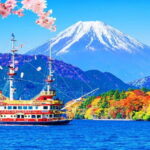
Next is Lake Yamanaka (also called Yamanakako), around 30 minutes. It’s described as the largest of the Fuji Five Lakes, and the stop notes a revamped sightseeing boat experience now operating as Swan Lake.
This is a “slow down and reset” stop. Even if you don’t take the boat, the lake view helps connect the dots between the earlier Kawaguchiko shots and the later caves.
If you’re choosing between taking photos and adding a short boat ride, think about time. You don’t want to cut your cave time too close—those are often where you’ll appreciate the cooler temperatures and unique scenery more than another viewpoint.
Narusawa Ice Cave and Fugaku Wind Cave: cold-weather gold
This is where the tour gets more interesting than just scenery, because you step into physical environments.
Narusawa Ice Cave (Hyoketsu)
You’ll spend about 45 minutes at Narusawa Hyoketsu Ice Cave. Admission is not included. The cave is near the entrance to the Aokigahara “sea of trees” forest area, and it’s known for being a tourist stop you can reach via the area’s routes.
Even if you don’t love caves, this can be a great weather backup. Cold air inside feels like a relief when the day is cloudy or windy outside.
Fugaku Wind Cave
Then there’s Fugaku Wind Cave for about 44 minutes. Admission is also not included. One useful fact: once inside, it’s pleasantly cool, with an average temperature around 3℃.
Bring a light jacket or at least something you can toss on without thinking. If you get cold easily, plan for it here, not later.
Saiko Iyashi no Sato Nenba: thatched-roof village atmosphere
Your final scenic stop in the core set is Saiko Iyashi no Sato Nenba, about 30 minutes. Admission is not included here either.
This is a revived thatched-roof village where you can see Mt. Fuji in a seasonal setting. The idea is less about a single viewpoint and more about the atmosphere—the sense of stepping into a different pace and time.
Because it’s a short stop, you’ll want to decide quickly what you want: a calm walk for photos, or a quick scan and move on. Either way, this village ending can help the day feel less like a checklist and more like a full cultural loop.
Food breaks, restrooms, and ride comfort on a long day
Food and drink aren’t included, so you’ll need to manage your own energy. Lunch is on you, and that matters because the day is long and spread out. If you’re prone to getting hungry or tired, pack a small snack and water. Even if a guide suggests snack stops, don’t rely on it.
Comfort is also not just about the car being air-conditioned. A few past experiences flagged issues like unpleasant van odors or ride comfort problems. That doesn’t mean it will happen to you, but it’s smart to treat this as a “sensitive nostrils” day. If you’re bringing motion sickness meds or anything for comfort, use it early.
Restrooms are your real clock. Plan to use them at each stop rather than trying to stretch between places.
Price and value: what $497.43 per group actually covers
At $497.43 per group (up to 7 people), you’re buying private time with a driver-guide, not just transportation. What’s included:
- Air-conditioned vehicle
- Highway toll tax
- Driver/guide
- Pick-up and drop-off from your hotel
- Gasoline/petrol
- Private transport only for your group
What’s not included:
- Food, drink, and lunch
- Fuji 5th Station entrance fee (listed as 2,100 yen per group)
- Admission at several stops like Narusawa Ice Cave, Fugaku Wind Cave, and Saiko Iyashi no Sato Nenba (listed as not included)
- Overtime charges: 5,000 yen per extra hour after 10 hours (hotel to hotel time)
So is it worth it? For families or a small group, yes—because you’re not paying for separate tickets, and you’re not doing route math in a new city. If you’re traveling solo or only with one person, it can still be a good value if you really want the pickup convenience and a calm, guided rhythm.
Weather reality: why Mt. Fuji days can change fast
This tour requires good weather. If it’s canceled due to poor conditions, you should expect an alternate date or a full refund.
On days when the weather is mixed, you may still get windows of clear views. When clouds break for a moment, guides who are quick on their feet can sometimes grab that instant with photos. That’s why being ready at the right time matters more than chasing every angle endlessly.
If visibility is bad, the caves and shrine/village stops often become more than filler. They give you something to do even when Mt. Fuji is hiding.
Should you book this Mt. Fuji day trip from Tokyo?
I’d book it if you want:
- hotel pickup and drop-off
- a private van for your pace
- classic Fuji Five Lakes highlights in one day
- support from an English-speaking driver-guide who helps with timing and photos
I’d think twice if:
- you’re very price-sensitive and don’t want extra admissions,
- you hate short stop times,
- or you need strict, guided commentary throughout (some experiences can feel more like a driver-and-drop-off than a fully chatty guide, depending on who you get).
Best move: if you book, confirm your pickup details clearly and keep your phone reachable that morning. The tour works best when everyone is set up for smooth timing.
FAQ
How long is the Mt. Fuji day trip?
The tour runs for about 10 hours (approx.).
What’s the group size and how private is it?
It’s a private tour/activity, and the group size is up to 7 people.
What’s included in the price?
The price includes an air-conditioned vehicle, highway toll tax, a driver/guide, gasoline/petrol, and hotel pick-up and drop-off.
What isn’t included?
Food and drink (including lunch) are not included. Also, admission fees for some stops are not included, including the Fuji 5th Station entrance fee of 2,100 Japanese Yen per group, plus other stop admissions listed as not included.
Do I need to pay for the Fuji 5th Station?
Yes. The Fuji 5th Station entrance fee is listed as 2,100 Japanese Yen per group and is not included.
What happens if the weather is poor?
This experience requires good weather. If it’s canceled due to poor weather, you’ll be offered a different date or a full refund.
Can I cancel for free?
Yes. You can cancel up to 24 hours in advance of the experience for a full refund.