REVIEW · SIEM REAP
Siem Reap: Angkor Wat Sunrise Explore The Most Iconic Temples
Book on Viator →Operated by Hellobird Tour · Bookable on Viator
Sunrise at Angkor Wat starts in the dark. I like that this tour takes care of hotel pickup in an air-conditioned minibus and gets you to the Angkor Archaeological Park fast, so you are not figuring out transport before dawn. I also like the English-speaking guide approach, because the stops are explained, not just stamped with a quick look.
The one big thing to consider is weather. If rain or heavy clouds show up, you may end up watching sunrise through grey skies instead of sunfire, and one account from the field notes the group still went out even when it was raining hard (umbrellas were provided).
In This Review
- Key things I’d watch before you go
- Sunrise logistics: why the 4:30 am start is the whole point
- Pickup, comfort, and the real meaning of group size
- Angkor Wat first: how to make the sunrise stop worth the ticket
- The guide factor: what English commentary adds (and who you might get)
- Banteay Kdei: a quieter stop that can feel surprisingly special
- Ta Prohm: the jungle-tree contrast that makes people stop moving
- Bayon Temple and the faces: what to look for beyond the obvious
- North Gate and Tonle Om Gate: the myth-game entrance to Angkor Thom
- Timing, weather, and the best way to protect your morning
- Price and value: what $26 really buys you
- Who should book this Angkor circuit (and who might not love it)
- Quick buying checklist before you go
- Should you book this tour?
- FAQ
- What time does the sunrise tour start?
- Is hotel pickup and drop-off included?
- Is the Angkor Wat entrance ticket included?
- How long is the tour?
- What’s included in the tour price?
- Do I need to bring an entrance ticket for the temple sites?
- Can I cancel and get a full refund?
Key things I’d watch before you go
- 4:30 am start means you need an early night and a quick breakfast plan
- Pickup + drop-off keeps you cool and saves time in a pre-sunrise scramble
- English guide explanations help you connect what you see at each temple
- You’re buying entrance tickets (Angkor Wat ticket is not included)
- Group size can run up to 25, even if you booked a smaller max
Sunrise logistics: why the 4:30 am start is the whole point
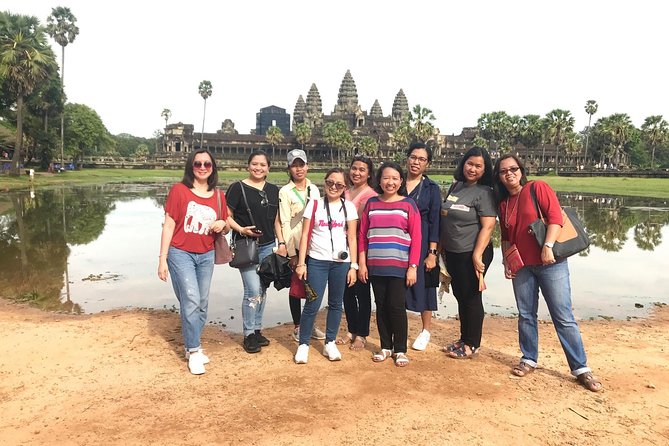
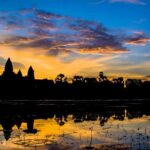
This is built around the idea of watching Angkor Wat in its morning mood. The tour starts at 4:30 am, which sounds brutal until you realize what you are gaining: cooler air, calmer temple paths, and a better chance to see the famous light over the moat and towers.
The practical win is that the tour handles your transportation in an air-conditioned vehicle from your Siem Reap hotel. You are less stressed, less sweaty, and less likely to lose time trying to coordinate a tuk-tuk schedule in the dark.
One caution: sunrise views depend on the sky. If weather turns, the tour still runs. In at least one situation, the group got fully wet and still continued, with umbrellas on hand. So come prepared for rain even if the forecast looks good.
You can also read our reviews of more tours and experiences in Siem Reap.

Pickup, comfort, and the real meaning of group size
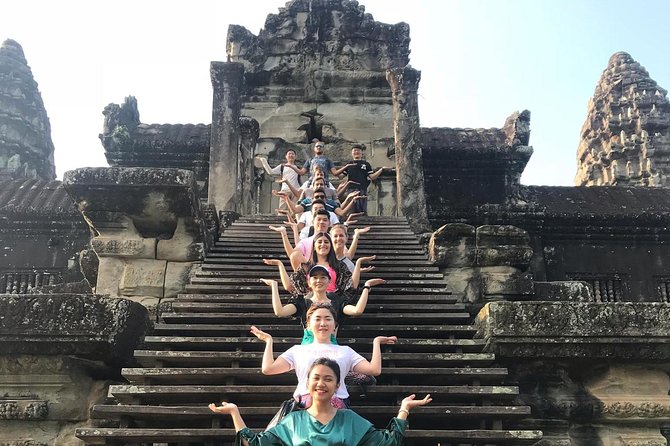
The tour includes pickup and drop-off, plus drinking water, which is a simple but smart combination for an early start. You are also dealing with temple days where walking heat ramps fast once the sun rises, so staying hydrated matters more than you think.
The operator sets a maximum of 25 travelers, and some people have noticed the day felt larger than they expected. The key takeaway for you: expect a tour that is organized, but not private. If you hate feeling rushed or like being near the front at every stop, this group format may feel less satisfying than a smaller group sunrise tour.
That said, the overall feedback trend is strong on punctuality and smooth pickup, and that is huge for this type of itinerary. When the day starts right, the rest of the temple circuit usually feels easier.
Angkor Wat first: how to make the sunrise stop worth the ticket
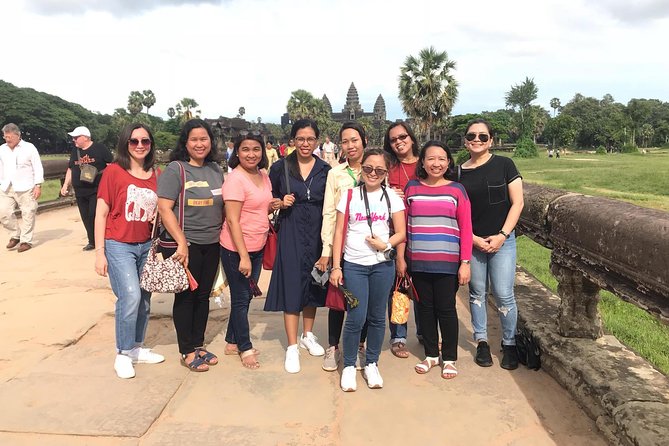
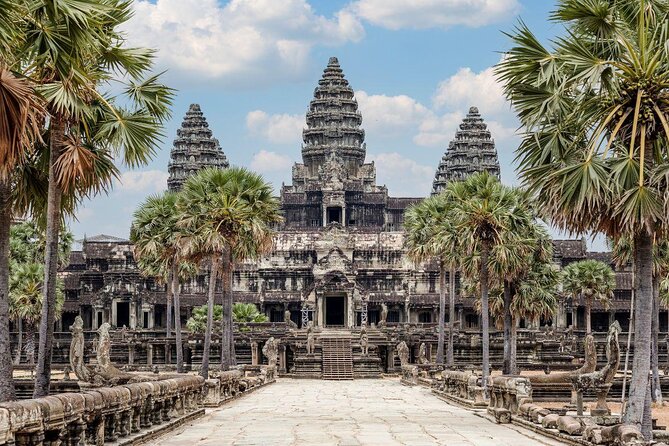
Angkor Wat is the headline, and the order makes sense: you go first, when conditions are best. The tour takes you from Siem Reap to the Angkor Archaeological Park, and you purchase your entrance ticket at the site (not included in the tour price).
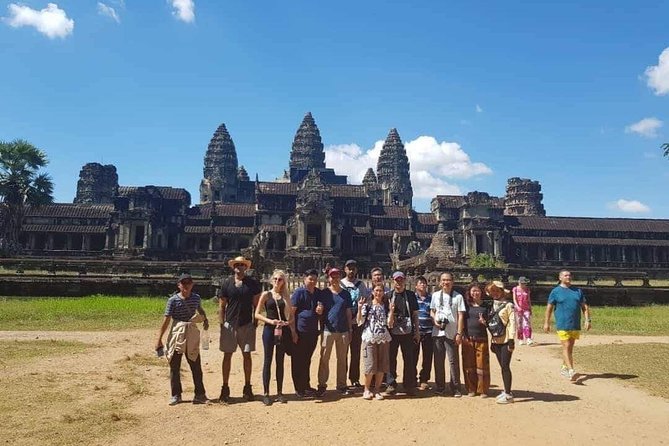
What you should expect at Angkor Wat during a sunrise-focused visit is not just the big silhouette. With a guide, you can get oriented quickly: where the main axes are, why certain structures are positioned the way they are, and what the overall design is trying to communicate.
You also have time to look without treating the place like a race. Even so, the day is packed, so you will want to move with purpose once you are inside. Think of this as a classic “hit the iconic angles” morning, not a slow art-studio stroll.
If the sunrise doesn’t fully deliver due to clouds or rain, you can still get value from the visit. Angkor Wat is still stunning in overcast light, and the guide’s context is what turns it from photos into understanding.
The guide factor: what English commentary adds (and who you might get)
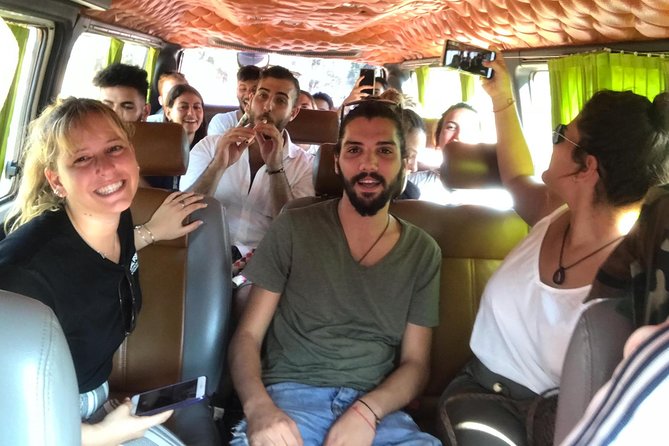
This tour is led by an English-speaking tour guide, and that changes everything when you are dealing with a site as layered as Angkor. The guide helps you connect symbols and scenes to the Khmer Empire and the temple’s role as more than a tourist postcard.
Two guide names show up strongly in real-world experiences: Nuon and Channoun. Both are described as giving solid insight, with Nuon especially noted for history and context, and Channoun for being kind and helpful even when conditions were miserable.
For you, the practical benefit is simple: you do not have to read a long wall of facts while standing in the crowd. The guide gives you the story while you are at the exact spot where the story makes sense.
Banteay Kdei: a quieter stop that can feel surprisingly special
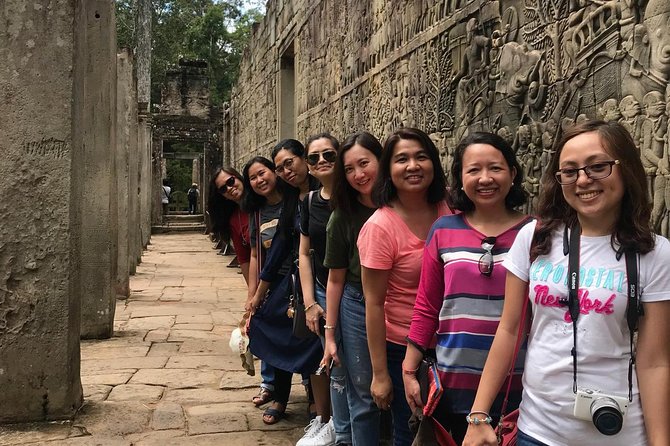
After Angkor Wat, you head to Banteay Kdei, a temple that is often less crowded and more contemplative than the headline sites. The name is often explained as meaning Citadel of Chambers, and you can feel why that matters once you are walking through.
Built in the late 12th century as a Buddhist monastery, this temple is known for carvings and more serene corridors than the more famous stacks and courtyards. On a day like this, that quiet can be a relief. It gives your brain a break from trying to process the biggest symbols at every turn.
The drawback is that time here is limited. The stop is relatively short, so you may not catch every detail unless you are intentional about where you pause. If you love close-up carvings, bring your patience and pick a few sections to focus on rather than trying to see everything.



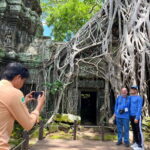
Ta Prohm: the jungle-tree contrast that makes people stop moving
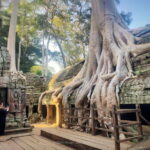
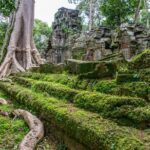
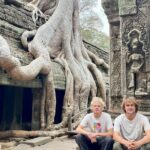
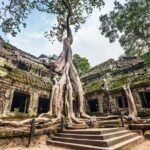
Next up is Ta Prohm, the temple made famous by massive tree roots wrapping through walls. This is the stop where most people finally stop treating it like a checklist and start treating it like a scene.
The tour framing matters here: Ta Prohm is described as a 12th-century temple left largely unrestored, which creates that jungle temple effect. When you see it that way, you notice textures you would miss if you only approached it as a photo backdrop.
A guide helps you understand why this place looks the way it does and why the “unrestored” look matters. It is not just for spectacle; it is part of how the site preserves its story in layers of time.
Timing note: it is an easy place to linger if you like photography. But the overall itinerary has other major stops, so you’ll want to manage your pace. If you are the type who always ends up last in group tours, set a personal rule for Ta Prohm: find your best angles, then keep moving.
Bayon Temple and the faces: what to look for beyond the obvious
In Bayon Temple, the famous element is the 54 towers with four massive, serene faces each. Even if you have seen pictures before, the scale hits differently when you are standing in the complex.
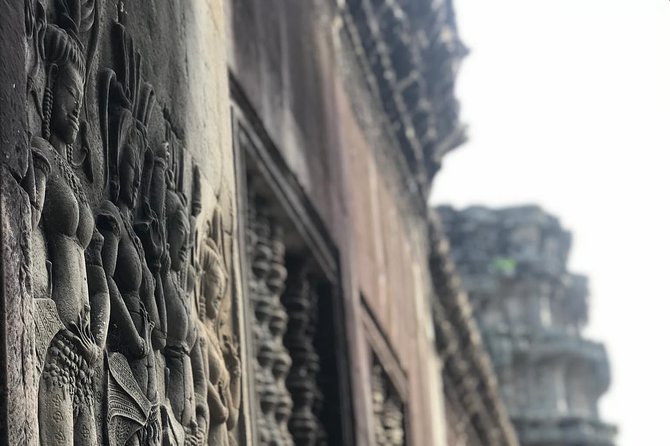
The guide adds real value here by pointing out that the carvings show scenes of daily life and historical moments. Instead of just thinking of the faces as an iconic look, you start noticing storytelling details.
Bayon is located at the center of Angkor Thom, so it also works as a navigation anchor for the day. Once you understand where you are in Angkor Thom, the rest of the circuit feels more connected rather than random.
The stop is shorter than you might want if Bayon is your favorite, but the payoff is that you are seeing it as the core of Angkor Thom, not as another temple on the list.
North Gate and Tonle Om Gate: the myth-game entrance to Angkor Thom
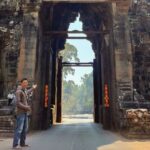
One of the more memorable photo corridors on this route is the approach to the gate. The stop is described around Tonle Om Gate, linked with the South Gate of Angkor Thom, and it includes the causeway lined with statues of gods and demons.
This is where you get the dramatic entrance experience. The gate is crowned with four giant stone faces similar to those at Bayon, so your eye gets an instant comparison between the city entrance and the central temple icon.
If you care about atmosphere more than just structures, this is a strong stop. The causeway statues create a sense of movement and story, and it is a good moment to slow down for a few minutes if you are feeling temple fatigue.
Timing, weather, and the best way to protect your morning
Because this tour is sunrise-centered, you should plan like the weather might change fast. If it is raining, you might still go out, and umbrellas may be available. So pack light rain gear, not just a shrug-and-hope attitude.
Also, start thinking about comfort. The day is early, and your body will probably feel it. Bring water, and use it. Dress in breathable layers so you can handle cool morning air and warmer afternoon temple conditions without feeling stuck.
One more small trick: keep your phone charged and your camera settings ready. This route moves, and once you are inside temple spaces, you will not want to waste time figuring out the basics.
Price and value: what $26 really buys you
At $26 for roughly eight hours, the big value is what is included. You get hotel pickup and drop-off, transportation in an air-conditioned vehicle, an English-speaking guide, and drinking water.
What is not included is the entrance ticket for Angkor Wat (and admission is listed as not included in the itinerary overview). You should also be ready for food to be on your own. The tour does not list a meal as included, so plan to buy lunch separately or bring simple snacks if that matches your style.
So the cost analysis is this: the price is low for the logistics and guiding support, but you are still paying the separate site entrance fees. If you already planned to visit the temples anyway, this is a practical way to combine transport + interpretation for far less than you would likely pay for a more customized private guide.
If you hate groups and you want a slow, unhurried experience with maximum time at each temple, you may find the value feels less generous. But if you want a well-timed circuit with context, the price makes sense.
Who should book this Angkor circuit (and who might not love it)
This tour is a great fit if you want the Angkor Wat sunrise start and you like having the day structured. It also suits you if you prefer an English guide who explains what you are seeing rather than wandering with a map and hoping you guessed right.
You will likely enjoy it if you are comfortable in a group setting and you do not need private pacing. The route hits the major icons plus quieter stops, which is a solid “first Angkor day” pattern.
You might want a different style of tour if you are extremely time-sensitive about how long you spend at each site or if you strongly prefer smaller groups. Some people have felt the day moved quickly and that certain parts of the schedule could feel like more time was spent on non-temple elements than expected. If that is your pet peeve, you’ll want to compare tour timing carefully.
Quick buying checklist before you go
You can make this day easier with a few basics:
- Angkor Wat entrance ticket cost set aside before you arrive
- Rain-ready gear since the sunrise can happen under bad weather
- Comfortable shoes for temple stone and uneven paths
- A charged phone for face towers and tree-root angles
- Cash/card for food since meals are not listed as included
Should you book this tour?
I’d book this if you want a sunrise-focused Angkor Wat morning with hotel pickup, an English guide, and a full temple circuit that includes Bayon and Ta Prohm. The low price for the transportation + guiding time is hard to ignore, especially if it is your first time around Angkor.
I would think twice if your top priority is guaranteed sunrise skies or if you dislike group pacing. Weather can ruin the dream sunrise, and group size can run up to 25. Still, even on a grey day, the temples themselves are worth the trip, and the guide commentary is what helps it feel meaningful instead of just crowded sightseeing.
If you are deciding today: go for it if you can handle early mornings and variable weather, and if you want the day’s highlights connected with real context.
FAQ
What time does the sunrise tour start?
The tour starts at 4:30 am.
Is hotel pickup and drop-off included?
Yes. The tour includes pickup and drop-off from your hotel.
Is the Angkor Wat entrance ticket included?
No. The Angkor Wat ticket is not included (you purchase entrance tickets on-site).
How long is the tour?
It runs for about 8 hours.
What’s included in the tour price?
The tour includes transportation, an English-speaking tour guide, drinking water, and hotel pickup and drop-off.
Do I need to bring an entrance ticket for the temple sites?
Yes. The tour description notes that admission tickets are not included, and you buy your entrance ticket for Angkor Wat as part of the experience.
Can I cancel and get a full refund?
Yes. You can cancel for a full refund if you cancel at least 24 hours before the experience’s start time.