REVIEW · SIEM REAP
Siem Reap: Full Day Angkor Wat Temple Experience with Sunset
Book on GetYourGuide →Operated by ASEAN ANGKOR GUIDE · Bookable on GetYourGuide
Angkor is one of those rare places that still feels mythic. This full-day circuit hits Angkor Wat, Bayon, and the jungle drama of Ta Prohm, then tops it off with a sunset climb at Phnom Bakheng. I like how the day is paced to keep you moving without feeling shoved along, and I really value the included comfort touches like A/C transport, cold towels, and bottled water. One thing to plan for: it’s a lot of walking in heat, plus you’ll need to manage the Angkor pass requirement before the day starts.
You’ll be picked up from Krong Siem Reap in the morning window (around 8:00 to 8:30), with the big temples stacked in a sensible order so the light works in your favor. The most physically demanding moment is the final sunset stop at Phnom Bakheng, where you’re climbing and standing for views. If you want an Angkor day that feels big on highlights but still organized, this fits.
In This Review
- Quick reasons this day works
- Starting in Siem Reap: an early pickup and a smart first step
- Angkor Thom and the South Gate: the royal city wall vibe
- Bayon Temple: hundreds of faces and a surprisingly human mood
- Baphuon, Terrace of the Elephants, and Phimeanakas: royal life in stone
- Terrace of the Leper King and Srah Srang: the odd details that make it real
- Ta Prohm and Phum Preah Dak: jungle roots and a palm sugar lesson
- Angkor Wat in the afternoon: the moat, the towers, and the bas-relief effect
- Phnom Bakheng at sunset: worth the climb, if you plan your steps
- Logistics, comfort, and why the tour feels good value
- Who should book this Angkor full-day sunset tour
- Should you book it? My take
- FAQ
- Is the Angkor pass included in the price?
- What time does pickup happen?
- Is lunch included?
- What’s included to keep you cool during the day?
- Which temples and sites are included?
- What should I wear or bring?
- Is this suitable for children?
Quick reasons this day works
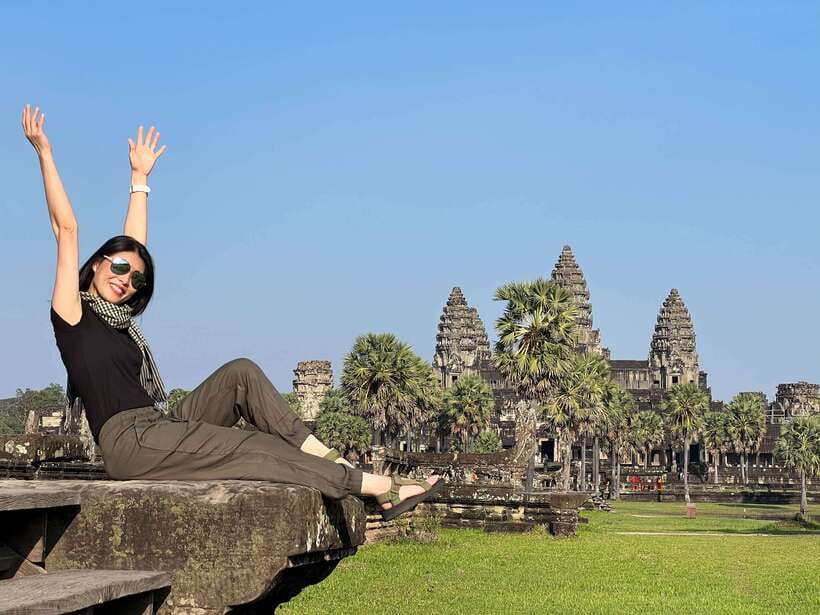
- A full Angkor hits-bigger-better route: Angkor Thom, Bayon, Ta Prohm, Angkor Wat, plus Phnom Bakheng sunset.
- Comfort that matters in the Cambodian heat: A/C transport, unlimited bottled water, and cool towels at stops.
- Photo-friendly timing: the day is scheduled so you have time before crowds build, especially around the sunset viewpoint.
- A guide-led storyline: you see Buddhist and Hindu sites in context, with explanations that connect the Khmer empire’s ideas to the stone carvings.
- A real local break: lunch at a local restaurant (vegetarian option available) and a village stop for palm cake and palm sugar.
- Small-group option: limited to 14 participants for a more personal feel.
Starting in Siem Reap: an early pickup and a smart first step
The day begins early, and that’s not just for drama. You’re picked up from your hotel in Krong Siem Reap between 8:00 and 8:30, then you head out with enough time to get oriented before the heat ramps up. Expect a guided handoff: your driver and guide meet you in the lobby, and the guide holds a sign with your name.
The other key early step is the Angkor temple pass. It’s not included, and you’re required to have it before the start of the Angkor portion. Practically, that means you should buy it ahead of time online so there’s no last-minute scramble. Plan for the pass cost on top of the tour price.
You can also read our reviews of more tours and experiences in Siem Reap.
Angkor Thom and the South Gate: the royal city wall vibe
Angkor Thom is one of the places where you immediately understand why the Khmer rulers built monumental cities. The fortified Great Royal City was constructed in the 12th century by King Jayavarman VII, and the scale hits you fast once you’re inside.
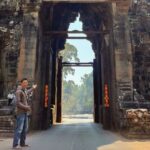
You start with the South Gate, where you can spot the imposing Avalokiteshvara statue. It’s the same look you might recognize from pop-culture references, which helps make the stone details feel less abstract. From there, you move into the heart of Angkor Thom, where the walking paths, gates, and carved features feel like a whole system, not random ruins.
What I like for your experience: you get a strong “big picture” foundation early—then later temples make more sense because you already know what this royal city represented.
Possible consideration: the South Gate-to-core section involves steady walking and stair bits, so bring water with you when you step off the vehicle.
Bayon Temple: hundreds of faces and a surprisingly human mood
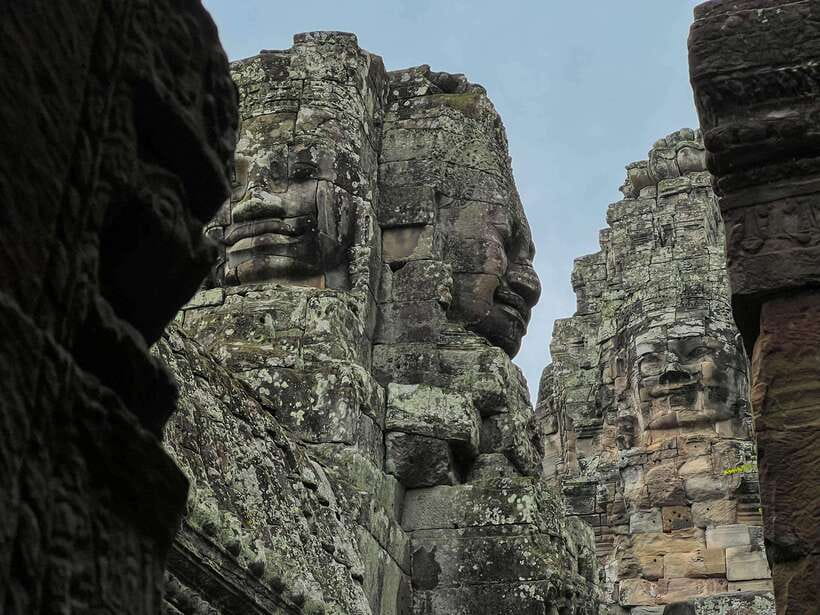
Bayon is where Angkor goes from grand to intimate. The temple is Buddhist in style and covered with hundreds of stone faces, each one worn by time but still strikingly expressive. The effect is not just visual. It feels like you’re being watched, guided, or judged, depending on where you stand.
This stop is often the one that turns a sightseeing day into something memorable, because it’s the easiest temple to “read” with your eyes. You can slow down, find different faces from different angles, and understand why photographers keep coming back here.
Practical tip: bring your camera, but also take a few minutes with no lens. Walk around slowly and let your eye adjust. The faces keep changing as you move.
Possible drawback: Bayon can get busy, so the value is in timing. Tours like this aim to arrive while you still have space to breathe between photo spots.
Baphuon, Terrace of the Elephants, and Phimeanakas: royal life in stone
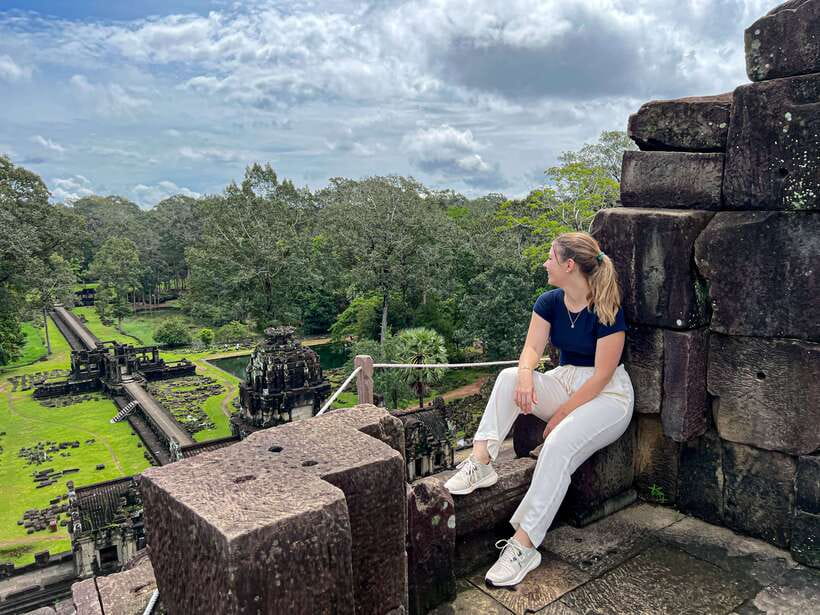
After Bayon, you shift from faces to function—what rulers built for power, ceremony, and spectacle. You’ll visit several sites inside Angkor Thom, including Baphuon, the Terrace of the Elephants, and Phimeanakas.
- Terrace of the Elephants helps you picture palace-era showmanship. The carvings connect the temple design to public life and royal display.
- Phimeanakas adds another layer by showing how myth and kingship were intertwined in Khmer thinking.
- Baphuon brings you back into Hindu-era temple forms, adding variety after the Buddhist-heavy Bayon experience.
Why this grouping helps you: instead of treating each temple as a standalone photo, you’re seeing a sequence. You get a better sense of how the empire shaped religious architecture and also how rulers staged authority.
Watch your pace: you’ll likely be moving between multiple viewpoints in a limited time window. If you’re slow on steps, save your extra energy for the later climbs.
Terrace of the Leper King and Srah Srang: the odd details that make it real
Next comes one of Angkor Thom’s more unusual names: the Terrace of the Leper King, also referred to as Preah Ponlea Sdach Komlong in the tour route. The stop is short, but it’s worth it because it reminds you these were lived-in spaces with stories attached, even when the labels sound mysterious.
Then you pause at Srah Srang, a break and reset point before lunch. This matters more than you think. Cambodia heat makes even a short gap useful—your feet get relief, and you can rehydrate before the next temple surge.
If you’re sensitive to humidity, this is one of those “smart breaks” that keeps your whole day from unraveling.

Ta Prohm and Phum Preah Dak: jungle roots and a palm sugar lesson
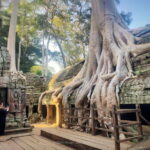
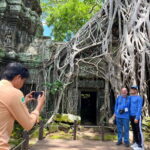
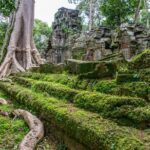
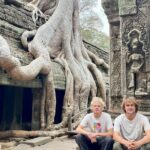
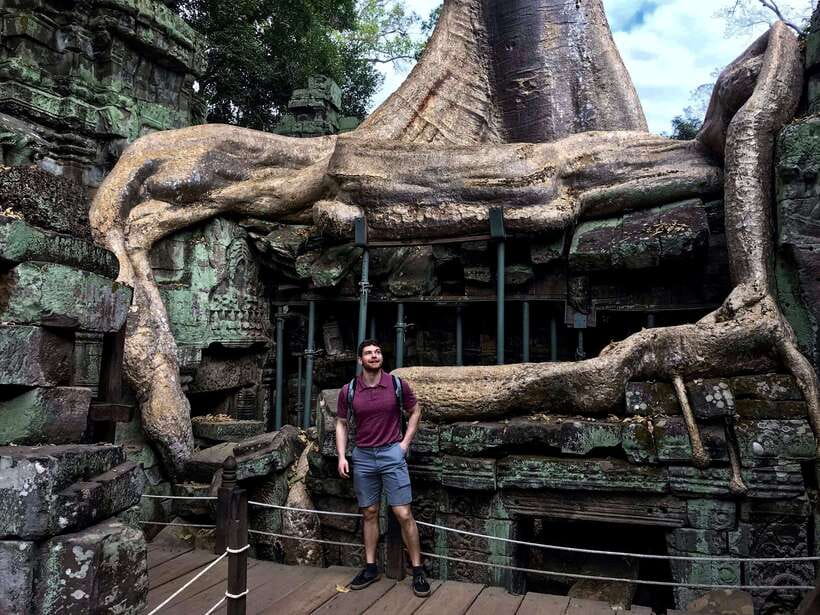
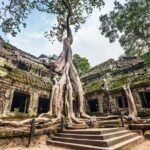
Ta Prohm is the temple people recognize from the look of its stone swallowed by roots. This is the jungle-temple atmosphere that still feels cinematic: huge trees intertwine with carvings, and the temple walls look like they’re holding their breath.
You also get a story connection to Tomb Raider, but the real payoff is the way the roots create natural framing. You’ll see angles that feel like old photographs even before you take one.
After Ta Prohm, the day makes a smart turn toward local life with a visit to Phum Preah Dak. This is where you can learn how locals make palm cake and palm sugar. It’s a contrast to the ruins: same day, different meaning. You get to see how an Angkor region remains a place where people actually live and work.
What I think you’ll enjoy most here: it breaks the temple “loop.” By the time you head to Angkor Wat, you’ll feel less like you’re just checking boxes.
Possible consideration: Ta Prohm’s roots mean uneven ground and frequent slow walking. Wear footwear you trust.
Angkor Wat in the afternoon: the moat, the towers, and the bas-relief effect
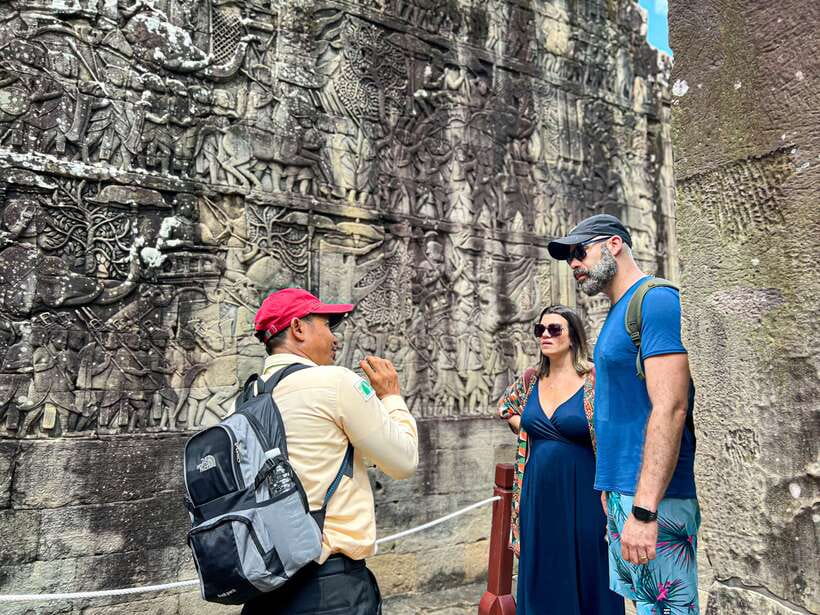
Later, you move into Angkor Wat, the star of the whole Angkor complex. The temple is dedicated to Vishnu and was built under King Suyavarman. It’s also famous for huge amounts of wall decoration and the longest bas-relief in the world—exactly the kind of detail that rewards a slow viewing pace.
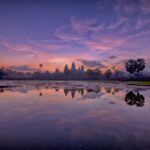
Angkor Wat sits within a giant moat, and the five towers are tied to symbolism you’ll recognize from the Cambodian flag. When you walk the grounds, you feel how the design pulls your attention back toward the center. Even if you’re not an architecture nerd, the symmetry and scale do the work for you.
One of the best values of doing it this way: you’re there after earlier sites. Your guide can point out how motifs echo across different temples, and you’re more likely to notice carvings rather than just hunting for the perfect “one shot.”
Possible drawback: by late afternoon, the sun can still be strong. Sunscreen and a hat aren’t optional.
Phnom Bakheng at sunset: worth the climb, if you plan your steps
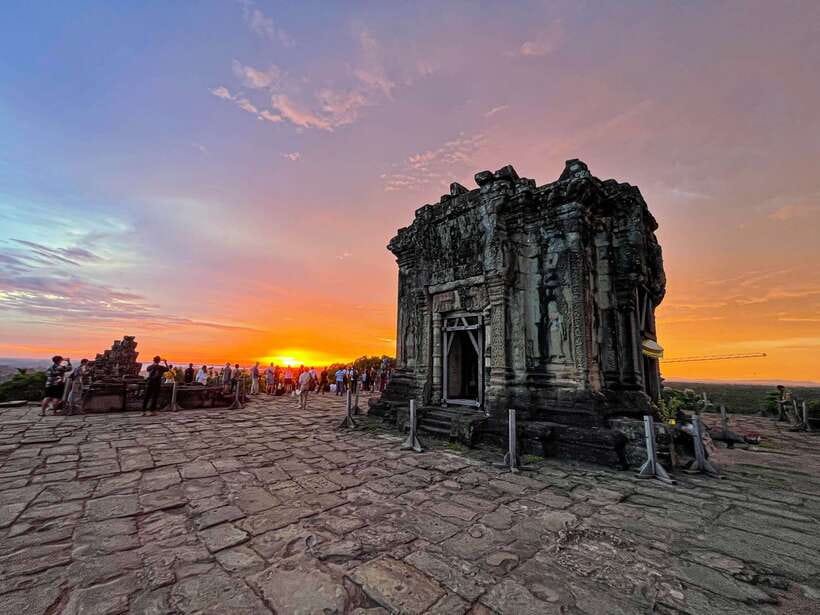
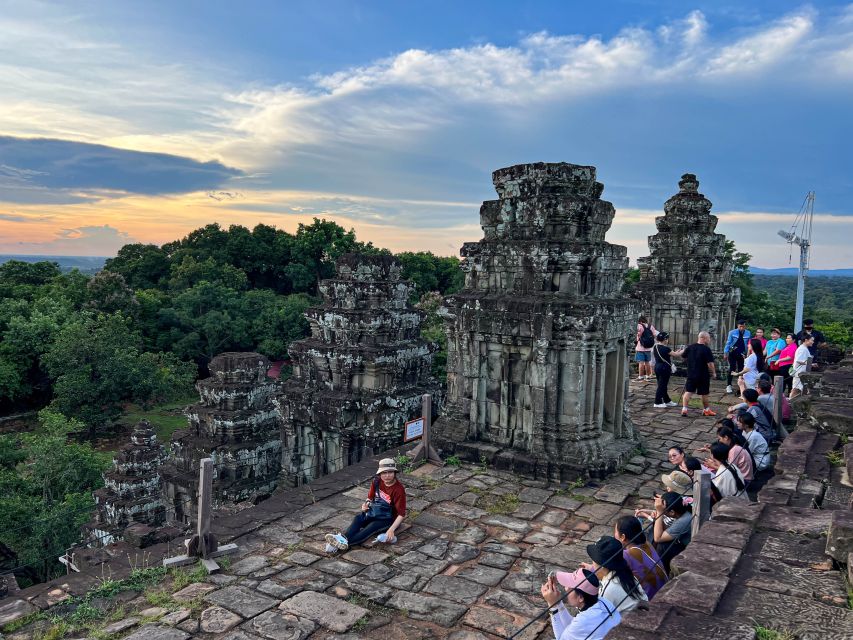
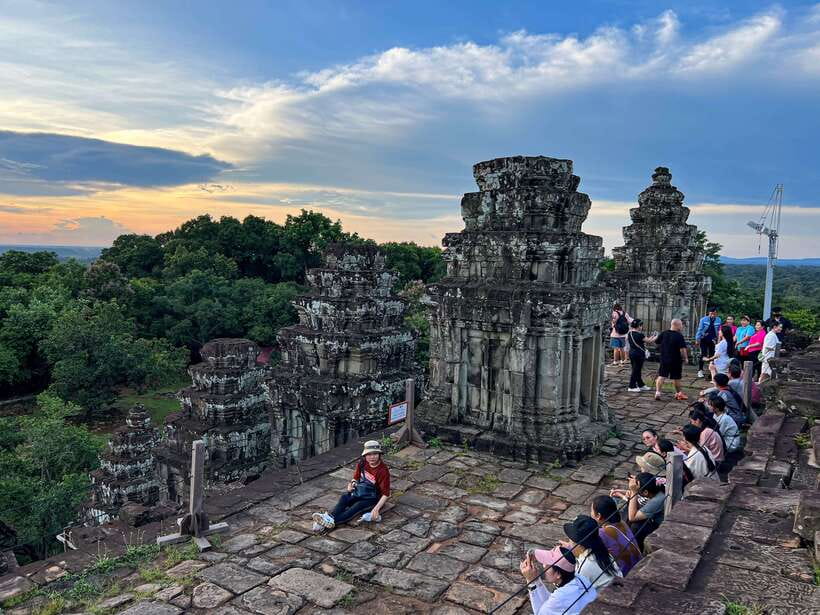
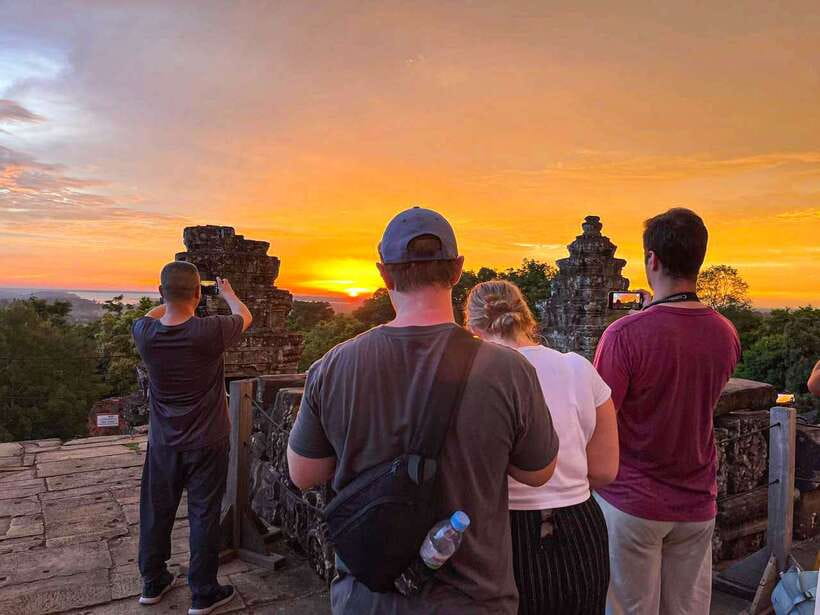
The finale is Phnom Bakheng, where you climb for sunset views. This is one of the most memorable “end scenes” in the Angkor area, but it comes with two practical realities: stairs and crowds.
This tour is designed to give you enough time to reach viewpoints and enjoy the light before the biggest rush. That timing helps, even though no one can erase the fact that sunset is popular for a reason.
How to make this part easier:
- Start your climb with a steady pace, not a sprint.
- Keep water accessible, because the climb can dry you out fast.
- Take a moment early to locate the best spot for your camera, then return your attention to the sky.
What you’ll feel after: Angkor Wat is the iconic monument, but Phnom Bakheng is the moment where the whole complex feels alive under changing light.
Logistics, comfort, and why the tour feels good value
The listed price is $25 per person, and that alone already looks reasonable for a full day. But the real comparison is what’s included versus what you’d pay if you went DIY.
Here’s the practical breakdown:
- Included: an English-speaking professional guide, A/C transportation, hotel pickup and drop-off, unlimited bottled water, cool towels, and lunch (with vegetarian option).
- Not included: the Angkor pass (US$37 per person) and soft drinks.
If you’re comparing to hiring a taxi plus guide plus timed entry, this format can save you stress and time. Also, the comfort details are not tiny: A/C vehicles and seat-level charging (USB and USB-C are mentioned in feedback) keep your phone alive for photos and maps, and cold towels help you keep going in heat.
Small-group note: the small-group option is capped at 14 participants. That often means less waiting around at key photo points and a better chance your guide can manage pacing.
Dress code reality check: shoulders and knees must be covered. No short skirts and no sleeveless shirts. If you show up underdressed, you’ll lose time fixing it.
Who should book this Angkor full-day sunset tour
This is a strong fit if you want:
- A full highlight loop without the chaos of planning your own route.
- A guide to connect what you see at Angkor Thom, Bayon, Ta Prohm, and Angkor Wat into one story.
- The comfort factors that keep long days enjoyable: A/C, bottled water, and cool towels.
- A sunset ending that doesn’t force you into an ultra-early morning start.
It may not be ideal if:
- You dislike temple stairs and want minimal walking.
- You’re traveling with children under 10 and are counting on the small-group option (it’s noted as not suitable there).
- You’re not prepared to cover shoulders and knees, or you show up with large bags.
Should you book it? My take
Book it if you want an Angkor day that feels organized, with enough time to enjoy details and not just race from one tower to the next. The combination of Angkor Thom faces, Ta Prohm roots, and Angkor Wat’s monument scale makes the day feel complete, and the sunset payoff at Phnom Bakheng is a great way to close.
Skip it (or at least reconsider) if you already know you’ll hate heat, stairs, and the need for strict dress code. Also, budget for the Angkor pass separately so the day stays stress-free.
If you’re on the fence, I’d make the decision based on one question: do you want to spend your morning handling logistics and tickets, or do you want that time turned into temples and a calmer ride? This tour leans hard toward the calm, guided side.
FAQ
Is the Angkor pass included in the price?
No. The Angkor temple pass is not included and is listed as US$37 per person. You are required to have the pass before the start of the tour.
What time does pickup happen?
Pickup is included from your hotel, typically between 8:00 AM and 8:30 AM. The guidance says to wait in the hotel lobby about 10–15 minutes before pickup.
Is lunch included?
Yes. Lunch is included, and there is a vegetarian option available if you let the provider know in advance.
What’s included to keep you cool during the day?
You get unlimited bottled water and cool towels during the excursion, plus A/C transportation.
Which temples and sites are included?
The route includes Angkor Thom (South Gate), Bayon, Baphuon, Terrace of the Elephants, Phimeanakas, Terrace of the Leper King, Srah Srang (break time and lunch), Ta Prohm, Angkor Wat, and Phnom Bakheng for sunset.
What should I wear or bring?
Bring sunscreen, a hat, and insect repellent (and a camera). Dress code requires shoulders and knees to be covered, with no short skirts and no sleeveless shirts.
Is this suitable for children?
Children under 10 years old are not suitable for the small-group tour option.