REVIEW · SIEM REAP
Siem Reap: Angkor Sunrise 1- or 2-Day Guided Temples Tour
Book on GetYourGuide →Operated by Journey Cambodia · Bookable on GetYourGuide
Angkor has a way of turning your brain on fast. This small-group tour gives you prime sunrise at Angkor Wat plus expert context for the temples you see, not just the views.
I love the mix of big-ticket sights and lesser-seen stops on Day 1, including Banteay Srei and the moody Preah Khan ruins. I also like the practical comfort setup: a/c transport, bottled water, and cool towels when the heat starts winning.
The main drawback is simple: it is an early, active two-day plan. You’ll be walking on uneven ground, and you need to cover shoulders and knees even in warm weather.
In This Review
- Key highlights to look forward to
- The rhythm: why this tour feels different from just temple hopping
- Sunrise at Angkor Wat: getting there before the crowd energy hits
- Day 1 outside Angkor Thom: Pre Rup, Banteay Srei, Neak Pean, Preah Khan, and sunset
- Pre Rup: a Hindu temple with a layered build style
- Banteay Srei: fine carving on a smaller scale
- Neak Pean: a calm break inside a big water setting
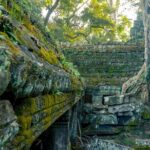
- Preah Khan: ruined but packed with mood
- Sunset: why ending the day here works
- Day 2: Angkor Wat inside, Angkor Thom’s gates and terraces, then Ta Prohm
- Angkor Wat interior: learning the carvings while you walk
- Breakfast outside: simple but well-timed
- Angkor Thom: Southern Gate and the faces of the city
- The terraces: Leper King and Elephants
- Ta Prohm: jungle roots, ruins, and a cinematic feel
- Guide quality: the real value you’re paying for
- Comfort and heat management: AC van, cool towels, and smart pacing
- Price and what you’re really getting for it
- What to bring, what to wear, and how to avoid common temple hassles
- Bring
- Wear
- Practical behavior note
- Who this tour suits best
- Should you book: my take
- FAQ
- What does the tour price include?
- Is the Angkor temples pass included?
- What time does the sunrise day start?
- What’s the meeting and pickup timing on Day 1?
- How big are the groups?
- What language is the guide?
- What should I wear and bring?
- Do I need a passport for this tour?
- What’s not allowed?
Key highlights to look forward to
- Angkor Wat sunrise timing with pre-dawn departure so you’re in position before most people arrive
- Banteay Srei’s intricate carvings on a smaller sandstone temple that packs a lot of detail
- Preah Khan’s atmosphere: crumbling stone plus tree roots, with the added interest of restoration underway
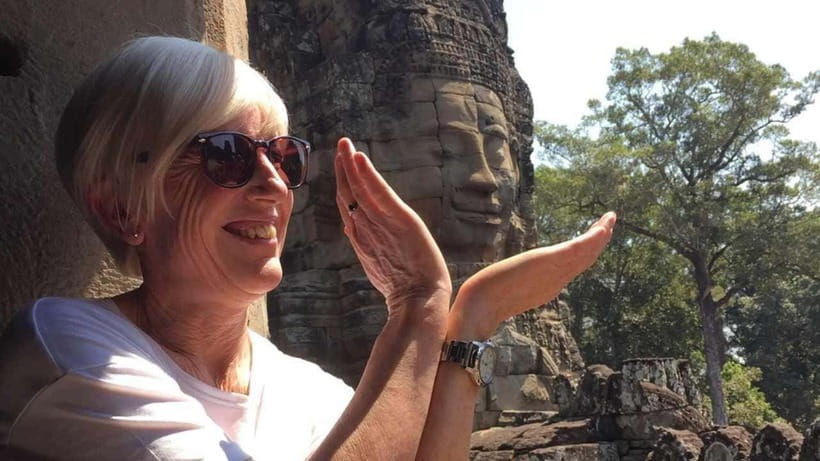
- Angkor Thom’s icon moments: the Southern Gate figures and the face-covered central towers
- Ta Prohm’s jungle look where roots and stone share the frame
- Small group size (limited to 15), often feeling closer to a private visit
The rhythm: why this tour feels different from just temple hopping
Angkor is massive. If you come in with no plan, you end up sprinting between crowds and missing the story behind the stones. This tour avoids that trap by keeping the day structured and then explaining what you’re actually looking at.
On Day 1, you go west and south of the most central cluster, aiming for standout temples that feel calmer and more intimate. You start with Pre Rup, then hit the carving-rich Banteay Srei. After that, you bounce through Jayatataka Baray’s Neak Pean and finish with the haunting Preah Khan before watching the light change at sunset.
On Day 2, you wake up in the dark for Angkor Wat sunrise, then go deeper inside the temple rather than doing a quick walk-by. After Angkor Wat, the tour shifts to Angkor Thom and its big symbolic gate and terrace areas, then ends with the root-choked magic of Ta Prohm.
You can also read our reviews of more tours and experiences in Siem Reap.
Sunrise at Angkor Wat: getting there before the crowd energy hits
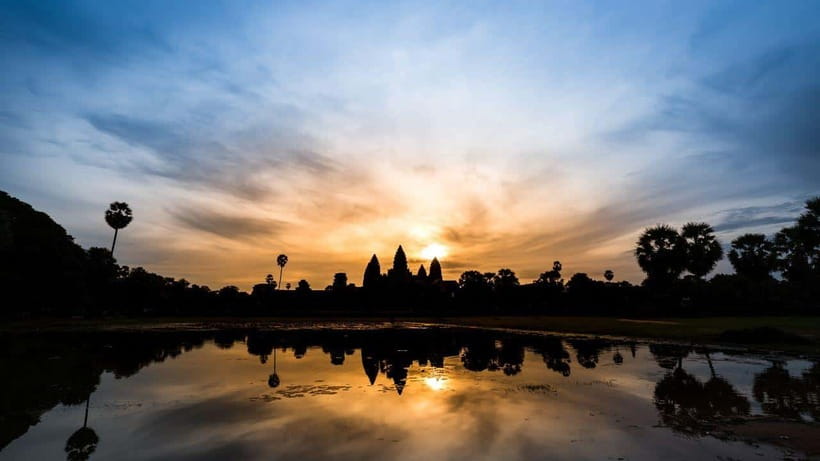
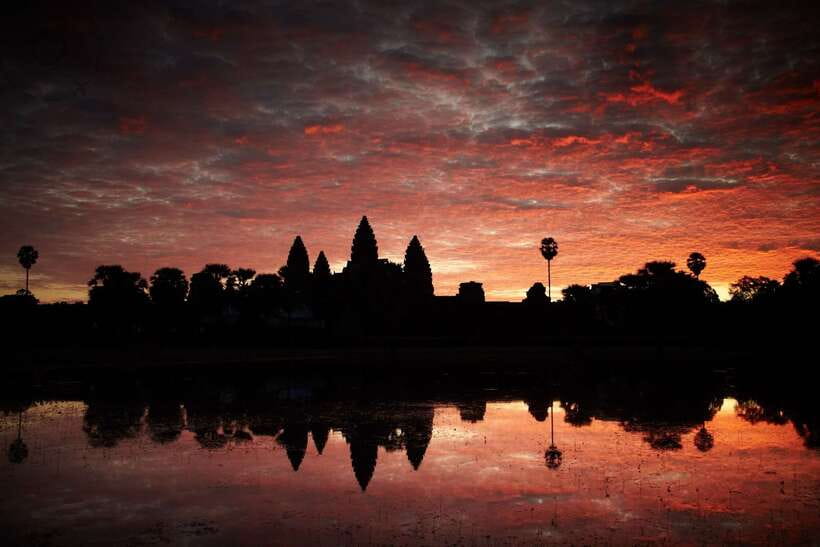
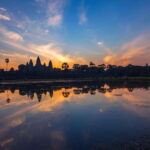
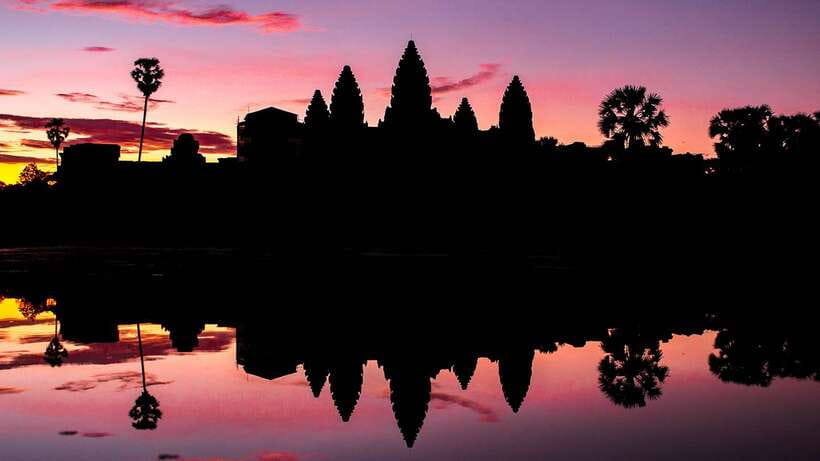
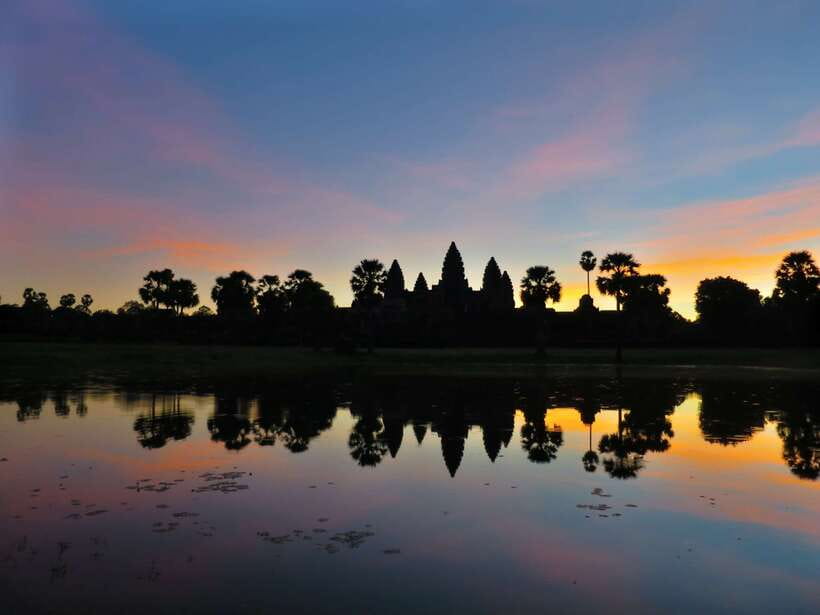
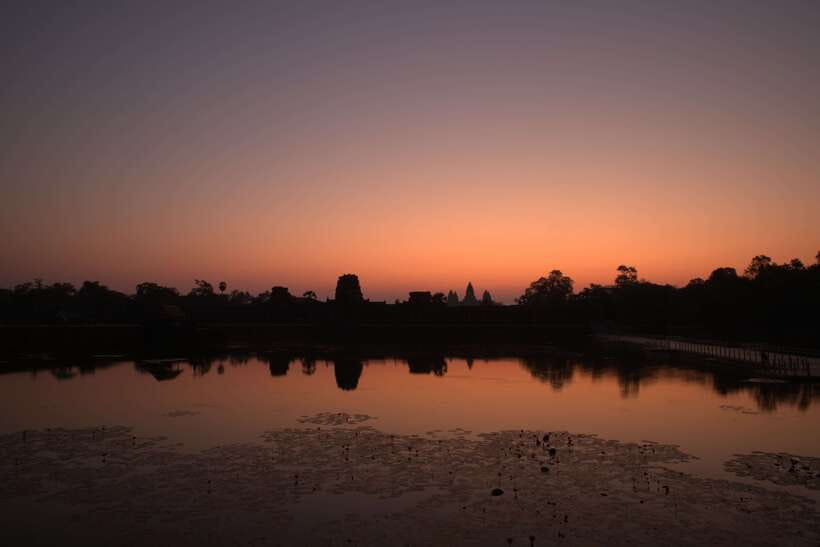
Angkor Wat sunrise is famous for a reason, but the real value here is how the tour handles the timing. You depart pre-dawn on Day 2 (pickup is scheduled around 4:20–4:35 AM depending on your pickup window), and you’re aiming for a sunrise view at the world’s largest sacred building.
Once inside the Angkor Wat grounds, the emphasis moves beyond the sky. Your guide helps you understand the bas-reliefs and the temple layout, so you’re not just taking photos of the outside. You spend about two hours exploring the interior—corridors, central chambers, and upper terraces—where the carvings start to feel less like decoration and more like a visual text.
You also get breakfast just outside the temple, which matters because the morning can otherwise turn into a scramble. Even if you’re not a breakfast person, having food sorted helps you stay focused for the rest of the day.
One note for expectations: weather can affect what you see at sunrise. If skies are cloudy, you still get the atmosphere and the morning light, but you might not get the full sun show.
Day 1 outside Angkor Thom: Pre Rup, Banteay Srei, Neak Pean, Preah Khan, and sunset
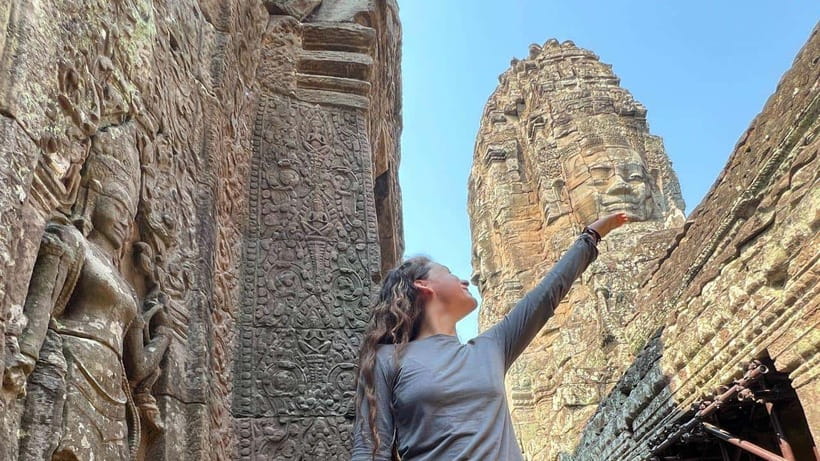
Day 1 is the temple-collector’s calm day. You start with pickup around 7:40 AM to 8:00 AM and you end back in Siem Reap in the late afternoon/early evening range (the tour info lists drop-off around 4–5 PM, with hotel arrival sometimes running later, roughly 6:00–6:30 PM).
Pre Rup: a Hindu temple with a layered build style
Your first stop is Pre Rup, a Hindu temple dated to 961 or 962. What I like about starting here is that it gives you a baseline before the sandstone detail later on Day 1. Pre Rup also has that classic Angkor feeling of structure sitting among trees and heat haze, which makes the next temples easier to compare.
Banteay Srei: fine carving on a smaller scale
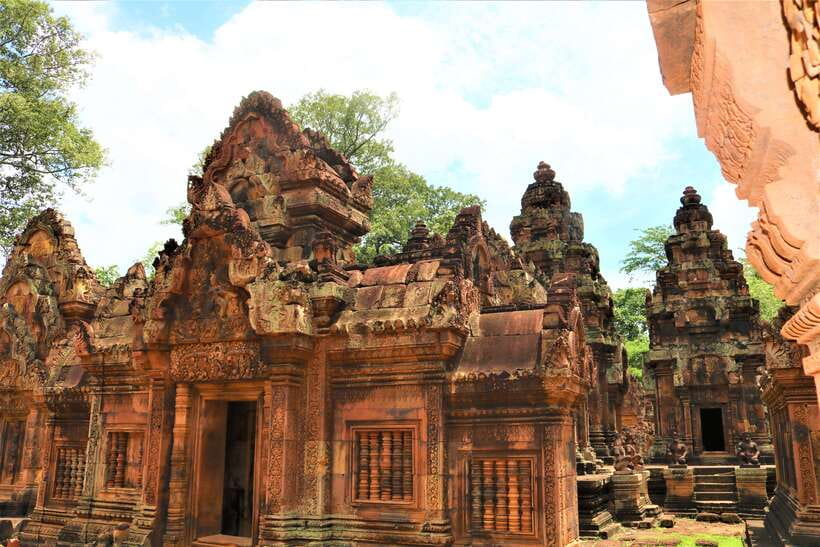
Then you drive to Banteay Srei, widely regarded for its delicate reliefs and careful sandstone craftsmanship. This is one of those places where smaller scale actually helps. You can stand close enough to see the work without feeling like you’re chasing giant monuments from far away.
In practice, this is where your camera and your guide’s pacing both matter. You’ll want to slow down, look up, and let the details land. If you rush, you miss the point of Banteay Srei.

Neak Pean: a calm break inside a big water setting
Next comes Neak Pean, a Buddhist temple built on a circular artificial island within Jayatataka Baray. It’s a different vibe than the more “fortress-like” structures elsewhere. The water setting gives you visual breathing space, and the shift from Hindu to Buddhist context helps the story of Angkor feel less one-note.
Preah Khan: ruined but packed with mood
Your final temple on Day 1 is Preah Khan, a ruined site that still feels intensely alive thanks to the tree roots and crumbling stone. Construction was commissioned by Jayavarman VII in honor of his father, and that connection helps make the ruin feel purposeful rather than random.
Preah Khan is also being restored by the World Monument Fund, and some sections are in remarkably good condition. That mix of restored and ruin makes it a fascinating contrast with Angkor Wat’s more iconic symmetry.
Sunset: why ending the day here works
Day 1 ends with a sunset stop before returning to Siem Reap. This timing is smart. After a full day of walking and staring upward, sunset gives your eyes a rest while you still get that Angkor “light show” effect.
Day 2: Angkor Wat inside, Angkor Thom’s gates and terraces, then Ta Prohm
Day 2 is the long, famous day—and it’s set up for maximum payoff.
You depart again very early (pickup is scheduled roughly 4:20–4:30 AM) to chase sunrise. After the morning at Angkor Wat, you end around 12:30–1:30 PM back at your hotel area.
Angkor Wat interior: learning the carvings while you walk
You’ll explore Angkor Wat in depth for about two hours. Your guide connects what you see to life and belief during the height of the Khmer Empire, using the bas-reliefs as your map.
This is also the part where a strong guide really shows up. Different guides point out different layers—some focus on geometry and symbolism, others focus on daily life and cultural meaning. The best ones also help with photo angles so you aren’t only photographing crowds behind you.
Breakfast outside: simple but well-timed
Breakfast is served just outside the temple area. It’s an unglamorous detail, but it’s the difference between enjoying the day and dragging through the hottest hours with low energy.
Angkor Thom: Southern Gate and the faces of the city
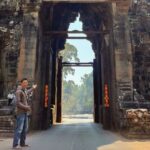
After Angkor Wat, you head to Angkor Thom and start with the Southern Gate. This gate has 54 stone figures on each side: gods on the left and demons on the right. It’s one of those symbolic setups you can read instantly once you know what you’re looking for.
You then move through Angkor Thom, focusing on the central towers covered in more than 200 enormous faces. Even if you’ve seen photos, the scale on-site is still a shock in a good way.
The terraces: Leper King and Elephants
Next are the Leper King Terrace and the Terrace of Elephants. These are key hangout spots in Angkor Thom because they connect you to the “living space” feel of a royal complex. You’re not just passing by gates—you’re stopping to take in how space was designed for movement, meetings, and ceremony.
Ta Prohm: jungle roots, ruins, and a cinematic feel
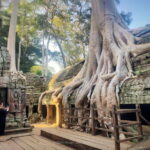
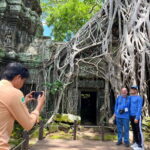
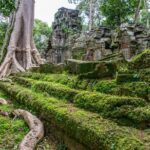
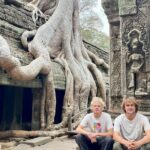
Finally, the tour ends at Ta Prohm, once home to almost 3,000 monks. Today it’s famous for the tree roots wrapping into the stone, which makes it visually dramatic without needing any stage lighting.
Ta Prohm works best when you slow down. Let the roots frame the buildings and look for the sections where stone and vegetation blend into one composition.
Guide quality: the real value you’re paying for
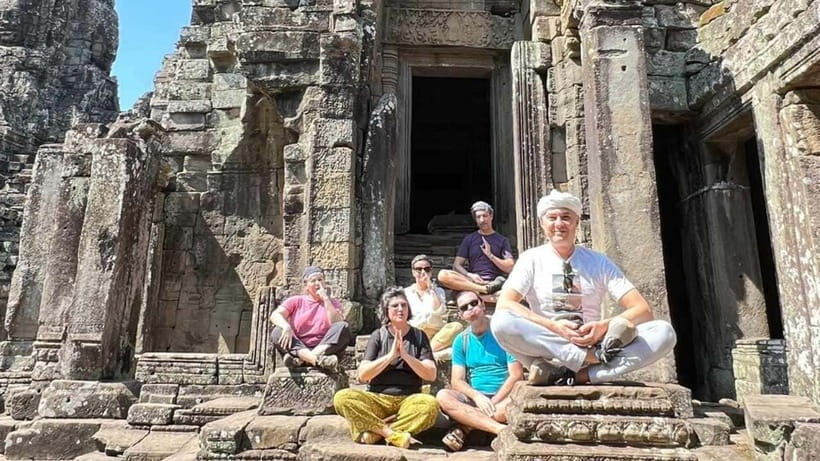
Most people buy this kind of tour for Angkor. You get Angkor. But the part that turns it into a real experience is the guide.
In this tour, guides are not just repeating a script. They explain what you’re seeing and give context about Khmer beliefs and how people understood their world. Names from recent departures that stood out include Sak, Pal Saruon (often spelled Pal Saruon or Saruon Pal depending on the booking), Pi, Bun, Chhay, and Lucky. Drivers like Naro, Vichet, Ro, Mao, and Water also come up a lot for safe transport and careful attention between stops.
I also like that many guides actively help with photos. It’s not only about where to stand, but how to frame temples so the picture matches what your eyes are seeing. A good guide can help you avoid the awkward angles that leave you with a blurry crowd and half a monument.
Comfort and heat management: AC van, cool towels, and smart pacing
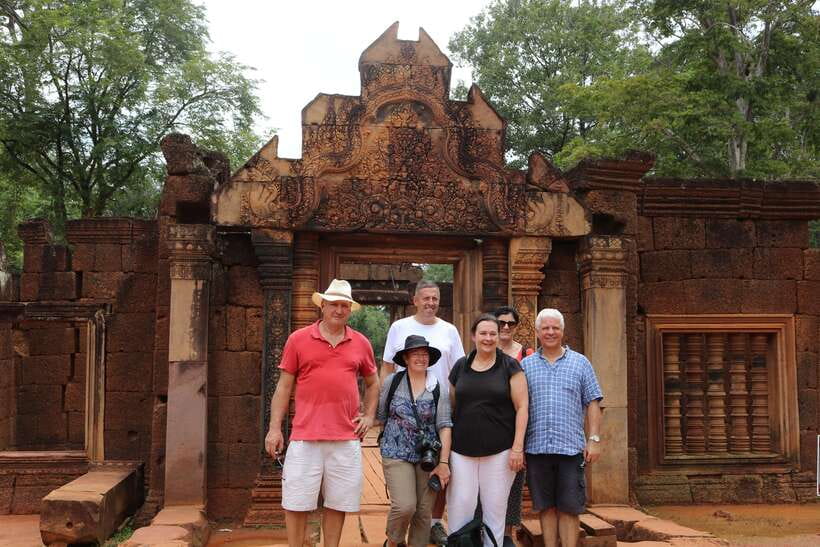
Siem Reap heat can grind you down fast. This tour helps with the practical stuff.
You travel in an air-conditioned vehicle, and you get bottled water and a cool towel during the day. Many guides and drivers keep water on hand after temple visits, and the towels are often scented (people mention mint or eucalyptus-style scents). That small detail makes a noticeable difference when you’re sweating and climbing uneven steps.
Pacing also matters. The itinerary is tight, and you’ll still cover a lot of ground, but it doesn’t feel like a nonstop sprint. You get guided narration and then time to look around and explore on your own at stops. Even if you’re naturally curious, that balance helps you absorb more.
Safety is another quiet win. Drivers and guides consistently manage the group on uneven surfaces and remind you to hydrate. When you’re visiting ruins, stepping carefully is not optional.
Price and what you’re really getting for it
The tour price listed is $19 per person, and what you get includes hotel pickup and drop-off, an English-speaking guide, bottled water and cool towels, and air-conditioned transport. That part is the value engine: you’re paying for access plus interpretation plus comfort.
The part that’s not included is the 2–3 day temples pass (listed as $62 per person). Meals are also on you. So your real all-in cost usually looks like:
- Tour price: $19
- Temple pass: $62
- Meals: varies
Even with the pass added, this can still make sense if you’re comparing it to hiring transport and a guide separately for two high-intensity days. The small-group size and guide-led routing help you use your limited time in Siem Reap well.
What to bring, what to wear, and how to avoid common temple hassles
Angkor visits come with temple rules. Follow them and you’ll have fewer delays.
Bring
- Comfortable shoes (you’ll deal with uneven ground and stairs)
- Sunglasses and sun hat
- Camera
- Insect repellent
Wear
You are required to cover knees and shoulders at temples. Shorts are not allowed. Lightweight long pants or long skirts usually work best.
Practical behavior note
Feeding animals is not allowed.
If you’re sensitive to heat, plan like it’s a trekking day: start hydrated, reapply sunscreen as needed, and use the cool towel breaks without skipping them.
Who this tour suits best
This is a great fit if you want:
- A sunrise-first Angkor Wat experience without having to plan the timing yourself
- More context than a quick photo lap
- A structured two-day loop that covers big temples plus the stronger Day 1 contrast
- A small group where the guide can actually talk to you and help with photo stops
It may not suit you if you:
- Need wheelchair accessibility or are traveling with someone who relies on mobility support (this tour is not suitable for wheelchair users)
- Are traveling with children under 8 (not suitable for that age group)
- Hate early mornings and long walking days (the schedule starts extremely early on Day 2)
Should you book: my take
If your goal is to experience Angkor Wat at sunrise, then get real guidance through Angkor Thom and Ta Prohm, this tour is a smart use of your time. The combination of early timing, small-group feel, and the guide-led storytelling is what makes it more than a checklist.
Book it if you’ll appreciate history told in plain language, and if you’re willing to dress for temples and handle plenty of walking. Skip it if you want a slow, flexible day with no tight timing and no early alarm.
FAQ
What does the tour price include?
The tour price includes hotel pickup and drop-off, an English-speaking guide, bottled water and a cool towel, and air-conditioned vehicle transport.
Is the Angkor temples pass included?
No. You need to buy the 2–3 day temples pass separately (listed as $62 per person for all temples). The pass is available to purchase online, and the information you provided says it is like the tour may have it sent one day before the tour start.
What time does the sunrise day start?
Pickup for the sunrise day is between 4:20 and 4:35 AM, and the tour ends with drop-off around 12:30–1:30 PM.
What’s the meeting and pickup timing on Day 1?
Day 1 pickup is listed around 7:40–8:00 AM (and another note places pickup between 7:50–8:10 AM), with return to the hotel in the late afternoon/early evening.
How big are the groups?
This is a small group tour limited to 15 participants.
What language is the guide?
The guide provides narration in English.
What should I wear and bring?
You should wear something that covers your knees and shoulders. Bring comfortable shoes, sunglasses, a sun hat, a camera, and insect repellent.
Do I need a passport for this tour?
No, this tour does not require a passport.
What’s not allowed?
Shorts are not allowed, and feeding animals is not allowed.