REVIEW · CHIANG MAI
Chiang Mai: Cooking Class, Market and Thai Herbs Garden Tour
Book on GetYourGuide →Operated by Thai Cottage Home Cookery School · Bookable on GetYourGuide
Thai cooking starts before the stove. This Chiang Mai class pairs a local market hunt with a hands-on cook session built around curry paste from scratch. I really like how it turns you from a tourist into someone who can name ingredients and build flavor step by step, all with fun English-led guidance from chefs and hosts like Toey, Flook, Wave, and Balloon.
My second big win is the setting and the pacing. You cook and then eat in a family-style kitchen garden setup, and the menu options are wide enough that you’re usually making at least four dishes that feel different (from soups to Pad Thai). One thing to consider: drinks aren’t included, and alcohol is not allowed, so plan on handling hydration yourself.
In This Review
- Key highlights at a glance
- A Chiang Mai cooking class that teaches flavor, not just recipes
- Hotel pickup, timing, and how to avoid a missed start
- The local market stop: where you learn what Thai cooking actually starts with
- Organic herb garden kitchen: the vibe and why it helps you cook better
- Choosing your menu: starters, mains, curry paste, and mango sticky rice
- Starters: pick the soup or appetizer style that fits you
- Main courses: classic favorites and stir-fry comfort
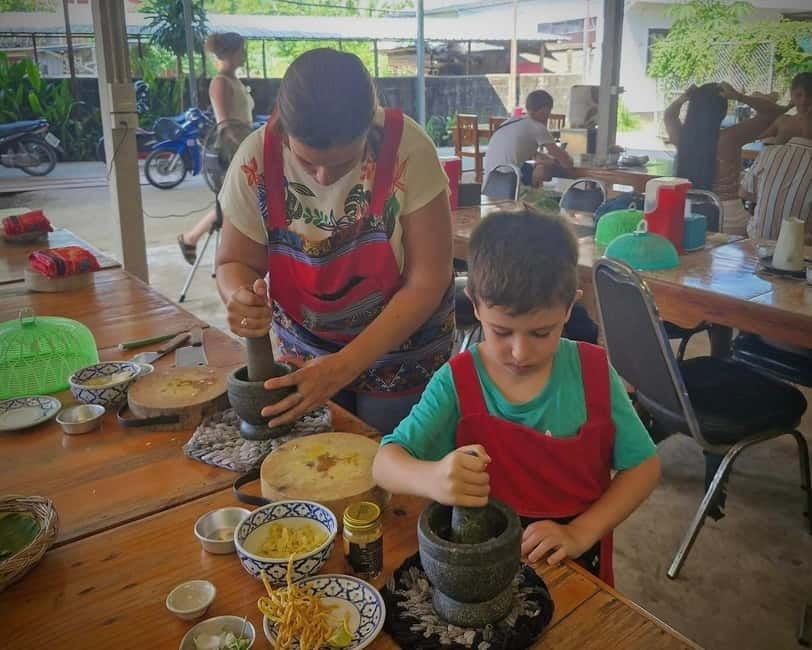
- The curry paste moment: mortar and pestle plus real customization
- Mango sticky rice: the sweet ending that actually teaches you something
- What you’ll eat, and how “full” you should plan to be
- Spiciness, diets, and allergies: you can usually make it work
- What the class feels like: instructor energy, group flow, and hands-on time
- Who this Chiang Mai class is best for
- Price and value: why $28 feels fair for this setup
- Should you book this Chiang Mai cooking class?
- FAQ
- FAQ
- How long is the Chiang Mai cooking class?
- Do you get hotel pickup and drop-off?
- What time does the pickup happen?
- Can you make the food spicy or non-spicy?
- Are vegetarian, vegan, gluten-free, or halal options available?
- Are drinks included?
- Should you book this Chiang Mai cooking class?
Key highlights at a glance
- Market-first ingredient shopping: grab herbs and staples, then snack and browse while your guide keeps it moving
- Curry paste mortar-and-pestle: choose red, green, Phanaeng, Massaman, or Khao Soi paste options and make it yourself
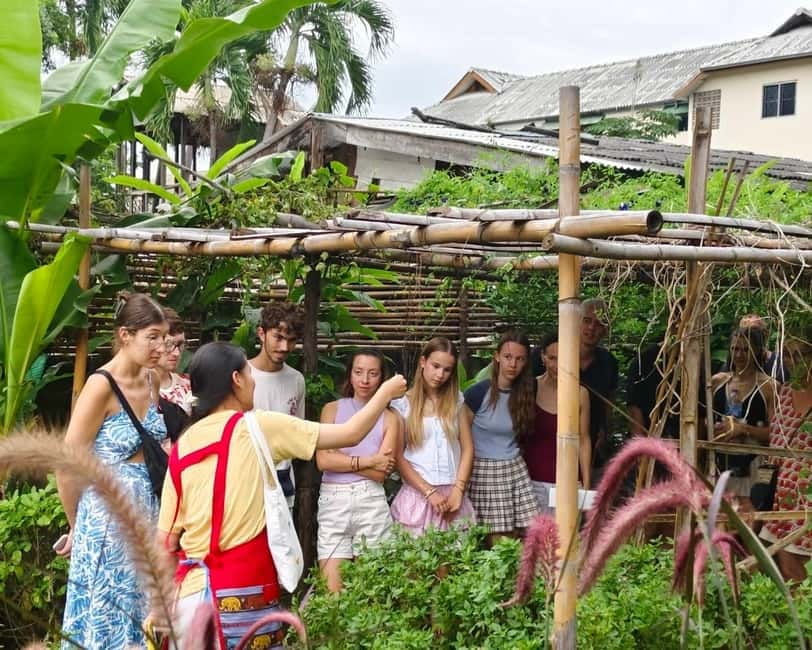
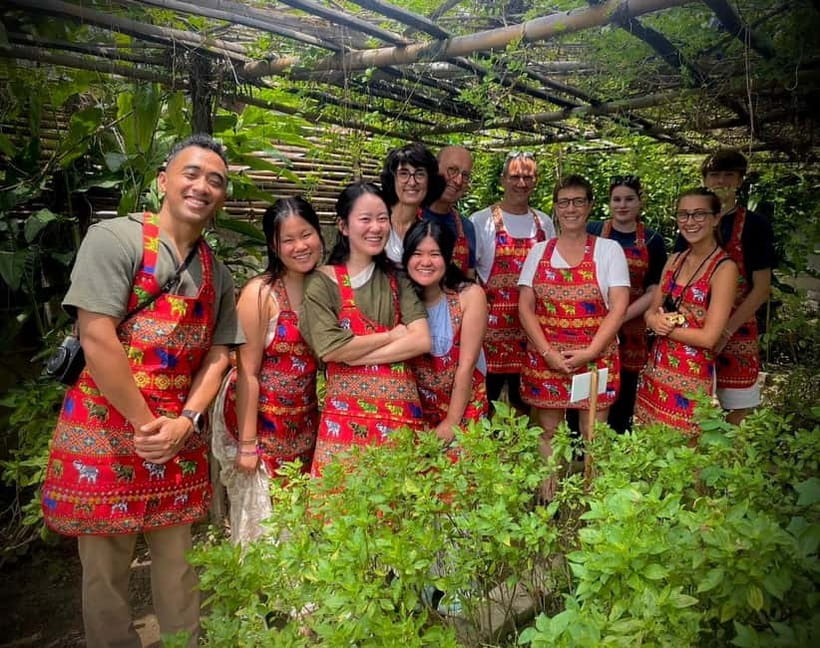
- Organic kitchen garden dining: cook with garden vibes and eat where the herbs live
- Cook, eat, repeat: starters, mains, and mango sticky rice are built into one 4–4.5 hour block
- English hosts who keep it fun: guides like Flook, Wave, Toey, Balloon, and Mew are repeatedly praised for clarity and humor
A Chiang Mai cooking class that teaches flavor, not just recipes
If you want the easy souvenir version of Thai food, you’ll be fine with a restaurant meal. If you want the learn-it-for-real version, this cooking class is a strong pick. You’re not just mixing ingredients. You’re getting the logic behind Thai flavor—how herbs, aromatics, salty-sour-sweet balance, and spice level work together.
And you’re doing it in the most practical way possible: you shop for ingredients, cook with them, then sit down and eat what you made. That feedback loop matters. When you taste your own curry, your brain gets a real-time lesson in how Thai cooking behaves.
At $28 per person for a 4–4.5 hour experience with hotel pickup (within the Old Town transfer radius), market time, ingredients, an English instructor, and a PDF recipe book, the value is decent. You’re paying for guided shopping, hands-on coaching, and enough food that you’ll leave satisfied. The real question isn’t whether it’s “cheap.” It’s whether you want a learn-to-cook day instead of a sit-and-watch day.
You can also read our reviews of more tours and experiences in Chiang Mai.


Hotel pickup, timing, and how to avoid a missed start
This class runs multiple starting windows throughout the day, so you can fit it around your Chiang Mai plans. Pickup times are listed as:
- Morning: 8:30–9:00
- Brunch: 11:00–11:30
- Afternoon: 13:30–14:00
- Evening: 16:30–17:00
Pickup is included with free transfer within 3 km of Chiang Mai Old Town. The driver usually grabs you 15–30 minutes before class, and traffic can shift timing, so don’t assume you’ll be on the exact minute.
If your hotel is farther away, you’ll need to meet at the meeting point instead of expecting a direct pickup. This matters because you don’t want to play catch-up and walk in late hungry and frazzled. If you’re not sure where you fall, message ahead before the day arrives.
The local market stop: where you learn what Thai cooking actually starts with

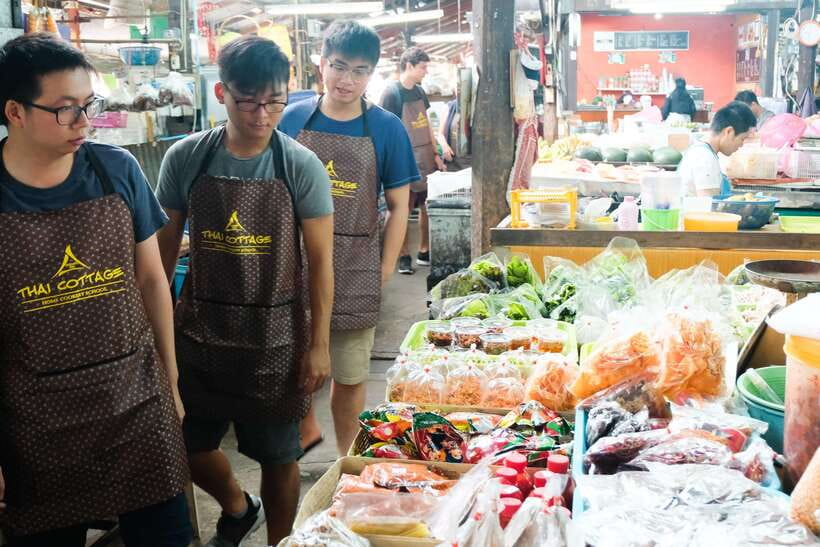
The market portion is a big reason to choose this class over a “kitchen-only” option. You head out from your pickup point and go to a local market first to pick herbs and ingredients for your dishes.
In practice, this is where you start learning names and roles. In Thai cooking, ingredients aren’t just for flavor—they’re for structure. Fresh herbs, aromatic roots, chili profiles, and citrusy tang don’t behave the same way. Seeing and smelling them in the market helps you cook with more confidence later.
You’ll typically get guided shopping and then some free time to roam and grab small snacks or souvenirs. Many people love this part because it feels like real Chiang Mai, not a scripted “look but don’t touch” stop. Bring curiosity. Ask what something is used for. And if you’re the type who likes to recreate meals later, this is your chance to pay attention to the ingredients you’ll handle at the stove.
Organic herb garden kitchen: the vibe and why it helps you cook better
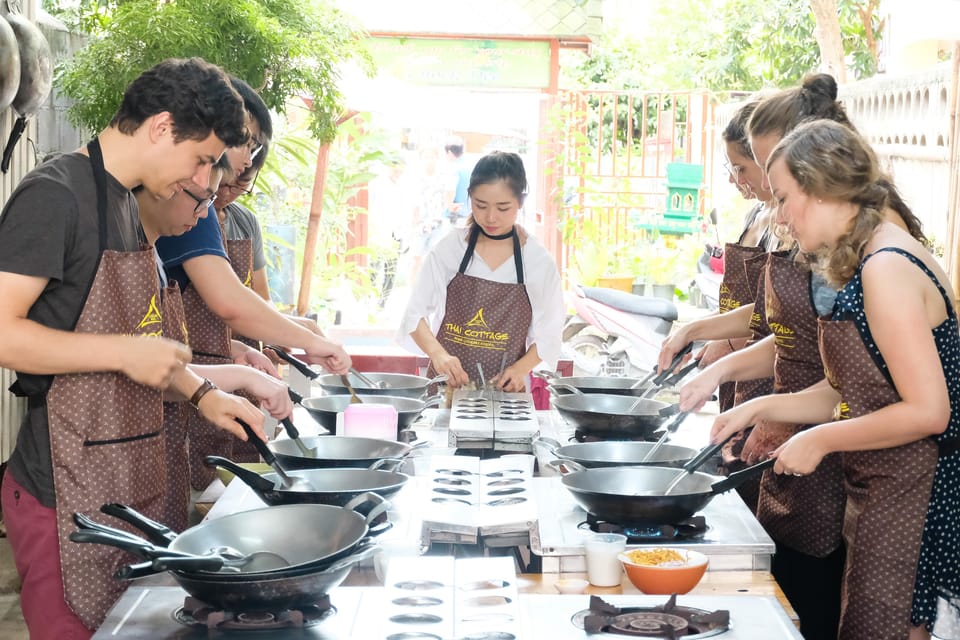
After the market, you head to the cooking location: a family-run kitchen garden setup. The idea here is simple. Thai herbs are not an abstract concept. They’re living, fragrant plants that you can connect to the dishes you’re making.
You’ll cook with a local chef and an English-speaking instructor who walks you through each step. And because you’re cooking in a garden-linked setting, the whole day feels closer to a household routine than a classroom. People often describe the experience as relaxed—but still structured enough that you get hands-on time.
This is also where you start to realize that Thai cooking is not only about one “secret sauce.” It’s about timing, grinding or chopping basics, and knowing when to add different flavors. The instructors keep things practical so you can actually follow along without special knife skills or a science degree.
Choosing your menu: starters, mains, curry paste, and mango sticky rice
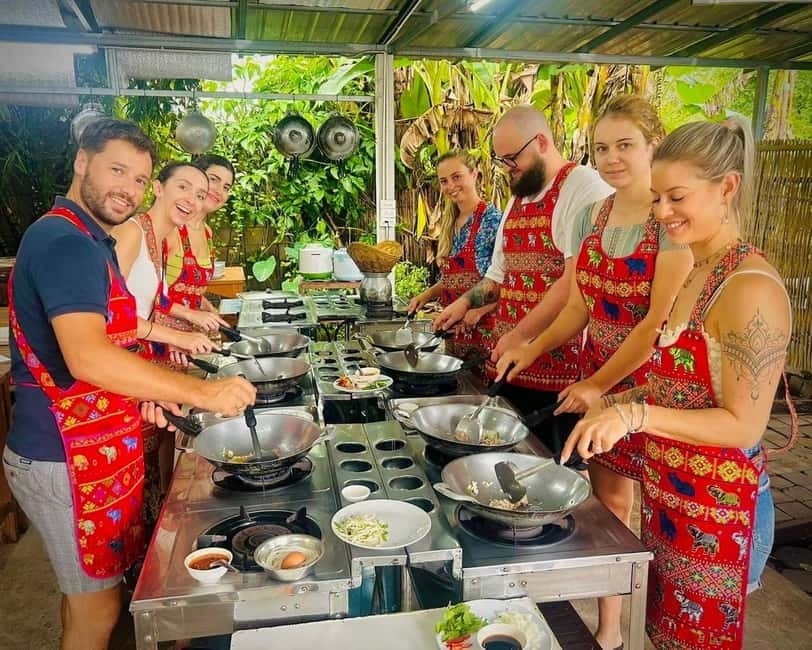
One of the best parts is that you’re not stuck with a single fixed set of dishes. You choose from different categories, which makes the class feel more personalized—and it helps accommodate different appetites and spice comfort levels.






Starters: pick the soup or appetizer style that fits you
Your starter choices can include:
- Hot and sour prawn
- Local chicken soup
- Chicken in coconut milk
- Turmeric chicken soup
These options are smart because they teach different Thai flavor directions. If you pick something sour and spicy, you learn how chili and sour elements sharpen the palate. If you pick coconut-based soup, you learn how richness balances heat.
Main courses: classic favorites and stir-fry comfort
For the main, options can include:
- Pad Thai
- Chicken fried rice
- Fried chicken with cashew nuts
- Pad Kra Pao
This range matters. Pad Thai and fried rice build on aromatics and stir-fry rhythm. Pad Kra Pao (often herb-forward and chili-lively) shows you how Thai cooks layer heat with a savory punch.
The curry paste moment: mortar and pestle plus real customization
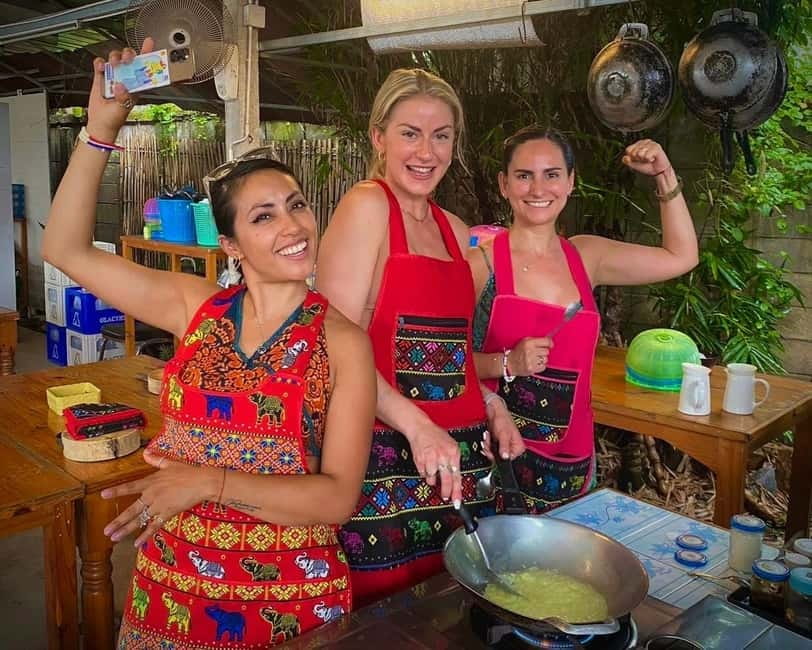
If there’s one signature skill you should care about, it’s the curry paste. This is the hands-on part that most cooking classes skip, and it’s exactly why this one is memorable.
You’ll craft curry paste from scratch using a mortar and pestle, then choose the style you want to build your dish around:
- Red
- Green
- Phanaeng
- Massaman
- Khao Soi
Once your paste is ready, you use it to make a chicken and coconut milk curry. This is where the class becomes more than “follow steps.” You’re shaping the flavor base yourself, so you taste the difference between paste types in a way that’s hard to replicate from a restaurant table.
Practical tip: if you’re worried about spice, you can make your food spicy or non-spicy. Thai cuisine often handles spice like a volume knob. You can still learn what the paste does without turning your mouth into a stress test.
Mango sticky rice: the sweet ending that actually teaches you something

The final dessert is sweet sticky rice with mango. It sounds straightforward, but dessert is where lots of home cooks struggle: texture, sweetness balance, and serving temperature matter.
This part also makes the class feel complete. Thai food isn’t only savory heat. You finish with something that’s bright, creamy, and satisfying—especially after cooking and eating throughout the session.
What you’ll eat, and how “full” you should plan to be
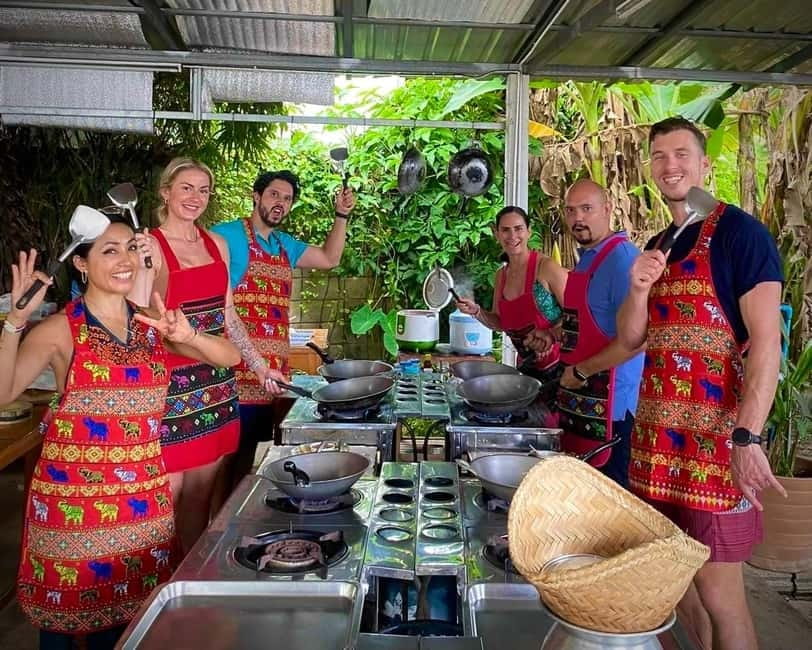
This workshop is built around cooking multiple dishes and then eating them as you go. In real-world terms, you should treat it like a meal with a lesson, not a light snack.
People repeatedly emphasize doing it on an empty stomach because there’s plenty to eat. I agree with that advice. The value you’re paying for isn’t just ingredients and instruction. It’s the quantity and variety of food you get at the end of the work.
One small caution: drinks are not included, and alcohol isn’t allowed. So plan around water and non-alcoholic beverages on your own. If you rely on having a beverage with meals, you’ll want to handle that ahead of time.
Spiciness, diets, and allergies: you can usually make it work
Thai food can be intimidating if you avoid spice or have dietary restrictions. The class is designed to handle real needs, not just “special request” language.
You can:
- Choose spicy or non-spicy
- Request vegan or vegetarian substitutions
- Ask for gluten-free options
- Request halal food
- Share allergies, and the team has alternative ingredients available
This is a big deal for value and comfort. When you can actually cook something close to what you’ll eat, you don’t feel like you’re sitting out half the class.
If you have allergies, be specific when you arrange it. The data says you can bring dietary requirements, and there are alternatives, but your job is to communicate clearly what you avoid.
What the class feels like: instructor energy, group flow, and hands-on time
From the way the experience is described, the instructor’s job is more than explaining. It’s keeping the rhythm steady so everyone gets time to cook, not just watch.
Guides like Flook and Wave are repeatedly praised for humor and for making steps easy to follow. Toey, Balloon, Toy, and Mew also come up as friendly, patient, and clear. You can expect explanations of ingredients and how they’re used—so you’re not only repeating motions.
Also, it sounds like the stations are kept clean and the process is efficient. That matters because a cooking class can turn messy fast if the kitchen isn’t organized. Here, the goal is to keep you cooking and tasting without getting bogged down.
Who this Chiang Mai class is best for
This workshop is ideal if you:
- Want a practical Chiang Mai experience beyond sightseeing
- Like food learning with real steps (grinding, mixing, tasting)
- Want a structured day that still feels like local life
- Plan to cook at home and want a PDF recipe book afterward
It’s also a great fit for solo travelers who like group energy, as well as couples and friends who want shared food memories.
Where it might not be the best choice:
- If you need a totally low-activity day, this one is hands-on. You’ll be at the stove and moving around between steps.
- If you’re bringing very young children, it’s not suitable for children under 5. It’s also not suitable for people over 95.
Price and value: why $28 feels fair for this setup
Let’s talk value in plain terms.
For $28, you’re getting:
- Hotel pickup and drop-off (within the Old Town area transfer radius)
- A visit to a local market
- A hands-on cooking class with a local chef/instructor
- All ingredients
- A PDF recipe book you can use later
That stacks up quickly. Market time alone can be a separate experience. Add guided instruction and multiple dishes worth of ingredients, and the price starts to make sense. Most importantly, you eat what you cook, which is the part a lot of “classes” forget. This one doesn’t.
Should you book this Chiang Mai cooking class?
Book it if you want to leave Chiang Mai with more than photos. This is one of those days where you return home with skills: how curry paste starts, how Thai balance tastes in a bowl, and how mango sticky rice should feel on the spoon.
Don’t book it if you only want a restaurant meal experience or if you’re expecting drinks to be included. Also, if your spice tolerance is complicated, plan to communicate your preferences so your dishes match your comfort level.
FAQ
FAQ
How long is the Chiang Mai cooking class?
It lasts about 4 to 4.5 hours. Starting times vary, so you’ll want to check availability for the time window you want.
Do you get hotel pickup and drop-off?
Yes. Pickup and drop-off are included. Free transfer applies within 3 km of Chiang Mai Old Town. If your hotel is farther away, you’ll be asked to meet at the meeting point.
What time does the pickup happen?
Pickup times are listed as: morning 8:30–9:00, brunch 11:00–11:30, afternoon 13:30–14:00, and evening 16:30–17:00. You’ll be picked up 15–30 minutes before class.
Can you make the food spicy or non-spicy?
Yes. You can choose whether your food is spicy or non-spicy.
Are vegetarian, vegan, gluten-free, or halal options available?
Yes. Vegan, vegetarian, gluten free, halal food, and allergies are welcome, and alternative ingredients are available.
Are drinks included?
No. Drinks are not included, and alcohol is not allowed.
Should you book this Chiang Mai cooking class?
Yes, if you want a hands-on Chiang Mai food experience with market time, curry paste skills, and a full meal you helped cook. It’s especially worth it if you like learning ingredients and want a PDF recipe book to recreate the dishes later. If you prefer a low-key day or want drinks included in the price, look for another option.