REVIEW · CHIANG MAI
Chiang Mai: Evening Cooking Class and Local Market Visit
Book on GetYourGuide →Operated by Galangal Cooking Studio · Bookable on GetYourGuide
Shopping for Thai ingredients first beats guessing later. I like the market-to-kitchen flow and the stroll through an organic garden, and I like that you actively cook a full set of Thai dishes (not just watch). One consideration: come ready to eat, because the class is built around dinner time, and they ask you to arrive with an empty stomach.
At Galangal Cooking Studio, the English-speaking team (often led by instructors like New, and sometimes Aoy/Aoi/Oi) guides you through stir-fries, soups, an appetizer, and a curry-style dish. You also leave with a PDF recipe book so you can recreate what you cooked back home.
In This Review
- Key highlights to know before you go
- Why This Chiang Mai Evening Cooking Class Feels Like a Real Dinner
- Getting There Smoothly: Pickup Timing and Where It Covers
- The Market Stop and Organic Garden Walk: Learning What Thai Cooks Buy
- Inside Galangal Cooking Studio: The 5-Hour Plan You’ll Actually Feel
- What You Cook: Stir-Fry, Soup, Appetizer, and Curry/Curry Paste
- Stir-fried options (choose one)
- Soup options (choose one)
- Appetizer options (choose one)
- Curry and curry paste making (choose one)
- Menu Choices That Work for Vegans, Vegetarians, Halal, and Gluten-Free
- Hands-On Cooking Without the Overwhelm
- Food Amounts, Timing, and the Empty-Stomach Rule
- What You Take Home: The Recipe Book Plus Real Technique
- Value Check: Is $28 Fair for 5 Hours of Market + Cooking?
- Who Should Book This and Who Might Skip It
- Should You Book This Chiang Mai Evening Cooking Class?
- FAQ
- How long is the Chiang Mai evening cooking class?
- Does the price include hotel pickup and drop-off?
- What dishes will I cook during the class?
- Are there vegetarian, vegan, Halal, or gluten-free options?
- Do I need to bring anything or worry about restrictions?
- Is this tour accessible for wheelchairs or strollers?
Key highlights to know before you go
- Hotel pickup and drop-off in central Chiang Mai makes the evening easy, with a clear pickup window
- Market shopping plus an organic garden walk helps you understand what you’re buying and why
- Hands-on cooking: you’ll make your own stir-fry, soup, appetizer, and curry/curry paste
- Menu choice: pick one dish from each category so the experience feels tailored
- Dietary options are handled (vegetarian, vegan, halal, and gluten-free needs are mentioned)
Why This Chiang Mai Evening Cooking Class Feels Like a Real Dinner
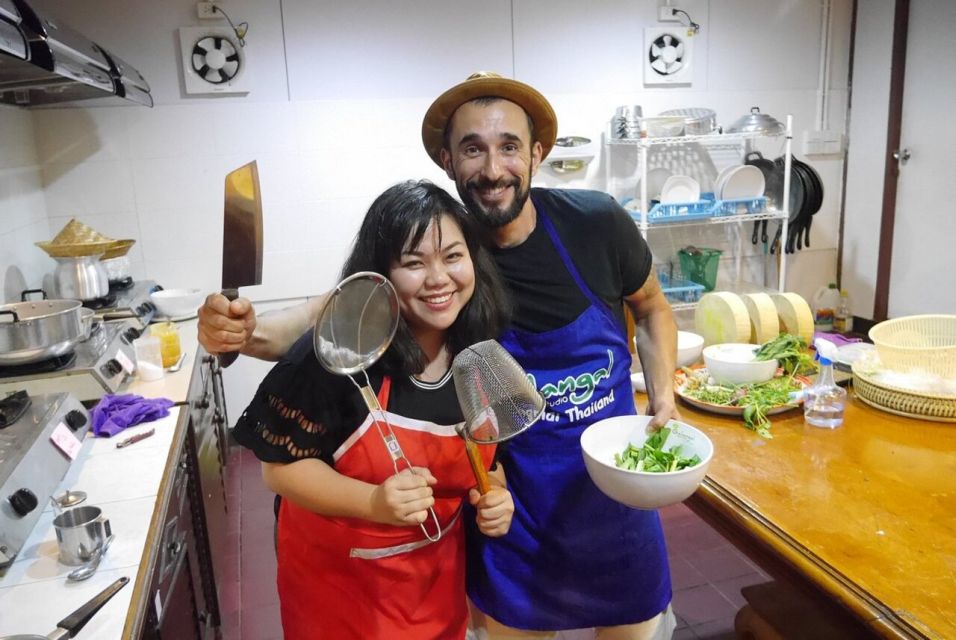
This isn’t just a cooking demo that ends with a small bite. It’s designed like a proper Thai evening meal. You start by seeing ingredients up close, then you head to a kitchen and turn those ingredients into a multi-dish feast.
What makes it work is the order. You don’t just show up, chop whatever is in front of you, and call it Thai cooking. Instead, you shop first, including a stroll through an organic garden where herbs and vegetables are grown. That gives you a mental map of flavors—what’s fresh, what’s aromatic, and what Thai cooks rely on for balance.
I also like the energy in the teaching style. Instructors are described as friendly, attentive, and organized, with lots of step-by-step guidance. Even when the cooking parts are straightforward, you still learn what each ingredient is doing.
One more practical win: everything is set up in an indoor kitchen with air-conditioning, so you’re not fighting heat while trying to learn techniques.
You can also read our reviews of more tours and experiences in Chiang Mai.


Getting There Smoothly: Pickup Timing and Where It Covers
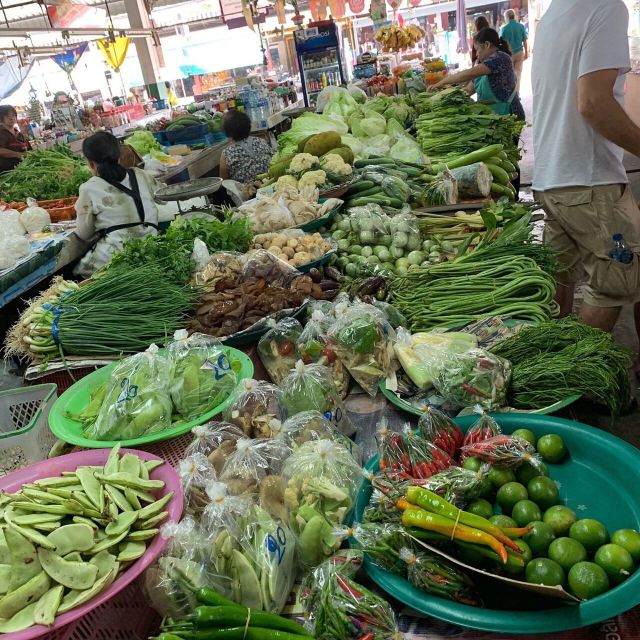
The biggest stress in any evening tour is transportation. Here, hotel pickup and drop-off are included, and the operation is built around central Chiang Mai.
Pickup is offered to hotels in:
- the old city, Santitham, and along Huay Keaw Road (from Kad Suan Keaw to Maya Shopping Mall)
- and some areas of Nimmanhaemin Road, Sirimongkrajan Road, Wat Ket Road, Chang Pheuk, Changklan, and Changmoi (certain farther areas may not be covered)
The schedule window is 3:15–3:45 PM, with pickup starting a bit earlier due to evening traffic. The driver waits no longer than 5 minutes after your scheduled time, so set a reminder and be ready in the lobby.
If your hotel is outside the service area, they’ll tell you ahead of time. In that case, you can arrange your own ride to the school or market, and you’ll be given arrival timing and the address.
Why I think that matters: this class runs in the evening, so being stuck without transport kills the vibe. With pickup included, you can focus on food.
The Market Stop and Organic Garden Walk: Learning What Thai Cooks Buy
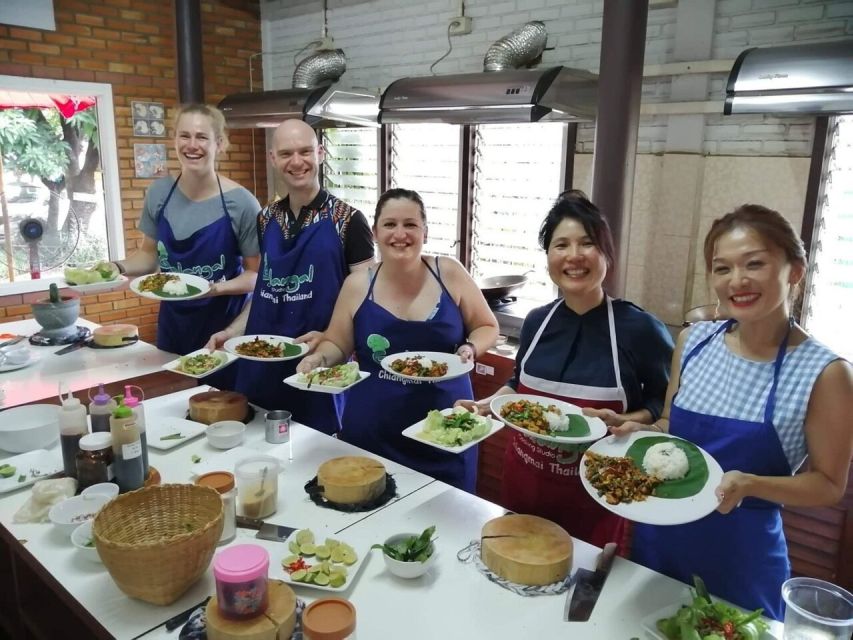
The tour includes a market visit (depending on interest) where you can hand-pick ingredients for your chosen dishes. You’ll see fresh vegetables and market staples up close, and you get context for what goes into Thai cooking.
Then there’s the organic garden stroll. This isn’t a long hike or a complicated detour. It’s a guided walk so you can see how herbs and vegetables are cultivated in Thailand—useful because Thai cuisine is herb-driven. When you understand what herbs look like at the source, it’s easier to recognize them later at the market or when you cook at home.
A small but smart detail: this ingredient scouting is tied directly to the menu you’ll cook. So your market time has a purpose. You’re not collecting souvenirs. You’re selecting food that becomes dinner.
If you’re the kind of traveler who usually skips markets because they feel touristy, this approach tends to make the stop feel more practical.
Inside Galangal Cooking Studio: The 5-Hour Plan You’ll Actually Feel
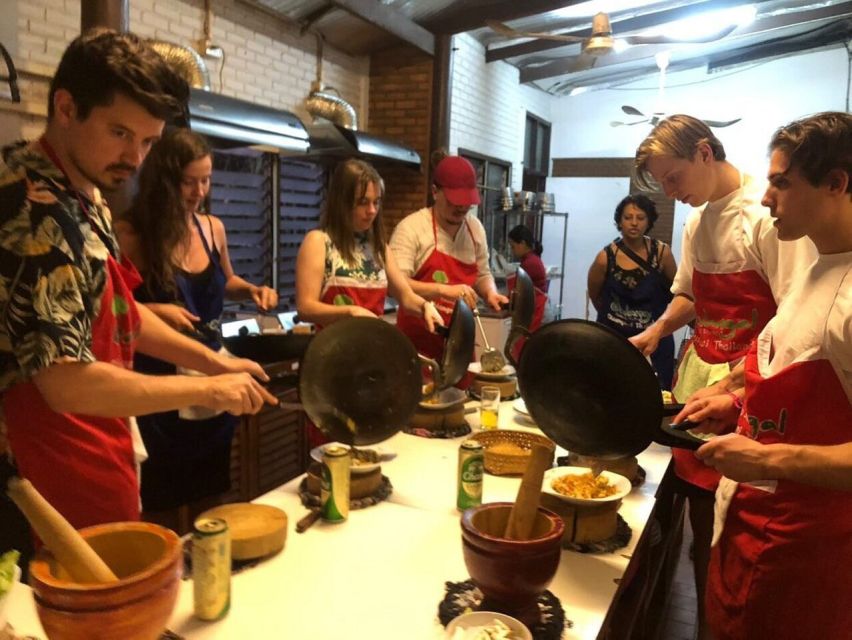
The class runs about 5 hours. The general schedule is set for 4:00 PM to 8:30 PM for larger groups (10–12 people or more). If the group is smaller, they finish earlier. That means you should plan your evening around that window, not around an exact finish time.
Your evening typically moves like this:
- Pickup from your central Chiang Mai hotel
- Market and/or garden stop (market tour is described as depending on interest)
- Cooking session at the school, in an air-conditioned indoor setup
- Eating the dishes you cooked
- Return drop-off to your hotel
You’ll also have an English instructor and an English audio guide included. If you prefer to follow along in your own way, that combination helps.
Also note the school is near public transportation. That’s useful if you ever need an alternate plan.
What You Cook: Stir-Fry, Soup, Appetizer, and Curry/Curry Paste
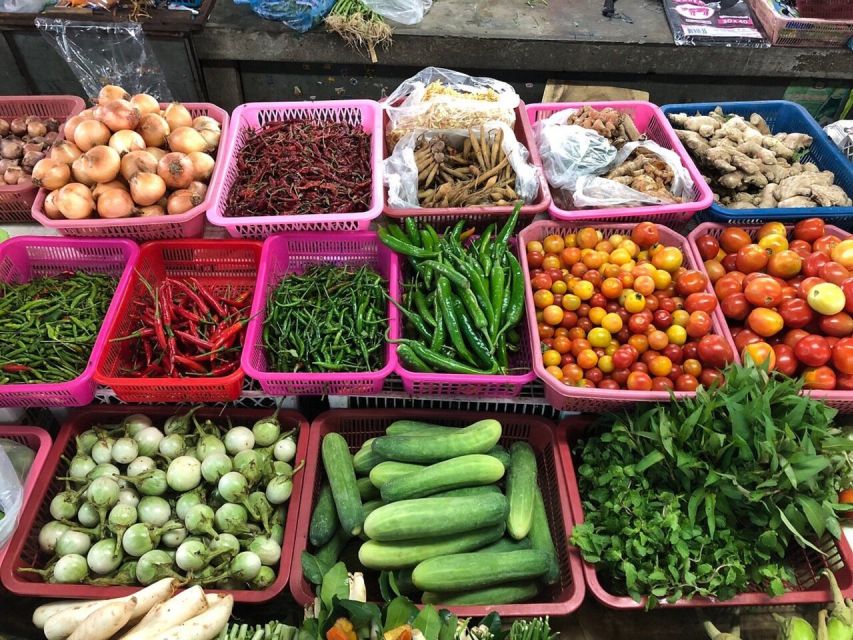
This is the part that most cooks-in-training care about: what dishes are included, and how much work you’ll do.
The format is pick-one-from-each-category. You can select one dish in each section, and you’ll work toward making a set of Thai dishes yourself:






Stir-fried options (choose one)
- Pad Thai (fried noodles Thai style)
- Pad See Ew (stir-fried chicken with fresh noodles)
- Kai Pad Med Mamuang Him Ma Pan (chicken cashew nut)
- Pad Kaphao Kai (minced chicken with holy basil)
Soup options (choose one)
- Tom Yum Kung (hot and sour prawn)
- Tom Kha Kai (chicken in coconut milk)
- Tom Kha Je (vegetarian/vegan in coconut milk)
- Tom Zap Kai (hot and sour with chicken)
Appetizer options (choose one)
- Som Tam (papaya salad)
- Por Pia Thod (spring roll)
- Larb Kai (chicken salad)
- Yam Woon Sen (glass noodle salad)
Curry and curry paste making (choose one)
- Kaeng Massaman (Massaman curry)
- Kaeng Kieaw Wan Kai (green curry)
- Kaeng Panaeng Kai (Panang curry)
- Khao Soi (Chiangmai noodle with chicken)
- plus additional curry choices like Kaeng Ped (red curry), Kaeng Karee (yellow curry), and Pad Prik Kaeng (dry red curry)
Here’s the key value: you’re not just tasting these dishes. You’re learning how they come together, including curry paste making. One ingredient skill transfers really well to home cooking—if you can make a curry paste base with confidence, you can rebuild many Thai flavors later.
Menu Choices That Work for Vegans, Vegetarians, Halal, and Gluten-Free
If you have dietary restrictions, this class is one of the easier ones to book with confidence. They list support for vegan, vegetarian, Halal, and gluten-free needs, plus allergies.
In practical terms, you can expect the instructor to help steer choices within the menu options. Some dishes have vegetarian or vegan versions built in (like Tom Kha Je), and the broader menu includes dishes that can fit different needs.
Why I think this is a big deal: Thai meals rely on specific sauces and textures, so a class that refuses to adjust becomes frustrating fast. This one is set up to handle substitutions and alternatives, which keeps you from spending the evening watching other people eat while you wait.
You’ll still want to mention your needs clearly when you arrive, especially medication or any allergy details (they only note that you should bring personal medication).
Hands-On Cooking Without the Overwhelm
The kitchen part is structured enough for beginners, but it still feels real. You’ll be doing actual chopping, stirring, and assembling—not just standing nearby while someone else works.
And the teaching style matters. Many instructors are described as patient, attentive, and organized, with clear explanations of ingredients and steps. Some guidance also includes fun, light atmosphere, which makes the kitchen feel less like a school and more like an evening workshop.
A practical tip: because you’re cooking multiple dishes, pace becomes part of the lesson. You’ll learn how to move through tasks efficiently so you can finish a full meal without rushing or burning everything.
Also, you’re in an air-conditioned indoor dining room, which keeps the focus on cooking rather than sweat-management.
Food Amounts, Timing, and the Empty-Stomach Rule
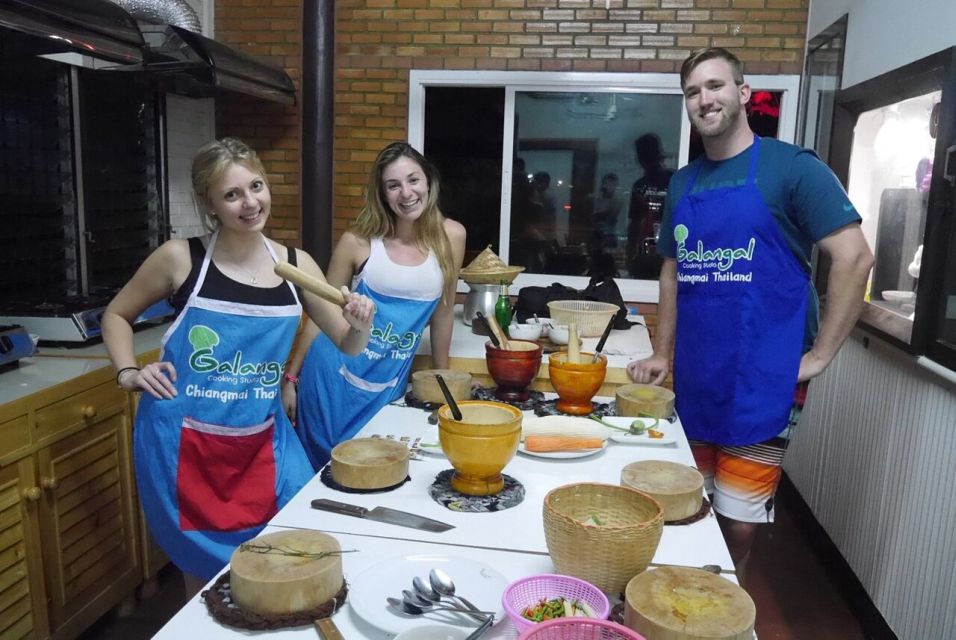
They ask you to come with an empty stomach. The cultural logic is simple: dinner in Thailand often starts around 4 or 5 PM, and the schedule follows that rhythm.
Plan for this to be a full meal with plenty of food. The structure also means you’ll be tasting what you made, not just finishing cooking tasks and leaving.
If you show up late or after you’ve already eaten a big snack, you’ll miss the best part: the moment you sit down and taste the dishes you helped create.
A small logistics detail: there are options to have an observer adult or observer child (6–12). Observers need to pay a fee, so if you’re bringing someone who wants to watch, budget for that.
What You Take Home: The Recipe Book Plus Real Technique
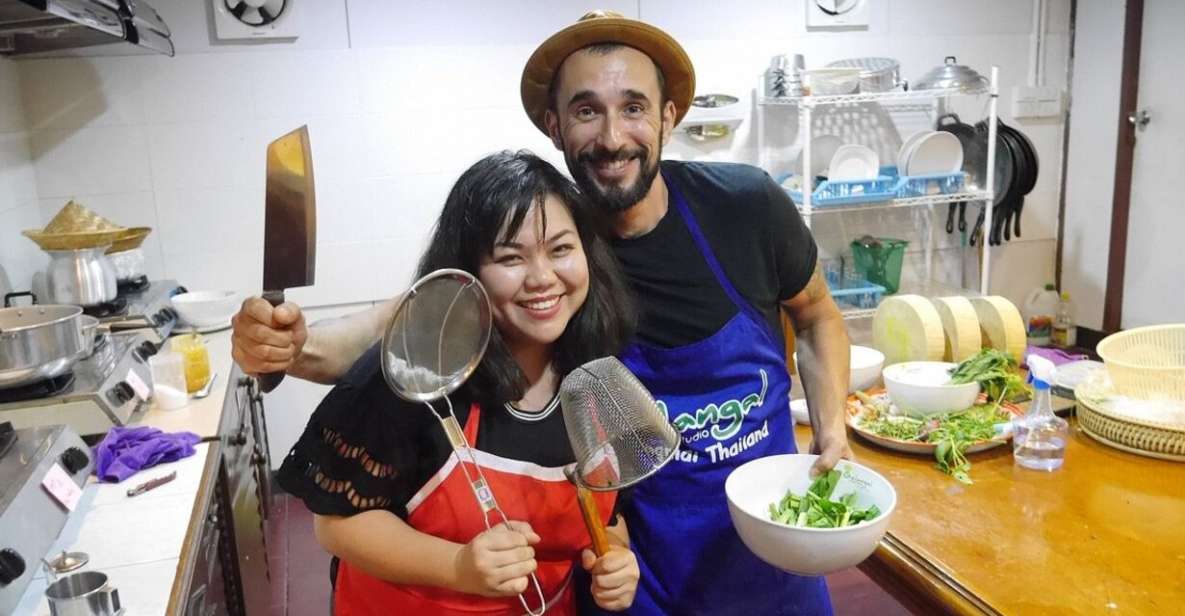
You leave with a recipe book in PDF format. That matters because Thai cooking is about balance—sweet, sour, salty, spicy—and it’s hard to remember every ratio from memory.
The PDF also gives you a way to recreate what you cooked without needing to re-ask your instructor each time. Since you made dishes from multiple categories, you also get variety: you can host a Thai-style meal where one person handles stir-fry, another handles soup, another does a classic appetizer, and someone else builds the curry.
The other takeaway is technique confidence. Curry paste making and getting stir-fry basics down are the skills you use again and again, even if you change the specific ingredient.
Value Check: Is $28 Fair for 5 Hours of Market + Cooking?
At $28 per person for about 5 hours, this sits in the value zone for Chiang Mai. Here’s why the math works:
You’re getting:
- hotel pickup and drop-off in included zones
- market visit with ingredient selection
- an organic garden stroll
- cooking instructions plus all ingredients and equipment
- water, tea, and coffee
- multiple dishes you cook and eat
- a PDF recipe book
Many cooking classes charge more when they include shopping, transportation, and a full meal. Here, the combination of market + curry paste making + multi-dish cooking is what makes the price feel reasonable.
The only way it stops being a great deal is if you dislike markets, you hate hands-on cooking, or you show up not hungry and not ready to pay attention.
Who Should Book This and Who Might Skip It
Best fit:
- First-timers who want guided cooking with enough structure to succeed
- Food lovers who want market context, not just a kitchen lesson
- Travelers with dietary needs, since they explicitly mention vegan, vegetarian, Halal, and gluten-free options
Maybe skip or consider another style if:
- You don’t enjoy markets or ingredient shopping
- You want a more advanced, knife-skills-heavy class (this is described more as approachable, friendly guidance)
- You have altitude sickness concerns (they list it as not suitable)
Should You Book This Chiang Mai Evening Cooking Class?
If your goal is to leave Chiang Mai with both a memorable meal and the ability to cook Thai food at home, I’d book this. The market-to-garden-to-kitchen flow gives you context, the menu choice keeps it personal, and the teaching approach is built for clear guidance rather than intimidation.
If you can handle one simple rule—come with an empty stomach—you’ll get the full experience: shopping, cooking, eating, and taking home a recipe that actually matches what you made.
FAQ
How long is the Chiang Mai evening cooking class?
The experience lasts about 5 hours.
Does the price include hotel pickup and drop-off?
Yes. Pickup and drop-off are included for hotels in central Chiang Mai areas listed by the provider, and coverage varies for some farther neighborhoods.
What dishes will I cook during the class?
You can select one dish from each category: a stir-fry, a soup, an appetizer, and a curry/curry paste making option. The class includes cooking instructions and you eat the dishes you make.
Are there vegetarian, vegan, Halal, or gluten-free options?
The class states it is available for vegan, vegetarian, Halal, and gluten-free needs, and it can accommodate allergies as well.
Do I need to bring anything or worry about restrictions?
Bring personal medication. Smoking indoors is not allowed, and alcohol and drugs are not allowed.
Is this tour accessible for wheelchairs or strollers?
Yes. The experience is wheelchair and stroller accessible, and it is described as near public transportation.