REVIEW · TOKYO
From Tokyo: Mount Fuji Full Day Customizable Private Tour
Book on GetYourGuide →Operated by E-MAN Private Tours · Bookable on GetYourGuide
Fuji looks different from every stop. This private day trip is interesting because you’re not locked into one script—you build the route around what you care about, and you travel in a private A/C vehicle with a multilingual driver. I love the big mix of famous sights (Chureito Pagoda, Oshino Hakkai, Hakone Ropeway) plus the option to swap in more off-the-beaten stops. One drawback to plan for: a chunk of the day goes into transit from Tokyo, and several experiences you might want (ropeways/boat rides) have tickets that are not included.
You also get real-world guidance, not just a GPS. Guides called out by name such as Ali and Hassan tend to make the day feel organized and photo-ready, with quick context as you move from viewpoint to viewpoint. Just keep expectations realistic on weather: if clouds swallow the summit, you’ll still get plenty of scenic stops, but your peak views can vary.
One more practical note: the day is long and you’ll be in and out of vehicles often. Also, bags are listed as not allowed, so pack light and keep your day essentials easy to grab.
In This Review
- Key Things That Make This Tour Work So Well
- The Fuji and Hakone Day: Big Sights Without the Tokyo Stress
- Price and What You Actually Get for $407 (Group Up to 6)
- Getting From Tokyo: The 10-Hour Rhythm You Should Expect
- Mount Fuji 5th Station: The Summit Gateway Moment (Plus the Fee)
- Fuji Five Lakes Side: Oshino Hakkai to Chureito Pagoda (Why These Stops Work)
- Oshino Hakkai: Clear Ponds and Traditional Houses
- Arakurayama Sengen Park: A Fuji Viewpoint Setting
- Chureito Pagoda: The Postcard Frame (Spring Bonus)
- Kitaguchi-hongu Fuji Sengen Shrine: Spiritual Stop, Scenic Context
- Oishi Park and Lake Kawaguchi: Walk Views, Not Just Standing
- Ropeways and Quick Photo Breaks: Mt. Kachi Kachi and More
- Hakone Switch-Up: Owakudani, Hakone Ropeway, and Volcanic Reality
- Lake Ashi and Hakone Open-Air Museum: Calm Moments After the Crater
- Gotemba Premium Outlets: When Shopping Fits the End of the Day
- Optional Culture and Cave Options: Build Your Own Fuji-Hakone Emphasis
- The Guide Factor: Why Names Like Ali and Hassan Matter
- Who Should Book This (and Who Might Want a Different Plan)
- Should You Book This Mount Fuji Full Day Private Tour?
- FAQ
- How long is the tour, and how much time is for transit?
- What is the price, and how many people can be in a group?
- Are tickets for ropeways or boat rides included?
- Is the Mount Fuji 5th station entrance fee included?
- What languages are supported by the driver?
- What pickup and drop-off locations are available?
- What should I bring, and what is not allowed?
Key Things That Make This Tour Work So Well
- Custom route control: you choose your mix of Fuji Five Lakes and Hakone moments.
- Private, air-conditioned comfort: a clean car for your group beats “sit and wait” public transit.
- English (plus other languages) on hand: your driver can handle communication and logistics.
- Photo-and-view stops built in: Chureito Pagoda, Owakudani, Hakone Ropeway, and Lake Ashi.
- Weather-minded pacing: guides often help you prioritize views when conditions change.
- WiFi and water/coffee included: small perks that matter on a 10-hour day.
The Fuji and Hakone Day: Big Sights Without the Tokyo Stress
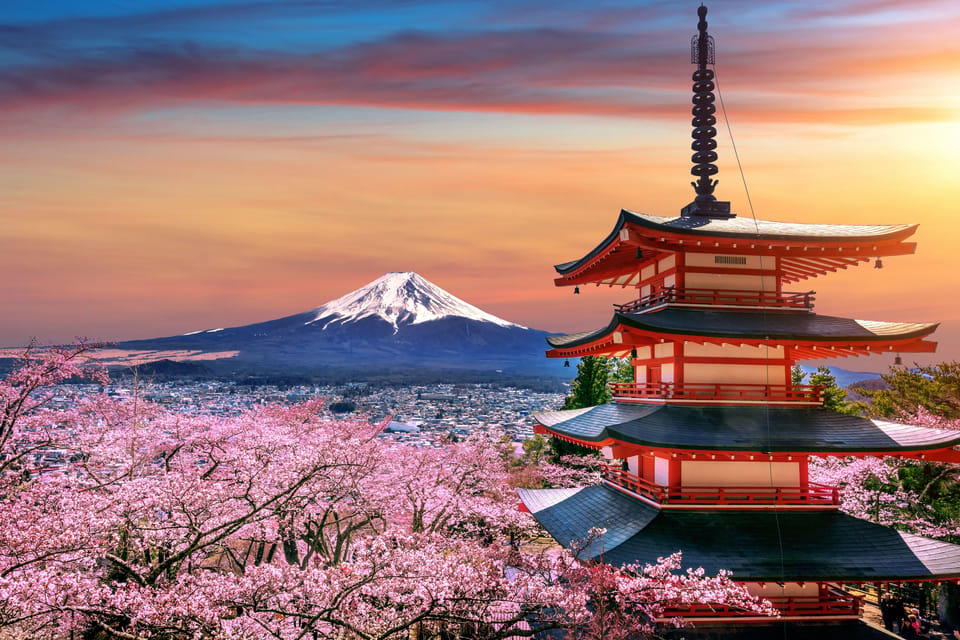
This is a full-day, private-style outing built for people who want classic Mount Fuji and Hakone without dealing with transfers, ticket lines, and crowd flow. The idea is simple: pick your favorites, then let the guide handle the order and timing so you spend more time looking at the views and less time figuring out buses.
Your total duration is about 10 hours, and the schedule reflects that Tokyo-to–Fuji/Hakone distances add up. Plan on roughly 4 hours of transit (in total) and the rest for sightseeing. That time math is important. If your goal is maximum Fuji summit time, this format may not feel like enough. If your goal is “see the best angles across the region,” it’s a strong fit.
You can also read our reviews of more tours and experiences in Tokyo.
Price and What You Actually Get for $407 (Group Up to 6)
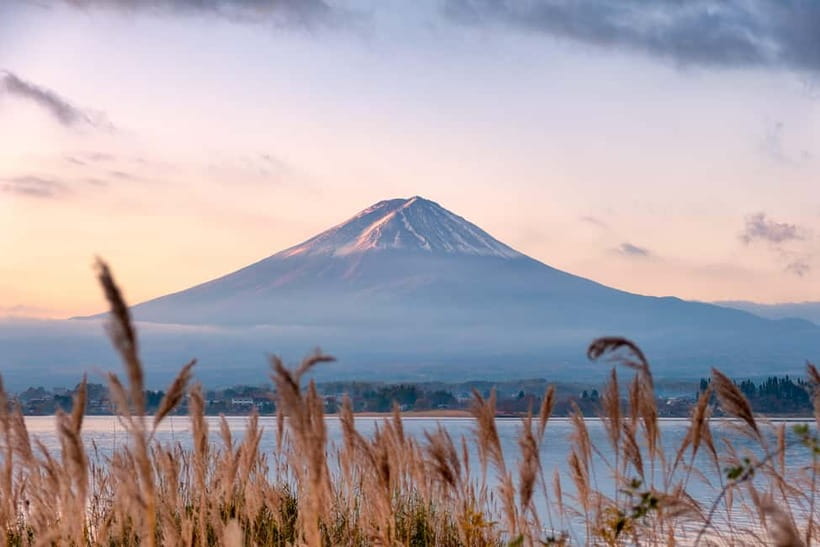
The price is $407 per group up to 6 people. That’s where the value comes from: you’re paying for private transportation plus guide support for a full working day. For two people, the per-person cost can be higher than a shared bus. For four to six people, it usually starts to feel like a fair deal because the vehicle cost is spread out.
A few costs are not included, so you’ll want to budget ahead:
- Mount Fuji 5th station entrance fee (2100¥ per group) is extra.
- Tickets for ropeways/boats/activities are not included.
- Meals are not included.
If you do a lot of paid viewpoints, your final spend can rise quickly. But the flipside is you’re not forced into expensive add-ons you don’t care about—you can pick what’s worth paying for on the day.
Getting From Tokyo: The 10-Hour Rhythm You Should Expect
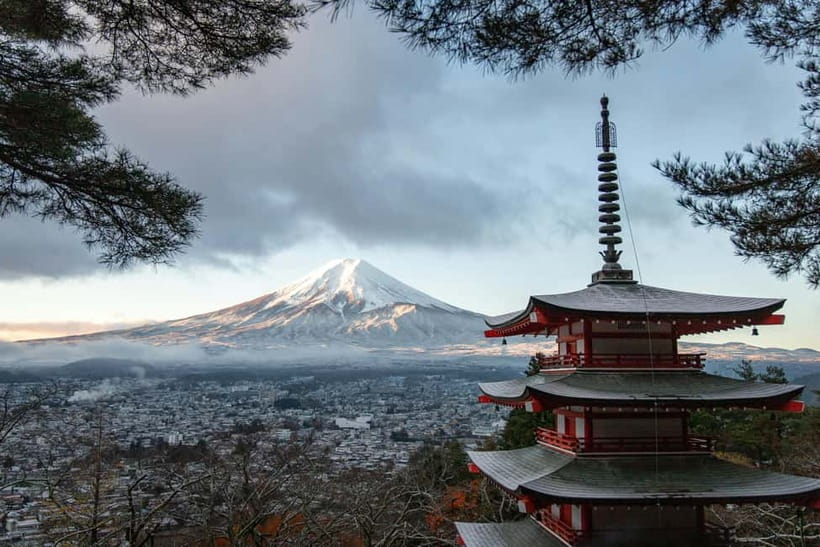
Your pickup is flexible within Tokyo’s 23 wards, and drop-off can include spots like Shinjuku, Shibuya, Chiyoda, and even Yokohama. Outside those areas, extra charges apply and depend on where you’re starting.
Here’s the rhythm to expect:
- You’ll ride out in a comfortable, private A/C vehicle.
- You’ll stop often enough to break the drive, but not so often that the day falls apart.
- You’ll be back in Tokyo after the full circuit, with the schedule designed to fit a single day.
The guide/driver coordination uses WhatsApp, and you should be ready in the lobby 10 minutes before pickup. The driver won’t wait longer than 60 minutes after the scheduled time, and traffic can cause delays. In other words: you don’t need to stress, but you do need to be ready.
Mount Fuji 5th Station: The Summit Gateway Moment (Plus the Fee)
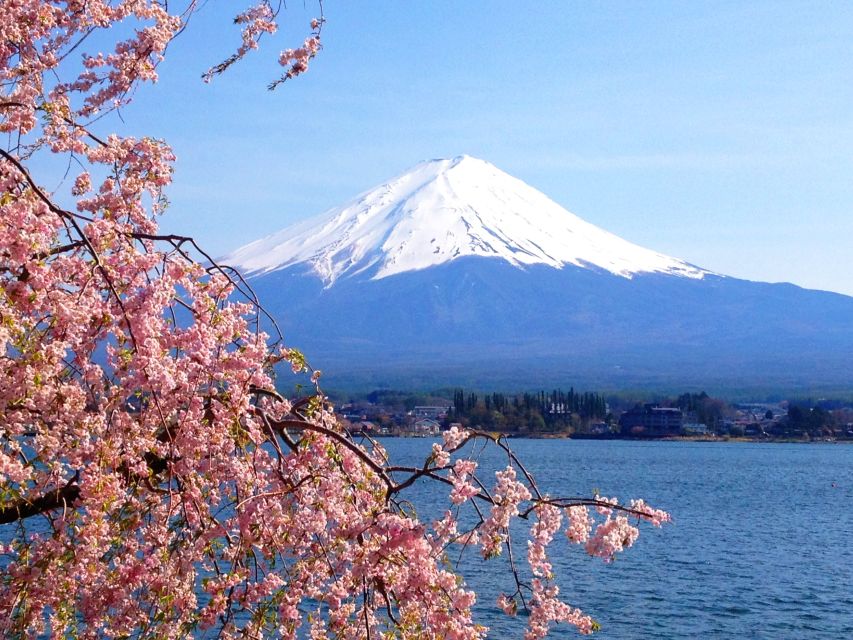
Your day is designed around a first major Fuji stop at the 5th Station area. This is the classic “Mt. Fuji in your face” viewpoint zone. Even if the weather isn’t perfect, the sense of scale comes through fast: valleys, ridgelines, and the mountain’s volcanic geometry.
Plan for the entrance fee (2100¥ per group) since it’s not included. Also, bring cash and your credit card, just in case you decide to add on something small while you’re there.
Potential drawback: cloud cover can hide the summit. When that happens, the tour still gives you other angles—so you won’t end up stuck with only one disappointed photo.
Fuji Five Lakes Side: Oshino Hakkai to Chureito Pagoda (Why These Stops Work)
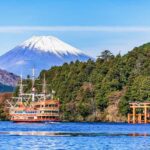
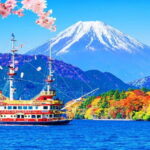
This tour gives you multiple “Fuji reflected / Fuji framed / Fuji looming” angles. That’s the secret. Mount Fuji isn’t one view—it’s a whole set of moods.


Oshino Hakkai: Clear Ponds and Traditional Houses
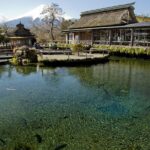
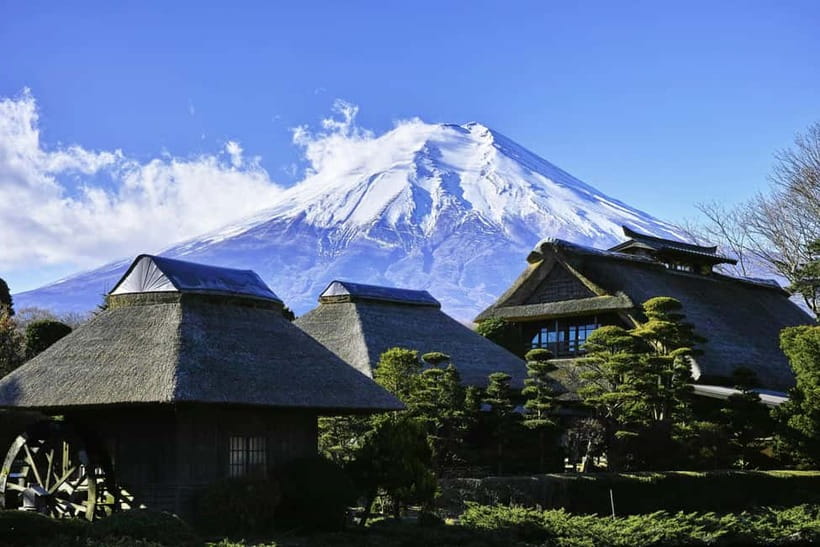
Oshino Hakkai is a short walk-and-look stop (about 1 hour). It’s a good place to slow down. The ponds and classic village atmosphere help you shift from big-picture mountain awe to something more human-scaled.
Practical upside: you can wander at your own pace here, and the scenery doesn’t depend entirely on the summit being visible.
Arakurayama Sengen Park: A Fuji Viewpoint Setting
You’ll also visit Arakurayama Sengen Park (about 1 hour). This kind of viewpoint area is great for photos because it gives you elevation plus a wide-angle relationship with the mountain.
If you’re traveling with people who like short, rewarding climbs more than long hikes, this is the style that fits.
Chureito Pagoda: The Postcard Frame (Spring Bonus)
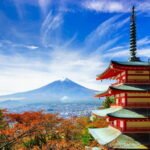
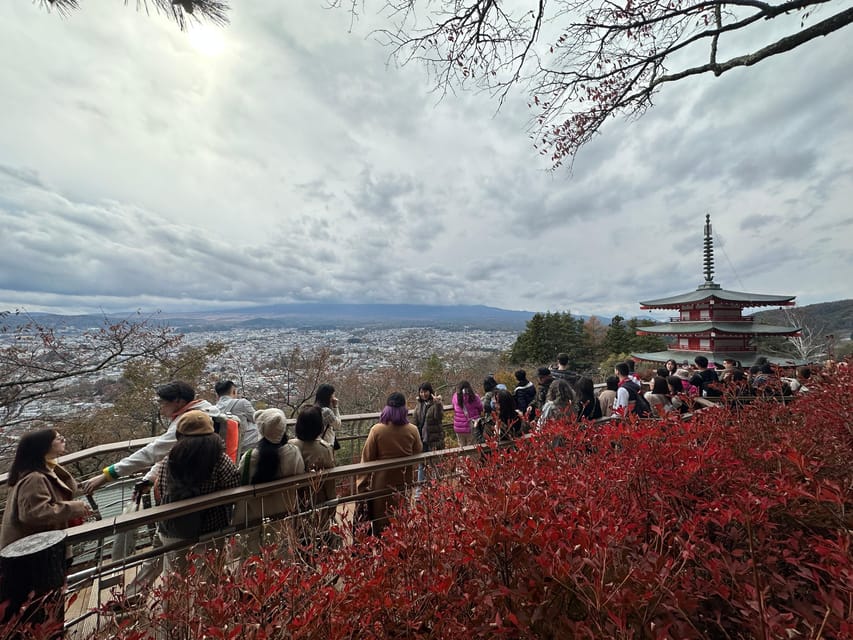
Then comes one of the region’s most iconic sights: Chureito Pagoda. You’ll spend about 1 hour here, with time for walking and photos.
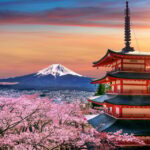
This stop is famous for a reason. You get a clean foreground frame and Fuji as the background. In spring, cherry blossoms can add extra magic, but even outside cherry season it still works as a classic “Fuji framed by structure” scene.
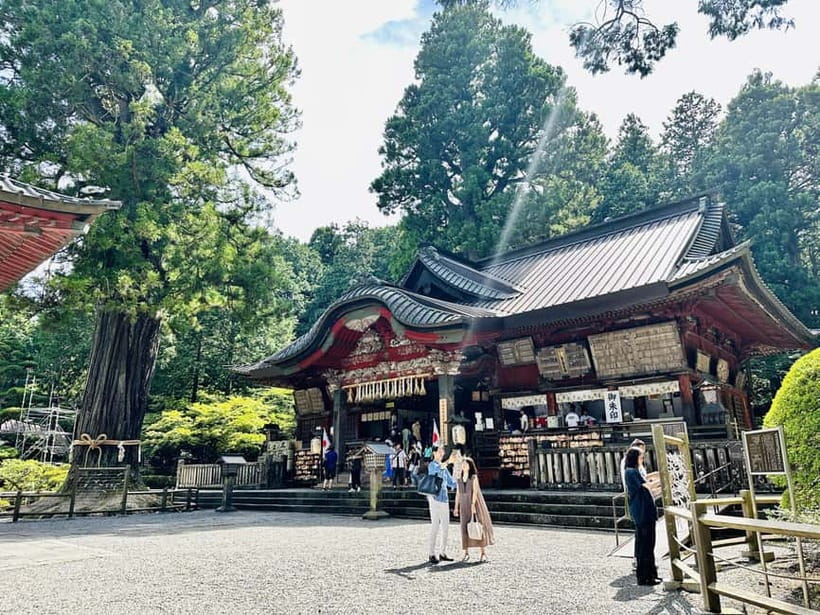
Kitaguchi-hongu Fuji Sengen Shrine: Spiritual Stop, Scenic Context
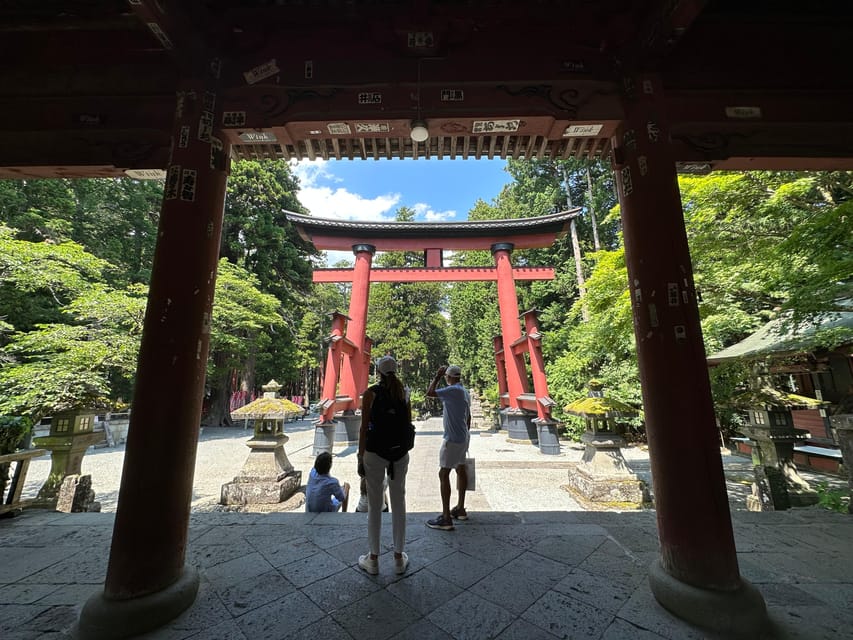
Next up is Kitaguchi-hongu Fuji Sengen Shrine (about 1 hour). This is a change of pace from “look at the mountain,” shifting you into a more cultural setting where the mountain is tied to local belief and tradition.
If you like your travel with at least one meaningful non-shopping stop, this one helps balance the day.
Oishi Park and Lake Kawaguchi: Walk Views, Not Just Standing
You’ll spend about 1 hour at Oishi Park, then about 1 hour around Lake Kawaguchi. These are your “breathe and look longer” parts of the day.
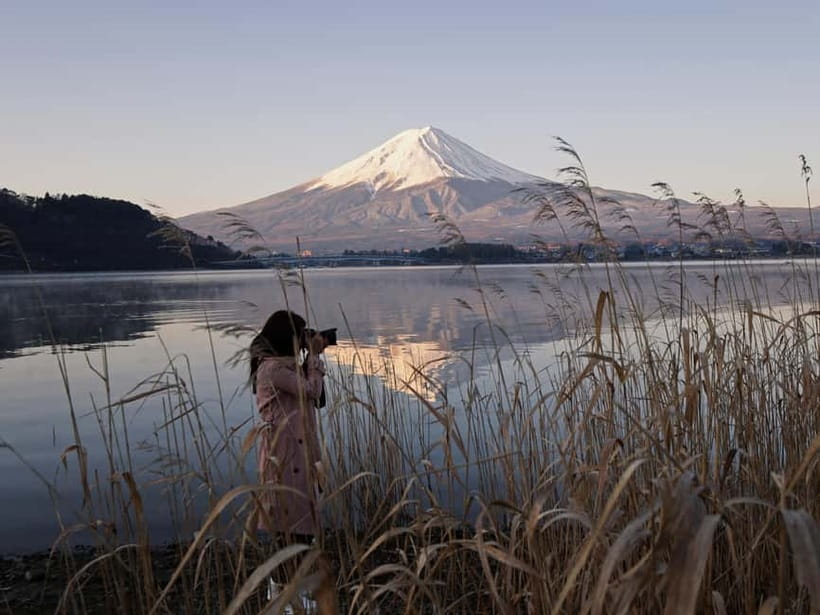
Lake stops are also the best places to catch Fuji under changing light. If the summit is hidden at one moment, it might reappear later—especially if clouds are moving.
Ropeways and Quick Photo Breaks: Mt. Kachi Kachi and More
The tour includes time at Mt. Kachi Kachi Ropeway (about 1 hour, with photo stop and free time). You’re likely to pay ropeway tickets since activity tickets aren’t included.
The payoff is the viewpoint height and dramatic angles over the lake area. In weather that’s even slightly clear, your photos can look surprisingly sharp because the vantage point separates you from lake-level haze.
Practical note: if you’re traveling with someone who gets motion sickness easily, ropeways can feel intense. Since this isn’t listed as accessible or medical-friendly, check your comfort before booking.
Hakone Switch-Up: Owakudani, Hakone Ropeway, and Volcanic Reality
After the Fuji Five Lakes side, the day turns more volcanic in Owakudani Valley (about 30 minutes). This stop is the “wait, Japan is still active” reminder. Steam, sulfurous vibes, and a very different rock-and-slope feel than the lake views.
Then you’ll move on to the Hakone Ropeway (about 30 minutes). This is another viewpoint ride option, and again, ropeway tickets aren’t included.
Why it’s worth it: the Ropeway gives you a way to see the volcanic crater landscape from above. It also helps you finish the day with views that feel different from the Fuji framing you did earlier.
Lake Ashi and Hakone Open-Air Museum: Calm Moments After the Crater
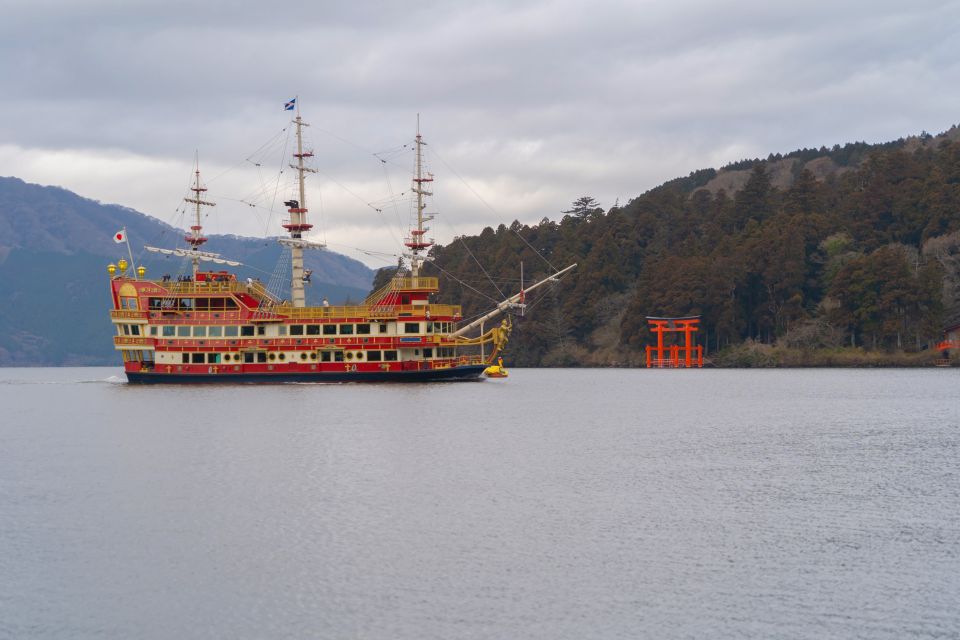
You’ll get time at Lake Ashi (about 30 minutes). This is a good wind-down stop. The pacing here matters. After volcanic views and travel time, Lake Ashi gives you calmer water and more breathing room.
The tour also includes Hakone Open-Air Museum (about 20 minutes). It’s not long enough to act like a full museum visit, but it gives you a taste of art in an outdoor setting. If art museums aren’t your thing, treat this as a short pause rather than the main event.
You might also see Lake Ashi cruise options discussed as part of the day planning. But boat ride tickets are not included, so if you want that on your personal schedule, plan to pay separately.
Gotemba Premium Outlets: When Shopping Fits the End of the Day
Gotemba Premium Outlets appear as a 1-hour stop. This is useful if you want a practical shopping hour after sightseeing. It’s also a nice way to burn off energy without standing on a viewpoint in cold wind.
But here’s the tradeoff: if you’re traveling for the scenery only, this stop might feel like “time away from Fuji/Hakone.” I’d treat it as optional in spirit. If you don’t want it, ask to swap in more viewpoint time while you still have daylight.
Optional Culture and Cave Options: Build Your Own Fuji-Hakone Emphasis
This private format is the point. You can mix and match the Fuji and Hakone sides, and add optional stops when they fit your interests.
Depending on the plan you create, you might include:
- Saiko Iyashi-no-Sato Nenba (traditional thatched-roof village, if you want culture-focused time)
- Other alternative cave attractions like Narusawa Ice Cave and Fugaku Wind Cave (if they’re offered and the schedule fits)
You should still expect a full day of movement. These “add-ons” change the feel of the trip, but they also require time. Choose them based on what you’d rather remember: scenery, culture, or special-ticket natural attractions.
The Guide Factor: Why Names Like Ali and Hassan Matter
The big reason this tour gets high marks is the guide-driver combo. Many guides in this operation are multilingual, including English, Hindi, Japanese, and Arabic, and the communication style tends to be practical—helping you move efficiently between stops.
From the guide examples called out by name—Ali, Hassan, Kamran, Chand, Mohsin, Malik, Faisal, Jazib Butt, Umar, Aswad, Haris, and more—you can pick up a consistent pattern: the better guides treat waiting time as part of the day. That means you get facts, helpful photo positioning, and quick course corrections when the sky changes.
Even if your guide isn’t any of those names, the key is to look for that skill set: flexible pacing and clear explanations, not just reading out a checklist.
Who Should Book This (and Who Might Want a Different Plan)
This tour is a great match if you:
- Want private transportation and a day that feels tailored.
- Care about multiple Fuji views plus at least a couple of Hakone highlights.
- Prefer not to handle logistics and ticket timing on your own.
It may not be ideal if you:
- Need a fully sedentary day. You’re in and out of vehicles and walking for most stops.
- Want lots of time at only one location. This is a variety day, not a single-site day.
- Have medical concerns listed by the operator. It’s marked as not suitable for pregnant women, people with pre-existing medical conditions, people with high blood pressure, and people over 95.
Should You Book This Mount Fuji Full Day Private Tour?
Yes, if your ideal day is “big views across Fuji and Hakone” with minimal hassle. The private A/C van, multilingual communication, and flexible route control are the big wins—especially if you’re traveling as a group of up to six.
Book with two expectations set in advance:
- You’ll pay extra for key ticketed experiences like ropeways, and the Fuji 5th station fee is separate.
- Weather can change the summit view, but the tour still gives you enough stops to keep the day rewarding.
If you want a smooth, efficient Fuji-and-Hakone sampler that you can shape to your interests, this is a solid choice.
FAQ
How long is the tour, and how much time is for transit?
The tour runs about 10 hours. The plan includes around 4 hours for transfers to and from Tokyo, with roughly 6 hours for sightseeing, depending on timing.
What is the price, and how many people can be in a group?
It’s $407 per group for up to 6 people.
Are tickets for ropeways or boat rides included?
No. Tickets for ropeway or boat-type activities are not included.
Is the Mount Fuji 5th station entrance fee included?
No. The 5th station entrance fee is listed as 2100¥ per group and is not included.
What languages are supported by the driver?
The driver is listed as multilingual, including English, Hindi, Japanese, and Arabic.
What pickup and drop-off locations are available?
Pickup and drop-off include several options within Tokyo’s 23 wards (such as Shinjuku, Shibuya, Shinjuku, Chiyoda, etc.) plus some outside areas. If you’re outside Tokyo’s 23 wards, extra pickup charges may apply.
What should I bring, and what is not allowed?
Bring a camera, credit card, and cash. Not allowed items include bikes, backpacks, bags, alcohol and drugs, and baby carriages.
![[HOT] Hanoi Old Quarter Walking Street Food - Small Group Tour - The Old Quarter walking part: where the real value lives](https://b.travelinasia.net/wp-content/uploads/hot-hanoi-old-quarter-walking-street-food-small-group-tour-400x267.jpg)