REVIEW · TOKYO
Tokyo 4hr Private Tour with Government-Licensed Guide
Book on Viator →Operated by Japan Guide Agency · Bookable on Viator
Tokyo feels overwhelming until someone threads it for you. This 4-hour private tour with a government-licensed English guide lets you choose 2–3 highlights, so you’re not stuck figuring out train transfers or missing the good context at stops like Senso-ji and Shibuya. The trade-off: it’s a walking tour with set limits, so the Imperial Palace inside isn’t included and some gardens/museums may require extra entrance tickets.
What I like most is how fast it gets you oriented. Your guide helps you manage Tokyo’s subway and meet the day’s sights with less stress, even if your group is moving at a careful pace.
If you’re the type who enjoys planning, you might do some things cheaper on your own. But if your goal is an efficient, guided “greatest hits” sampler, this format is strong value.
In This Review
- Key things that make this tour click
- A 4-hour private walk is the right kind of efficient
- Customizing 2–3 stops: how to pick what fits your Tokyo
- Asakusa and Senso-ji: the old-city start that sets the tone
- Shibuya Crossing and Hachiko: modern Tokyo without the confusion
- Imperial Palace grounds: what you can do (and what you can’t)
- Meiji Jingu near Harajuku: the calm break in the middle of the action
- Tsukiji Fish Market area: food energy you can’t plan on your own
- Shinjuku Gyoen and the garden options: pick your kind of calm
- Akihabara and Tokyo Tower: two different kinds of iconic
- Koishikawa, Hama Rikyu, Rikugien, and the museum add-on logic
- Gotokuji, Nezu, and Shibamata: when you want local texture
- How the guide helps with the subway (and why it matters)
- What you’re paying for: $109.43 per person, and how to judge value
- Best fit: who will enjoy this most
- Quick practical notes before you go
- Should you book it? My take
- FAQ
- What’s included in the tour price?
- Is this tour a walking tour?
- Does the tour include entry inside the Imperial Palace?
- Are entrance tickets covered for all sights?
- Can I customize the itinerary?
- Is the tour really private?
- What’s the cancellation policy?
Key things that make this tour click
- Government-licensed English guide: you get clear explanations plus practical city navigation help.
- Choose 2–3 sites from a menu: the day stays focused instead of turning into a random checklist.
- A walking tour with on-foot meet-up: you’re guided through neighborhoods, not stuck in a van.
- Real transit coaching: multiple guides are praised for subway help and planning around stairs.
- Picks fit different moods: temple streets, mega-city crossing, and major gardens all show up in the options.
- Some sights have extra entrance fees: the tour covers only what you select from the included list; tickets for other places aren’t included.
A 4-hour private walk is the right kind of efficient
Tokyo is big, and the “easy” parts come with their own friction. Lines are confusing the first time, stations are huge, and you can burn an hour just getting from Point A to Point B. That’s exactly what you’re paying to avoid here.
This is a private, group-only tour, not a crowded shuffle. You meet your licensed guide within a designated area on foot, then spend the next ~4 hours moving between chosen spots. Because the itinerary is customizable, you can aim for what you actually care about—rather than paying for stops that don’t match your energy.
Also, the pace matters. Several guides are mentioned as adapting to families and to people who prefer fewer stairs. If you’ve got older legs, scooters, strollers, or just want time to stop for photos and snacks, that flexibility becomes the difference between a fun afternoon and a chore.
You can also read our reviews of more tours and experiences in Tokyo.

Customizing 2–3 stops: how to pick what fits your Tokyo
The “2–3 sites” structure is where the value lives. With only half a day, you want stops that give contrast: old Tokyo plus modern Tokyo, sacred plus city, or crowds plus calm.
Here’s an easy way to choose:
- Pick one classic historic area (Asakusa/Senso-ji, Imperial Palace grounds, or a traditional temple like Gotokuji).
- Pick one modern “Tokyo face” (Shibuya Crossing, Harajuku/Takeshita Street, or Akihabara if you love electronics and anime culture).
- Pick one reset (Meiji Jingu, a major garden like Shinjuku Gyoen, Koishikawa Korakuen, Rikugien, Hama Rikyu, or even a museum stop if that’s your thing).
That mix keeps you from spending your whole day in one theme. It also makes your photos look varied, because the neighborhoods genuinely feel different.
Asakusa and Senso-ji: the old-city start that sets the tone
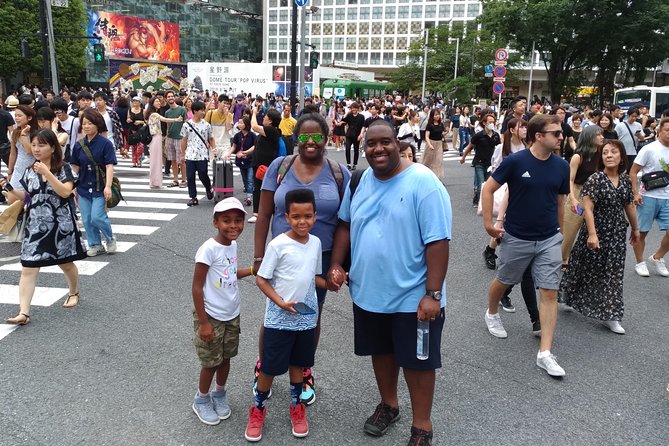
Asakusa is where Tokyo’s older “shitamachi” spirit lives—the streets feel less like a corporate grid and more like a place where traditions still run through daily life. The big draw is Senso-ji Temple. It’s free to enter, and it’s the kind of place where you can feel why this area keeps calling people back.
What makes a guided stop here useful: you’re not just looking at the gate and walking toward the main hall. A guide can help you time your visit so you’re moving at a comfortable rhythm, and they can add context so you’re not staring at a postcard.
Practical tip: if you’re choosing only one classic temple area, Asakusa is usually the best choice. It delivers culture, atmosphere, and photo variety in one compact zone.
Shibuya Crossing and Hachiko: modern Tokyo without the confusion
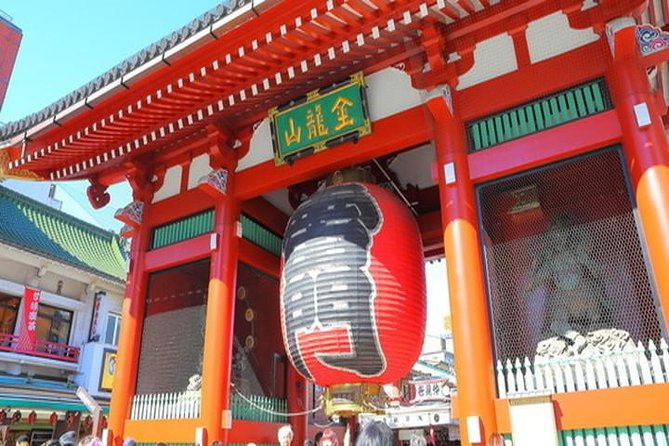
Shibuya Crossing is the busy, famous intersection everyone sees in photos. The local nickname is Shibuya scramble, and it really is that: a coordinated flood of people crossing from every direction.
A guide helps in two ways. First, they point you toward good viewing spots so you’re not stuck at the busiest entrance. Second, they explain the Hachiko connection so the area has a story, not just a crowd.
If you love energy, combine Shibuya with nearby street-level Tokyo (Harajuku/Takeshita Street is often a natural pairing). If you prefer calm, you can swap Shibuya for a garden stop and keep the modern edge for another day.
Imperial Palace grounds: what you can do (and what you can’t)
The Imperial Palace area is free to access on the level this tour typically covers, and it’s a great change from temple streets and commercial zones. You get the feel of massive walls, moats, and a formal layout.
One key limit: this tour does not include access to the inside of the Imperial Palace. You’re there for the surrounding grounds and the atmosphere, not for rooms and interior highlights.
Even with that limitation, it’s a good stop because it gives you contrast—Tokyo can be playful and loud, but it can also be restrained and ceremonial. If your group wants a more quiet, architectural pause, Imperial Palace grounds usually deliver.


Meiji Jingu near Harajuku: the calm break in the middle of the action
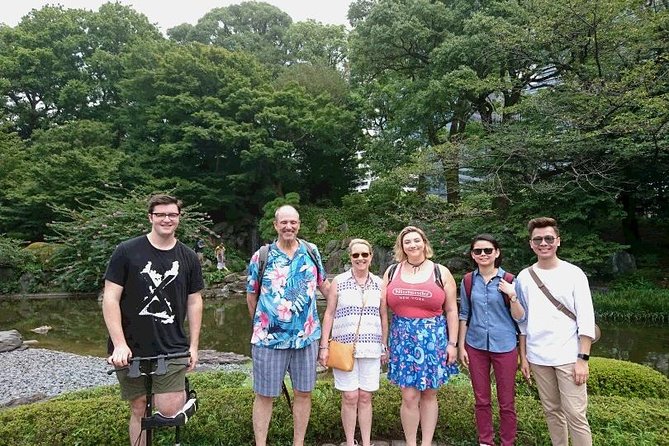
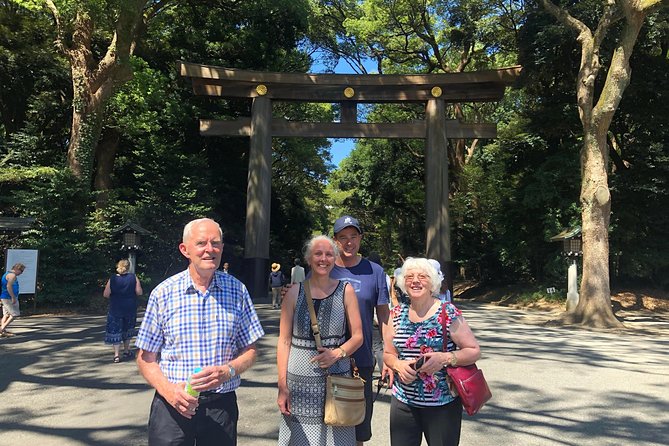
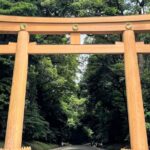
Meiji Jingu is a shrine dedicated to Emperor Meiji and Empress Shoken. It’s positioned near the busy Harajuku area, which makes it a smart choice for a “breather” between louder neighborhoods.
What you gain with a guide: how to move through shrine etiquette without feeling lost. Several tour experiences highlight guides explaining how shrines work—so you can participate respectfully without overthinking it.
And if you pair it with Harajuku, you get a strong contrast day: sacred calm, then street fashion energy. Takeshita Street is free to walk, and it’s a quick hit of teenage culture and style.
Tsukiji Fish Market area: food energy you can’t plan on your own
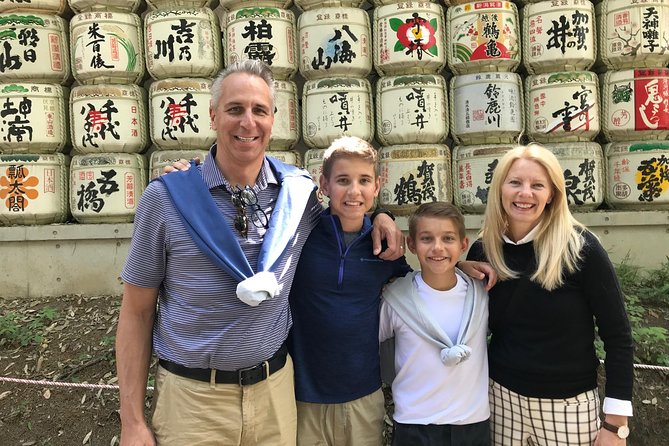
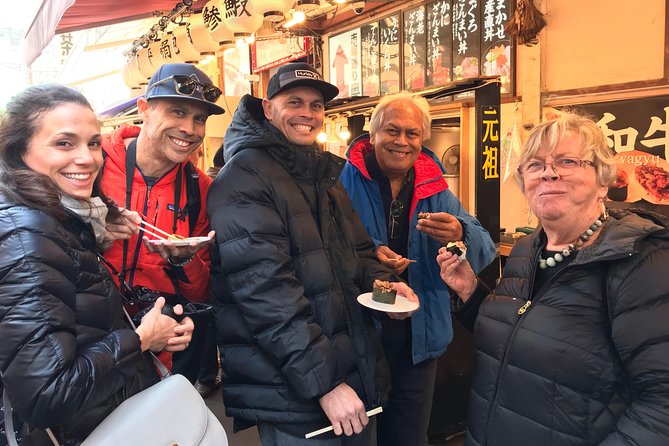
Tsukiji is famous for food, and the market vibe is a sensory experience even if you don’t plan a whole “food tour.” The tour option emphasizes the Old Fish Market area and encourages you to grab something while you’re there.
A guided stop matters most for this: you get help selecting what’s practical to eat on the go and where to go without wandering in circles. One common theme in guide feedback is that people enjoyed tasting items from stalls as part of the experience.
If you’re visiting Tokyo for the first time, Tsukiji is also a great way to get into local food culture fast, without needing a long, separate culinary day.
Shinjuku Gyoen and the garden options: pick your kind of calm
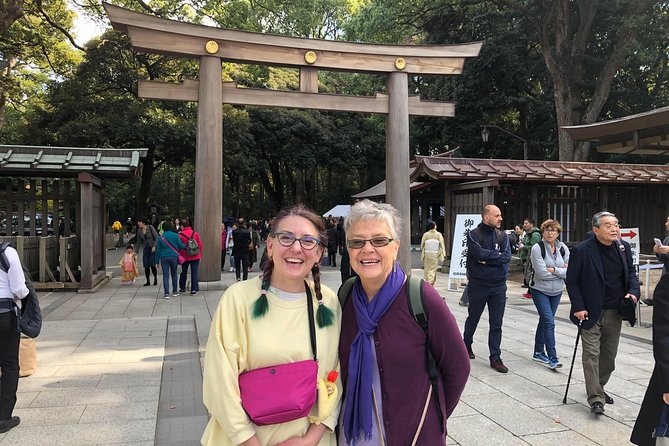
Not every stop is about crowds. If you want green space and time to breathe, there are several garden choices on the menu.
- Shinjuku Gyoen National Garden: large, popular, and designed for walking paths and relaxed scenery. It’s listed with entrance ticket not included, so expect to pay if it’s one of your chosen sites.
- Koishikawa Korakuen Garden: one of Tokyo’s oldest gardens, built in the early Edo Period. Also listed as not included for entrance tickets.
- Rikugien Garden: built around 1700, often paired as a serious garden experience for people who like traditional design.
- Hama Rikyu Gardens: near Tokyo Bay with seawater ponds that change with the tides, plus a teahouse setting.
If your group includes people who need quieter pacing, choose one garden as your “slow hour.” Two gardens in four hours can be too much walking, so think of it like seasoning: one strong garden note is usually enough.
Akihabara and Tokyo Tower: two different kinds of iconic
If your tastes lean modern and pop-culture, Akihabara is the option that fits. It’s known for electronics shops, and the area is closely associated with Japan’s tech and pop culture energy. It’s listed with admission ticket free in the plan options, making it an easy add.
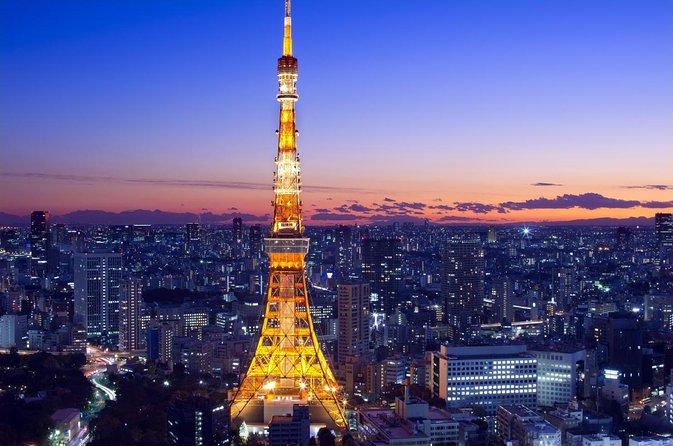
For classic city views, Tokyo Tower is another popular pick. One important limit: this tour only includes access up to the main deck—the top deck is not included. Entrance ticket is listed as not included, so budget extra if you select it.
Akihabara and Tokyo Tower don’t replace each other. Akihabara is about browsing and atmosphere; Tokyo Tower is about the view and the landmark moment.
Koishikawa, Hama Rikyu, Rikugien, and the museum add-on logic
You might notice the tour list includes several gardens and at least one major museum option: Tokyo National Museum. That museum is listed as not included for entrance tickets.
Here’s how I’d think about it: if your group includes one person who loves museums and another who prefers fresh air, the garden picks can balance the day. If everyone is museum-first, you can shift toward Tokyo National Museum as your “quiet indoor anchor” and keep the other one or two stops focused on Tokyo’s big neighborhoods.
Gotokuji, Nezu, and Shibamata: when you want local texture
Not every stop has to be world-famous. If you want quieter neighborhoods and a more everyday Tokyo feel, there are options like:
- Gotokuji Temple: associated with the maneki-neko, the luck-inviting cat figurine. It’s free and short, which helps you fit it into a tight half-day.
- Nezu and Yanaka-style neighborhoods (listed as Yanaka and Nezu): described as old downtown areas that avoided major damage, retaining last-century character. Free option.
- Shibamata: an older neighborhood feel near the Edogawa River. Free option.
These are especially good when your group has already seen the big city icons or you simply want a softer pace and a more human scale.
How the guide helps with the subway (and why it matters)
Tokyo’s transit system is world-class—and also easy to mess up. You can have a Suica card, download maps, and still get stuck because one entrance is on the wrong side or because stair routes are wrong for your group.
A few guides are praised specifically for:
- helping people navigate the metro and trains,
- planning routes to reduce long stair sections,
- and guiding transfers so the day stays on schedule.
This is the part you can’t easily buy with a smartphone app. The guide turns navigation into a low-stress process. That frees up your attention for the streets, the buildings, and the moments you actually came for.
What you’re paying for: $109.43 per person, and how to judge value
At $109.43 per person for about 4 hours, you’re not just buying entry tickets. You’re buying:
- a licensed local guide who can explain what you’re seeing,
- the ability to customize 2–3 sites so you don’t waste time,
- and someone who handles route decisions across neighborhoods.
That’s value if:
- you’re short on time and want a focused “best of” day,
- you want help with subway routing,
- your group has mixed interests (history, food, modern city, gardens),
- or you’re traveling with kids, older family members, or anyone who benefits from pacing help.
It’s less value if:
- you already know the city layout and you don’t mind managing your own transfers,
- you’re not interested in explanations and just want to wander,
- or you plan to choose only one super-close spot where you can easily self-navigate.
Best fit: who will enjoy this most
This tour style tends to work best for:
- first-time Tokyo visitors who want structure without a rigid script,
- couples on a honeymoon or anniversary who want meaningful stops without long days,
- families who need an adaptable walking pace,
- and people who appreciate learning how to move around Tokyo confidently.
One tour feedback theme is that guides adapt to family needs and help reduce friction like steps. That makes a big difference when you’re trying to keep everyone happy.
Quick practical notes before you go
This is a walking tour. Pickup is offered on foot within a designated area, and transportation fees aren’t included. Entrance fees vary by the selected sites: some are free (like Senso-ji and Meiji Jingu options), while others list tickets as not included (like Shinjuku Gyoen, certain gardens, and Tokyo National Museum).
Also, lunch isn’t included, so decide ahead of time whether you’ll add a quick snack while you walk or use a stop as a food moment.
If you’re selecting Tokyo Tower, remember you only get up to the main deck.
Should you book it? My take
Book this tour if you want a short, guided Tokyo “highlights and calm breaks” plan where you call the shots. The ability to pick 2–3 sites, plus the real-world subway help, is what makes it work in four hours.
Skip it if you’re traveling with the mindset of independent wandering every minute and you don’t care about navigation assistance or explanations. In that case, you can spend less by going DIY.
If you do book, choose your 2–3 stops with contrast in mind: one classic, one modern, one reset. That’s how you get the most Tokyo for your time.
FAQ
What’s included in the tour price?
The tour price includes a licensed local English-speaking guide and a customizable route of about 2–3 sites from the options list. Entrance fees, lunch, and transportation costs are not included unless your selected sights are listed as free in the tour options.
Is this tour a walking tour?
Yes. It’s described as a walking tour, and you meet your guide on foot within a designated area in Tokyo.
Does the tour include entry inside the Imperial Palace?
No. The tour does not include access to the inside of the Imperial Palace.
Are entrance tickets covered for all sights?
No. Some sights show admission ticket as free, while others list admission ticket not included. The guide entry fees are covered only for sights listed under what to expect.
Can I customize the itinerary?
Yes. You can customize the itinerary by choosing 2–3 sites from the list of potential landmarks.
Is the tour really private?
Yes. It’s a private tour/activity, and only your group participates. You cannot combine multiple tour groups.
What’s the cancellation policy?
Free cancellation is available up to 24 hours in advance for a full refund, based on the experience’s local time. If you cancel less than 24 hours before the start time, the amount paid isn’t refunded.