REVIEW · TOKYO
Tokyo Night Foodie Tour in Shinjuku – Seasonal Sushi, Wagyu Beef
Book on Viator →Operated by MagicalTrip Inc. · Bookable on Viator
Neon streets + real Japanese food. This 3-hour Shinjuku night tour strings together seasonal sushi and shichirin-grilled Wagyu with a guide who knows how to translate the chaos of Kabuki-cho into something you can actually enjoy. I also like the small-group format, which keeps the night from feeling like a food stampede.
One thing to keep in mind: you should not count on guaranteed allergy-free eating or guaranteed dietary substitutions, since some kitchens won’t be set up for that.
In This Review
- Key highlights that matter (not just cute bullets)
- Why Shinjuku at night is a smart choice for food
- Meeting point in Nishishinjuku: getting oriented fast
- Stop 1: a local sushi haven to start with seasonal bites
- Stop 2: Omoide Yokocho area and the omakase handoff
- Stop 3: Kabuki-cho nightlife walk with context (not just selfies)
- Stop 4: Godzilla Road and the quick photo-worthy head
- Stop 5: Nishishinjuku dessert or drink to seal the win
- Seasonal sushi and wagyu on shichirin: what you should expect
- Guides make or break the night: the human part of the value
- Value check: is $111.62 a fair deal?
- Who this tour fits (and who should think twice)
- Practical tips to make the most of the night
- Should you book the Tokyo Night Foodie Tour in Shinjuku?
- FAQ
- How long is the Tokyo Night Foodie Tour in Shinjuku?
- How many people are in the group?
- What food does the tour include?
- Where does the tour start and end?
- Can I request a vegetarian course?
- Are allergies accommodated?
- Will we pass through areas where smoking is allowed?
- What is the cancellation policy?
Key highlights that matter (not just cute bullets)
- Seasonal sushi at a local spot with chef-prepped bites designed for the season
- Wagyu on a shichirin stove so you get the grilling drama, not just a plate
- Kabuki-cho nightlife walk plus a quick stop where the Godzilla fans nerd out
- Dessert or a drink finale in Nishishinjuku to close the meal on a sweet note
- Max 7 people for more questions, faster help, and less standing around
- Mobile ticket + near public transport for an easier start in a big city
Why Shinjuku at night is a smart choice for food
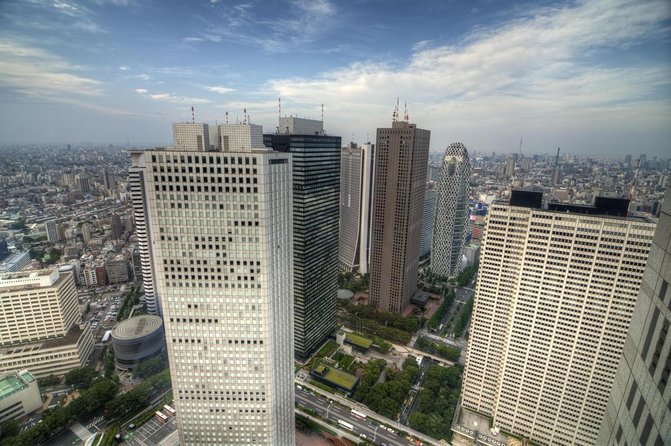
Tokyo is great in the daytime. But Shinjuku after dark is where the city turns theatrical. You’ll see neon signage, crowds spilling out of side streets, and little pockets of restaurants that feel like they’ve been there forever.
This tour is built for that exact mood. It starts with food first, then uses walking time to add context—what you’re eating, where you are, and why these neighborhoods do what they do. I like that the night doesn’t just hand you bites and move on. The guide helps you connect the dots while you’re still in the moment.
You can also read our reviews of more tours and experiences in Tokyo.
Meeting point in Nishishinjuku: getting oriented fast
The tour starts at 1-chōme-2-8 Nishishinjuku, Shinjuku City. It also ends back at the meeting point, which is convenient when you’re done eating and simply want to call it a night.
Because the schedule is about 3 hours total, the pacing tends to feel efficient. You’re not doing a long hike across town; you’re doing a tight, walkable circuit where the food stops are the headline, and the neighborhood sights are the supporting cast. With a maximum of 7 travelers, you’re less likely to lose people behind you in the crowd.
A practical note for planning: Japan’s temperatures can swing hard, with summer highs around 40°C (110°F) and winter lows around -5°C (20°F). Dress for the weather outside, not for what you hope the weather will be inside restaurants.
Stop 1: a local sushi haven to start with seasonal bites
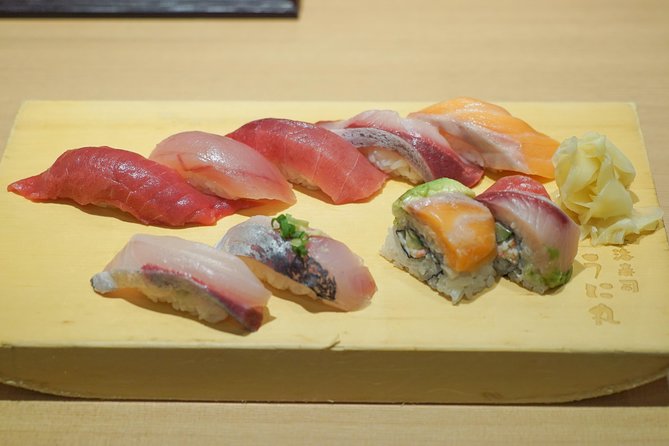
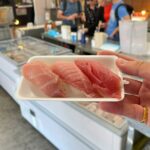
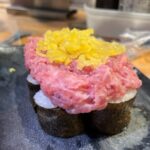
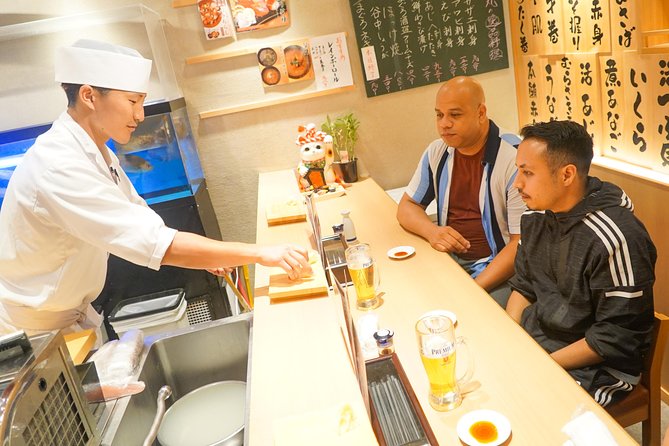
You’ll meet your guide and begin at an authentic sushi place that’s described as a local sushi haven. The focus here is seasonal sushi, which is a real theme in Japanese dining. It means what you eat is tied to what’s good right now, not just what looks good on a menu.
This first stop sets expectations. You get the rhythm of the night—how the chef works, how to order or follow along (you’ll get guidance), and how to taste beyond the simple idea of fish on rice. If your baseline assumption is that sushi is always the same, this stop usually corrects that fast.
The main drawback for some people: sushi places can be compact and rules can be strict. The good news is the tour format keeps you from having to figure it out alone.
Stop 2: Omoide Yokocho area and the omakase handoff
From there, the tour moves toward the Omoide Yokocho area. This is one of those Shinjuku zones that people love to picture in their head: narrow lanes, retro energy, and lots of tiny spots.
Here’s the thing to know: even if you’re near Omoide Yokocho, you may not necessarily eat inside the lanes themselves. The tour is set up so you’ll walk to a nearby omakase sushi restaurant for the chef’s choices, then continue on to the next big meal. In other words, you’re using the neighborhood location for atmosphere, while the real tasting happens at the planned sushi stop.
Why omakase works on a tour:
- You avoid decision fatigue.
- The chef controls the flow around seasonality.
- Your guide can help you understand what you’re seeing and eating.
If you’re a picky eater, this is where you should pay attention to what your guide asks you about up front. The tour does say substitution for dietary needs isn’t guaranteed at every stop, and the guide will do their best to compensate elsewhere.
Stop 3: Kabuki-cho nightlife walk with context (not just selfies)
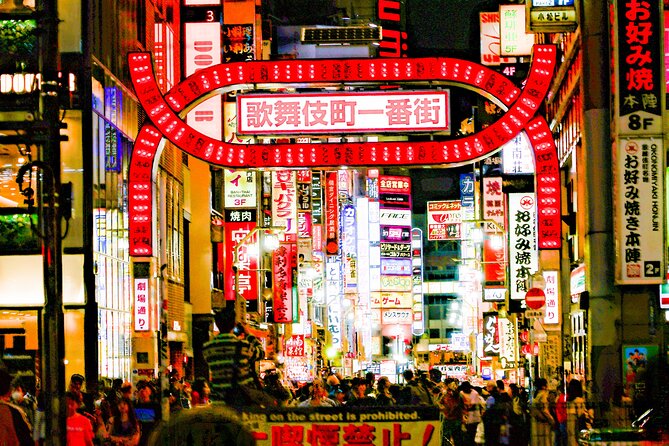
Next comes a walk through the Kabuki-cho district. This is the entertainment district side of Shinjuku—neon, theaters, restaurants, and the kind of street energy that looks loud even when you’re standing still.
The value here is context. A guide can point out what matters in the neighborhood so you’re not just watching light reflections in your phone screen. You’ll get a sense of how the area functions at night and what kinds of places are clustered where.
Also, it’s a good mental reset between heavy food moments. Sushi to wagyu is a strong pairing. The walk gives your body time to process, and your eyes time to adjust to the street scene.
One consideration: the tour may visit places where smoking is not prohibited. That means you should be prepared for occasional smoke exposure depending on the venue and crowd flow. If that’s a dealbreaker for you, plan accordingly.


Stop 4: Godzilla Road and the quick photo-worthy head
Then you’ll hit Godzilla Road and see the Godzilla Head. This is a short stop (around 5 minutes), but it’s the kind of playful detail that makes a food tour feel like a Tokyo night, not a restaurant relay.
For practical travelers: it’s fast. You won’t feel stuck there while the group waits. It also breaks up the night visually right before dessert.
Stop 5: Nishishinjuku dessert or drink to seal the win
The final leg is Nishishinjuku, where the tour ends with unique Japanese desserts or drinks. This matters because it shifts the experience from savory intensity to something lighter—or at least something sweet enough to reset your taste buds.
Dessert or a drink isn’t just a nice ending. It also turns the tour into something you can remember as a complete arc: sushi, wagyu, neighborhood night energy, then the sweet finale.
Some people end up choosing dessert; others choose a drink. Either way, the tour is aiming for you to leave satisfied without needing to hunt for a last snack on your own.
Seasonal sushi and wagyu on shichirin: what you should expect
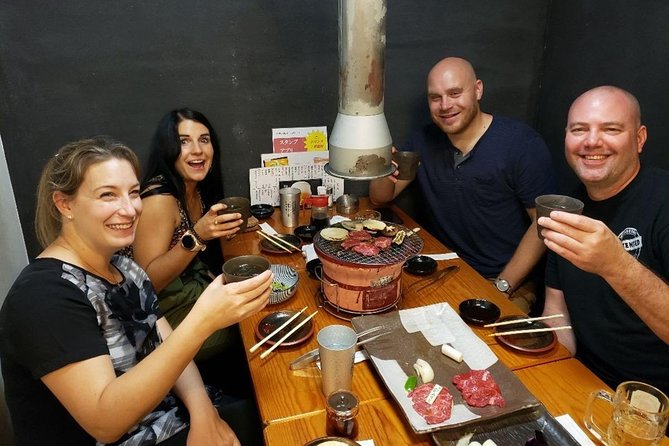
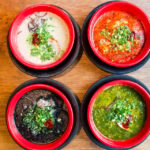
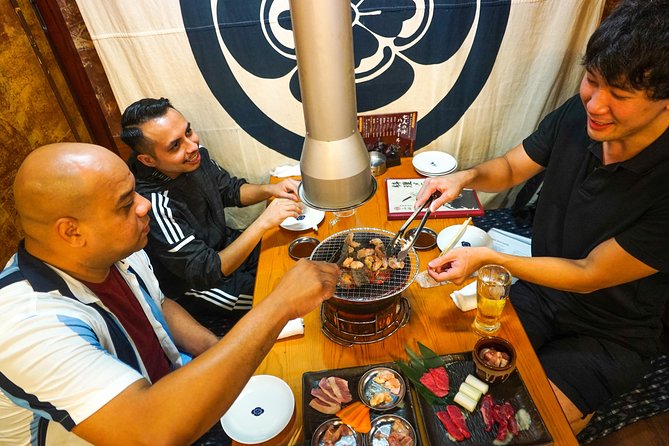
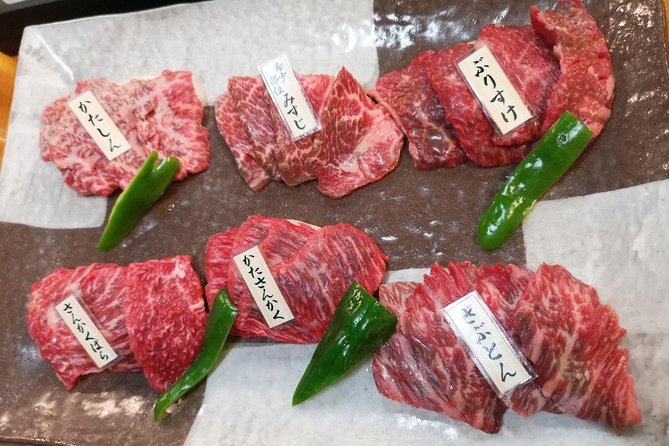
The two biggest food anchors are seasonal sushi and Wagyu beef grilled on shichirin stoves.
Seasonal sushi:
- You get variety that changes with timing.
- The chef’s choices can make the meal feel thoughtful rather than generic.
- You’ll likely notice different textures and flavor balance across pieces, especially if you slow down and follow your guide’s guidance.
Shichirin-grilled wagyu:
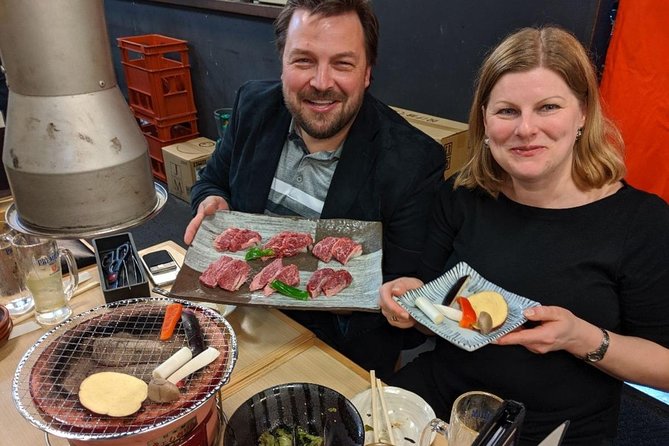
- Grilling in front of you changes everything. You’re not just receiving cooked beef; you’re seeing it happen.
- Wagyu quality is part of the appeal, but the grilling method is the other half. A shichirin stove is designed for grilling, which helps build that “fresh off the heat” experience.
In the reviews, people consistently describe the wagyu tasting as a highlight, and many mention they’re full by the end. That suggests the tour is not stingy with portions. Still, there are different eating appetites, so the best strategy is to come hungry but don’t assume you can eat like it’s a buffet marathon.
Guides make or break the night: the human part of the value
The tour’s rating is near the top end, and a large chunk of that comes from guide performance—people praise guides for guiding well, explaining culture and food as they walk, and keeping everyone comfortable.
You’ll see names pop up in feedback: guides like Yuki, Molly, Megumi, Yosh, Hiro, Aoi, Mimi, and Minnie are mentioned for being friendly, answering questions, and making the group feel included. That doesn’t mean every guide will be identical, but it does show what MagicalTrip tends to get right: the food is excellent, and the explanation is there so you understand what you’re eating.
If you like asking questions—about food, Tokyo neighborhoods, or just how to handle a night out—this tour format supports that. Small group size helps a lot.
Value check: is $111.62 a fair deal?
At $111.62 per person for about 3 hours, you’re paying for three things at once:
1) Multiple restaurant tastings (not just one stop)
2) A guided route through key neighborhoods
3) A small group that keeps attention focused
It’s not the cheapest way to eat in Shinjuku. But it’s also not random bar-hopping. You’re getting the big two food categories—sushi and wagyu—and a structured night walk that gives you a payoff even if you’re not buying extra drinks along the way.
If you’re the kind of traveler who hates spending hours hunting for the right place, this price can feel like you’re buying back time and confidence. Also, several notes in feedback point out that portions are more than enough for people, which improves the value equation.
Who this tour fits (and who should think twice)
This tour is a strong match if:
- You want sushi + wagyu in one night without planning.
- You enjoy walking and want the neighborhood context, not just food.
- You like small groups where you can ask questions.
It may be a less perfect match if:
- You have strict allergy needs and need guaranteed allergy-free kitchens. The tour explicitly can’t guarantee that.
- You strongly avoid any smoking exposure. The tour may include areas where smoking is not prohibited.
- You want a long, slow, food-only sit-down experience. This is structured and walk-focused, with a sightseeing-style flow through nightlife areas.
If you’re vegetarian, you can request a vegetarian course in advance (by the day before), but it’s not guaranteed if you request last minute.
Practical tips to make the most of the night
- Dress for temperature swings. Tokyo nights can go from comfortable indoors to harsh outdoors fast, especially in summer heat or winter cold.
- Come with a realistic appetite. The night includes sushi, wagyu, and dessert or a drink. Most people end up full.
- If you have dietary restrictions beyond vegetarian needs, plan to communicate them early. The tour says substitutions aren’t always possible at every stop.
- Expect tight spaces at food counters and small restaurants. It’s part of the authentic setup.
- Bring a little patience for crowds. Kabuki-cho is busy, and part of the point is seeing how lively it is.
Should you book the Tokyo Night Foodie Tour in Shinjuku?
I’d book it if you want one well-run night that covers the two headline foods—seasonal sushi and shichirin-grilled wagyu—plus a guided Shinjuku walk that keeps you oriented in the neon chaos. The small group size is a big deal, and the dessert finish makes it feel complete.
I’d think twice if your needs are allergy-heavy or smoke-sensitive, because the tour can’t guarantee allergy-free cooking and may visit places where smoking is not prohibited. Also, if you hate walking between stops, this route is still walk-based.
If you fall into the first group, this is the kind of Tokyo experience that leaves you full, informed, and with places you’ll recognize the next time you wander Shinjuku on your own.
FAQ
How long is the Tokyo Night Foodie Tour in Shinjuku?
The tour lasts about 3 hours.
How many people are in the group?
The group is capped at 7 travelers.
What food does the tour include?
You’ll taste seasonal sushi, Wagyu beef grilled on a shichirin stove, and you’ll end with dessert or a drink.
Where does the tour start and end?
It starts at 1-chōme-2-8 Nishishinjuku, Shinjuku City, Tokyo 160-0023, Japan, and it ends back at the meeting point.
Can I request a vegetarian course?
Yes, you can request a vegetarian course in advance (by the day before). Vegetarian may not be available if requested on the day of the tour.
Are allergies accommodated?
The tour cannot guarantee allergy-free options, and substitutions may not be possible at certain stops, though they will make an effort to compensate elsewhere.
Will we pass through areas where smoking is allowed?
The tour may visit places where smoking is not prohibited, and venues may not be changed in those situations.
What is the cancellation policy?
You can cancel for a full refund up to 24 hours before the experience starts. If you cancel less than 24 hours before, the amount paid is not refunded.