REVIEW · TOKYO
Tokyo Asakusa Rickshaw Tour
Book on Viator →Operated by Ebisuya · Bookable on Viator
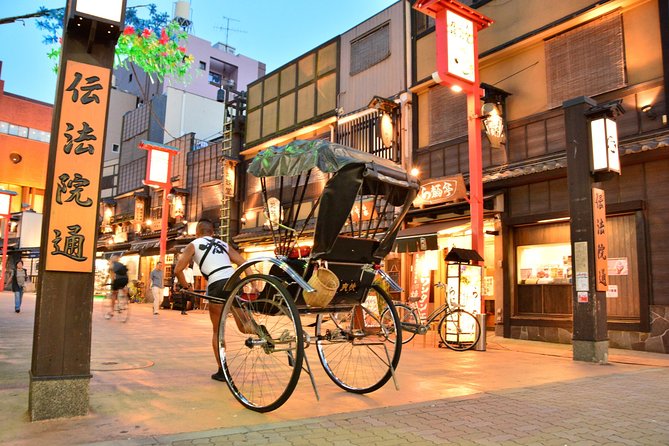
Asakusa slows down at rickshaw pace. This custom rickshaw ride lets you glide past Edo-era streets and seasonal trees, with Tokyo’s modern skyline close by. I love that the route can be shaped around what you want most.
The second thing I like is the mix of very specific stops. You can hit Ushijima Shrine’s three-entry gate, Imado Shrine’s cat figurines, and a classic Tokyo Skytree photo angle across the Sumida River. You also get a chance to relax in a Japanese garden while checking out the Lucky Fortune Cow Shrine.
The trade-off is snug seating and partial walking. The rickshaw is only 74 cm wide, and rickshaw rides aren’t allowed through the Sensoji/Asakusa Temple area or Nakamise shopping street, so some portions are on foot.
In This Review
- Key points before you go
- Entering Asakusa by rickshaw: why this route feels different
- Meeting point and how the tour actually starts
- Timing that fits real life: 30 minutes to 3 hours
- Customizing your route: tell the guide what you care about
- Ushijima Shrine and the triple-gate detail you’ll actually remember
- Honryuin Matsuchiyama Shoden: the radish story and the Sensoji web
- Imado Shrine and the manekineko you’ll spot faster than you think
- The Sensoji Temple area: what you’ll see and what you won’t
- Japanese garden time and the Lucky Fortune Cow Shrine moment
- Edo-era street facades, retro shops, and how to spot the real old Tokyo
- Raccoon street stops and the fun-photo side of Asakusa
- Entertainment-history streets: Rokku Street and the old-school show vibe
- The old amusement park stop that keeps the day light
- Asahi Beer headquarters and the golden flame photo spot
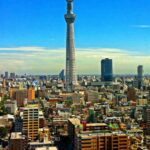
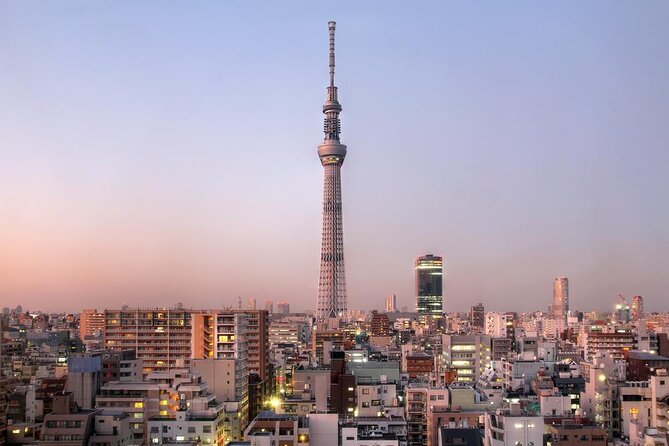
- Sumida Park and Tokyo Skytree views across the river
- Price and value: what $42.90 buys you
- Comfort and logistics: the rickshaw width matters
- Guides, pace, and what makes the ride feel good
- Who this tour suits best (and who might prefer something else)
- Should you book this Tokyo Asakusa rickshaw tour?
- FAQ
- How much does the Tokyo Asakusa Rickshaw Tour cost?
- How long is the tour?
- Where do I meet for the tour?
- Where does the tour end?
- What’s included in the price?
- What’s not included?
- Can the tour be customized?
- Are rickshaws allowed inside Sensoji Temple and Nakamise?
- How many people can ride in one rickshaw?
- What if the weather is bad?
Key points before you go
- Lucky Fortune Cow Shrine pause in a Japanese garden for calm, not crowds
- Ushijima Shrine’s unusual triple-entry gate that’s easy to spot and fun to ask about
- Imado Shrine’s manekineko cats, including the beckoning-cat details
- Raccoon-themed street stops with figurines every few meters for quick photos
- Asahi Beer headquarters and its iconic golden flame for skyline-style pictures
- Sumida River viewpoints that work well even on short itineraries
Entering Asakusa by rickshaw: why this route feels different
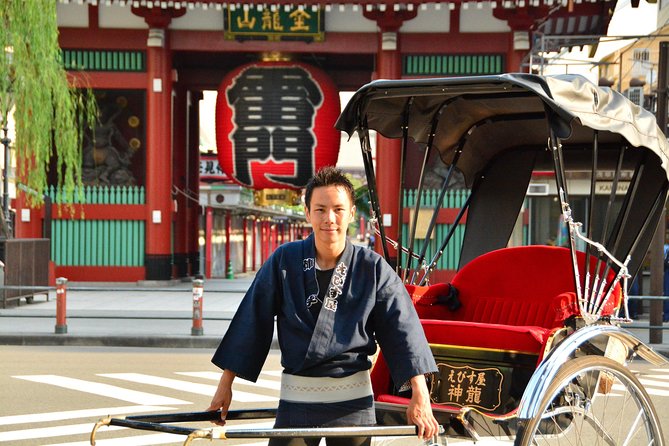
Asakusa is one of those neighborhoods where the past and present lean into each other. You’ll see traditional religious spots and Edo-era street facades, then turn a corner and catch modern Tokyo in the same view. Doing it at rickshaw pace changes your rhythm. Instead of bouncing along with everyone else on foot, you get a slow, human-scale tour where you can actually look at doorways, lanterns, shop signs, and the little stuff guides love to point out.
This also isn’t a one-size route. You can tell your guide what matters most, and the stops can shift to fit your interests. That matters in Asakusa because there are multiple “right” ways to see it. Some people want shrines and temple details. Others want photo stops, entertainment-history streets, and river views.
One more practical reason I like this format: it’s fast enough to fit into a busy Tokyo day. The ride time can run from about 30 minutes up to around 3 hours, so you can choose how long you want the slow pace to last.
You can also read our reviews of more tours and experiences in Tokyo.
Meeting point and how the tour actually starts
You meet at 1-chōme-1-4 Asakusa, Taito City, Tokyo 111-0032, right by Asakusa Station. Getting there is straightforward because it’s near public transportation. When you arrive, you’ll link up with your guide, then move straight into the rickshaw portion.
This tour doesn’t include hotel pickup or drop-off. You’ll be on your own to reach the start point, and then your guide will get you to the end area at Kan’non-dōri 1-chōme-2-11 Asakusa (though the exact finishing spot can be decided on the day). That flexibility is handy if you want to connect to Sensoji area, the river walk, or just a nearby train stop.
Also, this is a private tour/activity, meaning only your group rides. That helps if you’re traveling as a couple, family, or small group and you want the guide to set the pace rather than juggling a big crowd.
Timing that fits real life: 30 minutes to 3 hours
The duration range is the big planning lever here. With 30 minutes, you’re really buying a quick overview of Asakusa highlights and photo points. With a longer session, you can slow down for more stops and more explanations.
I’d think about it like this:
- If you’re also doing major Tokyo sights the same day, choose the shorter option and focus your guide on the top 3 places you care about.
- If Asakusa is your main theme day, go longer so you can relax between stops and actually enjoy the atmosphere on the streets.
A detail that’s easy to forget until you’re there: the best-feeling parts of this neighborhood are often short walks between spots. That means your time gets used efficiently when your route is planned with you in mind.
Customizing your route: tell the guide what you care about
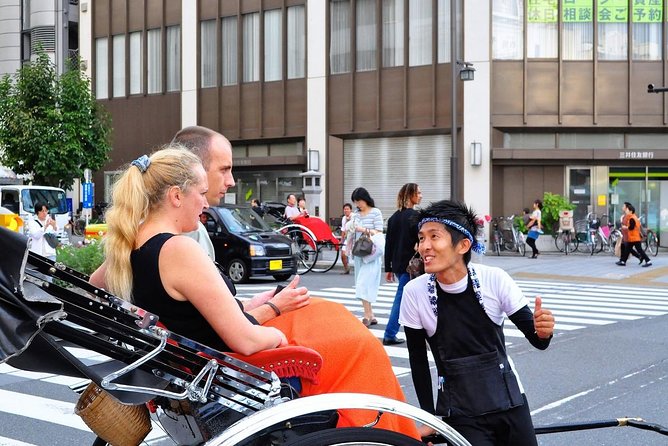
Customization is built into the experience. You’ll tell your guide what you want to see, and the route can adjust. That’s useful because Asakusa has several “storylines” running at once:
- religious sites with Shinto and Buddhist elements together
- Edo-period street facades and older neighborhood streets
- entertainment-history pockets
- playful photo stops, like raccoons and cat figurines
- river viewpoints with Skytree in the frame
- modern landmarks like the Asahi Beer headquarters
The guide you get can make a big difference in how the trip feels. Some named drivers and guides people talk about include Issy, Micchy, Kei, Koko, Yusuke, BUCHI, and Takumi (with Mr T mentioned as well). The common thread in those examples is that the ride stays friendly and question-friendly, not stiff.
A tip that helps customization work smoothly: pick one category as your priority, and one category as your bonus. For example, shrines first, photos second.
Ushijima Shrine and the triple-gate detail you’ll actually remember
One standout stop is Ushijima Shrine, a Shinto shrine where you’ll notice something unusual right away: the gate has three entrances instead of the standard single entrance. It’s one of those details that feels small until a guide points it out, and then it becomes the whole memory.
You should also know this: the tour notes say admission tickets for listed stops like Ushijima are not included. That doesn’t mean you can’t go, just plan for possible small entry costs depending on what you choose during your route.
Even if you’re not a shrine person, this stop works because it’s visual. The three-entry gate gives you something concrete to look for while you’re riding and then while you’re taking photos.

Honryuin Matsuchiyama Shoden: the radish story and the Sensoji web
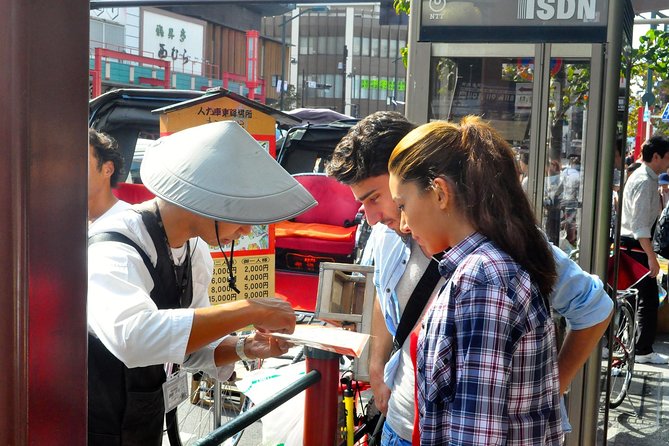
Another temple stop is Honryuin Matsuchiyama Shoden, part of the larger Sensoji temple network. Here, you’ll learn the story behind something unusual: why there are so many radishes connected with this place, and why radishes show up on lanterns too.
That kind of detail is exactly what makes short tours worth it. Instead of just seeing a name on a map, you get a reason the place looks the way it does.
Like Ushijima, the tour notes indicate admission tickets aren’t included. Plan for that if you’re trying to keep strict track of spending.
Imado Shrine and the manekineko you’ll spot faster than you think
Imado Shrine is famous for its cat figurines, especially the manekineko, the beckoning cat. The ride format helps here because you can go from one visual moment to the next without losing time. A cat figurine detail might sound like a small thing, but it’s one of the most recognizable elements of Japanese shrine culture for first-time visitors.
Imado also tends to be one of the easier stops to enjoy even with limited time. If you want a playful, photo-friendly moment between temple stops, this is a strong choice.
Admission tickets are noted as not included for this stop too, so keep a small buffer in your budget.
The Sensoji Temple area: what you’ll see and what you won’t
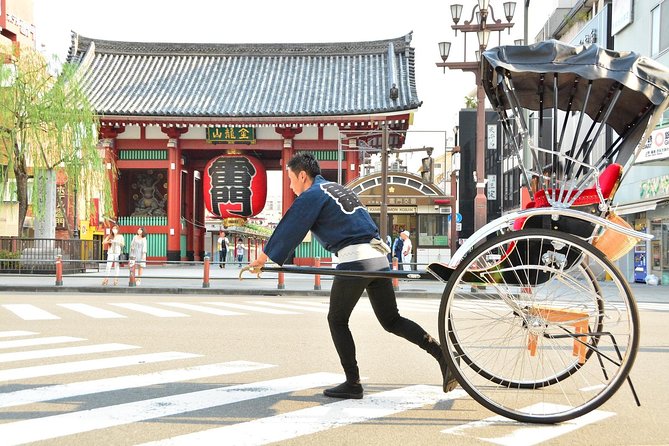
This is the part many people need to understand before they arrive. Rickshaw rides aren’t allowed in the Sensoji Temple/Asakusa Temple area, including the temple buildings, the temple grounds, and the Nakamise shopping street.
So what does that mean for your experience? You can still see the big landmarks, and your guide can still plan the approach so you get the important exterior views and the cultural explanations. But you should expect some sections to be on foot. That’s not a dealbreaker, it’s just how the system works in this area.
If you’re thinking you’ll get a smooth ride all the way through the busiest streets, adjust expectations. For most people, the easiest compromise is to use the rickshaw to get you close, then walk through the parts you want to slow down for.
Japanese garden time and the Lucky Fortune Cow Shrine moment
One of the more relaxing highlights is a stop at a Japanese garden where you can see the Lucky Fortune Cow Shrine. This is the palate cleanser in an Asakusa schedule: you trade street noise for quieter garden space and a more “look and breathe” feel.
Even in a short tour, this type of pause is valuable because it gives your eyes a rest. It also creates a different kind of photo and memory than shrines and storefronts do.
If your timing lines up with seasonal scenery, you may also appreciate the mention of maple and cherry trees in the area. That’s a nice touch in Asakusa because seasonal color makes the Edo-era feel softer, almost dreamlike next to the straight lines of modern buildings.
Edo-era street facades, retro shops, and how to spot the real old Tokyo
A big portion of what makes Asakusa special is less about famous names and more about the streets themselves. Your route includes a historic street with stores and housing facades dating to the Edo period. That’s where you start to notice texture: older building layouts, narrow street rhythm, and the layered look of the neighborhood.
This is also where rickshaw pace shines. On foot, you tend to move fast just to cover the distance. By rickshaw, you’re more likely to actually look out the side and register what you’re seeing.
For a first-time visitor, this is one of the best ways to get an overview without turning the day into a sprint.
Raccoon street stops and the fun-photo side of Asakusa
Asakusa has its quirks, and one of the most fun is a street with the main theme of raccoons. The details are playful: there are raccoon figurines placed along the street every few meters, so you can take lots of small, easy photos without needing a perfect angle.
This is an ideal stop if:
- you’re traveling with kids or teens
- you like lighthearted photo moments
- you want something that breaks up the shrine-and-temple concentration
Even if you don’t care about raccoons, it’s still useful as a way to slow down and enjoy the street vibe.
Entertainment-history streets: Rokku Street and the old-school show vibe
Another stop connects to Asakusa’s entertainment district history. Rokku Street, now part of the retro district, used to be the most popular entertainment district in Tokyo before the war. You’ll hear about cinemas and theaters that once stood here.
You also visit a venue that was and is still a heart of Asakusa entertainment, where you can experience comedy and shows. That doesn’t mean you’ll necessarily watch a performance during the tour, but it anchors the neighborhood in what people came here for.
If you’re the type who likes to understand why a place feels the way it does, this historical context is worth the time.
The old amusement park stop that keeps the day light
Your route can also include one of Japan’s oldest amusement parks, still in operation. It’s a nice contrast to the temple-heavy feel elsewhere on the tour.
If you’re planning a family day or you just want a softer, fun moment before heading back to the train, this is a good addition. It also tends to work well for people who don’t want only solemn stops.
The trade-off is that, like all optional stops, it depends on your chosen duration. Short rides may limit how many of these you can fit in comfortably.
Asahi Beer headquarters and the golden flame photo spot
One of the highlights is the Asahi Beer headquarters, including the iconic golden flame on top of the building. Even if you’re not a beer fan, it’s a strong visual landmark. It gives you a different skyline-style photo than the river and the temple gates do.
This stop also works because it marks the contrast you came for: old Tokyo street views, then a clear modern corporate landmark nearby.
If you care about photos, tell your guide you want a few specific shots, and you’ll get a more deliberate stop rather than just a drive-by.
Sumida Park and Tokyo Skytree views across the river
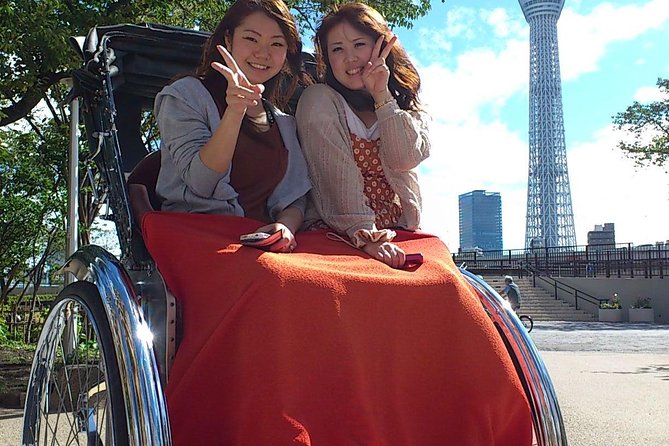
Your route can include Sumida Park, a long park along the Sumida River. It’s a good break spot, and it’s also where you can see cherry blossoms in spring and enjoy an excellent view of Tokyo Skytree just across the river.
Even outside blossom season, the river perspective matters. It’s one of the easiest ways to frame the city skyline without needing a climb or long transit.
If you like taking photos, this is also one of the better “stand here and frame it” locations on the route.
Price and value: what $42.90 buys you
At $42.90 per person, you’re paying for a mix of things that don’t exist together in normal sightseeing:
- a rickshaw ride driven locally
- a guided route through multiple landmarks in a compact timeframe
- customizable stops, so the day isn’t wasted on places you don’t care about
Because the tour can run from 30 minutes up to about 3 hours, the value depends on which length you pick and how tightly you plan your interests. If you pick a longer duration and ask for a coherent route, it can feel like you bought time back from Tokyo traffic and crowds.
Two cost notes that can affect your budget:
- Food and drinks aren’t included.
- Admission tickets for certain shrines/temples aren’t included, so keep a small buffer.
If you’re traveling as a couple and you fit comfortably, sharing a rickshaw can reduce cost per person. If you’re traveling as larger adults or you’re worried about room, booking individual rickshaws can make the experience more comfortable.
Comfort and logistics: the rickshaw width matters
The rickshaw can fit two adults, but it’s only 29.1 inches (74 cm) wide. That’s the detail that can make or break comfort. If you’re broad-shouldered, taller, or just prefer more wiggle room, I recommend planning for individual rickshaws.
The tour also notes:
- Maximum of 2 adults per rickshaw.
- Up to 2 children aged 5 years and under can ride with 2 adults, but children ride on an adult’s lap.
- If a child 5 years uses one of the two seats, it must be booked as an adult.
- If you can’t both fit and still want to ride at the same time, you may need a second rickshaw, subject to availability.
This isn’t meant to scare you. It just means you should match your expectations to the vehicle size.
Guides, pace, and what makes the ride feel good
A lot of the satisfaction here comes from the human factor. In the examples of guides and drivers people mention, you see the same priorities: friendly conversation, lots of stamina, quick photo help, and answers that make the sights stick.
Some drivers are also noted for high energy and for being willing to adjust if you need a moment during the ride. One person even described the tour as a highlight, partly because the guide made it feel personal and photo-friendly.
I’d also plan to ask questions at the stops. The best way to get value from a short tour is to treat each stop like a mini lesson: one question, one curiosity, one photo.
On cooler or rainy days, you should also expect they can help with comfort. People have specifically mentioned staying warm and dry.
Who this tour suits best (and who might prefer something else)
This tour is a great fit if you want:
- a quick, guided overview of Asakusa without a long walk-only day
- shrine and temple context, including Shinto and Buddhist connections on the ground
- photo-ready landmarks like the Asahi golden flame and Skytree views
- a bit of playful fun, like raccoons and the manekineko cats
- a personalized route where you choose the emphasis
It may be less ideal if you:
- strongly dislike walking at all, since the Sensoji/Asakusa Temple area and Nakamise street are walk-only
- need lots of personal space in tight vehicles, because the rickshaw width is limited
- want a strictly free-roaming self-guided day, because customization still runs through your guide’s route choices
Should you book this Tokyo Asakusa rickshaw tour?
I think this is a smart booking when you want Asakusa’s feel fast and correctly. The rickshaw gives you a different angle on the neighborhood, and the combination of shrines, historic streets, and photo stops means you’re not relying on luck to find the best moments.
Book it especially if your time in Tokyo is tight, or if you’re the kind of traveler who likes learning why places look the way they do. With customization, you can steer the day away from anything you’re not excited about.
If you go, do two things to make it better: pick your top interests before you meet the guide, and plan for some walking around the main temple area.
FAQ
How much does the Tokyo Asakusa Rickshaw Tour cost?
The price is $42.90 per person.
How long is the tour?
It runs from about 30 minutes up to about 3 hours, depending on the option selected.
Where do I meet for the tour?
You meet outside Tokyo’s Asakusa Station, at 1-chōme-1-4 Asakusa, Taito City, Tokyo 111-0032.
Where does the tour end?
It ends at Kan’non-dōri 1-chōme-2-11 Asakusa. The exact finishing point is decided on the day of the tour with your guide.
What’s included in the price?
You get a local rickshaw driver and the rickshaw ride.
What’s not included?
Hotel pickup/drop-off and food and drinks are not included. Admission tickets are not included for the listed shrines/temples.
Can the tour be customized?
Yes. It’s customizable based on your interests, and you tell the guide what you want to see.
Are rickshaws allowed inside Sensoji Temple and Nakamise?
No. Rickshaw rides are not allowed in the Sensoji Temple/Asakusa Temple area, including temple buildings, temple grounds, and Nakamise shopping street.
How many people can ride in one rickshaw?
A maximum of 2 adults per rickshaw. Up to 2 children aged 5 or under can ride with the adults if they sit on an adult’s lap.
What if the weather is bad?
The experience requires good weather. If it’s canceled due to poor weather, you’ll be offered a different date or a full refund.