REVIEW · TOKYO
Tokyo Grand Sumo Tournament Viewing Tour with Tickets
Book on Viator →Operated by JTB Global Marketing & Travel Inc. · Bookable on Viator
Sumo in Tokyo is loud, formal, and oddly beautiful, all at once. This 4-hour tour pairs an English sumo talk at Ryogoku View Hotel with reserved 2nd-floor chair seating at Ryogoku Kokugikan—so you’re not just watching, you’re understanding what you’re seeing. You’ll get an English brochure and a day-specific sumo ranking list, and your guide helps translate rules as the action builds.
I also like how the timing is built around the real rhythm of the day. If you’re in the S or A seat categories, you’ll be there for the earlier stretch (13:10–18:00), including key ceremony moments, while the B category starts later (14:30–18:00). One consideration: seating isn’t something you pick in advance—so you’ll want to follow the venue guidance on the day, and you may have brief waiting time during major ceremony entrances.
In This Review
- Key things to know before you go
- Ryogoku View Hotel: a pre-match lesson that actually pays off
- Walking into Ryogoku Kokugikan: what your seat category changes
- The S/A perks (small, but useful)
- Ticket is handled as a mobile ticket
- Ceremony timing and match flow: what to expect hour by hour
- 15:40 — Makuuchi and possible Yokozuna ceremonial entrance
- 16:00 — Makuuchi division sumo matches
- Earlier matches and the junior-to-top progression
- 18:00 — Bow-twirling ceremony
- Understanding what you’re watching: the English support that matters
- Arena-side extras: flags, photos, and the Sumo Museum
- Price and value: why $124 can feel fair (or not)
- Practical tips: how to avoid the common “ugh” moments
- Arrive on time (it’s not optional)
- Be ready for brief waiting during ceremonies
- No outside food or drinks
- Luggage and strollers
- Small group size is part of the feel
- Who this tour suits best (and who might skip it)
- Should you book this Tokyo grand sumo tournament viewing tour?
- FAQ
- Where do I meet the guide?
- When does the tour end?
- How long is the experience?
- What seating is included?
- Is it an actual tournament ticket or just observation?
- Do I get an English guide and materials?
- Does the snack and drink depend on seat type?
- Do I get the cheering towel?
- Can I bring food and drinks into the arena?
- If a ceremony starts while we arrive, what happens?
Key things to know before you go
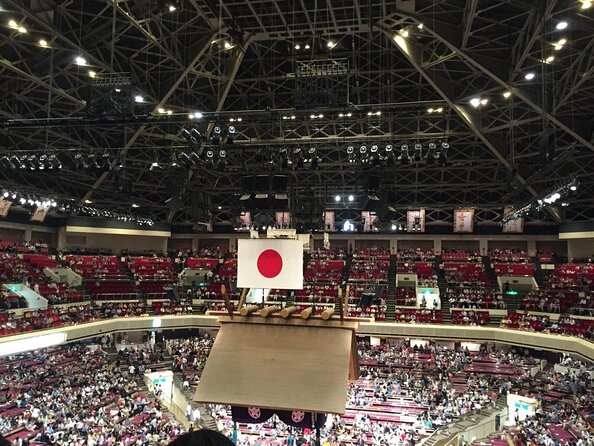
- English guide interpreter support before you enter the arena, plus help navigating the stands
- 2nd-floor chair seating included, with S/A categories adding perks at the arena
- Daily match context in English, including a sumo-ranking list and a brochure
- Ceremony timing matters: the 15:40 Yokozuna entrance happens only if a Yokozuna is present
- Food rules are strict: no outside food or drinks in Kokugikan—vendors are inside
- Arrive early: meet the guide about 10 minutes before the scheduled start time
Ryogoku View Hotel: a pre-match lesson that actually pays off
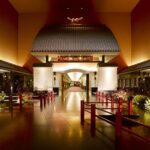
The first stop is Ryogoku View Hotel, right in the sumo neighborhood near the venue. Before you even reach Kokugikan, you’re set up with a short English talk from a National Government Licensed Guide Interpreter. This is the part that makes the rest of the day click.
You’ll also see exhibitions at the hotel tied to sumo’s long tradition—think memorabilia and ceremonial aprons with roots in older practices. The goal isn’t to overwhelm you with trivia. It’s to give you the language to notice what’s happening once you’re seated: the meaning of rituals, how match order works, and what to watch for beyond the obvious grappling.
This is where I’d call out one of the strongest themes from past groups: the guide’s passion. Names like Miki, Michiko, Halle, and Shin show up again and again, with people praising how their commentary made the rules and wrestlers feel understandable in real time. Even if you only catch pieces, that kind of guided framing helps you read the arena like it’s a show with plot.
You can also read our reviews of more tours and experiences in Tokyo.
Walking into Ryogoku Kokugikan: what your seat category changes
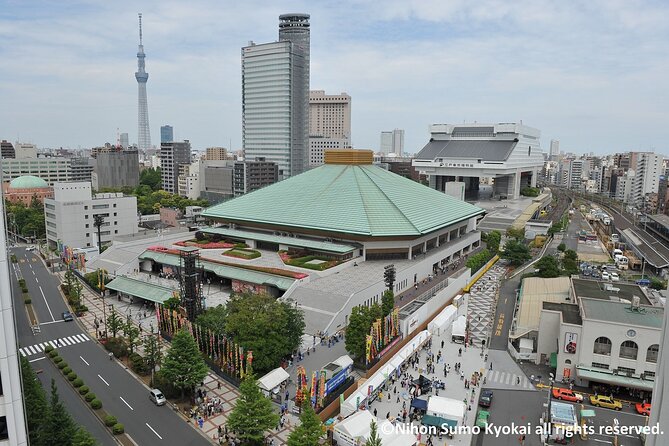
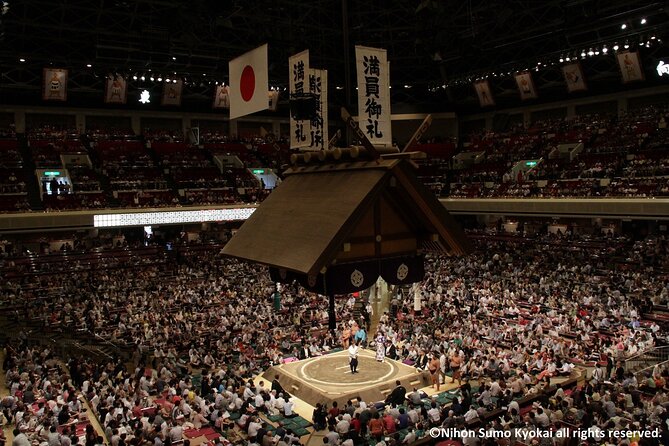
Once you arrive at Ryogoku Kokugikan, you get the full theater effect. The arena is built for ceremonies and timing—so where you sit is less about personal preference and more about catching the day’s key moments.
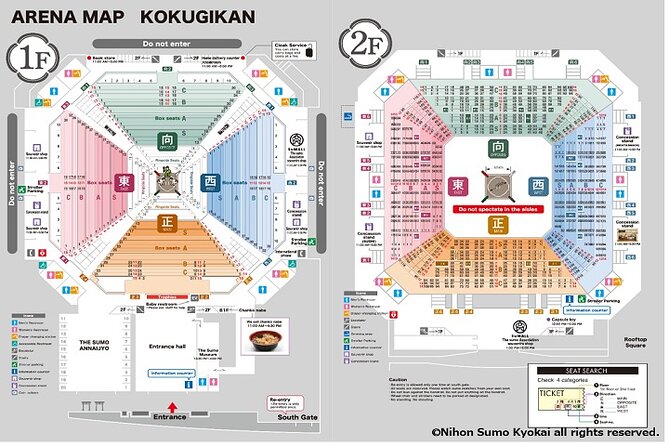
You’re included in 2nd-floor chair seating, but your ticket class changes what you’re there for and what extras you receive:
- S & A-class seats: access from 13:10–18:00
- B-class seats: access from 14:30–18:00
That difference matters if you care about the earlier flow of matches and the ceremonies that punctuate the afternoon. Also, S and A seating includes arena extras; B doesn’t.
The S/A perks (small, but useful)
For S and A seats, you get:
- a light snack and drink (Kokugikan specialty yakitori and a drink; 1 per person)
- a cheering towel as a souvenir
If you’re in B seats, you’re not getting the light snack or cheering towel. That’s not a problem if you plan to buy food inside, but it’s a direct trade-off. If you know you’ll enjoy a mid-event bite without hunting for it, S/A tends to feel more “worth it.”
Ticket is handled as a mobile ticket
You’ll receive a mobile ticket. For planning, that means you should have your phone charged and accessible. I’d also recommend saving the confirmation message somewhere you can find quickly, just in case.
Ceremony timing and match flow: what to expect hour by hour
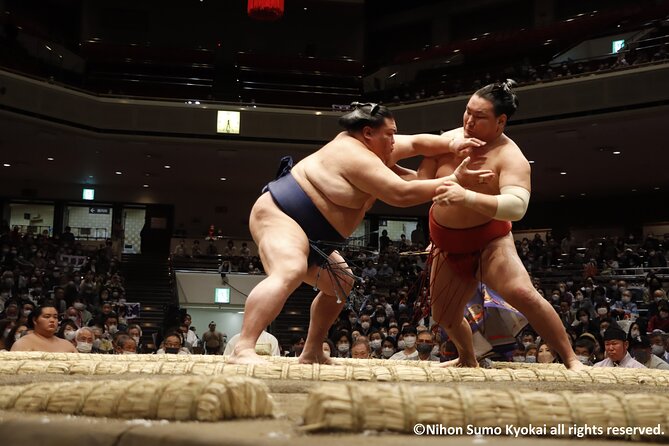
Sumo days move like a sequence of big beats, not like a casual sports afternoon. Here’s the rhythm you can expect based on the event schedule provided:


15:40 — Makuuchi and possible Yokozuna ceremonial entrance
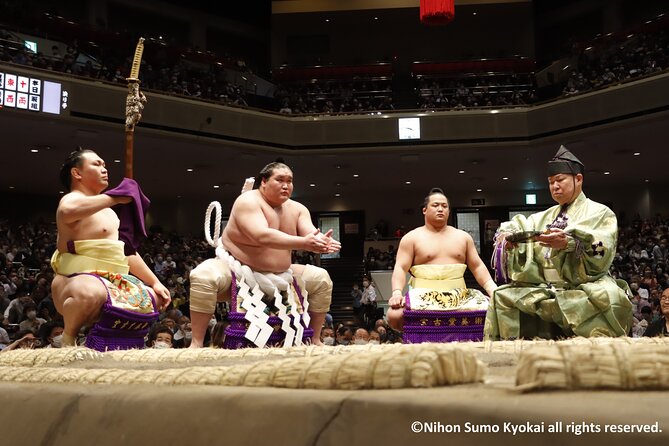
At 15:40, there’s a ceremonial entrance for Makuuchi wrestlers, plus the Yokozuna ring entrance when a Yokozuna Grand Champion is present. The schedule also notes this entrance will not take place if there are no Yokozuna present. Either way, this is the moment when the crowd energy jumps. You’ll feel it as soon as you hear the arena shift from anticipation to cheers.
16:00 — Makuuchi division sumo matches
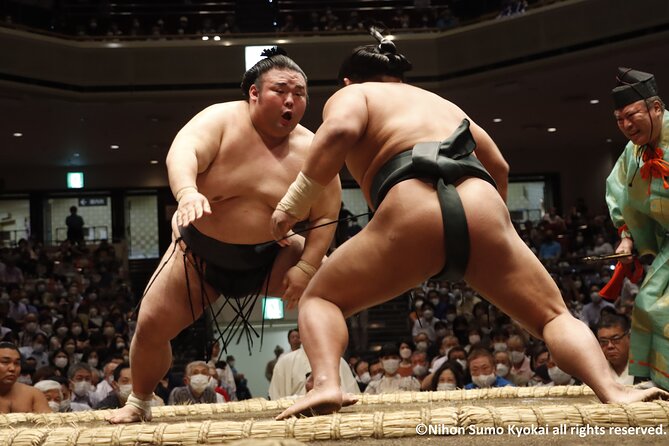
Starting at 16:00, you’ll watch the top division action in the elevated ring. This is the point where the sport turns into “watch closely” mode:
- wrestlers grapple on the clay-and-sand surface
- your guide explains what you’re seeing and how the ranking structure works
- you’ll get context for why certain matchups feel more important
Earlier matches and the junior-to-top progression
The tournament day typically follows a structure where lower divisions run first, and higher-ranked matches come later. The tour language also sets you up with the idea that junior division matches happen early in the day and move upward as the afternoon progresses. If you’re in S/A, you’re positioned to experience more of that full progression.
18:00 — Bow-twirling ceremony
At 18:00, you’ll see the bow-twirling ceremony, a formal closing moment that helps you understand sumo isn’t just about outcomes—it’s about respect, posture, and ritual every step of the way.
Understanding what you’re watching: the English support that matters
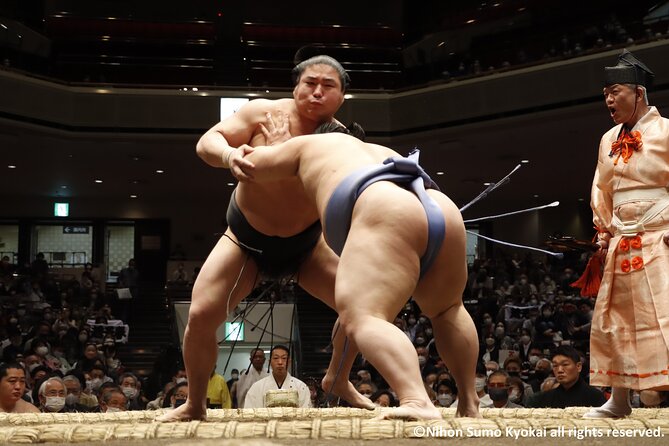
A sumo bout is fast, physical, and heavy on tradition. If you don’t have a translator explaining the rules, it’s easy to end up only understanding the final result.
This tour tries to prevent that by giving you:
- an English brochure
- a sumo-ranking list for the day
- guide interpretation, including help during the stands once you’re seated
More importantly, your guide is there to interpret the structure: rankings, ceremonial details, and why the match order unfolds the way it does.
One detail worth knowing before you arrive: you’ll have a chance to take in the kesho-mawashi, the ceremonial apron. The tour notes it can only be worn by the top division wrestlers (makuuchi). This is the kind of visual cue that helps you spot the level of competition instantly, even if you’re still learning the ranking ladder.
Arena-side extras: flags, photos, and the Sumo Museum
Between bouts, you’ll likely have brief breathing room. That’s when Kokugikan becomes more than just seats.
Two good options:
- Check the arena entrance lobby for championship flags and other items connected to top wrestlers. It’s also a common photo stop.
- Look for the Sumo Museum inside the venue area, which includes items like woodblock prints and folding screens (the tour description specifically mentions these types of artifacts).
Even if you only scan a few pieces, it changes the feel of the day. The ceremonies stop being random and start making sense as part of a bigger system.
Price and value: why $124 can feel fair (or not)
At $124 for about 4 hours, this isn’t a “cheap ticket.” You’re paying for three things you’d struggle to replicate without local planning:
- Guaranteed tournament entry via a secured ticket process that can sell out
- English guidance that helps you understand what’s happening while it’s happening
- Reserved seating in a specific section category (2nd floor chair seating)
The value math also improves depending on your seat class. If you choose S or A, you get the yakitori-and-drink snack plus the cheering towel included. If you’re in B, the tournament ticket still has value, but you’ll want to budget to buy food on-site since outside food is prohibited.
And here’s the big practical point: sumo tournaments are hard to plan on your own if you care about decent access and a smooth flow. If you want to show up, get seated, and let someone else handle the translation and timing cues, this package tends to make sense.
Practical tips: how to avoid the common “ugh” moments
A sumo outing is straightforward, but there are a few rules that matter.
Arrive on time (it’s not optional)
The tour asks you to meet the guide about 10 minutes before the start time. If you’re late, reservations can be canceled. Tokyo public transit can be great, but humans still make mistakes. Build in buffer time.
Be ready for brief waiting during ceremonies
Your seating process can include waiting if major events are happening when you arrive. The guidance notes you may need to wait if you show up during:
- a sumo match
- a Sumo Association speech (on first and last tournament day)
- Makuuchi wrestler ring entrance (dohyoiri)
- Yokozuna ring entrance procession
- the ritual stomping ceremony (on the last tournament day)
Also, the guide won’t provide explanations during those event moments. Translation support resumes when the ceremony ends, so it’s worth arriving early to minimize waiting.
No outside food or drinks
You can’t bring food or drinks, including alcohol, into Kokugikan. Vendors are available inside, so if you didn’t choose S/A or you want something different than the snack, plan on buying there.
Luggage and strollers
- Strollers can be stored on the 1st and 2nd floors, but you can’t bring them into the arena seating area. The venue notes no responsibility for theft, so don’t leave valuables inside.
- Suitcases and large luggage can’t go into the seating area, and baggage can’t be stored at Ryogoku View Hotel. Use coin lockers or store luggage at your own accommodation.
Small group size is part of the feel
The tour caps at 1–19 travelers, which usually means you get more personal attention when it comes to finding your seating area and getting your bearings quickly.
Who this tour suits best (and who might skip it)
This is a strong fit if:
- you’re going to Tokyo during the Grand Sumo Tournament and want a smooth, guided way to do it
- you care about understanding the rules, rankings, and rituals—not just seeing wrestlers
- you want the structure of a guided day so you don’t burn time figuring out what’s happening when
It may be less ideal if:
- you prefer totally independent travel and don’t want to follow a set schedule
- you’re mainly there for a single match and you’re comfortable figuring out tournament logistics yourself
- you’re sensitive to missing ceremony commentary during those ring-entrance moments (the guide can’t explain during the ceremonies)
Should you book this Tokyo grand sumo tournament viewing tour?
Yes—if you want to leave the arena feeling like you understood what you watched. The English support, day-specific ranking materials, and reserved seating make the experience far more usable, especially on your first sumo day.
I’d book with S or A seating if you like added convenience: the light snack and drink reduce one more thing to think about, and the cheering towel is a fun keepsake. Go with B if you’re budget-minded and comfortable buying food inside, and you mainly want the matches rather than the extra inclusions.
Bottom line: this tour is at its best when you treat it like a guided “translation of the sport,” not just a ticket to the building. If that sounds like your style, it’s a very solid way to catch Tokyo sumo the right way.
FAQ
Where do I meet the guide?
You meet at Ryogoku View Hotel (2-chōme-19-1 Ryōgoku, Sumida City, Tokyo).
When does the tour end?
The tour ends at Ryogoku Kokugikan around 6:00PM, and you head to your next destination on your own.
How long is the experience?
It runs about 4 hours (approx.).
What seating is included?
You receive 2nd Floor Chair Seating.
Is it an actual tournament ticket or just observation?
It includes a secured ticket for sumo matches at Ryogoku Kokugikan, provided as a mobile ticket.
Do I get an English guide and materials?
Yes. You’ll have a professional guide and you’ll receive a sumo information pamphlet in English plus a sumo-ranking list for the day.
Does the snack and drink depend on seat type?
Yes. Light snack and drink (yakitori and a drink) are included only for S-class and A-class chair seats. B seats do not include the light snack.
Do I get the cheering towel?
Only for S-class and A-class chair seats. B seats do not include a cheering towel.
Can I bring food and drinks into the arena?
No. Bringing food and drinks, including alcohol, into Kokugikan is prohibited. You can buy refreshments from vendors inside.
If a ceremony starts while we arrive, what happens?
You may have to wait to be seated if a match or certain ceremonies are underway. During those events, the guide interpreter will not provide explanations.