REVIEW · TOKYO
Tsukiji Fish Market: Street Food & Culture Walking Tour
Book on Viator →Operated by Local Guide Stars · Bookable on Viator
Fish smells, rules, and treats in one walk.
This Tsukiji street food and culture tour is built for real market chaos, with a local guide helping you find what’s worth your yen and how to eat like you belong. I like that you get both the outside market street food vibe and the formal fish-trading atmosphere, so the day feels like one connected story. I also like the chance to see a traditional fish-cutting show, then follow that craft to a fresh seafood bowl afterward.
One thing to consider: you’re walking through crowds, and the pace can feel stop-and-wait at busy times. If you want a constant flow of talking history, the mix of eating, watching, and moving may leave you wanting more explanation in between.
In This Review
- Key highlights you should care about
- Tsukiji Jogai Market: your shortcut to eating well
- The fish-cutting show: watch technique, then connect it to food
- Inside the Tsukiji Fish Market: real traders, real rules
- Tsukiji Hongwanji Temple: a short cultural reset
- Price and value: is $33.16 a good deal for 2 hours?
- Group size, timing, and what crowds do to the pace
- Wheelchair and stroller access: a route you can actually use
- Practical tips so you don’t waste time in Tsukiji
- Should you book this Tsukiji street food and culture tour?
- FAQ
- How long is the Tsukiji Fish Market street food and culture walking tour?
- Where does the tour start?
- Is the fish-cutting show included?
- Are meals included in the price?
- Is the tour wheelchair and stroller accessible?
- How big is the group?
- What happens if the weather is poor?
- Is free cancellation available?
- When will I get confirmation after booking?
Key highlights you should care about
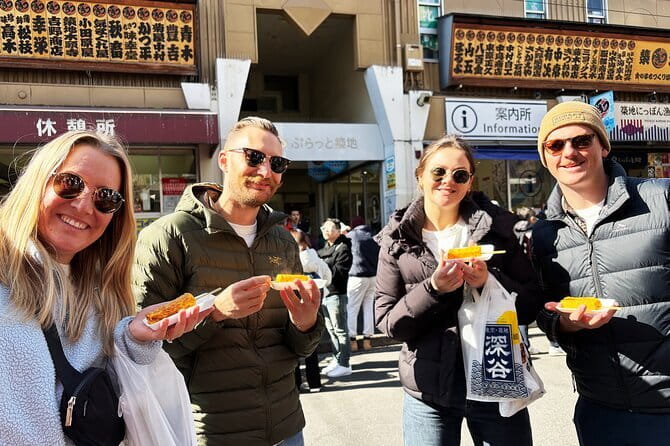
- Small-group feel (max 30) means you’re not swallowed by the crowd
- Fish-cutting show with traditional filleting techniques you can actually see
- Street-food focus at Tsukiji Jogai Market with a local’s guidance
- Real market atmosphere where traders are still working
- Culture stop at Tsukiji Hongwanji Temple for a quick Buddhism lesson
Tsukiji Jogai Market: your shortcut to eating well
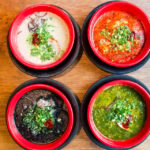
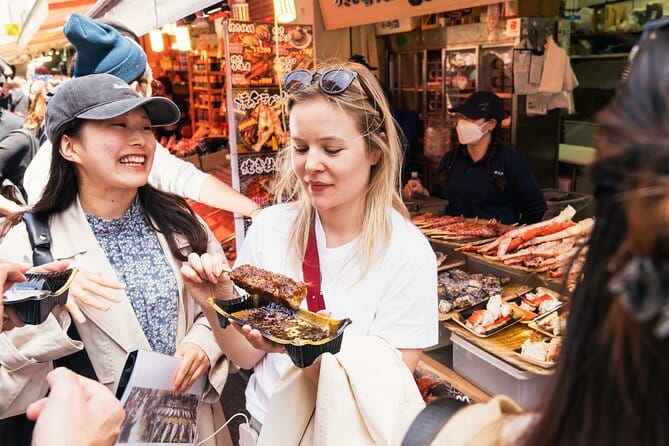
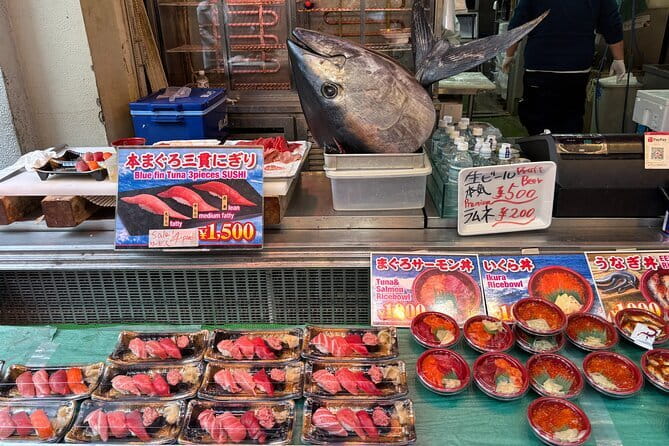
Tsukiji Jogai Market is where you start learning the rhythm. This is the area where the food scene is more “walk up, order, eat, repeat” than “museum tour.” You’ll typically have about 45 minutes here, which is long enough to sample without turning into a marathon.
Here’s what makes this opening smart for your trip: Tsukiji can feel like sensory overload. The stalls, the smells, the signs, the pace—without a guide you’ll likely spend time deciding what to do next. With a local leading, you spend your energy tasting rather than figuring out logistics. I like that the tour frames the food as culture, not just snacks.
Practical tip: wear shoes you can move fast in. You’ll be weaving through narrow lanes and quick-moving lines. If you get motion-sick easily, also know that markets are crowded and can get warm—plan hydration, not just willpower.
You can also read our reviews of more tours and experiences in Tokyo.
The fish-cutting show: watch technique, then connect it to food
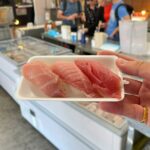
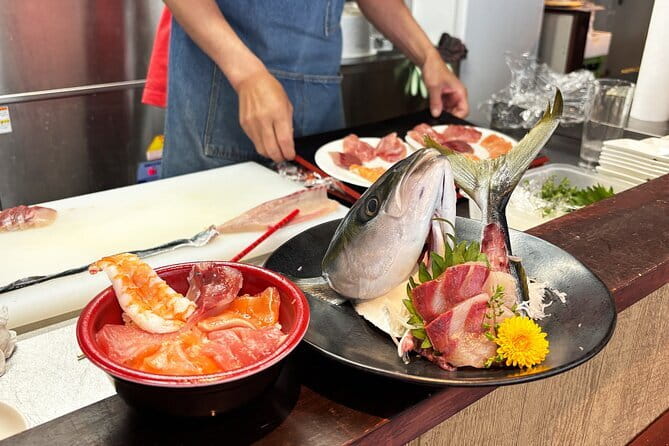
The standout moment for most people is the exclusive fish-cutting show, scheduled for about 30 minutes. This isn’t just someone demonstrating knives—it’s a focused look at traditional technique, with a skilled chef filleting a whole fish. You’ll see the steps that turn raw fish into usable cuts, and that changes how you read everything you eat next.
Why it matters for you: when you watch the process, even basic items start to make sense. Texture, cut size, and how the fish is prepared all become more than trivia. After the show, the schedule includes time to enjoy a fresh seafood bowl afterward, which is a nice payoff: craft first, then flavor.
Also, keep your expectations realistic. You’re in a working-food environment with people moving around. If you’re easily bumped or don’t like crowds near the action, position matters. Try to stand where you can see the chef clearly, then only move if your guide asks you to.
Inside the Tsukiji Fish Market: real traders, real rules
Next comes the Tsukiji Fish Market atmosphere proper, about 30 minutes. This is the part that feels most like you’re seeing something operational. You’re not just touring stalls—you’re seeing professionals at work in a busy trading setting.
What I like about this segment is that it prevents the tour from becoming purely food-only. Even if you only eat a bite here and there, the market context helps you understand what you’re eating. Fish isn’t a casual item here; it’s labor, timing, and careful handling.
Your best move: expect professional focus and movement. Don’t block walkways. Keep your bag close and your phone ready but not swinging around like a selfie fan. In a place like this, small etiquette choices make your experience smoother.
Tsukiji Hongwanji Temple: a short cultural reset
About 15 minutes is spent at Tsukiji Hongwanji Temple with your guide. The tone here is more cultural than practical: you learn about the charm of the temple and how it connects to the history and culture of Buddhism.
Is it worth your time? For many people, a quick temple stop gives your brain a break from food cues and crowds. For others, it may feel like a short detour—especially if you came for pure market food. The good news is the time is limited, so you’re not stuck there long.
If you’re the type who likes a little quiet and meaning mixed into travel, you’ll probably appreciate this stop. If you prefer action-to-action nonstop, treat this as a pause, not the main event.
Price and value: is $33.16 a good deal for 2 hours?
At $33.16 per person for about two hours, this tour is priced like a focused walking experience with a paid component (the fish-cutting show). The “value” isn’t only the ticket—it’s the time and decision-making power you get.
Here’s the tradeoff: the tour includes guidance and a guided market route, but meals are not listed as included. That means your food spending will still be in your hands. You’ll likely be tempted to buy multiple bites because Tsukiji makes it easy. The tour helps you pick, but you shouldn’t assume everything you see is covered.
Where the money tends to land best is if you:
- want the fish-cutting show without hunting for how and where to see it,
- like learning while you snack,
- want someone to help you avoid wasted time when markets are crowded.
Who it’s not for: if you already know Tsukiji well and just want to roam freely with no guidance, you might feel the price pinch. And if you’re hoping for lots of long, uninterrupted historical storytelling, the route includes multiple activity types, so it won’t be a lecture.



Group size, timing, and what crowds do to the pace
This is a small-group tour with a maximum of 30 travelers, and it uses a mobile ticket. That sounds manageable, and in practice it usually helps. You’re more likely to hear your guide and keep up than you would in a huge group.
But markets have their own rules. Even with a small group, narrow alleys and popular stopping points can slow things down. Some people find the pacing a bit heavy on stopping and waiting, especially during peak busy seasons or crowded periods.
A practical mindset helps: think of it as a route with moments—street food tasting, show viewing, market watching, then a temple quick stop—not a continuous, line-free parade.
If you’re hard of hearing or need sound to be clear, here’s a simple fix: ask your guide to repeat key points, and stay closer when possible. Noise levels rise fast in markets.
Wheelchair and stroller access: a route you can actually use
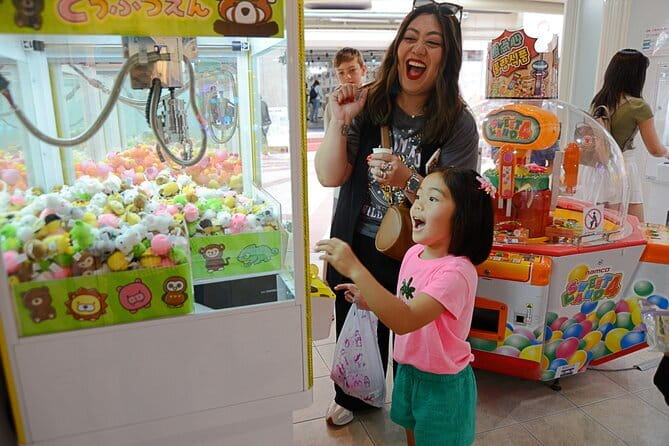
The tour is listed as wheelchair and stroller accessible, and it notes that your guide can focus more time on you during a small-group format. That matters because Tsukiji’s streets include tight spaces and lots of stop-start movement.
What I suggest: if accessibility is important for you, plan to arrive ready to move, not expecting a fully smooth path. Being “accessible” doesn’t mean “no obstacles.” But having a guide who can manage the group and adjust attention is a real advantage.
Also, bring basic comfort items: water, sun protection, and a plan for breaks. The tour doesn’t list that you get long seated breaks, so your comfort choices are on you.
Practical tips so you don’t waste time in Tsukiji
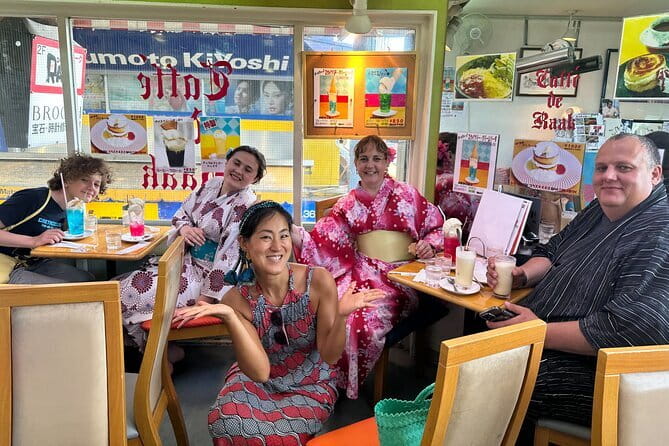
Tsukiji is one of those places where the details affect your mood. Here’s how to set yourself up:
- Come prepared for sun and heat. The route involves outdoors market time, so plan for weather.
- Wear shoes with grip. Floors can be slippery near food prep areas.
- Keep your phone power up. You’ll want translation help and photos, but don’t let battery anxiety slow you down.
- Communicate early. If you need to avoid sun or have a mobility constraint, say something at the start so your guide can plan stops.
- Plan your food budget. Even though there’s a fish-cutting show highlight, food spending can add up fast in market areas.
One more thing: the tour requires good weather. If conditions are poor, you’ll be offered another date or a full refund. Since Tsukiji is outdoor-heavy, always treat weather as part of your planning.
Should you book this Tsukiji street food and culture tour?
Book it if you want an easy way to experience Tsukiji with guidance—especially the combination of street food route + fish-cutting show + market atmosphere + temple stop in about two hours. This tour is at its best when you like eating with context, and when having a guide steer you reduces decision stress in a crowded place.
Skip it (or at least reconsider) if you’re looking for a long, calm, explanation-heavy history walk. Also reconsider if you’d rather save money and roam on your own—Tsukiji rewards curiosity, and you may already know what you want to eat.
For most people, though, the balance is strong: you’re paying for smart direction, a visible craft moment, and a smooth route that keeps the day from turning into random wandering.
FAQ
How long is the Tsukiji Fish Market street food and culture walking tour?
It runs for about 2 hours.
Where does the tour start?
The meeting point is 築地本願寺本堂3-chōme-15-1 Tsukiji, Chuo City, Tokyo 104-0045, Japan. The tour ends back at the same meeting point.
Is the fish-cutting show included?
Yes. The fish-cutting show is part of the tour schedule and is listed as admission included.
Are meals included in the price?
No. The tour information notes that meals are not included, even though the schedule mentions enjoying a fresh seafood bowl after the fish-cutting show. Plan on purchasing what you eat.
Is the tour wheelchair and stroller accessible?
Yes, it is listed as wheelchair and stroller accessible.
How big is the group?
The tour has a maximum of 30 travelers.
What happens if the weather is poor?
The experience requires good weather. If it is canceled due to poor weather, you’ll be offered a different date or a full refund.
Is free cancellation available?
Yes. You can cancel for a full refund up to 24 hours in advance.
When will I get confirmation after booking?
Confirmation is received at the time of booking.