REVIEW · TOKYO
Yanaka Walking Tour: Historic and Traditional District of Tokyo
Book on Viator →Operated by Trip Designer Inc. · Bookable on Viator
Tokyo slows down in Yanaka.
This walking tour is a practical way to see a quieter side of Tokyo, with Edo-period streets, temples, and the famous cemetery world of reien (memorial grounds) taught by a guide in English.
What I love most is how the tour turns scenery into understanding. Two highlights for me are the English-speaking guides (many of them, like Keita, Charlotte, Kiyo, Michiko, Kaori, and Satsuki, are described as warm, attentive, and very good with questions) and the chance to slow-walk past places you’d usually miss on a first trip.
The main consideration: it is a real walking route for about 3.5 hours, and one chunk of that time is spent in the cemetery area. If you want nonstop sights without pauses, you’ll want to pace yourself and wear shoes ready for uneven, old-city paths.
In This Review
- Key points worth knowing
- Why Yanaka feels like old Tokyo (and why that matters)
- Price and value: what about $72.96 buys you
- Where the tour starts (and why Nippori is a smart choice)
- What a 3.5-hour Yanaka walk really feels like
- The Yanaka District stop: your first clue that this is different
- Tennoji Temple: a garden setting with serious age
- Yanaka Cemetery: why it’s the big cultural stop (and how to handle the time)
- Nezu Jingu and the shrine atmosphere with old trees
- Gallery Okubo tea ceremony: optional, and worth it if you like hands-on culture
- SCAI The Bathhouse and Edokoro Alan West: the afternoon art-side of Yanaka
- Shitamachi Customs Museum: for when you want daily-life context
- Yanaka Ginza Shopping Street: end with snacks and old-town browsing
- How the guides turn streets into stories
- Who should book this Yanaka Walking Tour
- Should you book Yanaka Walking Tour
- FAQ
- How long is the Yanaka Walking Tour?
- Where does the tour start and end?
- What is included in the tour price?
- What is not included?
- Are there optional stops on this tour?
- Is the tour suitable for all fitness levels?
Key points worth knowing
- Small groups (up to 8 travelers) keep it easy to ask questions and move at a comfortable pace
- Yanaka Cemetery and Tennoji Temple give you a rare look at Tokyo’s memorial culture
- Optional tea ceremony at Gallery Okubo lets you try the tatami-style experience if you want it
- Afternoon tours may include SCAI The Bathhouse and Edokoro Alan West, adding a modern art twist
- End with Yanaka Ginza Shopping Street, a classic old-town lane for snacks and browsing
Why Yanaka feels like old Tokyo (and why that matters)
Yanaka is one of the places where Tokyo still feels like Tokyo from before the high-rises took over. The neighborhood is tied to the Edo period (roughly the 16th through 19th centuries), and that shows in the street scale, the home architecture, and the way temples and memorial grounds sit close to everyday life.
This tour is interesting because it’s not only about looking. You’re walking with an English guide who connects the dots between religion, daily neighborhood customs, and the logic behind where things are placed. That turns a photo stop into something you actually remember when you’re back in your hotel.
And yes, it’s a mini-retreat. The pace is more human than the big sightseeing loops. Even on a busy day in Tokyo, Yanaka tends to feel calmer, with back lanes, garden-like temple areas, and long-established local streets.
You can also read our reviews of more tours and experiences in Tokyo.


Price and value: what about $72.96 buys you
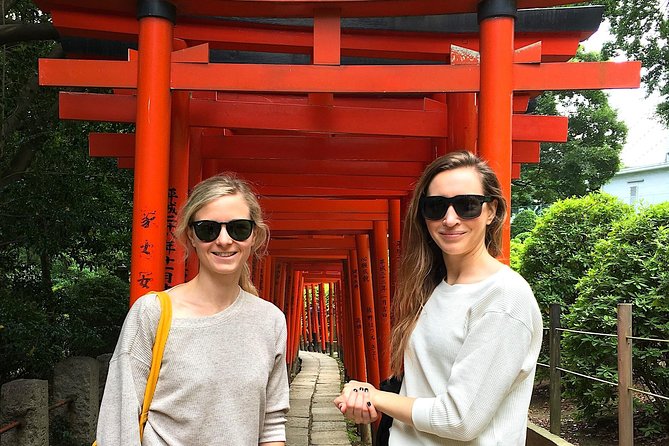
At about $72.96 per person for roughly 3 hours 30 minutes, you’re not paying just for walking access. You’re paying for interpretation: an English-speaking guide plus included fees, and the tour also includes photos of participants.
Here’s how I’d judge the value. This is a structured way to see several meaningful stops that tourists often skip because they assume it’s too confusing. In this case, you get context for the cemetery, help distinguishing temple vs. shrine ideas, and you also get local culture signals you’d miss if you were just wandering.
The group size is capped (max 8 travelers per booking), which matters for value too. Smaller groups usually mean fewer people to compete with, and that translates into more time for questions, not just marching forward.
Where the tour starts (and why Nippori is a smart choice)
You meet at Nippori Station, in the Nishinippori area (2 Chome-19 Nishinippori, Arakawa City). The tour ends back at the meeting point, so you don’t have to worry about figuring out a long one-way transfer.
Starting here is practical. Nippori is a transport hub, and meeting at a station keeps the morning simple. If you’re arriving from elsewhere in Tokyo, you can usually plan your route around the trains without needing extra cabs.
The tour runs on two start options: 9:00 am or 2:00 pm. That’s important because the neighborhood changes mood. Morning tends to feel fresher and cooler. Afternoon can be better if you want art-gallery style stops that only happen on the afternoon tour.
What a 3.5-hour Yanaka walk really feels like

This isn’t a sit-and-stare tour. You’ll be on your feet for about 3.5 hours and you should plan for moderate walking. The pace is guided, and guides have shown they adjust when needed, but the physical reality stays: old Tokyo streets aren’t flat, and they’re not designed for rolling luggage.
If you’re thinking of this on your first day in Japan, I think it works well. Several guides have been praised for giving travelers a fast start on how things work locally, from shrine and temple etiquette to how to navigate the neighborhood without feeling lost.
My advice: bring comfortable walking shoes and plan your hydration. On hot or humid days, guides in past tours have even come prepared with cooling items, like bug spray and cooling spray, which tells you they’re mindful of real-world conditions.
The Yanaka District stop: your first clue that this is different
The first stop is the Yanaka District itself. This is where you get your bearings: the streets, the old-town rhythm, and the sense that this neighborhood has kept its character while much of Tokyo changed.
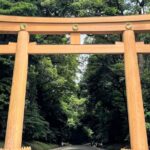
One thing you’ll notice quickly is that Yanaka isn’t built around big monuments. It’s built around small spaces that have meaning: temples, gates, gardens, and the quiet geometry of homes and lanes. That’s why a guide matters. Without context, you might miss why a small structure or garden corner is important. With context, it starts to connect to Edo-period life, later history, and local customs.
Also, if you visit during cherry blossom season, the tour is timed to include the springtime feel people associate with Japan’s older districts. Even without blossoms, the street atmosphere is the point.




Tennoji Temple: a garden setting with serious age
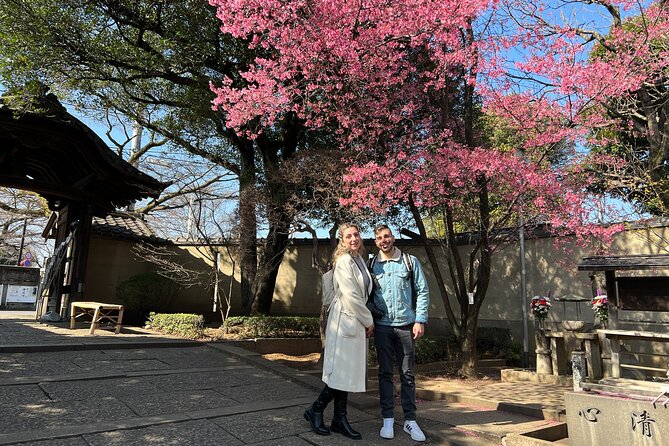
A standout early stop is Tennoji Temple, positioned on the edge of Yanaka Cemetery. The temple dates back to 1274, which is mind-bending when you think about how often Tokyo reinvents itself.
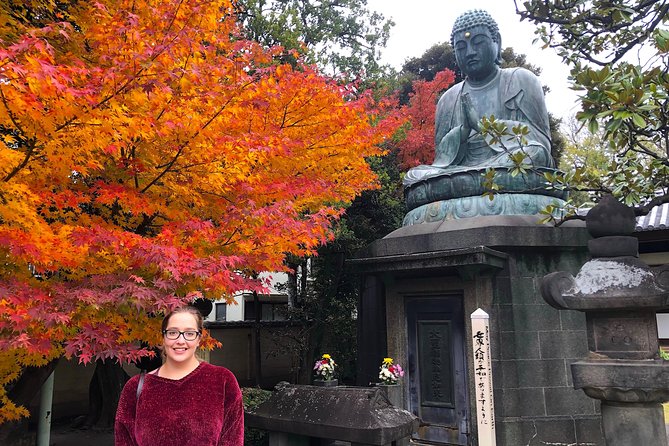
You’ll notice the temple isn’t just a building. You’re guided to look at the pleasant garden area behind an old wooden gate. In the grounds is a bronze Buddhist statue dating back centuries, and your guide’s explanations help you understand what you’re looking at and why it’s preserved.
This stop works especially well if you want a clear “bridge” between the neighborhood feel and the cemetery. You go from everyday street scale into a more protected, spiritual space.
Yanaka Cemetery: why it’s the big cultural stop (and how to handle the time)
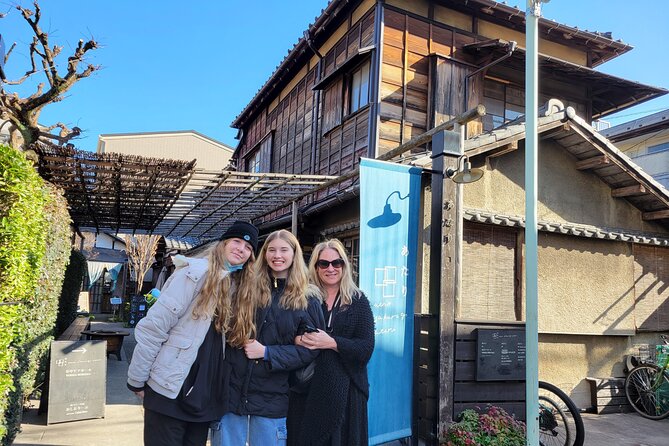
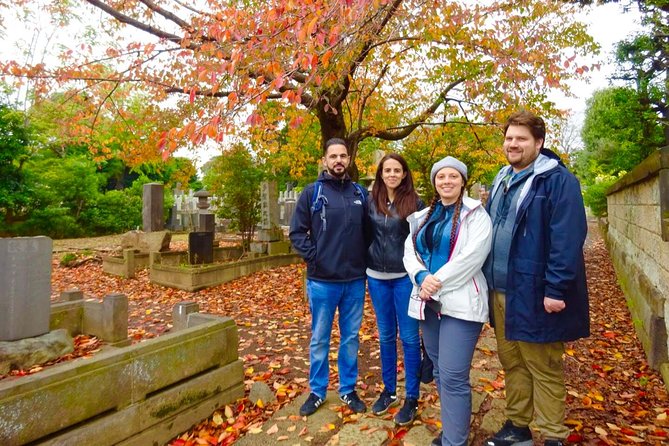
The tour’s longest focus is Yanaka Cemetery. It covers about 100,000 square meters and has over 7,000 graves, and it’s known for being part of Tokyo’s long memorial traditions.
This is the kind of stop that can split people into two groups. If you enjoy history that feels personal and human, you’ll like it. Cemetery culture is not the same thing as a tourist site. It’s tied to family memory, community continuity, and the way Japan cares for the past.
One reason this stop gets such high praise is that the guide doesn’t treat it like a quick photo detour. The explanations help you understand what memorial grounds mean in Japanese life, and how the area’s famous associations fit into the wider Tokyo story.
A practical note: because it takes real time, you’ll want to be okay with slower walking and more quiet moments. One guest suggestion was that the cemetery time felt a bit long, but the trade-off is that this is exactly where the tour differentiates itself from standard temple-hopping. If you’re sensitive to longer stops, wear good shoes and take a slow breath before you enter.
Nezu Jingu and the shrine atmosphere with old trees
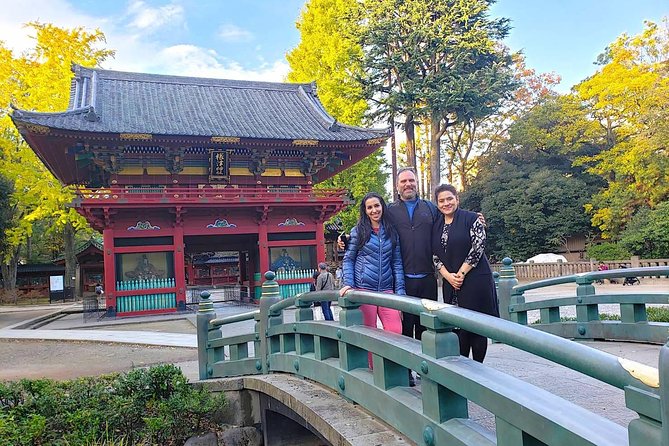
Another highlight is a major shrine stop that many guides build into the walk. In the neighborhood experience, this is the stop that has the feel of a classic Japanese garden shrine: big trees, flowering azalea shrubs (つつじ), ponds and pathways, and charming wooden structures with color and character.
Some guides explicitly mention Nezu Jingu during this part of the tour, and they also explain how Shinto and Buddhist ideas overlap in everyday Japanese religious life. Even if you’re not trying to memorize religious terms, the guide’s framing helps you see what people mean when they talk about shrine etiquette and respectful behavior.
This stop is a nice change of pace after the cemetery focus. It shifts the mood toward flowing greenery and ritual spaces rather than the stillness of memorial stones.
Gallery Okubo tea ceremony: optional, and worth it if you like hands-on culture
If you’re on the right tour time, you may get an optional stop at Gallery Okubo with a chance to experience Japanese tea ceremony on tatami mats.
The tea itself costs ¥1,000 and is not included in the tour price. That means you can skip it without losing the core experience. But if you do it, this is the kind of add-on that turns “I saw tea culture” into “I actually did a small ritual.”
If you tend to like practical experiences over lectures, I’d lean yes. Just be sure you have small cash or the payment method the gallery expects, since the tour listing notes the tea price separately.
SCAI The Bathhouse and Edokoro Alan West: the afternoon art-side of Yanaka
For the afternoon tour, you may include stops that add a modern contrast to the old streets.
One is SCAI The Bathhouse, a contemporary art gallery housed in a venerable public bath. That “old building with a new purpose” feeling is part of what makes Yanaka interesting. You’re not only looking at preserved history; you’re seeing how the neighborhood reuses old structures.
Another afternoon possibility is Edokoro Alan West, described as a studio once used as an auto body garage and now operating in an old-town setting. This kind of stop is for people who like design and craft details, and for those who enjoy seeing how Tokyo’s creative energy fits into older blocks.
If you book the morning tour, you may miss these, but the core district-to-temple-to-cemetery-to-street arc still gives you plenty to chew on.
Shitamachi Customs Museum: for when you want daily-life context
There’s also an optional stop connected to Shitamachi culture, with a museum and exhibit hall designed to teach future generations about the “Down Town” side of Tokyo.
The idea here is simple: you’re not only learning about big institutions. You’re getting a sense of used objects and everyday life—things that were actually used by people. If you like culture that feels lived-in rather than ceremonial-only, this can be a good add-on.
Because it’s optional, it works best when your group has energy for it and your legs aren’t begging for a bench.
Yanaka Ginza Shopping Street: end with snacks and old-town browsing
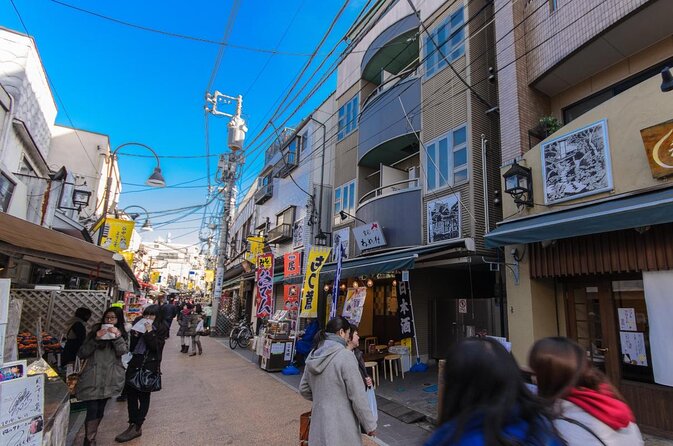
The walk ends at Yanaka Ginza Shopping Street, which is known as a well-preserved local shopping lane with a classic Shitamachi vibe.
This is where you can exhale and do something tourists often skip: eat something small, browse without pressure, and soak up street-level atmosphere. The tour doesn’t make food a requirement, but guides have been praised for building in time for snacks and small shop stops.
Based on the kinds of stops guests described, it’s common for guides to help you find items like traditional sweets and local treats. You might also see shops selling older-style textiles, and some tours include time that feels like a friendly wander rather than a checklist.
How the guides turn streets into stories
The tour’s biggest strength is the human one: the guide.
Across different guide names like Keita, Charlotte, Kiyo, Michiko, Kaori, Ken, Mana, Fumiko, Ryan, Muchan, Satsuki, and Masa, the pattern is consistent: clear English, strong local context, and an ability to answer questions without rushing you.
Some guides have also been praised for things like:
- Adjusting pace to the group
- Helping with safety awareness
- Taking photos so you can be in the frame
- Knowing the difference between shrine vs temple ideas and etiquette basics
If you’ve ever tried to explore Tokyo on your own and felt you were reading signs like a mystery novel, this is the antidote. A good guide helps you understand what the neighborhood is teaching you, not just what you’re looking at.
Who should book this Yanaka Walking Tour
I’d suggest this tour if you want:
- A quieter Tokyo experience that feels closer to older Japan
- A guided explanation of temple, shrine, and memorial culture
- A half-day plan that doesn’t involve sitting on buses all morning
- Small-group attention, not a loud production line
It’s also a solid pick for first-time visitors. Many travelers like using a walk like this as an intro because it gives you language for what you’ll notice later: religious spaces, neighborhood structure, and how old blocks survive.
If your main goal is only the biggest must-see landmarks with short time on foot, you might find the cemetery segment less appealing. But if you like meaning and place, this tour earns its time.
Should you book Yanaka Walking Tour
Yes, I think you should book it if you want Tokyo with fewer crowds and more context. The mix of Tennoji Temple, Yanaka Cemetery, shrine time (often Nezu Jingu), and the practical finish at Yanaka Ginza creates a complete neighborhood story. Add in a small group size and strong guide performance, and the value feels real for the price.
Also, if your dates are flexible, you have the option to cancel up to 24 hours in advance for a full refund. That safety net makes it easier to plan around weather and energy.
If you’re the kind of traveler who likes to understand how places work, not just collect photos, this is a smart choice.
FAQ
How long is the Yanaka Walking Tour?
The tour runs about 3 hours 30 minutes (approx.).
Where does the tour start and end?
You start at Nippori Station (2 Chome-19 Nishinippori, Arakawa City, Tokyo 116-0013, Japan) and the tour ends back at the meeting point.
What is included in the tour price?
The price includes an English-speaking guide, all fees and taxes, and photos of tour participants.
What is not included?
Food and drinks are not included. An optional tea ceremony at Gallery Okubo costs ¥1,000 and is not included.
Are there optional stops on this tour?
Yes. Stops such as Gallery Okubo (tea ceremony), Shitamachi Customs Museum & Exhibit Hall, and certain afternoon-only art stops may be optional depending on the tour time.
Is the tour suitable for all fitness levels?
The tour notes that travelers should have moderate physical fitness, since it’s a walking experience over about 3.5 hours.