REVIEW · SIEM REAP
Angkor 2-Day Sunset & Sunrise Small-Group Tour
Book on Viator →Operated by Journey Cambodia · Bookable on Viator
Two days, two temple miracles at Angkor. This tour strings together the big stuff—air-conditioned vehicle comfort and hotel pickup—with enough structure that you’re not stuck figuring out logistics before sunrise.
I like the balance: you get a full Day 1 temple circuit plus a classic Day 2 start with Angkor Wat sunrise from a quieter approach. The main drawback is budget math: the $49 tour price does not cover the temple pass you must pay separately (listed as $62 per person), and Day 2 begins pre-dawn.
In This Review
- Key points before you go
- Air-conditioned Angkor in a small group (max 15)
- Price and logistics: $49 tour price plus a $62 temple pass
- Day 1 temple circuit: Preah Khan, Neak Pean, Banteay Srei, Pre Rup
- Preah Khan (about 1 hour)
- Neak Pean (about 40 minutes)
- Banteay Srei (about 1 hour 30 minutes)
- Pre Rup (about 1 hour 30 minutes)
- Sunset on Day 1: the view can be affected by air and heat
- Optional extra: Landmine Museum stop on some departures
- Day 2 Angkor Wat sunrise: leaving 4:10 to 4:30 am
- What sunrise feels like when the timing is right
- Day 2 after sunrise: Angkor Thom and the city gates
- Angkor Thom (about 1 hour 30 minutes)
- South Gate (about 30 minutes)
- Terrace of the Elephants: leper king area and elephant scenes
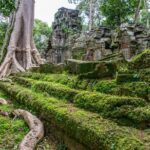
- Ta Prohm: the temple where trees take the stage (about 1 hour)
- Why the guide and driver can make or break Angkor
- Guides who help you see, not just walk
- Drivers who keep you comfortable in the heat
- Extra kindness: the small fixes
- How to prepare: dress, shoes, and breathing-smart planning
- Who this tour is best for
- Should you book this 2-Day Sunset & Sunrise tour?
- FAQ
- What time does the tour start?
- What is included in the price?
- Do I need to pay for temple entry separately?
- Are meals included?
- What time do I leave for Angkor Wat sunrise?
- Is transportation air-conditioned?
- How big is the group?
- What is the dress code for temples?
- Is free cancellation available?
- Can I request a different day?
Key points before you go
- Air-conditioned transport, not open-air tuk-tuks: easier in the heat between sites.
- Early Angkor Wat sunrise timing: hotel departure around 4:10 to 4:30 am for the best arrival window.
- A mix of iconic and quieter temples: including Banteay Srei, plus long-running favorites like Ta Prohm and Angkor Thom.
- Photo-friendly guidance: guides often help with framing and taking group/solo pictures at key spots.
- Small group size: max 15 people, so you’re less likely to feel lost in a crowd.
Air-conditioned Angkor in a small group (max 15)
Angkor in summer is hot, dusty, and long-walking. The big win here is the climate-controlled vehicle. You’re not bouncing around in an open-air ride while you’re trying to keep your energy for sunrise photos and midday temple circuits.
Your day also starts with convenient hotel pickup and drop-off. That matters more than it sounds. In Siem Reap, transfers can eat up your morning, and mornings here are already brutal. With pickup, you show up ready to go—no hunting for meeting points, no waiting in the street.
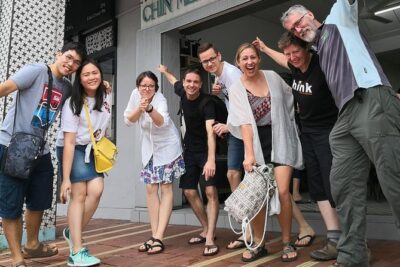
Group size is capped at 15, and that usually keeps things organized without feeling like you’re stuck in a giant tour line. In the reviews, the best experiences often come with guides and drivers who keep everyone together, manage timing, and still allow questions and extra photo stops.
The trade-off is the nature of the route. Even in a comfortable van, this is still a two-day temple schedule. If you like slow travel, you’ll want to plan extra downtime after sunrise day.
You can also read our reviews of more tours and experiences in Siem Reap.
Price and logistics: $49 tour price plus a $62 temple pass
The advertised tour price is $49 per person, but the temple ticket isn’t included. The tour listing states you must add an Angkor temple pass (listed as $62 per person for a 2–3 day pass), paid directly at the sites on the day of your activity.
So what are you really paying for?
- The tour price covers guide service, air-conditioned transport, sunrise and sunset coordination, and the guided route across multiple temples.
- The temple pass covers your legal entry into the archaeological area sites.
To judge value, I’d look at what you get in return for the pass cost: a tight two-day plan that includes both Angkor Wat sunrise and a second day built around Angkor Thom and Ta Prohm. For most first-timers, that’s exactly what you want—someone to handle the “where next” decisions while you focus on the temples and the photos.
One practical caution: meals are not included. You’ll be making lunch decisions on your own, which can be good (more choice) or annoying (if you forget to plan).
Day 1 temple circuit: Preah Khan, Neak Pean, Banteay Srei, Pre Rup
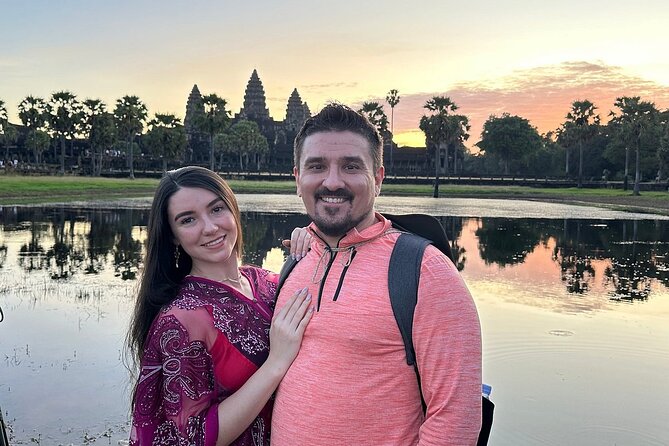
Day 1 is the long day. Expect a start around 8:00 am and a packed sequence that ends with sunset.
Preah Khan (about 1 hour)
Preah Khan is a ruined temple site with that classic Angkor look: crumbling stone and serious tree-root energy. This is the kind of stop where the guide’s narration can make a real difference because the place rewards attention. You’ll want time to look up and sideways, not just straight ahead at the main structures.
Wear shoes you don’t mind getting dusty. The terrain can be uneven, and 1 hour goes fast if you’re trying to photograph every angle.
Neak Pean (about 40 minutes)
Next is Neak Pean, built around an artificial island with a Buddhist temple layout in the middle of the Jayatataka Baray area. It’s quieter and more “thoughtful” than some of the larger sites. You’ll get a break in pace here—good before the longer, more detailed temple visit later.
If you’re the type who likes small context details (water, causeways, symbolism), this stop can feel more rewarding than its shorter time slot.

Banteay Srei (about 1 hour 30 minutes)
This is one of the standout values of the trip. Banteay Srei is described as well-preserved, and the details on its sandstone reliefs are considered among the finest in Cambodia. It’s smaller than Angkor Wat, which often means you can actually look closely without feeling completely swallowed by crowds.
This stop is also a nice contrast after the heavier stone-and-moss vibe of some of the other ruins. For photos, the lighter stone and intricate carvings tend to reward steady, patient viewing rather than quick snapshots.
Practical note: because the temple is smaller, your time there can turn into a “slow down and notice” moment. That’s a good use of the 1.5 hours.
Pre Rup (about 1 hour 30 minutes)
Pre Rup is a Hindu temple mountain built as the state temple of Khmer King Rajendravarman, with dedication noted as 961 or early 962. Even if you don’t memorize the dates, the structure helps you understand Khmer ideas of temple design: tiers, layers, and the sense of a deliberate climb toward a sacred viewpoint.
This is a solid temple for learning how to “read” Angkor architecture: where the attention is meant to go, and how the built form supports ceremonial space.
Sunset on Day 1: the view can be affected by air and heat
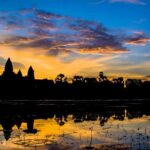
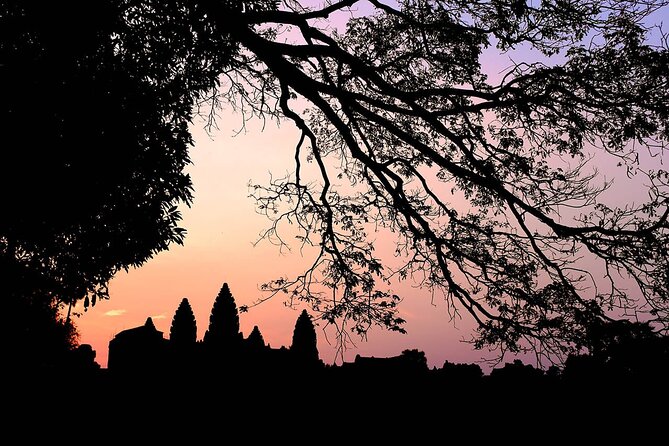
Day 1 ends with sunset on a hill. The tour promises a magical sunset moment, but real-world conditions can change the experience. One downside you should plan for: air quality and haze can limit visibility, and the viewpoint access can involve a heat-heavy incline.
If you have asthma or breathing issues, take this seriously. Heat plus pollution is not a minor detail at Angkor sunset points. Bring your medication plan and be realistic about what you can safely handle.
Also: sunset timing is weather-dependent. Clouds happen. If the sky doesn’t cooperate, you’ll still have temples to enjoy, but your payoff might be a softer sunset than you imagined.
Optional extra: Landmine Museum stop on some departures
One reason Day 1 sometimes feels even longer is that some schedules include an optional visit to the Landmine Museum. It has a separate entrance fee. If you’re curious about Cambodia’s more recent history, this can add meaningful context. If you’d rather rest between temple stops, you can typically skip it and continue relaxing in the air-conditioned vehicle or at a nearby cafe, depending on how your guide runs the day.
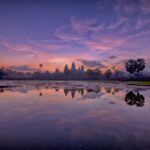
Day 2 Angkor Wat sunrise: leaving 4:10 to 4:30 am
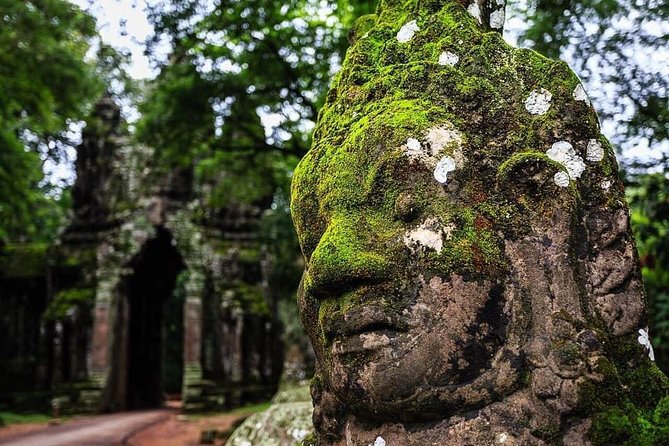
Day 2 begins pre-dawn. Your departure from the hotel is around 4:10 to 4:30 am, depending on the season. This is not an optional extra. It’s the whole point.
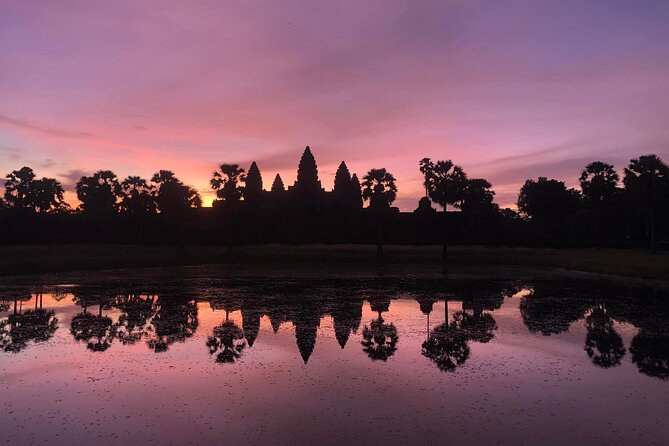
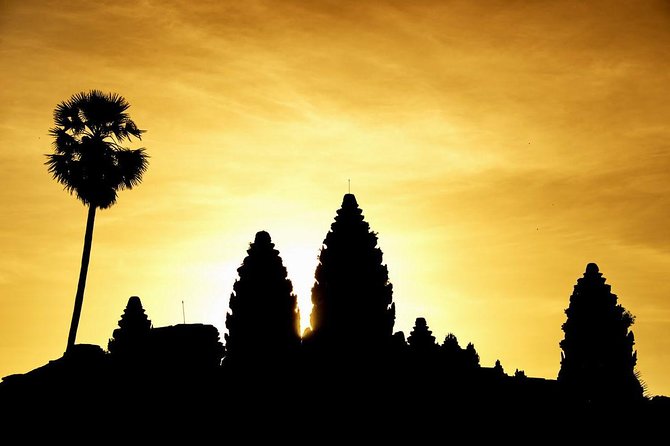
The tour description says you’ll enter Angkor Wat from the little-visited eastern side and tour in darkness before the sun rises. That matters because crowds tend to build quickly once people fully arrive. Coming in early can make the experience feel calmer and more cinematic.
Expect a wait. One review described sitting on the ground for about 1.5 hours until the sun came up, with people using phone flashlights. You don’t need gear beyond the essentials, but bring the same mindset you would for an early bus ride: dress for cool-to-warm conditions and plan to stand or sit quietly while the light changes.
What sunrise feels like when the timing is right
Angkor Wat sunrise isn’t just a photo moment. It’s also a chance to experience the temple before the noise kicks in. Your guide can help you understand which angles matter and when to shift your position for the best shots.
Also, sunrise viewing can be cloudy. Even then, the shift from dark stone to soft light often looks beautiful. The sky doesn’t have to be perfect; the temple still has presence.
Day 2 after sunrise: Angkor Thom and the city gates
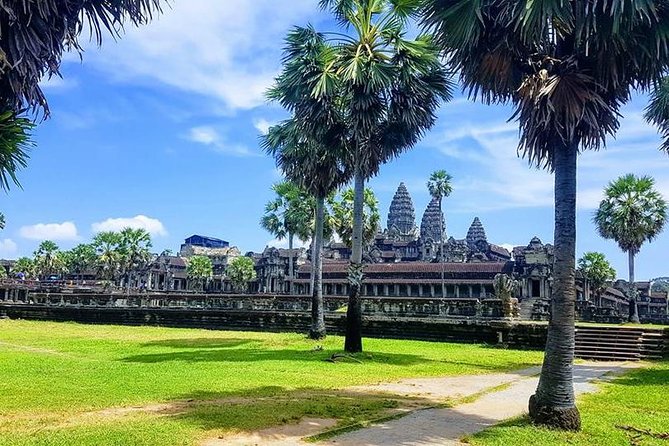
After sunrise, the schedule pivots to Angkor Thom, the Khmer Empire’s former capital. It’s grand in a very physical way: massive walls, gateways, and the sense of a planned city layout rather than just random temple scattering.
Angkor Thom (about 1 hour 30 minutes)
You’ll spend about 1.5 hours inside the Angkor Thom complex, including time at Bayon. Bayon is the kind of place where understanding the symbolism makes the experience more satisfying. If your guide is good at connecting temple art to Khmer religious stories, Bayon becomes more than an iconic face-on-stone scene.
South Gate (about 30 minutes)
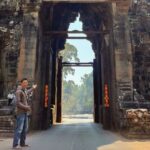
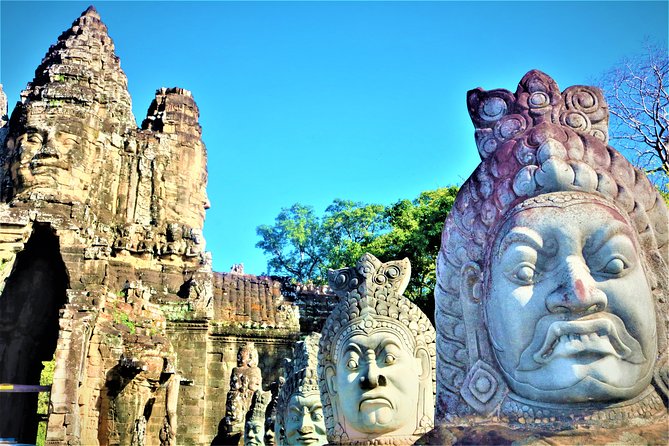
Then there’s time at Angkor Thom South Gate—also tied to that “capital city” feeling. Gate visits can be quick, but they work as photo anchors and mental resets. It’s a good spot to step back, look at sight lines, and realize how the city functioned as a whole.
Terrace of the Elephants: leper king area and elephant scenes
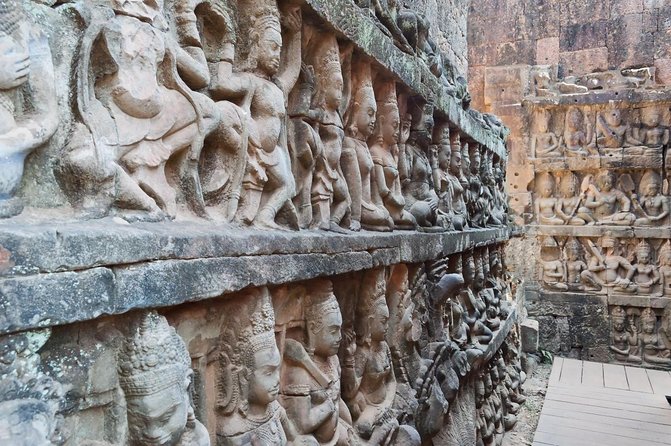
Next is the Terrace of the Elephants area. The description also mentions passing by the Terrace of the Leper King. You’re given about 1 hour 30 minutes here.
This is one of those Angkor sections where your guide can turn carvings into stories. If you’re walking in without context, you’ll still enjoy the scale, but with context you start noticing repeated motifs and narrative details.
Practical tip: this area can involve a fair bit of standing and looking up/down across uneven stone. Pace yourself. If you rush, you’ll miss the best carvings.
Ta Prohm: the temple where trees take the stage (about 1 hour)
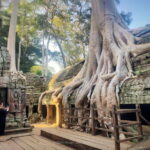
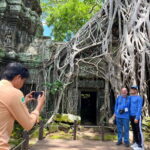
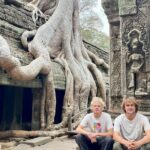
End your Day 2 experience with Ta Prohm. This temple is known for its atmospheric look—stone intertwined with massive tree roots. It’s also where the guide story can really add depth: Ta Prohm was once home to 2,740 monks, and its appearance is often discussed in relation to how it looked when French explorer Henri Mouhot brought it back into European awareness in the early 1850s.
The big reason Ta Prohm works on a guided tour is that it’s visually chaotic—in a good way. A guide helps you pick the spots that show the roots and structure without losing your sense of direction. You also get better timing for photos and less “wandering in the wrong direction.”
Why the guide and driver can make or break Angkor
In theory, Angkor is the attraction. In practice, the guide and driver shape your day more than you’d expect.
This tour is built around licensed, English-speaking guides and an AC driver setup, and the reviews back up a pattern: people remember the guide’s pacing, their ability to explain what you’re seeing, and their help with photos.
Guides who help you see, not just walk
Some named guides you may encounter include Sopheap Rath, Sokpee, Pal, Sak, Pi, Chhay, and Bun. Across reviews, the common thread is that guides often:
- explain temple art and Khmer religious stories in a way you can follow while walking,
- manage the schedule so you’re not constantly waiting,
- offer help with photos, including solo picture moments.
One review called out that a guide even used an iPad with visual aids (images and videos) to support the storytelling. Another mentioned a guide taking photos from the best photo spots. If you’re traveling solo or you hate awkward “please take my picture” moments, this kind of guidance is worth its weight.
Drivers who keep you comfortable in the heat
Your driver role is often the difference between a “hard day” and a “manageable day.” Many reviews mention cold water and cool towels after stops. That’s not a luxury in Angkor; it’s a heat reset that helps you keep moving through the midday stretch.
Also, some departures may include rainy-day adjustments. One review noted umbrellas provided on the rainy second day. If you go in assuming perfect weather, you’ll be less ready than you should be.
Extra kindness: the small fixes
There are also small human moments in the reviews, like a guide borrowing a scooter to help someone out. That’s not something you should plan on, but it tells you the tour team is paying attention to how people are actually doing.
How to prepare: dress, shoes, and breathing-smart planning
This tour involves a lot of walking, early mornings, and sun exposure. Plan for it.
- Dress code: casual is fine, but shoulders and knees must be covered inside temples. Bring a light layer if your outfit is borderline.
- Comfortable walking shoes: the sites involve dusty paths and uneven stone.
- Sunrise wake-up reality: your Day 2 departure is pre-dawn, so treat it like a real early commute.
- Heat and dust: even with AC transport, your temple time is outdoors. Bring sunscreen and hydrate. The tour includes bottled water and cool towels, but you’ll still sweat.
- Breathing considerations for sunset: if you have asthma or breathing issues, the sunset viewpoint access can involve a heat-heavy incline and air conditions can worsen in haze. Talk with your doctor about a safety plan and don’t ignore symptoms.
One more practical mindset: Day 1 is long. Even with stops built in, you may feel it by evening. Build in a nap buffer after Day 2 sunrise if you can.
Who this tour is best for
This is a strong fit if you:
- want Angkor Wat sunrise plus major temples over exactly two days,
- like having an organized route so you’re not juggling transport and entry timing on your own,
- appreciate a mix of iconic sites and quieter-feeling stops like Banteay Srei,
- want small-group comfort with AC and hotel pickup.
It may be a harder fit if you:
- hate early mornings and long days,
- have breathing or asthma concerns and are worried about polluted, hot sunset conditions,
- want a completely self-paced temple wandering day with no schedule.
Should you book this 2-Day Sunset & Sunrise tour?
I think you should book it if you want the classic Angkor experience without the stress. The combination of sunset plus Angkor Wat sunrise, AC transport, and a route that hits both famous and less-visited temples is good value for a time-limited trip.
But be smart about the two big “gotchas”: the temple pass cost you pay separately, and the fact that Day 2 starts pre-dawn. If you’re ready for early wake-ups, plan your day for heat, and come with covered knees/shoulders and good shoes, this is the kind of Angkor plan that turns into a highlight fast.
FAQ
What time does the tour start?
The tour start time is listed as 8:00 am.
What is included in the price?
Inclusions include a licensed English-speaking tour guide, air-conditioned vehicle, hotel pickup and drop-off, bottled water and cool towels, and both the sunset (Day 1) and sunrise (Day 2) experiences.
Do I need to pay for temple entry separately?
Yes. Entrance fee/temple pass is not included and is listed as $62.00 per person (for a 2–3 day pass) paid directly at the site on the day of your activity.
Are meals included?
No. Meals are not included, but meals are available at your own choice.
What time do I leave for Angkor Wat sunrise?
You’ll depart from your hotel around 4:10 to 4:30 am, depending on the time of year.
Is transportation air-conditioned?
Yes. The tour includes travel in an air-conditioned vehicle, and it’s specifically described as skipping open-air tuk-tuk rides.
How big is the group?
The tour has a maximum of 15 travelers.
What is the dress code for temples?
Dress code is casual, but your shoulders and knees must be covered when inside temples.
Is free cancellation available?
Yes. Free cancellation is offered up to 24 hours in advance for a full refund.
Can I request a different day?
The information says swap day will be flexible for you.